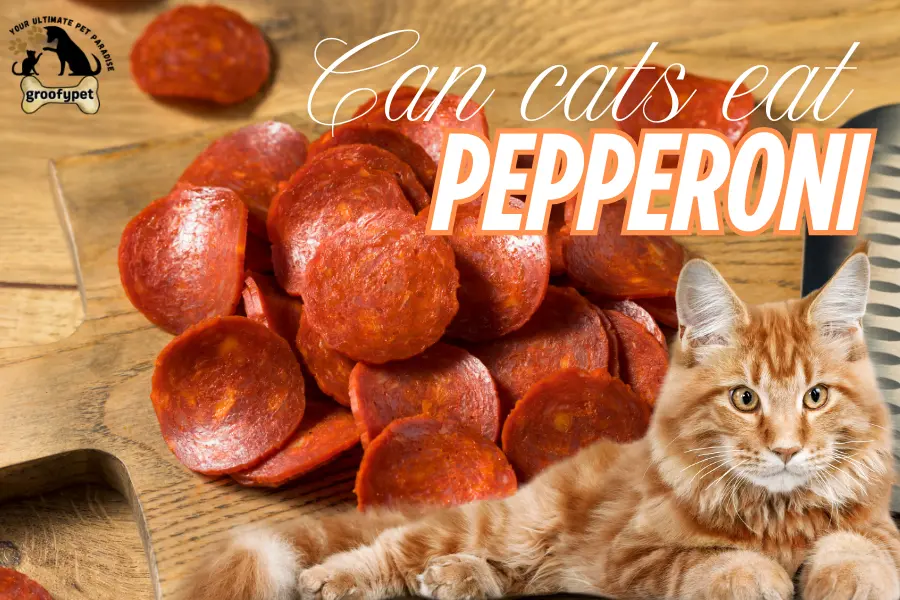
We love pepperoni, especially on pizza, but if your cat gives you those curious eyes during dinner, you might wonder, can cats eat pepperoni? It’s meat, after all, so it must be okay, right? Not exactly. While giving your cat a tiny bite might seem harmless, pepperoni isn’t a good treat.
It’s loaded with salt, spices, and preservatives—things that don’t belong in a cat’s diet. You are halfway through a pepperoni pizza when your cat materializes beside you, eyes wide, whiskers twitching at the aroma of that spiced cured meat. It is one of the most relatable scenes in cat ownership.
But before you surrender even a single slice to those insistent eyes, it is worth asking a genuinely important question—can cats eat pepperoni, or is this processed meat far more hazardous than it appears?
The short answer is no, pepperoni is not safe for cats. The longer answer, however, involves understanding precisely what makes it dangerous, what happens physiologically when a cat consumes it, and what responsible cat owners should do if their feline companion has already eaten some.
This comprehensive vet-reviewed guide covers every dimension of that conversation, drawing on feline nutritional science, allium toxicity research, and veterinary dietary guidelines. In the wild, cats don’t season their meals, and their bodies aren’t built to handle all that extra sodium.
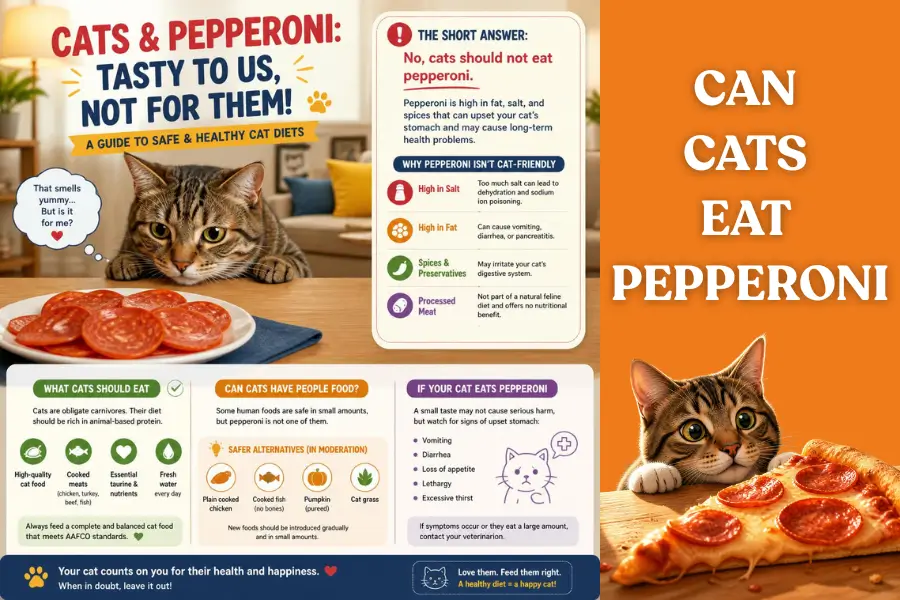
In this article, we are diving into the world of pepperoni and cats. Is it safe? Is it healthy? Let us get into it.
What Exactly Is Pepperoni? Ingredients That Make It Dangerous for Cats
Pepperoni is an American-style cured meat, technically a dried salami crafted from a mixture of pork and beef, heavily seasoned, and preserved through salt curing, fermentation, and drying. Interestingly, the name derives from the Italian word “peperone,” meaning bell pepper, though modern commercial pepperoni bears no resemblance to that mild vegetable.
The problem for cats is not the meat itself; it is everything that accompanies it. Pepperoni’s signature spice profile and preservation process introduce a catalog of ingredients that directly conflict with feline biology.
Typical Ingredients in Commercial Pepperoni
• Pork and beef are highly processed, fat-dense, and nutritionally unlike whole prey protein.
• Salt used as a primary preservative in quantities exceeding feline sodium tolerances by a factor of ten
• Paprika and red chili flakes are members of the Capsicum family, irritating to the feline gastrointestinal tract
• Garlic and onion powder are both acutely toxic to cats even in trace amounts due to thiosulfate compounds
• Black pepper and fennel are digestive irritants for obligate carnivores
• Sodium nitrate and sodium nitrite chemical preservatives that interfere with oxygen transport in feline blood
• Lactic acid starter cultures fermentation by-products that alter gut pH
• Artificial colorings and flavor enhancers not designed for feline metabolism
Can cats have pepperoni?
Even though one slice won’t likely poison your cat, it still has way more salt than what is safe for them in a day. Over time, too much can lead to problems like an upset stomach, vomiting, diarrhea, or even more serious signs like seizures or coma in extreme cases.
Can cats eat pepperoni? If you ever notice your cat acting oddly after eating salty food, it is worth checking with your vet or calling a pet poison hotline. In short, while pepperoni smells best, keep it off your cat’s menu.
Can cats eat pepperonis?
Pepperoni contains garlic powder, which can be harmful to your cat. If your cat consumes a complete slice of pepperoni pizza, both the dough and the marinara sauce contain garlic, which is harmful for your cat. While most cat owners are aware that garlic is toxic to pets, even in small amounts.
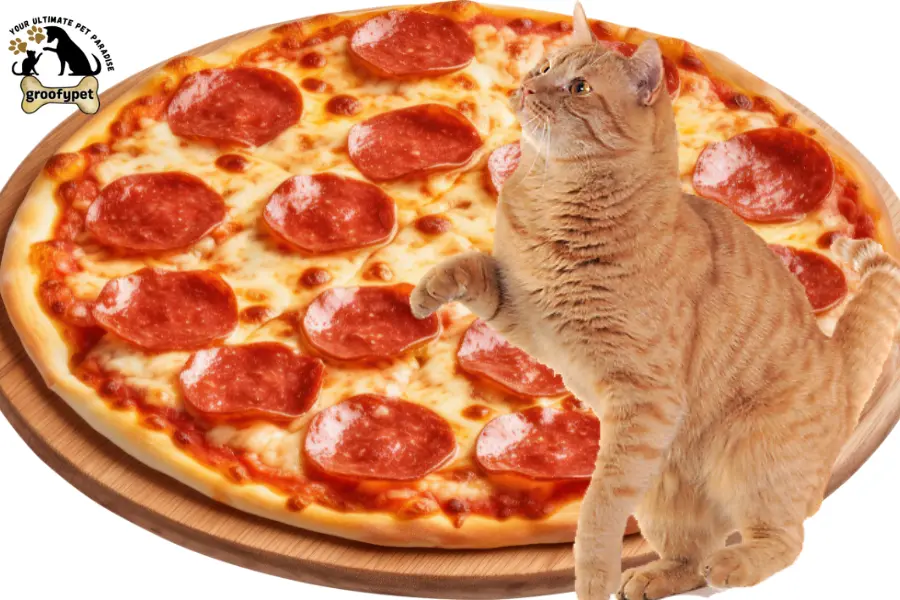
You step away for a moment to take a call and come back to find your cat eating a piece of pepperoni you left out. It might seem harmless, but can a cat really eat pepperoni? The answer is it is best to keep it away from them.
While it smells good and looks tasty, the ingredients in pepperoni are not safe for cats. Pepperoni is soft and flavorful, which makes it attractive for cats, but that flavor comes from preservatives, artificial coloring, and a lot of salt.
Can a cat eat pepperoni?
Can cats eat pepperoni? These ingredients are not good for cats, and a small bite can upset their stomach. Big amounts can be dangerous for your cat. It is harmful if your cat keeps trying to sneak a bite. Did you know pepperoni is the most popular pizza topping in the US?
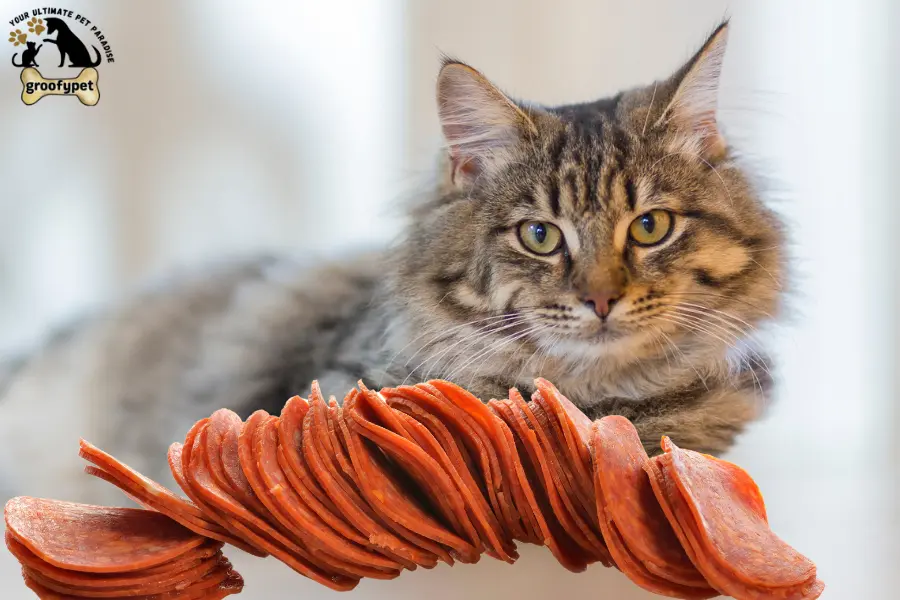
Almost half of all pizzas ordered include it. And even though the name sounds Italian, if you order a pepperoni pizza in Italy, you might get bell peppers instead of meat since “peperone” means bell pepper in Italian.
The biggest issue with pepperoni is the high amount of salt. It may taste great to us, but cats need way less sodium. Just one small slice has over 30 mg of sodium, which is already too much for a small cat.
Can Cats Eat Pepperoni? How Much Is Safe?
Pepperoni is not recommended for cats because it is high in fat and sodium and often contains garlic or onion seasonings. There is no healthy serving size for regular feeding.
| Cat Size | Recommended Pepperoni | If Accidentally Eaten |
|---|---|---|
| Kitten | 0 pieces | Contact a vet if more than a tiny bite was eaten |
| Small cat | 0 pieces | Monitor for vomiting, diarrhea, or unusual thirst |
| Medium cat | 0 pieces | A tiny bite is unlikely to cause problems, but avoid more |
| Large cat | 0 pieces | Monitor closely, especially if heavily seasoned |
| Any cat | Not recommended as a treat | Seek veterinary advice if symptoms develop |
Better alternatives: Plain cooked chicken, turkey, or small amounts of fully cooked fish without salt, oil, garlic, or onion.
If your cat eats pepperoni from a pizza, it’s even harder to know how much salt they’ve had. Too much salt can make your cat sick. Signs include low energy, vomiting, diarrhea, being very thirsty or shaky, and, in serious cases, seizures.
Can cats eat pepperoni? If you notice anything unusual or think your cat ate a lot of pepperoni, call your vet or the Pet Poison Helpline right away. So even if your cat wants to eat, it’s best to keep pepperoni out of their reach.
So, you’re enjoying a slice of pepperoni pizza, and your cat is giving you that look the one that says, “Just one bite, please?” Before you give a piece their way, let us talk about whether that spicy, greasy meat stick is actually safe for your feline friend.
Symptoms to Watch For If Your Cat Eats Pepperoni
The clinical presentation depends on the quantity consumed, the cat’s individual size and pre-existing health status, and whether the pepperoni contained garlic or onion powder specifically. Here is what to monitor across two distinct timeframes.
Immediate Reactions (0 to 6 Hours)
• Vomiting or repeated retching
• Excessive drooling or pawing at the mouth
• Diarrhoea or very soft stools
• Increased thirst and persistent water-seeking behavior
• Abdominal pain or visible bloating
• Restlessness and signs of gastrointestinal discomfort
Delayed Reactions (12 to 72 Hours — Allium Toxicity Window)
This timeframe is the most dangerous and is often missed by owners who assume their cat is unaffected after showing no immediate symptoms.
• Progressive lethargy worsening over multiple days
• Pale, white, yellow, or grey gum colorization an anemia indicator
• Loss of appetite extending beyond 24 hours
• Labored or rapid breathing at rest
• Dark, discolored urine (brown, red, or dark orange)—hemoglobinuria
• Weakness or collapse, particularly in the hindquarters
• Tremors or seizures in severe sodium poisoning cases
• Difficulty breathing a late-stage warning sign requiring emergency care
Important: If any delayed reactions appear within 72 hours of pepperoni consumption, treat this as a veterinary emergency. Hemolytic anemia from allium toxicity worsens rapidly without intervention.
My Cat Ate Pepperoni What Should I Do Right Now?
First, stay calm. A single small piece of plain pepperoni free from garlic or onion powder is unlikely to cause life-threatening harm in a healthy adult cat, though gastrointestinal upset is probable. The dose determines the danger: the concern scales proportionally with quantity consumed and whether toxic seasonings were present.
Immediate Steps to Take If Your Cat Accidentally Ate Pepperoni
• Identify exactly what was consumed: Check the ingredient list of the specific pepperoni brand for garlic powder, onion powder, or other allium derivatives. This single step changes the urgency level significantly.
• Estimate the quantity: A nibble of one slice is very different from several slices eaten from an unattended pizza box.
• Do not induce vomiting at home: Unlike dogs, inducing emesis in cats without veterinary supervision carries serious risks including aspiration pneumonia.
• Provide unrestricted access to fresh water: This helps offset the sodium load and supports renal clearance.
• Contact your veterinarian or Pet Poison Helpline immediately: Even if symptoms are absent, describe precisely what was consumed and request professional guidance.
• Monitor closely for 72 hours: The delayed onset of hemolytic anemia means that an apparently normal cat at hour one may show serious symptoms at hour 48.
• Note the time of ingestion: This information is critical for your vet in assessing treatment urgency and monitoring windows.
Special Cases: When to Seek Emergency Veterinary Care Immediately
• Your cat ate a large quantity of pepperoni (more than a few pieces)
• The pepperoni contained garlic powder or onion powder — any amount
• Your cat is a kitten—immature kidneys and immune systems face amplified risk
• Your cat is a senior cat with age-related decline in renal function.
• Your cat has a diagnosed history of CKD, hypertension, heart disease, or pancreatitis.
• Your cat is already anemic—allium exposure compounds compromised hematological status.
• Your cat ate cooked pepperoni or raw pepperoni; cooking does not remove the dangerous ingredients.
Can Cats Eat Cooked Pepperoni or Turkey Pepperoni? Are There Any Safer Variants?
No, cooking pepperoni does not make it safe for cats. The dangerous elements are the ingredients, not the preparation method. Cooking does not remove sodium, garlic powder, onion powder, or nitrate preservatives.
The fat content remains unchanged, and the spice concentration may actually intensify slightly during the drying or cooking process. Cooked pepperoni poses identical risks to raw pepperoni for cats.
Can Cats Eat Turkey Pepperoni?
Turkey pepperoni is not meaningfully safer than standard pork-beef pepperoni for cats. While turkey itself is a safe, lean protein source for feline consumption, turkey pepperoni is still a cured, processed product. It retains high sodium levels, nitrate preservatives, and Allium seasonings.
The base protein being turkey does not neutralize the hazardous additive profile. Cats can eat plain, unseasoned, cooked turkey — but turkey pepperoni is not that product.
Can Cats Eat Vegan Pepperoni?
Plant-based pepperoni alternatives are not appropriate for cats either. Cats are obligate carnivores who derive no meaningful nutrition from plant protein sources, and vegan pepperoni often contains garlic, onion, high sodium, and various spices that remain problematic. The absence of meat does not resolve the seasoning and preservative issues.
Safe Protein Alternatives — What Can Cats Eat Instead of Pepperoni?
If you want to share a special protein treat with your cat, there are genuinely safe and nutritionally valuable options. The guiding principle is simplicity: the fewer the ingredients, the lower the risk. The best protein sources for cats are lean, unseasoned, minimally processed animal proteins that align with their dietary requirements as obligate carnivores.
Veterinarian-Approved Cat-Safe Protein Treats
• Plain cooked chicken breast — no seasoning, no sauces, no skin; one of the best cat-friendly protein treats available
• Plain cooked turkey — a lean, low-fat protein source well-tolerated by most cats; safe alternative to pepperoni
• Plain cooked salmon or sardines in water — rich in omega-3 fatty acids beneficial for coat and joint health
• Plain cooked shrimp — high protein, low fat, digestively well-tolerated
• Plain cooked lean beef — in small quantities as an occasional supplement
• Single-ingredient freeze-dried meat treats — no additives, preservatives, or seasonings
• Natural cat treats without preservatives — commercially formulated treats with clean ingredient profiles
• Small pieces of unseasoned cooked turkey or chicken — the single safest human food treat for cats
A plain piece of cooked chicken or turkey delivers everything a cat instinctively seeks from pepperoni — protein aroma, meat texture, and palatability — without a single one of the hazardous ingredients. Cats do not require culinary variety the way humans do; the simplest option is usually the safest and most nutritionally appropriate.
Pepperoni vs Salami vs Bacon for Cats — How Do the Dangers Compare?
Pepperoni is not the only processed meat that poses a risk to cats. Many human deli staples share the same toxic profile. Here is how the most common culprits compare.
• Salami — almost identical spice profile to pepperoni, equally high sodium concentration, frequently contains garlic and onion
• Bacon — extreme fat and sodium content, frequently cured with nitrates; the fat alone is a pancreatitis trigger
• Ham — salt-cured by design, sodium levels far beyond any safe feline threshold
• Bologna and deli meat rolls — contain garlic, onion, and chemical preservatives as standard
• Hot dogs and sausages — notoriously high in sodium, fat, and additives; multiple toxic ingredients per serving
• Prosciutto and cured charcuterie — salt-cured specifically for preservation, entirely unsuitable
• Smoked meats — the smoking process adds phenolic compounds that may be independently toxic to cats
The consistent pattern across all processed and cured meats: excessive sodium, allium seasonings, saturated fat, and chemical preservatives. No variant of processed deli meat is appropriate for cats.
My Cat Got Into the Pizza Box—What Should I Do?
This is a genuinely common scenario. You ordered pizza, left the box unattended for a few minutes, and came back to find your cat had eaten pepperoni off a slice or possibly consumed more from an open box. Here is the practical approach.
Pepperoni is estimated to be present on approximately 50 percent of all pizzas ordered in the United States, making pizza-box incidents a frequent dietary indiscretion event for cats. Veterinary data suggests that dietary indiscretions unintended consumption of inappropriate human food cost cat owners an average of hundreds of dollars in veterinary care annually.
Practical Steps When Your Cat Ate Pepperoni From a Pizza Box
• Remove access to the pizza immediately and secure the box
• Count roughly how many pepperoni pieces are missing this helps your vet assess exposure
• Look up the pizza brand or restaurant to identify if garlic-infused oil or garlic powder is used in the sauce or on the pepperoni
• Offer fresh water and encourage drinking
• Do not give any home remedies—hydrogen peroxide, salt, or other emetic agents can cause serious harm in cats
• Contact your veterinarian or cat poison control for guidance based on quantity and ingredients
Understanding Feline Nutritional Needs Why Pepperoni Fails Every Test
To fully understand why pepperoni is incompatible with feline health, it helps to understand what cats genuinely require from their diet. Cats are obligate carnivores who evolved as hunters of small vertebrate prey mice, birds, lizards and their entire metabolic architecture reflects that heritage.
Their nutritional requirements are profoundly different from those of omnivores like dogs or humans.
Core Nutritional Requirements of Domestic Cats
• High animal protein intake — cats require approximately 2 to 3 times the protein that dogs need; their liver enzymes are permanently upregulated for amino acid catabolism
• Taurine — an essential amino acid cats cannot synthesise internally; taurine deficiency causes dilated cardiomyopathy and retinal degeneration; must come directly from animal tissue
• Arachidonic acid — an omega-6 fatty acid cats cannot produce from linoleic acid, unlike most mammals; must be obtained from animal fat sources
• Vitamin A from animal sources — cats cannot convert beta-carotene from plant sources into usable Vitamin A
• Niacin (Vitamin B3)—must be obtained directly from prey; cats have minimal capacity for de novo synthesis
• Species-appropriate diet — moderate fat from whole animal sources, not from chemically preserved or processed meats
None of these requirements are meaningfully met by pepperoni. The protein it contains is denatured, chemically altered, and arrives packaged with ingredients actively detrimental to feline health. A species-appropriate diet for a cat is one built around high-quality cat food formulated to meet these specific nutritional demands, not processed human deli meats.
Why do these ingredients matter for cats?
Cats have completely different nutritional needs than humans. Ingredients like garlic powder and high salt levels can actually be toxic to them. Even a little can trigger problems, especially with repeated exposure.
Can Cats Eat Pepperoni Safely?
Occasional Bites vs. Regular Feeding
One tiny bite every now and then might not do major damage. Cats are resilient in small doses. But pepperoni should never be part of their regular diet. Think of it like letting a toddler sip your coffee—not exactly ideal.
What Happens If a Cat Eats Too Much?
Here’s what you might notice:
- Vomiting or diarrhea
- Increased thirst (thanks to salt overload)
- Lethargy or restlessness
- Potential toxicity from garlic/onion powders
Too much can cause long-term issues like kidney strain, obesity, or even sodium ion poisoning in extreme cases.
The Risks of Feeding Pepperoni to Cats
Cats need very little salt. Pepperoni has a whole lot of it. Too much sodium can lead to:
- High Sodium Content
- High blood pressure
- Dehydration
- Kidney issues
- Not exactly what you want for your purring companion.
Spices and Preservatives
That tasty tang? It’s from spices and chemicals like nitrates. These aren’t just unnecessary for cats—they’re potentially harmful. Some cats react with upset stomachs, while others might show no signs until long-term damage is done.
Fat and Calorie Overload
Cats do need fat, but not the greasy, processed kind. Pepperoni is calorie-dense, and too much can lead to obesity, diabetes, and pancreatitis.
What About Pepperoni-Flavored Treats?
Some pet brands market pepperoni-style treats—think “Meow-roni.” These are usually safe, but check the labels. You’ll want to avoid anything with artificial flavors, dyes, or too many additives.
- Red Flags in Ingredient Labels
- Garlic or onion powder
- Excess salt or sugar
- Artificial smoke flavor
How do cats react to processed meats?
Digestive Issues
Cats aren’t built to handle processed meats. You may see vomiting, loose stools, or excessive grooming (a sign of belly discomfort).
Behavioral Changes
Too much junk food can make your cat hyper or sluggish. It’s like giving a kid a candy bar for breakfast—there are going to be consequences.
Are There Any Benefits at All?
Protein Content
Yes, pepperoni does contain protein, and cats are obligate carnivores. But they need clean, lean sources of protein—not salty sausage sticks.
Smell and Taste Appeal
Cats are hunters by nature, and strong-smelling foods like pepperoni can be super tempting. While it might make your cat happy short-term, the risks outweigh the temporary joy.
Safe Alternatives to Pepperoni for Cats
Want to treat your cat the right way? Here are safer, healthier alternatives:
Cooked Chicken
Lean, unseasoned chicken is a fan favorite among felines. Full of protein and easy on the tummy.
Turkey (Plain and Unseasoned)
Same idea as chicken. Just skip the gravy and spices.
Fish (No Seasoning or Bones)
Salmon or sardines can be great if you pick boneless, cooked options. Omega-3s? Yes, please!
Healthy Cat Treat Brands
Brands like Temptations, Blue Buffalo, and Greenies offer tasty, nutritionally balanced treats that won’t send your cat into digestive distress.
What to do if your cat eats pepperoni?
- Stay calm—one piece isn’t usually an emergency.
- Offer fresh water.
- Monitor for vomiting, diarrhea, or unusual behavior.
Can cats eat pepperoni? When to Call the Vet
If your cat ate a lot, or if you notice symptoms like
- Repeated vomiting
- Lethargy
- Lack of appetite
- Tremors
keeping away your cat from these things
- Human Foods to Avoid
- Onions and garlic
- Chocolate
- Alcohol
- Grapes and raisins
- Caffeinated drinks
Encouraging Healthy Eating Habits
- Stick to a routine feeding schedule
- Offer high-quality cat food.
- Keep snacks to less than 10% of their daily intake.
Frequently Asked Questions
What if my cat loves pepperoni and begs for it constantly?
Try replacing it with lean meat treats that mimic the smell or texture. Cats are adaptable!
Is turkey pepperoni any better for cats?
Not really. It may have slightly less fat, but the spices and salt are still too much.
How much pepperoni is dangerous for a cat?
Even one slice is pushing it. Tiny pieces might be okay occasionally, but it’s best avoided.
Can kittens eat pepperoni?
Definitely not. Kittens are even more sensitive to salt and spices. Stick to kitten-formulated food.
Are there any spices safe for cats?
Very few. Most herbs and spices aren’t necessary or safe for cats. Catnip is a fun exception, though!
Also Read : Is butter bad for cats
Final Thoughts
In short, it is best not to feed your cat pepperoni at all. This meat contains several ingredients that can be harmful to cats even in small amounts. If your cat sneaks a bite, it will be okay, but it is important to watch for any unusual behavior. If anything seems off, do not hesitate to contact your vet for guidance.
So can cats eat pepperoni? Technically, yes—but should they? That’s a hard no. It might smell amazing to your feline friend, but the risks from sodium to spices to preservatives just aren’t worth it. Treat your cat to something healthy instead. After all, they depend on you to make the right choices for their nine lives.
Can Cats Eat Ice Cream? The Risky Scoop Behind the Sweetness!
Are Cherries Toxic to Cats? The Truth About Cherries and Cats!