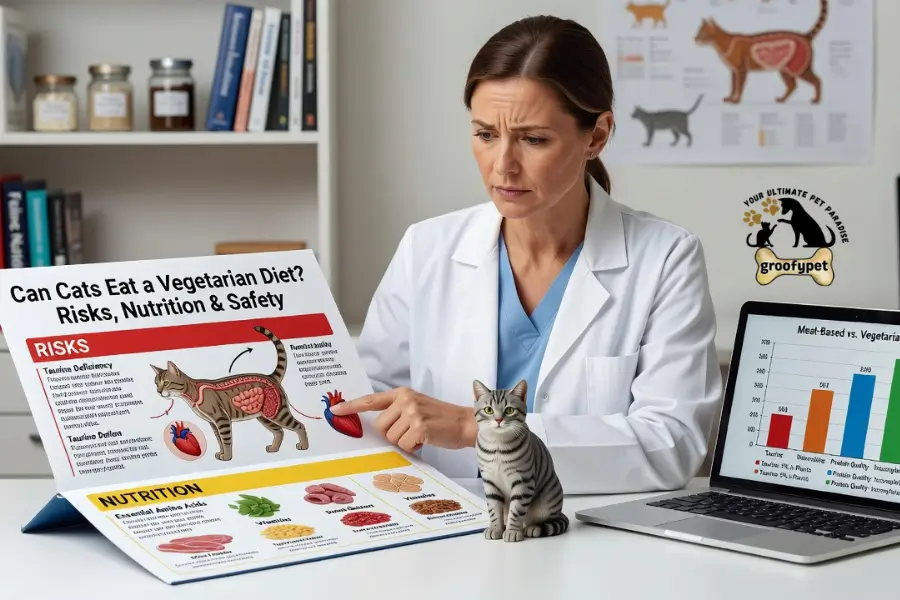
Can cats eat a vegetarian diet? Cats are obligate carnivores, which means their bodies naturally depend on nutrients commonly found in animal tissues. Unlike humans, cats cannot meet all their nutritional needs simply by eating a variety of vegetables, grains, and fruits. They require specific nutrients, including taurine, vitamin A, arachidonic acid, and certain essential amino acids.
Some commercially formulated vegetarian or plant-based cat foods contain added nutrients designed to meet feline nutritional requirements. However, their nutritional completeness, digestibility, and suitability for individual cats need careful consideration.
If you follow a vegetarian or vegan lifestyle, you may wonder whether your cat can follow the same diet. The answer requires understanding feline biology, essential nutrients, and the potential risks of an improperly balanced meat-free diet.
In this guide, we explain whether cats can eat a vegetarian diet, what nutrients they need, and how to make responsible feeding decisions.
Can Cats Eat a Vegetarian Diet Safely?
Cats can eat small amounts of certain plant-based foods, but that does not mean vegetables can replace their regular meals. Their bodies need specific nutrients in particular amounts to maintain normal health. A vegetarian diet excludes meat and fish but may contain eggs or dairy products. A vegan diet excludes all animal-derived ingredients, including eggs and dairy.
Both diets can create nutritional challenges for cats. Even when a commercial vegetarian cat food contains added vitamins and amino acids, its nutritional quality and digestibility matter. Cats need more than a list of nutrients printed on a package. They also need nutrients in forms their bodies can digest and use effectively. Veterinary professionals therefore advise caution when considering meat-free diets.
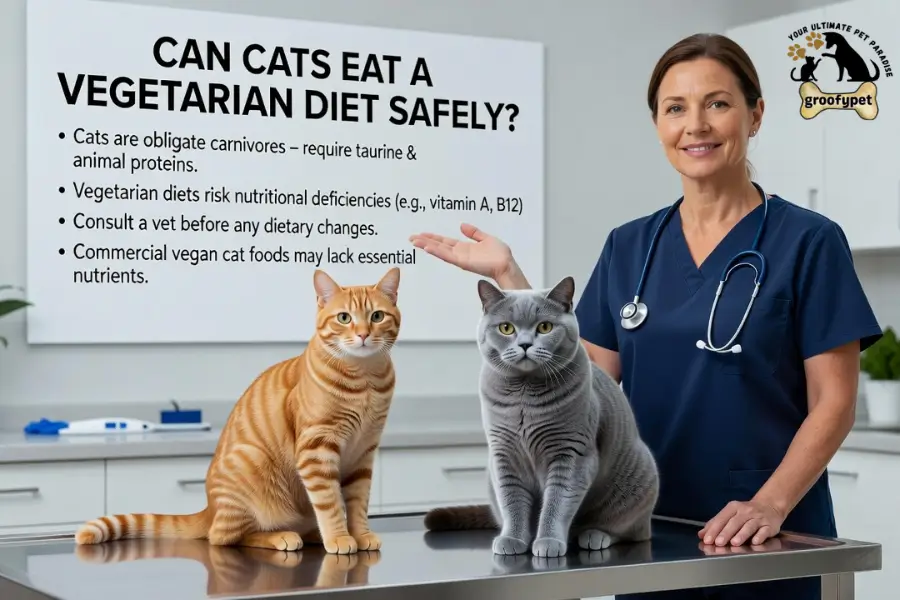
Important distinction: Cats are not physically unable to swallow or digest every plant ingredient. The concern is whether a plant-based diet can consistently provide everything they need throughout their lives.
Why Are Cats Obligate Carnivores?
Cats are called obligate carnivores because their bodies evolved to obtain essential nutrients from animal-based foods. Their digestive systems and metabolism differ from those of humans and many other animals. In the wild, cats hunt small animals such as rodents and birds. They consume muscle tissue, organs, and other parts of their prey. These foods naturally provide protein, fats, vitamins, and minerals.
Unlike humans, cats cannot produce enough of certain essential nutrients on their own. They must obtain them through a properly formulated diet.
Here are some reasons cats need special nutritional care:
- High protein requirements: Cats need substantial amounts of dietary protein to maintain muscles and support normal body functions.
- Unique amino acid needs: They require taurine, arginine, methionine, and other essential amino acids.
- Vitamin A requirements: Cats need preformed vitamin A rather than relying on converting plant beta-carotene.
- Fatty acid requirements: They need essential fatty acids, including arachidonic acid.
- Special metabolism: Cats use protein continuously for important metabolic processes.
These biological differences explain why a vegetarian diet designed for humans cannot automatically meet a cat’s nutritional requirements.
What Nutrients Do Cats Need From Their Diet?
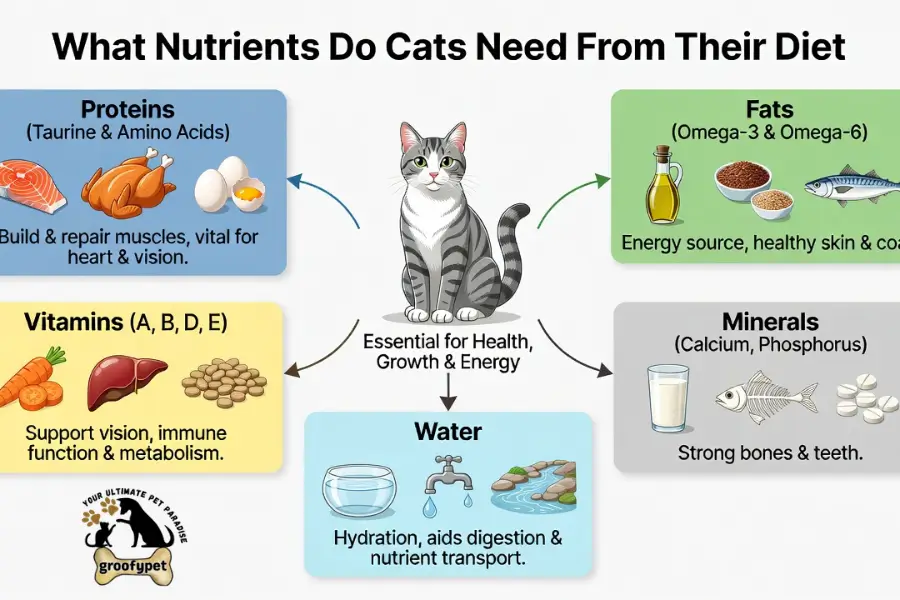
A healthy cat needs a balanced combination of proteins, fats, vitamins, minerals, and amino acids. Missing even one essential nutrient can affect normal body functions. When considering vegetarian cat food, it is important to understand the nutrients that require particular attention.
1. Taurine
Taurine is an essential amino acid that supports heart function, eyesight, digestion, and normal reproduction. Cats cannot produce enough taurine to meet their daily requirements. Animal tissues naturally contain taurine, while ordinary plant ingredients are not reliable sources. A lack of taurine can cause serious health problems, including dilated cardiomyopathy and retinal degeneration.
2. Vitamin A
Vitamin A supports eyesight, skin health, immune function, and normal growth. Cats require preformed vitamin A. Humans can convert beta-carotene from foods such as carrots into active vitamin A. Cats have limited ability to perform this conversion, so they need an appropriate dietary source of preformed vitamin A.
3. Vitamin B12
Vitamin B12, also called cobalamin, supports nerve function, red blood cell production, and normal metabolism. Animal-derived ingredients naturally provide vitamin B12. A properly formulated alternative diet would need to supply this nutrient in an appropriate form and amount.
4. Arachidonic Acid
Arachidonic acid is an essential omega-6 fatty acid involved in cell membranes, skin health, and normal body functions. Cats have limited ability to produce enough arachidonic acid from other fatty acids. This makes its dietary availability particularly important.
5. Arginine
Arginine is an essential amino acid that helps the body remove ammonia produced during protein metabolism. Cats have a high dietary requirement for arginine. Even a short-term deficiency can cause serious metabolic problems.
6. Methionine
Methionine is a sulfur-containing amino acid that supports protein production, metabolism, and normal tissue maintenance. Cats need sufficient methionine from their daily food. The overall amino acid balance matters, not simply the total amount of protein.
Can Cats Survive Without Eating Meat?
Cats require specific nutrients rather than particular ingredient names. In theory, a carefully formulated diet could provide essential nutrients through alternative ingredients and supplements. For example, manufacturers can add synthetic taurine, vitamins, minerals, and selected amino acids to commercial pet food.
However, this does not automatically make every meat-free diet suitable for cats. Nutritional adequacy depends on the quality of the formulation, nutrient availability, digestibility, manufacturing standards, and proper storage. There is also limited long-term evidence about the safety of feeding cats exclusively plant-based diets throughout their lives.
A cat might appear healthy for some time while developing an underlying nutritional problem. Therefore, eating normally, maintaining weight, or having a shiny coat does not prove that a diet is nutritionally complete. The safest approach is to discuss the proposed diet with a veterinarian before making any changes. A board-certified veterinary nutritionist can help assess whether a particular food meets your cat’s needs.
Is Vegetarian Cat Food Different From Vegan Cat Food?
Yes. Vegetarian and vegan cat food differ mainly in the ingredients they exclude. Vegetarian food does not contain meat or fish but may contain ingredients such as eggs and dairy products. Vegan food excludes all animal-derived ingredients.
However, neither label guarantees that a product contains the nutrients a cat needs.
| Feature | Vegetarian Cat Food | Vegan Cat Food |
|---|---|---|
| Meat | Excluded | Excluded |
| Fish | Usually excluded | Excluded |
| Eggs | May be included | Excluded |
| Dairy | May be included | Excluded |
| Plant proteins | May be included | Commonly included |
| Added taurine | May be included | May be included |
| Nutritional completeness | Depends on formulation | Depends on formulation |
Both types require careful nutritional evaluation. A vegetarian label does not automatically mean a food is healthier or safer than a vegan product.
Also, milk and cheese should not be used as substitutes for complete cat food. Many adult cats have difficulty digesting lactose, which can cause diarrhea and stomach discomfort.
What Are the Risks of Feeding Cats a Vegetarian Diet?
An improperly formulated vegetarian diet can expose cats to nutritional deficiencies and other health problems. These risks are particularly concerning when a cat receives the same unbalanced food for months or years.
Here are ten important risks cat owners should understand.
1. Taurine Deficiency
Taurine deficiency is one of the biggest nutritional concerns when feeding cats an unsuitable meat-free diet.Low taurine levels can damage the retina and affect the heart muscle. In severe cases, cats may develop dilated cardiomyopathy, a condition that makes it difficult for the heart to pump blood effectively.
2. Vitamin B12 Deficiency
A diet without an adequate source of vitamin B12 can affect normal nerve function, blood cell production, and digestion. Cats with nutritional deficiencies may experience weakness, poor appetite, weight loss, or digestive problems.
3. Inadequate Protein Intake
Cats need sufficient high-quality protein to maintain their muscles and support everyday metabolic functions. Some plant proteins have different amino acid profiles and digestibility compared with animal proteins. A poorly balanced diet may fail to provide enough usable protein.
4. Poor Amino Acid Balance
Protein contains amino acids that perform different jobs throughout the body.
A diet may contain a reasonable amount of total protein but still lack sufficient taurine, arginine, methionine, or other essential amino acids.
5. Vitamin A Deficiency
Cats cannot efficiently convert beta-carotene into active vitamin A. Feeding carrots, spinach, or other vegetables cannot replace the need for an appropriate source of preformed vitamin A.
6. Essential Fatty Acid Deficiency
Cats need specific fatty acids for healthy skin, normal cell function, and other important processes. A poorly formulated vegetarian diet may not provide enough arachidonic acid or other required fatty acids.
7. Digestive Problems
A sudden change in food ingredients or an unsuitable dietary composition may cause vomiting, loose stools, gas, or reduced appetite. Some cats may also struggle with particular plant ingredients.
8. Poor Nutrient Absorption
The presence of a nutrient on an ingredient list does not guarantee that the cat can absorb and use it effectively.Digestibility and nutrient availability are important considerations when evaluating plant-based cat food.
9. Weight and Muscle Loss
An inadequate diet may fail to provide enough calories, protein, or essential nutrients.Over time, a cat may lose body weight and muscle mass. This can affect energy levels, mobility, and overall health.
10. Heart and Eye Complications
Long-term nutritional deficiencies can affect important organs.Taurine deficiency is particularly concerning because it can contribute to heart disease and retinal damage. Some complications may become permanent if they are not identified and treated promptly.
Remember: These risks do not mean every commercial vegetarian product automatically causes deficiencies. They highlight why nutritional testing, appropriate formulation, and veterinary supervision are essential.
Can Kittens Eat a Vegetarian Diet?
Kittens have higher nutritional demands because their bodies are developing rapidly. They need sufficient calories, protein, essential amino acids, fats, vitamins, and minerals to support healthy growth.Feeding an unsuitable vegetarian diet during this stage can create serious nutritional concerns.
Young cats need proper nutrition for:
- Healthy bone development.
- Muscle growth.
- Brain development.
- Normal eyesight.
- Strong immune function.
- Healthy skin and coat.
- Proper organ development.
A kitten should receive food specifically formulated for growth or all life stages. Adult maintenance food may not provide the right nutritional balance for a growing kitten.If you are considering a vegetarian product for a kitten, consult your veterinarian before feeding it. Do not assume that a food suitable for adult cats is also appropriate for kittens.
How Can Cat Owners Check Whether Vegetarian Cat Food Is Nutritionally Complete?
If you are researching vegetarian cat food, do not make your decision based only on the product name or marketing claims.Look at the nutritional information and ask whether the product has been formulated and evaluated for feline nutritional requirements.
Here is a practical checklist.
| What to Check | Why It Matters |
|---|---|
| AAFCO nutritional statement | Identifies whether the food claims to meet recognized nutritional profiles or has passed a feeding trial |
| Life-stage suitability | Adult maintenance and kitten growth have different requirements |
| Taurine content | Supports normal heart and eye function |
| Protein quality | Helps maintain muscles and normal metabolism |
| Vitamin A | Cats require preformed vitamin A |
| Vitamin B12 | Supports normal nerve and blood cell function |
| Essential fatty acids | Support skin, cells, and other body functions |
| Manufacturer information | Helps assess formulation, testing, and quality control |
| Veterinary guidance | Helps evaluate your individual cat’s nutritional needs |
What Does an AAFCO Statement Mean?
The Association of American Feed Control Officials (AAFCO) develops nutritional model regulations and nutrient profiles used in the United States.Look for a nutritional adequacy statement explaining whether the food is formulated to meet AAFCO nutrient profiles or has been substantiated through appropriate feeding trials.
Check whether the statement covers your cat’s life stage.However, an AAFCO statement is not a guarantee that a specific vegetarian diet has been proven safe for every cat over its entire lifetime. It is one important part of evaluating commercial cat food.
You can also discuss the manufacturer’s nutritional testing, quality control, and feeding recommendations with your veterinarian.
Must Read : Can Cats Have Alfredo Sauce? Safety, Risks, and What to Do
What Should You Do If You Want to Avoid Feeding Meat to Your Cat?
Following a vegetarian or vegan lifestyle is a personal decision. However, cats have different nutritional needs from humans, and their food choices must support their natural biology.
If you want to avoid meat in your household, consider these practical steps.
1. Talk to a veterinarian first.
Explain your dietary preferences and ask about suitable feeding options. Your veterinarian can evaluate your cat’s age, weight, health history, and nutritional requirements.
2. Consult a veterinary nutritionist.
A board-certified veterinary nutritionist can assess the nutritional adequacy of a proposed diet and identify potential deficiencies.
3. Avoid homemade vegetarian recipes.
Vegetables, lentils, rice, beans, and dairy products cannot independently provide everything a cat needs. Adding random supplements does not guarantee a balanced meal.
4. Choose complete and balanced cat food.
Prioritize foods formulated specifically for cats and appropriate for their life stage. Do not rely on products marketed as natural, organic, or plant-based without checking their nutritional adequacy.
5. Monitor your cat’s health.
Regular veterinary examinations, weight checks, and nutritional assessments can help identify potential problems early.You can also explore animal-welfare-focused pet food companies and responsibly sourced animal ingredients if your concerns relate to animal welfare. Your cat’s nutritional needs should remain the priority.
Vegetarian Household vs. Carnivorous Cat: How Can Both Coexist?
Living with a cat does not mean you must change your personal dietary philosophy. However, it is important to recognize that humans and cats have different nutritional requirements.Humans can obtain essential nutrients from a wide range of plant foods when their diets are properly planned. Cats have more specific biological requirements and depend on particular nutrients that are naturally abundant in animal tissues.
For example, humans can convert beta-carotene into active vitamin A, but cats cannot do this efficiently. Similarly, cats need dietary taurine because their bodies cannot produce enough to meet their needs.If you are uncomfortable purchasing conventional meat-based cat food, discuss your concerns with a veterinary nutritionist. You can also investigate responsibly sourced ingredients and animal-welfare certifications.
The goal is to respect your personal choices without compromising your cat’s health.
Can Cats Get Taurine From Plant-Based Ingredients?
Ordinary vegetables, fruits, grains, and legumes are not reliable sources of taurine for cats.Taurine naturally occurs in animal tissues. However, commercial pet food manufacturers can use synthetic taurine to supply this essential nutrient.This is one reason why the nutritional composition of a food matters more than simply looking at its ingredients.
Nevertheless, adding taurine alone does not make a vegetarian diet complete. Cats also need appropriate amounts of protein, essential amino acids, vitamins, minerals, and fatty acids.A properly formulated diet must address all these requirements together.
Five Questions to Ask Before Buying Vegetarian Cat Food
Before purchasing a meat-free cat food product, consider asking the manufacturer or your veterinarian these questions:
- Is this food complete and balanced for cats? Check whether it has an appropriate nutritional adequacy statement.
- Is it suitable for my cat’s life stage? A growing kitten has different nutritional needs from an adult cat.
- Does it provide sufficient taurine? Ask about the amount and nutritional testing.
- Has the food undergone nutritional testing? Ask whether the manufacturer conducts laboratory analysis and appropriate feeding trials.
- Can my veterinarian evaluate this product? Share the full nutritional information with a veterinary professional before making a decision.
These questions can help you look beyond attractive packaging and understand what your cat will actually receive from its food.
What If Your Cat Accidentally Eats Only Plant-Based Food for a Day?
If your cat accidentally eats a small amount of plant-based food for one day, there is usually no reason to assume that it will immediately develop a nutritional deficiency.Nutritional deficiencies generally become a concern when a cat repeatedly receives an inadequate diet over time. However, the safety of an accidental meal also depends on the ingredients.
Some human foods contain onion, garlic, excessive salt, or other ingredients that can harm cats.If your cat eats an unfamiliar food, check its ingredients and contact your veterinarian if it contains potentially toxic substances or your cat develops symptoms.Do not confuse a one-time dietary incident with feeding an exclusively vegetarian diet over several months.
Also Read : Can Cats Eat Beef ? A Vet-Backed Guide to Safe Feeding
Signs Your Cat May Not Be Getting Proper Nutrition
A nutritionally unbalanced diet may affect your cat’s appearance, behavior, and overall health.
Watch for these possible warning signs:
- Unexplained weight loss: Your cat may lose weight despite eating regularly.
- Reduced appetite: Your cat may become less interested in food.
- Muscle loss: The body may appear thinner, particularly around the back and legs.
- Dull coat: Fur may become dry, rough, or less healthy-looking.
- Low energy: Your cat may sleep more or show less interest in normal activities.
- Digestive changes: Vomiting or diarrhea may develop.
- Weakness: Your cat may have difficulty jumping, walking, or playing.
These symptoms do not automatically indicate a vegetarian diet deficiency. Other health problems can cause similar changes.If you notice these signs, arrange a veterinary examination. Seek prompt veterinary attention if your cat develops severe weakness, breathing difficulties, sudden vision problems, or stops eating.
Remember that cats can hide signs of illness. Regular veterinary checkups are important even when your pet appears healthy.
Frequently Asked Questions
Can cats live on a vegetarian diet?
Cats have specific nutritional requirements that make vegetarian feeding challenging. Although specially formulated meat-free foods may provide added nutrients, their nutritional adequacy and long-term suitability need careful evaluation by a veterinarian.
Can cats survive without eating meat?
Cats need essential nutrients rather than specific ingredient names. However, meeting all their nutritional requirements without animal-derived ingredients is challenging, and long-term safety remains an important concern.
Is vegan cat food safe for cats?
Not every vegan cat food is nutritionally complete. Some products may contain added taurine, vitamins, and amino acids, but their nutritional quality and digestibility must be carefully assessed.
Do cats need animal protein?
Cats need high-quality, digestible protein and specific amino acids. Animal-based ingredients naturally supply many of these nutrients, making them an important part of traditional feline nutrition.
Can kittens eat vegetarian food?
Kittens require carefully balanced nutrition for growth and development. An unsuitable vegetarian diet can create serious nutritional problems. Always consult a veterinarian before considering alternative diets for kittens.
Why do cats need taurine?
Taurine supports normal heart function, eyesight, digestion, and reproduction. Cats cannot produce enough taurine themselves, so they must obtain sufficient amounts through their daily diet.
Is plant-based protein enough for cats?
Plant proteins can contribute amino acids, but their digestibility and amino acid profiles differ from animal proteins. A properly formulated diet must supply all essential amino acids in appropriate amounts.
What happens if a cat does not eat meat?
If a cat receives an inadequate diet, it may develop nutritional deficiencies affecting its heart, eyes, muscles, and other organs. The risk depends on the nutrients missing from its food.
Conclusion
So, can cats eat a vegetarian diet? The answer is more complicated than a simple yes or no. Cats are obligate carnivores with unique nutritional requirements that make meat-free feeding difficult.Although specially formulated vegetarian and vegan cat foods may contain added nutrients, their nutritional completeness, digestibility, and long-term suitability deserve careful attention.
If you follow a vegetarian lifestyle, you can still be a responsible cat owner without expecting your pet to follow the same diet. Focus on providing complete and balanced nutrition that supports your cat’s health at every life stage.Before making dietary changes, consult your veterinarian or a board-certified veterinary nutritionist. Your cat’s health, nutritional needs, and well-being should always come first.