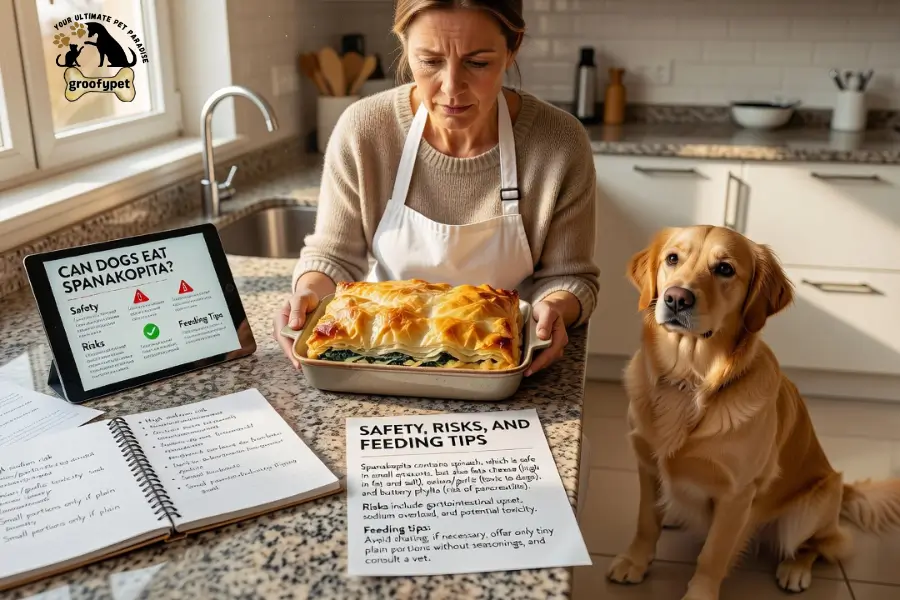
Can Dogs Eat Spanakopita? No, dogs should not eat traditional spanakopita. This Greek spinach pie often contains onion, garlic, feta cheese, salt, and buttery or oily pastry. Onion and garlic are especially dangerous because they can damage a dog’s red blood cells and cause anemia.
Even though spinach is generally safe for many dogs in small, plain portions, spanakopita is not a suitable dog treat. The finished dish contains several ingredients that may upset your dog’s stomach or create more serious health risks.
If your dog has already eaten spanakopita, do not panic. The amount eaten and the recipe ingredients will help determine what to do next.
What Is Spanakopita?
Spanakopita is a traditional Greek savory pie made with spinach and feta cheese wrapped in thin phyllo pastry. It is commonly baked until the pastry becomes golden, crisp, and flaky.
Most traditional recipes include:
- Spinach
- Feta cheese
- Onion
- Garlic
- Olive oil or butter
- Phyllo pastry
- Salt and black pepper
- Fresh herbs such as dill or parsley
Some recipes also include eggs, lemon juice, or other seasonings. These ingredients give spanakopita its rich flavor, but they also make it unsuitable for dogs.The biggest concern is not the spinach. It is the combination of onion, garlic, salt, dairy, and added fat.
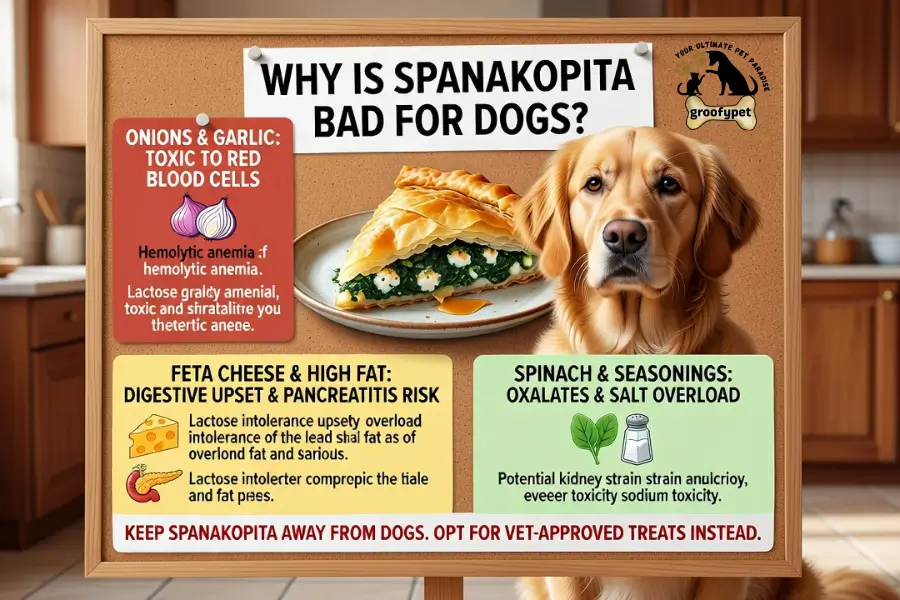
Why Is Spanakopita Bad for Dogs?
Traditional spanakopita is not recommended for dogs because it may contain ingredients that are toxic or difficult to digest. Here are the main concerns every dog owner should understand.
1. Onion Can Be Toxic to Dogs
Onion is one of the most concerning ingredients in spanakopita. It belongs to the Allium family, which also includes garlic, leeks, and chives.Onions contain compounds that can damage a dog’s red blood cells. This damage may lead to hemolytic anemia, a condition in which red blood cells break down faster than the body can replace them.
Cooked onion is still harmful. Baking or sautéing it does not make it safe for dogs. Even if you remove visible onion pieces, the remaining food may still contain onion compounds. For this reason, never offer traditional spanakopita to your dog.
2. Garlic Can Damage Red Blood Cells
Garlic is another ingredient that may appear in spanakopita recipes. It also belongs to the Allium family and can be toxic to dogs. Garlic exposure may cause oxidative damage to red blood cells. The risk depends on the amount consumed, the dog’s size, and the dog’s overall health.
Garlic poisoning symptoms may not appear immediately. A dog can seem normal at first and develop signs of illness later. If your dog eats spanakopita containing garlic, contact your veterinarian for advice instead of waiting for symptoms.
3. Feta Cheese May Upset Your Dog’s Stomach
Feta cheese gives spanakopita its creamy, salty flavor. However, it is not an ideal ingredient for dogs. Feta contains lactose, fat, and sodium. Some dogs have difficulty digesting dairy products, which can lead to digestive discomfort.
Possible problems include
- Diarrhea
- Gas
- Bloating
- Vomiting
- Stomach discomfort
Feta is also relatively salty. Eating too much sodium can increase thirst and may cause more serious problems in large amounts.
4. Phyllo Pastry Contains Extra Fat and Carbohydrates
Phyllo pastry is made with flour and water, but recipes often use oil or butter between its thin layers.This pastry provides little nutritional value for dogs. Its added fat and refined carbohydrates can contribute to unnecessary calories and digestive upset.
Large amounts of fatty food may also trigger pancreatitis in susceptible dogs. Pancreatitis is inflammation of the pancreas and can cause vomiting, abdominal pain, and loss of appetite.
5. Salt Can Cause Health Problems
Spanakopita often contains added salt, and feta cheese adds even more sodium. A small accidental taste may not cause a problem in every dog, but large amounts of salt can be dangerous. Excessive sodium intake can cause increased thirst, vomiting, diarrhea, weakness, tremors, and seizures in severe cases.
Dogs with heart or kidney conditions may need to follow specific sodium limits. Avoid sharing salty human foods with them.
6. Olive Oil and Butter Add Extra Fat
Olive oil and butter are commonly used to prepare spanakopita. Although small amounts of certain cooking fats are not automatically toxic, too much fat can upset a dog’s digestive system. Dogs that eat fatty foods may develop loose stools, vomiting, or abdominal discomfort.
High-fat meals can also increase the risk of pancreatitis, particularly in dogs with a history of this condition.
Read This : Can I Give My Dog Greek Yogurt Every Day? Safety and Serving Guide
Can Dogs Eat the Spinach in Spanakopita?
Yes, many healthy dogs can eat a small amount of plain, cooked spinach. Spinach contains fiber and nutrients such as vitamins A, C, and K, along with minerals. However, spinach should be served without onion, garlic, butter, heavy salt, or rich sauces. Spinach also contains oxalates, naturally occurring compounds that can contribute to certain urinary stones in susceptible dogs.
Dogs with a history of calcium oxalate stones or kidney problems should not receive spinach without veterinary guidance. Remember that plain spinach and spanakopita are two different foods. The fact that spinach can be suitable in small amounts does not make the complete Greek pie safe.
Can Dogs Eat Spanakopita Without Onion and Garlic?
Removing onion and garlic reduces two major poisoning risks, but it does not automatically make spanakopita a good food for dogs.
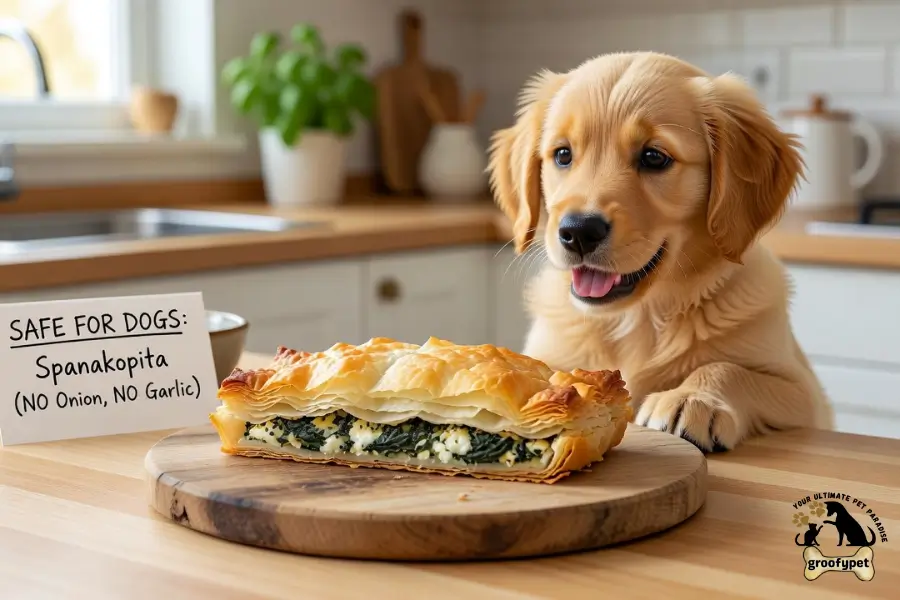
The remaining ingredients may still contain:
- Feta cheese with high sodium and fat.
- Phyllo pastry with added butter or oil.
- Seasonings that may irritate the stomach.
- Excess calories with little nutritional benefit.
If you prepare a dog-friendly version, use plain cooked spinach in a small amount and avoid feta, onion, garlic, excess oil, and salt. There is no need to wrap it in pastry.
A simpler, unseasoned vegetable treat is a better choice.
What Happens If a Dog Eats Spanakopita?
The effects depend on the recipe, the amount eaten, and your dog’s size. A small dog may face greater exposure from the same piece than a large dog. Some dogs may experience mild digestive upset. However, spanakopita containing onion or garlic can create a more serious poisoning risk.
Watch for these possible symptoms:
- Vomiting
- Diarrhea
- Loss of appetite
- Excessive thirst
- Abdominal discomfort
- Weakness or unusual tiredness
- Pale gums
- Rapid breathing
- Dark or reddish urine
Onion and garlic poisoning can cause delayed symptoms because red blood cell damage may take time to become noticeable. Do not wait for symptoms if you know your dog ate spanakopita containing onion or garlic. Contact your veterinarian promptly.
What Should You Do If Your Dog Eats Spanakopita?
If your dog steals a piece from your plate, take these steps:
- Remove the remaining food: Prevent your dog from eating any more spanakopita.
- Check the ingredients: Look for onion, garlic, onion powder, garlic powder, and other seasonings.
- Estimate the amount: Work out how much your dog ate and when it happened.
- Contact your veterinarian: Explain the ingredients, estimated amount, and your dog’s weight.
- Follow professional advice: Your veterinarian can decide whether your dog needs monitoring, an examination, or treatment.
Do not try to make your dog vomit unless a veterinarian specifically tells you to. Avoid giving milk, oil, or home remedies to treat possible poisoning.
What If Your Dog Ate Different Amounts?
| Situation | What you should do |
|---|---|
| Your dog only licked a little | Check the recipe and contact your vet if it contained onion or garlic |
| Your dog ate a small piece | Contact your veterinarian with the ingredient list and estimated amount |
| Your dog ate several pieces | Seek veterinary advice promptly, even if your dog seems normal |
| The recipe contained onion or garlic | Contact your veterinarian immediately for guidance |
| Your dog shows weakness, pale gums, or breathing problems | Seek emergency veterinary care |
There is no guaranteed safe amount of traditional spanakopita for dogs. The risk depends on its ingredients and your dog’s individual circumstances.
How Do Vets Treat Onion or Garlic Poisoning?
Treatment depends on how much your dog ate, how recently the exposure happened, and whether symptoms have developed. If the ingestion happened recently, a veterinarian may consider safely removing some of the food from the stomach. This should only be done under professional supervision.
Your vet may also recommend blood tests to check red blood cells and look for signs of anemia. Some dogs need fluids, supportive care, or hospitalization. Severe cases may require a blood transfusion. Never attempt to treat suspected onion or garlic poisoning at home. Early veterinary advice can help prevent complications.
Safe Alternatives to Spanakopita for Dogs
If your dog wants a small snack while you enjoy spanakopita, offer a simple food that does not contain harmful seasonings.
| Food | Can dogs eat it? | How to serve |
|---|---|---|
| Plain cooked spinach | Yes, in small amounts | Cook without onion, garlic, salt, or butter |
| Green beans | Yes | Serve plain and cooked or fresh |
| Cucumber | Yes | Wash and cut into small pieces |
| Plain pumpkin | Yes | Serve cooked and unseasoned |
| Carrots | Yes | Offer small, bite-sized pieces |
| Plain cooked chicken | Yes | Remove bones, skin, and seasonings |
Introduce new foods gradually and keep treats within 10% of your dog’s daily calorie intake. Your dog’s regular complete and balanced food should provide most of their nutrition.
Also Read : Can Dogs Eat Pickled Ginger? Risks and Safety Tips
Frequently Asked Questions
Can dogs eat frozen spanakopita?
No. Frozen spanakopita is not a safe dog treat. Freezing does not remove onion, garlic, excess salt, or fat from the recipe. Check the ingredient label if your dog accidentally eats some.
Can dogs eat homemade spanakopita?
Traditional homemade spanakopita is also unsuitable for dogs. Homemade recipes commonly contain onion, garlic, feta, and oil. Making it at home does not remove these risks.
Can dogs eat spanakopita with cooked spinach?
Plain cooked spinach may be suitable for some dogs in small amounts. However, spanakopita with cooked spinach may still contain onion, garlic, cheese, and pastry. Avoid feeding the finished dish.
Is cooked onion safe for dogs?
No. Cooked onion can still damage a dog’s red blood cells. Raw, cooked, dried, and powdered onion can all cause toxicity. Merck Veterinary Manual+1
How long after eating spanakopita can symptoms appear?
Digestive symptoms may appear earlier, but signs of anemia from onion or garlic poisoning can take several days to develop. A dog appearing normal immediately after eating it does not rule out poisoning. Merck Veterinary Manual+1
Can puppies eat spanakopita?
No. Puppies should not eat spanakopita because of its potentially toxic ingredients, salt, dairy, and added fat. Give your puppy food designed for its age and nutritional needs.
What should I do if my dog ate spanakopita with garlic powder?
Contact your veterinarian promptly. Garlic powder is a concentrated form of garlic, and it can contribute to Allium poisoning. Share the ingredient label, your dog’s weight, and the estimated amount eaten. Merck Veterinary Manual+1
Key Takeaways
- Dogs should not eat traditional spanakopita.
- Onion and garlic can damage red blood cells and cause anemia.
- Cooked onion and garlic are not safe alternatives.
- Feta cheese may cause digestive problems because of its salt, fat, and lactose.
- Phyllo pastry adds unnecessary fat and carbohydrates.
- Plain cooked spinach may be suitable for some healthy dogs in small amounts.
- Contact your veterinarian if your dog eats spanakopita containing onion or garlic.
- Never induce vomiting or use home remedies without veterinary instructions.
Final Thoughts
So, can dogs eat spanakopita? The safest answer is no. Although spinach itself may be suitable for some dogs, traditional Greek spinach pie contains several ingredients that make it a poor choice.Onion and garlic are the biggest concerns because they can cause red blood cell damage and anemia. Cheese, salt, and fatty pastry create additional digestive risks.
Keep spanakopita on your plate and choose simple dog-friendly snacks instead. If your dog accidentally eats some, check the ingredients and contact your veterinarian for advice.