
Greek yogurt is a popular snack for people, but is it safe to share with your dog every day? Many dog owners use it as a food topper or an occasional treat because it contains protein and calcium.
Can I give my dog Greek yogurt every day? Some healthy dogs can tolerate small amounts of plain, unsweetened Greek yogurt, but daily feeding is not necessary for every dog. Greek yogurt contains less lactose than many regular yogurts, yet it can still cause digestive problems in sensitive dogs. The best approach is to choose the right product, start with a tiny serving, and consider your dog’s health, weight, and dietary needs.
Can I Give My Dog Greek Yogurt Every Day?
You may be able to give your dog a small amount of plain Greek yogurt regularly if your dog tolerates dairy and has no medical restrictions. However, there is no need to make it a daily habit. Greek yogurt can provide extra protein and calcium, but a complete and balanced dog food should already supply the nutrients your pet needs.
Adding yogurt every day may increase calorie intake without offering a meaningful nutritional advantage. Some dogs digest yogurt comfortably, while others develop gas, loose stools, or diarrhea. The difference depends on the individual dog and the amount consumed.
If you want to offer Greek yogurt, start with a tiny taste and watch your dog for digestive changes over the next 24 hours. If your dog has a sensitive stomach, pancreatitis, a food allergy, or a prescribed diet, ask your veterinarian before introducing it.
The bottom line: Plain Greek yogurt can be an occasional treat for dogs that tolerate it. Daily feeding should depend on your dog’s individual needs rather than a fixed routine.
Is Greek Yogurt Safe for Dogs?
Yes, plain, unsweetened Greek yogurt is generally safe for many dogs in small amounts. However, not every product sold as Greek yogurt is suitable for pets. Greek yogurt is made by straining yogurt to remove some of its liquid whey. This process creates a thicker texture and usually produces a yogurt with more protein per serving than regular yogurt. It also generally contains less lactose, although the amount varies by product.
Lactose is a natural sugar found in milk. Some dogs have difficulty digesting it, which can lead to stomach discomfort after eating dairy products.Before feeding Greek yogurt, check the ingredient list carefully. Choose a product without added sugar, chocolate, or artificial sweeteners. Pay special attention to xylitol, a sweetener that is toxic to dogs.
Also consider the fat content. A low-fat, plain variety may be a better choice than a rich, full-fat product, especially for dogs that need to limit dietary fat.According to the American Kennel Club, yogurt may be suitable for some dogs, but lactose intolerance and excess fat are important concerns.
Benefits of Greek Yogurt for Dogs
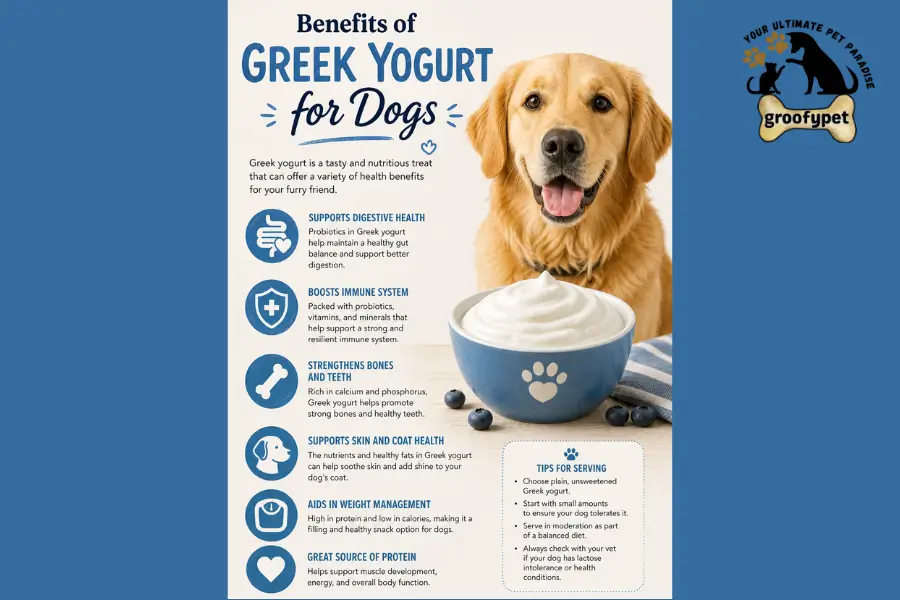
Greek yogurt offers several nutrients that can make it a useful occasional treat. However, its benefits should not be exaggerated because dogs eating a balanced diet usually do not need extra yogurt.
1. Provides Protein
Protein supports muscle maintenance, tissue repair, and other normal body functions. Greek yogurt is often higher in protein than regular yogurt because of its straining process.A small spoonful can provide some additional protein. Still, yogurt should not replace the protein sources in your dog’s regular food.
2. Contains Calcium
Calcium supports normal bones, teeth, and muscle function. Greek yogurt contains calcium, although the amount varies between brands.Dogs eating a complete and balanced diet generally receive the calcium they need. Adding yogurt is not necessary to prevent calcium deficiency and should not be used as a substitute for a veterinarian-approved diet.
3. May Provide Live Cultures
Some Greek yogurts contain live bacterial cultures. Certain beneficial bacteria, called probiotics, may support digestive health when the appropriate strains are used.However, not every live culture provides a proven probiotic benefit for dogs. Human yogurt is not the same as a veterinary probiotic product, and the benefits can vary by bacterial strain and amount.
If your dog needs probiotics for a specific health concern, ask your veterinarian which product is appropriate.
4. Makes a Convenient Treat
Plain Greek yogurt has a soft texture that many dogs enjoy. You can offer a small amount from a spoon, spread a thin layer on a lick mat, or mix it into your dog’s regular food.It can also make a simple frozen treat in warm weather. Just remember that freezing yogurt does not remove lactose, sugar, or excess fat.
5. Adds Variety to Treat Time
Some dogs enjoy a different texture or taste during training and enrichment activities. A tiny amount of plain Greek yogurt can provide variety without requiring a large serving. Keep portions small and count yogurt toward your dog’s daily treat calories. Your dog does not need yogurt to enjoy a healthy and varied routine.
Risks of Feeding Greek Yogurt to Dogs Every Day
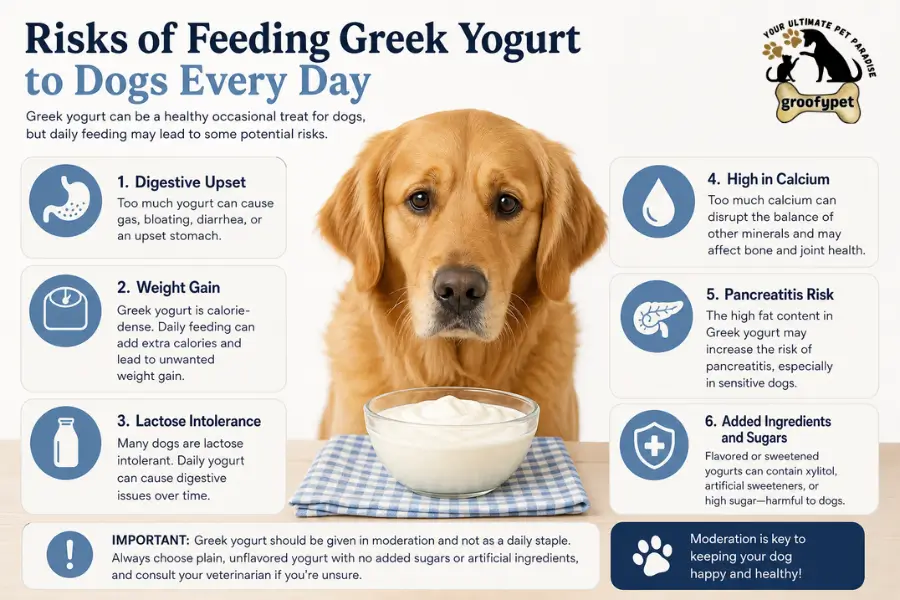
Greek yogurt may suit some dogs, but regular feeding can create problems if the product or serving size is unsuitable.
1. Lactose Intolerance
Some dogs have difficulty digesting lactose after puppyhood. Although Greek yogurt generally contains less lactose than regular yogurt, it is not necessarily lactose-free. A dog that is sensitive to dairy may experience gas, stomach discomfort, or diarrhea after eating even a small amount.
2. Diarrhea and Loose Stools
Too much yogurt can upset your dog’s digestive system. Lactose, fat, added sugar, or other ingredients may contribute to loose stools. Stop feeding yogurt if your dog develops diarrhea. Contact your veterinarian if symptoms are severe, persistent, or accompanied by vomiting, blood in the stool, weakness, or signs of dehydration.
3. Gas and Bloating
Digestive bacteria break down food in the intestines, and poorly tolerated dairy can contribute to excess gas. You may notice more flatulence, stomach noises, or discomfort after your dog eats yogurt. If these signs appear repeatedly, stop offering yogurt rather than continuing to test larger servings.
4. Vomiting or Food Sensitivity
Some dogs may vomit after eating yogurt, especially if they consume too much or cannot tolerate dairy. Other dogs may have an individual sensitivity to an ingredient in the product. A single mild episode may have several possible causes, so do not assume yogurt is always responsible. Repeated vomiting, marked lethargy, or an inability to keep water down warrants prompt veterinary attention.
5. Unwanted Weight Gain
Greek yogurt contains calories even when it is plain and unsweetened. Feeding it daily in addition to regular meals and treats can gradually increase your dog’s total calorie intake.This matters particularly for dogs that are overweight or have low activity levels. Measure portions instead of allowing your dog to lick large amounts directly from the container.
6. High Fat
Full-fat Greek yogurt may contain more fat and calories than low-fat varieties. Large amounts of high-fat food can upset the stomach and may contribute to pancreatitis in susceptible dogs. Pancreatitis is inflammation of the pancreas that can cause abdominal pain, vomiting, and loss of appetite. Dogs with a history of pancreatitis should not receive high-fat treats unless their veterinarian approves them.
7. Added Sugar
Flavored and sweetened yogurts can contain unnecessary sugar. Regularly feeding sugary foods may make weight management harder and can contribute to poor dietary habits. Choose plain yogurt without added sugar or sweet toppings. Naturally occurring milk sugar is different from added table sugar, but lactose can still cause digestive problems.
8. Dangerous Artificial Sweeteners
Never give your dog Greek yogurt containing xylitol. This sweetener can cause a dangerous drop in blood sugar and potentially severe liver damage in dogs. Xylitol may appear in some sugar-free products. Read the entire ingredient list rather than relying on labels such as “light,” “diet,” or “no added sugar.”
If your dog eats yogurt containing xylitol, contact an emergency veterinarian or animal poison control service immediately. Do not wait for symptoms to appear or try to make your dog vomit unless a veterinary professional instructs you to do so.
What Type of Greek Yogurt Is Best for Dogs?
The safest choice is usually plain, unsweetened Greek yogurt with a simple ingredient list. Check the label before every new product because ingredients and formulations can differ.
| Type of Greek yogurt | Suitable for dogs? | What to know |
|---|---|---|
| Plain, unsweetened, low-fat | Often suitable in small amounts | Usually a practical first choice for dogs that tolerate dairy |
| Plain, unsweetened, full-fat | Sometimes | Contains more fat and calories; avoid without veterinary guidance for dogs needing fat restriction |
| Vanilla-flavored | Best avoided | Often contains added sugar or other flavoring ingredients |
| Fruit-flavored | Best avoided | May contain added sugar, sweeteners, or unsuitable fruit ingredients |
| Sugar-free yogurt | Check carefully; avoid if ingredients are uncertain | Some products contain xylitol |
| Chocolate yogurt | Do not feed | Chocolate can be toxic to dogs |
| Lactose-free, plain yogurt | May be easier to tolerate | Still check the fat content and other ingredients |
Do not assume that a yogurt is safe simply because it says “Greek” on the packaging. The ingredients, fat content, and your dog’s ability to tolerate dairy matter more than the brand name.
How Much Greek Yogurt Can a Dog Eat?
There is no single serving size that works for every dog. The appropriate amount depends on body size, weight, calorie needs, health conditions, and tolerance to dairy.
Use the following table as a cautious starting point for a healthy adult dog trying plain, unsweetened Greek yogurt for the first time. These are illustrative trial portions, not established daily allowances.
| Dog size | Illustrative first serving | Feeding advice |
|---|---|---|
| Small dogs | About 1 teaspoon or less | Start with a lick or a tiny taste |
| Medium dogs | About 1 teaspoon | Begin small and monitor digestion |
| Large dogs | About 1 teaspoon | Increase only if appropriate for the individual dog |
Even a large dog should start with a small taste when trying a new food. A bigger body does not guarantee that a dog can digest dairy comfortably.If your dog tolerates the first serving, you can discuss a suitable portion and frequency with your veterinarian. Avoid increasing the amount simply because your dog enjoys the taste.
Treats, including yogurt, should generally make up no more than 10% of a dog’s daily calories. The remaining calories should come from a complete and balanced diet. For dogs with weight problems or medical conditions, an even smaller treat allowance may be appropriate.
Can I Give My Dog One Spoonful of Greek Yogurt?
A small spoonful of plain Greek yogurt may be reasonable for some healthy dogs, depending on their size and tolerance. However, a tablespoon may be too much for a very small dog or a dog that is sensitive to dairy.Start with less than a spoonful and watch for symptoms. Remember that one tablespoon is three teaspoons, so small portions can add up quickly.
Also Read : Can Dogs Eat Sourdough Starter? Safety, Risks, and What to Do
Can Puppies Eat Greek Yogurt?
Puppies may tolerate a tiny amount of plain Greek yogurt, but it is not a necessary part of their diet. Their main source of nutrition should be a complete and balanced puppy food designed to support healthy growth.Puppies have specific calorie and nutrient requirements. Too many extras can reduce the amount of balanced food they eat or upset their developing digestive systems.
If you are considering yogurt for a puppy, ask your veterinarian first, particularly if your puppy has diarrhea, vomiting, food sensitivities, or another health concern. Avoid introducing several new foods at once because it becomes harder to identify the cause of a reaction.
Can Greek Yogurt Help Dogs With Diarrhea?
Greek yogurt is not a proven treatment for diarrhea in dogs. Although some products contain live cultures, that does not mean they will resolve a digestive problem.Yogurt may actually make diarrhea worse in a dog that struggles to digest lactose. Added sugar and high fat content can also be unhelpful when the digestive system is already upset.
If your dog has diarrhea, provide access to fresh water and contact your veterinarian for advice on the right feeding approach. Seek prompt veterinary care if diarrhea is severe or persistent, contains blood, or occurs with repeated vomiting, weakness, pain, or dehydration.
Puppies, older dogs, and dogs with existing medical conditions may need earlier assessment. Do not use Greek yogurt as a substitute for veterinary treatment or a prescribed diet.
How to Introduce Greek Yogurt Into Your Dog’s Diet
A careful introduction can help you identify whether your dog tolerates yogurt.
- Step 1: Read the ingredient label. Choose plain, unsweetened Greek yogurt without xylitol, chocolate, or unnecessary additives.
- Step 2: Check the fat content. A plain, low-fat option may be more suitable for some dogs than a full-fat product.
- Step 3: Offer a tiny taste. Start with a small lick or approximately one teaspoon, depending on your dog’s size and health.
- Step 4: Watch for changes. Monitor your dog over the next 24 hours for gas, loose stools, vomiting, or discomfort.
- Step 5: Stop if symptoms appear. Do not continue feeding yogurt to see whether the reaction gets worse. Ask your veterinarian for guidance if symptoms are concerning.
- Step 6: Consider the whole diet. If you want to feed yogurt regularly, account for its calories and ask your veterinarian whether it suits your dog’s nutritional needs.
Can Dogs Eat Greek Yogurt With Other Foods?
Yes, some dogs can enjoy a small amount of plain Greek yogurt mixed with their regular food. You can also spread a thin layer on a lick mat or use it in a simple frozen treat.Keep the recipe uncomplicated. Avoid chocolate, grapes, raisins, macadamia nuts, and any ingredient containing xylitol. These additions can introduce serious risks or unnecessary calories.
If you want to add fruit, check that it is safe for dogs and offer it in an appropriate amount. Never assume a commercial fruit yogurt contains only dog-safe ingredients.For a simple treat, freeze a small amount of plain Greek yogurt in a suitable mold. Offer an appropriately sized portion and supervise your dog while eating.
When Should You Avoid Giving Your Dog Greek Yogurt?
Greek yogurt is not suitable for every dog. Avoid feeding it or seek veterinary advice first if your dog has any of the following concerns:
- A history of pancreatitis: Your dog may need a carefully controlled fat intake.
- Recurring digestive problems: Dairy may worsen diarrhea, gas, or vomiting.
- A food allergy or elimination diet: Extra ingredients can interfere with identifying food triggers.
- Obesity: Yogurt adds calories that may make weight management harder.
- A prescribed veterinary diet: Unapproved extras can interfere with the purpose of the diet.
- A medical condition requiring dietary restrictions: Your veterinarian can assess whether yogurt is appropriate.
If your dog is healthy and tolerates dairy, a small amount may be acceptable. However, there is no nutritional need to give Greek yogurt every day when your dog’s regular diet is already balanced.
Read This : Why Do Dogs Stretch When They See You? 10 Reasons Explained
Greek Yogurt for Dogs: Myths vs. Facts
- Myth: Every dog can digest Greek yogurt.
- Fact: Greek yogurt usually contains less lactose than regular yogurt, but some dogs still experience digestive upset.
- Myth: More yogurt means more probiotics.
- Fact: A larger serving adds calories and may cause stomach problems. Yogurt cultures also vary, and more is not automatically better.
- Myth: Greek yogurt cures diarrhea.
- Fact: Yogurt is not a proven treatment for diarrhea and may worsen symptoms in dogs that are sensitive to dairy.
- Myth: Sugar-free yogurt is always healthier for dogs.
- Fact: Some sugar-free products contain xylitol, which is toxic to dogs. Always read the ingredient list.
- Myth: Greek yogurt can replace dog food.
- Fact: Yogurt does not provide all the nutrients dogs need in the right proportions. Feed a complete and balanced dog food as the foundation of your dog’s diet.
Frequently Asked Questions
Can I give my dog Greek yogurt every day?
Some dogs can tolerate small amounts of plain Greek yogurt, but daily feeding is not necessary. Consider your dog’s size, calorie needs, digestive tolerance, and medical history. If you want to make yogurt a regular treat, ask your veterinarian about an appropriate portion and frequency.
How much Greek yogurt can I give my dog?
Start with a tiny taste or approximately one teaspoon, adjusting for your dog’s size and health. This is an initial trial amount, not a universal daily allowance. Watch for digestive symptoms and count yogurt toward the calories your dog receives from treats.
Is Greek yogurt better than regular yogurt for dogs?
Plain Greek yogurt generally contains more protein and less lactose per serving than regular yogurt because it is strained. However, the exact nutritional content varies by product. Neither type is suitable for every dog, and both should be plain, unsweetened, and free from xylitol.
Can Greek yogurt cause diarrhea in dogs?
Yes. Lactose, excess fat, added sugar, or individual food sensitivity may cause diarrhea. Stop feeding yogurt if your dog develops loose stools. Contact a veterinarian if symptoms persist, become severe, or occur with vomiting, blood in the stool, weakness, or dehydration.
Can dogs eat Greek yogurt with probiotics?
Some dogs can eat plain Greek yogurt containing live cultures. However, the cultures in human yogurt are not necessarily proven to provide specific health benefits for dogs. If your dog needs probiotic support, your veterinarian can recommend a suitable canine product.
Is fat-free Greek yogurt safe for dogs?
Plain, unsweetened fat-free Greek yogurt may be suitable for some dogs in small amounts. Check the label for xylitol and other unsuitable ingredients. Fat-free does not mean lactose-free, and some products contain added sugar or sweeteners.
Final Thoughts
Can I give my dog Greek yogurt every day? The answer depends on your dog’s health, digestive tolerance, and overall diet. Plain, unsweetened Greek yogurt may be a suitable occasional treat for some dogs, but daily feeding is not essential.Choose a simple product, check the label carefully, and begin with small amount.
Avoid yogurt containing xylitol, and be cautious with high-fat varieties if your dog has a history of pancreatitis or needs a restricted diet.If your dog develops digestive symptoms or has a medical condition, speak with your veterinarian before offering yogurt again. A complete and balanced diet, appropriate portions, and careful treat choices remain the foundation of good canine nutrition.
Raw Dog Food Calculator by Breed: Find the Right Portion for Your Dog