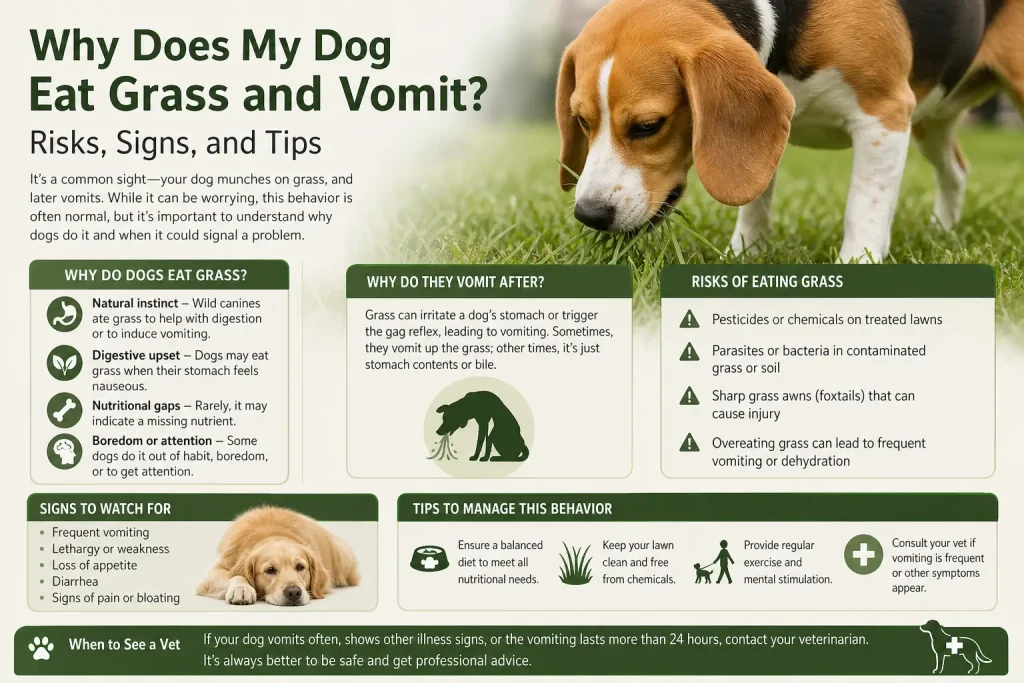
Have you ever watched your dog eat grass outside and then throw up a few minutes later? This behavior can be confusing, especially when your dog seems perfectly healthy afterward. So, why does my dog eat grass and vomit?
Dogs may eat grass because they enjoy its taste, feel curious, or follow a natural grazing habit. Some dogs may also eat grass when they feel nauseated. Eating large amounts of grass can irritate the stomach and trigger vomiting.
The important thing is to watch how your dog behaves before and after vomiting. A single episode in an otherwise healthy dog may be less concerning than repeated vomiting, weakness, abdominal pain, or other unusual symptoms.
In this guide, you will learn why dogs eat grass and throw up, when to worry, what you can safely do at home, and how to help prevent the behavior.
Why Does My Dog Eat Grass and Vomit?
There is no single explanation for every dog that eats grass and vomits. Some dogs graze because they enjoy the taste or texture, while others may have digestive discomfort. In some cases, swallowing grass may contribute to vomiting rather than relieve an existing problem.
Here are the most common explanations to consider.
1. Your Dog May Have an Upset Stomach
One possible reason your dog eats grass and vomits is nausea or digestive discomfort. Dogs cannot tell us when their stomach feels uncomfortable, so owners may notice changes in behavior instead.
A nauseated dog may lick its lips, swallow repeatedly, drool, refuse food, or appear restless. Some dogs also start eating grass shortly before vomiting.
However, grass eating alone cannot confirm that your dog has an upset stomach. If this behavior happens frequently or comes with other symptoms, a veterinarian can help identify the underlying cause.
2. Eating Too Much Grass cause Vomiting
Some dogs nibble a few blades of grass, while others gulp down large mouthfuls. Eating a substantial amount quickly may irritate the digestive tract and contribute to vomiting.
Your dog may bring up grass mixed with food, stomach fluid, or mucus. This can happen shortly after grazing, although the timing does not prove that grass was the only cause.
If your dog regularly eats large quantities of grass and vomits afterward, supervise outdoor time and discourage excessive grazing. Repeated vomiting should be discussed with a veterinarian.
3. Your Dog Simply Enjoys Eating Grass
Not every dog that eats grass is unwell. Some dogs enjoy its fresh taste, texture, or smell. Others explore their surroundings by chewing different plants and objects.
If your dog occasionally eats a little grass but remains active, eats normally, and shows no other symptoms, the behavior may simply be a habit.
Still, prevent your dog from eating grass that may contain chemicals, parasites, or other harmful substances.
4. Your Dog May Be Hungry or Following a Feeding Routine
Some dogs graze outdoors when they are hungry or when their usual feeding schedule changes. Others may eat grass between meals because they have developed the habit. Hunger does not automatically explain vomiting, however. A dog that vomits repeatedly before meals may have an underlying digestive issue that requires attention.
Feed a complete and balanced dog food suitable for your pet’s age and nutritional needs. If vomiting happens regularly around mealtimes, discuss the pattern with your veterinarian before changing portion sizes or feeding frequency.
5. Boredom or Curiosity May Encourage Grass Eating
Dogs use their mouths to explore their environment. A dog that spends long periods outside without much activity may chew grass simply because it is available. Puppies and energetic dogs may be especially interested in investigating new textures and smells.
Boredom may explain grass chewing, but it does not necessarily explain vomiting. If your dog throws up repeatedly, do not assume the behavior is purely psychological. Try supervised play, interactive toys, sniffing games, and short training sessions to provide more mental stimulation.
Also Read : How to Care for a Dog: A Complete Beginner Guide
6. Your Dog May Have a Digestive Health Problem
Grass eating and vomiting can sometimes occur alongside gastrointestinal conditions. These may include stomach inflammation, food-related irritation, intestinal parasites, or other digestive disorders. Some medical conditions, including pancreatitis and intestinal obstruction, can also cause vomiting. These problems cannot be diagnosed from grass eating alone.
Pay attention to additional signs, such as:
- Reduced appetite or refusal to eat.
- Diarrhea or changes in stool.
- Unusual tiredness or weakness.
- Abdominal discomfort.
- Weight loss.
- Repeated vomiting.
If your dog develops these symptoms, arrange veterinary assessment. Seek emergency care for severe symptoms, suspected poisoning, or signs of an intestinal blockage.
7. Your Dog May Have Eaten Contaminated Grass
Grass can carry risks beyond the plant itself. Lawns and outdoor areas may contain pesticides, herbicides, fertilizers, animal waste, or infectious organisms. If your dog vomits after eating grass in an unfamiliar area, consider whether it could have swallowed something harmful.
Chemical exposure may cause vomiting, drooling, diarrhea, weakness, or other symptoms, depending on the substance and amount involved.
If you suspect your dog has eaten chemically treated grass or another toxic substance, contact a veterinarian or animal poison service immediately. Do not wait for additional symptoms, and do not try to induce vomiting unless a veterinary professional specifically instructs you to do so.
Is It Normal for Dogs to Eat Grass and Throw Up?
Occasional grass eating is common, and a single vomiting episode does not always indicate a serious illness. However, vomiting should not automatically be considered normal just because it happens after grazing.
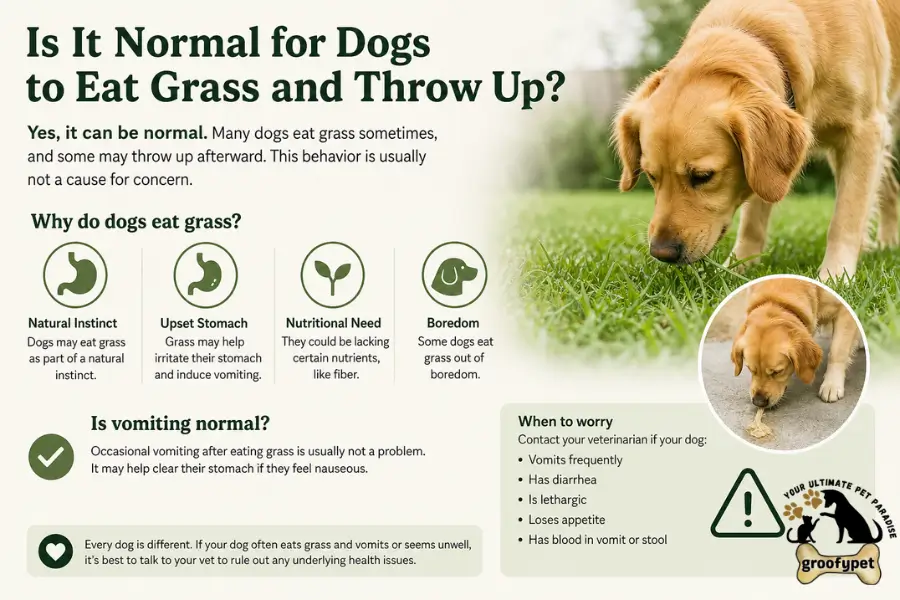
The context matters.
- Grass eating without vomiting: Often a normal behavior when your dog otherwise seems healthy.
- One vomiting episode: May have a temporary cause, but monitor your dog carefully for other symptoms.
- Repeated grass eating followed by vomiting: May indicate ongoing nausea, irritation, or another problem that deserves veterinary attention.
- Vomiting with lethargy or abdominal pain: Requires prompt veterinary assessment.
- Vomiting with a swollen abdomen or repeated unsuccessful retching: An emergency that requires immediate veterinary care.
A dog that seems normal after one episode may need less urgent attention than a dog that continues vomiting or becomes weak. Nevertheless, contact your veterinarian if you are unsure, especially if your dog is very young, elderly, or has an existing health condition.
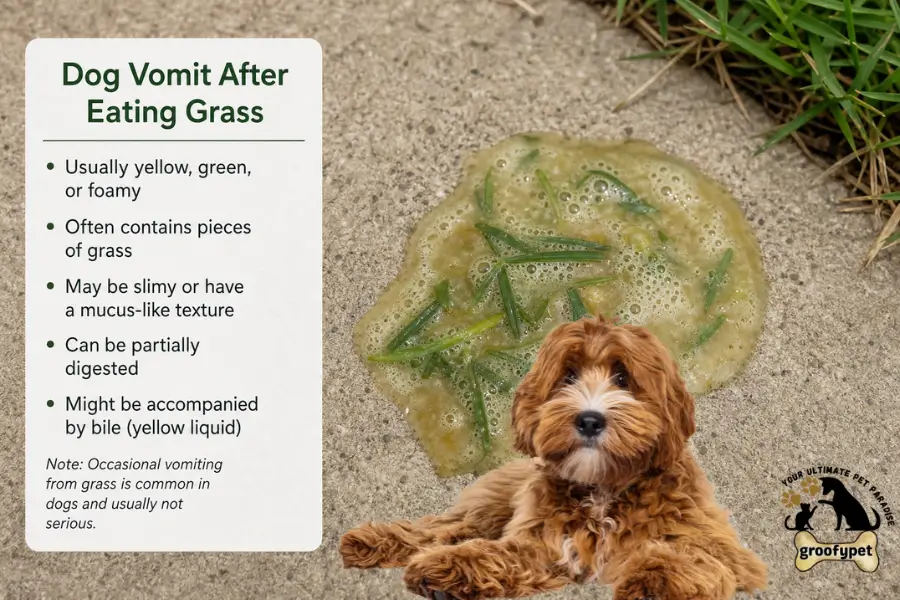
What Does Dog Vomit After Eating Grass Look Like?
The appearance of your dog’s vomit may provide useful information, but it cannot establish a diagnosis by itself.
Grass Mixed With Food
You may notice green blades mixed with partially digested food. This can happen when your dog vomits shortly after eating grass or a meal. A single episode may be less concerning if your dog quickly returns to normal. Repeated vomiting, however, warrants veterinary advice.
Yellow or Foamy Vomit
Yellow vomit often contains bile, a digestive fluid that can enter the stomach. It may appear when the stomach is empty, but it can also occur with gastrointestinal problems. Do not assume that yellow vomit is harmless simply because your dog has been eating grass. Consider the frequency of vomiting and whether your dog has other symptoms.
Clear Fluid or Mucus
Clear fluid or mucus may appear when a dog vomits stomach fluid or saliva. Several conditions can cause this appearance. If your dog repeatedly brings up clear fluid or cannot keep water down, seek veterinary advice promptly.
Blood or Dark, Coffee-Ground-Like Material
Blood in vomit or material that resembles coffee grounds can indicate bleeding in the digestive tract. Contact a veterinarian urgently if you notice either of these signs. Do not rely on home treatment to manage possible gastrointestinal bleeding.
Also Read : How Much Water Should a Small Dog Drink a Day?
When Should I Worry About My Dog Eating Grass and Vomiting?
Knowing when to seek help is more important than identifying the exact reason for grass eating at home.
Use this table as a general guide.
| What You Notice | Possible Explanation | What You Should Do |
|---|---|---|
| Occasional grass eating without symptoms | Normal grazing or curiosity | Supervise and monitor |
| One vomiting episode, followed by normal behavior | Temporary digestive irritation or another cause | Monitor closely and contact your vet if concerned |
| Vomiting happens repeatedly | Digestive illness or another underlying problem | Contact a veterinarian promptly |
| Vomiting with diarrhea or low energy | Illness or dehydration risk | Seek prompt veterinary assessment |
| Blood in vomit | Possible gastrointestinal bleeding | Obtain urgent veterinary care |
| Swollen abdomen with unsuccessful retching | Possible gastric dilatation-volvulus (GDV) | Go to an emergency veterinary hospital immediately |
| Vomiting after possible chemical exposure | Possible poisoning | Contact a veterinarian or animal poison service immediately |
| Cannot keep water down | Dehydration risk or serious illness | Seek urgent veterinary care |
Gastric dilatation-volvulus, commonly called bloat, can become life-threatening quickly. A swollen abdomen, restlessness, excessive drooling, and repeated attempts to vomit without producing anything are emergency warning signs.
Do not wait for all symptoms to appear before seeking help.
What Should I Do If My Dog Eats Grass and Vomits?
If your dog has vomited after eating grass, stay calm and assess its condition. The right response depends on the dog’s symptoms, age, medical history, and possible exposure to harmful substances.
Follow these steps.
Step 1: Stop Further Grass Eating
Gently move your dog away from the grass and supervise it. This helps prevent additional ingestion while you assess the situation.
Avoid treated lawns and areas where you cannot identify possible chemical exposure.
Step 2: Check Your Dog’s Behavior
Look for signs that your dog is recovering normally or becoming unwell.Check whether your dog is alert, walking normally, breathing comfortably, and responding as usual. Also look for repeated vomiting, drooling, diarrhea, abdominal discomfort, or unusual weakness.
If severe symptoms appear, seek emergency veterinary care.
Step 3: Offer Small Amounts of Water if Safe
If your dog is alert, can swallow normally, and is not actively vomiting, offer small amounts of fresh water.Do not force your dog to drink or allow it to gulp a large quantity at once. If it vomits again after drinking or cannot keep water down, seek urgent veterinary advice.
Never withhold water for a prolonged period without veterinary guidance.
Step 4: Avoid Giving Human Medications
Do not give your dog human anti-nausea medicines, painkillers, antacids, or home remedies unless a veterinarian recommends them.Some human medications can be dangerous to dogs, and the correct treatment depends on the cause of vomiting.
Step 5: Ask About Feeding
Do not immediately offer a large meal after vomiting. If your dog is otherwise healthy and the vomiting has stopped, ask your veterinarian when to offer food and what type is appropriate.Puppies, diabetic dogs, small or medically vulnerable dogs, and pets with ongoing symptoms may need specific instructions rather than a general fasting recommendation.
Step 6: Keep Track of Symptoms
Record when your dog ate grass, when vomiting started, how many times it happened, and what the vomit looked like.Note any changes in appetite, water intake, stool, energy, or behavior. This information can help your veterinarian assess possible causes.
How Can I Stop My Dog From Eating Grass and Vomiting?
You may not need to eliminate every instance of grass eating, but you should reduce unnecessary risks and address repeated vomiting.
Supervise Outdoor Time
Watch your dog when it explores the yard or walks through grassy areas. Redirect it from unknown plants, animal waste, and areas that may have been chemically treated.
Teach the “Leave It” Cue
Positive-reinforcement training can help your dog move away from grass when needed.Practice the cue in a quiet setting first. Reward your dog for looking away from grass and returning its attention to you.Avoid punishment, which may create stress without addressing the reason for the behavior.
Maintain a Consistent Diet
Feed your dog a complete and balanced diet appropriate for its life stage. Sudden food changes and table scraps may contribute to digestive upset in some dogs.If you suspect a food intolerance or nutritional problem, consult your veterinarian before changing diets or adding supplements.
Provide Exercise and Mental Enrichment
Daily walks, sniffing activities, play, and puzzle toys can help keep your dog occupied. These activities may reduce grass chewing that occurs out of boredom.However, enrichment will not treat an underlying medical problem. If vomiting continues, arrange a veterinary examination.
Monitor Repeated Grazing
If your dog suddenly starts eating much more grass than usual, pay attention to the change.Frequent grazing accompanied by vomiting, poor appetite, diarrhea, or weight loss deserves veterinary assessment. Your veterinarian may recommend tests based on your dog’s symptoms and medical history.
Why Does My Dog Eat Grass Every Day and Throw Up?
Daily grass eating does not necessarily mean your dog is ill. Some dogs develop a regular grazing habit because they enjoy the taste or texture.However, daily grass eating combined with repeated vomiting is a reason to investigate further.Possible explanations include ongoing nausea, digestive irritation, dietary problems, or another health condition. The exact cause cannot be determined from the behavior alone.
Keep track of when your dog eats grass and whether vomiting occurs before or afterward. Note any changes in food intake, stool, energy, or body weight.Schedule a veterinary appointment if the pattern continues, even if your dog seems normal between episodes. Seek urgent care if vomiting becomes frequent or is accompanied by pain, weakness, blood, or other serious symptoms.
How to Keep a Grass-Eating and Vomiting Log
A simple record can help you identify patterns and provide useful information during a veterinary visit.
| Detail to Record | Example |
|---|---|
| Time of grass eating | 9:00 a.m. |
| Time of vomiting | 9:10 a.m. |
| Number of episodes | One |
| Vomit appearance | Grass mixed with food |
| Recent meal | Normal breakfast |
| Water intake | Drank normally afterward |
| Energy level | Playing as usual |
| Other symptoms | None noticed |
| Possible exposure | Unknown public lawn |
These examples are illustrative, not a diagnosis or a guarantee that home monitoring is sufficient.If your dog has emergency symptoms, do not delay veterinary care to complete a log. Your dog’s safety comes first.
Frequently Asked Questions
Why does my dog eat grass and vomit afterward?
Your dog may eat grass because it enjoys the taste, follows a grazing habit, or feels nauseated. Swallowing large amounts of grass may also irritate the digestive tract. However, vomiting can have other causes, so repeated episodes or additional symptoms should be evaluated by a veterinarian.
Should I worry if my dog throws up after eating grass?
A single vomiting episode in an otherwise healthy dog may be less concerning than repeated vomiting. Monitor your dog closely and contact your veterinarian if symptoms return or your dog seems unwell. Blood, severe weakness, abdominal swelling, or unsuccessful retching requires urgent veterinary attention.
Do dogs eat grass because they have an upset stomach?
Some dogs may eat grass when they feel nauseated, but many dogs graze without showing signs of illness. Research has not established that dogs generally eat grass to make themselves vomit. Look at your dog’s overall behavior rather than assuming grass eating means an upset stomach.
Should I stop my dog from eating grass?
You should prevent your dog from eating grass that may be contaminated with pesticides, fertilizers, animal waste, or other harmful substances. Occasional grazing on a safe lawn may be harmless, but excessive eating should be discouraged. If grass eating is accompanied by repeated vomiting, speak with your veterinarian.
What should I feed my dog after vomiting?
Avoid immediately giving a large meal. If your dog is alert and vomiting has stopped, ask your veterinarian when to offer a small meal and what food is suitable. Puppies, diabetic dogs, and pets with ongoing vomiting or other medical problems may need individualized feeding instructions.
Why does my dog eat grass every day and throw up?
Daily grazing followed by repeated vomiting may reflect ongoing nausea, digestive irritation, dietary problems, or another medical condition. It does not identify the cause on its own. Arrange a veterinary examination, especially if your dog also has diarrhea, reduced appetite, weight loss, or low energy.
What does it mean if my dog eats grass and acts lethargic?
Grass eating followed by unusual tiredness can indicate that your dog is unwell. Possible causes include dehydration, gastrointestinal illness, poisoning, or another medical problem. Contact a veterinarian promptly, and seek emergency care if your dog is severely weak, collapses, has abdominal swelling, or continues vomiting.
Key Takeaways
- Grass eating is common in dogs and is not always a sign of illness.
- Some dogs vomit after eating grass, but the relationship does not prove that grass caused the problem.
- Eating large amounts of grass, contaminated grass, or foreign materials can create health risks.
- Repeated vomiting, poor appetite, diarrhea, or lethargy warrants veterinary attention.
- A swollen abdomen, unsuccessful retching, collapse, or suspected poisoning requires emergency care.
- Supervision, positive-reinforcement training, and a balanced diet can help reduce avoidable risks.
Final Thoughts
So, why does my dog eat grass and vomit? The answer may be as simple as a grazing habit or as important as an underlying digestive problem. Some dogs enjoy eating grass, while others may feel nauseated before they start chewing.
Pay attention to how often your dog vomits, whether the behavior is new, and whether other symptoms appear. Prevent access to potentially contaminated grass, avoid unapproved home remedies, and seek veterinary guidance when the problem continues.
Most importantly, do not assume repeated vomiting is harmless simply because your dog has eaten grass. When your dog’s behavior changes or emergency warning signs appear, professional veterinary care is the safest next step.