
Bringing a dog into your home is exciting, but how to care for a dog properly involves a lot more than filling a food bowl and offering the occasional walk. A dog’s health depends on a mix of good dog nutrition, regular dog exercise, mental stimulation for dogs, consistent dog grooming, routine veterinary checkups, and plenty of love and attention.
Whether you just adopted your first puppy or you’ve owned dogs for years, this guide breaks down every part of basic dog care into simple, practical steps. You’ll learn what a dog needs every single day, how care needs change with age, common mistakes to avoid, and when it’s time to call the vet. By the end, you’ll have a clear, realistic daily dog care routine you can actually stick to.
What Does a Dog Need Every Day?
Every dog, regardless of breed or age, needs the following on a daily basis:
- Nutritious food appropriate for their age, size, and activity level
- Fresh water available at all times
- Exercise to support physical health and burn energy
- Mental stimulation to prevent boredom and destructive behavior
- Regular bathroom breaks
- Rest and sleep in a comfortable, quiet space
- Attention and companionship from their owner
- Safe surroundings free of hazards
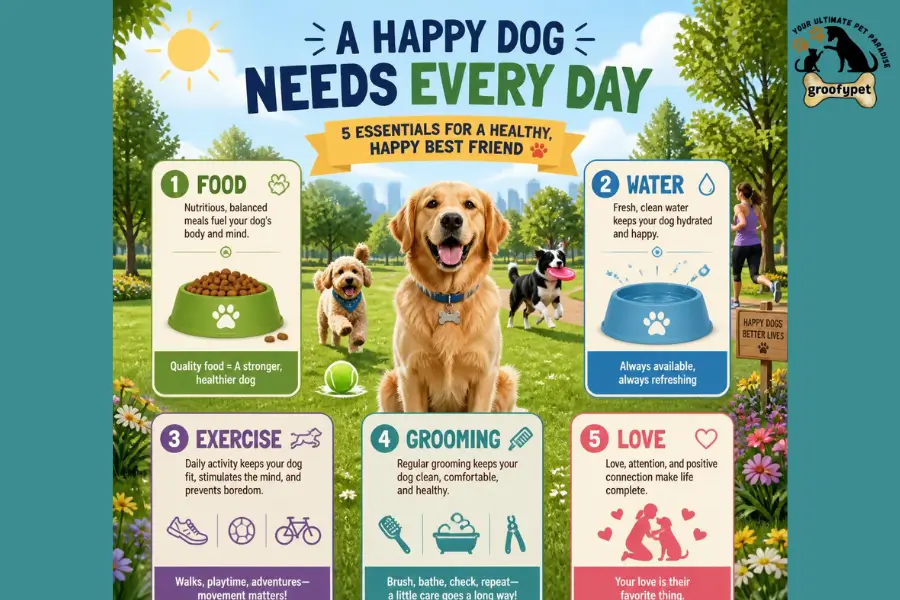
Meeting these basics consistently is the foundation of responsible dog ownership and forms the core of any solid daily dog care routine.
1. Feed Your Dog a Balanced Diet
Dog nutrition is one of the most important factors in your dog’s long-term dog health. The right diet depends on your dog’s age, size, breed, and activity level, so it’s worth taking time to choose healthy dog food that fits your dog specifically.
By life stage:
- Puppy nutrition — Puppies need calorie- and nutrient-dense food formulated for growth, usually fed in three to four smaller meals a day.
- Adult dog nutrition — Most adult dogs do well on one to two measured meals a day of a complete, balanced dog food.
- Senior dog nutrition — Older dogs often need fewer calories but more support for joints, digestion, and weight management.
Other feeding basics:
- Practice portion control to prevent obesity, which is one of the most common preventable health problems in dogs.
- Limit treats to a small percentage of daily calorie intake, and choose healthy options over table scraps.
- Avoid foods dogs should avoid, including chocolate, grapes, raisins, onions, garlic, xylitol (a common sugar substitute), and cooked bones.
- Introduce new food gradually. Sudden diet changes can cause digestive problems like vomiting or diarrhea, so transition over 5–7 days by mixing old and new food.
If your dog has allergies, sensitivities, or a medical condition, ask your veterinarian for a specific feeding plan rather than guessing.
2. Always Provide Fresh Water
Hydration affects nearly every system in a dog’s body, from digestion to joint health to temperature regulation. Fresh water for dogs should be available at all times, indoors and outdoors.
Tips to encourage healthy drinking habits:
- Change water at least once or twice a day and wash the bowl regularly to prevent bacteria buildup.
- Keep multiple water stations if you have a larger home or multiple pets.
- Bring water on walks, hikes, or car rides, especially in warm weather.
- Watch for signs of dehydration, such as dry gums, lethargy, or loss of skin elasticity, and contact your vet if you notice these signs.
3. Give Your Dog Regular Exercise
Dog exercise needs vary widely depending on breed, age, size, health status, and individual energy level. A young Border Collie and a senior Bulldog have very different exercise requirements, so it’s important to tailor activity to your specific dog.
Good ways to keep your dog active include:
- Walking — A daily walk supports physical health and gives your dog a chance to explore and sniff.
- Playing fetch — A simple way to burn energy in a smaller space.
- Running when appropriate — Suitable for healthy, high-energy breeds, but not recommended for puppies with developing joints or brachycephalic (flat-faced) breeds.
- Swimming when safe — Low-impact exercise that’s easy on joints, ideal for many dogs but always supervised.
- Interactive games — Tug-of-war, hide-and-seek, or agility-style obstacles at home.
As a general guideline, most adult dogs benefit from 30 minutes to 2 hours of activity daily, split across the day. If you’re unsure what’s appropriate for your dog’s breed or health condition, ask your veterinarian.
4. Provide Mental Stimulation
Physical exercise alone isn’t enough. Mental stimulation for dogs helps prevent boredom, anxiety, and destructive habits like chewing furniture or excessive barking.
Ways to keep your dog mentally engaged:
- Puzzle toys that dispense treats as the dog solves them
- Training games that reinforce commands in a fun way
- Scent games, like hiding treats around a room for your dog to find
- Food puzzles that slow down eating while engaging the brain
- Exposure to new environments, such as different parks or walking routes
- Interactive play sessions using toys that require problem-solving
A mentally tired dog is often calmer and better behaved than one that only gets physical exercise.
5. Keep Your Dog Clean and Groomed
Dog grooming does more than keep your dog looking good — it supports skin, coat, and overall dog hygiene.

| Grooming Task | General Guideline |
|---|---|
| Brushing | Several times a week; more often for long-haired or heavy-shedding breeds |
| Bathing | Every 4–8 weeks, or when visibly dirty or smelly |
| Nail trimming | Every 3–4 weeks, or when nails start clicking on hard floors |
| Ear care | Weekly check; clean as needed with a vet-approved solution |
| Coat care | Varies by breed — some need professional trims, others just brushing |
| Paw care | Check pads regularly for cuts, cracks, or embedded debris |
Grooming needs differ significantly between breeds. A short-haired Beagle needs far less maintenance than a long-coated Shih Tzu, so research your dog’s specific coat type and grooming requirements.
6. Take Care of Your Dog’s Teeth
Dental care for dogs is often overlooked, but poor oral hygiene can lead to pain, bad breath, and more serious health issues over time.
Basic dental care includes:
- Brushing your dog’s teeth several times a week with dog-specific toothpaste (never human toothpaste)
- Offering dental chews or dental-formula food designed to reduce plaque
- Scheduling professional dental cleanings as recommended by your vet
Signs of possible dental problems include bad breath, red or swollen gums, visible tartar buildup, difficulty chewing, or pawing at the mouth. If you notice these signs, schedule a veterinary dental exam rather than waiting.
7. Schedule Regular Veterinary Checkups
Routine veterinary checkups are essential for catching health problems early, when they’re often easier and less costly to treat. A typical preventive care schedule includes:
- Annual wellness exams for healthy adult dogs
- More frequent visits (every 6 months) for senior dogs
- Dog vaccinations based on your dog’s age, lifestyle, and local disease risk
- Parasite prevention for fleas, ticks, heartworm, and intestinal worms
- Dental examinations as part of routine visits
Every dog is different, and vaccination or preventive-care schedules should always be determined by your veterinarian based on your dog’s individual health, age, breed, and environment — not a generic online timeline.
8. Train and Socialize Your Dog
Dog training and dog socialization build a confident, well-behaved companion and strengthen the bond between you and your dog.
Key areas to focus on:
- Basic commands — sit, stay, come, and leave it are foundational for safety and communication.
- House training — Consistency and a predictable schedule are key for puppies and newly adopted dogs.
- Leash training — Teaching a dog to walk politely on a leash makes daily walks safer and more enjoyable.
- Positive reinforcement — Reward-based training (treats, praise, play) is widely recommended over punishment-based methods for building trust and lasting behavior change.
- Safe socialization — Gradual, positive exposure to new people, dogs, sounds, and environments, especially during puppyhood, helps prevent fear and aggression later in life.
Understanding normal dog behavior also helps you recognize when something is off, whether it’s stress, discomfort, or an underlying health issue.
9. Give Your Dog a Safe and Comfortable Home
Dog safety starts with the environment you provide at home.
- Set up a comfortable sleeping area — a supportive bed in a quiet, draft-free spot.
- Choose safe toys appropriate for your dog’s size and chewing strength; avoid small parts that could be swallowed.
- Maintain secure fencing or a securely enclosed yard to prevent escapes.
- Ensure proper identification — a collar with an ID tag plus a microchip, in case your dog gets lost.
- Remove toxic substances like certain plants, cleaning products, and pest control chemicals from areas your dog can access.
- Keep dangerous foods and household products — medications, chocolate, sugar-free gum, and cleaning supplies — well out of reach.
A safe home environment prevents many of the most common and most avoidable emergency vet visits.
10. Give Your Dog Love, Attention, and Companionship
Dogs are social animals, and emotional wellbeing matters just as much as physical health. Regular interaction, affection, play, and a consistent daily routine help dogs feel secure and reduce stress-related behaviors like excessive barking or destructive chewing.
Simple ways to strengthen your bond:
- Spend quality one-on-one time daily, even just 10–15 minutes
- Use a consistent routine for feeding, walks, and bedtime
- Pay attention to your dog’s body language and moods
- Include your dog in family activities when appropriate
How to Care for a Dog Based on Age
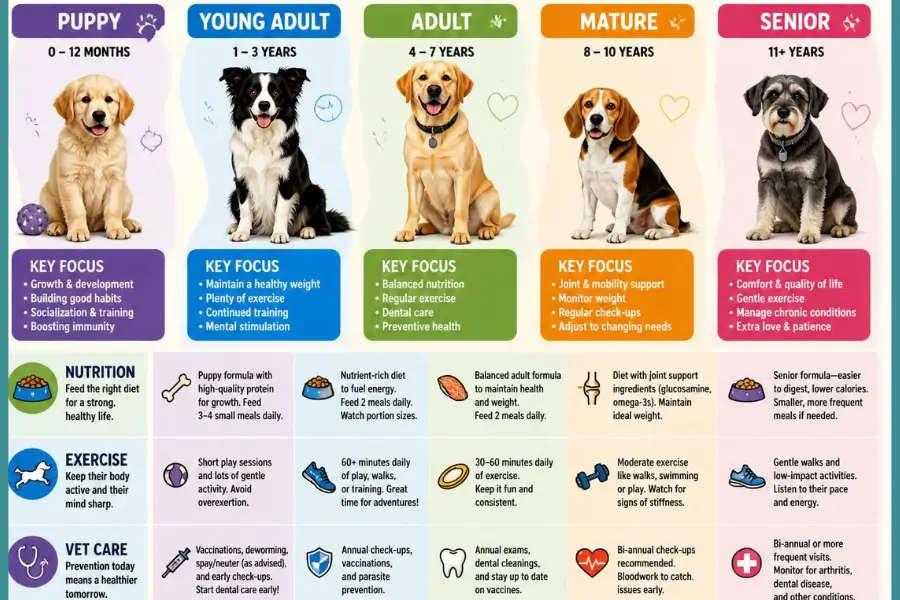
| Life Stage | Main Care Needs |
|---|---|
| Puppy | Nutrition, vaccinations, training, socialization, frequent bathroom breaks |
| Adult Dog | Balanced diet, exercise, preventive care, training, grooming |
| Senior Dog | Comfortable exercise, nutrition, veterinary monitoring, mobility support |
Puppy care focuses heavily on training, socialization, and frequent feeding and bathroom breaks. Senior dog care shifts toward joint support, weight management, and closer veterinary monitoring for age-related conditions.
Daily Dog Care Routine
Here’s an example of what a realistic daily dog care routine might look like:
Morning
- Bathroom break
- Breakfast and fresh water refill
- Short walk or play session
Daytime
- Mental stimulation (puzzle toy, training session, or scent game)
- Midday bathroom break if needed
- Rest time in a comfortable space
Evening
- Longer walk or exercise session
- Dinner
- Grooming check (teeth, coat, paws) as needed
- Quiet bonding time before bed
Adjust timing and activity levels based on your dog’s age, breed, and health status.
Common Dog Care Mistakes to Avoid
Even well-meaning owners can fall into these habits:
- Overfeeding — Leads to obesity and related health problems.
- Too many treats — Can unbalance an otherwise healthy diet.
- Lack of exercise — Contributes to weight gain and behavioral issues.
- Ignoring dental care — Can lead to painful, preventable dental disease.
- Skipping veterinary visits — Missed early warning signs of illness.
- Inconsistent training — Confuses dogs and slows learning.
- Poor grooming — Leads to matting, skin irritation, and discomfort.
- Leaving unsafe objects or foods within reach — A common cause of emergency vet visits.
- Ignoring changes in behavior — Behavior changes are often the first sign something is wrong.
Signs Your Dog May Need Veterinary Attention
Contact your veterinarian if your dog shows any of the following:
- Sudden loss of appetite
- Repeated vomiting
- Persistent diarrhea
- Difficulty breathing
- Severe lethargy
- Unusual pain or sensitivity to touch
- Sudden behavior changes
- Difficulty walking or standing
- Significant changes in drinking or urination
These signs can indicate a range of issues, from mild to serious, and only a veterinarian can properly evaluate and diagnose the cause. When symptoms are sudden, severe, or persistent, don’t wait schedule a veterinary evaluation promptly.
Frequently Asked Questions
How do you properly care for a dog?
Proper dog care means consistently meeting your dog’s physical and emotional needs: balanced nutrition, fresh water, regular exercise, mental stimulation, grooming, training, veterinary care, and companionship.
What are the basic needs of a dog?
The basic needs of a dog are nutritious food, fresh water, exercise, mental stimulation, a safe living space, rest, and social interaction with their owner.
How do I take care of my dog every day?
A daily routine should include feeding, fresh water, at least one walk or exercise session, mental stimulation, bathroom breaks, and quality time with your dog.
How often should I feed my dog?
Most adult dogs do well with one to two meals a day, while puppies typically need three to four smaller meals. Your veterinarian can recommend a specific feeding schedule.
How much exercise does a dog need?
Exercise needs vary by breed, age, and health, but most adult dogs benefit from 30 minutes to 2 hours of activity daily, adjusted to their individual energy level.
How often should a dog be groomed?
Brushing should happen several times a week, while bathing is typically needed every 4–8 weeks. Grooming frequency depends heavily on breed and coat type.
How often should a dog visit the vet?
Healthy adult dogs generally need one wellness exam per year, while senior dogs benefit from checkups every six months. Puppies need a more frequent schedule for vaccinations.
How can I keep my dog healthy and happy?
Combine balanced nutrition, regular exercise, mental stimulation, grooming, routine veterinary care, training, and consistent affection and attention.
What should a first-time dog owner know?
Learning how to care for a dog isn’t about doing everything perfectly it’s about building consistent habits around the things that matter most: dog nutrition, hydration, dog exercise, mental stimulation for dogs, dog grooming, dental care for dogs, dog training, safety, veterinary checkups, and companionship.
Every dog is an individual, so pay attention to your dog’s specific breed, age, and health needs, and don’t hesitate to consult your veterinarian for personalized guidance. With a steady routine and genuine attention to your dog’s wellbeing, you’ll be well on your way to giving them a healthy, safe, and happy life.
Can Dogs Eat Fonio? Benefits, Risks and Safe Serving Guide
Can Dogs Eat Whitebait? Safe or Risky? The Complete Feeding Guide