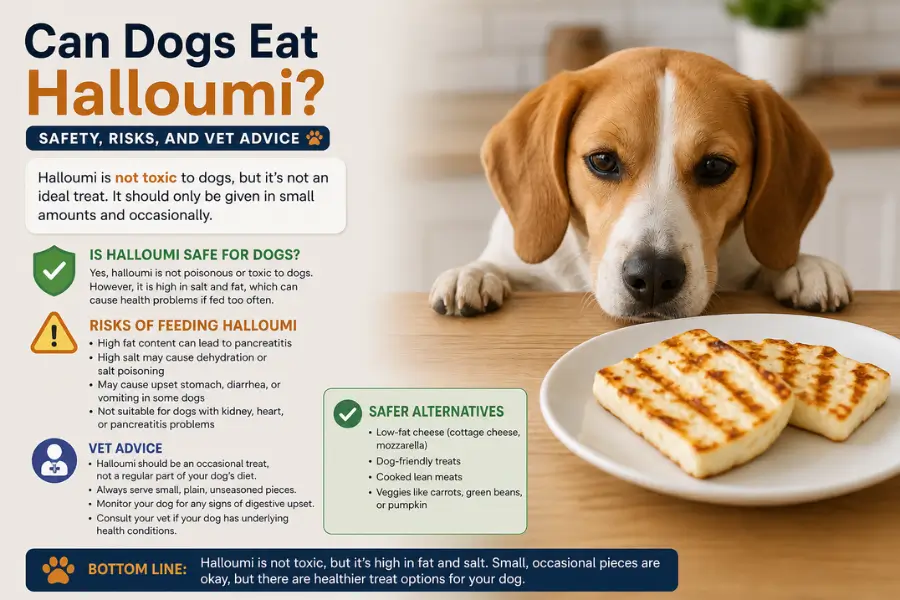
Can dogs eat halloumi? Not as a treat. Halloumi is salty and rich, so it’s best avoided. One tiny taste of plain halloumi usually won’t harm a healthy dog, but bigger portions, small dogs, health conditions, and seasoned halloumi raise the risk.
Halloumi smells wonderful when it hits a hot pan, and your dog knows it. If a slice fell on the floor or your dog snagged one off the cheese board, you probably want to know whether to worry.
Here’s the short version. Halloumi is a salty, fatty cheese, so it isn’t a smart snack for dogs. It isn’t poison the way chocolate is, though. What matters is how much your dog ate, how big your dog is, whether your dog has a health condition, and what else was on the cheese.
This guide covers the main risks, what to do after an accidental bite, when to call a vet, and better treats to offer instead.
Quick Safety Summary
| Food | Main concern | Recommendation | After accidental ingestion |
|---|---|---|---|
| Plain halloumi | High salt and fat | Don’t feed as a treat | Remove the rest, offer fresh water, and watch your dog |
| Grilled or fried halloumi | Salt, plus added oil | Avoid | Check what oil and seasonings were used |
| Halloumi with garlic or onion | Salt, fat, and ingredients that can harm red blood cells | Avoid | Call a vet or poison control line promptly |
| Large amount of any halloumi | Higher risk of salt problems and pancreatitis | Avoid | Call a vet, even if your dog seems fine |
Is Halloumi Safe for Dogs?
Halloumi isn’t toxic on its own, but it isn’t a good choice for regular feeding either. That difference matters.
A toxic food, such as grapes or chocolate, can hurt a dog even in small amounts. An unsuitable food is different. It causes trouble because of how much a dog eats, how often, or the dog’s health. Halloumi belongs in that second group. The ASPCA lists salty foods and fatty foods among the people foods to avoid, and both labels fit halloumi.
Halloumi is a firm, brined cheese that traditionally comes from Cyprus. It’s usually made from sheep’s milk, goat’s milk, cow’s milk, or a mix. It holds its shape under heat, which is why people grill and fry it. The brine and the cooking also give it that salty, rich flavor.
Three things drive the risk: salt, fat, and portion size. Lactose plays a smaller role. Dogs also don’t need halloumi for nutrition, which we’ll get to below.
Why Is Halloumi Bad for Dogs?
No single ingredient makes halloumi dangerous in every case. The problems add up, and they hit some dogs harder than others.
High Salt
Dogs need a little sodium, but too much can cause salt poisoning, also called sodium toxicity. Pet Poison Helpline explains that dogs often try to cope by drinking lots of water, and that signs can get worse when fresh water isn’t available. Possible signs include increased thirst, vomiting, weakness, tremors, and, in serious cases, seizures. The helpline notes that death is rare but possible.
The risk depends on the amount and the dog’s size. The same piece of cheese is a much bigger dose for a 6-pound dog than for an 80-pound dog. Dogs with kidney disease are more likely to be affected, because the kidneys help control the body’s salt and electrolyte balance.
There’s no single amount of halloumi that’s safe for every dog, so we won’t pretend there is.
High Fat
Rich food can upset a dog’s stomach. The ASPCA says fatty foods can cause vomiting and diarrhea and may lead to pancreatitis in some pets.
Pancreatitis means the pancreas, an organ that helps with digestion, becomes inflamed. It can be painful and may need hospital care. The Animal Medical Center of New York lists high-fat foods, including table scraps, and being overweight among the factors linked to pancreatitis in dogs.
Here’s a fair caveat. Pancreatitis often has no clear cause, and a veterinary review in the Journal of Veterinary Internal Medicine noted that researchers can’t yet draw firm conclusions about how much dietary fat matters. Still, vets commonly advise keeping fatty human foods away from dogs, especially dogs that have had pancreatitis before. Fat also adds calories, which can lead to weight gain over time.
Lactose Intolerance
Puppies make an enzyme called lactase to digest milk sugar, and many dogs make less of it as they grow. The ASPCA notes that pets don’t have much lactase, so dairy can cause diarrhea or other digestive upset.
Cheese usually contains less lactose than milk. The American Kennel Club (AKC) points out that dogs with severe lactose intolerance can still react to small amounts. Signs include gas, bloating, diarrhea, and vomiting.
Stomach Upset
Even without a true intolerance, a rich, salty cheese can upset a dog’s stomach. A new food, a greasy food, and a salty food all pile onto the same system.
Mild upset may look like soft stool, gurgling sounds, or a single episode of vomiting. Mild signs often settle down. Repeated vomiting, a tight or painful belly, or a dog who won’t eat needs a vet’s attention.
Seasonings and Cooking Ingredients
Plain halloumi and restaurant halloumi are not the same thing. Cooked halloumi often comes with garlic butter, onion, chili flakes, herb blends, honey, or rich sauces.
Garlic and onion belong to the allium family. The ASPCA lists onion, garlic, and chives as foods to avoid, and veterinary schools such as Texas A&M explain that these plants can damage a dog’s red blood cells. Garlic and onion powders count too. They hide in many seasoning mixes.
So a halloumi skewer with onion is a bigger problem than a plain cube.
Can Dogs Eat a Small Piece of Halloumi?
A tiny accidental bite of plain halloumi is usually less worrying than a full serving. Many healthy dogs will be fine. Some may get gas or loose stool.
That doesn’t make halloumi a good reward. If you want a treat for training, pick something lean and plain instead.
The One-Bite Versus Whole-Serving Comparison
Quantity matters, and so does body size. Picture a large dog and a small dog that each eat the same cube of halloumi. The cube is a small share of the large dog’s body weight. For the tiny dog, it’s a much bigger share, so the salt and fat hit harder.
Now picture the same tiny dog eating a whole slice or a plate of grilled halloumi left on a low table. That’s a different situation. A small taste and a full portion are not the same exposure, even though both involve the same cheese.
Dogs That Need Extra Caution
Dogs with kidney disease, heart disease, pancreatitis, or a prescribed low-sodium diet need extra care. For these dogs, even a small amount of a salty, fatty food may cause problems. Call your vet for advice if one of them gets into halloumi.
What Happens If a Dog Eats Halloumi?
What happens depends on the dog and the situation. None of these outcomes is guaranteed.
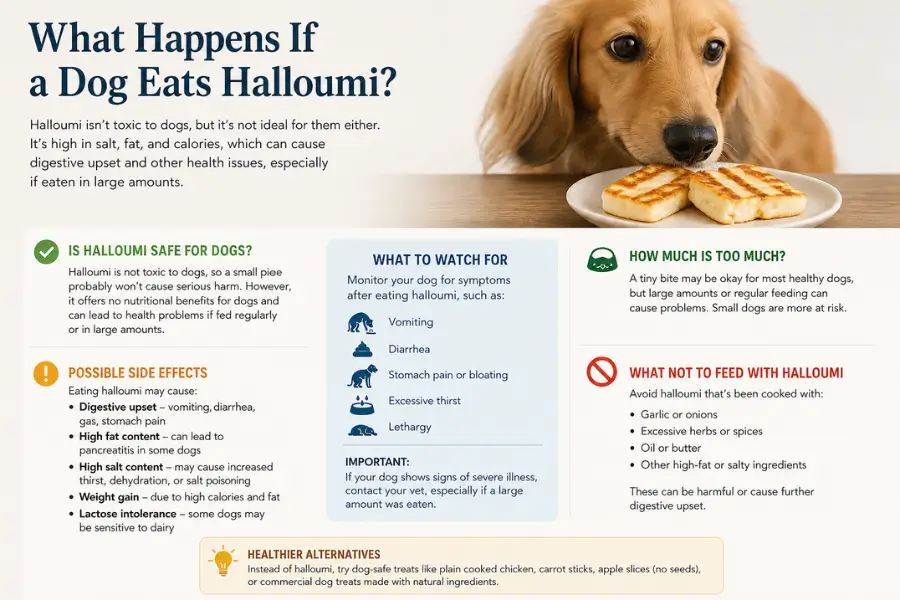
- A tiny bite of plain halloumi: Your dog may show no symptoms at all.
- A larger serving: Your dog may develop digestive upset, along with a bigger dose of sodium and fat.
- A large amount: The risk of salt-related illness or pancreatitis goes up, especially for small or at-risk dogs.
- Halloumi with garlic or onion: The ingredients bring their own toxicity concerns on top of the salt and fat.
The dog’s weight, health history, the ingredients, and the amount eaten all shape the outcome.
The Halloumi Ingredient Check
Before you decide how worried to be, look at what else was on the cheese:
- Garlic or onion: Check for fresh, powdered, or granulated forms, including in marinades and seasoning blends.
- Heavy seasoning: Spice mixes and salt rubs add sodium and other unknowns.
- Oil or butter: Frying and basting add fat.
- Sauces and dips: Rich or sweet sauces may bring extra salt, fat, or sugar substitutes. Check the label if the sauce came from a jar.
If you can’t tell what was in the dish, say so when you call your vet.
What Should You Do If Your Dog Eats Halloumi?
Stay calm and work through these steps.
- Remove the remaining cheese. Keep your dog from eating any more.
- Estimate how much your dog ate and check the ingredients. Note your dog’s weight too. Keep the package or recipe handy.
- Make fresh water available. Don’t force your dog to drink.
- Contact a veterinarian promptly if your dog ate a large amount, is very small, has a relevant medical condition, or ate seasoned halloumi.
- Seek urgent veterinary help for repeated vomiting, severe weakness, tremors, seizures, collapse, or other serious symptoms.
Don’t try to make your dog vomit, and skip home remedies, unless a veterinary professional tells you to. Some home methods can cause harm.
Also Read: 10 Best Treats for Dogs With Sensitive Stomachs
If you think your dog ate a lot of salty food, call for advice even before symptoms appear. Signs of salt poisoning can take time to show, and early guidance helps..
A Simple Decision Guide
| What happened | What to do |
|---|---|
| A tiny taste of plain halloumi | Remove the rest, offer water, and watch for gas, loose stool, or vomiting |
| A larger portion of plain halloumi | Call your vet for advice, especially if your dog is small |
| Halloumi with garlic, onion, or heavy seasoning | Call your vet or a poison control line promptly |
| Your dog has kidney disease, heart disease, pancreatitis, or a low-sodium diet | Call your vet, whatever the amount |
| Repeated vomiting, tremors, seizures, collapse, or severe weakness | Get urgent veterinary care now |
How Much Halloumi Can a Dog Eat?
There’s no recommended serving of halloumi for dogs. Its salt and fat make it an unsuitable treat, so we won’t give you a number of grams.
A tiny accidental taste is one thing. Deliberately feeding a portion is another. Treat allowances don’t make a high-sodium food safe, because the salt is still in the cheese. Dogs with medical conditions may need stricter limits, and your vet is the right person to set them.
Can Puppies Eat Halloumi?
No. Puppies shouldn’t get halloumi as a treat. They’re small, so the same amount of salt is a bigger exposure compared with their body weight. Their stomachs can also be sensitive.
A complete puppy food and small, puppy-appropriate treats are better choices. If you’re unsure what’s okay, ask your vet before offering any human food.
Can Dogs Eat Grilled or Fried Halloumi?
Grilling doesn’t remove halloumi’s salt or fat. Frying and adding oil can push the fat content higher.Be extra careful with pieces cooked with garlic, onion, seasoning blends, or rich sauces. Those add risks that plain cheese doesn’t have. If you cook halloumi for yourself, keep it out of reach, and don’t share the pan scrapings.
Are There Any Benefits of Halloumi for Dogs?
Halloumi does contain protein and calcium. Those are real nutrients. But dogs already get them from a complete and balanced commercial dog food.
The AKC lists protein, calcium, and vitamin A among cheese’s nutrients, while still advising moderation and lower-fat choices. Halloumi’s nutrition doesn’t outweigh its salt and fat. A dog doesn’t need halloumi to get what it provides.
Healthier Alternatives to Halloumi for Dogs
If you want to share a snack, these are easier on your dog:
| Alternative | Why it may be better | Feeding advice |
|---|---|---|
| Plain cooked chicken | Lean protein | Remove bones, skin, and seasonings |
| Plain cooked turkey | Protein with little added fat when prepared lean | Avoid bones, skin, onion, and garlic |
| Carrot pieces | Crunchy, low-fat snack | Wash and cut into suitable pieces |
| Cucumber | Hydrating and low in calories | Serve plain in bite-sized pieces |
| Plain green beans | Fiber and a crunchy texture | Serve cooked or raw when appropriate, without seasoning |
| A small piece of low-fat, low-sodium cheese | May contain less fat and salt than halloumi | Check the label and offer sparingly if tolerated |
If you do offer cheese, the AKC suggests lower-fat options such as mozzarella, cottage cheese, or soft goat cheese, and notes that cottage cheese is lower in fat and sodium than many other cheeses. Still, check the label for added salt, garlic, or onion.
Any alternative needs to suit your individual dog. Skip added salt, butter, oils, and toxic ingredients. Treats shouldn’t replace a complete and balanced diet. For more ideas, see our guides on dog-safe human foods and on whether dogs can eat cheese.
Myth Versus Fact
- Myth: All cheese is poisonous to dogs.
- Fact: Cheese isn’t universally toxic, but some types are poor choices because of salt and fat. Our guide to foods dogs should avoid explains the difference between toxic foods and unsuitable ones.
- Myth: Grilling makes halloumi safe for dogs.
- Fact: Grilling doesn’t remove halloumi’s sodium and fat concerns, and any oil adds more fat.
- Myth: Protein and calcium make halloumi a healthy dog treat.
- Fact: Dogs can get these nutrients from a balanced diet without halloumi.
When Should You Call a Veterinarian?
Call your vet or a poison control line if you see any of these after your dog eats halloumi:
- Repeated vomiting
- Severe diarrhea
- Unusual weakness or tiredness
- Excessive thirst
- Tremors or seizures
- Collapse
- Signs of belly pain, such as a hunched posture, restlessness, or whining when touched
Tremors, seizures, and collapse are emergencies. Go to a veterinary clinic right away.
Call for individual advice if your dog has pancreatitis, kidney disease, heart disease, or a sodium-restricted diet, even if your dog seems fine. Learn more about pancreatitis in dogs and salt poisoning in dogs so you know what to watch for.
For a healthy dog that licked or nibbled a tiny piece of plain halloumi, home observation is often reasonable. Signs that appear later, a larger amount, a very small dog, or seasoning on the cheese all change that. If you’re unsure, a quick call costs less than guessing wrong.
Read This : Can Dogs Eat Turnip Greens? Safety, Benefits, Risks, and Serving Guide
Frequently Asked Questions
Can dogs eat halloumi cheese?
Halloumi isn’t recommended for dogs. It isn’t poisonous on its own, but it’s salty and rich, and dogs gain nothing from it that a balanced diet doesn’t already provide. A tiny taste may pass without trouble. Regular feeding or large portions raise the risk of stomach upset, salt problems, and pancreatitis.
Is halloumi toxic to dogs?
Not by itself. Plain halloumi isn’t in the same category as true poisons like chocolate or xylitol. The concern is its salt and fat, which can hurt dogs in larger amounts. Garlic, onion, or other seasonings can turn halloumi into a bigger problem, so check how it was cooked.
Can dogs eat grilled halloumi?
Grilling doesn’t make halloumi safer. The salt stays in the cheese, and any cooking oil adds fat. Garlic, onion, spice blends, or marinades can add more risk. If your dog grabbed a grilled piece, check the amount and ingredients, then call your vet if you have concerns.
What happens if my dog eats a small piece of halloumi?
Often nothing happens. Some dogs get gas, loose stool, or a mild upset stomach. Watch your dog over the next day or so. Call your vet if symptoms appear, if your dog is very small, or if your dog has a health condition such as kidney disease.
Can halloumi cause pancreatitis in dogs?
It can in some dogs. Fatty foods are a known trigger for some dogs, and halloumi is a rich cheese. Pancreatitis often has no clear cause, so halloumi isn’t the only possible factor. Vomiting, belly pain, and a lost appetite after a fatty meal are good reasons to call your vet.
Is halloumi too salty for dogs?
Yes, it’s too salty to make a good treat. Dogs need some sodium, but too much can cause salt poisoning, especially in small dogs or dogs with kidney or heart conditions. A tiny nibble differs from a big serving, but no amount of halloumi counts as a recommended treat.
Can puppies eat halloumi?
No. Puppies are small, so the same bite delivers more salt and fat for their body weight. Their stomachs can also be sensitive. Stick with complete puppy food and small treats made for their age, and ask your vet before offering any human foods.Can dogs eat halloumi every day?
No. Daily halloumi means a steady dose of salt and fat, plus extra calories that can lead to weight gain. Overweight dogs are more prone to pancreatitis. Since there’s no recommended serving, choose a plain, lean daily treat instead, such as a few green beans.
Final Thoughts
So, can dogs eat halloumi? It’s best avoided as a dog treat because of its high salt and fat. A small accidental bite of plain halloumi doesn’t automatically mean your dog will get sick. Large amounts, small dogs, seasoned cheese, and certain medical conditions make the situation more serious.
Keep halloumi off the floor and out of reach, and choose treats made for dogs or simple, plain foods from the table above. If you’re worried about the amount your dog ate or the symptoms you’re seeing, call your veterinarian.