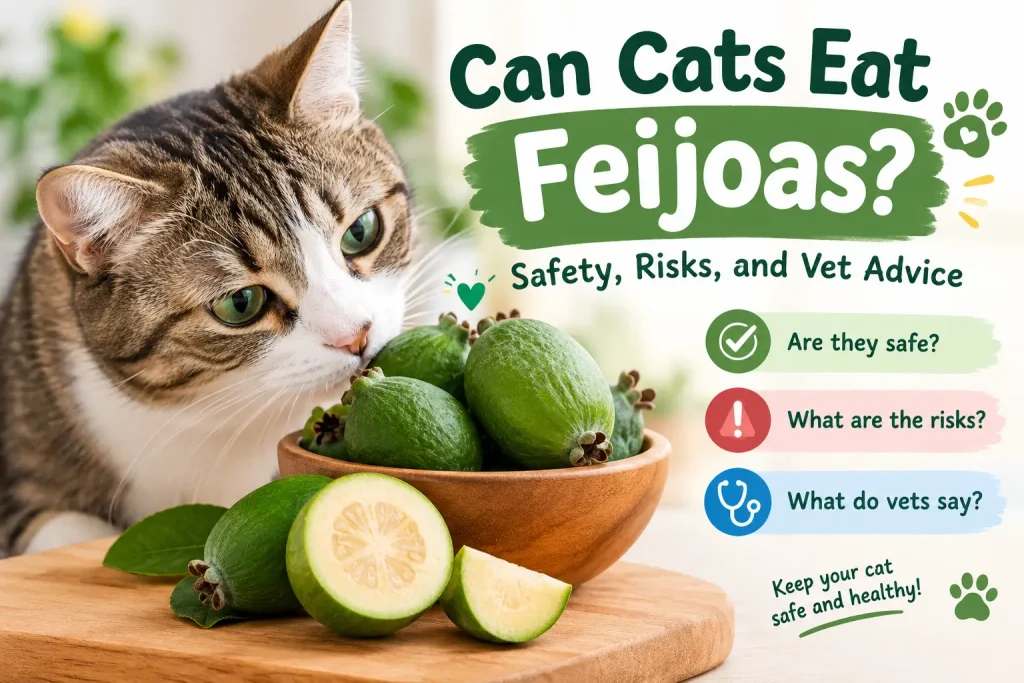
Nobody has established that feijoas are safe for cats, and no reliable source we reviewed calls them poisonous either. Feijoa, also sold as pineapple guava, has little feline-specific research behind it. That is why the careful answer is to skip it as a treat and call a veterinarian if your cat eats a lot or gets sick. Cats are obligate carnivores, so they need complete and balanced cat food, not fruit, to stay healthy. This guide explains what is known, what is not, which plant parts raise extra concern, and what to do if your cat has already helped itself.
Can Cats Eat Feijoas?
Short answer: Cats should not be fed feijoas on purpose. Feijoa is not a documented feline toxin in the sources we reviewed, but its safety for cats has not been established, so a veterinarian should approve it before it becomes a treat.
Two different statements get mixed up online. One is “this is proven toxic.” The other is “nobody has shown this is safe.” Feijoa falls into the second group. Proven toxicity means researchers or poison-control data link a substance to specific harm in cats. Insufficient evidence means that link has simply not been tested or recorded in a reliable way.
The fact that people eat feijoas does not settle the question either. Human diets and feline bodies work very differently, and plenty of foods that suit people cause trouble for cats. So the practical answer is neither “it’s poison” nor “it’s fine.” It is: avoid offering it, and treat an accidental taste as low-drama but worth watching.
What Are Feijoas?
Feijoa (Acca sellowiana, also listed as Feijoa sellowiana) is an evergreen shrub or small tree in the myrtle family, Myrtaceae. People also call the fruit pineapple guava, and a few places call it guava steven. The plant is native to southern Brazil, Paraguay, Uruguay, and northern Argentina, and growers now cultivate it in countries including New Zealand, Colombia, Israel, and the United States. In the US, it often shows up in California gardens and as a landscape shrub.
The fruit is green, oval, and usually about two inches long. It has a strong, perfumed aroma, soft grainy flesh, and a sweet-tart flavor that people compare to pineapple, guava, and mint. Cooks use it fresh, in jam, juice, and sorbet. The seeds are small and edible for people.
The plant itself has glossy dark green leaves with silvery undersides, and its showy flowers have red stamens. Some gardeners grow it mainly as an ornamental hedge.
One naming point matters for pet owners. Pineapple guava is not a true guava. True guava is Psidium guajava. The two belong to the same plant family, but sharing a family does not mean sharing a safety profile, so advice about guava should not be copied over to feijoa.
Are Feijoas Safe for Cats?
The honest answer is “unknown.” When we looked for authoritative feline-specific information, such as veterinary school pages, poison-control listings, and toxicology references, we did not find a study or a clear listing that describes feijoa as toxic to cats or confirms it as safe. Plenty of pet blogs talk about true guava, and some tell owners it is fine in small amounts. Those articles discuss a different fruit and rarely cite cat-specific research, so we did not treat them as proof.
That gap leaves three possibilities, and we cannot tell which one is right:
- Feijoa flesh may be harmless to most cats in tiny amounts.
- Some cats may react with an upset stomach.
- Parts of the plant other than the ripe fruit may behave differently from the flesh.
Because nothing reliable settles it, the safest advice is to avoid intentional feeding. If you still wonder whether a particular cat could have a taste someday, ask your veterinarian. They know your cat’s age, weight, weight history, kidney health, and whether the cat has diabetes or a sensitive stomach, and those details matter more than anything a general article can say.
Can Cats Eat Feijoa Flesh, Skin, and Seeds?
The table below separates what is known from what is not. Where the table says “no reliable data found,” that is a real gap, not a hidden warning.
| Fruit Part | What Is Known | Recommended Approach |
|---|---|---|
| Ripe flesh | No reliable feline-specific toxicity or safety data found. Humans eat it, which does not establish safety for cats. | Do not offer on purpose. A tiny accidental lick or taste usually calls for watching, not panic. |
| Skin or peel | No reliable feline-specific data found. The skin is firmer and more fibrous than the flesh, and it may carry pesticide or wax residues on store-bought fruit. | Avoid. Tough pieces can also be hard to digest. |
| Seeds | No reliable feline-specific data found. They are small and edible for people. In cats, swallowing many seeds could theoretically irritate the stomach. | Avoid. Do not assume small seeds are harmless. |
| Leaves and stems | No reliable toxicity information found for cats. Plant material is a common cause of vomiting in cats, whether or not it is poisonous. | Keep the cat away. Contact a veterinarian or poison-control service if a cat eats these, especially in quantity. |
Potential Risks of Feijoas for Cats
The risks below are plausible concerns, not proven harms. Digestive irritation does not mean a food is poisonous. Cats can vomit after eating many things that are not toxic, simply because their stomachs are not built for them.
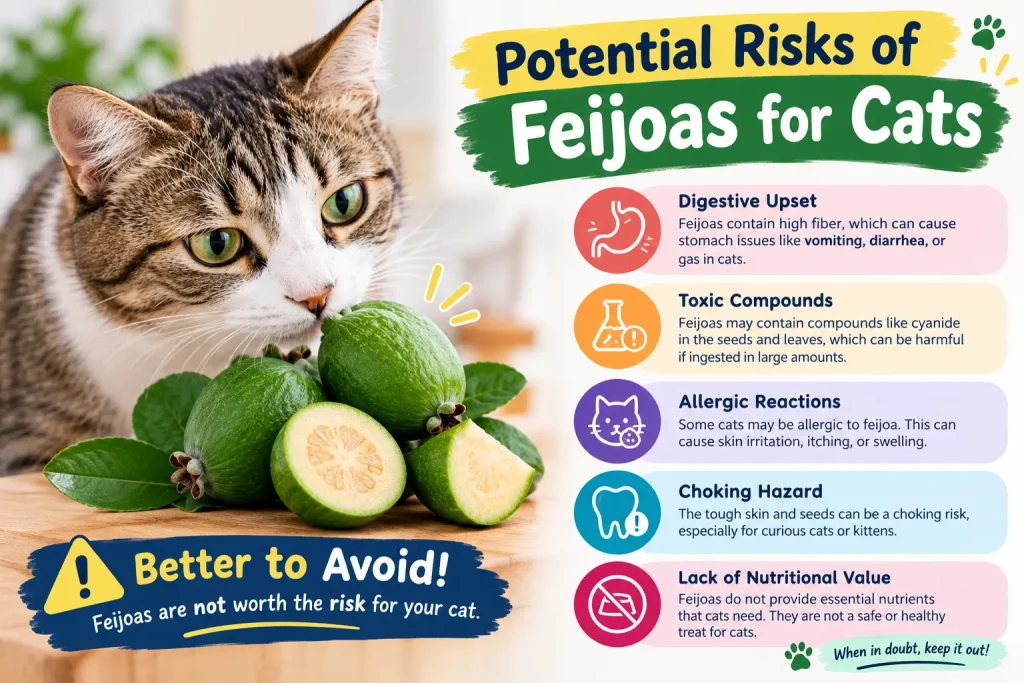
Digestive upset. Fruit contains fiber, natural sugars, and acids. A cat that normally eats only meat-based food may respond to a sudden dose of something new with vomiting, loose stool, or a gurgly stomach. This is the most likely reaction to any unfamiliar fruit, and it tends to show up within hours.
Unfamiliar plant material. Skin, seeds, and especially leaves are harder for a cat to digest than soft flesh. Because we found no reliable data on these parts for cats, the sensible approach is caution.
Choking and blockage. Feijoas have many small seeds and a thick peel. A small chunk of peel or a clump of seeds could, in rare cases, cause trouble swallowing. Whole fruit or large pieces are a bigger concern for a small cat than a lick of juice.
Sugar. Fruit sugar is not a necessary part of a cat’s diet. Large amounts matter most for cats with diabetes or weight problems, which is another reason to ask a veterinarian before offering fruit at all.
Residues and treated plants. Garden-grown or store-bought fruit and leaves may carry pesticides, fertilizer, or fungicide. If a cat eats part of a treated plant, the chemical, not the plant, may be the bigger worry.
Also Read : Can Cats Eat Wakame? Benefits, Risks, and Feeding Tips
Fruit Flesh Versus the Whole Plant
Evidence about the fruit does not automatically cover the rest of the plant. Many plants contain different compounds in their leaves, stems, flowers, and fruit, and cats are not good at handling plant chemicals in general. That is why a fruit that is gentle for people might not tell us anything about the leaves of the same shrub.
For feijoa, we found no reliable feline-specific information on the leaves, stems, or flowers. A cat chewing on an ornamental feijoa hedge deserves more attention than a cat that sniffed a slice of fruit. If you are not sure which part was eaten, or you are not sure the plant is a feijoa at all, tell the veterinarian or poison-control specialist exactly what you know and take a photo of the plant. Misidentified plants are a common problem, and some look similar to others that are dangerous for cats.
Can Kittens Eat Feijoas?
Kittens should not be given feijoas. Kittens grow fast and need a complete kitten food that supplies the protein, fat, vitamins, and minerals their bodies require. Their digestive systems are also more sensitive than an adult cat’s, so an experimental food can cause diarrhea that dehydrates a small body quickly.
As with adult cats, no one has established a safe amount for kittens. If a kitten eats feijoa and has vomiting, diarrhea, or low energy, call a veterinarian promptly rather than waiting to see what happens.
What Makes This Different From Ordinary Cat Treat Advice?
Most treat advice assumes the food has been studied in cats. Feijoa has not, as far as we could find. Three ideas guide how we think about it.
First, cats have different nutritional needs from humans. As obligate carnivores, they depend on nutrients found in animal tissue, and they do not need fruit to get what they require.
Second, unfamiliar foods can upset a cat’s digestion even when they are not toxic. A new food is a variable, and when something goes wrong you may not know which food caused it.
Third, safety advice should match the evidence for that specific food and animal. We will not tell you a serving size, because a recommended amount for cats has not been established. A made-up number would give false comfort.
What Happens If a Cat Eats Feijoa?
The outcome depends on how much the cat ate, which part it ate, the cat’s size and health, and whether symptoms show up. No amount of quiet after eating proves a food was safe, because some problems appear hours later. The table gives a practical way to think about it.
| Situation | What It May Mean | What to Do |
|---|---|---|
| A tiny accidental taste, no symptoms | Digestive upset is possible but not certain. Absence of symptoms does not prove safety. | Remove access, watch closely for 24 hours, and offer normal food and fresh water. Call your veterinarian if anything seems off. |
| A larger amount of fruit | More fiber, sugar, and possibly skin or seeds, which raises the chance of stomach upset or blockage. | Call a veterinarian or poison-control service for advice, especially for kittens, small cats, or cats with health conditions. |
| Leaves, stems, or an unknown plant part | No reliable feline data found. Plant identification may also be uncertain. | Contact a veterinarian or poison-control service. Have a photo or sample of the plant ready. |
| Vomiting, diarrhea, unusual behavior, or other worrying signs | Could be digestive upset, but signs are not specific to feijoa and may have other causes. | Call a veterinarian the same day, or go to an emergency clinic if signs are severe. |
Signs to Watch for After a Cat Eats Feijoa
We cannot list feijoa-specific symptoms because none are documented in the sources we found. What we can describe is the set of general signs that follow many food and plant exposures in cats. None of them proves feijoa caused the problem.
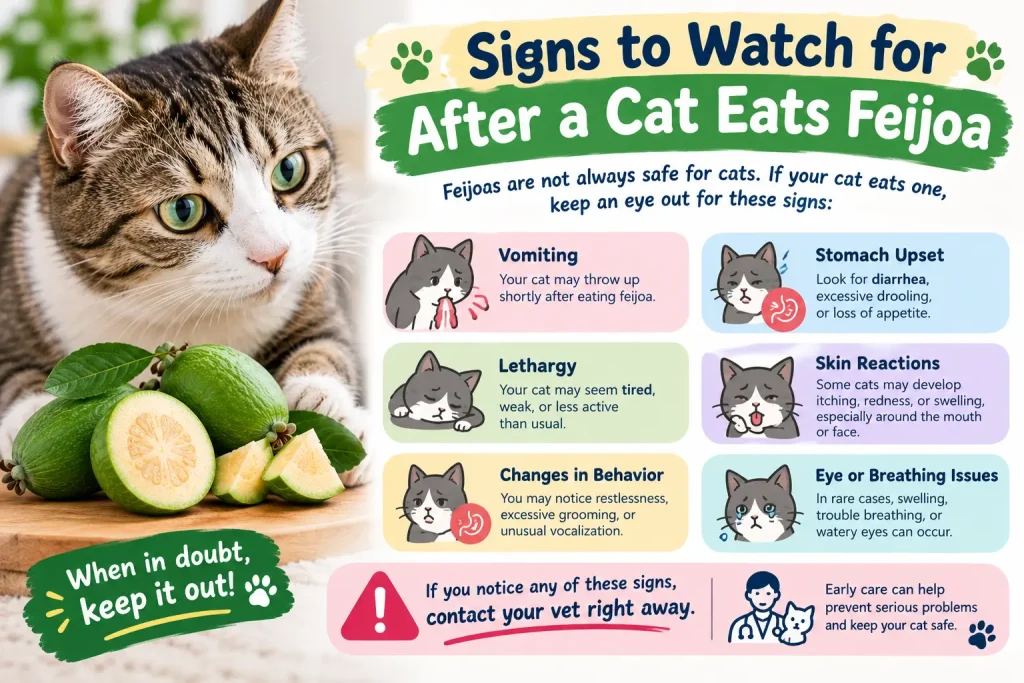
Common gastrointestinal signs include drooling, lip licking, vomiting, diarrhea, reduced appetite, hiding, a tense belly, and straining to pass stool. A single mild bout of vomiting in an otherwise bright cat may pass, but you should still tell your veterinarian if you know your cat ate something unusual.
Other changes worth noting include unusual sleepiness, restlessness, drinking or urinating much more or less than normal, and a cat that seems to be in pain.
Urgent signs. Get immediate veterinary care for trouble breathing, collapse, repeated vomiting, severe weakness, a swollen or painful belly, pale gums, seizures, or a cat that cannot keep water down. These signs need a professional right away, whatever the cause.
Must Read : Can Cats Eat Marjoram? Toxicity, Symptoms, and Safety Tips
What Should You Do If Your Cat Eats Feijoa?
Stay calm and work through these steps.
- Remove access to the fruit and plant. Take away any remaining fruit, peel, seeds, and leaves, and move the cat to a safe room.
- Identify what was eaten. Fruit flesh, skin, seeds, a leaf, a stem, or a flower? Check the cat’s mouth gently for leftover pieces, and save a sample or photo of what remains.
- Estimate the amount and the time. A rough guess, such as “a lick of juice about ten minutes ago” or “half a fruit this morning,” helps a professional decide how worried to be.
- Watch for changes. Keep the cat indoors where you can see it, and note any vomiting, diarrhea, drooling, or odd behavior.
- Contact a professional when needed. Call your veterinarian, an emergency clinic, or an animal poison-control service if your cat ate more than a taste, ate leaves or stems, is very young or small, has a medical condition, or shows any symptoms.
Do not induce vomiting or give home remedies unless a veterinary professional tells you to. Some home methods are dangerous, and they can cause harm even when the original exposure would not have.
Feijoa Safety Decision Guide
| Your Situation | Suggested Response |
|---|---|
| Cat has not eaten any feijoa | Keep fruit and plants out of reach and do not offer it as a treat. |
| Cat licked a small amount of juice | Remove access and watch for 24 hours. Call a veterinarian if vomiting, diarrhea, or lethargy appears, or if you are unsure how much was licked. |
| Cat swallowed flesh or peel | Contact a veterinarian for advice, especially if the amount is unclear, the pieces were large, or the cat is a kitten or has a health condition. |
| Cat ate leaves, stems, or another plant part | Call a veterinarian or poison-control service. Bring a photo or sample of the plant. |
| Cat is showing symptoms | Call a veterinarian right away. Go to an emergency clinic for breathing trouble, collapse, repeated vomiting, or severe weakness. |
Do Cats Need Fruit in Their Diet?
No. Cats are obligate carnivores, which means their bodies are built to get essential nutrients from animal-based foods. A complete and balanced cat food provides what they need, and fruit is not a required source of any nutrient for them.
That does not make every fruit dangerous. Some fruits are well known to be harmful to cats, and grapes and raisins are the most commonly cited examples. Others have little evidence either way, and feijoa is in that group. Cats also cannot taste sweetness the way people do, so most are not drawn to fruit for flavor, though a few chew on it for texture or smell. If your cat loves fruit, that interest is not a sign that your cat needs it.
Safer Treat Options for Cats
If you like giving your cat something special, choose treats made for cats. Commercial cat treats from a reputable brand are designed with feline nutrition in mind, and many list their ingredients and calorie content clearly. Small pieces of plain, cooked animal protein, such as unseasoned cooked chicken, can also work for many cats. Skip onion, garlic, salt, sauces, and bones, and ask your veterinarian first if your cat has kidney disease, diabetes, allergies, or a sensitive stomach.
Whichever you choose, treats should stay a small part of the day’s calories, and they should never replace a complete and balanced diet. Your veterinarian can tell you what share is right for your cat. Confirm any food-specific safety recommendation with a veterinarian before you rely on it.
Frequently Asked Questions
Are pineapple guavas safe for cats?
Safety has not been established. Pineapple guava is another name for feijoa, and we found no reliable feline-specific source that confirms it as safe or labels it toxic. Avoid feeding it on purpose, and ask your veterinarian if you want to try a taste.
Is feijoa poisonous to cats?
We did not find an authoritative source that lists feijoa as poisonous to cats. That is not the same as proof of safety. Little feline research exists, and the leaves, stems, and seeds are especially unstudied, so a veterinarian should guide you after any significant ingestion.
Can cats eat feijoa skin?
It is best to avoid it. No reliable data describe feijoa skin in cats. The peel is fibrous, may hold pesticide or wax residues, and could be hard to digest. If your cat swallowed a piece, watch closely and call a veterinarian for advice.
Can cats eat feijoa seeds?
It is best to avoid them. The seeds are edible for people, but cat-specific safety information is missing. A few seeds in an accidental bite may cause nothing, but a larger amount could irritate the stomach. Call a veterinarian if you are unsure.
What if my cat licks feijoa juice?
A small lick is usually a watch-and-wait situation, not an emergency, but no one can promise it is harmless. Remove the fruit, offer fresh water, and watch for vomiting, diarrhea, or low energy for a day. Call your veterinarian if signs appear.
Can kittens eat pineapple guava?
Kittens should not eat it. They need complete kitten food, and their digestion is more sensitive than an adult’s. No safe amount has been established. If a kitten eats feijoa or shows symptoms, contact a veterinarian promptly.
What symptoms should I watch for after accidental ingestion?
Watch for vomiting, diarrhea, drooling, poor appetite, hiding, belly pain, and unusual sleepiness. These signs are not specific to feijoa. Breathing trouble, collapse, repeated vomiting, or severe weakness needs urgent veterinary care.
Should I call a veterinarian if my cat eats feijoa?
Call if your cat ate more than a tiny taste, ate leaves or stems, is a kitten or has a health condition, or shows any symptoms. If your cat only licked juice and seems normal, careful monitoring may be enough, but a phone call is reasonable whenever you feel unsure.
Quick Safety Summary
- Do not feed feijoa to cats on purpose. Its safety has not been established.
- “Not proven toxic” does not mean “proven safe.” Both statements can be true at once.
- Fruit flesh does not tell you about the leaves, stems, or flowers of the plant.
- No serving size or feeding frequency exists for cats, so do not guess.
- Call a veterinarian or poison-control service after larger exposures, plant material, or any symptoms.
Final Thoughts
So, can cats eat feijoas? The careful answer is that no one has shown they are safe, and no reliable source we reviewed shows they are poisonous. That difference matters. It means a small, accidental taste is usually a reason to watch your cat rather than panic, and it also means you should not offer the fruit as a treat.
Keep fruit and the plant out of reach, and keep your cat on a complete and balanced diet. If your cat eats an uncertain amount, chews on leaves or stems, or develops symptoms, call your veterinarian or a poison-control service and tell them exactly what happened. A short call can bring peace of mind or catch a real problem early.
Can Cats Eat Swiss Chard? Benefits, Risks, and Feeding Tips
Can Cats Eat Shallots? Toxicity Risks, Symptoms, and What to Do