Cats are curious animals, and they may try to lick human breast milk if they find a spilled drop or an open bottle. But can cats drink human breast milk safely? A small accidental taste is not usually a reason to panic, but human breast milk is not a recommended drink or milk replacement for cats. Cats have different nutritional needs from human babies, and young kittens require specially balanced nutrition to grow properly.
If your cat has already tasted breast milk, the amount consumed, the cat’s age, and any symptoms are important factors. A healthy adult cat may have no noticeable reaction after a tiny taste, while another cat may develop digestive upset. Newborn kittens need extra care because they can become weak quickly when they do not receive adequate nutrition.
In this guide, you will learn why human breast milk is not ideal for cats, what can happen if they drink it, and which milk is appropriate for kittens.
Must Read :
Can Cats Drink Human Breast Milk Safely?
Cats should not drink human breast milk as a regular part of their diet. A small accidental taste may cause no problems, but some cats can experience digestive upset. Human breast milk is not a suitable substitute for cat milk, and orphaned kittens should receive an appropriate commercial kitten milk replacer under veterinary guidance.
Cats can accidentally consume a small amount of human breast milk, and this does not automatically mean they will become sick. However, human breast milk should not be given to cats as a regular treat or used as a substitute for a mother cat’s milk or commercial kitten milk replacer.
Human breast milk is designed to support the growth and development of human babies. Cat milk has a different nutritional composition that meets the needs of growing kittens. Although both contain water, fat, protein, and other nutrients, their nutritional balance is not identical.
A small lick from a spilled drop is different from feeding a cat a bowl of breast milk. If your cat has only tasted a little and appears normal, remove the remaining milk and monitor your pet for unusual symptoms.
If your cat drinks a substantial amount, develops vomiting or diarrhea, or has an existing health problem, contact your veterinarian for individualized advice.
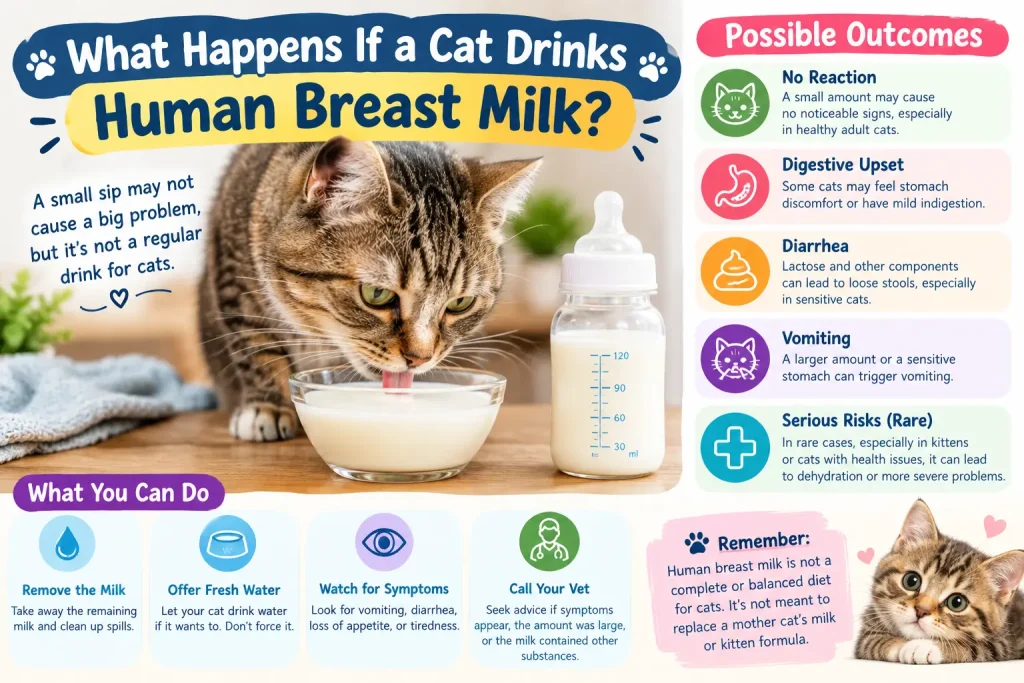
What Happens If a Cat Drinks Human Breast Milk?
The outcome depends on how much breast milk the cat consumes and how well its digestive system tolerates it.
Some cats may show no noticeable signs after a small accidental taste. Others may experience digestive discomfort, particularly if they have sensitive stomachs or consume a larger quantity.
Possible signs to watch for include:
- Loose stools or diarrhea.
- Vomiting.
- Reduced appetite.
- Abdominal discomfort.
- Unusual tiredness, especially if digestive symptoms continue.
These symptoms are not specific to breast milk, so you should not automatically assume that milk caused them. Other foods, infections, and health problems can produce similar signs.
If your cat appears comfortable after a tiny taste, fresh drinking water and normal feeding are generally appropriate. Do not force your cat to drink water or give human medicines to treat digestive symptoms.
Seek veterinary advice if symptoms persist or worsen. Repeated vomiting, severe diarrhea, marked weakness, or signs of dehydration deserve prompt attention. A newborn kitten that refuses food or becomes weak needs urgent veterinary guidance.
Also Read : Can Cats Eat Boysenberries? Benefits, Risks, and Feeding Tips
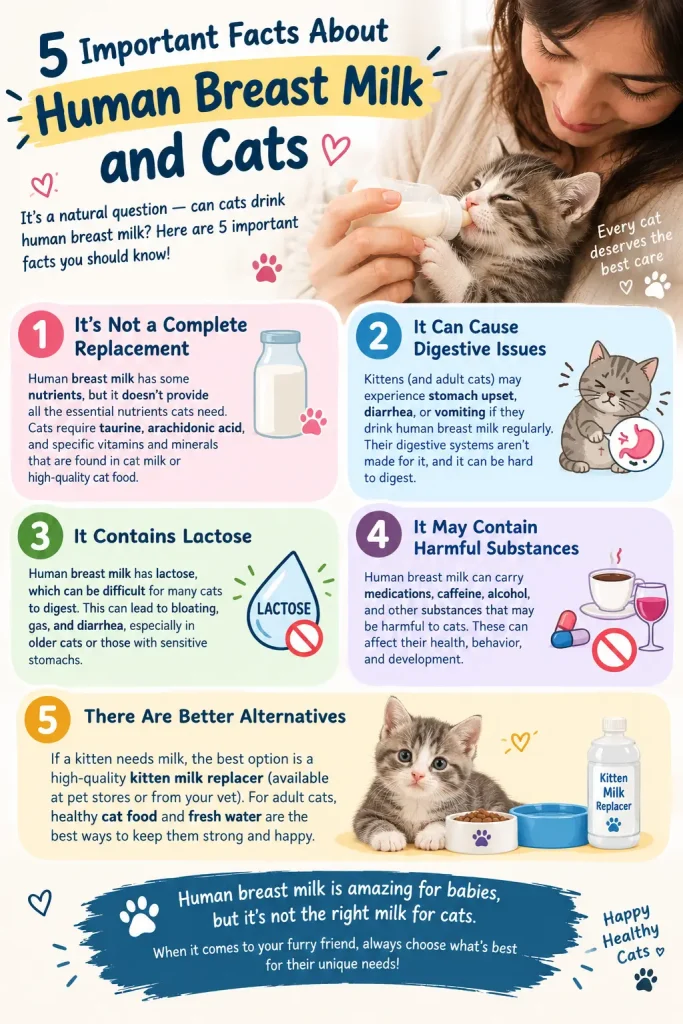
5 Important Facts About Human Breast Milk and Cats
Before offering any type of milk to your cat, understand these five important facts.
1. Human Milk and Cat Milk Have Different Nutrients
Every mammal produces milk suited to the needs of its own young. Human breast milk supports human infant development, while cat milk supplies nutrients needed by growing kittens.
Their nutritional composition differs, including the balance of protein, fat, carbohydrates, and minerals. Human breast milk should therefore not be treated as a nutritionally equivalent replacement for cat milk
2. Breast Milk Is Not a Complete Cat Diet
Cats need a balanced diet that meets their specific nutritional requirements. Human breast milk does not provide a suitable complete diet for adult cats, and it is not formulated to support all the needs of growing kittens.
Giving milk regularly may also add unnecessary calories or distract from proper feeding. Cats should receive complete, age-appropriate cat food once they are ready for solid food.
3. A Kitten’s Age Matters
Newborn kittens depend on milk for nourishment, growth, and development. As they mature, they gradually transition to solid food and water.
An orphaned kitten needs an appropriate feeding plan based on its age, weight, and condition. Human breast milk is not a reliable substitute for its mother’s milk or a commercial kitten milk replacer.
4. One Small Taste Is Different From Regular Feeding
A cat licking a few drops of breast milk is not the same as drinking it every day. A tiny accidental taste may cause no noticeable problems, but repeated feeding is not recommended.
Watch your cat for digestive symptoms if it has consumed some milk. Contact your veterinarian if you notice concerning changes or are unsure how much your cat swallowed.
5. Storage and Other Ingredients Matter
Breast milk that has been stored improperly may raise food-safety concerns. The risk can also change if the milk has been mixed with other substances.
If your cat drinks milk containing supplements, medication, flavorings, or other ingredients, check what was added. Contact a veterinarian promptly if an ingredient could be harmful.
Can Kittens Drink Human Breast Milk?
No, human breast milk is not recommended for kittens, especially newborns that depend entirely on milk for nutrition. Although it may seem like a natural alternative, it does not have the appropriate nutritional balance for feline development.
Newborn kittens need suitable nutrition during a period when their bodies are growing rapidly. They also need careful attention to warmth, hydration, and feeding technique.
According to VCA Animal Hospitals, commercial kitten milk replacers are recommended for orphaned kittens because they are designed to meet kittens’ nutritional requirements more appropriately than unsuitable milk alternatives.
Newborn Kittens
Newborn kittens are particularly vulnerable because they cannot eat solid food and depend on frequent milk feeds. Feeding them an unsuitable substitute may leave them without adequate nutrition or cause digestive problems.
If you find a newborn kitten without its mother, contact a veterinarian or experienced kitten rescue organization as soon as possible. Do not assume that human breast milk will keep the kitten healthy.
Orphaned Kittens
If a kitten’s mother is unavailable, commercial kitten milk replacer is generally the preferred substitute. Follow the product’s preparation instructions and ask a veterinarian how much to feed and how often.
Never force milk into a weak kitten’s mouth. Feeding a kitten that is too cold or unable to swallow properly can be dangerous, and milk entering the lungs can cause serious complications. Seek professional guidance before attempting alternative feeding methods.
Kittens Beginning to Wean
Kittens usually begin exploring solid food at around four weeks of age, although timing varies. During weaning, offer suitable kitten food and follow veterinary advice about transitioning from milk to solids.
Human breast milk is not necessary for this process. As kittens become fully weaned, fresh water and complete kitten food become increasingly important.
Must Read : Can Cats Eat Pâté? Ingredients, Risks, and Safe Feeding Tips
Can Adult Cats Drink Human Breast Milk?
An adult cat may tolerate a small accidental taste without becoming ill, but there is no nutritional reason to offer human breast milk regularly.
Many cats become less able to digest lactose after weaning. Lactose is the natural sugar found in milk, and poorly digested lactose can contribute to gas, loose stools, and diarrhea. Individual tolerance varies, so not every cat will react in the same way.
Adult cats should get most of their nutrition from complete and balanced cat food. Fresh, clean water is the best everyday drink.
If your cat enjoys investigating your baby’s feeding bottle, store pumped milk safely and clean up spills promptly. This simple habit helps prevent accidental consumption and keeps feeding supplies hygienic.
7 Possible Risks of Giving Human Breast Milk to Cats
Human breast milk is not automatically poisonous to cats. However, giving it as a regular drink or using it to feed kittens can create several concerns.
1. Digestive Upset
Some cats may develop stomach or intestinal discomfort after drinking milk that does not agree with them. The amount consumed and the cat’s individual sensitivity can affect the response.
Watch for changes in appetite, stool, or behavior after an accidental taste.
2. Diarrhea and Loose Stools
Milk sugars that are not properly digested can contribute to diarrhea. This is especially concerning in small kittens because fluid loss can quickly affect their condition.
Contact a veterinarian if diarrhea is severe, persistent, or accompanied by weakness, vomiting, or poor feeding.
3. Vomiting
Some cats may vomit after consuming a food or drink that upsets their digestive system. Vomiting is not guaranteed after drinking breast milk, and it may have another cause.
Repeated vomiting or an inability to keep water down requires prompt veterinary attention.
4. Inadequate Nutrition
Human breast milk does not supply the complete nutritional balance required for a cat’s long-term diet. If an owner regularly offers it instead of appropriate food, the cat may not receive the nutrients it needs.
Growing kittens are particularly vulnerable because nutritional deficiencies can interfere with healthy development.
5. Delayed Treatment for Orphaned Kittens
An owner may assume that any breast milk can replace a mother cat’s milk. This misunderstanding can delay access to suitable kitten formula and veterinary care.
A kitten that is not nursing properly, losing weight, or becoming weak needs prompt assessment rather than repeated attempts to feed an unsuitable substitute.
6. Food-Safety Problems
Improperly stored or handled expressed breast milk may become contaminated. The safest approach is to prevent pets from accessing stored milk and feeding equipment.
If your cat consumes milk that has been left out too long or may be contaminated, contact your veterinarian for advice based on the circumstances.
7. Risks From Added Ingredients
Breast milk may be mixed with medicines, supplements, or other products. Those added ingredients can change the safety of the mixture.
If your cat consumes milk containing a medication or a potentially harmful substance, do not wait for symptoms before seeking advice. Keep the product packaging or ingredient information available for the veterinarian.
What Should You Do If Your Cat Drinks Human Breast Milk?
If your cat has already drunk some human breast milk, stay calm. The right response depends on the amount consumed, the cat’s age, and whether the milk contained any additional ingredients.
Step 1: Remove the remaining milk
Move the bottle out of reach and clean up any spilled milk. This prevents your cat from drinking more.
Step 2: Provide fresh water
Let your cat drink fresh water if it wants to. Do not force water or milk into its mouth.
Step 3: Watch for symptoms
Look for vomiting, diarrhea, changes in appetite, or unusual tiredness. Do not assume that every symptom is caused by the milk.
Step 4: Contact your veterinarian when needed
Seek advice if your cat drank a large amount, develops symptoms, or consumed milk containing medication or other potentially harmful ingredients. Newborn kittens that are not feeding properly need urgent guidance.
Do not try to make your cat vomit. If your cat has severe vomiting, significant diarrhea, marked weakness, breathing difficulty, or collapse, seek urgent veterinary care.
What Milk Is Safe for Kittens?
The safest milk for a nursing kitten is its mother’s milk when she is available and nursing successfully. When this is not possible, a commercial kitten milk replacer formulated for feline nutritional needs is generally recommended.
| Milk or drink | General guidance |
|---|---|
| Mother’s cat milk | Best natural option for a nursing kitten |
| Commercial kitten milk replacer | Suitable substitute when prepared as directed |
| Human breast milk | Not recommended as a kitten milk replacement |
| Cow’s milk | Not suitable for routine kitten feeding |
| Almond or oat milk | Does not meet kittens’ nutritional needs |
| Fresh water | Appropriate as kittens develop and for adult cats |
Human Breast Milk vs. Cat Milk: What Is the Difference?
Both human breast milk and cat milk provide nourishment to young mammals, but each is suited to a different species.
| Feature | Human breast milk | Cat milk |
|---|---|---|
| Intended recipient | Human infants | Nursing kittens |
| Nutritional composition | Suited to human development | Suited to feline growth |
| Role in kitten feeding | Not a recommended replacement | Natural nourishment from the mother |
| Immune support | Adapted to human infants | Includes maternal immune components relevant to kittens |
| Recommended for orphaned kittens | No | Commercial kitten milk replacer is the usual substitute |
One important difference is the role of colostrum, the early milk produced after birth. It contains maternal immune components that help newborn kittens acquire early immune protection. Human breast milk should not be assumed to provide the same species-specific protection to kittens.
Although the two types of milk share some nutrients, similarity does not make them interchangeable. A kitten needs appropriate feline nutrition, not simply a liquid that contains protein and fat.
When Should You Contact a Veterinarian?
A tiny accidental taste may not require emergency treatment if your healthy adult cat remains well. However, seek professional advice when the circumstances are more concerning.
Contact a veterinarian if:
- Your cat develops repeated vomiting or persistent diarrhea.
- Your pet becomes unusually weak or lethargic.
- Your cat cannot keep water down.
- You suspect dehydration.
- The milk contained medication or another potentially harmful ingredient.
- A newborn kitten is refusing feeds, is cold, or appears weak.
- An orphaned kitten has no reliable source of appropriate nutrition.
Young kittens can deteriorate faster than healthy adult cats. If you are caring for an orphaned kitten, arrange a suitable feeding plan rather than experimenting with different types of milk.
Frequently Asked Questions
Can cats have a little human breast milk?
A healthy adult cat may tolerate a tiny accidental taste without noticeable problems, but human breast milk is not a recommended treat. Remove the remaining milk, offer access to fresh water, and watch for unusual symptoms. Contact a veterinarian if your cat becomes ill or consumed a substantial amount.
Is human breast milk toxic to cats?
Human breast milk is not generally classified as a poison to cats, but that does not make it a suitable food. Some cats may experience digestive upset, and it does not provide the right nutritional balance for feline growth. The cat’s age, the amount consumed, and any additional ingredients matter.
Can newborn kittens survive on human breast milk?
Human breast milk should not be relied on to raise newborn kittens. They need their mother’s milk or an appropriate commercial kitten milk replacer that meets their nutritional needs. If a newborn kitten is orphaned, contact a veterinarian or experienced kitten rescue organization promptly for feeding and care instructions.
Can I feed human breast milk to an abandoned kitten?
It is better not to use human breast milk as a substitute for cat milk. An abandoned kitten needs suitable feline nutrition, warmth, and careful monitoring. Contact a veterinarian or rescue service to determine the kitten’s age and condition and obtain an appropriate feeding plan.
Can human breast milk give cats diarrhea?
It is possible for a cat to develop diarrhea after drinking human breast milk, although not every cat will react. Digestive tolerance varies, and other health problems can also cause diarrhea. Seek veterinary advice if symptoms are severe, persistent, or accompanied by vomiting, weakness, or reduced appetite.
What happens if my cat licks spilled breast milk?
If your healthy adult cat licks a few drops and appears normal, there is usually no reason to panic. Clean up the spill and observe your cat for changes in behavior or digestion. If your cat is a newborn kitten, has health problems, or develops symptoms, seek veterinary guidance.
Is human breast milk better than cow’s milk for cats?
Neither human breast milk nor cow’s milk is an appropriate routine replacement for a mother cat’s milk. Both differ from feline milk, and neither should be relied on to meet a kitten’s nutritional needs. Commercial kitten milk replacer is the preferred substitute when the mother cannot nurse.
Can nursing mother cats drink human breast milk?
A nursing mother cat does not need human breast milk. She needs a nutritionally complete diet appropriate for pregnancy or lactation, along with access to fresh water. If she is losing weight, producing insufficient milk, or struggling to care for her kittens, consult a veterinarian.
What should I feed a kitten if its mother is unavailable?
For an unweaned kitten, use a commercial kitten milk replacer and follow veterinary guidance on feeding amounts, frequency, and technique. Very young kittens need careful attention because incorrect feeding can be dangerous. Older kittens may be ready to begin weaning onto complete kitten food, depending on their age and development.
Final Thoughts
So, can cats drink human breast milk? A small accidental taste is not usually a reason to panic, but human breast milk should not be part of a cat’s regular diet. It is not nutritionally designed for cats and cannot reliably replace the milk a growing kitten needs.
For adult cats, fresh water and complete, balanced cat food are the better choices. For newborn and orphaned kittens, their mother’s milk or a suitable commercial kitten milk replacer is the preferred source of milk nutrition.
If your cat has already tasted breast milk, consider how much it consumed and watch for unusual symptoms. When a kitten is weak, refusing food, or struggling to feed, seek veterinary help promptly.
Your cat does not need human breast milk to stay healthy. Providing the right food, fresh water, and appropriate veterinary care is a much better way to support its well-being.
Can Cats Eat Wakame? Benefits, Risks, and Feeding Tips
Can Cats Eat Shallots? Toxicity Risks, Symptoms, and What to Do