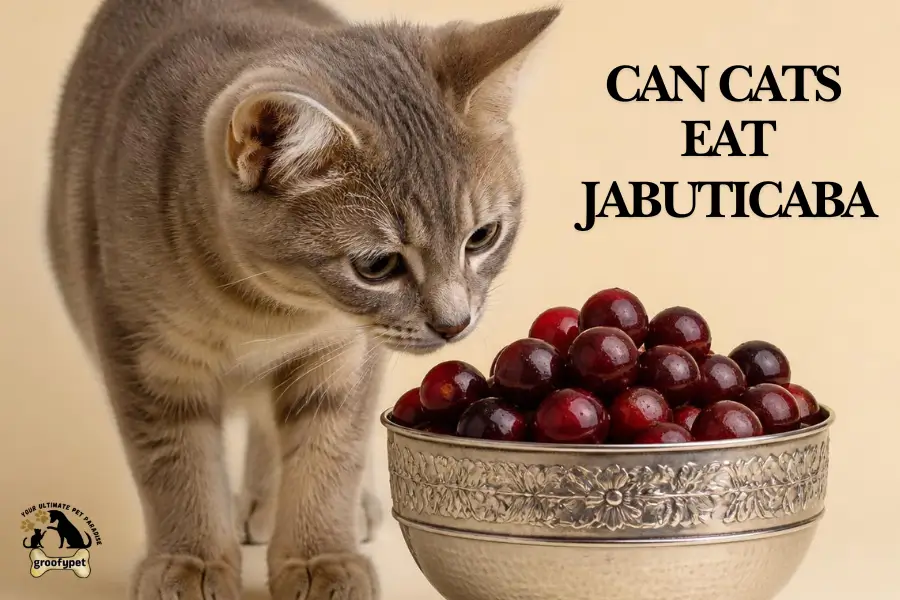
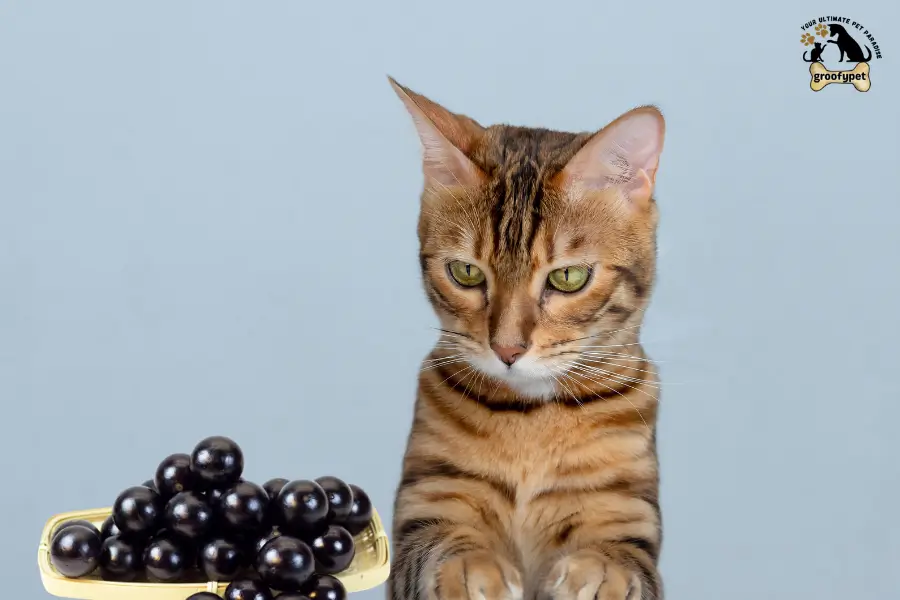
Can cats eat jabuticaba? A tiny bite is unlikely to cause serious harm, but no major veterinary source gives a clear answer for cats. We could not find jabuticaba in the ASPCA’s toxic and nontoxic plant database. The plain fruit is not confirmed toxic, and it is not confirmed safe either.
Can cats eat jabuticaba?
Possibly a very small piece of plain, ripe pulp. Cats do not need it, and veterinary evidence specific to cats is limited. Is jabuticaba toxic to cats? No reliable veterinary source we found lists it as toxic to cats. It also has no confirmed safety rating for them. Can kittens eat jabuticaba? It is best to skip it. Kittens have sensitive digestive systems and need complete kitten food.
Can cats eat jabuticaba seeds?
Avoid them. Seeds can cause choking or stomach irritation, and one dog site raises an unverified toxin concern. Remove any leftover fruit and watch for vomiting, diarrhea, drooling, or low energy. Call a vet if symptoms appear or the amount is large.
What Is Jabuticaba?
Jabuticaba (Plinia cauliflora) is also spelled jaboticaba and nicknamed the Brazilian grapetree. It belongs to the Myrtaceae family. The tree is native to Brazilian states, including Rio de Janeiro, Minas Gerais, Goiás, and São Paulo. The fruit looks like a large dark purple grape. It has white pulp and grows directly on the trunk, a trait called cauliflory.
The thin skin surrounds a sweet, juicy pulp with a few seeds inside. People eat it raw or turn it into jellies, jams, juice, and wine. Fresh fruit spoils fast. It can begin to ferment three to four days after harvest, so fresh jabuticaba is rare outside growing regions.
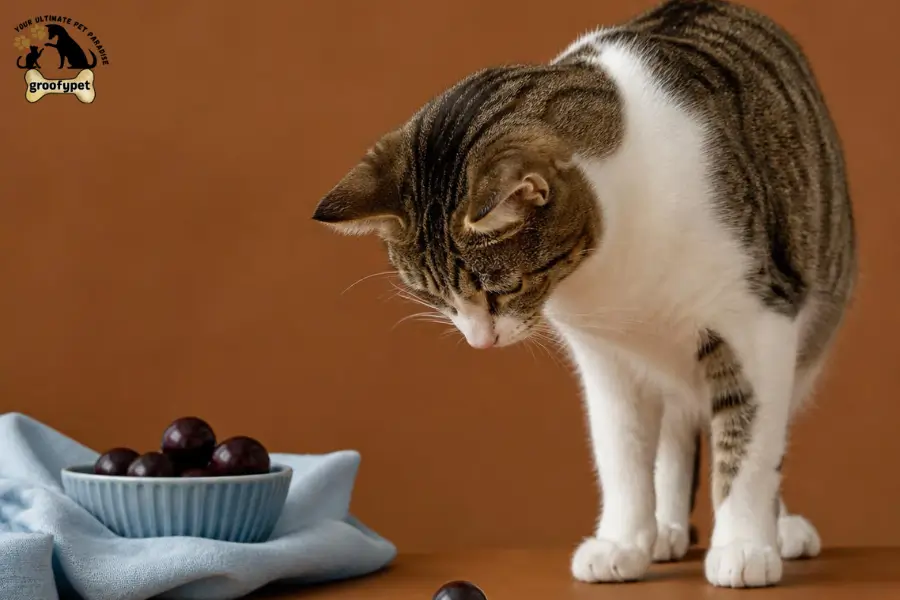
A cat owner might meet this fruit in a few ways. You may grow the tree in a container, buy it at a specialty market, or eat some while your cat watches. Cats often investigate what their owners eat, so a dropped fruit can become a quick snack.
Is Jabuticaba Toxic to Cats?
Start with what we know. No source we reviewed documents about jabuticaba poisoning in cats. We could not find it in the ASPCA plant database. The ASPCA also notes that eating any plant material may cause vomiting and stomach upset in dogs and cats. That warning is general and not specific to jabuticaba.
Now the limits. The dog pages we found disagree with each other. Jabuticaba is not toxic to dogs, though the skin and seeds could cause problems. Another site calls the skin’s tannins toxic to dogs and warns of vomiting, diarrhea, and stomach pain. These are pet websites, and neither cites veterinary studies. Dogs are also not cats.
Evidence about jabuticaba in people also does not answer the cat question. Human food research often highlights pigments such as anthocyanins in the dark skin. That says nothing about how a cat’s body handles them.
So the honest summary has four parts:
- Confirmed toxicity to cats: none found.
- Established safety for cats: none found.
- Possible digestive upset: reasonable with any unfamiliar plant food.
- Added ingredient risks: real for jam, juice, and desserts.
If your cat ate a bite, panic is not needed. A repeat habit is a different matter, so keep it to an occasional treat at most.
Can Cats Eat Fresh Jabuticaba?
Ripe, plain, washed pulp is the lowest-risk form. A small accidental nibble from a fallen fruit usually calls for watching, not alarm. If a cat steals a whole fruit, the skin and seeds come into play, and those get their own sections below.
Cats do not need fruit. They are obligate carnivores, which means their bodies are built to get nutrients from animal protein and fat. A complete and balanced cat food covers their needs. Fruit is an extra, never a requirement.
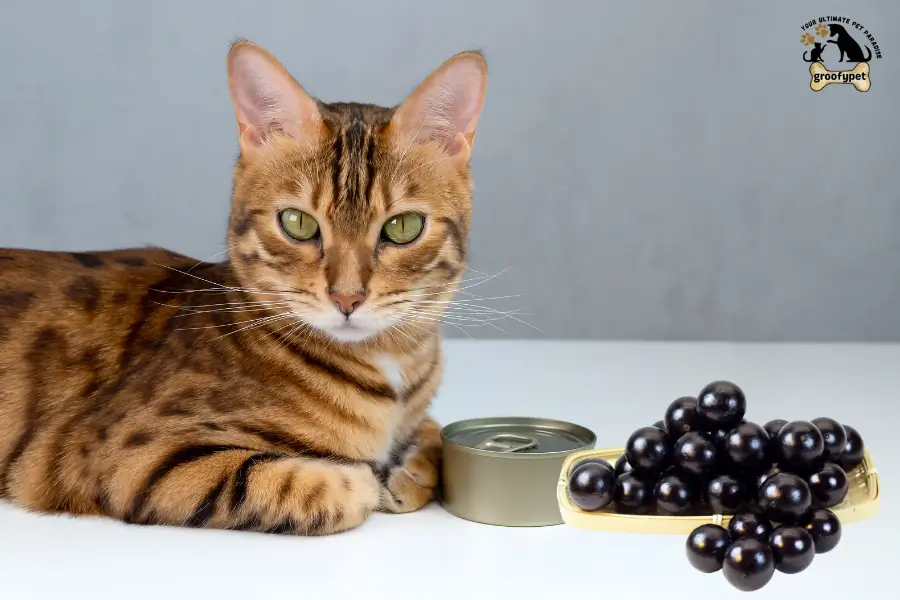
Cats also digest plant material poorly. Sugary fruit can loosen stools or upset the stomach, especially if a cat has never had it. Individual cats vary. One may ignore the fruit, and another may vomit after a nibble.
Many cats are simply not interested in fruit. Cats cannot taste sweetness the way we do, so a cat that chews a piece may be reacting to texture or smell. Do not push it if your cat walks away.
Also Read : Can Cats Eat Mustard Greens? Benefits, Risks and Safe Alternatives
Can Cats Eat Jabuticaba Skin?
The skin is the most debated part. It is thin, dark, and slightly tough, and it holds much of the fruit’s color. We found no reliable veterinary source calling it poisonous to cats. Some dog pages blame tannins, but that claim is unverified.
There are practical reasons to avoid it anyway. The skin is harder to digest than the pulp. A cat that swallows a large piece may gag or vomit. Fruit skin can also carry pesticide residue or dirt.
Washing matters. Rinse any store-bought or garden fruit under running water and dry it. Washing reduces surface residue but does not make the skin a proven cat food.
When evidence is uncertain, peeling is the conservative choice. If you offer any fruit, offer a small piece of peeled pulp.
Can Cats Eat Jabuticaba Seeds?
Jabuticaba usually has a few seeds in the pulp. Cats should not eat them. The seeds are hard, slippery, and large enough for a small cat to choke on. A swallowed seed could also irritate the stomach or, less commonly, cause a blockage.
One dog advice site says the seeds, like many fruit seeds, may contain small amounts of cyanogenic compounds. We could not confirm this in a veterinary reference, so we do not present it as fact for jabuticaba. It is a reason for caution, not a proven poisoning risk.
The simple rule works either way. If you ever offer a piece of fruit, remove every seed first. If your cat swallows a seed or chews on one, watch for gagging, repeated vomiting, or a belly that seems painful.
Can Kittens Eat Jabuticaba?
Kittens need more caution. Their digestive systems are still developing, and they grow fast on food designed for them. A stomach upset that a healthy adult cat shrugs off can hit a small kitten harder, especially if it causes diarrhea.
Fruit should never replace kitten food or milk replacer. There is also no need to introduce unusual foods early. A kitten gets everything it needs from a proper kitten diet.
We found no veterinary guidance giving an age at which jabuticaba is appropriate, so we will not invent one. If your kitten swallowed some fruit, call your veterinarian for advice, especially if the kitten is very young or has vomiting or diarrhea.
Also Read : Can Cats Eat Mustard Greens? Benefits, Risks and Safe Alternatives
Are There Any Benefits of Jabuticaba for Cats?
Pet sites often list vitamin C, antioxidants, and anti-inflammatory effects for dogs. One dog site describes jabuticaba as a source of vitamin C and antioxidants. Those claims come from human food discussions. They are not proven benefits for cats.
Cats make their own vitamin C, and a cat eating a balanced diet does not need extra antioxidants from fruit. Jabuticaba does not treat or prevent any disease in cats. The fruit also has little fiber value at the tiny amounts a cat could safely have.
The most honest answer is that any benefit is unproven. A cat might enjoy the taste or texture, and that is reason enough for an occasional nibble if it is safe.
Possible Risks of Feeding Jabuticaba to Cats
The realistic risks are modest and mostly digestive:
- Stomach upset: vomiting or diarrhea from unfamiliar plant matter or sugar.
- Choking: seeds or large pieces of skin can lodge in the throat.
- Swallowed seeds: possible irritation or, rarely, blockage.
- Spoiled fruit: fermented fruit can contain alcohol and cause illness.
- Added ingredients: sugar, chocolate, alcohol, and sauces in prepared foods.
- Individual sensitivity: some cats react to new foods more strongly than others.
None of these mean jabuticaba is poisonous. They mean any new food should be small and watched.
How Much Jabuticaba Can a Cat Eat?
No veterinary authority publishes a serving size for jabuticaba and cats. We will not make one up. The safest amount is none, and the next safest is a tiny taste after your vet agrees.
If your vet has no objection, one illustrative treat is a piece of peeled, seedless pulp about the size of a pea. This is a conservative example, not a veterinary prescription. Offer it once and wait a day before offering anything else.
Treats of any kind should stay a small part of a cat’s diet. Fruit is an occasional extra, never a meal.
How to Prepare Jabuticaba for a Cat
If you decide to offer a taste, keep it simple:
- Wash the fruit under running water to remove dirt and pesticide residue.
- Peel it and remove every seed.
- Check for spoilage. Skip fruit that smells sour, looks moldy, or tastes fermented.
- Keep it plain. Add no sugar, chocolate, alcohol, spices, or sauces.
- Cut a tiny piece small enough to swallow easily.
- Offer only that piece and watch your cat for several hours.
Do not turn jabuticaba into homemade recipes for your cat. Cooking does not remove seeds, and extra ingredients add extra risk.
Can Cats Eat Jabuticaba Jam, Jelly, Juice, or Desserts?
Processed jabuticaba is a different food. The fruit may be safe in principle, but the product usually is not.
Jam and jelly contain large amounts of sugar. Juice can be concentrated and sugary. Desserts may include chocolate, dairy, alcohol, spices, or other fruits. Wine and liqueurs are made from the fermented fruit and are dangerous for cats.
Chocolate and alcohol are known dangers for cats. Onion and garlic in sauces are also harmful. Artificial sweeteners deserve caution too. Xylitol is a well-known danger for dogs. Documented cases in cats are fewer, but veterinarians still advise keeping it away from them.
A product is not safe just because jabuticaba is the main ingredient. Read the label, and when in doubt, skip it.
Jabuticaba Safety Table
| Jabuticaba Form | Cat Safety Consideration |
|---|---|
| Fresh plain pulp | Not confirmed toxic. Not confirmed safe. Tiny amounts only, if at all |
| Skin | No proven toxin found. Harder to digest and may cause gagging or upset |
| Seeds | Choking and stomach risk. Remove all. Toxin claim is unverified |
| Cooked plain fruit | Cooking does not remove seeds or resolve the evidence gap |
| Jam | Usually high in sugar. Check the ingredient list |
| Jelly | Sugar and other additives. Avoid |
| Juice | Sugar concentrated. Not recommended |
| Dessert | Avoid if it contains chocolate, dairy, alcohol, or sweeteners |
| Spoiled or fermented fruit | Do not offer. Can contain alcohol and cause illness |
Jabuticaba vs Other Fruits
Never assume jabuticaba behaves like another fruit. The name “Brazilian grapetree” is misleading, so this is worth spelling out.
Grapes, raisins, and currants. Jabuticaba is not related to grapes. Grapes belong to a different plant family. Grape toxicity is established in dogs. Do not use grape rules as evidence for jabuticaba. Blueberries, strawberries, and blackberries. Pet sources commonly describe these as acceptable in small amounts.
That is a separate body of evidence. It does not transfer to Jabuticaba. Other tropical fruits. Each fruit has its own chemistry. Mango, papaya, and lychee do not tell you anything reliable about jabuticaba. The lesson is simple. Check the specific fruit, and treat uncertainty as uncertainty.
What Happens If a Cat Eats Jabuticaba?
A single accidental bite of plain fruit usually causes no problem. Take away the rest, rinse the mouth area if needed, and watch your cat for a day.
Signs worth watching for include:
- Vomiting
- Diarrhea
- Drooling
- Loss of appetite
- Belly discomfort or hiding
- Unusual tiredness
- Coughing, gagging, or trouble breathing
These signs do not prove jabuticaba caused the problem. Cats get stomach upset for many reasons. But if symptoms follow a fruit snack, mention the fruit to your vet.
Repeated feeding is different from an accident. If your cat keeps getting jabuticaba, stomach upset may build up, and sugar adds calories. Keep the fruit out of reach.
When Should You Call a Veterinarian?
Call your vet or an animal poison service if:
- Your cat ate a large amount.
- The fruit contained chocolate, alcohol, sweeteners, or other added ingredients.
- Your cat swallowed seeds or large pieces of skin.
- Your cat is vomiting or having diarrhea repeatedly.
- Your cat seems weak, lethargic, or refuses food.
- You do not know what your cat ate.
Seek urgent care right away for choking, trouble breathing, collapse, or seizures. Do not wait to see if symptoms pass.
Frequently Asked Questions
Can kittens eat jabuticaba?
It is best to avoid it. Kittens need complete kitten food, and their digestion is more delicate.
Can cats eat jabuticaba skin?
No toxin is proven, but the skin is tough and may upset the stomach. Peeling is the more careful choice.
Can cats eat jabuticaba seeds?
Avoid them. They pose choking and stomach risks, and a toxin claim from one dog site is unverified.
What should I do if my cat ate jabuticaba?
Remove the rest and watch for vomiting, diarrhea, drooling, or low energy. Call your vet if symptoms appear or the amount is large.
Can cats eat jabuticaba jam?
It is not recommended. Jam is high in sugar and may contain other ingredients that are unsafe for cats.
Can cats drink jabuticaba juice?
Skip it. Juice is sugary and concentrated, and cats do not need it.
How much jabuticaba can cats eat?
There is no veterinary serving size. If your vet agrees, a pea-sized piece of seedless pulp is a cautious example, not a prescription.
Are jabuticaba and grapes the same?
No. Jabuticaba is only called a “grapetree” because the fruit looks like grapes. They belong to different plant families.
Do cats need fruit in their diet?
No. Cats are obligate carnivores, and a complete cat food meets their nutritional needs.
What fruits are considered safer treats for cats?
Pet sources often mention small pieces of blueberry, strawberry, or apple without seeds. Check with your vet before adding any new treat.
Final Thoughts
Cats have different nutritional needs from people, and an uncommon fruit deserves caution. Jabuticaba is not confirmed toxic to cats. It is also not confirmed safe. Veterinary evidence for this specific fruit is limited.
If your cat sneaks a bite of plain pulp, monitor and do not panic. Keep the skin, seeds, spoiled fruit, and processed products away. When you are unsure, ask your veterinarian.
Can Cats Eat Tempeh? Vet-Approved Safety Guide
Can Cats Eat Sea Moss? Benefits, Risks, and Safe Feeding Guide!