Can dogs eat mortadella? The short answer is no, not as a regular food. Mortadella is a processed meat that tends to be high in fat and sodium, and depending on the recipe, it can contain seasonings like garlic or onion that aren’t good for dogs. That doesn’t mean one dropped slice is a medical emergency. There’s a real difference between a dog stealing a small bite off the counter and a dog eating mortadella as a regular snack.
This guide breaks down what mortadella actually is, why it isn’t a great choice for dogs, what to watch for if your dog already ate some, and what treats work better instead. If your dog got into a large amount, or the ingredient label raises red flags, that’s when a call to your veterinarian matters most.
Can Dogs Eat Mortadella?
Mortadella is not a recommended treat for dogs. It’s a processed meat, usually made from pork, that’s high in fat and salt and often includes seasonings that aren’t dog-friendly.
A few things affect how much this matters in any given situation:
- Portion size. A pea-sized nibble is not the same as several slices.
- Ingredients. Some mortadella recipes include garlic, onion, or heavy spice blends. Others don’t.
- Frequency. An occasional accidental taste is different from a habit of sharing deli meat at dinner.
- The individual dog. Size, age, and existing health conditions all change how a dog’s body handles fatty, salty food.
So while mortadella isn’t something to build into your dog’s diet, one small accidental bite from an otherwise healthy adult dog usually isn’t cause for panic. Regularly feeding it, or a dog getting into a large quantity, is a different story.
What Is Mortadella?
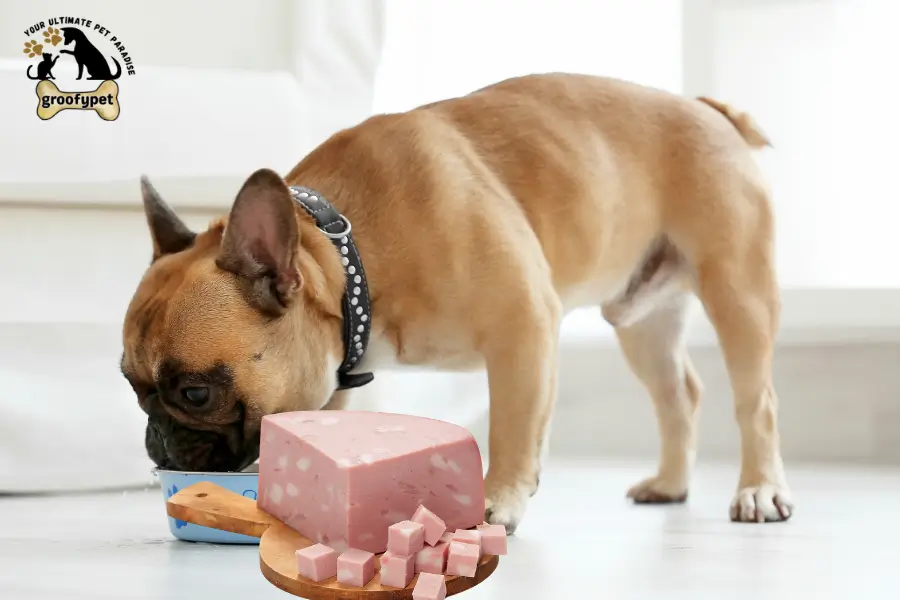
Mortadella is an Italian cured sausage, traditionally made in the city of Bologna. It’s finely ground pork (sometimes blended with other meats) mixed with cubes of pork fat, then seasoned and slow-cooked. The result is a smooth, pink deli meat often studded with visible white fat pieces and sometimes pistachios or peppercorns, depending on the recipe.
American bologna actually takes its name from this dish, though the two aren’t identical products. Traditional mortadella recipes can include:
- Ground pork and pork fat
- Salt
- Black pepper or whole peppercorns
- Myrtle berries or other spices (in some traditional versions)
- Pistachios (in some regional variations)
- Nitrates or nitrites as preservatives
Modern deli versions vary a lot by brand. Some are made with turkey or chicken instead of pork. Some contain garlic or onion powder. Some have added sugar. This is exactly why checking the ingredient label matters more than assuming all mortadella is the same product.
Why Is Mortadella Bad for Dogs?
Mortadella isn’t dangerous the way chocolate or grapes are dangerous, but it stacks up several smaller problems that add up to “not a good regular treat.”
High Fat
Mortadella is made with a meaningful amount of pork fat mixed right into the meat. Fatty foods can upset a dog’s stomach, causing symptoms like vomiting or diarrhea. In some dogs, eating rich, fatty food can also contribute to pancreatitis, a painful inflammation of the pancreas.
Not every dog that eats fatty food will develop pancreatitis. Some dogs handle the occasional fatty bite just fine. But dogs with a history of pancreatitis, dogs that are overweight, and certain breeds that seem more prone to it are at higher risk, and it’s not worth testing that limit with deli meat.
High Sodium
Dogs do need some sodium in their diet, but the amount in a typical serving of deli meat is far more than a dog would get from a balanced dog food. Excessive salt intake can lead to increased thirst, more frequent urination, and in extreme cases, sodium ion poisoning if a dog eats a very large quantity relative to its size.
A tiny bite isn’t going to push a dog into that territory. The concern grows with the amount eaten and how much water the dog has access to afterward.
Seasonings and Spices
This is one of the more important sections to pay attention to. Some mortadella recipes include garlic or onion, either fresh, powdered, or as part of a seasoning blend. These ingredients are genuinely worth being cautious about in dogs, and they’re not always obvious from the outside.
Ingredient labels matter here because “mortadella” isn’t one fixed recipe. A plain, traditional style might just have pork, fat, salt, and pepper. A flavored deli variety might include garlic powder or onion powder blended throughout the meat, which you can’t see or taste for in the way you could with a whole clove of garlic.
Processed Meat
Beyond fat and sodium, mortadella falls into the broader category of processed deli meat, which isn’t built with a dog’s nutritional needs in mind. It’s not designed to be a complete or balanced food, and making it a routine part of a dog’s diet doesn’t offer any real benefit over dog-appropriate proteins. This isn’t a claim that a bite of processed meat causes disease. It’s simply that there’s no upside to feeding it regularly.
Additives and Preservatives
Deli meats commonly include preservatives such as nitrates or nitrites to extend shelf life and maintain color. Some products also include added sugar, flavor enhancers, or other additives depending on the brand. These vary widely from one product to the next, which is another reason a single blanket rule about mortadella doesn’t quite work. What’s true for one brand’s recipe may not be true for another.
Also Read : Can Dogs Eat Nasturtiums? Pros, Cons, and Healthy Alternatives
Is Mortadella Toxic to Dogs?
Mortadella by itself isn’t classified as a toxin the way antifreeze or xylitol are. It’s more accurate to call it an inappropriate regular food than a poison.

That said, the risk isn’t zero, and it depends on a few specific factors:
- The dog’s size and how much was eaten relative to that size
- Whether the recipe contains onion or garlic
- Whether the dog has an existing health condition like pancreatitis or kidney disease
- How much salt and fat is in that particular product
A large amount of salty, fatty processed meat can create genuine digestive problems, and certain added ingredients can be harmful in their own right. But there’s no need to treat a small accidental taste with the same alarm as swallowing something genuinely poisonous. The goal here is caution and awareness, not fear.
Can Dogs Eat a Small Amount of Mortadella?
This is probably the most common real-world scenario: a dog snags a dropped piece off the floor or grabs a slice while nobody’s looking.
In most cases, a small accidental amount eaten by an otherwise healthy adult dog won’t cause a serious problem. Still, it’s worth paying attention to a few details:
- How big is the dog? A single small bite affects a 70-pound Labrador very differently than a 6-pound Chihuahua.
- How much did they actually eat? A lick versus a whole slice versus half a pack.
- What’s in it? Check the label if you have it. Garlic or onion changes the calculation.
- Does the dog have any existing conditions? A dog with pancreatitis, kidney disease, or a sensitive stomach needs more caution than a healthy adult dog with no history of issues.
For most dogs, the right move after a small accidental bite is simply to keep an eye on them for the next day or so. No panic, no emergency room visit required in the typical case. Just awareness.
What Happens If a Dog Eats Mortadella?
Depending on the amount and the individual dog, symptoms can range from nothing at all to noticeable digestive upset. Common, milder symptoms include:
- Vomiting
- Diarrhea
- Increased thirst
- Abdominal discomfort or a hunched posture
- Reduced appetite
- Lethargy or seeming more tired than usual
These symptoms, especially mild vomiting or a single loose stool, often resolve on their own within a day. They’re worth watching, not necessarily an automatic trip to the vet.

More serious warning signs deserve prompt veterinary attention. Contact your vet or an emergency clinic if you notice:
- Repeated or ongoing vomiting
- Severe abdominal pain, or a dog that won’t let you touch their belly
- Extreme weakness or an inability to stand
- Collapse
- Difficulty breathing
- Any neurological symptoms, such as tremors, disorientation, or unsteady walking
- Signs of dehydration, like sunken eyes, dry gums, or lethargy that doesn’t improve
Not every symptom on this list means poisoning occurred. Some of these can show up with ordinary dietary upset too. But they’re the signs that mean “call the vet now” rather than “wait and see.”
Must Read : Can Dogs Eat Betel Nuts? Benefits, Risks, and Warnings!
What If My Dog Ate a Lot of Mortadella?
If your dog got into a significant amount, here’s a practical plan to follow:
- Stay calm. Panicking doesn’t help you assess the situation clearly.
- Figure out roughly how much was eaten. A few slices versus most of the package makes a real difference.
- Check the ingredient label if you still have it. This tells you whether garlic, onion, or other concerning additives were involved.
- Look specifically for onion or garlic on the label, since these carry more risk than plain meat and fat.
- Don’t induce vomiting on your own unless a veterinary professional specifically tells you to. Doing this incorrectly can cause more harm.
- Call your veterinarian or a pet poison helpline when the amount eaten is large, the ingredient list is concerning, or your dog falls into a higher-risk group.
- Monitor your dog closely over the following 24 to 48 hours for any of the symptoms listed above.
Puppies, very small dogs, senior dogs, and dogs with existing health conditions should generally get a lower threshold for calling the vet. Their bodies have less margin for handling excess fat, salt, or problematic ingredients.
Can Dogs Eat Mortadella With Garlic or Onion?
This deserves its own section because it’s one of the more important safety issues tied to mortadella.
Garlic and onion, in essentially any form, are worth taking seriously around dogs. This includes:
- Fresh onion or garlic
- Cooked onion or garlic
- Onion powder
- Garlic powder
- Concentrated seasoning blends that include either one
The tricky part with processed meats is that these ingredients are often blended smoothly into the product. There’s no visible chunk of onion to spot and avoid. A flavored mortadella might list garlic powder several ingredients down the label, easy to miss if you’re not specifically checking.
There isn’t a reliable “safe amount” of onion or garlic to offer a dog, so the safest approach is avoiding foods that contain them at all, rather than trying to calculate a threshold.
Can Puppies Eat Mortadella?
Puppies are more vulnerable to the downsides of mortadella than adult dogs, for a few clear reasons:
- Their digestive systems are still developing and are more easily upset by rich or unusual food.
- Their smaller body size means the same amount of salt or fat has a proportionally bigger impact.
- High sodium and high fat are harder on a growing puppy’s system.
- Seasonings that might barely register in a large adult dog carry more weight in a small puppy.
- Puppies need balanced, complete nutrition to support proper growth, and processed deli meat doesn’t contribute to that.
Puppies are best served by sticking to a quality puppy food and treats made specifically for their age group, rather than experimenting with deli meats from the fridge.
Can Dogs With Pancreatitis Eat Mortadella?
Dogs with a history of pancreatitis need to be especially careful around high-fat foods, and mortadella fits squarely into that category given its fat content.
This isn’t a diagnosis of what’s happening with any specific dog’s digestive symptoms. It’s simply an acknowledgement that fatty foods are a known trigger for flare-ups in dogs already prone to pancreatitis. If your dog is on a veterinary-prescribed low-fat diet, sticking to that plan matters more than any occasional treat, and mortadella isn’t a food that fits within it.
Can Dogs With Kidney Problems Eat Mortadella?
High-sodium processed foods aren’t a good match for dogs managing certain kidney conditions. Many kidney-support diets are specifically formulated to limit sodium and phosphorus, and deli meats like mortadella work against that goal.
This isn’t a blanket statement that applies identically to every dog with kidney disease, since severity and individual treatment plans vary quite a bit. If your dog is on a prescribed renal diet, following your veterinarian’s feeding guidance takes priority over any human food, mortadella included.
Is Turkey Mortadella Safe for Dogs?
It’s a common assumption that swapping pork for turkey makes mortadella automatically dog-safe. That’s not really the case. Turkey mortadella is still a processed deli product, and it typically still contains:
- Meaningful sodium content
- Added fat
- Seasonings, which may or may not include garlic or onion
- Preservatives
- Other additives depending on the brand
The meat source changes the fat profile slightly in some cases, but it doesn’t remove the underlying concerns around sodium, seasoning, and processing. Turkey mortadella isn’t a “safe swap” simply because it’s turkey.
Can Dogs Eat Bologna Instead of Mortadella?
Bologna and mortadella are closely related, and neither one is a great choice for dogs on a regular basis. Here’s how they compare with a few other common deli and treat options:
| Food | Recommended for Dogs? | Main Concern |
|---|---|---|
| Mortadella | No, not recommended | Fat, sodium, seasonings |
| Bologna | No, not recommended | Fat, sodium, additives |
| Salami | No, not recommended | Fat, salt, seasonings |
| Pepperoni | No, not recommended | Fat, salt, spices |
| Plain cooked chicken | Yes, in moderation | Must be unseasoned |
| Plain cooked turkey | Yes, in moderation | Remove skin and seasoning |
“Not recommended” here means these foods don’t offer real benefits and carry avoidable risks, not that they’re automatically poisonous. There’s a meaningful difference between a food that’s simply a poor everyday choice and one that’s genuinely dangerous.
What Are Safer Alternatives to Mortadella for Dogs?
If your dog loves the taste of deli meat, there are better ways to satisfy that without the downsides of mortadella:
- Plain cooked chicken, with no skin, seasoning, or sauce
- Plain cooked turkey, skin removed
- Lean cooked beef, trimmed of excess fat
- Plain cooked fish, deboned and prepared without seasoning
- Small portions of dog-safe fruits like blueberries or apple slices (no seeds or core)
- Commercial treats made specifically for dogs
When offering any meat as a treat, keep these basics in mind:
- Fully cook it, no raw or undercooked meat
- Keep it plain, with no salt, garlic, onion, or spice blends
- Remove bones entirely
- Serve small portions, not a full meal’s worth
- Treat it as an occasional extra, not a daily habit
How Much Human Food Can Dogs Have?
As a general guideline, treats and extras (including any human food) should make up a small share of a dog’s total daily calories, often cited as no more than about ten percent. The rest should come from a complete, balanced dog food.
There’s no single mortadella “safe serving size” worth giving here, because it isn’t a recommended food to begin with. Instead, think about your individual dog:
- Size. Smaller dogs have far less room for extra calories, salt, and fat.
- Age. Puppies and senior dogs often need more careful diets.
- Activity level. An active working dog burns through more calories than a couch companion.
- Health status. Existing conditions change what’s appropriate.
- Current diet. What they’re already eating affects how much room is left for extras.
Mortadella Ingredients to Check Before Your Dog Eats It
If mortadella is already in your kitchen, it’s worth glancing at the label before deciding whether even a small taste makes sense. Watch for:
- Onion
- Onion powder
- Garlic
- Garlic powder
- High or added salt
- High fat content
- Spicy seasoning blends
- Artificial sweeteners
- Any unfamiliar or unusual additives
Ingredient lists vary a lot between brands and even between flavors from the same brand, so it’s worth checking each time rather than assuming one product is like another.
What Should I Do If My Dog Begs for Mortadella?
Dogs are persistent when there’s food involved, and deli meat smells appealing to them. A few practical habits help here:
- Don’t reward begging by handing over deli meat, even a small piece.
- Keep a dog-safe treat on hand as a substitute during meal prep or mealtimes.
- Store processed meats out of reach on counters or in the fridge, not left out.
- Avoid feeding directly from your plate at the table, which reinforces begging.
- Teach and reinforce a “leave it” cue, which helps in a lot of situations beyond just food.
None of this requires being strict for the sake of it. It’s just easier to prevent the habit than to manage it after it’s established.
Mortadella vs Healthy Dog Treats
| Treat | Better Choice for Dogs? | Why |
|---|---|---|
| Mortadella | No | Processed, salty, fatty |
| Plain chicken | Yes | Lean protein when prepared properly |
| Blueberries | Yes | Small fruit treat |
| Carrot pieces | Yes | Low-calorie option |
| Commercial dog treats | Yes | Formulated specifically for dogs |
Not every commercial treat is automatically a great choice either. Reading labels and choosing treats appropriate for your dog’s size and health still matters, but as a category, purpose-made dog treats are a safer bet than sharing deli meat.
Frequently Asked Questions
Can dogs eat mortadella?
Not as a regular treat. Mortadella is high in fat and sodium and may contain garlic or onion depending on the recipe. A small accidental bite usually isn’t a big deal for a healthy adult dog, but it shouldn’t become a habit.
Is mortadella toxic to dogs?
Mortadella itself isn’t classified as a toxin, but it’s not a healthy choice either. The risk depends on the amount eaten, the dog’s size, and whether the recipe includes ingredients like onion or garlic.
Can dogs eat a small piece of mortadella?
A small accidental piece is unlikely to cause serious harm in a healthy adult dog. Still, keep an eye out for vomiting, diarrhea, or unusual lethargy over the following day.
What happens if my dog eats mortadella?
Mild symptoms like vomiting, diarrhea, or a temporary drop in appetite are possible, especially with larger amounts. Severe symptoms like repeated vomiting, weakness, or collapse warrant an immediate call to your vet.
Can dogs eat turkey mortadella?
Turkey mortadella is still processed deli meat with sodium, added fat, and often seasonings. Switching the meat source doesn’t remove these concerns, so it’s not automatically a safer choice.
Can puppies eat mortadella?
Puppies handle high fat and sodium less well than adult dogs due to their smaller size and developing digestive systems. It’s better to stick with puppy-formulated food and treats.
Does mortadella contain garlic?
Some recipes do, either as fresh garlic or garlic powder in the seasoning blend. Always check the ingredient label, since this varies by brand.
Does mortadella contain onion?
Some varieties include onion or onion powder as part of the seasoning. Since it’s often blended into the meat, it isn’t always obvious without reading the label.
Can dogs eat deli meat?
Most deli meats, including mortadella, bologna, and salami, are high in fat and sodium and aren’t recommended as regular dog food. Occasional plain, unseasoned meat is a better option.
What meat is safe for dogs?
Plain, fully cooked chicken, turkey, beef, or fish, with no seasoning, skin, or bones, are generally safe options for dogs in moderation.
Key Takeaways
- Mortadella is not a recommended treat for dogs, though it isn’t the same thing as a poison.
- It’s typically high in both fat and sodium.
- Some recipes include garlic or onion, which are genuine concerns for dogs.
- A tiny accidental bite is very different from a dog eating a large amount.
- There’s no reason to intentionally feed mortadella to a dog on a regular basis.
- Check the ingredient label if your dog gets into some accidentally.
- Contact your veterinarian if the amount eaten is large or symptoms appear.
- Plain, unseasoned meats or dog-specific treats are simply a better everyday choice.
Final Thoughts
So, can dogs eat mortadella? Not really, at least not as anything more than a rare accident. It doesn’t offer your dog any nutritional benefit that you can’t get from safer, simpler foods, and it comes with fat, sodium, and sometimes seasoning risks that just aren’t worth it for a snack.
If your dog steals a bite off the counter, keep an eye on them and move on. If they get into a large amount, or the label shows onion or garlic, that’s worth a call to your vet. Beyond that, a plain piece of cooked chicken or a dog treat made for the job will make your dog just as happy, without the downsides.
Can Dogs Eat Plumcots? Safety, Benefits, Risks and Feeding Guide