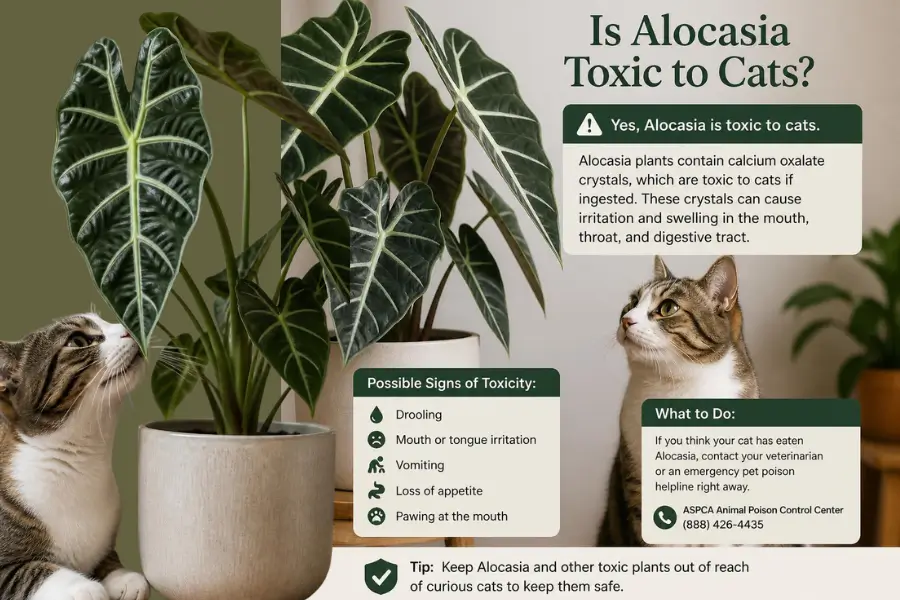
Is alocasia toxic to cats? Learn why Alocasia can be harmful to cats, common poisoning symptoms, and what to do if your cat eats it. Yes, Alocasia is toxic to cats. Every part of the plant contains insoluble calcium oxalate crystals, and chewing on a leaf or stem releases these microscopic, needle-shaped structures into the mouth.
The result is fast, painful irritation rather than slow-acting poisoning. Cats typically respond with drooling, pawing at the mouth, and sometimes vomiting or trouble swallowing.
If you keep this striking houseplant at home, or you’re thinking about bringing one in, it’s worth understanding exactly what makes it risky, what a reaction actually looks like, and when a vet visit becomes necessary rather than optional. This article walks through the toxic mechanism, the symptoms to watch for, immediate steps to take after exposure, and how Alocasia compares to plants that are safer to keep around cats.
Quick answer: Alocasia (elephant ear) is toxic to cats because it contains insoluble calcium oxalate crystals. When a cat bites or chews the plant, these crystals penetrate the soft tissue of the mouth and throat, causing pain, drooling, and swelling. Ingestion can also lead to vomiting and gastrointestinal upset. Severity depends on how much was chewed and the individual cat.
Is Alocasia Toxic to Cats?
Alocasia is toxic to cats, and this applies to every variety and cultivar of the plant, not just certain species. The toxicity comes from insoluble calcium oxalate crystals distributed throughout the plant’s tissue.
When a cat bites into a leaf or stem, plant cells rupture and release these crystals directly into the mouth. This isn’t a slow chemical reaction. The irritation is immediate. Cats often react within seconds of biting down, which is one reason many cats don’t end up swallowing much of the plant. The pain causes them to stop.
Why Is Alocasia Toxic to Cats?
The toxic mechanism behind Alocasia is mechanical, not purely chemical. That distinction matters, so it’s worth breaking down simply.
The plant contains insoluble calcium oxalate crystals shaped like tiny needles. Botanists call these structures raphides. They sit inside specialized plant cells, almost like microscopic bundles of glass shards packed into a capsule.
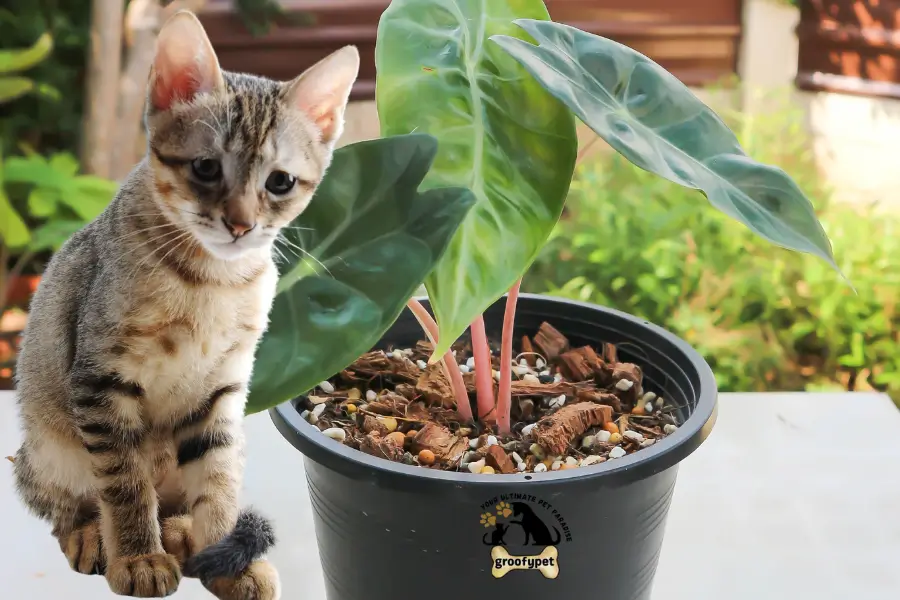
When a cat chews the leaf, stem, or petiole, that capsule ruptures. The needle-shaped crystals shoot into the surrounding tissue, embedding themselves in the lips, gums, tongue, and throat. This physical penetration is what causes the burning sensation and swelling that follow. It’s closer to a mechanical injury than a typical poisoning.
This is different from soluble oxalate poisoning, which involves oxalate compounds that dissolve and get absorbed into the bloodstream, potentially affecting the kidneys over time. Plants like certain ornamental Oxalis species or rhubarb leaves contain soluble oxalates. Alocasia’s insoluble crystals work differently.
They cause direct, localized tissue damage in the mouth and digestive tract rather than a systemic oxalate buildup. Severe kidney injury from Alocasia specifically is not the typical pattern seen with this plant, though any significant plant ingestion in a cat still deserves veterinary attention.
In short, the danger from Alocasia is physical irritation caused by crystal penetration, triggered the moment a cat bites into the plant.
What Is Alocasia?
Alocasia is a genus of tropical plants often grown as houseplants for their bold, dramatic foliage. Many varieties produce large, arrow-shaped or heart-shaped leaves with pronounced veining, which is why the plant has become a favorite for adding a jungle-like feel to indoor spaces.
Common names for Alocasia include elephant ear and African mask plant, though “elephant ear” is used loosely across several different plant genera. Popular Alocasia varieties sold in nurseries and online include Alocasia amazonica, Alocasia zebrina, and Alocasia macrorrhiza, among others. Some are grown strictly indoors, while others can be placed outside seasonally in warmer climates.
Because Alocasia is widely sold at garden centers, plant shops, and online retailers, it’s easy for a cat owner to bring one home without realizing it poses a risk. This is where plant identification becomes genuinely important. Several unrelated plants share the “elephant ear” nickname, and their toxicity profiles aren’t identical.
If you’re not sure exactly which plant you have, it’s worth checking the botanical name on the plant tag or asking the seller before assuming it’s safe.
What Parts of Alocasia Are Toxic?
Every part of the Alocasia plant should be treated as unsafe for cats. This includes:
- Leaves
- Stems and petioles (the stalks connecting leaves to the plant)
- Sap released from broken or cut tissue
- Roots, rhizomes, and corms
- Flowers, when present
Calcium oxalate crystals are distributed throughout the plant’s structure, not concentrated in one area. That means there’s no “safe” piece to let a cat chew on and no part of the plant that can be assumed harmless just because it looks less appealing to eat.
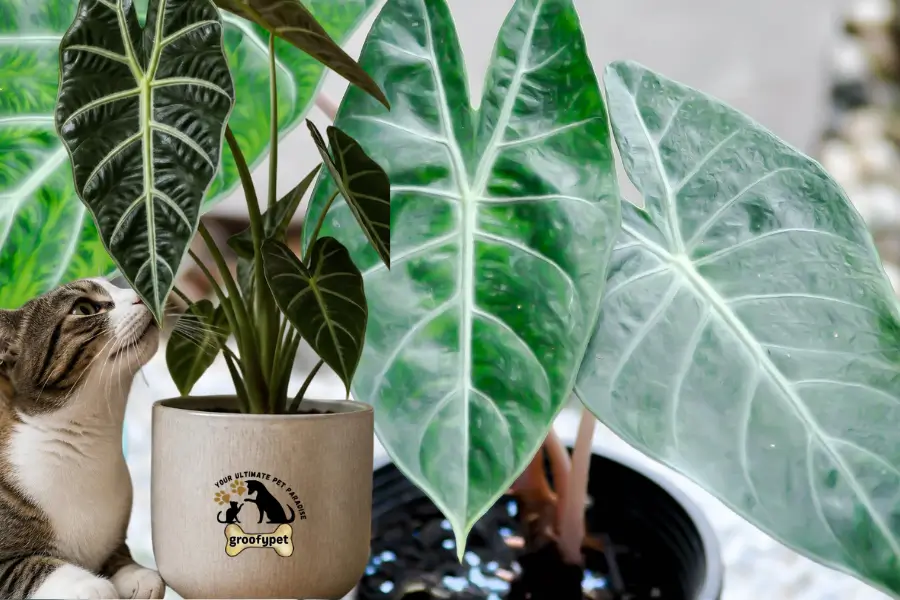
Don’t test this by offering a cat a small piece of leaf to see how they react. Even a small bite can cause a strong, painful response, and there’s no reliable way to predict how a particular cat will handle exposure.
What Happens If a Cat Eats Alocasia?
The typical sequence starts the moment a cat bites into the plant. Because the crystals release on contact, reactions often begin within seconds to minutes.
Most cats show immediate mouth discomfort. They may shake their head, paw at their face, or drool heavily as the crystals irritate oral tissue. Some cats vocalize or seem distressed in the first few minutes after biting down.
From there, a range of symptoms can follow:
- Drooling that doesn’t stop quickly
- Pawing at the mouth or face
- Difficulty swallowing
- Swelling of the lips or tongue
- Vomiting
- A drop in appetite over the following hours
- General stomach discomfort
Not every cat experiences every symptom. A cat that takes one bite and immediately drops the leaf may only show brief drooling and mouth irritation. A cat that chews and swallows more plant material is more likely to develop vomiting or ongoing discomfort. Because reactions vary, it’s worth watching your cat closely for several hours after any known or suspected exposure, even if the initial signs seem mild.
It’s also worth noting that chewing alone, without swallowing much of the plant, can still cause noticeable symptoms. The crystals do their damage on contact with tissue, so a cat doesn’t need to eat a large amount for the mouth to become irritated.
Symptoms of Alocasia Poisoning in Cats
Symptoms generally fall into two groups: signs that show up early and are common, and signs that suggest a more serious reaction.
Early or Common Symptoms
- Excessive drooling
- Pawing at the mouth
- Lip irritation or redness
- Tongue irritation
- Visible mouth pain or discomfort
- Difficulty swallowing
- Vomiting
These are the signs most owners notice first, often within minutes of the cat chewing the plant.
More Concerning Symptoms
- Significant swelling of the mouth or tongue
- Trouble swallowing that doesn’t improve
- Difficulty breathing
- Severe weakness or lethargy
- Persistent or repeated vomiting
If your cat shows any sign of breathing difficulty, treat it as an emergency and seek veterinary care right away. Swelling in the throat area can restrict the airway, and this is not something to wait out at home.
It’s also worth keeping expectations realistic. Most cats that chew a small amount of Alocasia will show mild, short-lived symptoms rather than a severe reaction. Still, because individual responses vary, any exposure is worth monitoring closely and worth a call to your veterinarian for guidance.
Can Alocasia Cause Drooling in Cats?
Yes, drooling is one of the most common and recognizable signs of Alocasia exposure. It happens because the calcium oxalate crystals irritate the sensitive tissue lining the mouth, and the body responds by producing extra saliva.
This isn’t ordinary drooling from relaxation or excitement. It tends to come on suddenly, often paired with lip smacking, head shaking, or pawing at the mouth. Cats may also appear agitated or restless immediately after biting the plant.
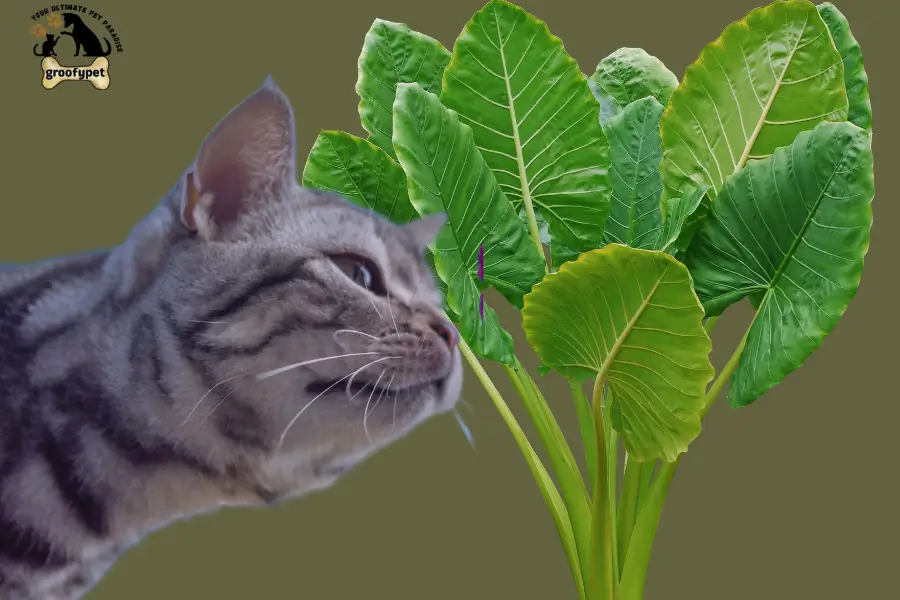
If your cat suddenly starts drooling heavily and you know there’s an Alocasia plant in the house, it’s reasonable to suspect plant exposure, especially if you find chew marks or fallen leaf pieces nearby. Sudden, unexplained drooling like this shouldn’t be brushed off. It’s worth checking your cat’s mouth carefully (without forcing it open) and contacting your veterinarian to describe what you’re seeing.
Can Alocasia Cause Swelling in a Cat’s Mouth?
Oral swelling is a real possibility after a cat chews Alocasia. The crystals embed in soft tissue, and the body’s inflammatory response can cause the affected area to swell.
This swelling can involve the lips, tongue, and other mouth tissues, and in more significant cases, it may extend toward the throat. Mild swelling might just look like a slightly puffy lip or tongue. More serious swelling can make it hard for a cat to close its mouth comfortably, swallow normally, or breathe without effort.
This is the point where a home situation can turn into an emergency. Swelling that interferes with swallowing is concerning on its own. Swelling that starts to affect breathing needs urgent veterinary attention without delay. Watch for open-mouth breathing, unusual breathing sounds, or a cat that seems to be struggling for air, and get to a vet immediately if you notice any of these signs.
Also Read: Is Hydrogen Peroxide Safe for Cats? Vet-Reviewed Safety Guide
What Should I Do If My Cat Eats Alocasia?
Staying calm and moving through a clear set of steps is the most useful thing you can do in the moment.
- Move your cat away from the plant. Prevent further chewing or ingestion right away.
- Remove remaining plant material from the area. Pick up dropped leaves, stems, or debris so your cat can’t return to it later.
- Check the mouth gently if your cat allows it. Look for visible plant pieces, but don’t force the mouth open if your cat resists. A stressed or painful cat may react defensively.
- Identify the plant. Confirm it’s Alocasia and, if possible, note the variety. This information helps your veterinarian assess the situation.
- Contact your veterinarian or a veterinary poison control service. Describe what happened, how much you think your cat chewed or swallowed, and what symptoms you’re seeing.
- Monitor your cat according to the guidance you’re given. Symptoms can shift over the following hours, so keep an eye on things even after the initial reaction settles.
A few things not to do: don’t try to induce vomiting at home. This isn’t recommended for plant exposures like this, and doing it incorrectly can cause additional harm, especially given the mouth and throat irritation already present. Also avoid giving your cat any medication, home remedy, or household substance without direction from a veterininary professional.
What seems helpful can sometimes make irritation worse or interact poorly with what’s already happening in your cat’s mouth and stomach.
Because exposure amount and individual reactions vary so much, professional guidance is genuinely the safest path. A quick phone call can help you figure out whether this is something to monitor at home or something that needs an in-person visit.
When Is Alocasia Poisoning an Emergency?
Most Alocasia exposures cause discomfort rather than a life-threatening emergency, but certain signs mean you shouldn’t wait to see if things improve on their own.
Treat the following as urgent:
- Difficulty breathing or labored breathing
- Severe swelling of the tongue or throat
- Inability to swallow
- Collapse
- Severe weakness that comes on suddenly
- Persistent or severe vomiting
- Signs of significant distress that don’t ease up
Breathing problems in particular require immediate emergency veterinary care. Airway swelling can progress, and this isn’t something to manage with home monitoring.
If you have reason to believe your cat had significant exposure, such as finding a heavily chewed plant or noticing multiple symptoms together, don’t wait for things to escalate before reaching out for help. Early contact with a veterinarian gives your cat the best chance at a smooth recovery.
Is Alocasia Dangerous for Kittens?
Alocasia poses a risk to cats of any age, but kittens deserve extra caution. Their small body size means that even a modest amount of plant material represents a larger relative exposure compared to an adult cat.
Kittens are also naturally curious and tend to explore the world mouth-first. Chewing on unfamiliar objects, including houseplants, is common kitten behavior, and a young cat may not have the same instinct to stop chewing immediately after the first sign of irritation.
Because of this combination, supervision alone isn’t a reliable safeguard in a kitten household. It’s better to treat Alocasia as completely inaccessible if you have a kitten around, rather than counting on watching them closely enough to intervene before they take a bite.
Must Read : Is Aloe Vera Safe for Cats? No — Vet Opinions Explained
Can Cats Recover From Alocasia Poisoning?
Many cats recover well from Alocasia exposure, particularly when the reaction is caught early and supportive care is provided. The mechanical nature of the injury, meaning irritation from crystal penetration rather than a systemic toxin, generally allows for a more straightforward recovery process compared to some other types of plant poisoning.
That said, there’s no fixed recovery timeline that applies to every cat. Outcome depends on several factors:
- How much plant material was chewed or swallowed
- How severe the symptoms became
- The individual cat’s size, health, and sensitivity
- How quickly treatment was started
- Whether complications, like significant swelling or persistent vomiting, developed along the way
A cat with mild, brief symptoms may be back to normal within a day. A cat with more significant oral swelling or ongoing vomiting may need a few days of supportive care and monitoring. Because every case is different, it’s best to rely on your veterinarian’s assessment rather than general expectations about recovery time.
How Veterinarians May Manage Alocasia Exposure
When a cat is brought in for suspected Alocasia exposure, veterinary care typically focuses on managing symptoms and preventing complications rather than reversing a single toxic event.
This may involve:
- A physical exam of the mouth and throat to check for visible irritation, swelling, or retained plant material
- Monitoring breathing and swallowing ability closely
- Treatment aimed at reducing pain and inflammation in the mouth
- Management of vomiting if it’s occurring
- Fluid support if the cat is dehydrated or not eating or drinking normally
- Continued observation for signs of complications, especially in more severe cases
The specific treatments and any medications used are decisions made by the veterinarian based on the individual cat’s condition. This article won’t recommend specific drugs or dosages, since that assessment needs to happen in person, with a professional who can examine your cat directly.
Alocasia vs Other Elephant Ear Plants
“Elephant ear” is a common name shared by several different plants, and this creates real confusion for cat owners trying to research safety.
Alocasia is one genus commonly called elephant ear. Colocasia, often grown as taro, is another. Xanthosoma is a third. All three share the broad, heart-shaped or arrow-shaped leaf look that inspired the nickname, and all three contain calcium oxalate crystals to varying degrees, which means caution applies across the group.
However, “similar nickname” doesn’t automatically mean “identical risk profile.” Different species and even different growing conditions can affect crystal concentration and plant chemistry. This is exactly why relying on a common name isn’t enough. If you’re trying to determine whether a specific plant in your home is safe, look up the full botanical name, ideally genus and species, rather than assuming based on what the nursery tag or seller called it.
Alocasia vs Cat-Safe Houseplants
Comparing Alocasia to commonly recommended cat-safe plants makes the difference in risk level easier to see at a glance.
| Plant | General Cat Safety | Main Consideration |
|---|---|---|
| Alocasia | Toxic | Contains insoluble calcium oxalate crystals |
| Spider plant | Generally non-toxic | Cats may still chew it, so monitor for mild stomach upset |
| Boston fern | Generally non-toxic | Keep soil and any treatments applied to it safe |
| Areca palm | Generally non-toxic | Avoid chemical fertilizers or pesticide treatments |
| Calathea | Generally non-toxic | Still not intended as food for cats |
A plant labeled “non-toxic” isn’t an invitation to let your cat eat it freely. Even safe plants can cause mild digestive upset if a cat eats a large amount, and soil, fertilizers, or pest treatments can introduce separate risks that have nothing to do with the plant itself. Non-toxic simply means the plant tissue itself isn’t expected to cause the kind of chemical or mechanical injury that Alocasia can.
Cat-Safe Alternatives to Alocasia
If you love the look of large, leafy houseplants but want to avoid the risk Alocasia carries several alternatives that are commonly recommended for cat households:
- Spider plant — easy to grow, with long arching leaves that some cats enjoy batting at
- Boston fern — adds lush greenery without the oxalate crystal risk
- Areca palm — a taller option that brings a similar tropical feel to a room
- Calathea — known for patterned leaves and a striking appearance
- Peperomia — compact and low-maintenance, with a wide variety of leaf shapes
Before bringing any new plant home, verify its identity using the full botanical name rather than relying on a common nickname at the store. It’s also worth remembering that fertilizers, leaf-shine products, and pest treatments applied to otherwise safe plants can introduce their own risks, so check what’s been used on a plant before assuming it’s completely safe for a curious cat.
How to Keep Alocasia Away From Cats
If you already own Alocasia and don’t want to give it up, some practical steps can reduce the chance of an incident:
- Keep the plant in a room your cat can’t access, and close the door consistently.
- Use a secure barrier, like a plant stand with a mesh enclosure, if a dedicated room isn’t an option.
- Don’t rely on high shelves alone. Cats climb, jump, and often reach places you’d assume are out of range.
- Remove fallen leaves and stem pieces promptly, since these are just as risky as the plant itself.
- Keep any cuttings, trimmings, or propagation pieces away from cat-accessible areas.
- Consider replacing Alocasia with a cat-safe alternative if keeping it reliably out of reach isn’t realistic in your home.
- Make sure everyone in the household, including guests, knows the plant is unsafe for the cat.
- Check every new plant before bringing it indoors, rather than assuming it’s fine based on appearance alone.
Consistency matters more than any single barrier. A cat only needs one unsupervised opportunity to cause a problem, so the goal is removing that opportunity altogether rather than managing it moment to moment.
Why Do Cats Chew Houseplants?
Understanding why cats go after plants in the first place can help with prevention. There isn’t one single reason, but a few common motivations show up repeatedly:
- Curiosity. New objects in the home, including plants, naturally draw investigation.
- Exploration. Cats use their mouths to examine texture and shape, not just to eat.
- Boredom. A cat without enough mental or physical stimulation may turn to plants for entertainment.
- Play. Swaying leaves and dangling stems can trigger a cat’s instinct to bat at and grab moving objects.
- Texture. Some cats are simply drawn to the feel of certain leaves in their mouth.
- Natural interest in greenery. Chewing on plant material is a normal behavior across many cats, unrelated to any specific need.
There’s no single proven explanation that applies to every cat, and often it’s a combination of these factors. Providing cat-safe alternatives, like cat grass, alongside removing dangerous plants can help redirect this natural chewing instinct toward something safe.
Other Common Plants That Are Toxic to Cats
Alocasia isn’t the only houseplant that deserves caution. A few other well-known examples include
- True lilies and daylilies — these are especially dangerous, since even small amounts can cause life-threatening kidney injury in cats. This risk is separate from and more severe than what Alocasia typically causes.
- Sago palm — contains toxins that can cause serious liver damage.
- Certain other calcium oxalate-containing plants, such as pothos and philodendron, which share a similar mechanical irritation pattern to Alocasia, though severity can vary by plant.
Toxicity varies a great deal between different plants, both in mechanism and severity. Lilies, for example, pose a fundamentally different and more urgent danger than Alocasia does, since the kidney damage they cause can be fatal even with a small exposure. This is why it’s worth researching each specific plant in your home individually rather than assuming all “toxic” plants carry the same level of risk.
How to Prevent Plant Poisoning in Cats
Beyond Alocasia specifically, a few general habits go a long way toward keeping cats safe around houseplants:
- Research every plant before bringing it home, using its full botanical name.
- Keep known toxic plants outside the home entirely, rather than trying to manage access indoors.
- Check flower bouquets carefully, since lilies and other dangerous flowers are common in cut arrangements.
- Don’t rely on common names alone when assessing safety, since the same nickname can apply to very different plants.
- Store fertilizers and pesticides somewhere your cat can’t reach.
- Remove fallen leaves, petals, and plant debris promptly.
- Make sure everyone in the household understands which plants are off-limits.
- Contact a veterinarian right away if your cat eats an unfamiliar or unidentified plant, even if symptoms haven’t appeared yet.
Frequently Asked Questions
What happens if a cat eats Alocasia?
Chewing releases calcium oxalate crystals that irritate the mouth almost immediately. Cats often drool, paw at their mouth, and may vomit. Symptoms depend on how much plant material was chewed or swallowed and how the individual cat responds.
What part of Alocasia is toxic?
The entire plant is toxic, including the leaves, stems, petioles, sap, roots, and rhizomes. Calcium oxalate crystals are distributed throughout the plant’s tissue, so no part should be considered safe.
Can Alocasia cause drooling in cats?
Yes. Drooling is one of the most common signs of Alocasia exposure. It happens because the calcium oxalate crystals irritate the mouth, prompting excess saliva production. Sudden drooling after plant contact should be checked out.
Can Alocasia cause mouth swelling?
Yes. The lips, tongue, and other mouth tissues can swell after exposure. Mild swelling is uncomfortable but usually manageable. Significant swelling that affects breathing or swallowing needs urgent veterinary attention.
What are the symptoms of Alocasia poisoning?
Common symptoms include drooling, pawing at the mouth, oral irritation, difficulty swallowing, and vomiting. More serious signs include significant swelling, breathing difficulty, and persistent vomiting, which require prompt veterinary care.
What should I do if my cat eats Alocasia?
Move your cat away from the plant, remove remaining plant material, and contact your veterinarian or a veterinary poison control service. Don’t induce vomiting or give home remedies. Monitor your cat closely based on professional guidance.
Is Alocasia dangerous for kittens?
Yes, and kittens may be more vulnerable due to their small size and tendency to chew on new objects. Keeping Alocasia completely inaccessible is safer than relying on supervision alone with young cats.
Can cats recover from Alocasia poisoning?
Many cats recover well, especially with prompt veterinary attention. Recovery time varies based on the amount ingested, symptom severity, and the individual cat. There’s no fixed timeline, and outcomes depend on each specific case.
Are elephant ear plants toxic to cats?
Several plants share the “elephant ear” nickname, including Alocasia, Colocasia, and Xanthosoma, and most contain calcium oxalate crystals to some degree. Because toxicity can vary between them, it’s best to identify the exact plant by botanical name.
What houseplants are safe for cats?
Plants generally considered safer for cats include spider plants, Boston ferns, areca palms, calathea, and peperomia. Even with safe plants, it’s wise to discourage heavy chewing and keep fertilizers or treatments out of reach.
Key Takeaways
- Alocasia is toxic to cats due to insoluble calcium oxalate crystals found throughout the plant.
- Chewing releases these crystals immediately, causing mechanical irritation rather than slow-acting poisoning.
- Common symptoms include drooling, pawing at the mouth, and vomiting.
- Significant swelling or difficulty breathing are emergency signs that need immediate veterinary care.
- Don’t induce vomiting or give home remedies without veterinary direction.
- Keep Alocasia in a location your cat truly cannot access, not just somewhere inconvenient to reach.
- Kittens need extra caution due to their small size and natural chewing instincts.
- Cat-safe alternatives like spider plants and Boston ferns offer similar greenery without the same risk.
Final Thoughts
Is alocasia toxic to cats? Learn why Alocasia can be harmful to cats, common poisoning symptoms, and what to do if your cat eats it. Alocasia’s striking leaves make it a popular choice for indoor plant collections, but it isn’t a plant that belongs within reach of a curious cat. The insoluble calcium oxalate crystals inside its tissue cause real, immediate discomfort the moment a cat bites down, and while most reactions are manageable, some can escalate into something that needs urgent care.
The most effective approach is prevention. Keep the plant genuinely inaccessible, know the signs of a reaction in case an accident happens anyway, and don’t hesitate to call your veterinarian if your cat shows drooling, swelling, or any sign of distress after contact with the plant. Quick, calm action, paired with professional guidance, gives your cat the best outcome if an exposure ever does occur.