
Can Dogs Eat Kimbap? No, dogs should not eat regular kimbap. While kimbap is a beloved Korean dish loaded with rice, vegetables, and protein, the version made for people usually contains seasonings, sauces, and fillings that are not suitable for dogs. Ingredients like garlic, onion, spicy sauce, and heavy salt content can all be a problem for your dog’s digestive system.
That said, the answer isn’t a flat “never.” Some of the individual ingredients that go into kimbap, like plain rice, plain seaweed, or plain cooked egg can be perfectly fine for dogs in small amounts. The real issue is how kimbap is prepared. Once those ingredients are seasoned, rolled together, and dressed in sauce, the dish becomes something very different from what a dog’s body is built to handle.
So if you’re wondering whether to share your lunch with your pup, the safest answer is skip the kimbap roll itself, but feel free to offer a few plain, unseasoned ingredients on the side.
What Is Kimbap?
Kimbap (also spelt ‘gimbap’) is a popular Korean dish that looks a lot like sushi, though it’s made differently and has its own distinct flavor. It consists of seasoned rice and a variety of fillings rolled tightly inside a sheet of seaweed, then sliced into bite-sized pieces.
Common kimbap ingredients include:
- Seasoned white rice (often mixed with sesame oil and salt)
- Seaweed (nori) wrapper
- Pickled radish (danmuji)
- Carrots
- Spinach or other leafy greens
- Cucumber
- Egg, cooked into a thin omelet strip
- Fish cake, imitation crab, tuna, or beef
- Sesame oil and sesame seeds
- Soy sauce, sometimes served as a dipping sauce
Kimbap is a favorite lunchbox meal in Korean households because it’s portable, filling, and endlessly customizable. There’s classic kimbap with beef and pickled radish, tuna mayo kimbap, spicy kimchi kimbap, cheese kimbap, and dozens of regional or family variations. Some restaurants even sell “diet kimbap,” which swaps rice for more vegetables, or triangle-shaped kimbap (samgak kimbap) sold as a quick snack at convenience stores.
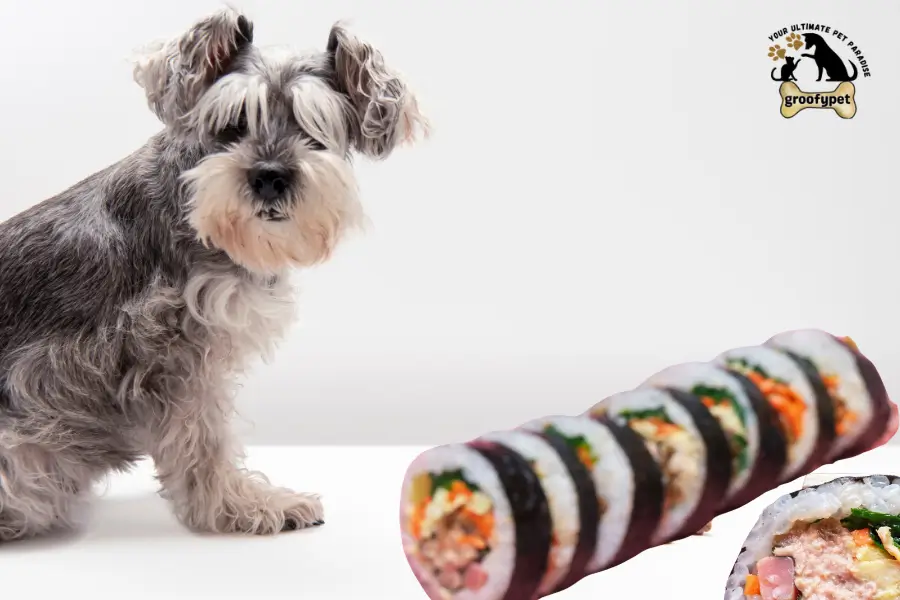
That same variety of ingredients is exactly why it’s tricky to answer the question “can dogs eat kimbap?” with a simple yes. Every roll is different, and what’s inside matters more than the dish’s name. A homemade roll with mild seasoning is a different story than a store-bought roll with spicy mayo, pickled vegetables, and a heavily salted dipping sauce. When you’re trying to decide whether to share your food with your dog, it helps to think ingredient by ingredient rather than treating “kimbap” as a single, uniform food.
Is Kimbap Safe for Dogs?
Generally speaking, kimbap is not a good choice for dogs, even as an occasional treat. This isn’t because every single ingredient is dangerous; it’s because kimbap combines multiple ingredients that are seasoned, salted, or spiced in ways that don’t suit a dog’s digestive system.
Think of kimbap less as one food and more as a bundle of many small decisions. Some of those decisions (plain carrot, a bit of cucumber) are dog-friendly. Others (garlic-infused sauce, salty pickled radish, spicy mayo) are not. Because you usually can’t separate all these components once the roll is made, the safest approach is to treat the finished dish as off-limits for dogs.
If you want to share the “spirit” of kimbap with your dog, the better route is to offer a few of the safe ingredients on their own, plain and unseasoned, rather than giving your dog a slice of the actual roll.
It also helps to remember that dogs and people process food differently. A dog’s digestive system isn’t designed to handle the same range of seasonings, sauces, and fermented or pickled ingredients that show up in a lot of human cooking, Korean food included.
This doesn’t mean Korean food is uniquely dangerous; it’s simply that any heavily seasoned dish, from pizza to pasta to kimbap, tends to include elements that are better suited for people than for dogs. Understanding this general rule makes it easier to judge other foods your dog might beg for at the dinner table, too.
Also Read: Can Dogs Eat Ambarella Fruit?
Kimbap Ingredients: Which Are Safe for Dogs?
Not every ingredient in kimbap carries the same level of risk. Here’s a breakdown of what tends to be safe in small amounts and what should be avoided entirely.
| Kimbap Ingredient | Generally Safe? | Important Notes |
|---|---|---|
| Plain cooked rice | Yes, in moderation | Must be plain and fully cooked, with no salt, oil, or seasoning added |
| Plain seaweed | Generally yes | Avoid seasoned, oiled, or salty seaweed snacks |
| Plain cooked egg | Yes | Serve fully cooked and unseasoned, no salt or oil |
| Carrot | Yes | Best served plain and cut into small, manageable pieces |
| Cucumber | Yes | Plain and cut into appropriately sized pieces to avoid choking |
| Cooked lean meat | Usually yes | Must be plain, boneless, and free from seasoning or marinade |
| Garlic | No | Can be harmful to dogs, even in small amounts |
| Onion | No | Can be toxic to dogs and should never be offered |
| Spicy sauce | No | May irritate a dog’s digestive system and cause discomfort |
| Very salty fillings | Avoid | Excess salt is not appropriate for a dog’s diet |
A few important notes on this table: ingredient safety isn’t just about the ingredient itself. It also depends on the quantity offered, how it was prepared, and your individual dog’s size, health history, and sensitivities. A large, healthy adult dog may tolerate a small taste of plain rice just fine, while a small dog with a sensitive stomach might react differently to the same amount. When in doubt, less is always safer than more.
Why Regular Kimbap May Be Bad for Dogs
Even though kimbap looks like a wholesome, balanced meal, several common elements make it a poor fit for dogs.
- High sodium. Kimbap rice is often seasoned with salt, and many fillings add even more sodium. Dogs have a much lower tolerance for salt than people do, and regularly eating salty food can put unnecessary strain on their system.
- Garlic and onion. These are two of the most well-known offenders when it comes to human foods that dogs should avoid. Both belong to a plant family that can be harmful to a dog’s red blood cells, and they sometimes show up in kimbap fillings or sauces.
- Spicy sauces. Some kimbap variations include spicy mayo or chili-based sauces. Dogs aren’t built to handle spice the way people are, and these sauces can lead to stomach upset.
- Excess oil or fat. Sesame oil is a signature flavor in kimbap, and while a tiny amount is unlikely to cause harm, regularly eating oily food can contribute to an upset stomach or unwanted weight gain over time.
- Seasonings in general. Beyond salt and spice, kimbap often includes soy sauce, sugar, and other flavorings that aren’t necessary or appropriate for a dog’s diet.
- Pickled ingredients. Pickled radish, a kimbap staple, is typically high in salt and sometimes sugar or vinegar, none of which offer real nutritional benefit to a dog.
- Ingredients that may upset the stomach. Combined together, all these seasonings and additions can be more than a dog’s digestive system is used to, even if no single ingredient is dangerous on its own.
- Choking concerns from large pieces. Kimbap slices are often cut into rounds that could pose a choking risk for smaller dogs, especially if gulped down quickly rather than chewed.
- Fermented or pickled additions. Some kimbap recipes include kimchi or other fermented vegetables as a filling. These often contain the same problematic ingredients found in kimchi itself, including garlic, chili, and high salt levels, which compound the concerns already present in a typical roll.
- Hidden ingredients you can’t always see. Once kimbap is rolled and sliced, it can be hard to tell exactly what went into it just by looking. A sauce might be brushed on lightly, or a filling might be finely chopped and blended in. This makes it difficult to control exactly what your dog is eating if you offer a piece of the finished dish, which is another reason many veterinarians and pet owners prefer to avoid it altogether.
- None of this means kimbap is an emergency-level danger sitting on your kitchen counter. Most dogs who steal a single bite won’t have a serious reaction. But repeated exposure, larger amounts, or a roll that happens to be heavy on onion, garlic, or spicy sauce can turn a harmless snack into a real problem. It’s the accumulation of small risks, rather than one single dangerous ingredient, that makes kimbap worth avoiding as a regular dog treat.
Can Dogs Eat Plain Kimbap Ingredients?
Yes, and this is really the safest way to let your dog “try” kimbap without the risk. Instead of handing over a slice of the finished roll, you can set aside a few plain ingredients before they’re seasoned or combined.

For example, you could offer your dog a small piece of plain cooked carrot, a bite of unseasoned cucumber, or a small portion of plain cooked egg. These are the same building blocks used in kimbap, just without the salt, oil, garlic, onion, or sauce that make the finished dish problematic.
This approach lets your dog enjoy some of the same flavors and textures found in your meal while keeping their treat firmly within dog-safe territory. It also gives you full control over portion size, which is important since even safe foods should only make up a small part of a dog’s overall diet.
Must Read:Can Dogs Eat Santol
Can Puppies Eat Kimbap?
Puppies should not eat kimbap, and honestly, they should be given even less leeway with human food than adult dogs. Puppies are growing quickly, and their nutritional needs are very specific. They require a carefully balanced diet designed to support healthy bone growth, muscle development, and organ function.
A puppy’s digestive system is also more sensitive than an adult dog’s. Foods that might cause only mild discomfort in a grown dog could lead to more noticeable issues in a puppy, including an upset stomach or diarrhea.
Beyond the digestive concerns, filling a puppy up on kimbap or other human snacks can crowd out the balanced puppy food they actually need. Puppies have small stomachs and high energy needs relative to their size, so every bite counts more than it might for an adult dog. Offering table scraps, even seemingly harmless ones, can also set a habit of begging that becomes harder to manage as your puppy grows.
Salt sensitivity is another reason to be extra cautious with puppies. Because they’re smaller and still developing, puppies generally need less sodium than adult dogs, and the salty seasoning found in kimbap rice and fillings can affect them more noticeably. The same goes for onion and garlic; a small amount that might cause mild discomfort in a large adult dog could be more serious for a young, small-bodied puppy.
If you want to give your puppy an occasional taste of something outside their regular diet, stick to very small amounts of plain, dog-safe foods, and always check with your veterinarian first about what’s appropriate for your puppy’s age, breed, and any health conditions they may have.
What Should You Do If Your Dog Ate Kimbap?
If your dog managed to snag a piece of kimbap off the counter or out of your lunch, try not to panic. Start by gathering some basic information, since this will help you (and your veterinarian, if needed) figure out the next steps.

Ask yourself:
- What ingredients were in the kimbap? Try to recall whether it contained onion, garlic, spicy sauce, or other concerning additions.
- How much did the dog eat? A small nibble is very different from an entire roll.
- How large is the dog? Smaller dogs are more affected by the same amount of a problematic ingredient than larger dogs.
- Were any high-risk ingredients included? Onion, garlic, and spicy sauces raise more concern than plain rice or vegetables.
After eating kimbap, keep an eye out for any of these signs:
- Vomiting
- Diarrhea
- Unusual weakness or lethargy
- Loss of appetite
- Other noticeable changes in behavior
If you know or suspect that your dog ate a potentially toxic ingredient like onion or garlic, especially in an unknown amount, or if your dog is already showing any of the symptoms above, contact your veterinarian or an animal poison control service right away. It’s always better to check in with a professional than to wait and see, particularly when onion or garlic toxicity is a possibility.
Safe Alternatives to Kimbap for Dogs
If you’d like to share a snack with your dog while you enjoy your kimbap, there are plenty of simple, dog-friendly options that don’t come with the same risks:
- Plain cooked rice, served without salt, oil, or seasoning
- Plain cooked chicken, boneless and unseasoned
- Plain cooked egg, without butter, oil, or salt
- Carrots, raw or cooked, cut into appropriate pieces
- Cucumber, cut into small, manageable slices
These alternatives let your dog enjoy some of the textures and tastes found in kimbap, minus the ingredients that cause problems. As always, moderation matters. Even safe foods should be given in small amounts, and they should never replace your dog’s regular, balanced diet. Steer clear of seasoning, sauces, onion, garlic, and excessive salt no matter which alternative you choose.
If you’d like to get a little creative, you can even make a simple “dog-safe kimbap” using these ingredients. Cook plain rice, mix in a small amount of finely chopped plain carrot or cucumber, and skip the seaweed wrap if your dog isn’t used to it, or use a small piece of plain seaweed if they tolerate it well. This gives your dog something that looks and feels similar to kimbap, made specifically with their health in mind rather than human taste preferences. Just introduce any new food slowly and watch for any signs of an upset stomach.
How Much Kimbap Can a Dog Eat?
There isn’t a safe serving size to recommend for regular, seasoned kimbap, because the dish as a whole isn’t a good fit for a dog’s diet. Rather than trying to figure out “how much is too much,” the better approach is to avoid feeding your dog human kimbap altogether.
If you want to include your dog in mealtime, the safest path is to offer individual dog-safe ingredients like plain rice, plain vegetables, or plain cooked protein in small portions. This way, you’re not guessing about hidden salt, sauce, or seasoning that might be mixed into a finished roll.
Frequently Asked Questions
Can dogs eat kimbap rice?
Plain, unseasoned rice can be given to dogs in small amounts. The concern is that kimbap rice is usually mixed with salt, sesame oil, or vinegar, which makes it less suitable than plain cooked rice on its own.
Can dogs eat seaweed from kimbap?
Plain seaweed is generally safe for dogs in small quantities. However, the seaweed used in kimbap may be lightly oiled or salted, so it’s best to offer plain seaweed separately rather than the seaweed used in the actual roll.
Can dogs eat kimbap with egg?
Plain, fully cooked egg without any seasoning can be a safe treat for dogs. If the egg used in the kimbap is plain, a small piece may be fine, but avoid any egg that’s been seasoned or cooked with oil and salt.
Can dogs eat beef kimbap?
Plain, cooked, unseasoned beef can generally be given to dogs in small amounts. The beef used in kimbap, though, is often marinated or seasoned with soy sauce, garlic, or sugar, which makes it a better idea to avoid the beef filling from a finished roll.
Can dogs eat tuna kimbap?
Small amounts of plain, cooked tuna can sometimes be offered to dogs, but tuna kimbap fillings are often mixed with mayonnaise, seasoning, or spicy sauce. It’s best to skip the tuna filling used in kimbap and offer plain tuna separately if you’d like to share it with your dog.
Can dogs eat kimbap with carrots?
Yes, plain carrots are a safe and healthy option for dogs. If you want to share the carrot pieces from your kimbap, just make sure they haven’t been seasoned or cooked with oil, salt, or sauce.
Can dogs eat kimbap with sesame oil?
Sesame oil is used to season kimbap rice and vegetables, and it’s not something dogs need in their diet. A very small amount is unlikely to cause serious harm, but it’s best to avoid offering any part of the kimbap that’s been coated in sesame oil.
What happens if my dog eats kimbap?
Depending on what was in the roll and how much your dog ate, they may show no symptoms at all, or they could experience an upset stomach, vomiting, or diarrhea. If the kimbap contained onion, garlic, or spicy sauce, contact your veterinarian, especially if your dog is showing any concerning symptoms.
Can puppies eat kimbap?
No, puppies should not eat kimbap. Their digestive systems are more sensitive, and their diet needs to stay focused on balanced puppy nutrition rather than human food.
What kimbap ingredients are toxic to dogs?
Garlic and onion are the most concerning ingredients commonly found in kimbap, since both can be toxic to dogs. Spicy sauces and excessive salt aren’t technically toxic, but they can still cause digestive upset and should be avoided.
Conclusion
So, can dogs eat kimbap? The short answer is no, not in its regular, seasoned form. Kimbap for dogs isn’t a good idea because the dish typically includes salt, garlic, onion, spicy sauce, and other seasonings that don’t belong in a dog’s diet. Onion toxicity in dogs and garlic toxicity in dogs are real concerns, and they’re common enough in kimbap recipes that it’s simply not worth the risk.
That doesn’t mean dogs and kimbap can’t cross paths at all. Many of the individual building blocks, plain rice, plain seaweed, a bit of carrot or cucumber, fall into the category of safe human foods for dogs when served on their own, without seasoning. If you want to share a taste of your meal, skip the finished roll and offer a few plain ingredients instead.
When it comes to foods dogs should avoid, seasoned kimbap firmly belongs on that list. Stick to plain, dog-safe ingredients in moderation, keep an eye on your dog after any accidental snacking, and check in with your veterinarian whenever you’re unsure. That way, you can enjoy your favorite Korean food without putting your dog’s health at risk.
Can Dogs Eat Aronia Berries?Benefits, Risks, and Feeding Guide
Can Dogs Eat Bilimbi? Safety, Benefits, Risks, and Feeding Guide