
Have you ever wondered, “Can dogs eat aubergine?” The good news is that most healthy dogs can enjoy small amounts of plain aubergine occasionally. Also known as eggplant, this vegetable contains fiber, antioxidants, and several nutrients. However, how you prepare it matters.
Dogs should eat aubergine without harmful seasonings, excessive oil, or added salt. You should also avoid giving them the plant’s leaves and stems. Although the ripe vegetable flesh is generally considered safe, some dogs may experience digestive problems or allergic reactions.
In this guide, we will explore aubergine’s nutritional benefits, potential risks, appropriate serving suggestions, and safe preparation methods. You will also learn which aubergine dishes your dog should avoid.
Quick Answer: Can Dogs Eat Aubergine?
Generally safe in moderation
Yes, dogs can eat small amounts of plain aubergine as an occasional treat. Cooked, unseasoned aubergine is usually the easiest option because it becomes softer and easier to chew.
Keep these safety points in mind:
- Serve small portions rather than a whole aubergine.
- Remove the stem and leaves.
- Wash the vegetable before preparation.
- Steam, boil, or bake it without seasoning.
- Avoid garlic, onions, excessive salt, butter, and spicy sauces.
- Introduce it gradually and watch for digestive problems.
Aubergine should never replace your dog’s complete and balanced food. Treats and additional foods should generally provide no more than 10% of daily calories.
Is Aubergine Safe for Dogs?
Yes, the ripe flesh of an aubergine is generally safe for most healthy dogs when offered in small quantities. It is not a necessary part of canine nutrition, but it can provide occasional variety. Aubergine belongs to the nightshade family, scientifically known as Solanaceae. Other familiar members include tomatoes, potatoes, and peppers.
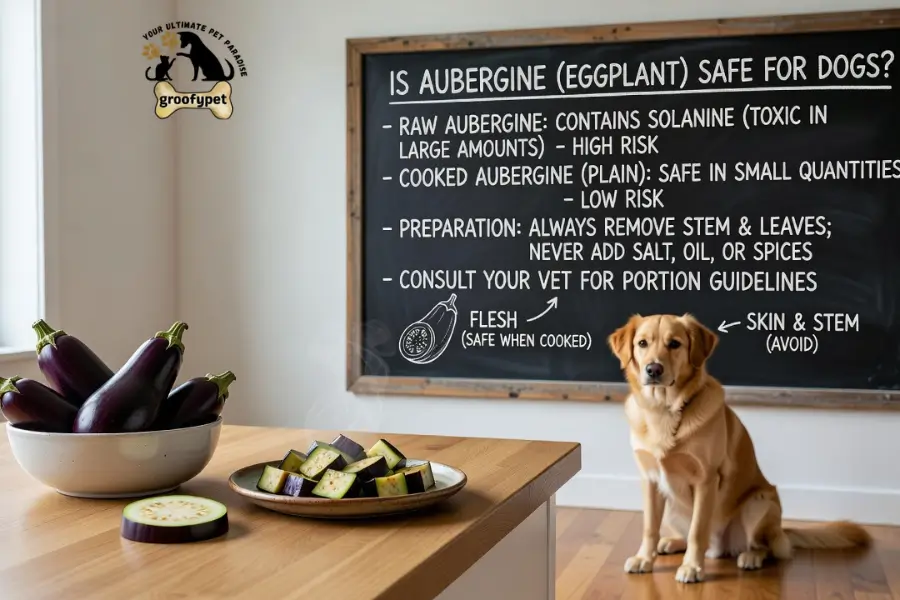
These plants naturally contain compounds called glycoalkaloids. One of them is solanine, which helps protect plants against pests. Higher concentrations can occur in certain green plant parts. The leaves, stems, and other green parts of the aubergine plant should not be fed to dogs. The ripe vegetable flesh contains much lower levels and is generally considered suitable in modest amounts.
However, not every dog responds to new vegetables in the same way. Dogs with food sensitivities or existing health conditions may need to avoid aubergine.
If your dog has never tried it, begin with one tiny piece of plain, cooked flesh.
Is Aubergine Good for Dogs?
Aubergine can offer some nutritional value, but it is not a superfood for dogs. It contains several nutrients that contribute to normal body functions. Its low-calorie nature also makes it an interesting alternative to some high-calorie human snacks.
However, dogs already receive essential nutrients from properly formulated commercial dog food. Therefore, aubergine should be considered an occasional addition rather than a nutritional requirement.
Nutritional Benefits of Aubergine for Dogs
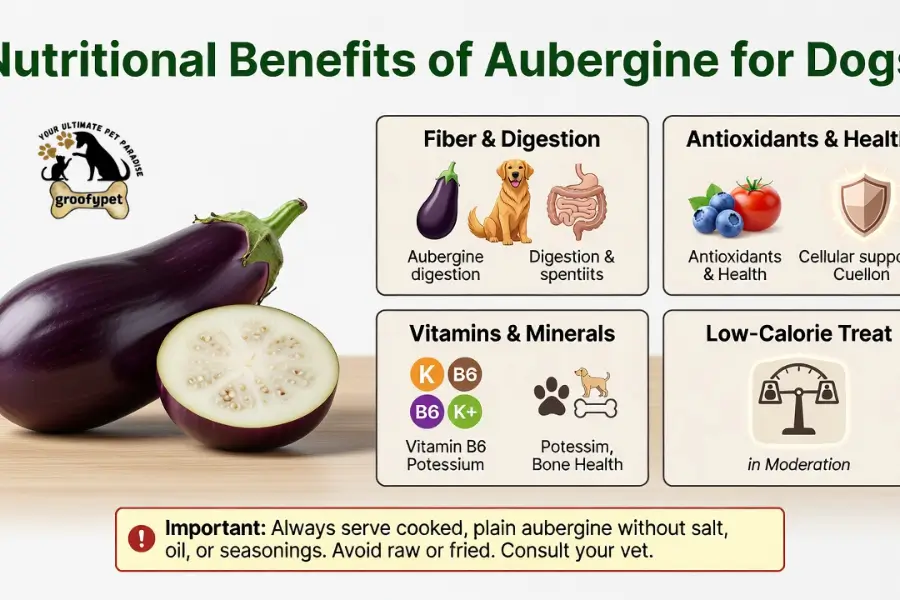
Aubergine contains water, dietary fiber, vitamins, minerals, and plant antioxidants. Here are some nutrients worth understanding.
1. Dietary Fiber for Digestive Health
Aubergine contains dietary fiber, which supports normal digestive function. Fiber helps regulate bowel movements and contributes to healthy stool formation. Small amounts may add variety to your dog’s diet. However, too much fiber can cause gas, loose stools, or stomach discomfort. Introduce aubergine gradually rather than giving your dog a large serving.
2. Antioxidants for Cell Protection
Aubergine contains natural plant compounds called antioxidants. Its purple skin contains anthocyanins, including a compound known as nasunin. Antioxidants help protect cells against oxidative damage. However, there is limited direct research showing that eating aubergine provides specific disease-prevention benefits in dogs.
3. Vitamins for Normal Body Functions
Aubergine contains small amounts of several vitamins, including vitamin C, vitamin K, and some B vitamins. These nutrients contribute to normal body functions, including metabolism and immune system activity. Nevertheless, your dog should obtain essential vitamins from a complete and balanced diet.
4. Potassium for Normal Muscle Function
Potassium is an important mineral found in aubergine. It supports normal nerve signaling, muscle function, and fluid balance. Healthy dogs generally receive sufficient potassium through properly formulated dog food.
5. Low-Calorie Vegetable Option
Plain aubergine is relatively low in calories. This makes it a possible occasional snack for dogs that need to watch their calorie intake. Remember that cooking ingredients can change their nutritional value. Oil, butter, cheese, and sauces can quickly increase the calorie content.
Can Dogs Eat Raw Aubergine?
Yes, dogs can eat small amounts of raw, ripe aubergine flesh. However, cooked aubergine is generally a better choice because it becomes softer and easier to chew.
Raw aubergine can have a firmer texture and a slightly bitter taste. Some dogs may find it difficult to chew, particularly puppies and small breeds.
If your dog accidentally eats a tiny piece of raw, ripe aubergine, there is generally no reason to panic. Monitor for digestive discomfort and contact your veterinarian if symptoms develop.
For regular feeding, plain cooked aubergine is the more practical option.
Can Dogs Eat Cooked Aubergine?
Yes, cooked aubergine is generally suitable for healthy dogs when prepared without harmful ingredients.
Cooking softens the vegetable, making it easier to chew. It can also make it more appealing to dogs that dislike raw vegetables.
You can prepare aubergine in several ways:
- Steamed aubergine: A good option because it softens without requiring oil.
- Boiled aubergine: Suitable when cooked in plain water without salt or seasoning.
- Baked aubergine: Fine when prepared without butter, sauces, or excessive oil.
- Grilled aubergine: Acceptable if it is plain and not covered with marinades or seasonings.
Always allow cooked aubergine to cool before serving. Cut it into small pieces to reduce choking risks.
Also Read : Can Diabetic Dogs Eat Watermelon? Safety, Risks, and Feeding Guide
Can Dogs Eat Fried Aubergine?
Fried aubergine is not a recommended treat for dogs.
Although the vegetable itself may be suitable, frying introduces additional ingredients and fat. Breaded aubergine dishes may also contain seasonings, cheese, and sauces.
Eating greasy food can upset your dog’s stomach. Large amounts of fatty foods may also increase the risk of pancreatitis in susceptible dogs.
Avoid giving your dog:
- Deep-fried aubergine
- Breaded aubergine slices
- Aubergine cooked in excessive oil
- Aubergine covered in spicy sauces
- Aubergine prepared with garlic or onion
Choose steamed or baked aubergine instead.
Can Dogs Eat Aubergine Skin and Seeds?
Aubergine Skin
Yes, aubergine skin is not automatically toxic to dogs. However, it can be tougher than the flesh and may be difficult for some dogs to chew or digest.
Peeling the vegetable is a sensible option when preparing it for puppies, small dogs, or dogs with sensitive stomachs.
Aubergine Seeds
The small seeds inside a ripe aubergine are generally safe in normal food quantities. You do not need to remove every seed before preparing a small serving.
However, avoid feeding large quantities of the vegetable or unripe aubergine.
How Much Aubergine Can Dogs Eat?
The appropriate amount depends on your dog’s size, calorie requirements, age, and digestive tolerance. Start with a very small piece of plain, cooked aubergine. If your dog tolerates it without problems, you can occasionally offer a slightly larger portion.
The following chart provides conservative starting suggestions rather than scientifically established serving limits.
| Dog Size | Approximate Weight | Starting Portion |
|---|---|---|
| Extra-small | Under 10 lbs | ½ teaspoon |
| Small | 10–20 lbs | 1 teaspoon |
| Medium | 21–50 lbs | 1–2 teaspoons |
| Large | 51–90 lbs | 1 tablespoon |
| Extra-large | Over 90 lbs | 1–2 tablespoons |
These are cautious starting portions, not daily feeding recommendations. Individual tolerance and veterinary dietary advice should guide future servings. Do not feed the maximum suggested portion automatically. Begin with less, particularly when introducing a new food.
Remember the 10% treat rule. All treats and additional foods combined should generally account for no more than 10% of your dog’s daily calories.
How to Prepare Aubergine for Dogs
Preparing aubergine for your dog does not require complicated recipes. The goal is to keep it clean, soft, plain, and easy to chew.
Follow these steps:
- Choose fresh aubergine: Select a firm, ripe vegetable without mold, decay, or damaged areas.
- Wash thoroughly: Rinse the aubergine under clean running water to remove dirt and surface residue.
- Remove the green parts: Cut away the stem and leaves. Never serve these parts to your dog.
- Peel if necessary: Remove the skin if your dog struggles with tougher textures.
- Cut into small pieces: Small cubes are easier to chew and swallow.
- Cook without seasoning: Steam, boil, or bake the pieces without adding oil, salt, or spices.
- Allow it to cool: Hot food can burn your dog’s mouth.
- Serve a tiny amount: Mix a small portion with regular dog food or offer it separately.
Never add garlic, onion, chili powder, or heavy sauces to your dog’s serving.
Aubergine Preparation Comparison
Different cooking methods can change the texture and suitability of aubergine for dogs.
| Preparation Method | Suitable for Dogs? | Recommendation |
|---|---|---|
| Raw aubergine | Yes, cautiously | Small amounts of ripe flesh |
| Steamed aubergine | Yes | Excellent option |
| Boiled aubergine | Yes | Serve plain |
| Baked aubergine | Yes | Avoid added fats |
| Grilled aubergine | Yes, if plain | Avoid marinades |
| Fried aubergine | Not recommended | Excess oil and coatings |
| Pickled aubergine | No | Often high in salt and seasonings |
| Aubergine parmesan | No | Often contains garlic, onion, cheese, and salt |
Steaming or boiling is usually the simplest way to prepare this vegetable for your dog.
Read This : Can Dogs Eat Slushies? Safety, Risks, and Healthy Alternatives
Risks of Feeding Aubergine to Dogs
Although ripe aubergine flesh is generally safe in moderation, it is not suitable for every dog. Understanding the possible risks helps you make better feeding decisions.
1. Digestive Upset
Eating too much aubergine can cause digestive discomfort because of its fiber content.Your dog may experience vomiting, diarrhea, gas, or changes in bowel movements.Start with a tiny serving and stop feeding it if your dog develops digestive problems.
2. Allergic Reactions
Some dogs may have an individual sensitivity or allergic reaction to aubergine.
Possible warning signs include:
- Itchy skin
- Excessive scratching
- Redness or skin irritation
- Facial swelling
- Vomiting
- Diarrhea
Stop offering aubergine if you notice an unusual reaction. Facial swelling or breathing difficulties require urgent veterinary attention.
3. Solanine and Glycoalkaloids
Aubergine belongs to the nightshade family. Plants in this family naturally produce glycoalkaloids, including solanine.These compounds help protect plants against pests. Higher concentrations can occur in certain green plant parts.Avoid feeding aubergine leaves, stems, or other green plant material. Do not confuse the risks associated with these parts with the much lower levels found in ripe edible flesh. American Kennel Club+1
4. Choking Hazards
Large, firm pieces of aubergine can be difficult for dogs to chew and swallow.This is particularly important for puppies, small breeds, and dogs that eat quickly.Always cut the cooked vegetable into small, manageable pieces.
5. Excessive Oil and Fat
Aubergine absorbs oil easily during frying. Eating oily food can cause stomach upset and add unnecessary calories.Dogs with a history of pancreatitis should be particularly careful about fatty foods.
6. Harmful Seasonings
Human aubergine recipes frequently contain ingredients that are unsuitable for dogs.Garlic and onions are especially concerning because they can damage dogs’ red blood cells. Excessive salt and spicy ingredients can also cause problems.Always prepare a separate, plain portion for your pet.
7. Existing Health Conditions
Dogs with certain medical conditions may require carefully controlled diets.For example, dogs with kidney disease or a history of urinary stones should not receive new foods without checking with their veterinarian. Their individual dietary restrictions matter more than general food-safety advice.
Which Dogs Should Avoid Aubergine?
Most healthy adult dogs can tolerate small amounts of plain aubergine. However, some dogs should avoid it or receive veterinary approval first.
Consider avoiding aubergine if your dog:
- Has previously reacted badly to eggplant or other foods.
- Experiences frequent diarrhea or digestive sensitivity.
- Has a medical condition requiring a restricted diet.
- Has kidney disease or a history of certain urinary stones.
- Is recovering from a digestive illness.
- Has been advised to avoid unfamiliar treats by a veterinarian.
Puppies also need extra care because their digestive systems are still developing. Their main nutrition should come from an appropriate complete puppy food.When in doubt, ask your veterinarian before introducing aubergine.
Can Dogs Eat Aubergine Every Day?
It is better not to make aubergine a daily feeding habit.Although small quantities of plain aubergine may be safe, dogs do not need this vegetable to maintain good health.Feeding the same additional food frequently can also make it harder to identify the cause of digestive problems or food sensitivities.
Instead, rotate suitable dog-friendly vegetables occasionally. Keep your dog’s regular complete and balanced food as the main part of its diet.
What Happens If a Dog Eats Too Much Aubergine?
Eating a large quantity of aubergine may cause digestive problems, particularly if your dog is not accustomed to eating vegetables.
Watch for these symptoms:
| Symptom | What It May Indicate |
|---|---|
| Vomiting | Digestive irritation |
| Diarrhea | Gastrointestinal upset |
| Gas | Difficulty tolerating the food |
| Abdominal discomfort | Digestive irritation |
| Loss of appetite | Possible stomach upset |
| Unusual weakness | Requires veterinary assessment |
If your dog eats a large amount, contact your veterinarian for advice. This is especially important if your dog has eaten leaves, stems, or other green plant parts.Do not try to induce vomiting unless a veterinarian specifically instructs you to do so.
Seek urgent veterinary attention if your dog experiences repeated vomiting, severe weakness, collapse, facial swelling, or difficulty breathing.
What to Do If Your Dog Eats Seasoned or Fried Aubergine?
If your dog steals a piece of cooked aubergine from your plate, do not panic. The level of risk depends on the ingredients, quantity, and your dog’s size.
Follow these steps:
- Remove any remaining food so your dog cannot eat more.
- Check the ingredients for garlic, onion, excessive salt, and other seasonings.
- Estimate how much your dog consumed.
- Watch for vomiting, diarrhea, unusual behavior, or weakness.
- Contact your veterinarian if the dish contains potentially harmful ingredients or your dog develops symptoms.
Garlic and onion deserve particular attention because they are toxic to dogs. Even if your dog appears normal initially, seek veterinary guidance after a potentially dangerous ingestion.
Healthy Alternatives to Aubergine for Dogs
If your dog does not enjoy aubergine, several other vegetables can provide variety.
1. Carrots
Carrots provide fiber and beta-carotene. Serve them raw in appropriately sized pieces or lightly cooked for easier chewing.
2. Green Beans
Plain green beans are a low-calorie snack. Remove the ends and serve them cooked or raw in manageable pieces.
3. Zucchini
Zucchini contains water and fiber. Serve small, plain pieces without butter, oil, or seasoning.
4. Cucumber
Cucumber contains plenty of water and makes a refreshing occasional snack. Cut it into small pieces to reduce choking risks.
5. Pumpkin
Plain cooked pumpkin provides dietary fiber. Avoid pumpkin pie filling, added sugar, and spices.Introduce every new vegetable gradually. Even foods generally considered safe can cause digestive problems when dogs eat too much.
Can dogs eat eggplant?
Yes, dogs can eat eggplant in moderation, provided it is prepared properly and served plain. If you’re wondering is eggplant safe for dogs to eat, the answer is generally yes for healthy dogs without known sensitivities. Eggplant is not toxic to most dogs, but it belongs to the nightshade family, so some dogs may experience an allergic reaction or digestive upset.
If you’re introducing eggplant for the first time, offer a very small piece and watch for any unusual symptoms. This is especially important if your dog has food allergies or a sensitive stomach.
Can dogs have raw or cooked eggplant?
Dogs can have both raw and cooked eggplant, but cooked eggplant is usually the better choice. Can dogs have raw eggplant? Yes, but raw eggplant can be harder to digest and may cause stomach discomfort in some dogs. If you want to feed your dog eggplant, steam or bake it without adding salt, butter, oil, garlic, or onion.
Can dogs eat eggplant cooked this way? Absolutely! Plain cooked eggplant is soft, easier to chew, and can be offered in small bite-sized pieces. Both raw and cooked eggplant should be served in moderation to avoid digestive problems.
Is eggplant good for dogs?
Eggplant contains fiber, vitamins, and antioxidants that may support your dog’s overall health. However, it should not replace a balanced dog food diet. While eggplant good for dogs is a common search, its benefits depend on portion size and your dog’s individual health.
Avoid fried eggplant because the extra oil and fat can upset your dog’s stomach. Similarly, can dogs have eggplant parmesan? It is best to avoid this dish because it often contains cheese, salt, garlic, and other seasonings that are unsuitable for dogs. Plain eggplant is a much safer option than fried or heavily seasoned versions.
Read This : Why Does My Dog Eat Grass and Vomit? Risks, Signs, and Tips
Frequently Asked Questions
1. Can Dogs Eat Aubergine Cooked Without Oil?
Yes, dogs can eat plain cooked aubergine without oil. Steaming and boiling are good preparation methods because they soften the vegetable without adding unnecessary fat. Serve small, cooled pieces occasionally.
2. Can Dogs Eat Raw Eggplant?
Yes, small amounts of ripe raw eggplant flesh are generally considered safe for most healthy dogs. However, cooked eggplant is softer and easier to chew. Avoid giving your dog the leaves and stems.
3. Is Eggplant Toxic to Dogs?
Ripe eggplant flesh is generally not considered toxic to dogs when consumed in small amounts. However, green plant parts, including leaves and stems, should be avoided because they can contain higher concentrations of potentially harmful glycoalkaloids.
4. Can Puppies Eat Aubergine?
Puppies can potentially eat a tiny amount of plain, cooked aubergine, but it is not necessary for their growth. Their primary diet should consist of complete puppy food. Ask your veterinarian before introducing unfamiliar vegetables.
5. Can Dogs Eat Aubergine Skin?
Yes, aubergine skin is not inherently toxic to dogs. However, its texture can be tougher than the flesh. Peeling it may make the vegetable easier for puppies and dogs with sensitive digestion to eat.
6. Can Dogs Eat Aubergine Seeds?
Yes, the small seeds inside ripe aubergine are generally safe in normal food quantities. You do not need to remove every seed before serving a small portion of cooked aubergine.
7. Can Dogs Eat Grilled Aubergine?
Yes, dogs can eat plain grilled aubergine in small quantities. Make sure it contains no garlic, onion, spicy marinade, excessive oil, or salt. Allow it to cool and cut it into small pieces.
Final Thoughts: Should You Feed Aubergine to Your Dog?
So, can dogs eat aubergine? Yes, most healthy dogs can enjoy small amounts of ripe aubergine flesh as an occasional treat.The most important thing is proper preparation. Wash the vegetable, remove the stem and leaves, and serve it plain. Steaming, boiling, and baking are practical options that avoid unnecessary fats and seasonings.
Remember that aubergine is not essential to your dog’s diet. A balanced dog food should always provide the majority of its daily nutrition.Start with a tiny serving and monitor your dog’s response. If your pet has allergies, kidney problems, or other dietary restrictions, consult your veterinarian before introducing aubergine.