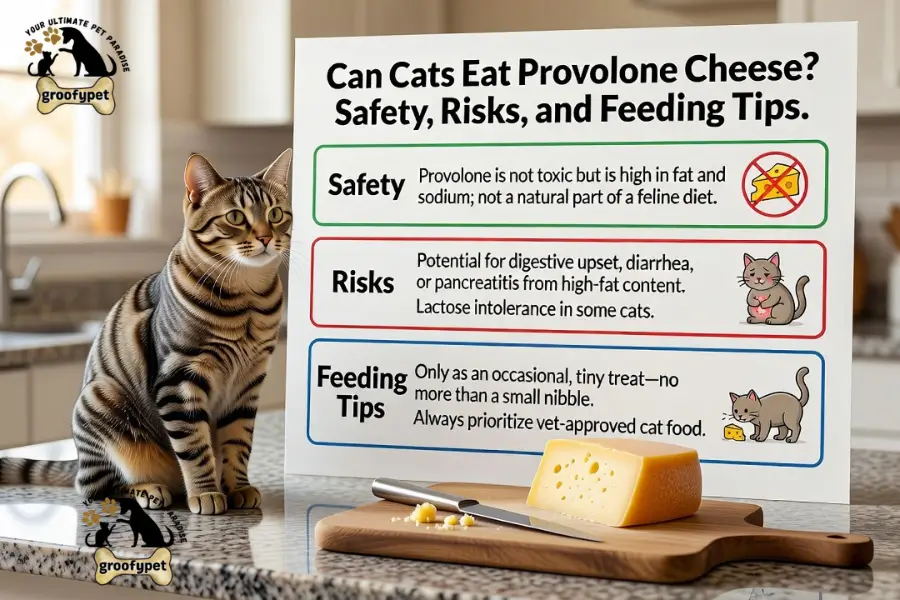
Can cats eat provolone cheese? Cats can technically eat a tiny amount of plain provolone cheese, but it is not a recommended treat. Provolone is a dairy product that contains fat, sodium, and some lactose. Many adult cats have difficulty digesting lactose, which can cause diarrhea, vomiting, and stomach discomfort. Although provolone is not generally considered toxic, it offers no nutritional benefit that cats cannot get from healthier foods.
If your cat steals a small piece of provolone from your plate, there is usually no reason to panic. However, regularly feeding cheese can contribute to digestive problems and unnecessary calories. Understanding the ingredients, potential risks, and safer alternatives can help you make better food choices for your cat.
Can Cats Eat Provolone Cheese Safely?
Cats can eat a very small piece of plain provolone cheese without necessarily experiencing an immediate problem. However, this does not mean provolone is safe or suitable for regular feeding.
Provolone is made from cow’s milk and contains dairy components that some cats cannot digest comfortably. After kittens grow up, many cats produce less lactase, the enzyme responsible for breaking down lactose. This makes them more likely to experience digestive upset after consuming dairy products.
Another concern is the cheese’s fat and sodium content. Cats need fat in their diets, but excessive calories from human foods can contribute to weight gain. Too much sodium is also unnecessary and may be harmful, particularly for cats with certain health conditions.
Quick verdict: Provolone cheese is not generally toxic to cats, but it is best to avoid offering it as a regular snack. A complete and balanced cat food is a much better nutritional choice.
What Is Provolone Cheese Made Of?
Provolone is a traditional Italian cheese made from cow’s milk. It belongs to the pasta filata family, which means its curds are heated and stretched during production. This process gives the cheese its smooth texture and slightly elastic consistency.
Most commercial provolone cheese contains the following ingredients:
- Cow’s milk: The main ingredient that provides protein, fat, and lactose.
- Salt: Adds flavor and helps preserve the cheese.
- Starter cultures: Beneficial bacteria used during fermentation.
- Rennet or enzymes: Help milk separate into curds and whey.
- Additional ingredients: Some brands may include preservatives or flavoring agents.
Provolone comes in two common varieties:
Mild provolone: This cheese has a softer flavor and is usually aged for a shorter period. It has a smooth texture and is commonly used in sandwiches.
Sharp provolone: Also called aged provolone, this variety develops a stronger flavor and firmer texture during a longer aging process.
Both varieties are dairy products. Their nutritional composition can differ depending on the recipe and aging process.
Why Is Provolone Cheese Not Good for Cats?
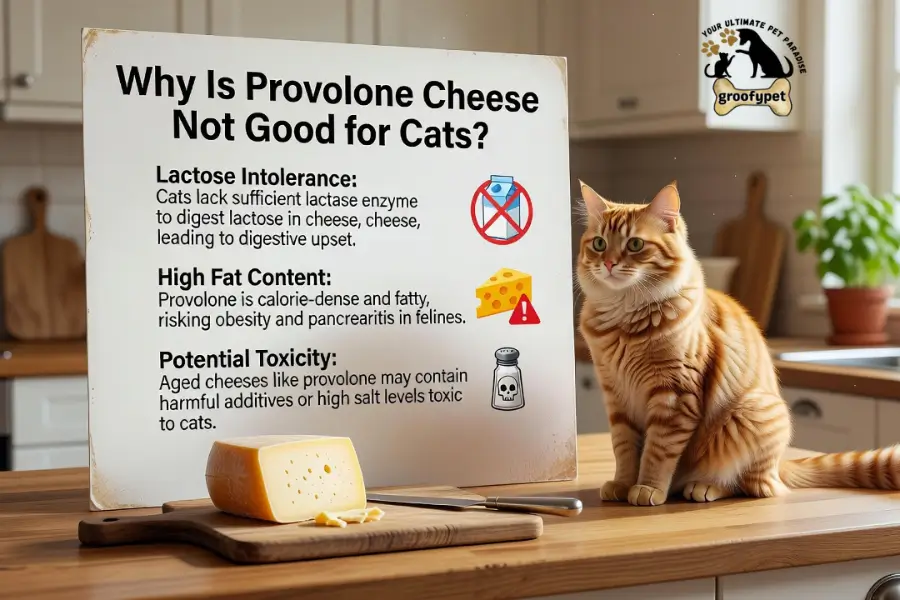
Although plain provolone is not usually toxic, several nutritional factors make it unsuitable for cats. Its lactose, fat, and sodium content can create problems, especially when cats eat it frequently.
Here are the main risks cat owners should understand.
1. Lactose Intolerance and Digestive Problems
Lactose is a natural sugar found in milk and dairy products. Cats need an enzyme called lactase to break down this sugar during digestion. Young kittens produce lactase to digest their mother’s milk. However, lactase production generally decreases after weaning. As a result, many adult cats have difficulty digesting lactose.
When an adult cat eats dairy products, undigested lactose can cause digestive discomfort. Provolone may contain less lactose than some softer cheeses, but that does not make it a suitable everyday snack.
2. Diarrhea and Loose Stools
One common problem associated with dairy consumption is diarrhea. When lactose remains undigested, it can draw water into the intestines and cause loose stools. Your cat may also experience increased bowel movements or discomfort. Pay attention if your cat develops diarrhea after eating provolone. Avoid offering more dairy and contact your veterinarian if symptoms are severe or continue.
3. Vomiting and Stomach Discomfort
Some cats develop vomiting after consuming cheese or other dairy products. Their digestive systems may not tolerate lactose or the high-fat content of certain cheeses. This can result in nausea, stomach discomfort, and occasional vomiting. A cat that vomits repeatedly, becomes weak, or refuses food needs veterinary attention.
4. High Fat and Extra Calories
Provolone contains milk fat, which contributes to its rich flavor and creamy texture. Cats require dietary fat for energy and normal body functions. However, they need the right amount from a balanced diet rather than frequent portions of human cheese.
Regularly sharing high-calorie snacks can contribute to weight gain. Overweight cats may face a greater risk of diabetes, joint problems, and other health concerns.
5. Excess Sodium Intake
Salt is another ingredient that makes provolone unsuitable as a regular cat treat. Cats need some sodium to support normal body functions. However, excessive sodium consumption can be harmful. Cheese can add unnecessary salt to an otherwise balanced diet. This is especially concerning for cats with kidney disease, heart problems, or other conditions requiring dietary management.
6. Food Sensitivity and Allergic Reactions
Some cats may have an adverse reaction to dairy proteins or other ingredients in cheese. Food allergies can cause symptoms such as itching, skin irritation, vomiting, and digestive problems. However, lactose intolerance and food allergies are different conditions. If your cat repeatedly develops symptoms after eating dairy, stop offering it and ask your veterinarian about possible food sensitivities.
Can Kittens Eat Provolone Cheese?
No, provolone cheese is not recommended for kittens. Young kittens have specific nutritional requirements that are best met through their mother’s milk or an appropriate kitten milk replacer before weaning.As kittens grow, they transition to specially formulated kitten food. Their digestive systems also change during this period, including a gradual reduction in lactase production after weaning.
Feeding provolone can introduce unnecessary fat, salt, and dairy components into their diet. It may also cause digestive upset in kittens with sensitive stomachs.
Better options for kittens include:
- Complete and balanced kitten food.
- Veterinarian-approved kitten treats.
- Appropriate kitten milk replacer when needed.
- Small amounts of plain cooked chicken when suitable for their age and diet.
Avoid giving kittens ordinary cow’s milk or cheese as a substitute for their regular nutrition.
What Happens If a Cat Eats Provolone Cheese?
If your cat accidentally eats a small piece of plain provolone, it will not necessarily become sick. Many cats tolerate a tiny accidental bite without noticeable symptoms.However, cats that are sensitive to lactose or dairy fat may develop digestive problems.
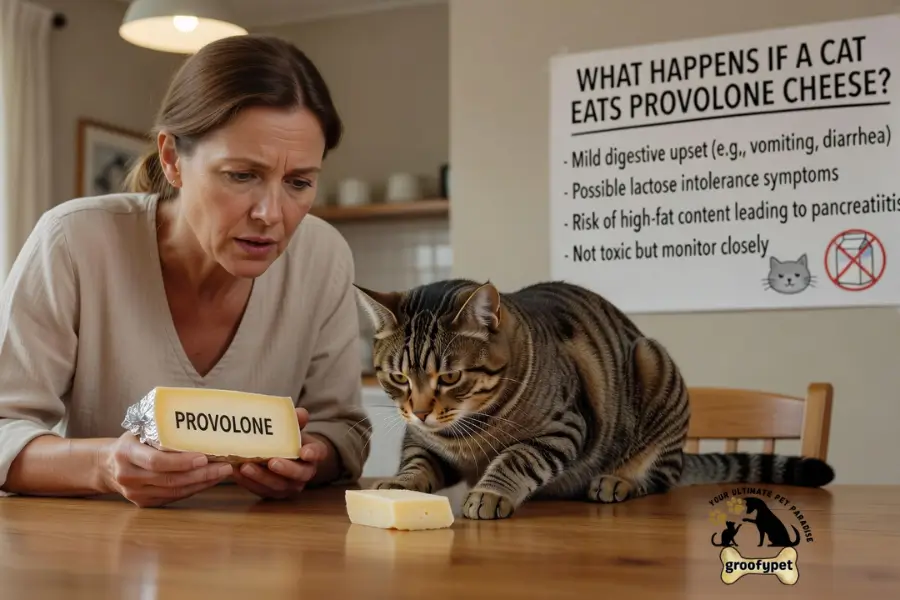
Possible symptoms include:
| Symptom | What You May Notice |
|---|---|
| Diarrhea | Loose or watery stools |
| Vomiting | Bringing up food or stomach contents |
| Gas | Increased flatulence |
| Bloating | An uncomfortable or swollen abdomen |
| Abdominal discomfort | Restlessness or unusual posture |
| Reduced appetite | Less interest in regular food |
Symptoms of lactose intolerance can appear several hours after eating dairy. Some veterinary guidance reports that diarrhea may develop around 8–12 hours after consumption. The severity depends on the amount consumed, the ingredients, and your cat’s individual digestive sensitivity.
When Should You Contact a Veterinarian?
Contact your veterinarian if your cat experiences repeated vomiting, persistent diarrhea, unusual weakness, or loss of appetite. Seek urgent veterinary care if your cat develops severe symptoms, including difficulty breathing, collapse, or significant weakness. Also check the cheese label. Garlic, onion, chives, and similar ingredients can be dangerous to cats and require prompt veterinary advice. wsava.org
How Much Provolone Cheese Can Cats Eat?
There is no established recommended serving size of provolone cheese for cats. Although a tiny accidental bite of plain cheese may not cause a problem, deliberately feeding provolone is unnecessary. Cats can obtain all their essential nutrients from properly formulated complete and balanced cat food.
Consider these situations:
| Situation | Recommendation |
|---|---|
| Tiny accidental bite | Monitor your cat for digestive symptoms |
| Small piece eaten intentionally | Avoid making it a regular habit |
| Large amount consumed | Contact your veterinarian |
| Cat with lactose intolerance | Avoid provolone |
| Cat with kidney or heart disease | Follow veterinary dietary instructions |
| Cheese containing garlic or onion | Contact a veterinarian promptly |
The important difference is between accidental exposure and regular feeding. One small bite does not automatically mean your cat will become ill, but repeated exposure increases the chance of unnecessary digestive and nutritional problems.
Read This:Can Cats Have Alfredo Sauce? Safety, Risks, and What to Do
Can Cats Eat Smoked or Aged Provolone Cheese?
Cats should not be offered smoked or aged provolone as a treat. These varieties may have different flavors, textures, and nutritional compositions, but they are still dairy products.
- Smoked provolone: Smoked cheese may contain additional flavoring ingredients or seasonings. Always check the ingredient label because garlic and onion ingredients can be toxic to cats.
- Aged provolone: Aging can reduce lactose in certain cheeses because bacteria use some lactose during fermentation. However, the amount remaining varies by cheese and production method.
Aged provolone still contains fat and sodium. Lower lactose does not automatically make it healthy or appropriate for cats. If your cat enjoys the smell of cheese, offer a veterinarian-approved cat treat instead.
Does Aged Provolone Have Less Lactose?
Yes, aging can reduce the lactose of certain cheeses. During fermentation and ripening, bacteria consume some of the lactose present in the milk.This is one reason some aged cheeses contain less lactose than fresh dairy products.However, there are important differences between lactose content and overall food safety. A cheese with less lactose can still contain considerable fat and sodium.
Therefore, even if aged provolone is easier for some lactose-sensitive cats to tolerate, it is not a necessary part of feline nutrition.Do not use aged cheese as a way to treat lactose intolerance or replace your cat’s regular food.
Can a Lactose-Intolerant Cat Eat Provolone?
It is best to avoid giving provolone to a lactose-intolerant cat.Even though some aged cheeses contain relatively little lactose, individual products differ. Your cat may also react to other dairy components, including milk proteins and fat.
Common signs of dairy intolerance include:
- Loose stools or diarrhea.
- Vomiting after eating dairy.
- Excessive gas.
- Abdominal discomfort.
- Changes in normal bathroom habits.
If your cat has previously experienced digestive problems after drinking milk or eating cheese, do not experiment with different varieties.Ask your veterinarian about suitable treats that will not interfere with your cat’s digestive health.
What Should You Do If Your Cat Eats Provolone Cheese?
Finding your cat eating provolone from a sandwich or kitchen counter can be surprising. Fortunately, a small amount of plain cheese does not automatically require an emergency visit.
Follow these practical steps:
1. Remove the remaining cheese.
Take away any leftover provolone so your cat cannot eat more. Keep other dairy products out of reach.
2. Check the ingredients.
Look at the packaging to identify additional ingredients. Pay particular attention to garlic, onion, chives, and unusual seasonings.
3. Estimate how much your cat ate.
Try to determine whether your cat swallowed a tiny piece, an entire slice, or a larger amount. This information can help your veterinarian assess the situation.
4. Provide fresh drinking water.
Make sure your cat has access to clean water. Do not force your cat to drink.
5. Monitor your cat.
Watch for vomiting, diarrhea, bloating, changes in appetite, and unusual behavior.
6. Contact your veterinarian when necessary.
Seek veterinary advice if your cat eats a large amount, consumes cheese with potentially toxic ingredients, or develops concerning symptoms.
Never try to induce vomiting at home unless a veterinarian specifically instructs you to do so.
What Are Healthier Alternatives to Provolone Cheese for Cats?
If your cat enjoys trying different foods, you can offer healthier alternatives instead of provolone cheese. Choose simple foods without added salt, butter, sauces, or seasonings.
Here are some options:
| Alternative | Is It Suitable for Cats? | Feeding Advice |
|---|---|---|
| Plain cooked chicken | Yes | Remove bones and skin |
| Plain cooked turkey | Yes | Serve without seasoning |
| Cooked salmon | Yes | Remove all bones and cook thoroughly |
| Commercial cat treats | Yes | Follow package instructions |
| Complete wet cat food | Yes | Serve according to feeding needs |
| Plain cooked fish | Yes | Remove bones and avoid added salt |
- Plain cooked chicken: Chicken is a good source of animal protein. Offer small pieces without bones, skin, seasoning, or cooking oil.
- Plain cooked turkey: Unseasoned turkey can be an occasional treat. Avoid processed deli turkey because it may contain excessive salt and seasonings.
- Cooked fish: Fully cooked, boneless fish can provide protein. Avoid raw fish and heavily seasoned preparations.
- Commercial cat treats: Treats specifically formulated for cats are generally a more convenient option. Choose products appropriate for your cat’s age and health.
Remember that treats should not replace complete and balanced meals. Veterinary nutrition guidelines generally recommend keeping treats within 10% of daily calories.
How to Keep Your Cat Away From Cheese and Other Dairy Products
Cats are naturally curious about food, especially when they notice something interesting on your plate. Some cats may approach cheese because of its strong smell and rich fat .However, enjoying the smell does not mean a food is suitable for their digestive systems.
Use these simple household precautions:
- Store cheese properly: Keep provolone and other dairy products inside sealed containers in the refrigerator.
- Avoid sharing sandwiches: Sandwiches may contain cheese, onions, garlic, and other unsuitable ingredients.
- Clean kitchen surfaces: Remove cheese crumbs and food leftovers from countertops.
- Check ingredient labels: Some flavored cheeses contain seasonings that can be harmful to cats.
- Offer appropriate treats: Keep healthy cat treats available when your pet begs for human food.
- Educate family members: Make sure everyone understands why sharing cheese is not a good feeding habit.
These small changes can help prevent accidental consumption and protect your cat from unnecessary digestive problems.
Quick Safety Verdict: Is Provolone Cheese Safe for Cats?
Provolone Cheese for Cats
Not recommended
- Toxicity: Plain provolone is not generally considered toxic.
- Lactose: May cause digestive problems in sensitive cats.
- Fat: Adds unnecessary calories.
- Sodium: Provides extra salt without a nutritional need.
- Kittens: Not recommended.
- Regular feeding: Avoid.
- Better choice: Plain cooked chicken or commercial cat treats.
Also Read : Can Cats Eat Hoisin Sauce? Safety, Risks, and What to Do
Frequently Asked Questions
1. Can Cats Eat a Small Piece of Provolone Cheese?
A healthy adult cat may tolerate a tiny piece of plain provolone without developing symptoms. However, cheese is not a necessary part of its diet. Avoid offering it regularly, especially if your cat has a sensitive stomach.
2. Is Provolone Cheese Toxic to Cats?
Plain provolone cheese is not generally classified as toxic to cats. However, its lactose, fat, and sodium content can cause health concerns. Flavored varieties containing garlic or onion are more dangerous and should be avoided.
3. Can Kittens Eat Provolone Cheese?
No, kittens should not be given provolone cheese. They need specially formulated kitten food to support healthy growth and development. Cheese can introduce unnecessary salt, fat, and dairy components into their diet.
4. Can Cats Eat Aged Provolone Cheese?
Aged provolone may contain less lactose than fresh dairy products because fermentation reduces some lactose. However, it still contains fat and sodium. It is not a recommended treat for cats.
5. What Should I Do If My Cat Eats Provolone Cheese?
Remove the remaining cheese and check its ingredients. Monitor your cat for vomiting, diarrhea, and unusual behavior. Contact your veterinarian if your cat eats a large amount, consumes harmful seasonings, or develops concerning symptoms.
Key Takeaways
- Cats can accidentally eat a tiny amount of plain provolone without necessarily becoming sick.
- Provolone is not generally toxic, but it is not a healthy treat.
- Lactose intolerance can cause vomiting, diarrhea, and digestive discomfort.
- Its fat and sodium content make regular feeding unsuitable.
- Kittens should not be given provolone cheese.
- Smoked and flavored varieties may contain additional ingredients that create risks.
- Plain cooked chicken and commercial cat treats are better alternatives.
Final Thoughts
So, can cats eat provolone cheese? Technically, a tiny accidental bite of plain provolone is unlikely to cause serious problems in most healthy cats. However, that does not make it a suitable snack.Cats have different nutritional requirements from humans. Their bodies need a balanced diet rich in animal-based nutrients rather than unnecessary dairy products.
If your cat enjoys exploring your food, choose appropriate treats instead of sharing cheese. A little care with everyday feeding decisions can help support your cat’s long-term health and digestive comfort.