
Can dogs eat einkorn wheat? Yes, plain, cooked einkorn wheat is generally safe for most healthy dogs in moderation. It isn’t essential to a dog’s diet, but it can offer fibre, protein, and trace minerals as an occasional addition.
Einkorn wheat still contains gluten, so dogs with wheat allergies, gluten sensitivity, or digestive conditions should avoid it unless a veterinarian says otherwise. It should never replace a dog’s need for quality animal protein, and daily feeding isn’t recommended.
What Is Einkorn Wheat?
Einkorn wheat is one of the oldest cultivated grains in human history, predating modern durum and bread wheat by thousands of years. Unlike hybridised modern wheat, einkorn has a simpler genetic structure (it’s diploid, with only two sets of chromosomes, compared to the six in common wheat), which is part of why it’s often marketed as an “ancient grain”.
Because it hasn’t been bred and modified the way modern wheat has, einkorn is sometimes considered easier to digest and less processed — though it still contains gluten and is not gluten-free.
Common foods made from einkorn wheat include:
- Einkorn flour
- Einkorn bread
- Einkorn pasta
- Einkorn crackers
- Whole cooked einkorn berries (used like farro or rice)
Einkorn is also one of the three grains commonly grouped under the term farro, alongside emmer and spelt.
Can Dogs Eat Einkorn Wheat?
Dogs can eat einkorn wheat when it’s plain, fully cooked, and given in moderation. In its whole, boiled form (similar to how you’d prepare rice or oats), einkorn is a digestible carbohydrate source that can fit into a balanced canine diet.
That said, veterinary nutrition guidance is consistent on a few points:
- Grains like einkorn are not required for a dog to thrive.
- Any grain should be a small part of the diet, not a primary ingredient.
- The bulk of a dog’s caloric intake should come from animal-based protein.
- Moderation and plain preparation matter more than the specific grain chosen.
There’s no strong evidence that einkorn wheat offers dogs meaningfully different health outcomes than other whole grains — it’s simply another digestible carbohydrate option.
Is Einkorn Wheat Safe for Dogs?
Safety depends heavily on the form einkorn takes:
| Form | Generally Safe? | Notes |
|---|---|---|
| Cooked, plain einkorn wheat berries | Yes | Best option; boil until soft |
| Raw einkorn wheat | No | Hard to digest, choking risk |
| Einkorn flour (in homemade treats, fully baked) | Yes, in moderation | Use plain recipes without additives |
| Einkorn bread (store-bought) | Caution | Often has salt, sugar, yeast, or raisins |
| Einkorn pasta (plain, cooked) | Yes, small amounts | Avoid sauces, garlic, onion, cheese |
| Einkorn crackers | Caution | Usually high in salt and seasonings |
Nutritional Profile of Einkorn Wheat
| Nutrient | Function | Benefit for Dogs |
|---|---|---|
| Protein | Muscle repair and maintenance | Supplements (not replaces) dietary protein |
| Fiber | Digestive regulation | Supports normal bowel function |
| Carbohydrates | Energy source | Provides usable energy |
| Iron | Oxygen transport in blood | Supports red blood cell health |
| Zinc | Skin and coat health, immune function | Supports skin barrier and healing |
| Magnesium | Muscle and nerve function | Supports normal muscle activity |
| Phosphorus | Bone and cell health | Supports skeletal structure |
| B vitamins | Metabolism and energy production | Supports energy metabolism |
| Antioxidants (carotenoids) | Cellular protection | May support general immune health |
Potential Benefits of Einkorn Wheat
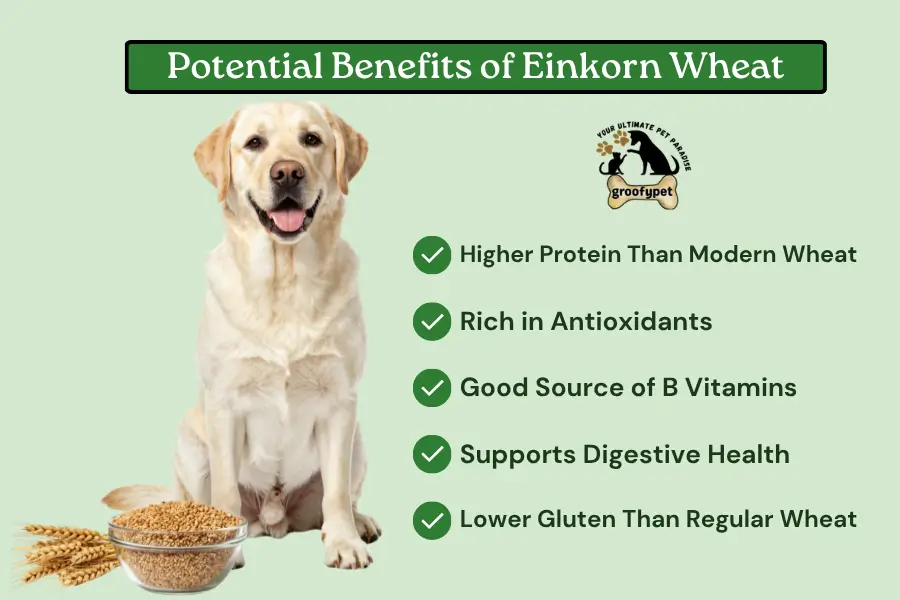
- Energy source — digestible carbohydrates dogs can use for daily activity
- Dietary fiber — can support normal digestion and stool quality
- Vitamins and minerals — contributes small amounts of B vitamins, iron, and zinc
- Useful in homemade treats — a flour option for owners baking dog treats at home
These are nutritional contributions, not medical treatments. Einkorn wheat does not prevent, treat, or cure any canine health condition.
Can Puppies Eat Einkorn Wheat?
Puppies have higher and more specific nutritional needs than adult dogs, focused on growth, bone development, and muscle formation. A small amount of plain, cooked einkorn wheat is unlikely to cause harm, but:
- It should only be an occasional addition, not a dietary staple
- Puppies should primarily be fed a complete and balanced commercial puppy food
- New foods should always be introduced gradually and in very small portions
- A veterinarian should be consulted before adding any new ingredient to a growing puppy’s diet
Potential Risks of Einkorn Wheat
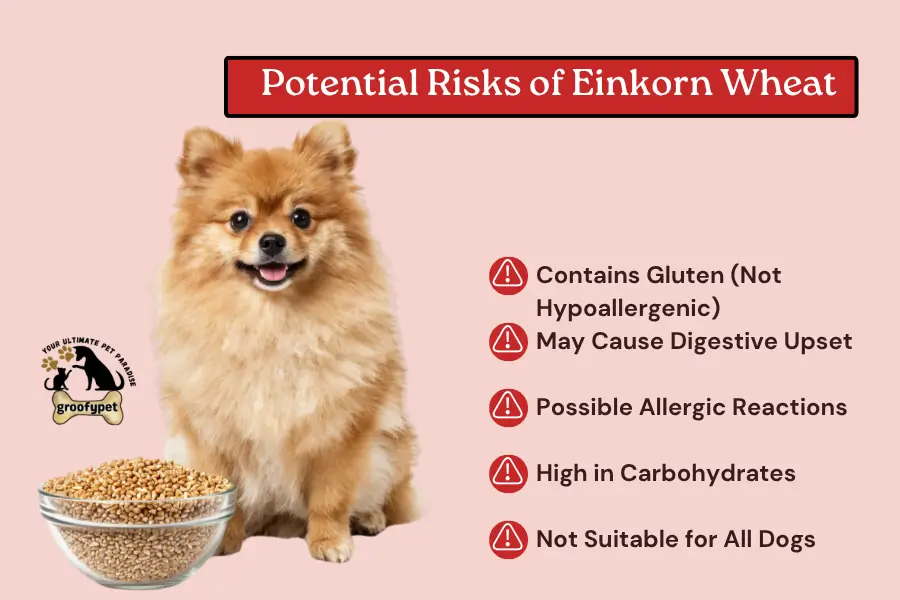
- Wheat allergy — one of the more common food allergens in dogs
- Gluten sensitivity — einkorn still contains gluten and is not appropriate for gluten-sensitive dogs
- Digestive upset — vomiting, diarrhea, or gas, particularly with large or sudden amounts
- Excess carbohydrates – overfeeding grains can contribute to weight gain
- Highly processed baked goods — bread, crackers, and pasta dishes often include salt, sugar, butter, garlic, onion, or sweeteners that are unsafe for dogs
- Xylitol — some baked goods and “healthier” treats use xylitol as a sugar substitute, which is highly toxic to dogs and should always be checked on ingredient labels
Can Dogs Eat Raw Einkorn Wheat?
No, raw einkorn wheat is not recommended. In their raw, uncooked state, whole grains are the following:
- Difficult for dogs to digest
- A potential choking hazard, especially for small dogs
- Less nutritionally accessible than cooked grains
Cooking breaks down the starches and softens the grain, making it far easier and safer for dogs to eat.
Pros and cons of Einkorn Wheat for dogs
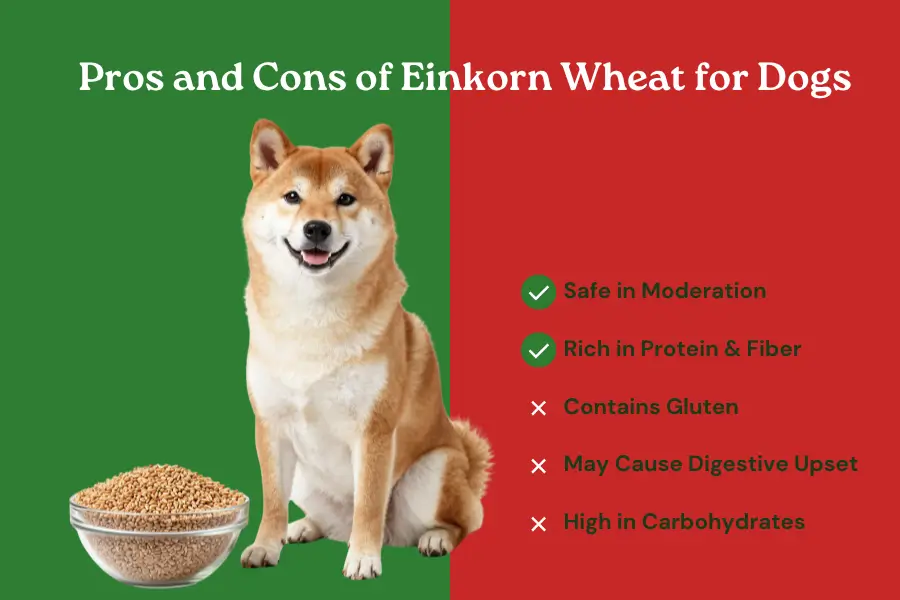
- Easy to digest.
- Good source of fibre.
- Contains protein.
- Rich in nutrients.
- Supports energy.
- Contains gluten.
- May cause allergies.
- Can upset the stomach.
- High in carbs.
- Feed in moderation.
Can Dogs Eat Cooked Einkorn Wheat?
Cooked einkorn wheat is the safest and most appropriate form to feed a dog. Best practices include:
- Boil until fully tender (similar texture to cooked rice or farro)
- Serve plain — no salt, butter, oil, or seasoning
- Avoid onions, garlic, and any seasoning blends, which are toxic or harmful to dogs
- Let it cool before serving
Can Dogs Eat Einkorn Bread?
Small amounts of plain einkorn bread are unlikely to harm most dogs, but bread is generally a low-value addition to a dog’s diet. Watch for:
- Yeast — raw or unbaked dough is dangerous and can cause gas buildup and alcohol toxicity; only fully baked bread should ever be offered
- Salt — many breads contain more sodium than is appropriate for regular feeding
- Sugar — added sweeteners provide no nutritional benefit to dogs
- Raisins — some breads contain raisins, which are toxic to dogs and can cause kidney injury
- Xylitol — always check labels on specialty or “healthier” breads
If sharing bread, a small plain piece is the safer choice, and it should be treated as an occasional extra, not a regular food.
Can Dogs Eat Einkorn Flour?
Einkorn flour is commonly used in homemade dog treat recipes, and it can be a reasonable substitute for standard wheat flour. To keep it safe:
- Use it in fully baked, plain recipes designed for dogs
- Avoid added sugar, chocolate, xylitol, or seasoning blends
- Practice portion control, since baked treats still add calories
- Introduce new homemade treats gradually to watch for any reaction
How Much Einkorn Wheat Can Dogs Eat?
| Dog Size | Approximate Safe Serving (cooked, plain einkorn) |
|---|---|
| Toy dogs (up to 10 lbs) | 1–2 teaspoons, occasionally |
| Small dogs (10–25 lbs) | 1–2 tablespoons, occasionally |
| Medium dogs (25–50 lbs) | 2–3 tablespoons, occasionally |
| Large dogs (50–90 lbs) | 3–4 tablespoons, occasionally |
| Giant breeds (90+ lbs) | ¼–⅓ cup, occasionally |
As a general feeding guideline, treats and extras, including grains like einkorn, should make up no more than about 10% of a dog’s total daily calorie intake, with the rest coming from a complete and balanced dog food.
Signs Your Dog Ate Too Much Einkorn Wheat
Watch for the following symptoms after feeding einkorn wheat or any new grain:
- Vomiting
- Diarrhea
- Excessive gas
- Bloating or a visibly distended abdomen
- General stomach discomfort or lethargy
When to call a veterinarian: Contact your vet if symptoms persist beyond 24 hours, worsen, or are accompanied by repeated vomiting, blood in the stool, significant lethargy, or refusal to eat or drink.
Dogs That Should Avoid Einkorn Wheat
Some dogs should avoid einkorn wheat entirely, including those with:
- A diagnosed wheat allergy
- Gluten sensitivity or gluten-related digestive issues
- Chronic digestive disease (such as inflammatory bowel disease)
- Obesity, where added carbohydrates aren’t advisable
- Diabetes, where carbohydrate intake needs careful portion management
- Dogs currently on a veterinary elimination diet to identify food allergies
If your dog has any of these conditions, consult your veterinarian before introducing einkorn wheat or any new grain.
Einkorn Wheat vs Other Grains
| Grain | Safe for Dogs? | Notes |
|---|---|---|
| Einkorn wheat | Yes, in moderation | Contains gluten; ancient wheat variety |
| Oats | Yes | Naturally low in gluten; gentle on digestion |
| Brown rice | Yes | Gluten-free; commonly used in sensitive-stomach diets |
| Barley | Yes, in moderation | Contains gluten; high in fiber |
| Quinoa | Yes, in moderation | Gluten-free; higher in protein than most grains |
| Millet | Yes | Gluten-free; easily digestible |
| Whole wheat | Yes, in moderation | Contains gluten; similar profile to einkorn |
| Rye | Yes, in moderation | Contains gluten; less common in pet diets |
Healthy Grain Alternatives
For dogs that need to avoid gluten or wheat specifically, these alternatives are commonly recommended:
- Oats — gentle, easily digestible, naturally low in gluten
- Brown rice — gluten-free and often used in sensitive-stomach or bland diets
- Quinoa — gluten-free with a relatively high protein content for a grain
- Millet — gluten-free and easy on digestion
- Sorghum — gluten-free, commonly used in commercial dog foods
- Barley — a fiber-rich option, though it does contain gluten
These alternatives may be more appropriate for dogs with confirmed wheat allergies or gluten sensitivity, always in consultation with a veterinarian.
Frequently Asked Questions
Can dogs eat einkorn wheat every day?
It’s not recommended as a daily food. Einkorn wheat is best offered occasionally as part of a varied, balanced diet, rather than as a daily addition.
Is einkorn wheat better than regular wheat for dogs?
Not meaningfully. Einkorn is less processed and has a simpler genetic makeup than modern wheat, but nutritionally the difference for dogs is minor. Both still contain gluten.
Can puppies eat einkorn wheat?
In small, occasional amounts, yes — but puppies should primarily eat a complete and balanced puppy food, and any new ingredient should be introduced gradually and discussed with a veterinarian.
Is einkorn flour safe for homemade dog treats?
Yes, when used in plain, fully baked recipes without sugar, xylitol, chocolate, or seasoning blends.
Can dogs eat einkorn bread?
Small amounts of plain, fully baked einkorn bread are generally fine, but watch for added salt, sugar, raisins, or xylitol.
Does einkorn wheat contain gluten?
Yes. Einkorn wheat contains gluten and is not appropriate for dogs with gluten sensitivity or wheat allergies.
Can dogs with wheat allergies eat einkorn?
No. Einkorn is still a wheat variety, so dogs with diagnosed wheat allergies should avoid it.
Is cooked einkorn wheat easier to digest?
Yes. Cooking softens the grain and breaks down starches, making it significantly easier to digest than raw einkorn wheat.
Final Thoughts
Can dogs eat einkorn wheat? Plain, cooked einkorn wheat is generally safe for most healthy dogs when given in moderation. It is not an essential ingredient in a dog’s diet, and it offers no unique advantage over other whole grains like oats, brown rice, or quinoa.
Dogs with wheat allergies, gluten sensitivity, or certain medical conditions should avoid it unless a veterinarian advises otherwise. As with most human foods shared with dogs, plain preparation, appropriate portion sizes, and moderation remain the safest approach.
Can Dogs Eat Psyllium Husk? Benefits, Risks and Safety Guide