If you have ever unwrapped a spring roll and found your dog staring up at you with hopeful eyes, you have probably wondered whether rice paper is safe to share. Dog owners increasingly ask this question as Asian cuisine becomes more popular in family kitchens, and the answer is not always straightforward.
In this comprehensive, evidence-based guide written from a licensed veterinary and canine nutrition perspective, you will learn exactly what rice paper is, which forms are safer than others, what symptoms to watch for, and what to do if your dog accidentally eats rice paper.
You will also find healthier treat alternatives and clear guidance on when to call your veterinarian.
Can Dogs Eat Rice Paper?
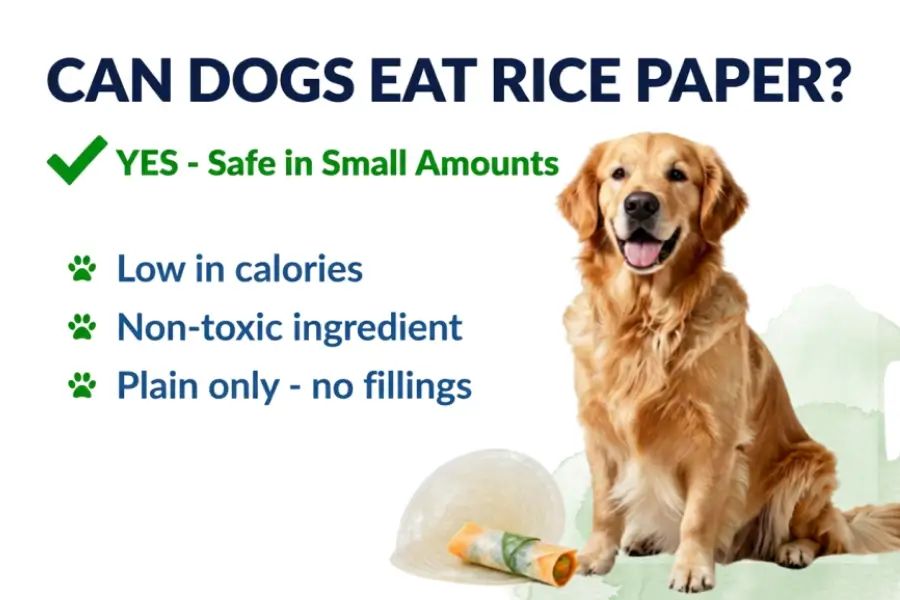
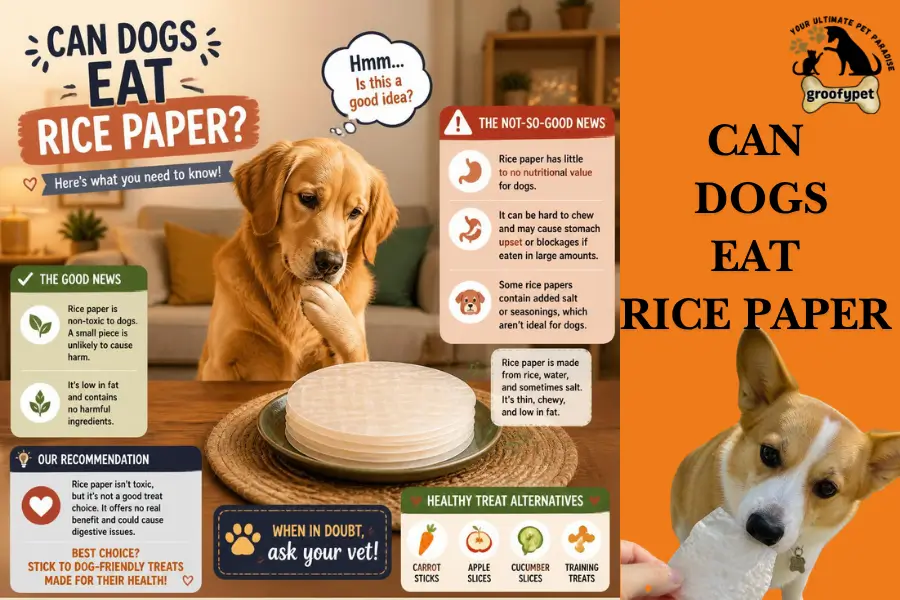
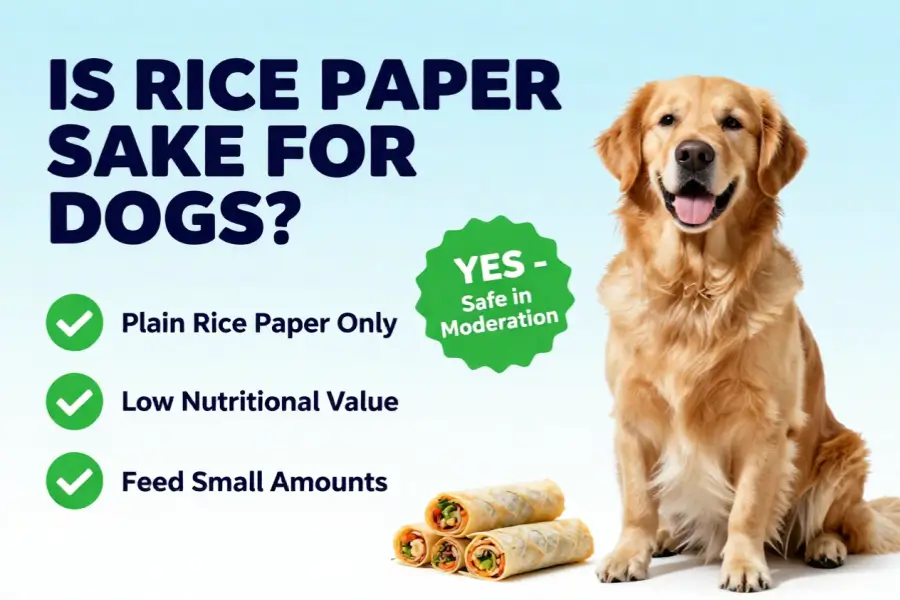
Yes, plain rice paper is generally safe for dogs in very small amounts. It is not toxic. However, it offers almost no nutritional benefit, and the risks multiply quickly when the wrapper is dry, flavored, filled with unsafe ingredients, or consumed in large quantities.
Plain, unfilled, softened rice paper is generally safe for dogs in small amounts. Can dogs eat rice paper?It does not contain ingredients that are acutely toxic to dogs, such as chocolate, xylitol, grapes, or raisins. A small accidental bite is unlikely to cause serious harm to a healthy adult dog.
Small Amount vs. Large Amount
The risk scales with quantity:
- One small piece of plain rice paper — unlikely to cause any reaction beyond minor stomach gurgling in a healthy adult dog.
- A full wrapper or several sheets — may cause digestive upset, loose stool, or vomiting. Dry sheets can clump and create a partial blockage.
- A filled rice paper roll (spring roll, summer roll)—the wrapper itself may be harmless, but the fillings often are not. Garlic, onion, shrimp paste, chili, and soy sauce appear in most traditional recipes and are problematic for dogs.
Veterinary Opinion
Most veterinarians agree that plain rice paper is a low-risk, low-reward food for dogs. It is not something that needs to be rushed to an emergency clinic over unless large amounts were consumed or the dog shows signs of distress.
What Is Rice Paper?
Ingredients
Traditional rice paper is made from a simple combination of:
- Rice flour — the primary structural ingredient
- Tapioca starch — adds chewiness and translucency
- Water — binds the mixture
- Salt — used in small amounts in most commercial varieties
Some commercial rice papers add preservatives, natural flavorings, or coloring agents. Always check the ingredient label before sharing any human food product with your dog.
How It Is Made
Rice flour and tapioca starch are mixed with water into a thin batter. This batter is spread in an ultra-thin layer over a bamboo mat or specialized drum, then steamed until set and dried into stiff, translucent rounds or squares. The result is a brittle, dry sheet that softens and becomes pliable when soaked in water for 20 to 30 seconds, making it ideal for wrapping fillings.
Common Culinary Uses
Rice paper is used across Vietnamese, Thai, Chinese, and broader Asian cuisines in dishes including:
- Fresh Vietnamese spring rolls (gỏi cuốn)
- Fried spring rolls (chả giò)
- Thai fresh rolls with peanut sauce
- Rice paper chips (baked or fried)
- Dumplings and wraps
- Edible cake and cupcake toppers
Nutritional Profile of Rice Paper
| Nutrient | Per 1 sheet (approx. 8g) |
|---|---|
| Calories | 30–35 kcal |
| Carbohydrates | 7–8g |
| Protein | <1g |
| Fat | 0g |
| Fiber | <0.5g |
| Sodium | 10–25 mg |
| Vitamins/Minerals | Negligible |
As the table shows, rice paper is almost entirely simple carbohydrates. It is not a nutritious food for dogs.
Is Rice Paper Safe for Dogs?
The answer depends significantly on the form of rice paper your dog encounters.
Dry Rice Paper
Can dogs eat rice paper? Dry, unsoaked rice paper is the most dangerous form for dogs. In its dry state, rice paper is rigid and brittle. When a dog swallows a piece, it begins absorbing saliva and stomach fluids, causing it to expand and become sticky.
This creates a real choking hazard and, in larger amounts, can potentially contribute to a gastrointestinal blockage, particularly in small breeds or dogs with pre-existing digestive issues.
Verdict on dry rice paper: Avoid intentional feeding. If your dog swallows a small dry piece, monitor closely for choking or signs of blockage.
Softened Rice Paper
Softened rice paper that has been soaked in water is more digestible. The starch has partially gelatinized, making it easier for a dog’s digestive enzymes to break down. A small piece of plain, softened rice paper given occasionally is the least risky form for a healthy adult dog.
Verdict on softened rice paper: Low risk in very small amounts. No nutritional benefit.
Cooked Rice Paper (Fried or Baked)
Cooked rice paper, such as fried spring roll shells or baked rice paper chips, introduces additional concerns. Frying adds fat and calories that dogs do not need. Commercial fried rice paper products often contain added salt, oils, spices, and flavor enhancers.
Verdict on cooked/fried rice paper: Not recommended. The cooking process and added ingredients create more risks than plain rice paper.
Flavored Rice Paper
Some rice paper products are sold with seasonings baked in shrimp flavor, garlic, sesame, chili, or soy sauce. These are unsafe for dogs. Garlic and onion in any form are toxic to dogs, even in small quantities over time. Chili causes gastrointestinal distress. Soy sauce contains high levels of sodium.
Can Puppies Eat Rice Paper?
Most puppies can eat a small piece of plain rice paper as an occasional treat, but it should not become a regular part of their diet. Always introduce new foods slowly and avoid rice paper that contains seasonings, fillings, or sauces.
Digestive Sensitivity
Puppies have developing digestive systems that are more sensitive than those of adult dogs. Their gut flora is still establishing, and unusual foods — even mild ones — are more likely to cause vomiting, diarrhea, or gas. Rice paper’s high starch content can ferment in a puppy’s gut, causing bloating and discomfort.
Choking Concerns
Puppies are more likely to swallow things without chewing properly. Dry rice paper is a meaningful choking hazard for small or young dogs. A sheet that softens around the throat or in the esophagus can cause gagging or, in serious cases, obstruction.
Veterinary Recommendations for Puppies
Puppies should be fed only age-appropriate, nutritionally complete puppy food and veterinarian-approved treats. Rice paper is not appropriate for puppies. If your puppy accidentally eats rice paper, monitor for choking, vomiting, or lethargy and contact your vet if any of these occur.
Nutritional Value of Rice Paper for Dogs
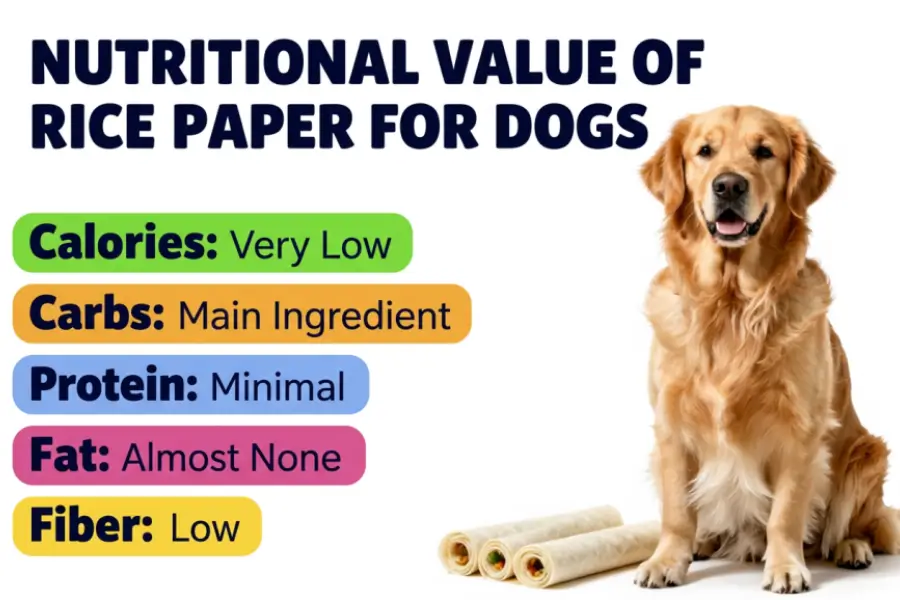
Rice paper is low in fat and made mostly from rice starch and water. It provides carbohydrates for energy but contains very little protein, fiber, vitamins, or minerals that benefit dogs.
1. Carbohydrates
Rice paper is almost entirely starch. While dogs can metabolize carbohydrates, they do not require the same carbohydrate levels that humans do. Excess simple carbohydrates can contribute to weight gain, blood sugar fluctuations, and digestive disruption in dogs.
2. Calories
At 30–35 calories per sheet, rice paper sounds low-calorie. However, these are empty calories providing energy without any vitamins, minerals, amino acids, or beneficial fats.
3. Protein
Rice paper contains less than 1 gram of protein per sheet. Dogs require protein from high-quality animal sources as the foundation of their diet. Rice paper contributes nothing meaningful here.
4. Fat
Plain rice paper is virtually fat-free. This is one of its only genuinely neutral attributes.
5. Fiber
Rice paper provides negligible dietary fiber. Compare this to a baby carrot (about 0.5g fiber) or a tablespoon of canned pumpkin (0.5g fiber), both far better options as low-calorie treats.
6. Vitamins and Minerals
Rice paper contains no significant vitamins or minerals in amounts that would benefit a dog’s health. It is not a source of calcium, iron, B vitamins, or vitamin C.
Potential Benefits of Rice Paper for Dogs
To be balanced, there are a few minor points in rice paper’s favor.
- Low in fat — unlike many table scraps, plain rice paper will not contribute to pancreatitis if given occasionally in tiny amounts.
- Simple, short ingredient list — plain rice paper does not contain dairy, artificial sweeteners, or common allergens like wheat.
- Wheat-free — useful for dogs with grain sensitivities specifically to wheat or gluten; rice flour is generally better tolerated.
- Easy to chew when softened — suitable for senior dogs with dental issues if given as a softened piece, though they would be better served with an actual veterinary-approved soft treat.
- Rarely toxic on its own — for owners anxious about their dog stealing a small piece, the reassurance that plain rice paper is not poisonous is real.
Despite these minor points, rice paper should not be a deliberate part of your dog’s diet. It simply offers too little nutritional value to justify it as a regular treat.
Risks and Side Effects of Rice Paper for Dogs
Choking Hazard
Dry rice paper is the most immediate physical danger. It expands when wet and can stick to the throat or esophagus. Always supervise your dog carefully if any rice paper is nearby.
Digestive Blockage
While a single small sheet is unlikely to cause a true blockage, multiple sheets — especially dry ones — can clump together in the stomach or intestines. Small dogs and brachycephalic breeds (bulldogs, pugs, French bulldogs) are at higher risk.
Stomach Upset
Even plain rice paper can cause loose stool, gas, or vomiting in dogs with sensitive stomachs or irritable bowel conditions. The starch ferments easily in the large intestine, producing gas.
Excess Carbohydrates
Dogs that eat rice paper regularly get unnecessary simple carbohydrates that contribute to weight gain and may worsen diabetes or insulin resistance in predisposed breeds.
Added Salt and Seasonings
Commercial rice paper often contains more sodium than homemade versions. While the amount per sheet is modest, dogs have lower sodium thresholds than humans. A dog that eats several sheets of salted rice paper may experience increased thirst, urination, large ingestion scenarios, and sodium poisoning.
Unsafe Fillings
This is the most serious risk category. Spring rolls, summer rolls, and dumplings wrapped in rice paper typically contain:
- Onion and garlic — toxic to dogs; destroy red blood cells and can cause hemolytic anemia even in small amounts over time.
- Shrimp paste or fish sauce — extremely high in sodium.
- Chili and hot sauces — cause gastrointestinal irritation.
- Sweet dipping sauces — high sugar, sometimes containing xylitol.
- Fried fillings — high-fat foods increase pancreatitis risk.
A dog eating a filled spring roll is not eating “rice paper.” They are eating a combination of potentially hazardous ingredients.
Allergic Reactions
While uncommon, some dogs may have individual sensitivities to rice or tapioca. Signs include itching, hives, facial swelling, or gastrointestinal upset after consumption.
Weight Gain
Empty calories add up. A medium-sized dog that eats two or three spring rolls has consumed 100+ extra calories significant against a typical 600–800 calorie daily intake.
Sensitive Stomach
Dogs with inflammatory bowel disease, pancreatitis history, or food intolerances should not be given rice paper. Their digestive systems cannot handle even mild, unusual foods without risking a flare.
Can Dogs Eat Foods Made With Rice Paper?
Spring Rolls (Fried)
No. Fried spring rolls are high in fat, often stuffed with garlic and onion, and dipped in sauces. All of these factors make fried spring rolls unsafe for dogs.
Fresh Summer Rolls (Unfried Vietnamese-style)
Generally no, with caution. The wrapper itself may be safe in isolation, but the typical fillings — shrimp, peanut sauce, mint, rice noodles, and hoisin sauce — are either unsafe or nutritionally inappropriate for dogs. Remove all fillings and only consider offering a plain, softened wrapper, and even then only as a tiny treat.
Fried Rice Paper Rolls
No. The frying process adds fats, and the rolls typically contain seasoned fillings.
Rice Paper Chips
No. Commercially available rice paper chips contain salt, oil, flavoring, and sometimes spices. These are not appropriate for dogs.
Rice Paper Dumplings
No. Dumpling fillings almost universally include garlic, onion, and high-sodium seasonings.
What Happens If a Dog Eats Rice Paper?
Small Piece of Plain Rice Paper
In most healthy adult dogs, a small piece of plain, unfilled rice paper will pass through the digestive system without incident. The dog may experience mild gas or slightly loose stool. No emergency action is typically required.
Large Amount of Rice Paper
If a dog eats several sheets of dry rice paper, monitor closely. The sheets can expand and clump. Watch for signs of blockage: repeated vomiting, inability to defecate, abdominal distension, or extreme lethargy. Contact your veterinarian if these signs appear.
Dry Wrapper
A dry sheet of rice paper is more concerning than a soaked one. It may get stuck in the throat or esophagus before fully softening. If your dog shows signs of choking (pawing at face, gagging, coughing repeatedly, or blue-tinged gums), treat it as an emergency and contact a vet immediately.
Filled Rice Paper Rolls
The filling determines the severity. If the roll contained garlic or onion, monitor for lethargy, pale gums, reduced appetite, and dark or reddish urine; these are signs of red blood cell damage that may appear 24–72 hours later. Contact your veterinarian regardless of the amount consumed.
Symptoms to Watch For After a Dog Eats Rice Paper
After your dog eats any form of rice paper, monitor for the following symptoms, especially in the first 24 hours:
- Vomiting — especially if repeated or containing blood
- Diarrhea — loose, frequent, or bloody stool
- Constipation — straining to defecate, no stool produced
- Choking or gagging — pawing at mouth, labored breathing, distress sounds
- Difficulty swallowing — refusing water, extended neck posture, drooling
- Loss of appetite — refusing food at the next meal
- Abdominal pain — hunched posture, reluctance to be touched on the belly, whimpering
- Lethargy — unusual tiredness, reluctance to move
- Pale or yellowish gums — may indicate anemia if garlic/onion was in the roll
- Increased thirst or urination — could signal excess sodium from seasoned paper
What Should You Do If Your Dog Eats Rice Paper?
Follow these steps calmly and systematically:
- Step 1 — Determine how much was eaten. One small piece of plain rice paper in a large dog is very different from a medium dog eating four dry sheets. Size the situation before deciding on next steps.
- Step 2 — Check whether it contained fillings or seasonings. Look at what was left. Did the rice paper have filling? Check the ingredients. Was it plain or flavored? This step determines urgency more than the quantity of wrapper eaten.
- Step 3 — Watch for symptoms. Review the symptom list above. Most mild symptoms (single loose stool, minor gas) resolve on their own. Severe or worsening symptoms require veterinary attention.
- Step 4 — Offer fresh water. Encourage your dog to drink water normally. This helps with digestion and can help flush any excess sodium. Do not force large amounts of water.
- Step 5 — Call your veterinarian if:
- Your dog is choking or having trouble swallowing
- Vomiting persists beyond two episodes
- Your dog shows signs of abdominal pain or bloating
- The rice paper contained garlic, onion, or other known toxins
- Your dog is a puppy or a senior, or has a known digestive condition
- You are simply unsure your vet would rather field a precautionary call than see a delayed emergency
Safe Alternatives to Rice Paper for Dogs
Rather than sharing rice paper, offer your dog these genuinely beneficial and safe treats:
| Food | Safe? | Benefits | Notes |
|---|---|---|---|
| Plain cooked rice | Yes | Easy to digest, bland diet staple | Feed in moderation; white rice preferred for GI upset |
| Cooked chicken (plain) | Yes | Lean protein, highly digestible | No seasoning, no bones |
| Canned pumpkin (plain) | Yes | Fiber, supports digestion | Not pumpkin pie filling plain only |
| Carrots | Yes | Vitamins A and K, crunchy texture | Great for dental health too |
| Green beans (plain) | Yes | Low-calorie, some fiber | Avoid canned versions with added salt |
| Apple slices (no seeds) | Yes | Fiber, vitamin C | Remove all seeds and core; seeds contain cyanogenic compounds |
| Cooked turkey (plain) | Yes | Lean protein | No skin, no seasoning, no bones |
| Boiled eggs | Yes | High-quality protein and healthy fats | Plain, fully cooked only |
| Blueberries | Yes | Antioxidants, low-calorie | Excellent small-size treat |
| Cucumber slices | Yes | Hydrating, low-calorie | Good for overweight dogs |
Foods Wrapped in Rice Paper That Dogs Should Avoid
Even if the wrapper is technically plain, avoid giving your dog the following:
- Spring rolls with onion or garlic filling — toxic to dogs
- Garlic-filled rolls or dumplings — same toxicity concern
- Shrimp rolls with spicy sauce — high sodium, GI irritant
- Fried spring rolls — high fat, pancreatitis risk
- Sweet dipping sauces — high sugar, possible xylitol
- Chili sauce or sriracha — causes GI distress
- Hoisin or oyster sauce — very high sodium
- Rolls with raw meat — food safety risk, possible bacterial contamination
Nutritional Comparison Table
| Food | Safe for Dogs? | Main Benefit | Main Concern |
|---|---|---|---|
| Plain rice paper (plain) | Yes, in moderation | Low fat | Near-zero nutrition |
| Spring roll (filled, fried) | No | None | Garlic, onion, high fat |
| Cooked white rice | Yes | Easy digestion, GI bland diet | Feed in moderation only |
| Flavored rice paper | No | None | Sodium, spices, toxic seasonings |
| Fresh summer roll (filled) | No (as served) | A wrapper alone is lower risk | Fillings are unsafe |
| Rice paper chips | No | None | Salt, oil, flavoring |
Pros and Cons of Rice Paper for Dogs
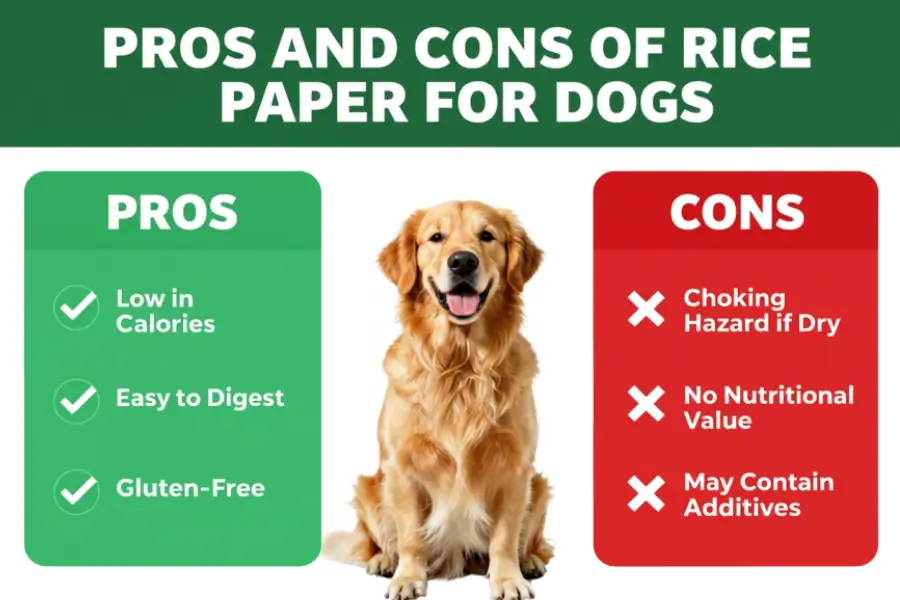
- Low in fat
- Simple, short ingredient list (plain versions)
- Small amounts are generally not toxic
- Easier to chew when softened — less hard than kibble
- Wheat-free and gluten-free (useful for dogs with wheat sensitivities)
- Very low nutritional value, essentially empty carbohydrates
- Dry rice paper is a genuine choking hazard
- Can expand and cause digestive discomfort or blockage in larger amounts
- Filled versions almost always contain ingredients unsafe for dogs
When Should You Contact a Veterinarian?
Call your veterinarian or an emergency animal poison control line immediately if:
- Your dog is choking, gagging continuously, or showing labored breathing after eating rice paper
- Vomiting occurs repeatedly (more than twice in one hour)
- Your dog develops severe diarrhea, especially with blood
- The abdomen appears swollen or your dog is in obvious pain
- Your dog has difficulty swallowing after eating rice paper
- A large amount was consumed, particularly dry sheets
- Your dog is a puppy (under 12 months) — digestive systems are more fragile
- Your dog has a known history of pancreatitis, IBD, diabetes, or other digestive disorders
- The rice paper roll contained onion, garlic, or other known toxins; this requires immediate contact even without immediate symptoms
Frequently Asked Questions
Can dogs eat plain rice paper?
Yes, plain rice paper is generally safe for dogs in very small amounts. It is non-toxic, but it offers almost no nutritional value. Think of it as a neutral but pointless snack, not harmful in a tiny accidental nibble, but not something to deliberately feed.
Is dry rice paper safe for dogs?
Dry rice paper carries more risk than softened rice paper. In its dry state, it is brittle and can expand when wet, creating a choking hazard or contributing to a digestive blockage, especially in small dogs. If your dog eats a dry sheet, monitor closely for choking or signs of blockage.
Can dogs eat spring roll wrappers?
The plain wrapper itself is low-risk in a small amount. However, spring roll wrappers served as part of a filled spring roll should not be given to dogs, as the fillings commonly include garlic, onion, sauces, and spices that are harmful to dogs.
What happens if my dog eats rice paper?
Most dogs that eat a small piece of plain rice paper experience no ill effects. Larger amounts may cause vomiting, diarrhea, or gas. If the rice paper contained unsafe fillings or seasonings, more serious symptoms, including lethargy, pale gums, and abdominal pain, may follow.
Can puppies eat rice paper?
No. Rice paper is not appropriate for puppies. Their digestive systems are still developing and are more sensitive to unusual foods. Dry rice paper also poses a greater choking risk for puppies. Stick to puppy-specific, vet-approved treats.
Is rice paper healthier than bread for dogs?
They are similarly low in nutritional value for dogs. Rice paper is wheat-free and very low in fat, which gives it a slight edge for dogs with wheat sensitivities or weight concerns. However, neither bread nor rice paper should be a deliberate treat choice when better options exist.
Can rice paper cause a blockage in dogs?
A small piece of softened rice paper is very unlikely to cause a blockage. Multiple dry sheets consumed at once carry a higher risk, as they can absorb digestive fluids and clump together. Small breeds, puppies, and dogs with prior GI issues are most vulnerable.
Should I call my veterinarian if my dog eats rice paper?
If your dog ate a small piece of plain, unfilled rice paper and is acting normally, you can monitor at home. Call your veterinarian if your dog ate a large amount, ate filled rice paper (especially with garlic or onion), or is showing any symptoms such as repeated vomiting, choking, abdominal pain, or lethargy.
Final Verdict
Can dogs eat rice paper? Technically yes, plain rice paper is not toxic to dogs, and a very small, accidental amount is unlikely to cause serious harm. However, it is not a food you should deliberately offer your dog.
When your dog gives you that hopeful look, reach for a baby carrot, a plain piece of boiled chicken, or a blueberry instead. These options deliver actual nutritional value and none of the risks.
If your dog has already eaten rice paper and you are concerned, do not wait and worry. Contact your veterinarian or an animal poison control line. Your pet’s health is always worth the call.