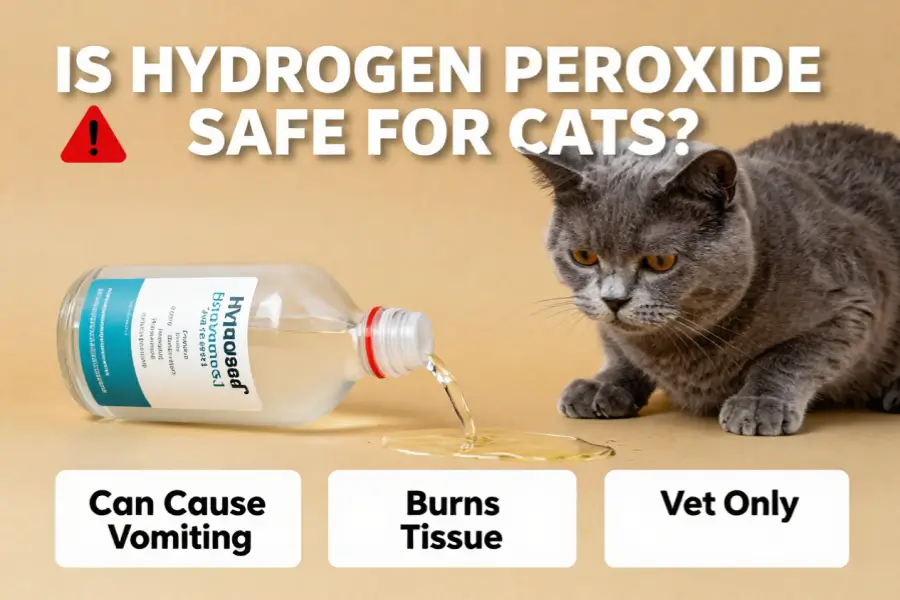
Is Hydrogen Peroxide Safe for Cats?
Is hydrogen peroxide safe for cats? No, hydrogen peroxide is generally not safe for cats. Veterinarians widely advise against using it on cats in any form unless specifically instructed by a licensed veterinary professional.
Whether applied to a wound, used to clean surfaces near your pet, or most critically given orally to induce vomiting, hydrogen peroxide carries real risks for cats that it does not carry to the same degree in humans or even dogs.
Cats process chemicals very differently from other mammals. Their livers lack certain enzymes that help neutralize chemical compounds, making them far more sensitive to substances like hydrogen peroxide.
Even the standard 3% solution found in most home medicine cabinets can cause stomach inflammation, ulcers, intestinal bleeding, and tissue damage in cats. Accidental exposure happens more often than owners expect through cats walking across a freshly cleaned surface and then grooming their paws, licking a treated wound, or getting into a spilled cleaning product.
Understanding the risks, recognizing the symptoms of hydrogen peroxide toxicity in cats, and knowing what to do in an emergency can protect your cat’s health and potentially save their life.
- Hydrogen peroxide is not safe for cats as a wound cleaner, emetic, or health remedy.
- Even 3% hydrogen peroxide can cause stomach ulcers, esophageal damage, and intestinal bleeding in cats.
- 25% of cats given hydrogen peroxide to induce vomiting develop severe stomach bleeding.
- Unlike dogs, no safe at-home method exists to induce vomiting in cats; always call a veterinarian.
- Safer alternatives include saline solution and chlorhexidine for wound care.
What Is Hydrogen Peroxide?
Hydrogen peroxide (H₂O₂) is a chemical compound made of water and an extra oxygen atom. That additional oxygen atom is unstable, which is what gives hydrogen peroxide its power as a disinfectant — it releases oxygen on contact with organic material, creating a bubbling, foaming reaction that can kill bacteria, viruses, fungi, and mold.
What Is It Used For?
In households, hydrogen peroxide serves multiple purposes:
- Household cleaning: Hydrogen peroxide kills bacteria and mold on surfaces, making it popular for bathroom cleaning, kitchen disinfection, and mold removal.
- Disinfecting surfaces: During the COVID-19 pandemic, hydrogen peroxide became one of the most widely recommended surface disinfectants. It is effective against many common pathogens and leaves no toxic residue once it fully decomposes into water and oxygen.
- First aid applications: For decades, hydrogen peroxide was a household staple for cleaning minor cuts and scrapes in humans. It remains on many bathroom shelves largely out of habit rather than clinical recommendation.
Common Strengths of Hydrogen Peroxide
Not all hydrogen peroxide products are the same strength. Understanding concentration matters greatly when assessing risk to your cat.
- 3% solution: The standard over-the-counter hydrogen peroxide available in pharmacies and grocery stores. This is the concentration most often involved in accidental pet exposures. Despite being the mildest common concentration, it is still capable of causing serious internal damage in cats.
- Higher concentrations: Industrial and commercial hydrogen peroxide products range from 6% to 35% or more. Higher-concentration products used for hair bleaching, pool sanitation, and industrial cleaning are dramatically more dangerous.
- Why concentration matters: A cat’s body cannot process the oxidative load that hydrogen peroxide creates. The higher the concentration, the faster and more severe the tissue damage. home use on cats.
Why Hydrogen Peroxide Can Be Dangerous for Cats
The danger of hydrogen peroxide for cats comes down to feline biology. Cats are obligate carnivores with a liver enzyme profile that differs significantly from dogs and humans. They lack specific cytochrome P450 enzymes needed to safely metabolize many chemical compounds.
Irritation to the Mouth and Digestive System
Is hydrogen peroxide safe for cats?When a cat is exposed to hydrogen peroxide orally by licking a treated wound, drinking contaminated water, or being given it intentionally, the compound makes immediate contact with the soft tissues of the mouth, throat, and esophagus.
- Tissue irritation: The unstable oxygen molecule in hydrogen peroxide reacts aggressively with the mucous membranes lining a cat’s mouth, throat, and stomach. This reaction creates intense localized irritation that can range from mild discomfort to visible tissue damage.
- Burning sensation: Cats exposed to hydrogen peroxide frequently show immediate signs of oral pain, pawing at the mouth, head shaking, excessive drooling, and lip smacking. These are direct responses to the burning irritation the compound creates on soft tissue.
- Stomach upset: Once hydrogen peroxide reaches the stomach, it reacts with stomach tissue and fluids, producing oxygen gas and foam. This process causes significant gastric irritation and nausea, even from relatively small amounts.
Risk of Vomiting and Gastrointestinal Damage
- Nausea: The gastric irritation caused by hydrogen peroxide ingestion consistently causes nausea in cats. Cats do not always vomit from hydrogen peroxide, making it both ineffective as an emetic and dangerous as a gastric irritant.
- Excessive drooling: Hypersalivation is one of the most commonly observed early symptoms of hydrogen peroxide exposure in cats. It signals that the mucous membranes of the mouth and throat are being actively irritated.
- Stomach inflammation: Gastritis, inflammation of the stomach lining, is a documented consequence of hydrogen peroxide ingestion in cats. This can develop rapidly and persist for hours or days following exposure, requiring veterinary treatment.
Is Hydrogen Peroxide Safe for Cleaning Cat Wounds?
This is one of the most common reasons pet owners reach for hydrogen peroxide: a visible wound on their cat that they want to clean quickly. The answer from modern veterinary medicine is clear: no, hydrogen peroxide should not be used to clean cat wounds.
Signs of Hydrogen Peroxide Poisoning in Cats
Recognizing hydrogen peroxide toxicity in cats quickly is critical. Internal damage can progress faster than visible symptoms suggest.
Common Symptoms
These early-stage symptoms typically appear within minutes to a couple of hours of exposure:
- Vomiting — One of the first responses; may contain foam
- Excessive drooling—Hypersalivation indicating oral or gastric irritation
- Pawing at the mouth—Indicates oral pain or burning sensation
- Loss of appetite—The cat refuses food due to nausea or stomach discomfort
- Nausea and lip licking—Repeated swallowing and lip movement without eating
- Stomach distension — Visible bloating from oxygen gas production in the stomach
- Foaming at the mouth — Foam produced by the oxidizing reaction
Serious Symptoms
These symptoms indicate a more serious reaction requiring emergency veterinary care:
- Difficulty breathing—Possible if foam or gas creates airway issues, or from severe distress
- Severe abdominal pain — Hunched posture, crying, resistance to being touched on the abdomen
- Lethargy — Unusual weakness or unresponsiveness
- Bloody vomit or stool—Indicates internal bleeding from ulceration or intestinal damage
- Collapse — Extreme weakness or inability to stand; possible sign of shock
- Cardiac arrhythmia — In severe cases, particularly with high-concentration products
Pros and Cons of Hydrogen Peroxide Around Cats
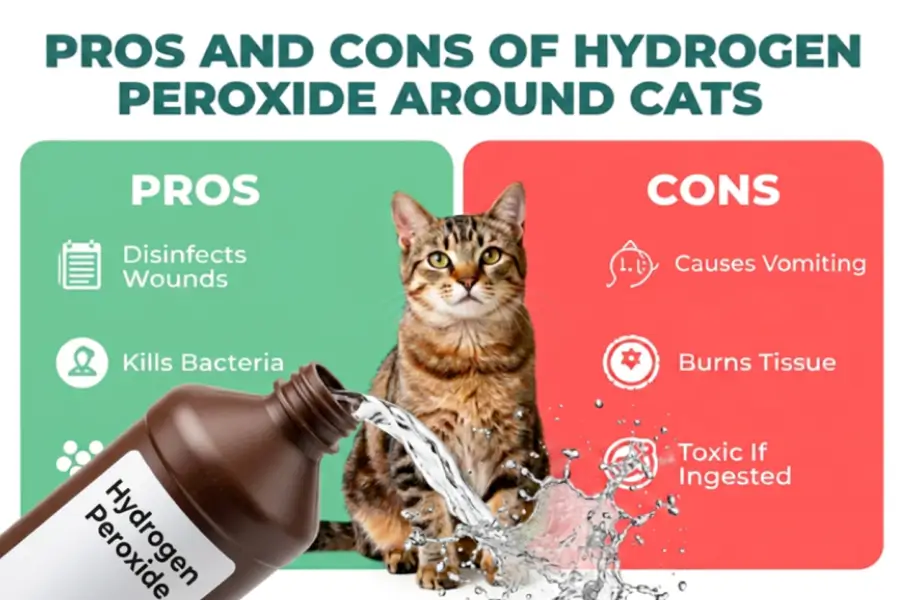
| Pros (Household Use) | Cons (When Cats Are Involved) |
|---|---|
| Effective surface disinfectant | Toxic if swallowed by cats |
| Affordable and widely available | Can cause skin irritation and chemical burns |
| Effective stain remover | Damages healthy wound tissue |
| Useful for general household cleaning | Fumes irritate feline respiratory tract |
| No toxic residue after decomposition | Unsafe as cat wound treatment |
| Kills broad range of pathogens | Never appropriate to induce vomiting in cats |
Benefits of Hydrogen Peroxide (For Household Use)
It is important to be balanced: hydrogen peroxide does have genuine uses in the home. The key distinction is that these benefits apply to household cleaning tasks, not to direct use on cats.
- Effective surface cleaning: Hydrogen peroxide kills a broad spectrum of bacteria, viruses, fungi, and mold on household surfaces. It is particularly effective in kitchens and bathrooms.
- Stain removal: Hydrogen peroxide lifts organic stains — including blood, wine, and grass — from fabrics and hard surfaces. It is commonly added to laundry as a non-chlorine bleach alternative.
- Disinfection properties: Accelerated Hydrogen Peroxide products have achieved hospital-grade disinfectant status in medical environments. Standard 3% solutions are broadly effective against common household pathogens.
- None of these benefits justify direct use on cats. The same properties that make hydrogen peroxide effective against bacteria — its aggressive oxidizing action — make it damaging to feline tissue.
Can Cats Lick Hydrogen Peroxide?
If a cat licks a very small amount of diluted hydrogen peroxide, for example, from a surface that was cleaned and not fully rinsed, the reaction is typically limited to brief oral irritation. The cat may drool, paw at its mouth, or show momentary discomfort. These symptoms usually resolve within 15–30 minutes as the hydrogen peroxide breaks down.
- Drooling, lip smacking, brief pawing at the mouth, and mild stomach upset.
- Keep the cat calm and provide access to fresh water.
- Monitor closely for 2–4 hours, and if symptoms persist or the cat becomes lethargic or vomits more than once, contact a veterinarian.
If a cat swallows a meaningful quantity of hydrogen peroxide, particularly an undiluted 3% solution or higher concentrations, the risk of hydrogen peroxide toxicity in cats increases significantly.
Safer Alternatives to Hydrogen Peroxide for Cats
Several veterinarian-recommended products and household solutions serve the cleaning and disinfection functions of hydrogen peroxide without the associated risks to cats. They achieve the necessary cleaning or disinfection without leaving residues that can harm cats through grooming or inhalation.
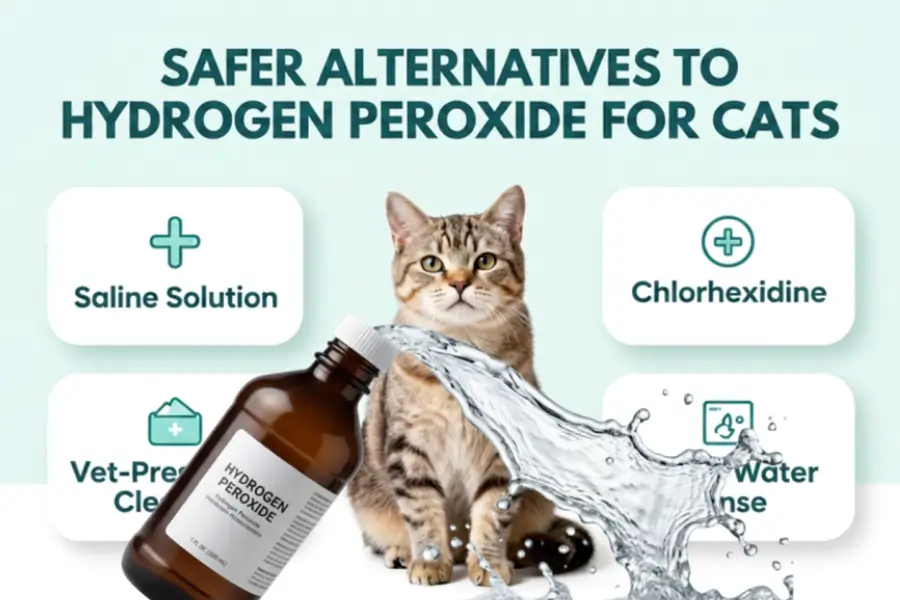
They are formulated with the knowledge that pets will re-enter cleaned spaces and lick their paws. Diluted white vinegar (1:1 with water) is effective for general surface cleaning and odor elimination. Enzymatic cleaners designed for pet homes neutralize odors at the molecular level and are non-toxic once dry.
Risks of Hydrogen Peroxide for Cats
| Risk Category | What Happens | Severity |
|---|---|---|
| Digestive irritation | Stomach inflammation, gastritis, nausea | Moderate to Severe |
| Skin irritation | Redness, rash, chemical burns (high concentration) | Mild to Severe |
| Eye damage | Corneal injury, permanent damage possible | Severe |
| Delayed wound healing | Fibroblast damage, increased scarring risk | Moderate |
| Accidental poisoning | Ulceration, intestinal bleeding, shock | Severe to Life-Threatening |
What Should You Do?
Act quickly and calmly. Time matters, but panicking delays proper care.
If It Gets on the Fur
Hydrogen peroxide on a cat’s coat carries the risk of ingestion through grooming. Act immediately:
- Bring the cat to a sink or tub without chasing or stressing them
- Rinse the affected area thoroughly with lukewarm water for at least 5–10 minutes
- Use a gentle, pet-safe shampoo if available to help remove any remaining product
- Dry the cat gently and prevent grooming of the wet area until fully clean
- Monitor the skin for redness, rash, or irritation over the next several hours
- Call your veterinarian if any skin reaction develops or the cat shows signs of distress
If It Gets in the Eyes
Eye exposure to hydrogen peroxide is an emergency.
- Flush the affected eye immediately and continuously with clean, lukewarm water for at least 15 minutes
- Do not use eye drops, milk, or any other substance; water only
- Transport the cat to a veterinarian or emergency animal hospital as quickly as possible
- Hydrogen peroxide can cause permanent corneal damage if not treated promptly
If It Is Swallowed
What to do immediately:
- Stay calm; panicking delays action
- Do not attempt to induce vomiting at home. This is critical: unlike dogs, there is no safe at-home method to induce vomiting in cats
- Do not give water, milk, oil, or any home remedy unless specifically instructed by a veterinarian
- Note the product name, concentration, and approximate amount consumed
- Photograph the packaging if possible
Emergency Warning Signs Seek Immediate Care
- Bloody vomit or bloody stool
- Collapse or extreme weakness
- Difficulty breathing
- Seizures
- Loss of consciousness
Are Hydrogen Peroxide Fumes Harmful to Cats?
Hydrogen peroxide produces a sharp, slightly acrid vapor, particularly when used in concentrated forms or in enclosed spaces. Cats have far more olfactory receptors than humans and experience chemical odors with much greater intensity.
The fumes from hydrogen peroxide can irritate the mucous membranes of a cat’s nasal passages, throat, and respiratory tract.
Sensitive cats: Kittens, elderly cats, and cats with respiratory conditions should be kept well away from any area being cleaned with hydrogen peroxide until the area has been fully ventilated and surfaces are dry.
Emergency Warning Signs to contact a vet
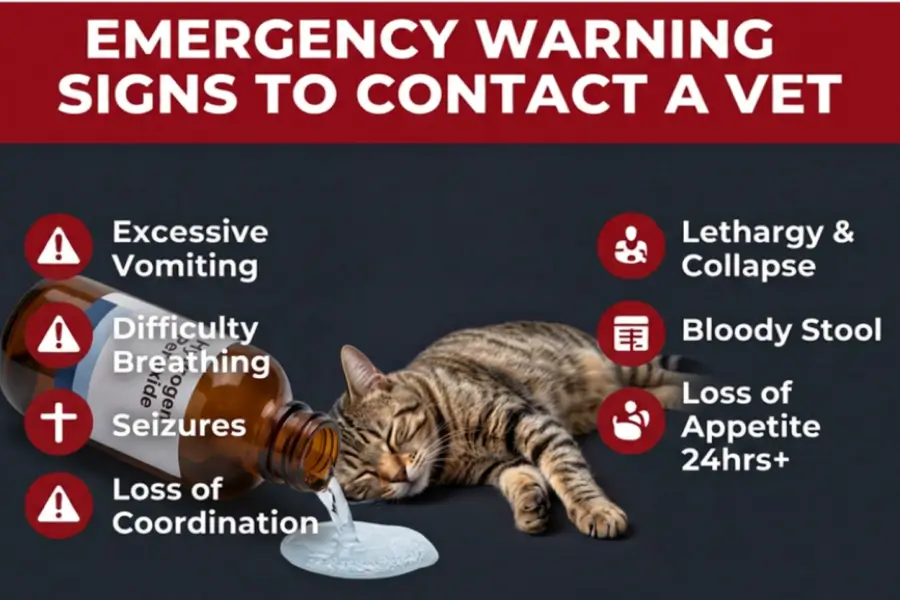
Contact a veterinarian or animal poison control immediately if your cat shows any of the following after hydrogen peroxide exposure:
- Vomiting especially if persistent or bloody
- Bloody stool or diarrhea
- Lethargy or unusual weakness
- Difficulty breathing or labored breathing
- Collapse or inability to stand
- Seizures or tremors
- Loss of consciousness
- Signs of severe abdominal pain
Frequently Asked Questions
Is hydrogen peroxide toxic to cats?
Yes, hydrogen peroxide is harmful to cats even in standard 3% household concentrations. It causes stomach and esophageal irritation and can produce ulcers and intestinal bleeding.
Can I use hydrogen peroxide on my cat’s wound?
No. Veterinarians no longer recommend hydrogen peroxide for wound care in cats or most other animals.
What if my cat licks hydrogen peroxide?
A very small lick of diluted hydrogen peroxide from a recently cleaned surface will typically cause only brief drooling or oral irritation. Provide fresh water and monitor closely for 2–4 hours.
Are hydrogen peroxide fumes harmful to cats?
In well-ventilated conditions with standard 3% hydrogen peroxide, brief fume exposure during normal cleaning is unlikely to cause lasting harm.
How do I clean a cat wound safely?
Flush the wound gently with sterile saline solution to remove debris. Do not use hydrogen peroxide, rubbing alcohol, iodine, tea tree oil, or human antiseptic wipes.
Should I induce vomiting with hydrogen peroxide?
Never. There is no safe at-home method to induce vomiting in cats. Hydrogen peroxide does not reliably cause vomiting in cats and frequently causes serious internal damage instead.
What cleaners are safe to use around cats?
Diluted white vinegar (1:1 with water) is broadly safe for surface cleaning when rinsed and dried. Enzymatic cleaners specifically formulated for pet homes are safe once dry.
Final Thoughts
Is Hydrogen Peroxide Safe for Cats? Hydrogen peroxide is a genuinely useful household product for cleaning, disinfecting, and stain removal. But when it comes to cats, the evidence from veterinary professionals is consistent and clear: hydrogen peroxide is generally not safe for cats in any direct application.
Your cat’s health is worth the extra step of choosing the right products and getting professional advice. When in doubt, call your veterinarian. That call is always free, always faster than an emergency visit, and always safer than experimenting at home.