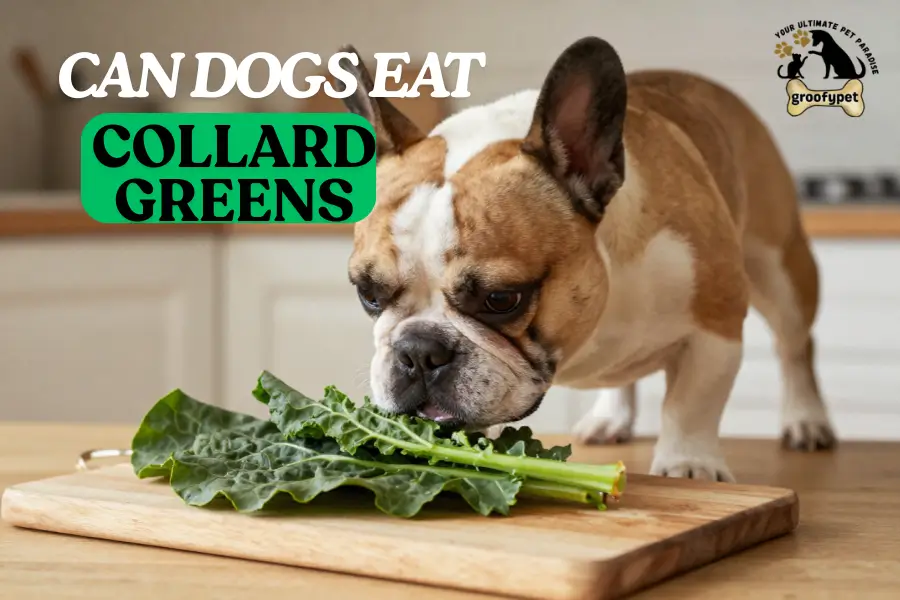
Collard greens are a popular leafy green vegetable that many people enjoy daily. If you eat collard greens at home, you may wonder, can your dog eat collard greens? The short answer is yes,dogs can eat collard greens in small amounts.
But there are important things you need to know before feeding them to your pet. Proper preparation and portion control make all the difference between a healthy treat and a digestive problem.
- Collard greens are generally safe for dogs when cooked and served plain
- They provide vitamins A, C, and K, calcium; fiber; and antioxidants
- Too much may cause digestive upset, gas, or diarrhea
- Avoid seasonings, onions, garlic, canned greens, and excessive portions
- Feed collard greens as an occasional treat alongside a balanced diet
In this guide, you will learn what collard greens are, whether they are safe for dogs, their nutritional value, health benefits, risks, and how to prepare them safely.
Can Dogs Eat Collard Greens?
Yes, dogs can eat collard greens. Cooked collard greens served plain and in small quantities are generally safe for healthy adult dogs.Collard greens provide dietary fiber, vitamins, and antioxidants that support your dog’s overall health.
However, raw collard greens are harder to digest and can cause stomach upset. Canned collard greens often contain harmful additives like garlic, onion, and salt all of which are toxic to dogs.
The key rule is simple: cook them plain, keep portions small, and always monitor your dog after feeding.
Are collard greens safe for dogs? Yes, when prepared correctly. Are there risks? Yes, if you feed too much or prepare them the wrong way. Keep reading to learn everything you need to know.
In human diets, collard greens are often simmered slowly with broth and seasonings. They are rich in nutrients and are recognized as one of the most nutritious leafy green vegetables available.
How Do Collard Greens Differ From Other Greens?
Collard greens are often compared to other leafy vegetables, but they have some key differences:
- Collard greens vs. kale: Both are cruciferous vegetables from the cabbage family. Kale has a stronger, more bitter flavor. Collard greens have a milder taste and larger, smoother leaves. Both are safe for dogs in small quantities.
- Collard greens vs. spinach: Spinach is higher in oxalates, which can interfere with calcium absorption in dogs. Collard greens contain oxalates too, but at lower levels. Both are best served cooked and in moderation.
- Collard greens vs. mustard greens: Mustard greens have a peppery flavor and are low in calories and fat. Both are good sources of vitamins and minerals for dogs. Collard greens tend to be more widely available.
Are Collard Greens Safe for Dogs?
Yes, collard greens are generally safe for dogs when served plain and in moderation. They contain beneficial vitamins, minerals, and fiber that can support overall health.
When Collard Greens Are Safe
Collard greens are safe for dogs in the following situations:
- You serve them cooked and plain, without any seasonings, oil, butter, or additives
- You give small serving sizes appropriate for your dog’s weight
- Your dog is a healthy adult without existing kidney, bladder, or thyroid conditions
When Collard Greens May Be Unsafe
Collard greens become unsafe in these situations:
- You feed large quantities, which can overwhelm your dog’s digestive system
- The greens contain added seasonings like garlic, onion, or salt — all toxic to dogs
- Your dog has health conditions such as kidney disease, bladder stones, or thyroid problems
- You serve raw greens in excess, which are harder for dogs to digest and may cause gas and bloating
Always consult your veterinarian before introducing new foods to your dog’s diet, especially if your dog has any existing health conditions.
Nutritional Value of Collard Greens
Collard greens are packed with nutrients that benefit both humans and dogs. Here are the key nutrients and why they matter for your pet:
- Vitamin A — supports eye health, skin health, and immune function. Dogs need adequate vitamin A for healthy vision and cell growth.
- Vitamin C — a powerful antioxidant that supports your dog’s immune system. Dogs produce some vitamin C naturally, but additional dietary sources provide extra immune support.
- Vitamin K — essential for healthy blood clotting and bone health. Collard greens are one of the richest natural sources of vitamin K.
- Calcium — supports strong bones and teeth. Calcium also plays a role in muscle function and nerve transmission.
- Fiber — promotes a healthy digestive system. Fiber keeps your dog’s bowel movements regular and supports gut microbiome health.
- Antioxidants—collard greens contain phytonutrients and phytochemicals that protect your dog’s cells from damage and support overall wellness.
Collard Greens Nutrition Chart (Per 1 Cup Raw, Approx. 36g)
| Nutrient | Amount |
|---|---|
| Calories | ~11 kcal |
| Fiber | ~1.4g |
| Protein | ~1g |
| Vitamin A | 48% of daily value |
| Vitamin C | 21% of daily value |
| Vitamin K | 145% of daily value |
| Calcium | 8% of daily value |
| Iron | 1% of daily value |
| Potassium | ~77mg |
| Folate | ~60mcg |
Collard greens also contain riboflavin, niacin, vitamin B6, magnesium, and phosphorus all beneficial for your dog’s balanced diet.
Health Benefits of Collard Greens for Dogs
Collard greens can provide dogs with vitamins A, C, and K, along with fiber and antioxidants that support overall health. They may help support digestion, immune function, and healthy skin and coat.
1. Rich in Antioxidants
Collard greens contain powerful antioxidants and phytochemicals. These compounds protect your dog’s cells from oxidative damage. Regular small servings may help reduce the risk of chronic disease and support healthy aging.
2. Supports Immune Health
The combination of vitamin C and other antioxidants in collard greens actively supports your dog’s immune system. A stronger immune system helps your dog fight off infections and stay healthy year-round.
3. Promotes Healthy Vision
Vitamin A in collard greens supports healthy eyes and vision in dogs. It helps maintain the cells in your dog’s eyes and may reduce the risk of vision problems as your dog ages.
4. Supports Bone Health
Vitamin K and calcium in collard greens work together to support strong bones and teeth. This is especially helpful for growing puppies (in very small amounts) and senior dogs whose bones may weaken with age.
5. Helps digestive function
The dietary fiber in collard greens — including both soluble and insoluble fiber — supports a healthy digestive system. Insoluble fiber adds bulk to stool and promotes regular bowel movements. It also improves gut microbiome health and provides roughage for optimal bowel function.

6. Provides Essential Vitamins
Collard greens deliver vitamins A, C, K, B6, folate, riboflavin, and niacin in a single serving. These vitamins support multiple body systems, including the immune system, nervous system, and skin.
7. Supports Healthy Skin
Vitamin A and vitamin E in collard greens promote healthy skin in dogs. Dogs with dry, flaky, or irritated skin may benefit from the skin-supporting nutrients found in leafy green vegetables.
8. Promotes a Shiny Coat
The combination of vitamins, minerals, and phytonutrients in collard greens can support a shiny, healthy coat. Dogs that eat a nutrient-rich balanced diet often show improvements in coat quality and texture.
9. Low-Calorie Treat Option
Collard greens are naturally low in calories and fat. They make an excellent treat choice for dogs that are overweight or have diabetes. You can offer a small piece as a reward without adding significant calories to your dog’s daily intake.
10. Helps Overall Wellness
Adding collard greens to your dog’s diet in small quantities is a great way to improve their overall health. The combination of fiber, vitamins, minerals, and antioxidants supports multiple body systems and contributes to a long, healthy life.
Risks of Feeding Collard Greens to Dogs
Feeding too many collard greens can cause digestive upset in dogs, including gas, bloating, or diarrhea. Their high fiber content may be difficult for some dogs to digest.
1. Digestive Upset
Raw collard greens are difficult for dogs to digest. Even cooked collard greens can cause mild gastrointestinal upset if your dog eats them for the first time or in large amounts.
2. Gas and Bloating
Collard greens are a cruciferous vegetable. Like broccoli and kale, they can produce gas during digestion. Dogs that eat too many collard greens may experience uncomfortable bloating.
3. Diarrhea
Too much fiber can lead to diarrhea in dogs. If your dog’s stool becomes loose after eating collard greens, reduce the portion size or stop feeding them temporarily.
4. Vomiting
Some dogs vomit after eating raw or large quantities of collard greens. If your dog vomits more than once or shows other symptoms, contact your veterinarian.
5. Choking Risk From Large Pieces
Thick collard green leaves and tough stems can be a choking hazard, especially for small dogs. Always chop collard greens into small pieces before serving.
6. Excess Fiber Intake
While fiber is beneficial in moderate amounts, too much fiber can disrupt your dog’s digestive system. It can change the gut flora and lead to alkalizing your dog’s body, which can affect kidney health over time.
7. Oxalate Concerns
Like many vegetables, collard greens contain oxalates. Oxalates can interfere with calcium absorption and may contribute to the formation of kidney stones or bladder stones in dogs that are predisposed to these conditions. Dogs with existing kidney or bladder conditions should avoid foods high in oxalates.
8. Thyroid Interference in Excess
Collard greens belong to the cruciferous family. In very large quantities, cruciferous vegetables may interfere with thyroid function. This risk is low with occasional small servings but is worth noting if your dog has a thyroid condition.
9. Harmful Seasonings
Many human collard green recipes use garlic, onion, chives, butter, salt, and other seasonings. These are toxic or harmful to dogs. Always prepare collard greens plainly for your pet; no exceptions.
10. Nutritional Imbalance
Collard greens should not be the main source of nutrition for your dog. Feeding too many greens can unbalance your dog’s diet and push out more important protein and fat sources. Vegetables should make up no more than 10% of your dog’s daily diet.
Can Puppies Eat Collard Greens?
Puppies have different nutritional needs than adult dogs. Their digestive systems are more sensitive and still developing, which makes them more vulnerable to digestive upset from new foods.
Puppies can eat collard greens in very small amounts; a tiny piece of cooked, plain collard green is fine as an occasional treat. However, puppies need a diet focused on high-quality protein and fat to support rapid growth and development. Leafy greens should play a very minor role in a puppy’s diet.
Always follow your veterinarian’s recommendations when introducing any new food to a puppy. Start with a tiny portion and watch carefully for any signs of digestive upset.
How Much Collard Greens Can Dogs Eat?
Dogs can eat collard greens in moderation, with small dogs having a few bite-sized pieces and larger dogs eating a few tablespoons at a time. These greens should be offered as an occasional treat rather than a daily food.
Feeding Guide by Dog Size
| Dog Size | Recommended Amount |
|---|---|
| Small Dogs (under 20 lbs) | 1 teaspoon |
| Medium Dogs (20–50 lbs) | 1–2 tablespoons |
| Large Dogs (over 50 lbs) | 2–3 tablespoons |
These amounts refer to cooked, plain collard greens. Always start at the lower end and monitor your dog’s reaction before increasing the portion.
How Often Can Dogs Eat Collard Greens?
Collard greens work best as an occasional treat, not a daily staple. Offer them 2–3 times per week at most. Keep total vegetable intake to around 5–10% of your dog’s daily caloric intake.Moderation is the most important rule. Even healthy foods can cause problems when your dog eats them in excess.
What Happens If a Dog Eats Too Many Collard Greens?
If your dog eats too many collard greens, you may notice the following:
- Stomach discomfort — your dog may seem restless or uncomfortable
- Loose stools or diarrhea — excess fiber causes soft or watery stools
- Gas and bloating—cruciferous vegetables produce gas during digestion
- Reduced appetite—digestive discomfort can reduce your dog’s interest in food
Most of these symptoms resolve within 24 hours. Make sure your dog drinks plenty of water and eats their normal meals.
When to call a veterinarian: Contact your vet if your dog vomits repeatedly, shows signs of severe abdominal pain, has bloody diarrhea, becomes lethargic, or stops eating for more than 24 hours.
Signs Your Dog Does Use Collard Greens
If your dog tolerates collard greens well, you may notice normal digestion, regular bowel movements, and no signs of stomach discomfort after eating them. Many dogs can enjoy small amounts without any issues.
Digestive Symptoms
Some dogs simply do not tolerate collard greens well. Watch for these digestive signs after feeding:
- Vomiting — one or more episodes after eating
- Diarrhea — loose, watery, or more frequent stools
- Gas — excessive flatulence or audible stomach gurgling
- Bloating — visibly distended or hard abdomen
Physical Symptoms
Beyond digestive signs, watch for these physical symptoms:
- Lethargy — unusual tiredness or unwillingness to move
- Loss of appetite — refusing to eat regular meals
- Abdominal discomfort — hunching, whining, or reluctance to be touched on the belly
If your dog shows any of these signs, stop feeding collard greens and consult your veterinarian.
Can Dogs Eat Different Forms of Collard Greens?
Dogs can eat collard greens in different forms, but cooked and plain collard greens are usually the safest and easiest to digest. Steamed or boiled greens without salt, butter, or seasonings are the best options.
1. Raw Collard Greens
Dogs can eat raw collard greens, but approach this with caution. Raw greens are harder to digest and may cause mild gastrointestinal upset such as gas, bloating, or diarrhea. Always wash raw collard greens thoroughly to remove pesticides and bacteria. Cut them into small pieces to reduce choking risk.
2. Cooked Collard Greens
Cooked collard greens are the best option for dogs. Cooking breaks down the cell walls, which releases more nutrients and makes them easier to digest. Always cook them plain — no oil, butter, salt, or seasonings.
3. Steamed Collard Greens
Steaming is the best cooking method. Lightly steaming collard greens softens them while preserving most of their nutritional value. Steamed collard greens are easy to chop into small pieces for your dog.
4. Boiled Collard Greens
Boiling also works well. Boil collard greens in plain water without any salt or seasoning. Note that boiling may reduce some water-soluble vitamins like vitamin C, but the greens remain safe and digestible.
5. Frozen Collard Greens
Plain frozen collard greens are safe for dogs, provided they contain no added seasonings or sauces. Always check the ingredient label. Thaw and cook them before serving.
6. Collard Greens in Soups
Homemade soups with plain collard greens and dog-safe ingredients are fine. However, most store-bought soups contain onion, garlic, salt, and other harmful ingredients. Avoid feeding your dog soup unless you made it yourself with safe ingredients.
7. Canned Collard Greens
Avoid canned collard greens for dogs. Most canned varieties contain harmful additives, seasonings, and preservatives like garlic, onion, and salt that cause stomach upset or toxicity in pets.
How to Prepare Collard Greens for Dogs Safely?
Follow these simple steps every time you prepare collard greens for your dog:
Wash Thoroughly
Rinse the collard greens under running water. This removes pesticides, bacteria, and dirt from the surface of the leaves. Even organic greens should be washed.
Remove Tough Stems
Slice along either side of the thick stem with a knife and discard the stems. The stems are tough, difficult to digest, and a potential choking hazard. Use only the leafy green parts.
Cook Without Seasonings
Steam or boil the leaves in plain water. Do not add oil, butter, salt, garlic, onion, or any other seasoning. Plain is the only safe option for dogs.
Chop Into Small Pieces
Cut the cooked leaves into small, bite-sized pieces appropriate for your dog’s size. Small dogs need very small pieces to prevent choking.
Serve Plain
Serve the collard greens as a standalone treat or mixed into your dog’s regular food as a topper. Do not mix with human food that contains seasonings.
Best Vegetable Alternatives to Collard Greens for Dogs
If your dog does not tolerate collard greens well, try these other dog-friendly vegetables:
1. Green Beans
Green beans are low in calories and rich in vitamins A, C, and K. They are easy to digest and one of the most popular dog-safe vegetables.
2. Carrots
Carrots are crunchy, low-calorie, and rich in beta-carotene and fiber. They also support dental health. Most dogs love the natural sweetness of raw or cooked carrots.
3. Pumpkin
Plain canned pumpkin (not pie filling) is excellent for dogs with digestive issues. It is rich in fiber and can help with both diarrhea and constipation.
4. Zucchini
Zucchini is very low in calories and easy to digest. It provides potassium, magnesium, and vitamins B6 and C. It is a great low-glycemic vegetable for dogs.
5. Sweet Potato
Cooked sweet potato is rich in fiber, vitamin A, and potassium. It is a nutritious and filling treat that most dogs enjoy.
6. Broccoli
Broccoli is safe for dogs in small amounts. Like collard greens, it is a cruciferous vegetable that provides vitamins, minerals, and antioxidants. Feed it in moderation to avoid gas.
Vegetables Dogs Should Never Eat
Not all vegetables are safe. Keep these completely out of your dog’s reach:
1. Onions
Onions are toxic to dogs. They damage red blood cells and can cause hemolytic anemia, even in small amounts. This includes raw, cooked, and powdered onions.
2. Garlic
Garlic is more toxic than onions on a per-weight basis. It causes the same type of red blood cell damage. Many canned collard greens contain garlic — this is why you should never feed canned greens to your dog.
3. Chives
Chives belong to the same family as onions and garlic. They are equally toxic to dogs and should be avoided completely.
4. Raw Potatoes
Raw potatoes contain solanine, a compound that is toxic to dogs. Always cook potatoes thoroughly before feeding, and avoid green potatoes entirely.
5. Wild Mushrooms
Many wild mushroom varieties are severely toxic to dogs and can cause liver failure or death. Never let your dog eat wild mushrooms found outdoors.
How to Introduce Collard Greens to Your Dog?
Follow these steps when introducing collard greens to your dog for the first time:
- Start with a small amount—offer a single teaspoon of cooked, plain collard greens regardless of your dog’s size
- Mix with regular food—blend the collard greens into your dog’s normal meal to ease the transition
- Monitor for reactions—watch for any signs of digestive upset, vomiting, or gas for 24–48 hours
- Increase slowly if tolerated—if no adverse reactions appear, gradually increase toward the recommended serving size
Never jump straight to large portions. A gradual introduction protects your dog’s digestive system and helps you catch any intolerance early.
Veterinarian Advice on Dogs and Collard Greens
Most veterinarians agree that leafy green vegetables like collard greens can be a healthy addition to a dog’s balanced diet when served correctly.
- Benefits of leafy greens: Greens provide natural vitamins, minerals, and phytonutrients that support immune health, digestion, bones, and skin and coat quality.
- Importance of balanced diets: Vegetables should complement, not replace, a complete and balanced dog food. A dog’s diet should be approximately 90% complete food with about 10% treats and toppers.
- Portion recommendations: Feeding 5–10% of the diet as vegetables works well for most healthy dogs. Your vet can help you find the right amount for your individual dog.
- Health conditions requiring caution: Dogs with kidney disease, bladder stones, thyroid conditions, or oxalate sensitivity should avoid collard greens unless a vet approves.
Always consult your veterinarian before making significant changes to your dog’s diet.
Frequently Asked Questions
Can dogs eat collard greens safely?
Yes. Dogs can eat collard greens safely when cooked plain and served in small quantities. Avoid raw greens in large amounts and never use seasonings.
Are collard greens good for dogs?
Yes. Collard greens provide vitamins A, C, and K, calcium, fiber, and antioxidants that support immune health, bone health, digestion, and overall wellness.
Can puppies eat collard greens?
Puppies can eat tiny amounts of cooked, plain collard greens occasionally. Their digestive systems are sensitive, so start with a very small piece and consult your vet first.
Can dogs eat raw collard greens?
Dogs can eat raw collard greens in very small amounts, but cooked collard greens are easier to digest. Always wash raw greens thoroughly and chop them into small pieces.
How much collard greens can dogs eat?
Small dogs: about 1 teaspoon. Medium dogs: 1–2 tablespoons. Large dogs: 2–3 tablespoons. Serve 2–3 times per week at most.
Can collard greens cause diarrhea in dogs?
Yes. Too many collard greens can cause diarrhea due to high fiber content. Stick to recommended portion sizes.
Are cooked collard greens better than raw?
Yes. Cooked collard greens are easier for dogs to digest. Steaming or boiling breaks down cell walls and releases more nutrients. Always serve without seasonings.
What leafy greens are safest for dogs?
The safest leafy greens include collard greens, romaine lettuce, kale, and spinach (all in moderation). Green beans and broccoli are also excellent dog-friendly choices.
Final Thoughts
Dogs can eat collard greens safely when you prepare them the right way. Cooked, plain collard greens in small amounts provide real nutritional benefits: vitamins, fiber, antioxidants, and minerals that support immune health, digestion, bones, skin, and coat.
The main risks come from overfeeding, improper preparation, and harmful additives. Always remove the stems, cook without seasonings, chop into small pieces, and keep portions appropriate for your dog’s size.
Feed collard greens as an occasional treat alongside a complete and balanced dog diet. Introduce them slowly, monitor your dog’s reaction, and consult your veterinarian if you have any concerns.
Top 20 Human Foods Puppies Can Eat
Can Dogs Eat Chia Pudding? Risks Benefits and Safe Alternatives!