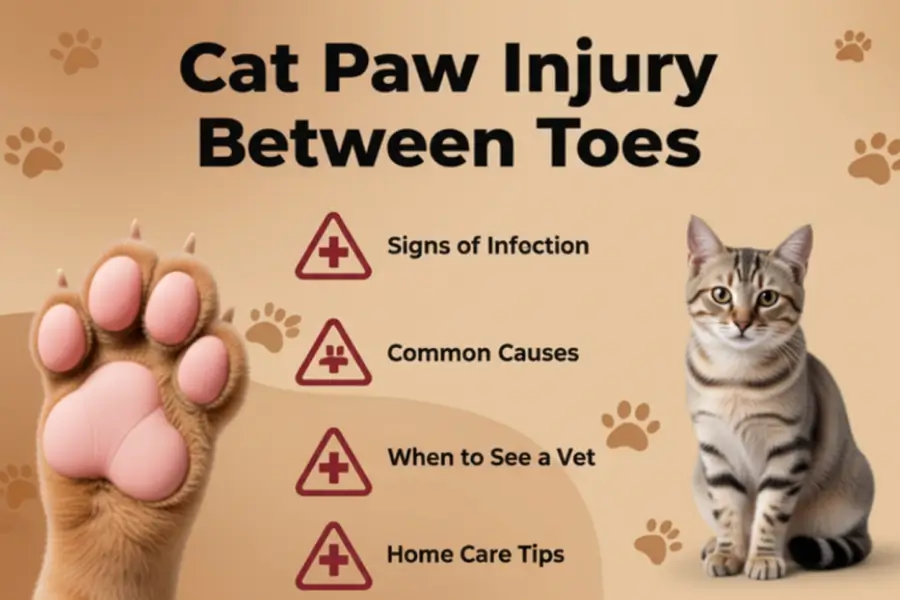
A cat paw injury between toes happens when the skin, webbing, or pad between a cat’s toes gets cut, punctured, burnt, or infected. It can range from a minor scrape that heals on its own in a few days to a deep wound needing veterinary care.
Minor injuries often heal with home care, but heavy bleeding, pus, swelling, or limping that doesn’t improve within 24–48 hours means it’s time to see a vet. If you’ve ever noticed your cat limping, licking one paw obsessively, or holding a foot up while walking, you may be dealing with a cat paw injury between the toes.
This is one of the most common injuries cat owners encounter, and it can happen to any cat, indoor or outdoor. Outdoor cats face more risks simply because they walk on rough ground, step near broken glass, or get into scuffles with other animals. But even indoor cats aren’t immune.
A stray staple, a sharp toy edge, or an ingrown nail can cause the same kind of pain and swelling. Early treatment matters. What starts as a small cat paw wound can turn into a painful infection or abscess if it’s ignored.
In this article, we’ll walk through the causes, symptoms, home care steps, and warning signs that mean it’s time to call your veterinarian so you can help your cat heal quickly and comfortably.
Understanding a Cat’s Paw Anatomy
To understand why a cat’s toe injury happens so easily, it helps to know what’s actually back there.
- Paw pads — the thick, cushioned pads on the bottom of the foot that absorb shock and provide traction.
- Toes — cats typically have five toes on the front paws and four on the back, each with its own small pad.
- Claws — Retractable and sharp, claws can get snagged, torn, or overgrown, leading to injury.
- Webbing between toes — this is the thin skin connecting each toe. It’s soft, flexible, and unfortunately very easy to cut or tear.
This area between the toes is especially sensitive because the skin is thinner than the pads themselves, there’s less fur for protection, and it stays in near-constant contact with the ground, litter, and any debris your cat walks through. That combination makes it a prime spot for a cat paw pad injury.
Common Causes of Cat Paw Injury Between Toes
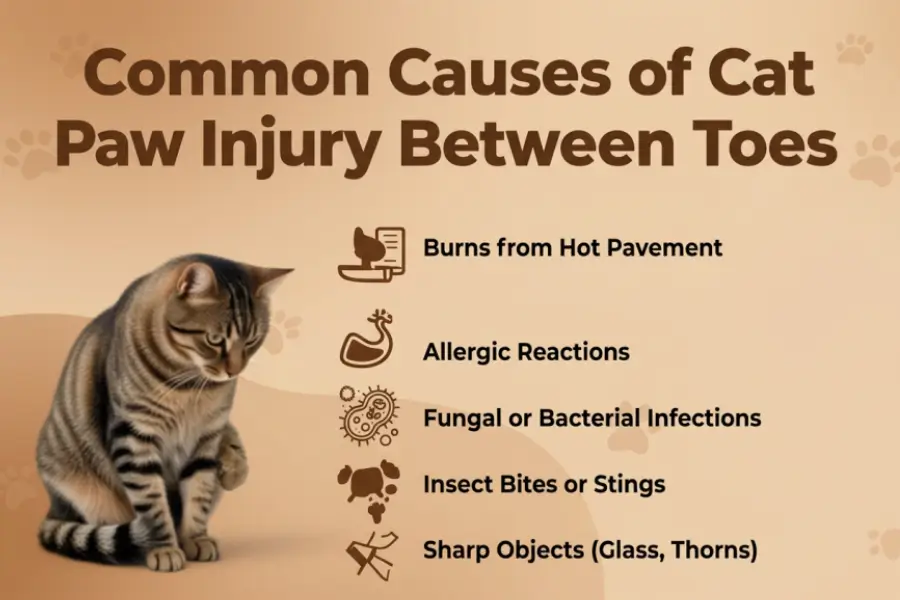
Cat paw injuries between the toes are often caused by sharp objects, rough surfaces, insect bites, burns, or getting something stuck between the paw pads. Infections, allergies, overgrown nails, and excessive licking can also irritate the skin and lead to pain or swelling.
Sharp Objects
Broken glass, thorns, stray nails, bits of wire, and wood splinters are some of the most frequent culprits. A cat’s paw can easily land on something sharp hidden in grass, on a sidewalk, or even in your own backyard.
Burns
Walking on hot pavement during summer can burn sensitive paw pads. Household chemicals — including cleaning products, antifreeze, and de-icing salt — can also cause chemical burns between the toes.
Bite Wounds
Cat fights are a common source of puncture wounds and torn skin around the toes, especially in cats that go outdoors or live with other pets.
Foreign Objects
Grass seeds, pebbles, and burrs can get wedged between the toes, causing irritation, swelling, and sometimes infection if they aren’t removed.
Insect Stings
Bees, wasps, and other insects can sting a curious paw, leading to sudden swelling and discomfort.
Allergic Reactions
Some cats develop redness and swelling between the toes due to allergies whether from food, environmental triggers, or contact with certain plants or chemicals.
Overgrown Nails
Nails that grow too long can curl inward and puncture the pad, causing pain and a wound that’s easy to miss unless you check the paw closely.
Excessive Licking
Cats that lick one spot repeatedly, often due to stress, allergies, or an existing minor irritation, can create raw, inflamed skin between the toes over time.
Signs and Symptoms
A cat’s injured paw between the toes doesn’t always look obvious at first. Watch for:
- Limping — favoring one paw or walking unevenly
- Swollen cat paw between toes — visible puffiness or a paw that looks larger than the others
- Bleeding — spots of blood on the floor, bedding, or fur
- Redness — inflamed or irritated-looking skin
- Pus — a sign of infection that needs prompt attention
- Bad odor — often accompanies infection or an abscess
- Licking or chewing the paw more than usual
- Crying when touched — vocalizing or pulling away if the paw is handled
- Difficulty walking — a stiff or hesitant gait
- Holding the paw up — avoiding putting weight on it entirely
Types of Injuries Between Cat Toes
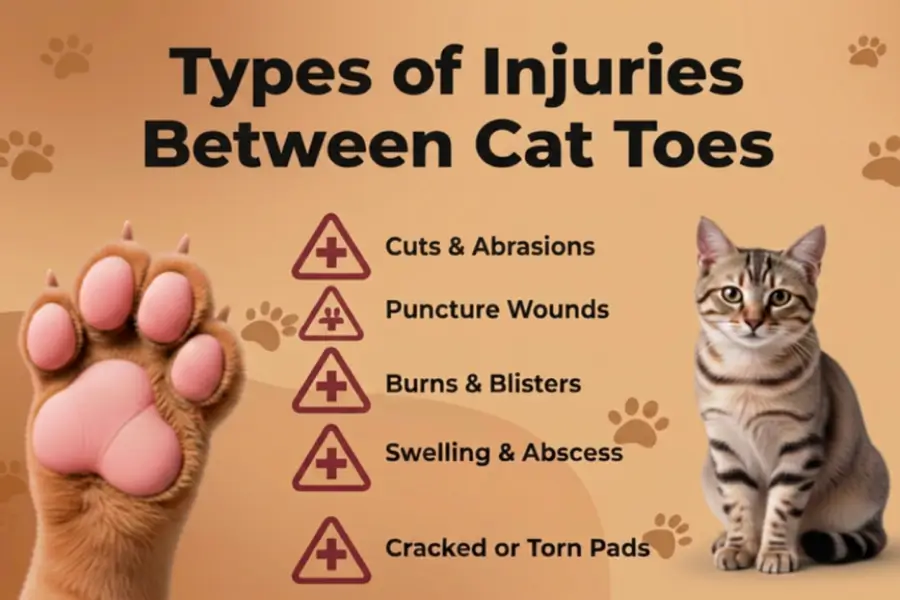
Not all paw injuries are the same. Common types include:
- Small cuts — shallow, minor breaks in the skin
- Deep lacerations — longer or deeper cuts that may need stitches
- Puncture wounds — small entry points from claws, teeth, or sharp objects, often deeper than they look
- Cat paw abscess — a painful, pus-filled pocket that forms after bacteria get trapped under the skin, often from a bite or puncture
- Torn skin — webbing or pad tissue that’s ripped rather than cleanly cut
- Burns — from heat or chemical exposure
- Foreign object injuries — wounds caused by something still lodged in the paw
- Nail injuries — broken, cracked, or ingrown claws
How to Examine Your Cat’s Paw Safely
If you suspect a cat paw injury between toes, check it carefully.
- Keep your cat calm. Approach slowly and speak softly. Wrap your cat in a towel if needed to prevent scratching.
- Wash your hands before touching the paw to avoid introducing bacteria.
- Check each toe carefully, gently separating them to look at the skin in between.
- Look for cuts or swelling, redness, or anything that seems out of place.
- Search for foreign objects like splinters, thorns, or small stones.
- Avoid forcing the paw open if your cat is in pain or resisting—this can cause more stress and risk of being scratched or bitten.
First Aid for a Cat Paw Injury Between Toes
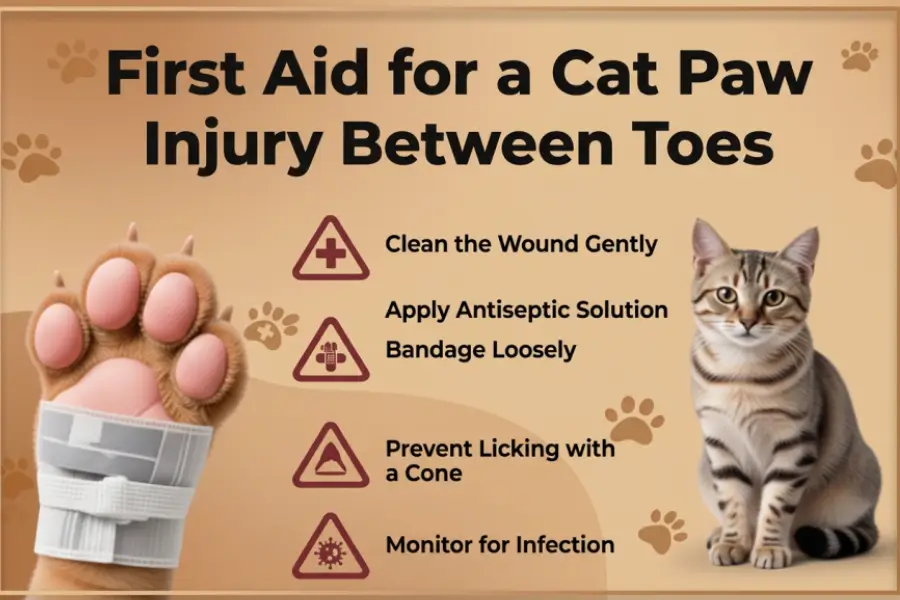
Once you’ve spotted an injury, basic cat paw first aid can make a real difference before you reach a vet:
- Stop bleeding by applying gentle, steady pressure with clean gauze or a soft cloth.
- Rinse with clean saline or lukewarm water to flush away dirt and debris.
- Remove loose debris only — don’t dig for anything embedded deeply.
- Apply gentle pressure if bleeding continues.
- Prevent licking, which can reopen the wound or introduce bacteria.
- Keep the paw clean and dry until you can assess it further or see a vet.
What not to do: Don’t use human antiseptics like alcohol or hydrogen peroxide without veterinary guidance, don’t try to pull out deeply embedded objects yourself, and don’t wrap the paw too tightly, which can cut off circulation.
Home Treatment
For minor wounds, cat paw care at home usually includes:
- Cleaning the wound once or twice daily with saline solution
- Keeping the paw dry, especially after using the litter box
- Using an Elizabethan collar (cone) to stop your cat from licking or chewing the area
- Restricting activity so the wound has time to close without reopening
- Monitoring healing daily for any signs the wound is getting worse instead of better
When Should You Visit a Veterinarian?
Some situations go beyond home care. Contact your vet if you notice:
- Heavy bleeding that doesn’t stop with pressure
- Deep wounds or lacerations
- Pus or discharge
- Severe swelling
- A broken nail with exposed tissue
- A foreign object stuck in the paw that you can’t safely remove
- Fever (lethargy, warm ears, reduced appetite)
- Persistent limping
- A wound not improving after 24–48 hours
Knowing when to take a cat to the vet can prevent a small injury from becoming a much bigger problem.
Veterinary Diagnosis
When you bring your cat in for a cat’s foot injury, your veterinarian will typically:
- Perform a physical examination of the whole cat, not just the paw
- Do a close paw inspection, checking each toe and the webbing
- Take X-rays if a fracture or embedded object is suspected
- Use ultrasound in some cases to look at soft tissue
- Run a culture if infection is suspected, to identify the right antibiotic
- Order blood tests in rare cases, especially if there are signs of a more serious underlying issue
Treatment Options
Treatment depends on the cause and may include cleaning the paw, removing any trapped object, applying prescribed medication, and preventing excessive licking. If the wound is deep, swollen, infected, or if your cat is limping, consult a veterinarian for proper care.
Cleaning and Flushing
The wound is thoroughly cleaned to remove debris and bacteria, reducing the risk of infection.
Bandaging
A cat’s paw bandage protects the wound while it heals and helps keep the area clean and dry.
Antibiotics
If there’s a cat paw infection or a risk of one, your vet may prescribe oral or topical antibiotics.
Pain Relief
Vets often prescribe pain medication to keep your cat comfortable during healing, since paw wounds can be surprisingly painful.
Foreign Object Removal
If something is lodged between the toes, your vet can safely remove it and clean out the area.
Surgery (Rare Cases)
Severe wounds, fractures, or advanced abscesses occasionally require surgical treatment.
Recovery Time
Cat paw healing time depends on the type and depth of the injury:
| Injury Type | Estimated Healing Time |
|---|---|
| Minor scrape | 3–5 days |
| Small cut | 5–10 days |
| Deep wound | 2–4 weeks |
| Abscess | 2–3 weeks |
| Surgery | 4–6 weeks |
Keep in mind that healing time varies based on the severity of the wound, your cat’s overall health, and how well home care instructions are followed.
Possible Complications
Left untreated, a minor cat paw injury between toes can lead to the following:
- Infection
- Abscess formation
- Delayed healing
- Chronic pain
- Tissue damage
- Difficulty walking long-term
How to Prevent Paw Injuries
A few simple habits can reduce the risk of future injuries:
- Keep floors clean and free of small, sharp objects
- Trim nails regularly to prevent overgrowth and ingrown claws
- Inspect outdoor areas for glass, thorns, or debris
- Check paws after walks or outdoor time
- Remove sharp objects from your cat’s environment
- Avoid hot pavement during summer months
- Use pet-safe cleaning products around the home
Cat Paw Injury vs Infection
It helps to know the difference between a fresh wound and one that’s becoming infected:
| Feature | Injury | Infection |
|---|---|---|
| Bleeding | Yes | Sometimes |
| Swelling | Mild | Moderate to severe |
| Pus | No | Yes |
| Odor | No | Often |
| Pain | Immediate | Worsens over time |
| Fever | Rare | Possible |
Home Care Checklist
- Check the wound daily
- Keep litter clean
- Prevent excessive licking
- Change bandages if instructed by your vet
- Watch for swelling
- Follow all veterinary instructions
Frequently Asked Questions
Why is my cat limping but I can’t see a wound?
Not all injuries are visible. A cat paw pad injury, a hidden splinter, an ingrown nail, or even a sprain can cause limping without an obvious cut. If limping continues for more than a day, a vet visit is a good idea.
How do I know if something is stuck between my cat’s toes?
Look for repeated licking, limping, swelling, or your cat holding up the paw. Gently separate the toes to check — you may see a thorn, seed, or small stone lodged in the skin.
Can a cat paw injury heal on its own?
Minor scrapes and small cuts often heal on their own with basic home care. Deeper wounds, punctures, or anything showing signs of infection need veterinary attention.
What should I do if my cat’s paw is bleeding?
Apply gentle pressure with clean gauze until the bleeding slows. If it doesn’t stop within a few minutes or the wound is deep, contact your veterinarian right away.
Can I use human antiseptic on my cat?
It’s best to avoid products like hydrogen peroxide or rubbing alcohol, since they can damage healthy tissue and slow healing. Use a vet-approved saline solution instead.
How long does a cat’s paw injury take to heal?
It depends on severity. Minor scrapes heal in about 3–5 days, while deeper wounds or abscesses can take 2–4 weeks or longer.
What causes swelling between a cat’s toes?
Swelling can come from an insect sting, foreign object, infection, allergic reaction, or trauma like a cut or bite wound.
Should I bandage my cat’s paw at home?
Simple wounds can sometimes be covered temporarily, but bandaging incorrectly can cut off circulation. It’s safest to have your vet show you the proper technique or handle bandaging themselves.
Final Thoughts
A cat paw injury between toes is a common problem that can range from a small cut to a serious infection. Early inspection, proper first aid, and prompt veterinary care for deep wounds or signs of infection can help your cat recover quickly and avoid complications.
Regular paw checks and a safe environment are the best ways to prevent future injuries and keep your cat comfortable on all four feet.
Why Is My Cat Getting Fat? The UltimateGuide For Cat Parents!
How to Hydrate a Cat That Won t Drink Water: What Should I Do?