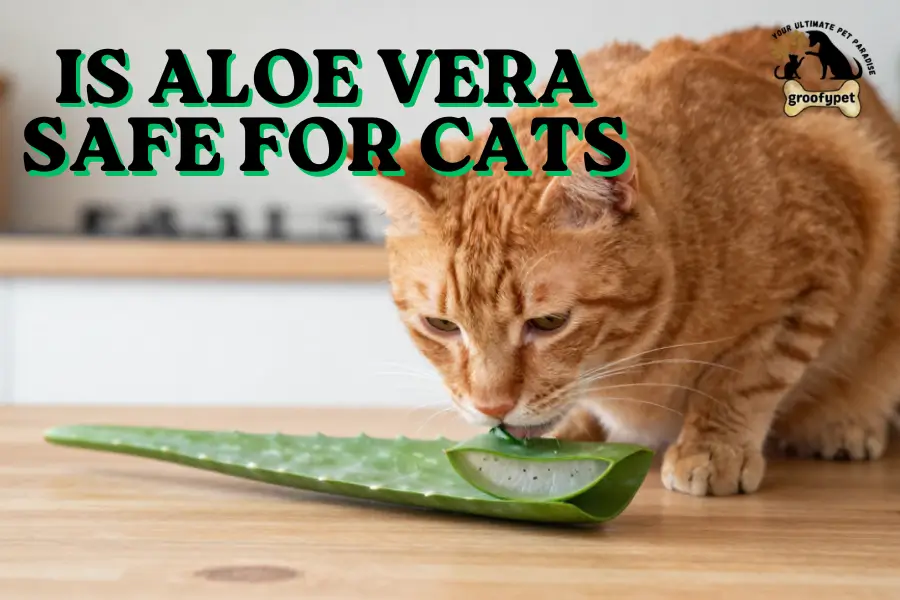
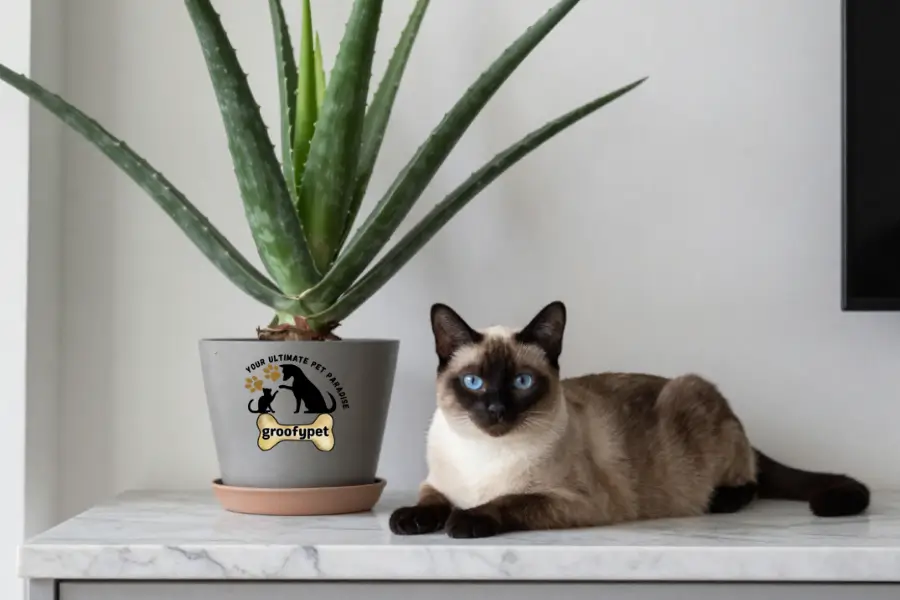
Aloe vera is one of the most popular houseplants in the world. People use it to treat sunburns, moisturize skin, and as an ingredient in cosmetics, health drinks, and herbal remedies. It is celebrated as a medicinal plant, a household staple, and even a superfood for humans. The question is, Is aloe vera safe for cats?
The short answer is no. Aloe vera is toxic to cats. According to the ASPCA Animal Poison Control Center, aloe vera (Aloe barbadensis, family Liliaceae) is classified as toxic to cats, dogs, and horses. The toxic principles saponins and anthraquinones can cause gastrointestinal distress, lethargy, changes in urine color, and, in rare cases, tremors.
But if you share your home with a cat, that beloved aloe vera plant deserves a second look. Cats are curious creatures. They chew on leaves, bat at dangling stems, and investigate every corner of their environment, including your houseplants. And when it comes to aloe vera, that curiosity could quickly become a veterinary emergency.
This complete guide will walk you through everything you need to know: what makes aloe vera toxic to cats, the symptoms of aloe vera poisoning, what to do if your cat ingests part of the plant, and the safest alternatives to keep your home green and your cat safe.
- Aloe vera is toxic to cats and classified as poisonous by the ASPCA, Pet Poison Helpline, and most veterinary authorities.
- The toxic principles are saponins and anthraquinones — compounds found mainly in the latex layer and outer leaves.
- Symptoms of aloe vera poisoning in cats include vomiting, diarrhea, lethargy, loss of appetite, changes in urine color, and rarely tremors.
- There is no truly safe amount for cats to ingest. Avoidance is the only recommended approach.
- The clear inner gel is considered less dangerous than the whole plant, but commercial aloe products may contain additives harmful to cats.
- If your cat eats any part of an aloe vera plant, contact your veterinarian or call the ASPCA Poison Control Center at (888) 426-4435 immediately.
- Safe alternatives to aloe vera for cats include cat grass, catnip, silver vine, and vet-approved skin care products.
Aloe vera, scientifically known as Aloe barbadensis miller, is a succulent plant native to the Arabian Peninsula. It has since been cultivated worldwide for thousands of years, spreading across Africa, the Mediterranean, and eventually every continent.
The plant belongs to the Aloaceae (or Liliaceae) family and is recognizable by its thick, fleshy, lance-shaped leaves that grow in a rosette pattern. The edges of the leaves are serrated with small, soft teeth.
In many households, aloe vera is kept as a low-maintenance indoor plant. It thrives with minimal watering, tolerates indirect sunlight, and rarely requires repotting, making it one of the most beginner-friendly houseplants available. Beyond its ornamental appeal, it is widely used in cosmetics, skincare products, health supplements, and traditional medicine across many cultures.
For humans, topical aloe vera gel is used to soothe sunburns, minor cuts, insect bites, and skin irritations. Aloe vera juice is marketed as a digestive health supplement. The plant has genuine medicinal properties for people, but that does not translate to safety for cats.
Different Parts of the Aloe Vera Plant
Understanding the different layers of the aloe vera plant is key to understanding why it is dangerous for cats:
- Outer green leaves: The thick, spiky exterior of the plant. This layer contains latex just beneath the skin, which is the most toxic part of the plant for cats.
- Yellow latex layer: This is the bitter, yellowish liquid found just inside the outer skin of the leaf. It is rich in anthraquinone glycosides, particularly aloin, which act as powerful purgatives. This is the most dangerous part for cats.
- Clear inner gel: The transparent, jelly-like substance at the center of each leaf. This is the part used in skincare and wound care products. The ASPCA notes the gel is considered edible, though ingestion is still not recommended.
The key point is that when a cat chews on an aloe vera leaf, which they are very likely to do given the accessible, dangling leaf structure, they are almost certainly ingesting the toxic latex layer alongside any gel.
Is Aloe Vera Safe for Cats?
No, aloe vera is not safe for cats. Aloe vera is classified as toxic to cats by the ASPCA, Pet Poison Helpline, Animal Humane Society, and virtually every reputable veterinary authority. The toxicity level is described as mild to moderate, meaning it is unlikely to be immediately life-threatening in very small amounts.
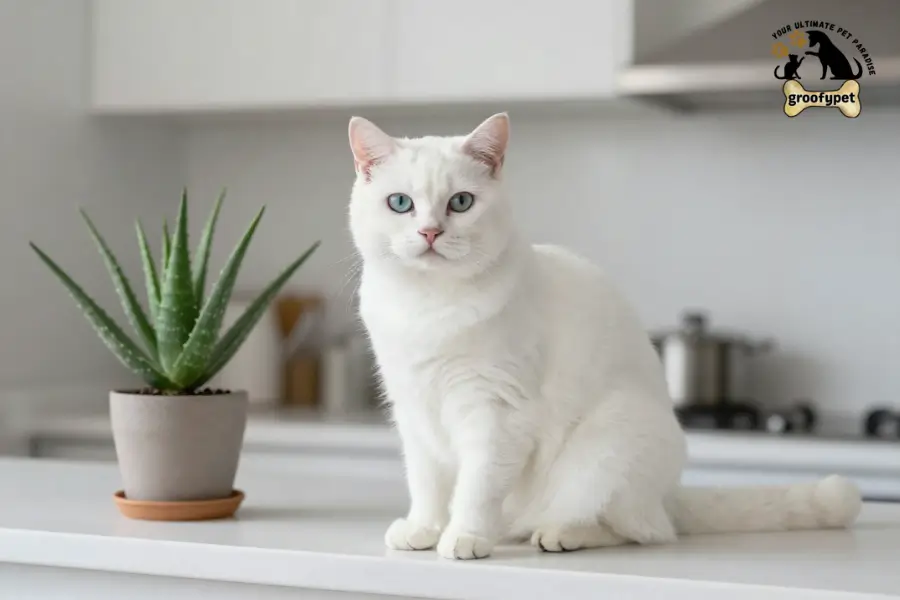
It can cause significant distress and requires veterinary attention. The plant contains two primary toxic compounds, saponins and anthraquinones, that disrupt a cat’s digestive system, cause fluid loss, and, in larger exposures, can lead to serious clinical symptoms requiring emergency care.
Why Are Cats Attracted to Plants?
Cats, especially indoor cats, are naturally drawn to plants. This behavior stems from their instinct to investigate their environment through smell and taste. Indoor cats with limited stimulation may chew on plants out of boredom, curiosity, or a natural desire for plant fiber. Cats that are not getting enough enrichment, exercise, or interaction may be particularly prone to plant exploration.
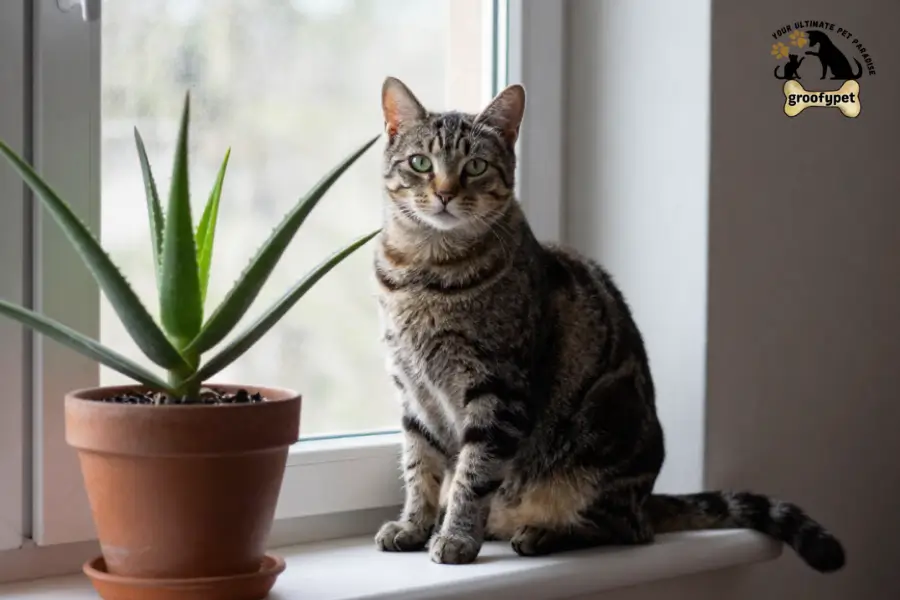
Aloe vera presents a specific risk because its broad, accessible leaves are easy to bite, its slightly bitter scent can be intriguing to cats, and the plant is commonly placed at cat height on windowsills, tables, and low shelves. Homes with multiple plants also increase the overall risk of incidental plant nibbling.
Why Is Aloe Vera Toxic to Cats?
Aloe vera is toxic to cats because it contains compounds like saponins and anthraquinones that can irritate the digestive system. These substances may cause vomiting, diarrhea, and other signs of poisoning even in small amounts.
Saponins
Saponins are a class of chemical compounds found naturally in many plants. In aloe vera, saponins are concentrated in the outer leaf and latex layer. When ingested by a cat, saponins disrupt the integrity of the gastrointestinal lining. They create a foamy, detergent-like reaction in the gut that irritates the mucosal lining of the stomach and intestines, leading to vomiting, diarrhea, and abdominal pain.
Saponins in aloe vera are responsible for the plant’s purgative (laxative) action. In appropriate pharmaceutical doses, this property has been studied for human use, but in cats — who have a very different metabolic pathway — the effect is rapid and damaging. Even a small amount of saponin-containing plant material can trigger gastrointestinal distress in cats.
Anthraquinones
Anthraquinones are the second key toxic compound in aloe vera. Specifically, aloe vera contains anthraquinone glycosides, primarily aloin, found in the yellow latex layer of the leaf. When a cat ingests aloe vera, these glycosides are metabolized by intestinal bacteria. The metabolites formed increase mucus production and water secretion in the colon — resulting in loose stools, diarrhea, and significant fluid loss.
In addition to gastrointestinal effects, anthraquinones can affect the kidneys and may cause changes in urine color — one of the more distinctive clinical signs of aloe vera ingestion in cats. In rare cases, anthraquinone metabolites have been associated with tremors, although this is an uncommon presentation.
Effects on a Cat’s Body
Together, saponins and anthraquinones create a multi-system impact on a cat’s body following aloe vera ingestion:
- Digestive irritation: Vomiting and diarrhea as the gut responds to the toxic compounds.
- Fluid loss: Repeated vomiting and diarrhea rapidly deplete the cat’s fluid reserves, leading to dehydration.
- Systemic effects: Lethargy, depression, and anorexia as the body diverts energy to managing toxin exposure.
- Urinary changes: Reddish or orange-brown discoloration of urine in some cats.
- Rare neurological signs: Tremors in severe cases of significant ingestion.
Nutritional Content of Aloe Vera
Vitamins Found in Aloe Vera
Aloe vera does contain genuine nutritional compounds, which is why it is celebrated as a health plant for humans. The gel contains:
- Vitamin A (beta-carotene): Supports vision, immune function, and skin health.
- Vitamin C: An antioxidant that supports immune defense and tissue repair.
- Vitamin E: A fat-soluble antioxidant that protects cells from oxidative damage.
Minerals in Aloe Vera
- Calcium: Supports bone density and muscle function.
- Magnesium: Involved in over 300 enzymatic reactions in the body.
- Potassium: Regulates fluid balance and cardiac function.
Why Nutrients Do Not Make It Safe
The presence of beneficial vitamins and minerals does not make aloe vera safe for cats. This is a critical distinction in pet nutrition. A substance can be nutritionally rich and simultaneously toxic — and that is precisely the case with aloe vera for cats.
The toxic compounds saponins and anthraquinones are present alongside the vitamins and minerals. There is no way for a cat to selectively consume the beneficial gel compounds without also being exposed to the toxic latex and saponin-containing plant material. The risks fundamentally outweigh any potential nutritional benefit, and no veterinary authority recommends feeding aloe vera to cats for nutritional purposes.
Potential Benefits of Aloe Vera for Cats
It is important to acknowledge that aloe vera, in specific veterinary-controlled forms, is occasionally referenced in pet care contexts. This section exists not to suggest aloe vera is safe for cats to ingest but to clarify the nuanced landscape that cat owners may encounter online.
Risks of Feeding Aloe Vera to Cats
Feeding aloe vera to cats can lead to digestive problems like vomiting, diarrhea, and loss of appetite due to its toxic compounds. In more serious cases, it may cause weakness, tremors, or dehydration if a large amount is consumed.
1. Vomiting
Vomiting is the most commonly reported symptom of aloe vera ingestion in cats. The saponins in the plant irritate the stomach lining, triggering the body’s protective response to expel the toxic material. Vomiting may begin within 30 minutes to a few hours of ingestion and can range from a single episode to repeated retching. Repeated vomiting rapidly depletes electrolytes and increases dehydration risk.
2. Diarrhea
Diarrhea is the second most common symptom and is primarily caused by the anthraquinone glycosides acting on the colon. These compounds stimulate excess water and mucus secretion, resulting in loose, watery stools. Diarrhea combined with vomiting creates a serious risk of rapid dehydration, particularly in smaller cats and kittens.
3. Stomach Pain
Cats experiencing gastrointestinal irritation from aloe vera ingestion will often display signs of abdominal discomfort: hunching their back, reluctance to be touched around the belly, restlessness, or alternatively, unusual stillness. Behavioral changes such as hiding, refusing to eat, or vocalizing pain are all signs that warrant immediate veterinary attention.
4. Loss of Appetite
Anorexia, the medical term for loss of appetite, is a consistent clinical sign of aloe vera poisoning in cats, noted by both the ASPCA and Pet Poison Helpline. Even if vomiting and diarrhea resolve within 24 hours, some cats may refuse food for an extended period.
In cats, going without food for more than 24-48 hours raises the risk of hepatic lipidosis (fatty liver disease), a serious secondary condition.
5. Lethargy
Lethargy and general depression are commonly reported alongside gastrointestinal symptoms. An affected cat may become noticeably less active, spend more time sleeping, and show diminished interest in play, food, and social interaction.
While mild lethargy can accompany any digestive upset, severe or prolonged lethargy, especially paired with othersymptoms, signalss that veterinary care is urgently needed.
6. Dehydration
Fluid loss from vomiting and diarrhea can quickly lead to dehydration, which is a medical emergency in cats. Signs of dehydration include skin tenting (skin that stays raised when gently pinched), sunken eyes, dry gums, and extreme weakness.
Dehydrated cats may require intravenous fluid therapy and hospitalization. Never attempt to manage suspected dehydration at home without veterinary guidance.
7. Allergic Reactions
While uncommon, some cats may have an allergic or hypersensitive response to compounds in aloe vera. Signs of an allergic reaction can include facial swelling, hives, excessive drooling, and in severe cases, breathing difficulty. Any sign of a potential allergic reaction requires immediate emergency veterinary care.
8. Toxicity in Kittens
Kittens are significantly more vulnerable to aloe vera toxicity than adult cats. Their smaller body mass means that even a very small amount of ingested plant material delivers a proportionally higher toxic dose.
Their immature digestive systems are also less equipped to process and eliminate the toxic compounds efficiently. If a kitten has chewed on an aloe vera plant, treat it as an emergency and contact your veterinarian or ASPCA Poison Control at (888) 426-4435 immediately — do not wait for symptoms.
9. Excessive Drooling
Oral irritation from the bitter latex compounds in aloe vera may cause excessive salivation or drooling in cats. This is an early sign of oral discomfort and often precedes other gastrointestinal symptoms. Drooling combined with pawing at the mouth indicates the cat is experiencing significant oral distress.
10. Long-Term Health Issues
Repeated exposure to aloe vera — even in small amounts — can cause cumulative damage to the gastrointestinal lining. Chronic low-level exposure may contribute to ongoing digestive problems, gut flora imbalances, and potential kidney stress from repeated anthraquinone metabolite exposure.
For this reason, aloe vera plants should be permanently removed from spaces accessible to cats, not simply relocated temporarily.
Symptoms of Aloe Vera Poisoning in Cats
Symptoms can range from mild to severe depending on how much of the plant was ingested and which part of the plant was consumed:
| Mild Symptoms | Moderate Symptoms | Severe Symptoms |
| Drooling / oral irritation | Loss of appetite (anorexia) | Severe, watery diarrhea |
| Single vomiting episode | Weakness and depression | Extreme lethargy |
| Temporary loose stools | Increased thirst | Dehydration requiring IV fluids |
| Mild stomach discomfort | Changes in urine color | Tremors (rare) |
| Restlessness | Repeated vomiting | Emergency vet care required |
Mild Symptoms
Mild symptoms typically occur with small, incidental ingestion — for example, a cat that briefly chews a leaf tip. Drooling, a single vomiting episode, and temporary loose stools are the most common presentation. The cat usually remains alert and responsive. Mild cases should still be reported to your veterinarian.
Moderate Symptoms
Moderate symptoms indicate a larger ingestion or a cat with higher sensitivity. Loss of appetite, weakness, increased thirst, and a change in urine color (reddish-orange tinge caused by anthraquinone metabolites) are key signs. The cat may appear lethargic and withdrawn. Veterinary consultation is essential at this stage.
Severe Symptoms
Severe symptoms represent a genuine medical emergency. Extreme lethargy, severe diarrhea leading to dehydration, and rare neurological signs like tremors require immediate emergency veterinary treatment. If your cat is displaying severe symptoms, call your vet or an emergency animal hospital immediately — do not wait.
What Should You Do If Your Cat Eats Aloe Vera?
If your cat eats aloe vera, remove any remaining plant pieces and watch for signs like vomiting, diarrhea, drooling, or tiredness. Contact your veterinarian if symptoms appear or if your cat ate a large amount of aloe vera, as it can be toxic to cats.
Stay Calm and Assess the Situation
If you discover your cat has chewed on or ingested part of an aloe vera plant, stay calm and act systematically. Try to estimate how much of the plant was eaten — a small nibble of a leaf tip versus consumption of a significant portion of a leaf are very different situations. Check your cat immediately for any visible symptoms: drooling, vomiting, distress, or lethargy.
Remove Access to the Plant
Immediately move the aloe vera plant completely out of your cat’s reach. Place it in a closed room, a high cabinet, or remove it from the home entirely. Preventing any further ingestion is the first priority. Do not leave the plant accessible while you monitor or call the vet, as your cat may return to it.
Contact Your Veterinarian
Call your veterinarian as soon as possible, even if your cat appears symptom-free. Some toxic effects take time to develop. Be prepared to provide the cat’s weight and age, an estimate of how much plant material was consumed, which part of the plant (leaf, tip, or significant amount), and any symptoms already observed.
Monitor Your Cat
If your vet advises monitoring at home, watch your cat closely for at least 24-48 hours. Track vomiting frequency, stool consistency, water intake, appetite, and activity levels. Take note of any changes in urine color. If symptoms worsen at any point, escalate immediately to emergency veterinary care. Do not attempt to induce vomiting at home without explicit veterinary instruction.
Can Cats Eat Aloe Vera Gel?
Cats should not eat aloe vera gel unless a veterinarian specifically approves a pet-safe product. Even though the gel contains fewer toxic compounds than the plant’s outer layer, it can still cause stomach upset and digestive problems in some cats.
Pure Aloe Vera Gel
The clear inner gel of the aloe vera plant is the part that is considered least toxic. The ASPCA notes the gel is considered edible, but this is a qualified statement, not a green light for cats. The gel in an intact leaf is never fully separated from the latex layer when a cat chews the plant. The simple act of biting into an aloe leaf exposes the cat to the latex alongside the gel.
Furthermore, even pure aloe vera gel can cause mild digestive upset in cats with sensitive stomachs. There is no safe threshold established for feline aloe gel consumption, and veterinary authorities universally recommend against it.
Commercial Aloe Vera Gel Products
Commercial aloe vera gels sold for human use — whether in skincare, sunburn relief, or health supplement forms — typically contain additional ingredients: preservatives, fragrance compounds, colorants, thickening agents, and sometimes alcohol or xylitol. Xylitol is a sweetener that is highly toxic to many animals.
These additives make commercial aloe vera gel products significantly more dangerous for cats than even the raw plant gel. Never apply human aloe vera products to your cat’s skin or allow your cat access to these items.
Can Cats Eat Different Forms of Aloe Vera?
Is aloe vera safe for cats?Cats should not eat any form of aloe vera, including gel, juice, or raw plants, because all parts can cause stomach irritation and toxicity. Even processed aloe products are not safe for cats and may lead to vomiting, diarrhea, or discomfort.
Fresh Aloe Vera Leaves
Fresh aloe vera leaves present the highest risk because they contain both the toxic latex and the less-toxic gel in their natural proportions. Any cat that chews on a fresh aloe vera leaf is exposed to anthraquinones, aloin, and saponins. Even a small amount of fresh leaf is enough to trigger vomiting and diarrhea in a sensitive cat.
Aloe Vera Juice
Aloe vera juice sold for human consumption is derived from the whole leaf or inner gel and is often concentrated. It may contain the latex fraction depending on processing methods. Aloe vera juice is not safe for cats and should be stored in closed cabinets out of reach. Some commercial aloe juices also contain sweeteners, citric acid, or preservatives that add further layers of toxicity risk.
Aloe Vera Supplements
Human aloe vera supplements, in capsule, tablet, or powder form, are completely inappropriate for cats. These concentrated preparations deliver much higher doses of anthraquinones and saponins than a small bite of leaf. Never give human herbal supplements to your cat without explicit veterinary authorization.
Aloe Vera Treats
Some pet treat manufacturers may incorporate aloe vera derivatives in their products. If you encounter a product labeled as containing aloe vera, read the label carefully and consult your veterinarian before purchasing.
Veterinary-approved products that include processed, denatured aloe vera derivatives in safe concentrations do exist, but they are the exception, not the rule. Never assume a pet product is safe without verification.
How Much Aloe Vera Can Cats Eat?
Cats should not eat aloe vera in any amount because it is toxic to them. Even small exposure can cause digestive upset or more serious symptoms.
Here is a simple table:
| Aloe Vera Form | Safe Amount for Cats | Risk Level |
|---|---|---|
| Raw Aloe Plant | 0 (not safe) | High—can cause vomiting, diarrhea, and lethargy |
| Aloe Vera Gel | 0 (not safe) | Moderate to high—may upset stomach and digestion |
| Aloe Juice / Supplements | 0 (not safe) | High – may contain compounds harmful to cats |
If a cat eats any amount, it is best to contact a veterinarian right away.
Signs Your Cat Does Not Eat Aloe Vera
If a cat does not eat aloe vera, there will be no signs of poisoning such as vomiting, diarrhea, or drooling. The cat will behave normally, with a regular appetite, energy, and digestion.
Digestive Problems
- Vomiting — single episode or repeated retching
- Diarrhea — loose, watery, or unusually frequent stools
- Excessive gas or abdominal bloating
- Changes in urine color — reddish or orange-brown tinge
Behavioral Changes
- Hiding in unusual places — a classic sign of feline discomfort
- Reduced activity — less interest in play or movement
- Appetite changes — refusing meals or treats they normally enjoy
- Increased thirst — a sign of fluid depletion
Skin Reactions
- Itching or scratching at skin — possible hypersensitive response
- Redness or irritation — particularly around the mouth area
- Excessive drooling — oral irritation from plant contact
How to Keep Cats Safe Around Aloe Vera?
Is aloe vera safe for cats? Keep aloe vera plants completely out of your cat’s reach or remove them from your home to prevent accidental chewing. You can also use cat-safe plants instead and monitor your cat’s environment to avoid exposure to toxic greenery.
Place Plants Out of Reach
The safest approach is to remove aloe vera plants from your home entirely if you have cats. If you choose to keep the plant, it must be placed in a location genuinely inaccessible to your cat — not just inconvenient. Cats are agile climbers and jumpers.
High shelves that the cat cannot reach, rooms the cat cannot access, or hanging planters well above jump height are the only reliably safe placement options. Do not assume that placing a plant on a windowsill or table is sufficient — most cats can reach these with ease.
Use Pet-Safe Plant Alternatives
Replace aloe vera and other toxic houseplants with cat-safe options. The ASPCA maintains an extensive database of non-toxic plants for cats. Popular safe indoor plants include Boston ferns, spider plants, areca palms, and calathea. Having safe plants in the home reduces the overall risk from the cat’s natural plant-chewing behavior.
Supervise Curious Cats
For cats with persistent plant-chewing behavior, environmental enrichment is the most effective long-term solution. Providing cat grass, puzzle feeders, interactive toys, and regular play sessions reduces the boredom-driven plant exploration that puts cats at risk. Some cat owners report success using citrus-scented deterrent sprays on plant pots, as many cats dislike the smell of citrus.
Best Alternatives to Aloe Vera for Cats
Safe alternatives to aloe vera for cats include pet-safe plants like cat grass, catnip, and wheatgrass that support digestion and enrichment. You can also use vet-approved supplements designed specifically for cats instead of herbal remedies.
1. Cat Grass
Cat grass, typically wheat grass, barley grass, or oat grass, is a safe, digestible plant that satisfies a cat’s natural urge to chew on greens. It is widely available at pet stores and can be grown easily at home. Cat grass may support digestion and help with hairball management. It is a genuinely cat-safe plant enrichment option.
2. Catnip
Catnip (Nepeta cataria) is a well-known, cat-safe herb that produces a harmless euphoric response in approximately 50-70% of cats. It is an excellent form of enrichment and stimulation for indoor cats. Catnip can be offered fresh, dried, or as a component in cat toys.
3. Silver Vine
Silver vine (Actinidia polygama) is an Asian plant that produces a similar response to catnip in cats and is effective even in cats that do not respond to catnip. It is considered safe for cats and provides natural stimulation and enrichment.
4. Omega-3 Supplements
If the reason you were considering aloe vera was for skin or coat health in your cat, veterinary-approved omega-3 fatty acid supplements are a far safer and more effective alternative. Fish oil-based supplements formulated for cats can improve coat shine, reduce skin dryness, and support overall health without any toxicity risk. Always use products specifically formulated for cats.
5. Vet-Approved Skin Care Products
For minor skin irritations, wounds, or dry skin in cats, there are numerous veterinary-formulated topical products that are safe and effective. These include products containing colloidal oatmeal, calendula, chamomile, or specially processed aloe derivatives in safe concentrations. Always choose products specifically labeled as safe for cats and consult your veterinarian before use.
Plants Cats Should Avoid
Aloe vera is not the only dangerous houseplant for cats. The following plants are commonly kept in homes and are all considered toxic to cats:
1. Lilies
True lilies (Lilium species) are among the most lethal plants for cats. Even tiny amounts — a few pollen grains, a small piece of leaf, or water from a vase — can cause acute kidney failure. Easter lilies, tiger lilies, Asiatic lilies, and daylilies are all in this category. Lily toxicity is a genuine life-threatening emergency that can be fatal without immediate veterinary treatment.
2. Sago Palm
All parts of the sago palm (Cycas revoluta) are extremely toxic to cats. The seeds are the most dangerous, containing cycasin, which causes severe liver failure. Sago palm poisoning has a high fatality rate even with treatment. This plant should never be in a home with cats.
3. Dieffenbachia
Dieffenbachia, also known as dumbcane, contains insoluble calcium oxalate crystals that cause severe oral irritation, excessive drooling, swelling of the mouth and tongue, and difficulty swallowing in cats. While rarely fatal, exposure causes significant pain and distress.
4. Pothos
Pothos (Epipremnum aureum) is one of the most common houseplants and one of the most common causes of plant-related cat toxicity. It contains insoluble calcium oxalates and causes oral irritation, excessive drooling, vomiting, and difficulty breathing in cats. Pothos should be kept completely out of reach.
5. Philodendron
Philodendrons contain the same calcium oxalate crystals as pothos. All varieties — heartleaf, split-leaf, and others — are toxic to cats and can cause oral pain, vomiting, and swelling. Despite their popularity as houseplants, they are unsafe in cat-occupied homes.
6. Aloe Vera
As detailed throughout this guide, aloe vera is toxic to cats due to its saponin and anthraquinone content. It belongs on every list of plants to avoid in cat-inhabited spaces.
Frequently Asked Questions
Is aloe vera poisonous to cats?
Yes. Aloe vera is classified as toxic to cats by the ASPCA, Pet Poison Helpline, and Animal Humane Society. The toxic compounds are saponins and anthraquinones (primarily anthraquinone glycosides such as aloin) found in the latex and outer leaf layers.
Can cats lick aloe vera gel?
The pure inner gel is considered the least toxic part, but licking is still not recommended. When a cat licks a cut aloe leaf, it is almost certainly also ingesting latex residue. Additionally, commercial aloe gel products for humans contain added ingredients — including potentially xylitol — that are dangerous to cats.
What happens if a cat eats aloe vera?
A cat that ingests aloe vera may experience vomiting, diarrhea, lethargy, loss of appetite, increased thirst, changes in urine color, and in rare cases, tremors. Severity depends on the amount ingested and the cat’s individual sensitivity. Contact your veterinarian promptly if ingestion is suspected.
Is aloe vera safe for cat skin?
Veterinary-approved topical aloe products — specially formulated for animals — can be used under veterinary supervision. However, because cats groom themselves constantly, any substance on their skin will be licked off and ingested. Human aloe vera gel should never be applied to a cat’s skin due to the risk of oral ingestion and the presence of potentially harmful additives.
Should I remove aloe vera plants from my home?
If you have cats, removing aloe vera from accessible areas is strongly recommended. The safest approach is to rehome the plant entirely or keep it permanently in a space your cat cannot enter. The risk to cat health is not worth the convenience of keeping the plant accessible.
Are kittens more sensitive to aloe vera?
Yes. Kittens are significantly more vulnerable to aloe vera toxicity than adult cats due to their smaller body mass, immature metabolic systems, and developing digestive tracts. A quantity of aloe vera that causes mild symptoms in a large adult cat could cause severe illness in a kitten. Treat any kitten exposure as an urgent veterinary emergency.
Final Thoughts
Aloe vera is a genuinely remarkable plant for humans but for cats, it poses a real and unnecessary risk. Is aloe vera safe for cats? The core message of this guide is simple: aloe vera is toxic to cats; it belongs on every list of houseplants to remove or secure, and there are no circumstances under which feeding or exposing your cat to aloe vera is recommended.
The toxic compounds saponins and anthraquinones cause gastrointestinal distress that can range from mild self-limiting symptoms to serious dehydration requiring emergency veterinary intervention. Kittens, senior cats, and cats with existing health conditions are most vulnerable, but no cat is immune.
Prevention is both the simplest and most effective approach. Remove aloe vera plants from cat-accessible spaces, replace them with genuinely cat-safe plant alternatives like cat grass, and provide your cat with enrichment that satisfies their natural curiosity without the danger.
If you need topical or supportive care for your cat’s skin, coat, or digestion, consult your veterinarian for products specifically formulated and tested for feline safety.
Can Cats Eat Chicharrones or Is This Crunchy Snack a Silent Danger!