Have you ever caught your cat licking a plate that contained balsamic vinegar? You might wonder whether this popular kitchen ingredient is safe for your feline friend. No, cats should not eat balsamic vinegar intentionally. Although a tiny accidental lick of ordinary balsamic vinegar is unlikely to cause serious poisoning, its acidity may irritate your cat’s mouth and digestive system.
Some balsamic products also contain added ingredients that can be harmful to cats.If your cat has tasted balsamic vinegar, do not panic. The amount consumed, product ingredients, and your cat’s symptoms all matter. Here is what every cat owner should understand about balsamic vinegar and feline food safety.
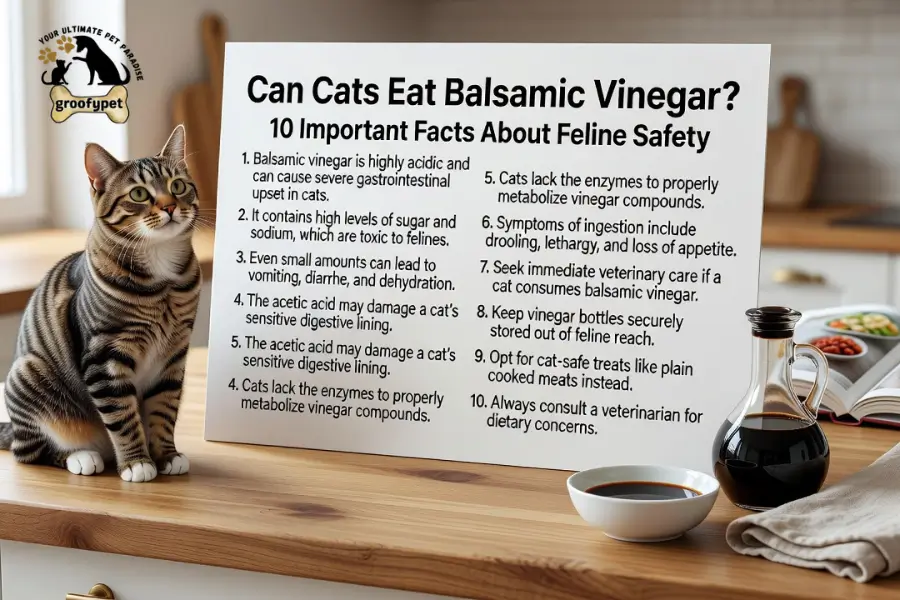
Can Cats Eat Balsamic Vinegar? 10 Important Facts
- Plain cooked chicken and cat-approved treats are safer alternatives.
- Balsamic vinegar is not recommended for cats.
- A tiny accidental lick is unlikely to cause serious poisoning.
- Its acidity may irritate a cat’s digestive system.
- Excessive consumption may cause vomiting or diarrhea.
- Balsamic vinegar is made from grape must.
- Grape-derived vinegar is not the same as whole grapes or raisins.
- Balsamic glaze may contain added sugar.
- Garlic and onion additives can be dangerous to cats.
- Cats do not receive essential nutritional benefits from vinegar.
Cats should not be given balsamic vinegar as a treat or mixed into their regular meals. It offers no nutritional benefit that cats need and contains acidic compounds that may upset their sensitive digestive systems. Balsamic vinegar is made from grape must, which is freshly crushed grape juice containing skins, seeds, and stems. It undergoes cooking, fermentation, and aging to develop its characteristic sweet and tangy flavor.
However, the fact that balsamic vinegar comes from grapes does not automatically mean it has the same toxicity as whole grapes or raisins. These are different products, and there is no established evidence that ordinary culinary balsamic vinegar causes the same kidney-related toxicity. The main practical concerns are its acidity, the quantity consumed, and any additional ingredients in the product.
If your cat accidentally licks a few drops of plain balsamic vinegar, it is not automatically a poisoning emergency. However, avoid offering it again and contact your veterinarian if your cat develops symptoms or consumes a larger amount.
What Is Balsamic Vinegar Made Of?
Balsamic vinegar is a dark, flavorful vinegar traditionally produced from grape must. It has a sweet, tangy taste and a thicker consistency than many other vinegar varieties.
Its production involves several steps that give it a distinctive flavor.
Common components include:
- Grape must: Freshly crushed grapes provide the natural sugars and fruit compounds.
- Acetic acid: This compound develops during fermentation and gives vinegar its sour taste.
- Natural sugars: Some remain in the finished product, contributing to its sweetness.
- Organic acids: These contribute to the vinegar’s characteristic flavor.
- Additional ingredients: Commercial products may contain caramel coloring, sweeteners, preservatives, or flavorings.
Traditional balsamic vinegar and commercial balsamic vinegar are not always identical. Their ingredients, production methods, aging periods, and concentrations can differ.
This matters because a commercial balsamic dressing or glaze may contain ingredients beyond vinegar itself. Cats do not need these ingredients in their diet. Their nutritional requirements are best met through complete and balanced cat food.
Is Balsamic Vinegar Toxic to Cats?
Ordinary culinary balsamic vinegar is not established as a specific feline poison. However, that does not make it a safe food for cats. The acidity of vinegar can cause irritation, particularly when an animal consumes a concentrated product or a larger quantity.
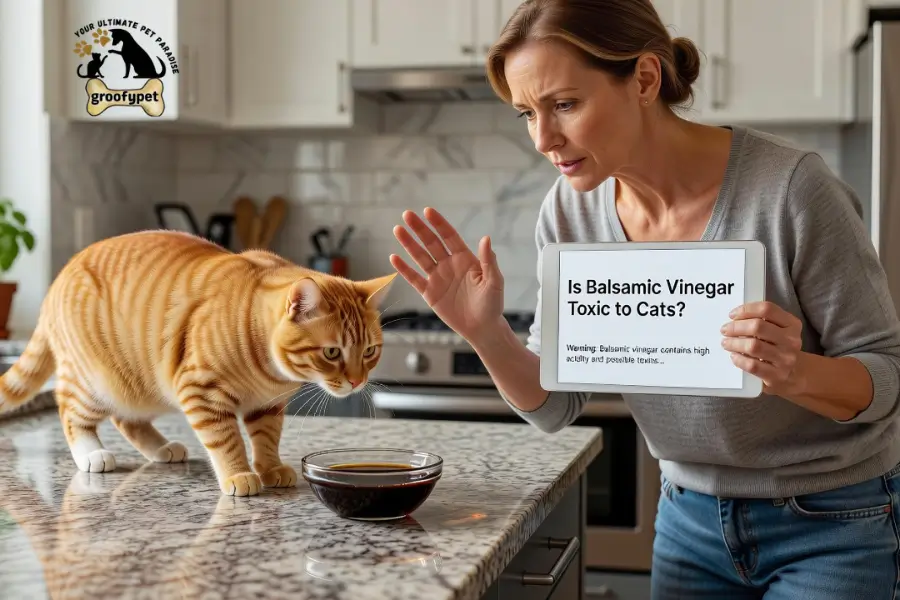
There is another important consideration: grapes. Balsamic vinegar originates from grapes, but grape-derived vinegar should not automatically be treated like whole grapes or raisins. Veterinary sources explain that grape and raisin toxicity is a concern, although the exact risk in cats remains uncertain.
Therefore, do not assume that balsamic vinegar has the same toxic effects as grapes. Equally, do not assume that every grape-derived product is safe. The safest approach is to keep balsamic vinegar away from your cat and seek veterinary advice after a significant exposure.
What Happens If a Cat Licks Balsamic Vinegar?
A cat that accidentally licks a small amount of plain balsamic vinegar may experience no noticeable reaction. However, some cats can develop digestive discomfort because of its acidic nature.
Possible signs include
- Drooling or excessive salivation.
- Repeated lip licking.
- Nausea or unusual swallowing.
- Vomiting.
- Diarrhea.
- Reduced appetite.
- Signs of abdominal discomfort.
These symptoms are not guaranteed to occur. Their likelihood depends on the amount consumed, the product’s ingredients, and your cat’s individual sensitivity.
For example, a cat that briefly licks a plate with a few drops of plain balsamic vinegar has a different exposure from one that drinks vinegar directly from an overturned bottle.
If your cat shows repeated vomiting, persistent diarrhea, unusual weakness, or other concerning symptoms, contact a veterinarian promptly.
Why Should Cats Avoid Balsamic Vinegar?
Although balsamic vinegar is a common ingredient in human kitchens, several reasons make it unsuitable for feline consumption.
1. Its Acidity May Irritate the Digestive System
Balsamic vinegar contains acetic acid, which gives it its recognizable sour flavor. Cats have no nutritional need for acidic condiments in their meals. Consuming too much may irritate the mouth and digestive tract. Some cats may respond with drooling, vomiting, or temporary digestive discomfort.
2. It Offers No Essential Nutritional Benefits
Cats are obligate carnivores, meaning they depend on nutrients found in animal-based foods. They require nutrients such as taurine, arachidonic acid, and certain vitamins that support normal body functions. Balsamic vinegar does not provide these nutrients in meaningful amounts.
Instead of experimenting with human condiments, provide nutritionally complete cat food and suitable feline treats.
3. Some Products Contain Added Sugar
Commercial balsamic vinegar products sometimes contain added sugars or sweeteners to create a sweeter flavor. Although small amounts of ordinary sugar are not considered a specific cat poison, excessive sugary foods are unnecessary and may contribute to weight gain.Cats cannot benefit from consuming sweet condiments. Their regular diet should provide all the nutrients they need.
4. Flavored Products May Contain Harmful Ingredients
Some balsamic dressings and flavored vinegar products contain additional ingredients.
Pay particular attention to the following:
- Garlic powder.
- Onion powder.
- Chives.
- Seasoning blends.
- Concentrated flavorings.
Garlic and onion belong to the Allium family and can damage red blood cells in cats. These ingredients may cause serious health problems depending on the amount consumed.
5. Concentrated Glazes May Cause More Irritation
Balsamic glaze is generally thicker and more concentrated than regular balsamic vinegar.Some varieties also contain additional sweeteners and flavoring ingredients. This makes checking the product label especially important.Cats should not be allowed to lick balsamic glaze from plates, food packaging, or kitchen surfaces.
Can Cats Eat Balsamic Glaze?
No, balsamic glaze is not recommended for cats. It is a concentrated condiment commonly made by reducing balsamic vinegar, sometimes with added sugar or other ingredients. Its thicker texture and sweeter taste do not make it more suitable for feline consumption.
Some commercial varieties contain additional ingredients that may create extra safety concerns.
Here is how balsamic vinegar and balsamic glaze differ:
| Feature | Balsamic Vinegar | Balsamic Glaze |
|---|---|---|
| Texture | Thin and pourable | Thick and syrupy |
| Main ingredient | Grape must or grape-based vinegar | Reduced balsamic vinegar |
| Sweetness | Naturally sweet and tangy | Often sweeter |
| Added sugar | Depends on product | Common in some varieties |
| Suitable for cats? | Not recommended | Not recommended |
If your cat accidentally licks a small amount of either product, check its ingredients and observe your pet. Contact your veterinarian if the amount was significant or the product contained potentially harmful additives.
Read This : Can Cats Have Alfredo Sauce? Safety, Risks, and What to Do
What Should You Do If Your Cat Drinks Balsamic Vinegar?
Discovering that your cat has consumed balsamic vinegar can be stressful. However, taking the correct steps can help you respond appropriately.

Follow these recommendations:
1. Remove the Vinegar Immediately
Move the bottle, plate, or spilled vinegar away from your cat. Prevent further licking to avoid additional exposure.
2. Check the Product Ingredients
Read the label carefully. Look for garlic, onion, concentrated seasonings, sweeteners, and other additional ingredients. This is especially important when dealing with balsamic dressing or glaze.
3. Estimate How Much Your Cat Consumed
Try to determine whether your cat only licked a few drops or drank a noticeable quantity. Also note when the incident happened. This information can help your veterinarian assess the exposure.
4. Watch for Unusual Symptoms
Observe your cat for drooling, vomiting, diarrhea, reduced appetite, or unusual behavior. Do not assume your cat is completely safe simply because it appears normal immediately after eating something questionable.
5. Contact Your Veterinarian
Contact your veterinarian if your cat drank more than a tiny accidental amount, consumed a product with concerning ingredients, or develops any symptoms.Do not induce vomiting or administer home remedies unless a veterinarian specifically instructs you to do so. Cornell University also advises against inducing vomiting without veterinary direction.
When Should You Contact a Veterinarian?
Not every accidental lick requires emergency treatment. However, certain situations deserve immediate veterinary attention.
Contact your veterinarian promptly if your cat experiences:
- Repeated vomiting.
- Persistent diarrhea.
- Excessive drooling.
- Unusual weakness or lethargy.
- Refusal to eat.
- Signs of abdominal pain.
- Difficulty breathing.
- Suspected ingestion of garlic or onion.
If your cat has consumed a substantial amount of balsamic vinegar, do not wait for symptoms before seeking advice.Kittens, senior cats, and cats with existing health problems may need additional attention because their ability to cope with digestive disturbances can vary.
Keep the original bottle or take a photograph of its ingredient label. This helps your veterinarian identify exactly what your cat consumed.
Can Cats Have Other Types of Vinegar?
Balsamic vinegar is not the only vinegar found in household kitchens. Apple cider vinegar, white vinegar, and rice vinegar are also commonly used in cooking.However, switching to another vinegar does not make it an appropriate cat treat.
Here is a quick comparison:
| Vinegar Type | Main Ingredient | Recommendation |
|---|---|---|
| Balsamic vinegar | Grape must | Avoid feeding |
| Apple cider vinegar | Fermented apple juice | Avoid feeding |
| White vinegar | Diluted acetic acid | Avoid feeding |
| Red wine vinegar | Fermented red wine | Avoid feeding |
| Rice vinegar | Fermented rice | Avoid feeding |
| Malt vinegar | Fermented malted grain | Avoid feeding |
Is Apple Cider Vinegar Safer for Cats?
Apple cider vinegar is made from fermented apple juice. Like other vinegar varieties, it contains acetic acid.Some pet owners discuss apple cider vinegar as a natural home remedy, but this does not mean it is suitable for cats to consume.There is no established nutritional requirement for cats to consume apple cider vinegar. Avoid adding it to their drinking water or meals without veterinary guidance.
Can Cats Have White Vinegar?
White vinegar is another acidic household product. It is commonly used for cooking and cleaning.A small accidental exposure to ordinary household vinegar may cause irritation rather than serious poisoning, but larger or concentrated exposures can be more concerning.Never deliberately feed white vinegar to your cat or use concentrated vinegar products around its mouth.
Also Read : Can Cats Eat Hoisin Sauce? Safety, Risks, and What to Do
Safe Alternatives to Balsamic Vinegar for Cats
If your cat shows interest in your food, you can offer healthier alternatives instead of sharing human condiments.Cats need animal-based nutrition rather than vinegar, salad dressings, or sweet sauces.
Consider these cat-friendly options:
Plain Cooked Chicken
Offer a small piece of fully cooked, boneless, skinless chicken without salt, garlic, onion, or seasoning.
Plain Cooked Turkey
Unseasoned, fully cooked turkey can be an occasional treat when served without bones or skin.
Complete Wet Cat Food
Choose nutritionally complete wet food formulated for your cat’s age and nutritional needs.
Commercial Cat Treats
Choose treats specifically formulated for cats and serve them in moderation.Remember that treats should make up no more than 10% of your cat’s daily calories. The remaining 90% should come from complete and balanced cat food.
Cat-Safe Kitchen Tips to Prevent Accidental Exposure
Cats are naturally curious and may investigate food left unattended on kitchen counters or dining tables.A few simple precautions can help prevent accidental exposure to balsamic vinegar and other unsuitable ingredients.
- Clean food spills: Wipe balsamic vinegar spills immediately rather than allowing your cat to investigate them.
- Cover leftover food: Keep salads, sauces, and prepared meals away from curious paws.
- Store vinegar bottles securely: Place vinegar and other condiments inside closed cabinets.
- Check food ingredients: Read labels before sharing any human food with your cat.
- Avoid licking plates: Do not allow your cat to clean leftover salad dressing or sauces from dishes.
- Keep garbage covered: Dispose of used food containers and dressing packets in a secure bin.
These small habits can reduce the risk of accidental ingestion and help maintain a safer kitchen environment.
Frequently Asked Questions
Is One Lick of Balsamic Vinegar Harmful to Cats?
One tiny lick of ordinary balsamic vinegar is unlikely to cause serious poisoning in most cats. However, its acidity may cause mild irritation or digestive discomfort. Monitor your cat and contact a veterinarian if symptoms develop or the product contains concerning ingredients.
Can Cats Lick Balsamic Dressing?
No, cats should not lick balsamic dressing. Unlike plain balsamic vinegar, dressing may contain garlic, onion, salt, oils, and additional seasonings. Garlic and onion are particularly concerning because they can damage feline red blood cells.
Is Balsamic Vinegar Poisonous to Kittens?
Ordinary balsamic vinegar is not an established feline poison, but kittens should not consume it. Their smaller bodies make the amount consumed especially important. If a kitten drinks vinegar or consumes a flavored product, contact a veterinarian for guidance.
Can Cats Eat Food Containing Balsamic Vinegar?
Cats should not be intentionally fed food prepared with balsamic vinegar. A tiny accidental taste of plain vinegar is generally less concerning than eating a substantial quantity or a dressing containing garlic and onion. Check the ingredients and seek veterinary advice when necessary.
Can Cats Eat Balsamic Glaze?
No, balsamic glaze is not an appropriate treat for cats. It may contain concentrated vinegar, added sugar, and additional flavorings. Although a tiny accidental lick is not automatically an emergency, prevent further consumption and check the ingredient label.
Does Balsamic Vinegar Contain Grapes?
Yes. Traditional balsamic vinegar is produced using grape must, which comes from crushed grapes. However, grape-based vinegar is not identical to whole grapes or raisins. Do not assume that both products have the same toxicity profile.
Can Vinegar Cause Vomiting in Cats?
Yes, vinegar may irritate a cat’s digestive system and contribute to vomiting, particularly after a larger exposure. However, vomiting can have many causes. Repeated vomiting or other unusual symptoms should always be discussed with a veterinarian.
Key Takeaways
- Cats should not eat balsamic vinegar intentionally because it offers no essential nutritional benefits.
- A tiny accidental lick of plain balsamic vinegar is unlikely to cause serious poisoning.
- Its acidity may irritate the mouth and digestive system.
- Balsamic glaze and commercial dressings may contain additional ingredients that create health concerns.
- Garlic and onion additives are particularly dangerous for cats.
- Contact a veterinarian after significant consumption or whenever concerning symptoms appear.
Final Thoughts
So, can cats eat balsamic vinegar? The safest answer is no. Although ordinary balsamic vinegar is not an established feline poison, it is not a suitable addition to your cat’s diet.Its acidity may cause digestive discomfort, while commercial varieties can contain additional ingredients that create unnecessary health risks.
If your cat accidentally licks a few drops, stay calm and monitor its condition. Contact your veterinarian if your cat consumes a larger amount or develops unusual symptoms.Instead of sharing human condiments, offer plain cooked chicken, appropriate cat treats, or nutritionally balanced feline food. Your cat does not need balsamic vinegar to enjoy a healthy and satisfying diet.
Can Cats Eat Provolone Cheese? Safety, Risks, and Feeding Tips
Can Cats Eat Edamame? Safety, Benefits, Risks, and Feeding Tips