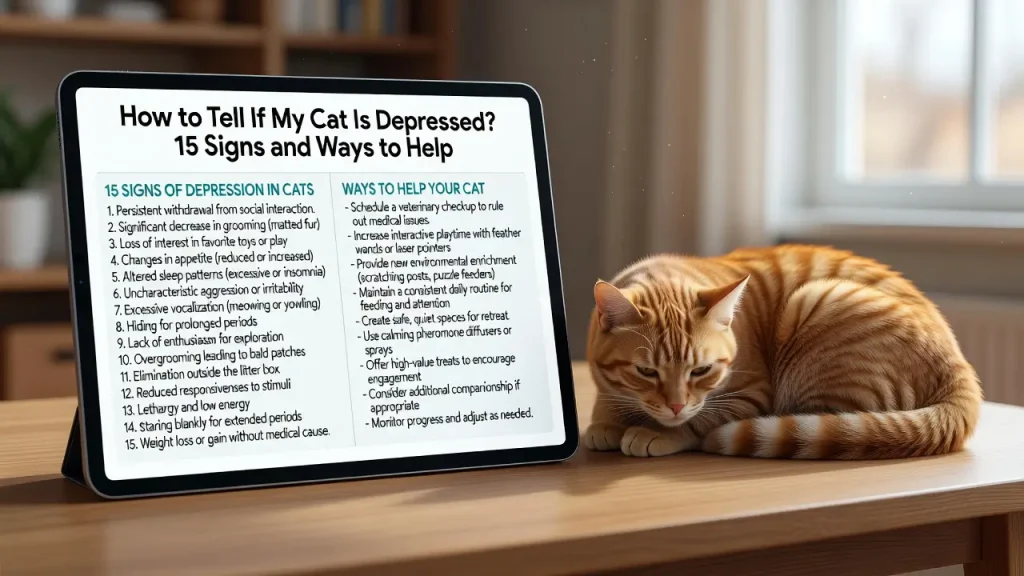
Cats may seem independent, but they can experience emotional distress just like other pets. Changes in their environment, daily routines, relationships, or health can affect their behavior. Sometimes, a cat that sleeps more, hides frequently, or stops playing may be showing signs of emotional distress.
How to tell if my cat is depressed? Look for noticeable changes in your cat’s normal behavior, including reduced appetite, excessive sleeping, hiding, loss of interest in toys, unusual vocalization, and avoiding family members. These changes may suggest depression, stress, or an underlying medical problem. A veterinarian can help identify the actual cause.
Understanding these warning signs helps you recognize when your cat needs extra attention. It also allows you to provide the right support before the problem becomes more serious.
Let’s explore 15 possible signs of depression in cats, what causes them, and how you can help your furry companion feel comfortable again.
How to tell if my cat is depressed? Can Cats Really Get Depressed?
Yes, cats can experience emotional distress that affects their mood, activity, appetite, and social behavior. Although feline depression is not always diagnosed in the same way as human depression, cats can show depression-like symptoms. Cats develop strong attachments to familiar people, animals, places, and daily routines. When something important changes, they may become withdrawn, anxious, or less interested in their usual activities.
For example, a cat may behave differently after losing an animal companion or moving into a new home. Another cat might become less playful when its owner spends less time interacting with it.However, depression is not the only explanation for these behaviors. Pain, infections, dental problems, and other medical conditions can produce similar symptoms.
Therefore, noticing changes in your cat’s normal personality is more important than trying to label its emotions immediately.
15 Signs Your Cat May Be Depressed
Every cat has a different personality. Some naturally sleep longer, while others enjoy spending time alone. The important thing is recognizing changes that are unusual for your particular cat.
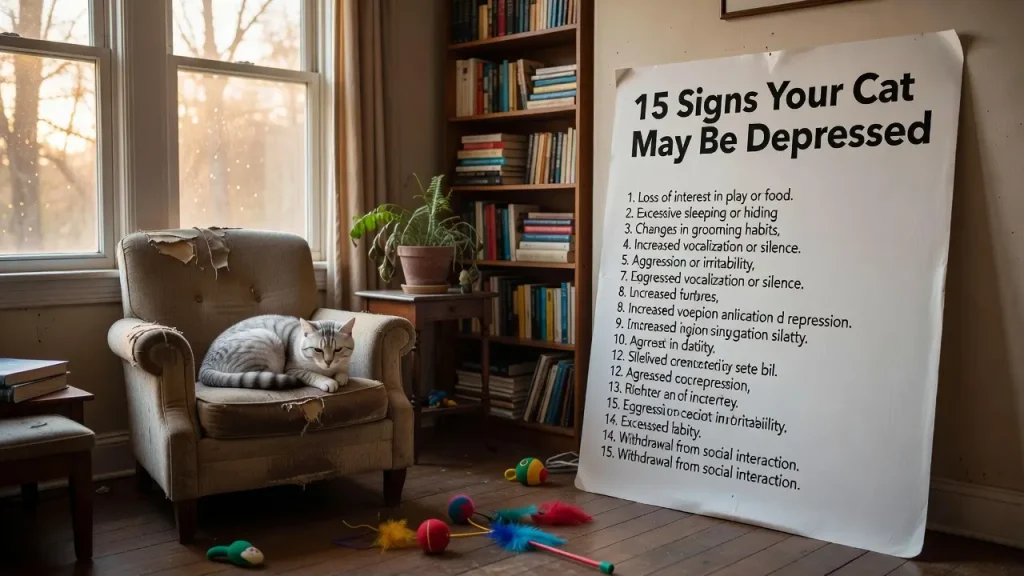
Here are 15 possible signs that your cat may be experiencing emotional distress.
1. Sleeping More Than Usual
Cats naturally spend many hours sleeping throughout the day. However, a sudden increase in sleeping time may indicate that something is affecting their physical or emotional well-being. A cat experiencing stress or depression-like symptoms may spend more time resting instead of exploring, playing, or interacting with family members.
You might notice your cat sleeping in unusual places or showing little interest in activities it previously enjoyed. Pay attention if your cat becomes unusually inactive or difficult to engage. Excessive sleeping can also indicate illness or pain, so persistent changes deserve veterinary attention.
2. Losing Interest in Favorite Activities
One noticeable warning sign is when your cat stops enjoying activities it previously loved. For example, a playful cat may suddenly ignore its favorite feather wand, chasing games, or interactive toys. It might also stop exploring rooms or watching birds through the window.
This behavior can happen when a cat feels stressed, uncomfortable, or emotionally unsettled. Try offering different activities without forcing your cat to participate. If the loss of interest continues, discuss the change with your veterinarian.
3. Hiding or Avoiding Family Members
Cats sometimes hide when they feel frightened or need a quiet place to rest. However, frequent hiding can become concerning when it represents a sudden change. A previously social cat might start spending most of its time under the bed, behind furniture, or inside closets.
It may also avoid familiar people and leave the room whenever someone approaches. Stress, environmental changes, fear, and physical discomfort can all cause hiding behavior. Give your cat a peaceful hiding place instead of pulling it out. If hiding becomes frequent or happens alongside other symptoms, arrange a veterinary checkup.
4. Eating Less or Refusing Food
Changes in appetite are among the most important signs to monitor. A cat experiencing emotional distress may show less interest in meals or stop approaching its food bowl at normal times. You might notice that your cat eats only a few bites before walking away. Some cats may also lose weight when reduced food intake continues.
However, appetite loss can indicate serious health problems, including dental pain, digestive disorders, kidney disease, or other illnesses. Important: If your cat refuses food, contact your veterinarian promptly rather than assuming depression is responsible. Cats that stop eating can develop serious complications, including hepatic lipidosis.
5. Excessive Meowing or Unusual Silence
Some cats become more vocal when they feel uncomfortable or unsettled. Others become unusually quiet and stop communicating as they normally do. For example, a naturally talkative cat may start meowing frequently during the night. Another cat may stop greeting its owner with familiar sounds.
These changes can reflect stress, anxiety, discomfort, or age-related health problems. Notice when the vocalization happens and whether other behaviors have changed. Sudden or persistent changes should be discussed with a veterinarian.
6. Lack of Interest in Playing
Play is an important part of a cat’s physical and mental well-being. It encourages movement, provides stimulation, and allows cats to express natural hunting behaviors. A cat experiencing emotional distress may stop chasing toys, running around, or participating in activities with its owner.
You may notice that even favorite toys no longer attract its attention. Try short, gentle play sessions with toys that encourage natural hunting movements. If your cat consistently avoids movement, remember that pain and illness can also reduce playfulness.
7. Changes in Grooming Habits
Cats usually spend a significant amount of time cleaning their bodies. Changes in grooming habits may indicate emotional or physical problems.Some cats groom less when they feel unwell or withdrawn. Their coats may become greasy, tangled, or unkempt.
Other cats may overgroom certain areas, causing hair loss, irritated skin, or bald patches. Both behaviors deserve attention because stress, skin conditions, allergies, pain, and other medical issues can affect grooming.
8. Becoming More Clingy Than Usual
Not every depressed or stressed cat becomes distant. Some cats respond to emotional changes by seeking more attention. Your cat might follow you from room to room, sit beside you constantly, or become uncomfortable when you leave. It may also demand more petting or vocalize whenever you are not nearby.
Although extra affection can seem harmless, a sudden change in attachment may indicate anxiety or insecurity. Offer reassurance and maintain a predictable routine. Avoid encouraging constant dependence by forcing interaction throughout the day.
9. Avoiding Physical Contact
A cat that previously enjoyed cuddles may suddenly avoid being touched. It might move away when you try to pet it, refuse to sit on your lap, or become irritated during normal interactions. Some cats also react negatively when someone touches a particular body area.
Emotional distress can contribute to social withdrawal, but physical pain is another important possibility. Never force affection. Give your cat enough space and observe whether the behavior improves or becomes more noticeable.
10. Changes in Litter Box Habits
Changes in litter box behavior can sometimes accompany stress or emotional distress. Your cat might start urinating outside the litter box, avoiding its usual bathroom area, or showing changes in bathroom routines. Possible triggers include household changes, dirty litter, territorial problems, and conflict with other pets.
However, inappropriate urination can also indicate urinary tract problems or other medical conditions. If your cat strains to urinate, repeatedly visits the litter box, cries while urinating, or produces little or no urine, seek emergency veterinary care. Urinary blockage is especially dangerous in male cats.
11. Losing Interest in Favorite Treats
Most cats become excited when they recognize their favorite treats. If your cat suddenly ignores familiar snacks, it may be experiencing reduced appetite, stress, or physical discomfort. For example, a cat that normally runs toward the kitchen when it hears a treat container may simply remain in its sleeping area.
Do not use treats as the only way to measure emotional health. Monitor normal meals, water intake, and overall activity too.
12. Unusual Aggression or Irritability
Some cats become more sensitive when they feel stressed or uncomfortable. A normally friendly cat may start hissing, growling, scratching, or swatting when someone approaches. It might also react negatively to other pets or avoid situations it previously tolerated.
Aggression is not proof of depression. It can be a response to fear, pain, overstimulation, or territorial conflict. Give your cat space and avoid punishment. A veterinary examination can help identify possible physical causes.
13. Sitting Alone for Long Periods
Cats enjoy peaceful spaces, but suddenly spending most of the day alone may indicate a behavioral change. Your cat might sit in one corner, remain near a window for hours, or stop joining family activities. This behavior may become more noticeable after moving homes, losing a companion, or experiencing changes in household routines. Provide safe resting areas and opportunities for gentle interaction. Also check whether your cat shows other signs of discomfort.
14. Neglecting Normal Daily Routines
Cats often follow predictable daily habits. They may eat at certain times, visit favorite sleeping areas, groom after meals, and become active during particular hours. A cat experiencing emotional or physical difficulties may stop following these familiar patterns.
For example, it might ignore its usual morning greeting, avoid its favorite resting place, or stop exploring the house.Changes in routine can help owners recognize problems early.
15. Changes in Body Language and Facial Expressions
Your cat’s body language can provide useful clues about its emotional state.A stressed or uncomfortable cat may keep its ears flattened, hold its body low, tuck its tail close, or avoid eye contact.It might also have a tense posture and appear less interested in its surroundings.However, no single facial expression or body position can confirm depression.Look at the complete picture, including appetite, grooming, activity, social interaction, and sleeping habits.
What Causes Depression in Cats?
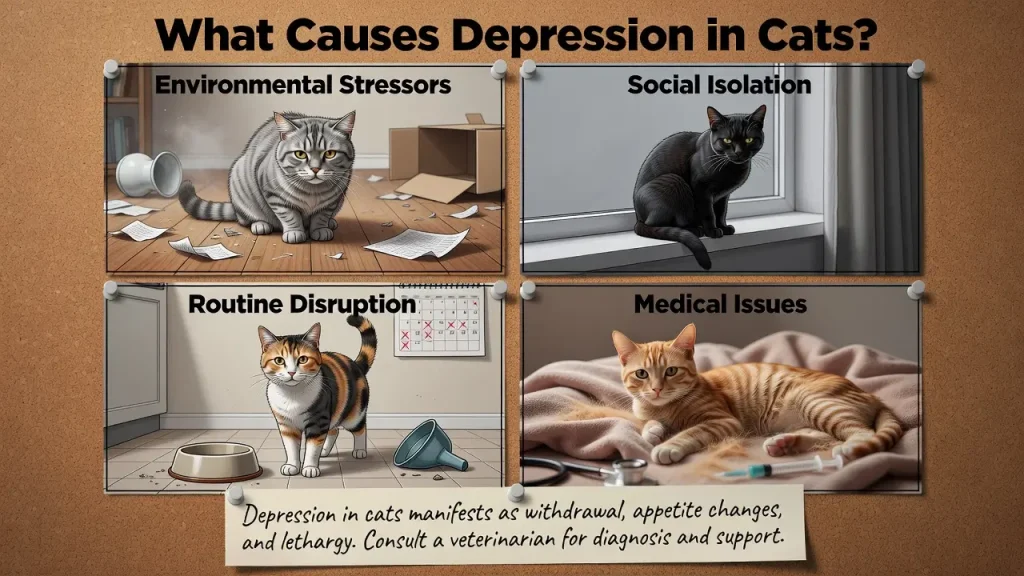
Several changes in a cat’s life can contribute to emotional distress. Cats appreciate familiar surroundings, predictable routines, and comfortable relationships.Understanding possible triggers can help you identify what might be affecting your pet.
1. Losing a Companion Animal
Cats can form strong relationships with other cats and household pets. Losing a companion may change their daily habits and social interactions.A cat that previously played, slept, or groomed another animal may become quieter after that companion disappears.
Some cats may search familiar areas or spend more time resting alone.
2. Losing a Family Member
Cats recognize familiar people and can become attached to their owners. When someone leaves the household or passes away, their absence may affect a cat’s behavior.Your cat might spend more time near that person’s bedroom, wait near the door, or become less interested in normal activities.
3. Moving to a New Home
Moving can be stressful because cats depend heavily on familiar territory.A new home brings unfamiliar smells, sounds, furniture, and surroundings. Your cat may hide, eat less, or avoid exploring until it feels comfortable.Give your pet time to adjust by providing familiar bedding, toys, food bowls, and a quiet resting area.
4. Changes in Household Routines
Cats often become comfortable with predictable schedules. Changes in feeding times, sleeping arrangements, or your working hours may disturb their routine.For example, a cat accustomed to morning playtime might become unsettled when its owner starts leaving home earlier.
5. Loneliness and Lack of Stimulation
Some cats need regular social interaction and mental stimulation. Spending long periods without interesting activities may contribute to boredom and stress.This can be particularly noticeable in indoor cats that have limited opportunities to explore.
6. Introducing a New Pet
A new kitten, dog, or another adult cat can change the household environment.Your existing cat may feel that its territory, resting areas, or access to attention are being threatened.Introduce new animals gradually and provide separate food bowls, litter boxes, and resting spaces.
7. Physical Pain or Underlying Medical Problems
Sometimes, what looks like depression is actually a sign of illness.Dental problems, arthritis, digestive disorders, urinary conditions, and other health issues can make cats withdraw from normal activities.This is why a veterinary examination is important before assuming your cat has an emotional problem.
How to Tell If Your Cat Is Depressed or Just Sleeping More
Cats naturally sleep for long periods, so sleeping frequently does not automatically mean your pet is depressed.The important difference is whether your cat’s overall behavior has changed.For example, a healthy cat may sleep most of the afternoon but still show excitement when you bring out its favorite toy.A cat experiencing emotional distress may sleep more while showing little interest in eating, playing, exploring, or interacting.
Here is a simple comparison:
| Normal cat behavior | Potentially concerning behavior |
|---|---|
| Sleeps after playing | Sleeps much more than usual |
| Eats regular meals | Suddenly loses appetite |
| Enjoys favorite toys | Consistently ignores toys |
| Occasionally hides | Hides for unusually long periods |
| Grooms regularly | Stops grooming or overgrooms |
| Enjoys familiar company | Suddenly avoids family members |
| Uses litter box normally | Shows unusual bathroom changes |
| Explores familiar rooms | Stops exploring favorite areas |
Remember that these behaviors are warning signs, not a depression diagnosis. Medical problems can produce similar changes.
Depression in Indoor Cats vs. Outdoor Cats
Indoor and outdoor cats can both experience emotional distress, although their environments create different challenges.
- Indoor cats: Cats that stay inside may become bored when they lack climbing opportunities, interactive toys, scratching surfaces, and regular playtime.A limited environment can reduce opportunities for natural activities such as exploring, hunting, climbing, and observing their surroundings.
- Outdoor cats: Outdoor cats may experience stress from territorial conflicts, unfamiliar animals, loud noises, injuries, or changes in their outdoor environment.They may also encounter unpredictable situations that make them feel unsafe.
Both indoor and outdoor cats benefit from a comfortable environment, predictable routines, mental stimulation, and access to safe resting places.
How to Help a Depressed Cat Feel Better
If your cat seems withdrawn or unhappy, small changes at home can help improve its comfort and daily experience.However, arrange a veterinary examination first if the behavior is sudden, persistent, or accompanied by physical symptoms.Here are practical ways to support your cat.
1. Establish a Predictable Daily Routine
Try feeding your cat, playing with it, and providing attention at consistent times.A familiar schedule can help reduce uncertainty and make the home environment feel more secure.Avoid making several major changes at once when your cat is already showing signs of stress.
2. Spend Quality Time Playing
Interactive play provides mental stimulation and encourages natural hunting behaviors.Use feather wands, soft balls, toy mice, or other safe toys your cat enjoys.Start with short sessions and allow your cat to decide whether it wants to participate. Never force play when your pet appears uncomfortable.
3. Introduce Puzzle Feeders
Puzzle feeders encourage cats to work for small portions of their food.They provide mental stimulation and can make mealtimes more interesting.Choose a suitable design that matches your cat’s abilities. Introduce it gradually rather than making every meal difficult.
4. Provide Comfortable Hiding Places
Cats need safe spaces where they can rest without interruption.A cardboard box, covered cat bed, quiet corner, or elevated resting area can provide comfort.Make sure your cat can enter and leave these spaces freely.
5. Offer Window Views and Climbing Areas
Window perches, cat trees, and shelves provide opportunities to observe the surroundings.Watching birds, people, and outdoor activity can provide additional stimulation for indoor cats.Make sure windows and climbing structures are secure.
6. Give Affection Without Forcing Interaction
Some cats want more attention when they feel unsettled, while others prefer quiet time.Let your cat approach you rather than repeatedly picking it up or forcing cuddles.Gentle talking, slow blinking, and sitting nearby may help your cat feel comfortable.
7. Maintain a Clean and Comfortable Environment
Keep litter boxes clean and place them in quiet, accessible locations.Provide fresh drinking water, comfortable bedding, scratching posts, and separate feeding areas when multiple pets share the home.Small environmental improvements can make everyday activities easier.
8. Consider Environmental Support
Some owners use feline pheromone diffusers to help manage stress-related behaviors.These products may help certain cats, but they are not a treatment for every behavioral problem or a substitute for veterinary care.Ask your veterinarian whether a pheromone product is appropriate for your cat.
When Should You Take a Depressed Cat to the Vet?
You should contact a veterinarian whenever your cat develops sudden or persistent behavioral changes.Cats are good at hiding pain and illness. Sometimes, reduced activity or unusual behavior is the first visible indication that something is wrong.
Watch for these warning signs:
- Refusing food or eating significantly less.
- Sudden weight loss.
- Repeated vomiting or diarrhea.
- Unusual weakness or extreme lethargy.
- Difficulty walking or jumping.
- Excessive hiding combined with other symptoms.
- Noticeable changes in drinking or urination.
- Poor grooming or unexplained hair loss.
- Signs of pain when touched.
- Sudden aggression or unusual vocalization.
Important: If your cat has not eaten for 24 hours, seek immediate veterinary care. Do not wait for several days to see whether its appetite returns. Cornell Feline Health Center explains that prolonged appetite loss can seriously affect a cat’s health.
If your cat repeatedly strains to urinate but produces little or no urine, seek emergency veterinary care immediately. This can indicate a life-threatening urinary blockage.Your veterinarian may recommend a physical examination, blood tests, urine testing, or other investigations depending on your cat’s symptoms.
Also Read : How to Stop Cat From Meowing at Door in Morning? 10 Practical Tips
How Long Does Cat Depression Last?
There is no single recovery timeline for cats experiencing depression-like symptoms.Some cats adjust relatively quickly after a minor environmental change. Others may need more time and professional support following a major loss, stressful experience, or household disruption.
Recovery depends on several factors:
- The original cause of the behavioral change.
- Your cat’s age and overall health.
- The amount of environmental stress.
- The availability of social interaction.
- Whether an underlying medical condition is present.
- The consistency of daily care and support.
If your cat does not gradually return to its usual behavior, consult your veterinarian. Avoid waiting for an arbitrary number of weeks when symptoms are continuing.
Can Cats Recover From Depression?
Yes, many cats can improve when the underlying cause of their emotional or behavioral changes is identified and addressed.For example, a cat struggling with boredom may benefit from interactive toys, climbing areas, and regular playtime.A cat experiencing stress after moving may feel more comfortable with familiar bedding, quiet resting spaces, and a gradual introduction to its new surroundings.
However, cats experiencing pain or illness need appropriate veterinary treatment.Some cats may also benefit from help from a qualified feline behavior professional. The best approach depends on the individual cat and the reason behind its behavioral changes.
How to Check Your Cat’s Emotional Health at Home
One useful way to recognize possible problems is to observe your cat’s everyday habits.Instead of relying on one unusual behavior, monitor several areas of its daily routine.
The 7-Day Cat Behavior Observation Guide
Use this simple checklist to record noticeable changes over one week.
| Behavior to monitor | What to observe |
|---|---|
| Appetite | Is your cat eating its normal meals? |
| Water intake | Is it drinking more or less than usual? |
| Sleeping | Has its sleeping pattern changed? |
| Grooming | Is its coat clean and well-maintained? |
| Playfulness | Does it still enjoy favorite toys? |
| Social interaction | Does it approach familiar people? |
| Litter box | Are bathroom habits normal? |
| Energy | Is it active during its usual hours? |
Write down unusual behaviors with the date and time they occur.For example, you might record that your cat ignored breakfast on Monday, hid under the bed on Tuesday, and stopped playing on Wednesday.
This information can help your veterinarian understand the pattern of changes.Important: This is an observation guide, not a reason to delay veterinary care for a sick cat. You should seek help immediately when serious symptoms appear.
Read This : Why Does My Cat Guard My Door at Night? 10 Possible Reasons
Frequently Asked Questions
How Does a Depressed Cat Behave?
A cat experiencing depression-like symptoms may become withdrawn, sleep more, avoid playing, hide frequently, or show changes in grooming and appetite. Some cats become unusually clingy, while others prefer being alone.
Can Indoor Cats Become Depressed?
Yes, indoor cats can experience boredom and stress when their environment lacks stimulation. Providing scratching posts, climbing structures, interactive toys, and regular play sessions can support their mental well-being.
How Long Does Depression Last in Cats?
Recovery depends on the underlying cause. Some cats adjust quickly to minor changes, while others need longer-term environmental support or veterinary treatment. Persistent behavioral changes should always be evaluated.
Do Depressed Cats Stop Eating?
Some cats experiencing emotional distress may eat less or refuse food. However, appetite loss can also indicate serious medical conditions. Contact your veterinarian promptly if your cat stops eating.
How Can I Cheer Up My Depressed Cat?
Spend quality time with your cat, offer interactive toys, maintain regular feeding times, and provide comfortable resting spaces. Let your cat choose when it wants attention, and avoid forcing physical interaction.
Can a Cat Recover From Depression Without Medication?
Some cats improve through environmental changes, consistent routines, and increased mental stimulation. However, cats with underlying medical or behavioral conditions may need professional treatment. Never give your cat medication without veterinary guidance.
Final Thoughts
Understanding how to tell if your cat is depressed starts with recognizing changes in its normal personality and daily habits. Excessive sleeping, hiding, reduced appetite, and avoiding favorite activities may indicate that something is wrong.Remember that cats cannot explain when they feel uncomfortable, stressed, or unwell. Their behavior often provides important clues about their well-being.
Give your cat patience, affection, a comfortable environment, and opportunities for daily stimulation. Most importantly, never assume that unusual behavior is simply depression. A veterinary examination can help identify the real cause and guide your cat toward feeling better.
Why Does My Cat Swipe at Me? 10 Reasons and What to Do
How to Stop Aggression in Cats: Causes, Warning Signs, and What to Do