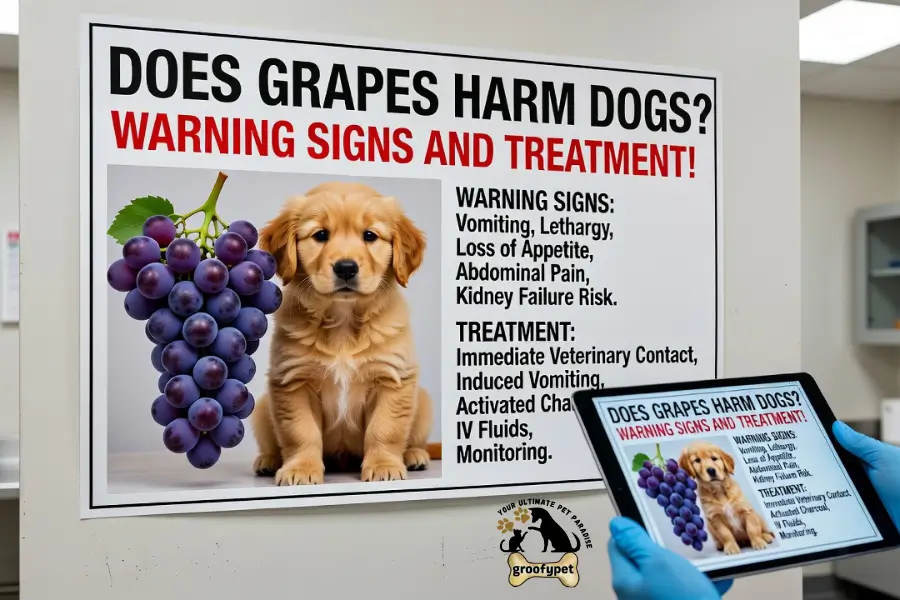
Does grapes harm dogs?Yes, grapes can seriously harm dogs and may cause sudden kidney damage, even when consumed in small amounts. Both red and green grapes are dangerous, including seedless varieties. Dogs should never eat fresh grapes, dried grapes, or raisins. If your dog accidentally eats grapes, contact a veterinarian immediately rather than waiting for symptoms to appear.
Grapes might look like a healthy, natural snack for humans, but they are not safe for dogs. Even a small accidental bite deserves attention because some dogs develop severe reactions after eating them.
Understanding grape toxicity can help you recognize warning signs, respond quickly, and protect your furry friend from potentially life-threatening complications.
Why Are Grapes Toxic to Dogs?
Grapes contain substances that can trigger serious kidney problems in dogs. Veterinary researchers now consider tartaric acid and its salt, potassium bitartrate, the most likely substances responsible for this toxicity. Dogs may struggle to process these compounds effectively. After ingestion, they can contribute to damage in the kidneys, which normally filter waste products from the blood.
When kidney cells become damaged, the organs may stop working properly. This condition is called acute kidney injury (AKI). In severe cases, it can progress to kidney failure. However, researchers have not established an exact toxic dose. The tartaric acid content varies between grapes, and individual dogs may respond differently.
According to veterinary research, this unpredictability makes every grape or raisin exposure potentially serious. Yes, even one grape can potentially harm a dog. However, it does not mean every dog that eats one grape will develop poisoning.The problem is that veterinarians cannot reliably predict which dogs will experience kidney damage or how much fruit will cause a reaction.
For example, a small dog may be at risk after eating a single grape, while another dog might consume several without developing obvious symptoms. This difference does not make grapes safe for larger dogs. There is no confirmed safe quantity that pet owners can use to decide whether veterinary attention is necessary.
Important: If your dog eats even one grape, contact your veterinarian immediately. Do not wait to see whether your pet becomes sick.
What Happens If a Dog Eats Grapes?
When a dog eats grapes, the harmful compounds may affect the digestive system and kidneys. Some dogs initially develop stomach problems, while others may show no obvious signs. The first symptoms commonly involve vomiting, diarrhea, and reduced appetite. As the condition progresses, kidney function may become affected.

A dog experiencing kidney damage may drink more water, become dehydrated, or produce less urine than usual.In severe cases, the kidneys may stop producing urine. This is a medical emergency that requires immediate veterinary treatment.
The following table explains what may happen after grape consumption.
| Stage | Possible effects |
|---|---|
| Early stage | Vomiting and diarrhea |
| Developing symptoms | Loss of appetite and tiredness |
| Kidney involvement | Increased thirst and changes in urination |
| Severe poisoning | Acute kidney injury and reduced urine production |
| Critical condition | Kidney failure and possible life-threatening complications |
Symptoms and their timing vary between dogs. Some animals may appear healthy initially despite a potentially serious exposure.
10 Warning Signs of Grape Poisoning in Dogs
Recognizing the symptoms of grape poisoning can help you respond quickly. However, remember that symptoms may take time to develop.
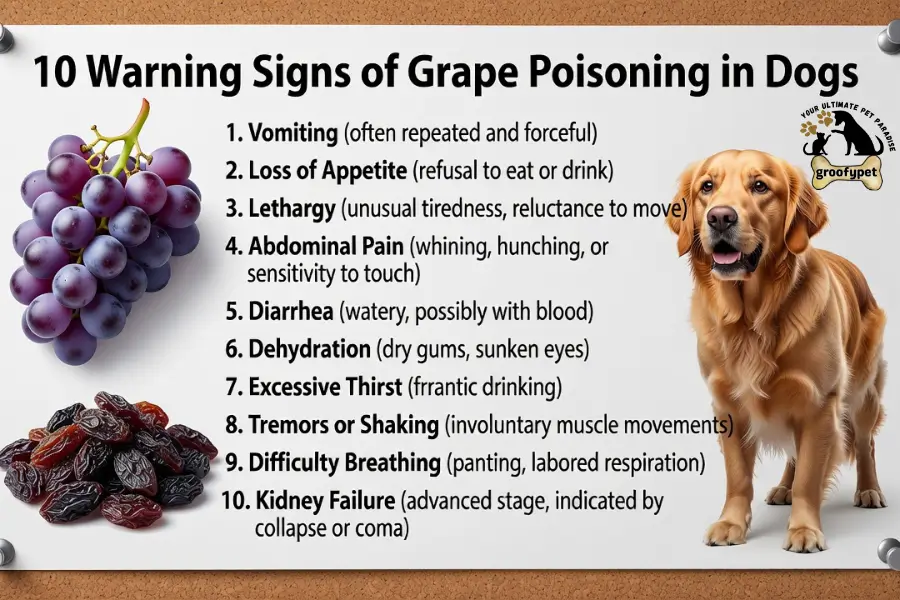
Here are ten warning signs every dog owner should understand.
1. Vomiting
Vomiting is one of the most common early symptoms of grape poisoning. Your dog may vomit once or several times after eating grapes. You might also notice pieces of partially digested grapes in the vomit.
2. Diarrhea
Some dogs develop loose stools or diarrhea after consuming grapes. Their digestive systems may react to the harmful substances in the fruit. Repeated diarrhea can also contribute to dehydration.
3. Loss of Appetite
A dog experiencing grape toxicity may suddenly refuse meals or favorite treats. If your normally hungry dog loses interest in food after eating grapes, contact your veterinarian.
4. Lethargy
Lethargy means unusual tiredness or reduced activity. Your dog may sleep more, avoid playing, or show little interest in everyday activities. This can be an early sign that something is wrong.
5. Abdominal Pain
Some affected dogs experience discomfort in their stomach area. They may become restless, avoid being touched, or show an unusual body posture. Abdominal discomfort alongside vomiting requires veterinary attention.
6. Excessive Thirst
Kidney problems can affect how the body manages water. Your dog may begin drinking more water than usual.Do not assume that increased drinking means your dog is recovering.
7. Dehydration
Vomiting, diarrhea, and changes in kidney function can contribute to dehydration. Possible signs include dry or sticky gums, weakness, and reduced energy.
8. Changes in Urination
Your dog may urinate more frequently or produce less urine than normal.Any noticeable change in urination after grape consumption deserves immediate veterinary attention.
9. Weakness and Trembling
As poisoning progresses, some dogs develop weakness, trembling, or difficulty coordinating their movements.These symptoms may indicate serious illness.
10. Reduced or No Urine Production
This is one of the most concerning warning signs. A dog with severe kidney damage may produce very little urine or stop urinating completely. This condition requires emergency veterinary care.
Remember: Never wait for all ten symptoms to appear. A dog that eats grapes needs veterinary advice even if it looks completely normal.
How Many Grapes Can Harm a Dog?
There is no scientifically established safe number of grapes for dogs. Even a small amount may create a risk because the harmful compound concentration varies.
The following table explains how owners should approach different amounts.
| Amount consumed | Safety recommendation |
|---|---|
| 1 grape | Contact a veterinarian immediately |
| 2–3 grapes | Seek immediate veterinary advice |
| 4–5 grapes | Treat as a potential poisoning emergency |
| A handful of grapes | Contact an emergency veterinary hospital immediately |
| Unknown quantity | Assume potential exposure and seek professional advice |
These amounts are not toxic-dose calculations. They are precautionary examples, not a guarantee that smaller quantities are safe.Your dog’s weight, health history, the type of grapes, and the amount consumed may all influence the veterinarian’s assessment.
Never calculate a safe serving based on your dog’s body weight. There is no reliable home formula for determining a harmless amount.
Are Seedless Grapes Safe for Dogs?
No, seedless grapes are not safe for dogs. Removing the seeds does not remove the substances associated with grape toxicity. Both seeded and seedless varieties can cause kidney damage. Pet owners sometimes believe that seeds are responsible for the danger. However, the suspected toxic compounds are found in the fruit itself.
Therefore, avoid giving your dog all varieties, including
- Green seedless grapes.
- Red seedless grapes.
- Black grapes.
- Purple grapes.
- Fresh grapes grown at home.
- Store-bought grapes.
The color, size, and presence of seeds do not make grapes suitable for canine consumption.
Can Dogs Eat Peeled Grapes?
No, peeled grapes are also unsafe for dogs. Removing the skin does not make the fruit harmless. The potential toxic compounds are not limited to the grape skin. Some owners may think peeling grapes makes them easier to digest. However, digestive comfort is not the main concern.
The risk involves possible kidney injury, not simply stomach irritation. If your dog eats a peeled grape, follow the same precautions as you would after eating an unpeeled grape.
Are Raisins More Dangerous Than Grapes?
Yes, raisins can be particularly concerning because they are dried grapes. Removing water concentrates the fruit’s contents into a smaller portion. This means a small handful of raisins may represent a much larger amount of fresh grapes.Both foods can cause kidney injury in dogs, and neither should be included in their diet.
| Food | Safe for dogs? | Main concern |
|---|---|---|
| Fresh red grapes | No | Kidney injury |
| Fresh green grapes | No | Kidney injury |
| Seedless grapes | No | Kidney injury |
| Peeled grapes | No | Kidney injury |
| Raisins | No | Kidney injury |
| Sultanas | No | Kidney injury |
| Foods containing raisins | No | Possible grape-related toxicity |
Pay attention to baked goods, breakfast cereals, fruitcakes, cookies, and trail mixes. These products may contain raisins that dogs can accidentally consume. Also, check ingredient labels before sharing human food with your pet.
Also Read :How Many Treats Per Day for a Puppy? A Safe Feeding Guide
What Should You Do If Your Dog Eats Grapes?
Discovering that your dog has eaten grapes can be frightening. However, taking the right steps quickly can help reduce the risk of serious complications.
Follow this emergency action plan.
Step 1: Remove Remaining Grapes
Immediately remove any grapes or raisins your dog can still reach.Check the floor, food bowls, kitchen counters, and nearby areas for additional pieces.
Step 2: Estimate How Many Grapes Were Eaten
Try to determine how many grapes your dog consumed. If possible, collect the packaging or remaining fruit. This information can help your veterinarian assess the exposure.
Step 3: Record the Time of Consumption
Write down when your dog ate the grapes. Even an approximate time is helpful because treatment decisions may depend on how recently the fruit was consumed.
Step 4: Contact Your Veterinarian Immediately
Call your veterinarian or the nearest emergency animal hospital. Explain what happened, how many grapes your dog may have eaten, and whether any symptoms have appeared. Do not wait for vomiting or other warning signs.
Step 5: Follow Veterinary Instructions
Your veterinarian may recommend bringing your dog in for examination and treatment.Depending on the situation, the veterinarian may safely induce vomiting to remove remaining fruit from the stomach.Never try to make your dog vomit at home unless a veterinarian specifically instructs you to do so. Do not use salt, hydrogen peroxide, or other home remedies without professional guidance.
Step 6: Monitor Your Dog’s Health
Your veterinarian may recommend blood tests, urine tests, or repeat kidney checks.Follow the complete treatment and monitoring plan, even if your dog appears normal.Emergency advice Prompt veterinary treatment offers the best chance of preventing or limiting kidney damage.
How Do Veterinarians Treat Grape Poisoning?
There is no specific antidote for grape poisoning in dogs. Treatment focuses on removing the remaining fruit, supporting kidney function, and preventing further complications.The veterinarian chooses a treatment plan based on how much fruit the dog consumed, when ingestion occurred, and the animal’s condition.
Common veterinary treatments include the following.
1. Inducing Vomiting
If the dog recently ate grapes and is suitable for the procedure, the veterinarian may administer medication to induce vomiting.This helps remove remaining fruit from the stomach before more harmful substances are absorbed.
Never attempt this procedure without veterinary supervision.
2. Intravenous Fluid Therapy
Dogs at risk of kidney injury may require intravenous (IV) fluids.These fluids help maintain hydration, circulation, and adequate blood flow through the kidneys.Depending on the exposure and test results, hospitalization and IV fluid therapy may be recommended for at least 48 hours.
3. Blood and Urine Tests
Your veterinarian may recommend laboratory testing to check how well your dog’s kidneys are working.These tests can help identify changes in kidney function, electrolyte levels, and urine production.
4. Kidney Function Monitoring
A single normal blood test shortly after ingestion does not always rule out developing kidney damage.Your veterinarian may repeat blood and urine tests over the following two to three days.This helps identify complications that might not appear immediately.
5. Hospitalization
Dogs with significant exposure or developing symptoms may need hospital care.Veterinary staff can monitor hydration, blood pressure, urine production, and kidney function.In severe cases, specialized treatments such as dialysis may be considered where available.
Early treatment is especially important because severe kidney injury can have a serious outcome.
Read This : Can Dogs Eat Elderberries? Safety, Toxicity, and What to Do
How Long Does Grape Poisoning Take to Affect Dogs?
Grape poisoning does not affect every dog at the same speed. Some dogs develop digestive symptoms within hours, while kidney complications may take longer to appear.
Here is a general timeline based on reported veterinary observations.
| Time after consumption | Possible developments |
|---|---|
| First few hours | Some dogs may show no symptoms |
| 6–12 hours | Vomiting, diarrhea, and digestive discomfort may begin |
| 12–24 hours | Loss of appetite, lethargy, and dehydration may develop |
| 24–72 hours | Kidney injury or changes in urine production may become apparent |
| Following days | Severe cases may develop serious kidney complications |
This timeline is approximate, not a prediction for an individual dog.Some dogs remain symptom-free, while others develop serious problems. That is why early veterinary assessment matters more than watching the clock.
Can a Dog Survive Grape Poisoning?
Yes, many dogs can recover from grape poisoning, especially when they receive prompt veterinary treatment before significant kidney damage develops.The outcome depends on several factors, including the amount consumed, the dog’s individual sensitivity, existing health problems, and how quickly treatment begins.
Dogs that develop severe acute kidney injury have a more serious prognosis.Some may require extended hospitalization and specialized care. Dogs that survive significant kidney damage may also experience lasting kidney problems.
The best way to improve your dog’s chances is to seek professional help immediately after discovering grape consumption.
What Other Foods Contain Grapes or Raisins?
Fresh grapes are not the only concern. Many everyday foods contain raisins or grape ingredients that dogs may accidentally consume.
Check these common foods carefully:
| Food | Potential hidden ingredient |
|---|---|
| Raisin cookies | Dried grapes |
| Fruitcake | Raisins and sultanas |
| Trail mix | Raisins |
| Breakfast cereal | Dried grapes |
| Homemade bread | Raisins |
| Sweet rolls | Raisins |
| Fruit salad | Fresh grapes |
| Some snack bars | Raisins |
Keep these foods away from your dog, particularly during holidays, family gatherings, and outdoor picnics.Also remember that foods containing cream of tartar or tamarind may deserve veterinary attention after significant ingestion. These ingredients contain tartaric acid or related compounds that have been associated with kidney injury in dogs.
What Fruits Can Dogs Eat Instead of Grapes?
Although grapes are dangerous, several other fruits can make occasional treats for dogs.Choose fresh, plain fruit, remove seeds, pits, and other unsafe parts, and serve small portions.
Here are some alternatives to consider.
1. Blueberries:Blueberries are small, easy to serve, and contain antioxidants. Offer a few washed berries as an occasional snack.
2. Strawberries:Fresh strawberries can provide fiber and vitamin C. Remove the green tops and cut larger berries into smaller pieces.
3. Watermelon:Seedless watermelon flesh is a refreshing snack. Remove the rind and seeds before offering small pieces.
4. Apples:Apples provide fiber and can make a crunchy treat. Remove the core and seeds before serving.
5. Bananas:Bananas are suitable for occasional treats in small portions. They contain natural sugar, so avoid offering too much.
6. Cantaloupe:Cantaloupe provides moisture and vitamins. Remove the seeds and rind, then serve bite-sized pieces.
Remember that even dog-safe fruits should be introduced gradually. Treats should generally make up no more than 10% of your dog’s daily calories, with the remaining 90% coming from a complete and balanced diet.If your dog has diabetes, kidney disease, or another medical condition, ask your veterinarian before introducing new treats.
How to Prevent Accidental Grape Poisoning
Preventing grape poisoning is easier than dealing with a veterinary emergency. A few simple household habits can protect your dog from accidental exposure.Keep grapes out of reach: Store fresh grapes and raisins in closed containers or secured refrigerators.
Teach children about food safety: Explain that grapes and raisins should never be shared with dogs.
- Check kitchen floors: Grapes can easily fall while preparing fruit salads or snacks.
- Secure your garbage: Dogs sometimes explore trash bins looking for leftover food.
- Read food labels: Check baked goods, cereals, and snack ingredients for raisins and sultanas.
- Be careful during gatherings: Guests may unknowingly offer grapes to your dog.
- Provide safe alternatives: Keep dog-friendly treats available so family members have something appropriate to share.
These small precautions can significantly reduce the chance of accidental grape consumption.
Frequently Asked Questions
Can one grape kill a dog?
One grape does not automatically cause death, but it can potentially trigger serious kidney damage in some dogs. Because sensitivity varies, contact a veterinarian immediately after any grape consumption.
How many grapes are toxic to dogs?
There is no confirmed safe or toxic number that applies to every dog. Even a small quantity can be dangerous, so do not calculate a safe serving.
Can dogs eat green grapes?
No. Green grapes are toxic to dogs, just like red, purple, and black grapes. Their color does not change the potential kidney risk.
4. Are red grapes poisonous to dogs?
Yes. Red grapes can cause grape toxicity and acute kidney injury. Never offer red grapes as a treat, regardless of their size or sweetness.
Can seedless grapes harm dogs?
Yes. Seedless grapes remain dangerous because removing the seeds does not eliminate the suspected toxic compounds.
Key Takeaways
- Grapes are toxic to dogs and should never be offered as treats.
- Red, green, peeled, and seedless grapes are all unsafe.
- Even one grape can potentially cause a serious reaction.
- Raisins and sultanas are also dangerous.
- Vomiting and diarrhea are common early warning signs.
- Grape poisoning can cause acute kidney injury and kidney failure.
- Contact a veterinarian immediately if your dog eats grapes, even without symptoms.
Final Thoughts
So, does grapes harm dogs? Absolutely. Grapes are among the human foods that dog owners should never share with their pets.Although grapes offer nutritional benefits to people, they can cause unpredictable and potentially life-threatening kidney problems in dogs.
The biggest mistake is assuming that one grape cannot cause harm or waiting until symptoms appear. Every dog responds differently, and there is no established safe quantity.If your dog accidentally eats grapes or raisins, contact your veterinarian immediately. Quick action, proper treatment, and kidney monitoring can make an important difference in your dog’s recovery.
Keeping grapes away from your furry friend is one of the simplest ways to protect their long-term health.