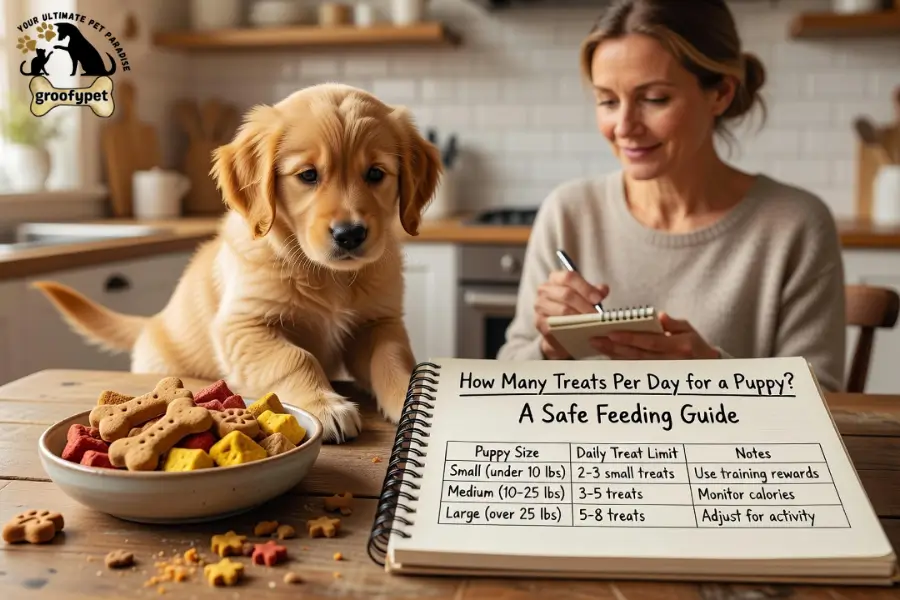
Puppies love treats, whether they are learning to sit, practicing recall, or simply enjoying time with their owners. However, giving too many treats can add extra calories and reduce the amount of balanced food a puppy eats. So, how many treats per day for a puppy is the right amount?
As a general guideline, treats should make up no more than 10% of a dog’s daily calories, with the remaining calories coming primarily from complete and balanced food. The exact number of treats depends on your puppy’s age, size, calorie needs, and the calories in each treat.
There is no single number that works for every puppy. A tiny training reward may contain only a few calories, while a large biscuit can contain much more. Understanding treat portions helps you reward good behavior without interfering with healthy growth.
How Many Treats Per Day for a Puppy?
A puppy can receive treats every day, provided the total amount fits within an appropriate calorie allowance. The best approach is to count calories rather than relying on a fixed number of treats.
For example, a puppy may receive several tiny rewards during training, while another puppy may need fewer treats because each snack contains more calories. Both puppies can have a suitable routine if their total food intake supports healthy growth.
The commonly recommended 10% guideline means that treats and other extras should generally provide no more than 10% of daily calories. For growing puppies, keeping treats below that limit may be helpful because they need sufficient complete and balanced puppy food to support development.
Consider these factors when deciding how many treats to give:
- Age: Young puppies need appropriate nutrition to support rapid growth.
- Size and breed: Toy breeds often have smaller calorie allowances than larger dogs.
- Treat size: Small rewards make it easier to control portions during training.
- Daily meals: Food, treats, chews, and other extras all contribute calories.
- Activity level: Training and exercise influence energy needs, although activity alone does not determine the correct portion.
- Body condition: Unwanted weight gain may mean the feeding plan needs adjustment.
Instead of choosing an arbitrary number, work out a suitable calorie budget and use small rewards throughout the day.
The 10% Rule for Puppy Treats
The 10% rule is a simple way to prevent treats from becoming too large a part of your puppy’s diet. It recommends that treats and other extras generally account for no more than 10% of daily calories.
The other 90% should come primarily from a complete and balanced diet appropriate for your puppy’s life stage. This matters because growing puppies need the right balance of protein, fats, vitamins, minerals, and other nutrients.
Treats may be enjoyable and useful for training, but they are not always nutritionally complete. If snacks replace too much of your puppy’s regular food, your puppy may miss important nutrients.
How Does the 10% Rule Work?
Suppose a veterinarian estimates that a puppy needs 600 calories per day. Ten percent of 600 is 60 calories.In this hypothetical example, the puppy’s general maximum treat allowance would be 60 calories per day. Those calories must include other extras, not just training biscuits.
However, 600 calories is only an example, not a recommendation for every puppy. Individual energy needs can vary substantially, so use an appropriate feeding plan and veterinary guidance.
Also Read: Can Puppies Drink Cat Milk? Risks, Facts, and Safe Options
The 10% figure is a maximum guideline rather than a target. You do not need to use the entire allowance every day.
Puppy Treats Per Day by Age
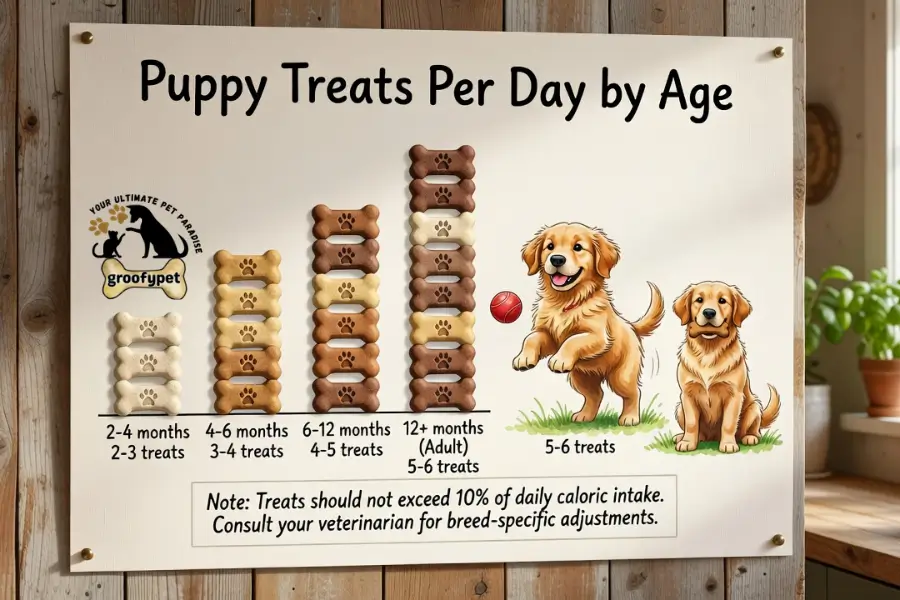
A puppy’s age affects its feeding schedule, training needs, and nutritional requirements. However, age alone cannot tell you the exact number of treats your puppy should receive.
| Puppy age | Treat-feeding advice |
|---|---|
| 8–12 weeks | Use very small, soft, puppy-appropriate rewards during short training sessions. |
| 3–4 months | Reward basic manners and house training while monitoring total calories. |
| 4–6 months | Continue rewarding useful behaviors and adjust portions as the puppy grows. |
| 6–12 months | Maintain a balanced diet and adapt training rewards to changing needs. |
| Approaching adulthood | Follow the appropriate life-stage feeding plan and adjust calories as needed. |
These age ranges are general examples. The right routine depends on the puppy’s breed, growth, health, and individual feeding plan.
How Many Treats Can an 8-Week-Old Puppy Have?
An 8-week-old puppy can receive small, appropriate treats during early training, but there is no universal daily count. At this age, puppies are still adjusting to their new homes and need a complete diet designed for growth.
Use tiny rewards to encourage behaviors such as responding to their name, coming when called, and beginning house training. You can often use a portion of the puppy’s regular kibble as a reward, provided the food is suitable and the puppy can eat it safely.
Avoid large, hard treats that may be difficult to chew. If you are unsure which treats are appropriate for such a young puppy, ask your veterinarian.
Do Older Puppies Need More Treats?
Not necessarily. Older puppies may participate in longer or more advanced training sessions, but this does not mean their daily treat allowance should automatically increase.As puppies grow, their energy requirements change. Monitor their body condition, meals, and total calories rather than increasing treats simply because they are getting older.
How Many Treats Can a Puppy Have by Weight?
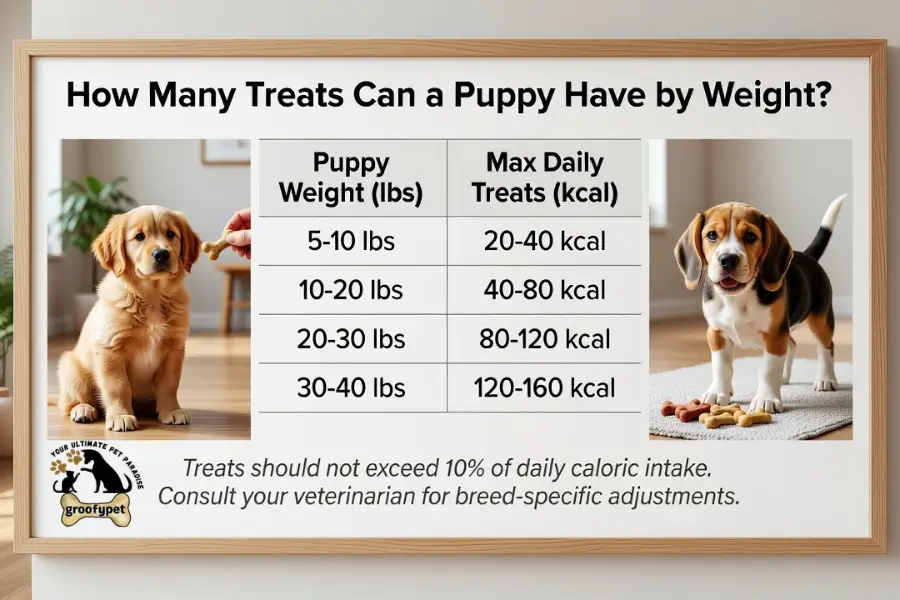
A puppy’s size can help you understand why treat portions need careful management. Smaller puppies may have limited daily calorie needs, so even a few high-calorie snacks can use a large portion of their allowance.
| Puppy size | What to consider | Practical advice |
|---|---|---|
| Toy breed | A small calorie allowance may be used up quickly. | Choose tiny rewards and check calories carefully. |
| Small breed | Large biscuits may contain too many calories for one reward. | Break suitable treats into smaller pieces. |
| Medium breed | Training rewards can add up throughout the day. | Track treats alongside meals. |
| Large breed | Growth and body condition need careful attention. | Keep treats balanced with the regular diet. |
| Giant breed | Controlled growth and an appropriate feeding plan are important. | Avoid excessive extras and follow veterinary guidance. |
Weight alone does not determine how many treats a puppy can eat. Two puppies of the same weight may have different calorie needs because of their age, growth rate, activity, and health.For that reason, do not use a breed-based treat chart as a substitute for an individualized feeding plan.
How to Calculate Your Puppy’s Daily Treat Allowance
Calculating a treat allowance helps you understand how many rewards can fit into your puppy’s daily diet. You do not need complicated mathematics, but you do need to know the approximate daily calorie requirement and the calories in each treat.
Step 1: Estimate Daily Calorie Needs
Start with your puppy’s feeding plan. Your veterinarian can help estimate daily energy needs based on age, current weight, expected adult size, growth, and body condition. Food-package feeding guides can provide a starting point, but individual needs may differ. Puppies with health concerns or unusual growth patterns may need more specific advice.
Step 2: Calculate 10% of Daily Calories
Multiply the estimated daily calorie requirement by 0.10.
For example:
- Estimated daily calorie needs: 500 calories
- General 10% treat allowance: 50 calories
- Remaining calories: 450 calories from the main diet and any adjustments required by the feeding plan
This example is for illustration only. It does not establish the calorie needs of a particular puppy.
Step 3: Check the Treat Label
Look for the calorie information on the packaging. Some products list calories per treat, while others provide calories per serving or per unit of weight. If the package does not clearly state the calorie content, contact the manufacturer or choose a product with more transparent nutritional information.
Step 4: Work Out the Number of Treats
Divide the daily treat calorie allowance by the calories in one treat.
For example, if the hypothetical allowance is 50 calories and each tiny treat contains 2 calories, the calculation is:
50 ÷ 2 = 25 treats.
This is a mathematical example, not a recommendation to give every puppy 25 treats daily. You may need fewer treats if your puppy receives other snacks, chews, or food rewards.
Step 5: Count All Extras
Remember to include training treats, dental chews, table scraps, and other food rewards. If you use kibble for training, account for it within the daily food ration instead of simply adding it on top.A simple daily record can help you avoid accidentally feeding too much.
Must Read: How to Care for a Dog: A Complete Beginner Guide
Best Low-Calorie Treats for Puppies
The best puppy treats are safe, easy to portion, suitable for your puppy’s age, and appropriate for the overall diet. Small rewards can make training easier because they allow you to reinforce good behavior without adding too many calories.
1. Regular Puppy Kibble
Your puppy’s usual kibble can be a convenient training reward. Set aside a portion of the daily food allowance before training begins. This method makes it easier to track food intake and helps puppies learn that their regular meals can also be rewarding. It works particularly well for puppies who enjoy their normal food.
2. Commercial Puppy Training Treats
Choose treats labeled as suitable for puppies. Look for small pieces with clearly listed calorie information. Some treats are designed for adult dogs and may be too large or hard for very young puppies. Always check the recommended age, feeding instructions, and texture.
3. Plain Cooked Chicken
Small pieces of plain, cooked, boneless chicken may be suitable for many puppies. Do not add salt, seasoning, sauces, onion, or garlic. Chicken should be an occasional reward rather than a replacement for balanced puppy food. Cut it into pieces that your puppy can safely chew and swallow.
4. Other Appropriate Plain Foods
Some puppies may enjoy small pieces of suitable fruits or vegetables, such as plain carrot or cucumber. Introduce unfamiliar foods gradually and check that each food is safe for dogs.Avoid foods that are toxic to dogs, including chocolate, grapes, raisins, onions, garlic, and products containing xylitol. Never assume that a food is safe simply because people commonly eat it.
5. Soft, Puppy-Suitable Rewards
Soft treats can be useful during early training, especially when a puppy is still learning to chew different textures. Choose an appropriate size and supervise your puppy while eating.Avoid treats that are excessively hard, oversized, or likely to break into choking hazards.
How Many Training Treats Should a Puppy Get Each Day?
Training treats help puppies connect a behavior with a positive reward. You can use them during house training, recall practice, leash training, crate training, and basic obedience.The number of rewards depends on how often you train and how much each treat contains. Several short sessions may involve many rewards, so choosing tiny pieces can help keep calories under control.
Follow these tips to make training treats more effective:
- Reward immediately: Give the treat as soon as your puppy performs the desired behavior.
- Use tiny pieces: A reward only needs to be large enough for your puppy to notice and enjoy.
- Keep sessions short: Several brief sessions can help maintain your puppy’s attention.
- Use regular kibble: Set aside part of the daily food ration for training.
- Mix rewards: Combine food with praise, play, toys, and affection when appropriate.
- Track every reward: Count treats given by everyone in the household.
You do not need to give a large treat every time your puppy succeeds. Small rewards can work well, especially when you deliver them consistently.
Can You Give a Puppy Treats During Every Training Session?
Yes, food rewards can be used in multiple training sessions, provided the total amount stays within the puppy’s feeding plan. However, the treats should not replace balanced meals or become an unlimited source of calories.
For example, you might use a few tiny rewards during a morning recall session, some kibble during afternoon leash practice, and additional rewards during house training. The exact amount should depend on your puppy’s calorie needs and the size of each reward.
As your puppy learns a behavior, you can gradually vary the rewards. Continue reinforcing important behaviors, such as coming when called, while also using praise and play.
How Often Should You Give a Puppy Treats?
There is no universal schedule for puppy treats. Some puppies receive several small rewards during training, while others need only occasional snacks outside their regular meals.
The most important factor is the total amount your puppy eats throughout the day. Frequent rewards can fit into a healthy routine when the portions are small and accounted for.
A practical routine might include:
- Morning: Reward calm behavior and early training with tiny treats.
- Midday: Use kibble or small rewards during a short training session.
- Afternoon: Reward leash manners, recall, or appropriate play.
- Evening: Practice simple commands and reward success when needed.
This is an example, not a required schedule. You can change the routine to fit your puppy’s needs, feeding times, and training progress.
Avoid offering treats every time your puppy begs. Otherwise, your puppy may learn that begging leads to food. Reward calm behavior and useful skills instead.
Should Puppies Get Treats Every Day?
Puppies can receive suitable treats daily when the treats fit their nutritional plan. Treats can make learning enjoyable and help build positive associations with training, grooming, handling, and new experiences.
However, treats are optional extras. Your puppy does not need a large collection of snacks to develop good habits.
A simple approach is to reserve some of the puppy’s daily kibble for rewards. You can then use a small number of appropriate commercial treats or other safe rewards when needed.
If your puppy follows a veterinary-prescribed diet, has food allergies, or needs careful dietary management, ask your veterinarian which rewards are suitable. Some medical diets require stricter control over additional foods.
Can Puppies Have Too Many Treats?
Yes. Too many treats can contribute to unwanted weight gain, digestive upset, and an unbalanced diet. Puppies need enough complete and balanced food to support their growing bodies, so treats should not take up too much of their daily intake.
Watch for these potential problems.
1. Unwanted Weight Gain
Treats contain calories, even when they look small. Giving extra rewards every day can gradually increase your puppy’s calorie intake beyond what is needed.
Check your puppy’s body condition regularly and ask your veterinarian whether growth and weight are appropriate for the breed and age.
2. Reduced Appetite for Regular Meals
Some puppies may become less interested in their normal food if they receive too many snacks throughout the day. This can make it harder to maintain a consistent feeding routine.
Do not automatically assume that a puppy refusing food is simply full from treats. Persistent appetite changes deserve veterinary advice, especially in very young puppies.
3. Digestive Upset
Introducing too many new foods or giving rich treats may cause soft stools, diarrhea, or vomiting in some puppies. Sensitive puppies may react even to foods that are safe for many other dogs.
Introduce new treats in small amounts and one at a time. Contact a veterinarian if symptoms persist, worsen, or occur alongside lethargy or other concerning signs.
4. Nutritional Imbalance
Many treats are not designed to provide all the nutrients required for healthy growth. If treats replace too much of a puppy’s complete food, the overall diet may become unbalanced.
This is particularly important for growing puppies, including large and giant breeds. Follow a suitable puppy feeding plan rather than using snacks to replace meals.
5. Poor Training Habits
If every small behavior is rewarded with a large snack, your puppy may become accustomed to receiving substantial food rewards. This can make it harder to manage portions during frequent training.
Use small rewards and gradually vary the ways you reinforce behaviors.
How Do You Know If Your Puppy Is Eating Too Many Treats?
You may need to review your puppy’s feeding routine if you notice:
- Gradual weight gain beyond the expected growth pattern.
- Less interest in regular meals.
- Repeated soft stools or digestive upset after snacks.
- Treats making up a large share of daily food intake.
- Difficulty keeping track of how many rewards your puppy receives.
These signs do not always mean treats are the cause. Growth, illness, stress, and other dietary changes can also affect appetite and digestion.
If your puppy is repeatedly vomiting, has severe diarrhea, becomes unusually tired, or refuses food, seek veterinary advice promptly. Young puppies can become dehydrated or unwell quickly.
Common Puppy Treat Mistakes to Avoid
Even caring puppy owners can accidentally offer too many treats. A few simple changes can make daily feeding safer and easier to manage.
| Common mistake | Better approach |
|---|---|
| Giving large biscuits during training | Break suitable treats into tiny pieces. |
| Ignoring calories in snacks | Check labels and track total intake. |
| Letting family members give unlimited rewards | Keep a shared daily treat record. |
| Replacing balanced food with treats | Make complete puppy food the main diet. |
| Offering unsafe human foods | Check ingredients and dog-safety guidance first. |
| Giving hard or oversized chews | Choose age-appropriate products and supervise chewing. |
| Adding treats without considering meals | Include extras in the daily feeding plan. |
| Using the same treat amount for every puppy | Adjust according to individual needs. |
Puppy Treat Feeding Schedule Example
A sample schedule can help you spread training rewards throughout the day without offering snacks constantly. Adjust this example to your puppy’s meal times, training needs, and calorie allowance.
| Time | Activity | Reward idea |
|---|---|---|
| Morning | Name recognition and recall | Tiny kibble pieces |
| After a meal | Calm behavior or handling practice | Praise or a small reward |
| Midday | Short training session | Small, soft training treats |
| Afternoon | Leash practice or socialization | Kibble or tiny treats |
| Evening | Basic commands | A few planned rewards |
| Before bed | Calm settling routine | Praise or gentle attention |
You do not need to use food at every point in this schedule. Some activities can be rewarded with play, affection, or praise.
Keep the day’s total food intake in mind. If you use kibble for training, take it from the measured daily portion. If you use commercial treats, count their calories and avoid adding excessive extras on top of meals.
How to Track Your Puppy’s Daily Treats
One overlooked problem is that several people may reward the same puppy without realizing how much food has already been given.
A simple tracking method can prevent accidental overfeeding.
- Measure the puppy’s daily food ration in the morning.
- Set aside some of that food for training.
- Place the day’s planned treats in a separate container.
- Ask family members to use rewards from that container.
- Record any additional chews or snacks.
- Review the routine if the puppy’s appetite or body condition changes.
For example, if one family member practices recall and another works on leash training, both should know what rewards have already been used.
This approach is especially useful when house training or teaching several new behaviors at once. It also helps you understand which rewards your puppy enjoys most.
Frequently Asked Questions
How many treats can an 8-week-old puppy have per day?
There is no fixed number that suits every 8-week-old puppy. Use tiny, age-appropriate rewards and count their calories within the daily feeding plan. A portion of the puppy’s regular kibble may work well for early training. Ask your veterinarian for guidance if you are unsure about treat size or nutritional needs.
Can I give my puppy treats every day?
Yes, puppies can receive appropriate treats daily if the portions fit their calorie needs and do not displace balanced puppy food. Treats can help with training and positive reinforcement. Choose suitable products, use small portions, and keep track of everything your puppy eats throughout the day.
How many training treats can a puppy have in one session?
The number depends on the puppy’s daily calorie allowance, treat size, and length of the session. Use tiny rewards and keep training sessions short enough to maintain attention. Count all the treats used across the day rather than setting a universal number for each session.
Can puppy treats replace kibble?
Treats should not replace a substantial portion of a puppy’s complete and balanced food unless a veterinarian has designed an appropriate feeding plan. Many treats do not contain the full range of nutrients required for growth. Regular puppy food can often be used as a training reward instead.
What are the healthiest treats for puppies?
Suitable options may include puppy-specific training treats, measured portions of regular kibble, and small pieces of plain cooked chicken. Some plain vegetables may also be appropriate. Choose safe textures and sizes, check calorie information, and introduce unfamiliar foods gradually.
How do I know if my puppy is eating too many treats?
Possible warning signs include unwanted weight gain, reduced interest in regular meals, digestive upset, and treats replacing balanced food. These signs can have other causes, too. Review the feeding routine and consult a veterinarian if symptoms persist or your puppy’s growth appears unusual.
Should I reduce my puppy’s meals when giving treats?
Treat calories should be considered as part of the overall daily feeding plan. However, growing puppies need enough complete and balanced nutrition, so do not cut meals substantially to make room for snacks. Ask your veterinarian how to adjust portions without compromising healthy growth.
Can treats cause diarrhea in puppies?
Yes, some puppies develop diarrhea after eating rich treats, receiving too many snacks, or trying unfamiliar foods. Other illnesses can also cause digestive problems. Introduce new foods gradually and contact your veterinarian if diarrhea persists, is severe, or occurs with vomiting, weakness, or reduced appetite.
Are store-bought treats safe for young puppies?
Many commercial treats are suitable when their labels specify the appropriate age and size. Choose products that are easy to portion and not excessively hard. Check ingredients and calories, supervise your puppy while eating, and ask your veterinarian if your puppy has dietary restrictions.
Can I use my puppy’s regular food as training treats?
Yes. Using some of your puppy’s measured daily kibble can make training convenient and help control calories. Set aside a portion before meals or training sessions, then account for the amount used. This also helps ensure that rewards remain part of the puppy’s balanced diet.
Key Takeaways
- There is no universal number of treats that every puppy should receive daily.
- Treat calories generally should not exceed 10% of daily calories, although individual puppy feeding plans may require stricter limits.
- Tiny treats and measured kibble are useful for training.
- Choose treats that are safe for your puppy’s age, size, and chewing ability.
- Count snacks, chews, and rewards from every family member.
- Keep complete and balanced puppy food as the main source of nutrition.
- Consult your veterinarian if you are concerned about growth, weight, appetite, or digestive problems.
Final Thoughts
Knowing how many treats per day for a puppy is appropriate can help you support healthy growth while making training enjoyable. The best approach is to focus on calories, portion sizes, and nutritional balance rather than following a fixed number.
Choose small rewards, use your puppy’s regular food when practical, and track every snack throughout the day. Remember that treats should complement a balanced diet, not replace it.
Every puppy is different. If you are unsure about your puppy’s calorie requirements or feeding routine, your veterinarian can help you develop a plan that supports healthy development.