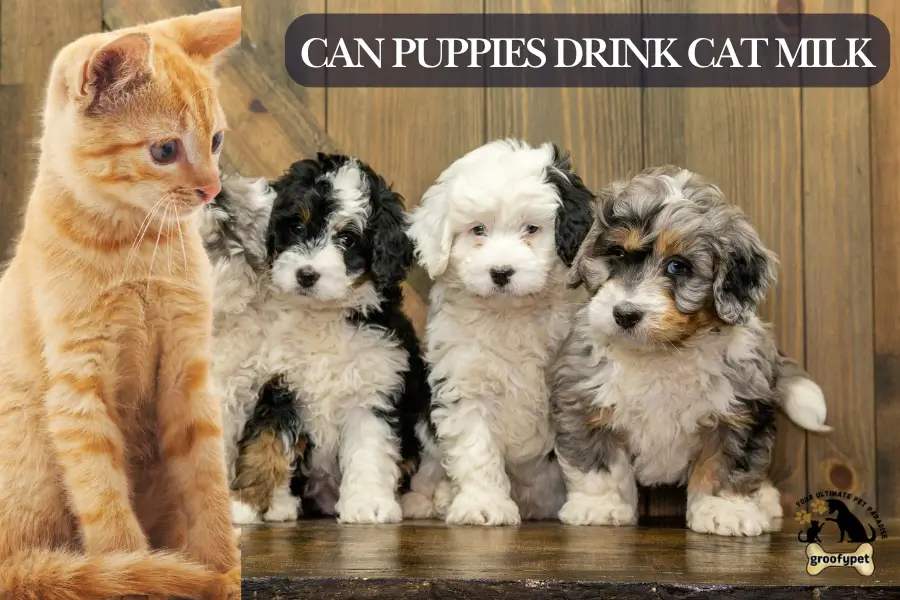
Can puppies drink cat milk? No, puppies should not drink cat milk regularly. Cat milk and kitten milk replacer are formulated for feline nutritional needs, not canine ones. Puppies need mother’s milk or a veterinarian-recommended puppy milk replacer, especially if orphaned or not nursing properly.
If you just found cat milk in the fridge and a hungry puppy at your feet, you want a straight answer, not a lecture. So here it is: no, puppies should not drink cat milk as a regular part of their diet. Cat milk products and kitten milk replacer are made with kittens in mind, not puppies, and puppies have their own nutritional needs during those early, fast-growing weeks.
That said, the full answer is a little more nuanced than a flat yes or no. “Cat milk” isn’t one single thing. Some products sold as cat milk are treat-style drinks made for adult cats. Others are milk replacer formulas meant to feed newborn kittens who have no mother available. These products don’t all contain the same ingredients, and they weren’t built with a puppy’s growth in mind.
Puppies normally get everything they need from their mother’s milk in the first few weeks of life. When a puppy is orphaned, rejected by its mother, or nursing poorly, it needs a proper puppy milk replacer, not whatever milk-labeled product happens to be in the house.
If a puppy licked up a small amount of an appropriate commercial cat milk product by accident, that alone usually isn’t a reason to panic. But an occasional lick and a regular feeding plan are two very different things, and this article will walk through why that distinction matters.
What Is Cat Milk?
Before answering whether puppies can drink it, it helps to know what “cat milk” actually refers to. The term gets used loosely, and the products sold under it aren’t interchangeable.
Commercial Cat Milk
A lot of the cat milk sold in pet stores isn’t meant to replace a full meal at all. It’s marketed as a drink or treat for adult cats, something poured into a bowl occasionally rather than fed daily. These products are formulated with cats in mind, adjusted for how a cat’s body typically handles dairy, and they often come with lower lactose levels than regular cow’s milk.
Kitten Milk Replacer
This is a different category entirely. Kitten milk replacer, sometimes labeled KMR, is designed to feed young kittens who can’t nurse from their mother. It’s built to mimic the nutritional makeup of a mother cat’s milk as closely as possible, which means it’s tailored to feline growth needs, not canine ones.
Lactose-Reduced Milk
Some cat milk products are formulated to reduce lactose content, since many adult cats lose much of their ability to digest lactose as they grow. This makes these products different from standard dairy milk in how they’re processed and tolerated. It also means you can’t assume a puppy will react to a lactose-reduced cat product the same way it would react to regular cow’s milk or the same way a cat would react to either one.
The label matters here. Before deciding anything about feeding a puppy a cat milk product, check what’s actually in the bottle or carton. Two products both called “cat milk” can have different ingredients, different lactose levels, and different intended uses.
Can Puppies Drink Cat Milk?
Here’s the core issue: puppies and kittens are not nutritionally identical, even though they’re both baby mammals going through a similar general stage of life. Cat milk and kitten milk replacer are formulated around what a growing kitten needs, and that formulation doesn’t automatically line up with what a growing puppy needs.
A few areas where the needs can differ:
- Protein requirements. Growing puppies and kittens both need protein, but the amount and balance that works well for one species isn’t guaranteed to match the other’s growth pattern.
- Fat requirements. Fat content that suits a kitten’s energy needs may not match what a puppy needs to support healthy weight gain and development.
- Energy needs. Puppies and kittens grow at different rates depending on breed and size, and their calorie needs during the nursing stage aren’t identical either.
- Vitamins and minerals. Formulations for kittens are balanced around feline requirements, which can differ from canine requirements in ways that matter over time.
- Developmental needs. Bone growth, muscle development, and organ development follow species-specific patterns, and milk replacers are designed around those patterns.
None of this means a small taste of cat milk will cause a disaster. It means that using a cat-formulated product as a puppy’s main source of nutrition skips over the reason these products exist as separate categories in the first place. Puppy milk replacer exists because puppies need something formulated for puppies.
Is Cat Milk Safe for Puppies?
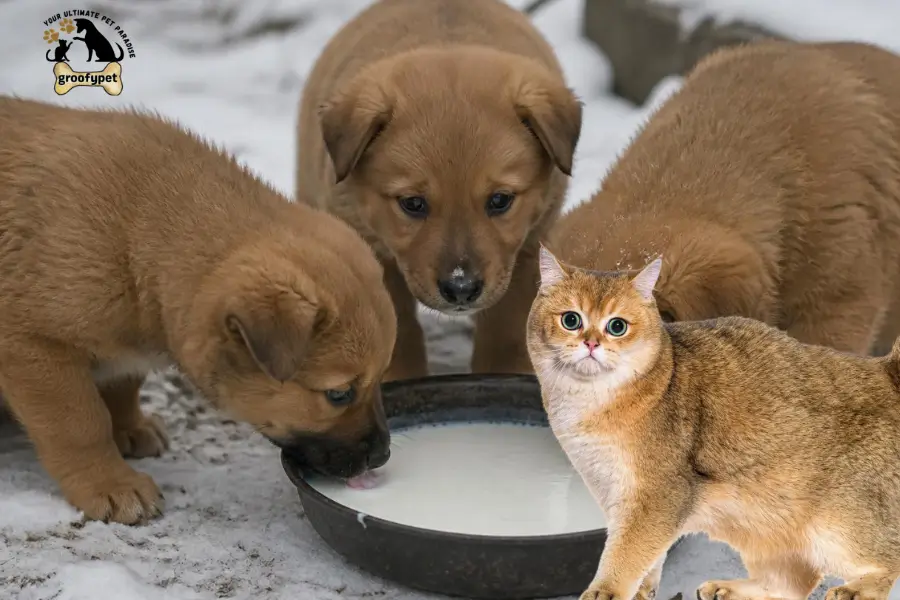
Safety really depends on a few specific factors: which product it is, how much the puppy consumed, the puppy’s age, and the individual puppy’s health and digestive sensitivity. There’s no single answer that covers every situation.
If a puppy drinks a notable amount of cat milk, especially a product with real dairy content, some digestive issues are possible:
- Diarrhea
- Gas
- Bloating
- Stomach discomfort
- Vomiting
Not every puppy will react this way. Some puppies handle a small amount of dairy without any noticeable problem, while others develop symptoms fairly quickly. Age plays a role too. A very young puppy with an underdeveloped digestive system is generally more sensitive than an older puppy that’s already eating solid food.
The safest approach is to treat cat milk as something to avoid rather than something to test on your puppy to see what happens.
Can Puppies Drink Kitten Milk Replacer?
This question comes up a lot, especially from people caring for orphaned puppies who only have kitten formula on hand. The honest answer sits between “never” and “sure, why not.”
There’s a real difference between short-term emergency use and ongoing regular nutrition. If a newborn puppy is in genuine danger of starving and no puppy milk replacer is available at that exact moment, some sources suggest that kitten milk replacer is less risky than regular cow’s milk as a temporary stopgap. That is not the same as saying it’s a fine long-term substitute.
Kitten milk replacer wasn’t formulated with a puppy’s growth curve in mind, and relying on it as a puppy’s everyday food source skips the nutritional matching that puppy-specific formulas are built to provide. If you’re in a situation where a puppy isn’t nursing properly, isn’t gaining weight, or has no mother available, the right move is contacting a veterinarian for guidance rather than picking whatever milk product happens to be closest at hand.
A vet can tell you what’s actually appropriate for that puppy’s age and condition, and can point you toward a proper puppy milk replacer or feeding plan.
Puppy Milk vs. Kitten Milk
| Feature | Puppy Milk Replacer | Kitten Milk Replacer |
|---|---|---|
| Designed for | Puppies | Kittens |
| Main purpose | Support puppy growth | Support kitten growth |
| Nutritional formulation | Puppy-specific | Kitten-specific |
| Appropriate as a regular puppy replacement? | Yes, when properly selected | Not automatically |
| Veterinary guidance | Recommended when needed | Especially important if considering use for a puppy |
The table above sums up the main point of this whole article. These two products are built for different species with different developmental needs. They’re not interchangeable just because both come in a can labeled “milk replacer.”
Also Read : Can Dogs Eat Frosted Flakes Safely or Is It a Sugary Mistake?
Why Puppies Need the Right Milk
The first several weeks of a puppy’s life involve an enormous amount of growth packed into a short window of time. During this stage, puppies rely on milk to support:
- Rapid physical growth
- Bone development
- Muscle development
- Brain development
- Immune support, especially through colostrum in the earliest days
- Healthy, steady weight gain
Milk replacer shouldn’t be chosen just because the label says “milk” or because another type of animal happens to be able to drink it. A puppy’s growth during this window depends on getting nutrition that matches what its body is actually built to use. This is the same reason human infant formula and puppy milk replacer aren’t treated as interchangeable products, even though both are labeled for baby mammals.
Can Puppies Drink Regular Cat Milk?
It’s worth separating commercial cat milk products from plain dairy milk, since people sometimes lump these together. Commercial cat milk is often adjusted in some way, whether through reduced lactose or a different overall formulation, while regular cow’s milk from the grocery store hasn’t been adjusted for any pet at all.
Lactose tolerance varies from puppy to puppy. Not every puppy is lactose intolerant, and some can handle small amounts of dairy without any issue. But that variation is exactly why regular cow’s milk isn’t treated as a reliable substitute for mother’s milk or puppy milk replacer. It wasn’t designed for puppies, and drinking it regularly doesn’t provide the balanced nutrition a growing puppy needs, even for puppies who tolerate the lactose itself just fine.
Read Now : Can Dogs Eat Pupusas? A Pet Lover Guide to Safe Feeding!
What Should Puppies Drink?
What a puppy should be drinking really depends on its age and situation.
Nursing Puppies
When the mother dog is healthy and nursing normally, her milk is the appropriate food source. There’s usually no need to add anything else during this stage.
Orphaned Puppies
When a puppy’s mother isn’t available, whether due to loss, illness, or rejection, a veterinarian-recommended puppy milk replacer is generally the standard approach. This is a situation where getting professional input early makes a real difference.
Weaning Puppies
As puppies grow, they gradually shift away from milk and start eating puppy food, usually moistened at first to make the transition easier. This happens gradually over a period of weeks, not overnight.
Older Puppies
Once puppies are weaned and eating solid puppy food, fresh water becomes their normal drink. Milk isn’t a necessary part of an older puppy’s daily routine anymore.
What If My Puppy Accidentally Drank Cat Milk?
If your puppy got into some cat milk before you could stop it, try not to panic. Here’s a practical way to handle it:
- Check exactly what product the puppy consumed.
- Read the ingredient list so you know what you’re dealing with.
- Estimate how much was actually consumed.
- Watch the puppy over the next several hours for any digestive symptoms.
- Make sure the puppy has access to fresh water.
- Call a veterinarian if symptoms show up, seem severe, or don’t go away on their own.
Don’t try to induce vomiting. In most cases, a small accidental taste of a commercial cat milk product isn’t an emergency, but keeping an eye on the puppy afterward is still the right move.
Signs Cat Milk May Be Upsetting Your Puppy
Watch for these after any accidental exposure:
- Loose stool
- Diarrhea
- Vomiting
- Excessive gas
- Abdominal discomfort
- Bloating
- Reduced appetite
- Unusual lethargy
A little gas or one loose stool usually isn’t cause for alarm and can often just be monitored at home. Repeated vomiting, ongoing diarrhea, or a puppy that seems unusually weak or uninterested in eating is a different story and deserves a call to the vet.
When Should I Call a Veterinarian?
Young puppies can go from mildly uncomfortable to seriously dehydrated faster than adult dogs, so it’s better to be cautious than to wait things out too long. Reach out to a veterinarian if you notice:
- Repeated vomiting
- Severe or persistent diarrhea
- Blood in the stool or vomit
- Extreme weakness
- Refusal to eat
- Difficulty breathing
- Severe abdominal swelling
- Signs of dehydration, such as dry gums or sunken eyes
- A very young puppy that isn’t nursing or feeding normally
These signs don’t automatically mean something is seriously wrong, but they’re the kind of symptoms that are better checked out than guessed at from home.
Can Puppies Drink Cat Milk Every Day?
No. Cat milk shouldn’t be treated as a routine part of a puppy’s diet. A product built around a kitten’s nutritional profile doesn’t become nutritionally complete for a puppy just because the puppy seems to like it or tolerates it once in a while.
If you’re thinking about giving an older puppy a milk-based treat now and then, check the ingredient list first, and talk to your veterinarian before making it a habit, especially if your puppy has any history of digestive sensitivity.
Can Puppies Drink Cat Milk for Weight Gain?
Using cat milk as a homemade fix for a puppy that isn’t gaining weight isn’t a good strategy. Slow weight gain has a cause, and adding extra calories from an unrelated product doesn’t address that cause. It’s better to figure out what’s actually going on first.
Possible reasons a puppy isn’t gaining weight as expected include:
- Insufficient feeding
- Parasites
- Illness
- Poor nutrient intake
- Problems during the weaning process
A veterinarian can help figure out which of these applies and recommend an appropriate feeding plan, rather than guessing with a product that wasn’t designed for the puppy’s needs in the first place.
Can Puppies Drink Cat Milk If They Are Orphaned?
Orphaned puppies need nutrition that’s carefully matched to their age and condition, and feeding decisions at this stage matter a lot since these puppies are especially vulnerable. Cat milk shouldn’t be treated as an automatic stand-in for puppy milk replacer just because it’s available and labeled as milk.
If you’re caring for an orphaned puppy, especially a newborn, get in touch with a veterinarian as soon as possible. They can guide you toward the right puppy milk replacer, the right feeding schedule, and the right amount, based on that specific puppy’s age and health.
Frequently Asked Questions
Can puppies drink cat milk?
Not as a regular diet. Cat milk products are formulated for cats or kittens, not for a puppy’s nutritional needs, so they shouldn’t be used as an everyday food source.
Can puppies drink kitten milk replacer?
It’s not an ideal regular substitute. It may be considered as a short-term emergency option in specific situations, but a veterinarian should guide that decision.
Is cat milk safe for newborn puppies?
Newborn puppies have very specific and delicate nutritional needs. Cat milk isn’t formulated for them, and a veterinarian should be involved in feeding decisions for any newborn puppy without a nursing mother.
Can puppies drink cat milk every day?
No. Daily use isn’t recommended, since cat milk products aren’t built to meet a puppy’s ongoing nutritional needs.
Can puppies drink lactose-free cat milk?
Lactose-reduced formulation may lower the chance of digestive upset from lactose specifically, but it still doesn’t turn the product into a nutritionally complete option for a puppy.
What happens if my puppy drinks cat milk? A small amount may cause no noticeable issue, or it may lead to mild digestive symptoms like loose stool or gas. Monitor the puppy and contact a vet if symptoms are severe or persistent.
Can puppies drink kitten formula?
It’s sometimes discussed as a temporary emergency measure, but it isn’t recommended as an ongoing feeding plan. Puppy-specific formula is the better option whenever it’s available.
What milk is best for puppies?
For nursing puppies, their mother’s milk is best. For orphaned or non-nursing puppies, a veterinarian-recommended puppy milk replacer is the standard choice.
Can puppies drink cow’s milk?
Regular cow’s milk isn’t a balanced substitute for mother’s milk or puppy milk replacer, and it can cause digestive upset in some puppies.
When can puppies start drinking water?
Puppies typically start drinking water as they begin weaning and transitioning to solid puppy food, generally over the following weeks under the care of their mother or owner.
Can cat milk help a puppy gain weight?
It shouldn’t be used this way. Weight gain issues have underlying causes that need to be identified, and a veterinarian is best placed to guide the right feeding approach.
Should orphaned puppies drink cat milk?
No, not as a standard choice. Orphaned puppies need carefully matched nutrition, and a veterinarian should help determine the right puppy milk replacer and feeding plan.
Key Takeaways
- Cat milk is not automatically appropriate for puppies, even though both are labeled as baby-animal milk products.
- Cat milk products vary. A treat-style cat milk drink and a kitten milk replacer are not the same thing.
- Kitten milk replacer shouldn’t automatically replace puppy milk replacer for regular feeding.
- Very young or orphaned puppies need nutrition matched specifically to their age and condition.
- Fresh water becomes an increasingly important part of a puppy’s routine as it weans and grows.
- Watch for digestive symptoms after any accidental consumption, and don’t assume every puppy will react the same way.
- A veterinarian should be involved whenever a young puppy isn’t feeding normally or isn’t gaining weight as expected.
Final Thoughts
So, can puppies drink cat milk? Not as a regular habit. Puppies have their own nutritional needs during a stage of life where growth happens fast and gets built on a fairly narrow window of proper feeding. Cat milk and kitten milk replacer were built with a different animal’s needs in mind, and using them as a puppy’s everyday food skips over the reason puppy-specific formulas exist at all.
If your puppy is nursing well from a healthy mother, there’s nothing to change. If you’re dealing with an orphaned puppy, a puppy that isn’t gaining weight, or one that got into some cat milk by accident, the safest path is a proper puppy milk replacer, a call to your veterinarian, and a bit of patience while you figure out what that specific puppy actually needs.
What Causes Dehydration In Dogs? Signs And Symptoms!
Can Dogs Eat Buckwheat? The Loving Owner Guide to Safe Feeding!