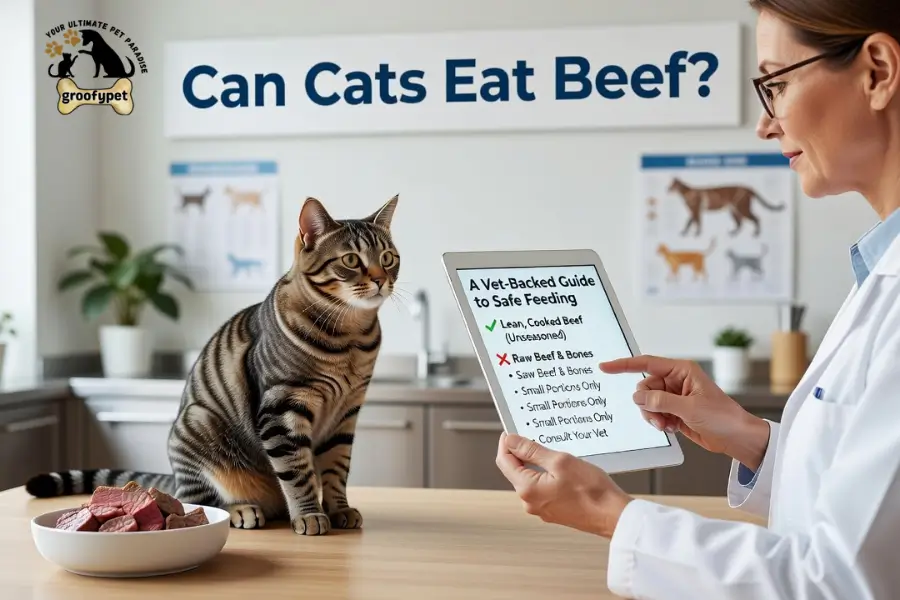
Have you ever noticed your cat staring at you while you prepare beef for dinner? Cats often show interest in the meat we eat. But before you share a bite, you should know how to serve it safely.
Yes, cats can eat plain, thoroughly cooked beef in small amounts as an occasional treat. Beef provides animal protein and other nutrients. However, you should remove bones, avoid seasonings, and trim excess fat. Raw beef is not recommended because it may carry harmful bacteria and other pathogens. Beef should never replace your cat’s complete and balanced food.
In this guide, you will learn about the benefits of beef for cats, safe cooking methods, serving sizes, possible risks, and what to do if your cat eats unsafe beef.
Can cats eat beef safely?
Yes, most healthy cats can eat a small amount of plain, thoroughly cooked beef. Beef is an animal protein that can add variety to your cat’s treats. Cats are obligate carnivores. This means they need nutrients found in animal-based foods to stay healthy. However, cats need more than plain meat to meet all their nutritional needs.
Follow these safety rules before feeding beef to your cat:
- Cook the beef thoroughly.
- Serve it without salt, spices, sauces, onion, or garlic.
- Remove all bones.
- Trim visible excess fat.
- Cut the meat into small pieces.
- Start with a tiny amount and watch for digestive problems.
Important: Beef is a treat, not a complete meal. A cat needs a balanced diet that provides the right amounts of protein, fats, vitamins, minerals, and essential amino acids.
Nutritional benefits of beef for cats
Beef contains several nutrients that support normal body functions. However, the amount of each nutrient depends on the cut of meat and how you prepare it.
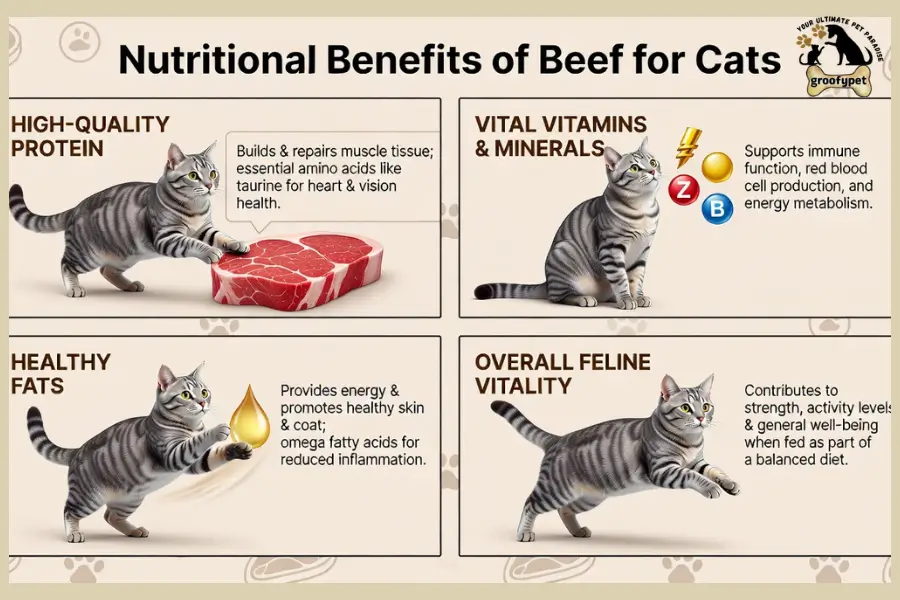
1. High-quality animal protein
Protein helps maintain your cat’s muscles and supports normal tissue growth and repair. Cats need adequate animal protein as part of their daily diet.Cooked beef provides protein, but a small serving should complement your cat’s regular food rather than replace it.
2. Iron for normal body functions
Beef contains iron. This mineral helps the body produce hemoglobin, a protein in red blood cells that carries oxygen.However, feeding extra beef does not automatically prevent or treat anemia. A cat with suspected anemia needs veterinary care.
3. Zinc for normal health
Zinc supports normal skin, coat, immune function, and other body processes. Beef contains zinc, but your cat should get the right amount from a balanced diet.
4. Vitamin B12
Beef provides vitamin B12, which helps support normal nerve function and red blood cell production.A complete cat food should provide the vitamins your cat needs in appropriate amounts.
5. Essential amino acids
Cats require several essential amino acids from their diet. Taurine is especially important for normal heart function, vision, and other body processes.Although beef contains some taurine, plain beef muscle meat alone does not provide a complete feline diet. Its nutrient content also varies with the cut and preparation.
Can cats eat different types of beef?
Not every beef dish is safe for cats. The ingredients and cooking method make a big difference.
Can cats eat cooked beef?
Yes. Plain, thoroughly cooked beef is generally the best choice when you want to offer your cat a little beef.
- Boil, bake, or cook the meat in a pan without adding seasonings. Let it cool before serving.
- Remove bones and excess fat. Then cut the meat into small, easy-to-eat pieces.
- Avoid giving your cat beef prepared with gravy, butter, rich sauces, or seasoning mixes.
- These may contain too much fat or ingredients that are unsafe for cats.
Can cats eat raw beef?
No. It is safest to avoid feeding raw beef to cats.
- Raw beef can carry harmful germs, including Salmonella and E. coli.
- These pathogens can make pets and people sick.
- A cat may also spread harmful bacteria through its stool even if it does not show obvious symptoms.
- Fresh-looking meat is not necessarily free from pathogens. Freezing or rinsing meat at home does not reliably make it safe.
- Choose thoroughly cooked beef instead of raw meat or an unverified homemade raw diet.
Can cats eat ground beef?
Yes, cats can eat plain, thoroughly cooked ground beef in small amounts.Ground beef can be easy to divide into tiny portions. However, some varieties contain a lot of fat.
Follow these tips:
- Choose lean ground beef when possible.
- Cook it thoroughly throughout.
- Drain excess fat.
- Do not add salt, onions, garlic, or seasoning.
- Let it cool before serving.
Avoid giving your cat raw ground beef. Grinding can spread bacteria throughout the meat.
Can cats eat beef steak?
Yes, a small piece of plain, thoroughly cooked steak can be an occasional treat for most healthy cats.
- Trim off excess fat and remove every bone.
- Cut the steak into small pieces that your cat can chew and swallow easily.
- Do not share steak cooked with garlic butter, pepper, sauces, marinades, or other seasonings.
- Also, avoid rare or medium-rare steak because it may contain harmful pathogens.
Can cats eat beef liver?
Cats can eat a tiny amount of properly cooked, plain beef liver occasionally, but it should not become a regular, large part of their diet.
- Beef liver contains vitamin A and other nutrients.
- However, liver is very rich in vitamin A.
- Eating excessive amounts over time can cause vitamin A toxicity and serious health problems.
- A complete cat food already provides appropriately balanced nutrients.
- If your cat eats a prescription diet or has a health condition, ask your veterinarian before adding liver.
Can cats eat beef fat?
- It is best to avoid feeding your cat fatty pieces of beef.
- A small accidental bite of fat may not cause a problem, but large amounts can lead to digestive upset.
- Fat also adds extra calories and may contribute to weight gain.
- Trim off visible fat before cooking or serving beef.
- Contact your veterinarian if your cat develops repeated vomiting, diarrhea, or other concerning symptoms after eating fatty meat.
Can cats eat beef broth?
Cats may be able to have a small amount of plain broth, but many human broths are unsuitable.
- Store-bought beef broth may contain onion, garlic, excessive salt, or seasonings.
- Some products also contain ingredients that are inappropriate for cats.
- If you want to offer broth, choose a product specifically made for cats or prepare a simple, unseasoned broth with ingredients your veterinarian considers suitable.
- Check the label carefully.
- Never use onion- or garlic-containing broth, even if you cannot see pieces of those ingredients.
What are the risks of feeding beef to cats?
Plain cooked beef can be a suitable occasional treat, but unsafe preparation or excessive amounts can create problems.
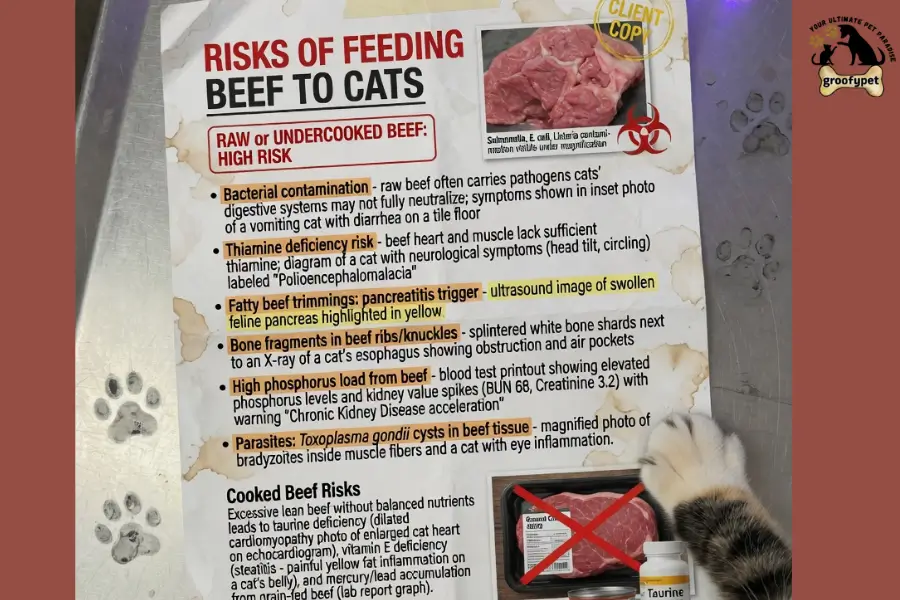
1. Bacterial contamination
Raw or undercooked beef may contain bacteria that cause illness.
How to prevent it: Cook beef thoroughly, wash your hands after handling raw meat, and clean utensils and food-preparation surfaces.
2. Onion and garlic poisoning
Onions and garlic can damage a cat’s red blood cells. These ingredients may appear in gravies, marinades, meatballs, broths, and seasoning mixes.
How to prevent it: Serve beef without onion, garlic, chives, shallots, or products containing them.
If your cat eats beef seasoned with onion or garlic, contact a veterinarian promptly. Do not wait for symptoms to appear or try to make your cat vomit at home.
3. Choking and bone injuries
Large chunks of meat can be difficult to swallow. Bones can cause choking, dental injuries, or damage to the digestive tract.
How to prevent it: Remove bones completely and cut cooked beef into small pieces. Never feed cooked bones.
4. Digestive upset
A cat that eats too much beef or suddenly tries an unfamiliar food may develop vomiting, diarrhea, or stomach discomfort.Fatty meat may make these problems more likely.
How to prevent it: Offer a tiny portion the first time and stop feeding beef if your cat develops symptoms.
5. Weight gain
Beef adds calories to your cat’s daily diet. Frequent, large servings may contribute to weight gain, especially in cats that are less active.
How to prevent it: Keep treats small and account for them in your cat’s daily calorie intake.
6. Nutritional imbalance
Beef does not contain every nutrient a cat needs in the correct proportions. A diet based mainly on plain meat can cause nutritional deficiencies over time.
How to prevent it: Keep complete and balanced cat food as the main part of your cat’s diet. Ask a veterinary nutrition professional to formulate any long-term homemade diet.
7. Beef allergy or food intolerance
Some cats may react poorly to beef. Possible signs include itching, skin irritation, vomiting, or diarrhea.These symptoms can have other causes, so they do not automatically mean your cat has a beef allergy.
How to prevent it: Stop offering beef if you notice a possible reaction. Ask your veterinarian for help identifying the cause. Do not conduct a home food challenge if your cat has a suspected food allergy.
Also Read : Can Cats Eat Prosciutto?Risks Benefits and Safe Feeding Tips!
How to prepare beef for cats safely
Follow this simple process whenever you want to share a little beef with your cat.
Step 1: Choose fresh beef.
Buy beef from a reliable source and store it safely. Do not use meat that smells spoiled or has been stored improperly.
Step 2: Remove bones and excess fat.
Check the meat carefully. Remove all bones and trim fatty edges before cooking.
Step 3: Cook the beef thoroughly.
Boil, bake, or pan-cook the meat without seasoning. Use a food thermometer and appropriate food-safety guidance to check that it reaches a safe internal temperature.
Step 4: Avoid unsafe ingredients.
Do not add salt, onion, garlic, chili, sauces, or seasoning mixes. Plain beef is the better choice.
Step 5: Let the meat cool.
Allow the cooked beef to cool before serving. Never offer meat that is hot enough to burn your cat’s mouth.
Step 6: Cut it into small pieces.
Make the pieces small enough for your cat to chew and swallow easily.
Step 7: Start with a tiny serving.
Offer a small taste rather than a full bowl. Watch for changes in digestion, appetite, or behavior.
Step 8: Store leftovers safely.
Refrigerate cooked beef promptly in a covered container. Follow food-safety storage guidance, and discard meat that has been left out too long or may have spoiled.
How much beef can a cat eat?
The right amount depends on your cat’s weight, age, health, activity level, and regular food.For most healthy cats, start with a tiny piece or a few small pieces of plain cooked beef. There is no single gram amount that is right for every cat.Veterinary nutrition guidance commonly recommends keeping treats and other foods outside a complete and balanced diet to no more than about 10% of daily calories. This is an upper limit, not a target. Smaller amounts may be better for many cats.
For example, if a veterinarian determines that your cat needs 200 calories per day, the general 10% limit would be 20 calories from all treats combined. That includes beef and any other snacksIt does not mean you should feed 20 calories of beef every day. Your cat may already receive enough treats, and beef calories vary by cut and preparation.
A simple rule: Keep beef portions small, offer them occasionally, and make sure they do not reduce your cat’s intake of complete cat food.
Read This : Can Cats Eat Gizzards? Don’t Miss This Surprising Health Boost!
Can kittens eat beef?
Kittens may be able to eat a tiny amount of plain, thoroughly cooked beef when they are old enough to handle solid food safely. However, their nutritional needs differ from those of adult cats.Growing kittens need food formulated to support development. Plain beef does not supply all the nutrients they need in the correct amounts.
If you offer beef to an older, weaned kitten:
- Make sure the meat is fully cooked.
- Remove bones, fat, and seasonings.
- Cut it into very small pieces.
- Offer only a tiny amount.
- Keep kitten-formulated food as the main diet.
Do not feed solid beef to very young kittens that are not ready for solid food. Ask a veterinarian before introducing new foods to kittens with digestive problems or other health concerns.
What if your cat eats raw or seasoned beef?
Your next step depends on what your cat ate, how much it swallowed, and whether it shows symptoms.
| What your cat ate | What to do |
|---|---|
| A small piece of plain, cooked beef | Monitor your cat for digestive upset. |
| Raw or undercooked beef | Contact your veterinarian for advice, especially if symptoms develop or your cat is vulnerable to infection. |
| Beef with onion or garlic | Contact a veterinarian promptly, even if your cat appears normal. |
| A large amount of fatty beef | Watch for digestive problems and seek veterinary advice if the amount was substantial or symptoms appear. |
| Cooked bones or a large, hard piece of meat | Seek prompt veterinary advice. If your cat is choking or struggling to breathe, seek emergency veterinary care immediately. |
| Beef followed by repeated vomiting, bloody diarrhea, or severe weakness | Seek urgent veterinary care. |
Do not induce vomiting or give home remedies unless a veterinarian specifically instructs you to do so.When contacting the vet, explain what your cat ate, approximately how much, when it happened, and whether the beef contained seasonings or bones.
Signs your cat may not tolerate beef
Most healthy cats may tolerate a small piece of plain cooked beef, but every cat is different.
Watch for these possible signs of a problem:
- Vomiting
- Diarrhea
- Reduced appetite
- Unusual itching or scratching
- Red or irritated skin
- Changes in normal behavior
These signs can occur for several reasons. A veterinarian can help determine whether the cause is food intolerance, an allergy, infection, or another health problem.Seek urgent veterinary care for difficulty breathing, collapse, severe weakness, repeated vomiting, bloody diarrhea, or suspected onion or garlic poisoning.
If you notice a pattern of symptoms after eating beef, stop offering it until you have discussed the problem with your veterinarian.
Is beef better than chicken or fish for cats?
Beef, chicken, and fish can all provide animal protein, but none is automatically the best choice for every cat.
| Food | Potential benefit | Main consideration |
|---|---|---|
| Plain cooked beef | Provides protein, iron, zinc, and vitamin B12 | Trim excess fat and avoid seasoning |
| Plain cooked chicken | Provides animal protein and may be lean, depending on the cut | Remove bones and skin where appropriate |
| Plain cooked fish | Provides protein; some fish contain omega-3 fatty acids | Remove bones and avoid salted or seasoned fish |
| Complete and balanced cat food | Formulated to provide essential nutrients in appropriate amounts | Choose food suitable for your cat’s life stage and health |
Your cat’s individual needs matter more than choosing one meat as a universal winner.
If your cat has a suspected food allergy, kidney disease, urinary problems, or another medical condition, ask your veterinarian before changing its diet or adding meat treats.
Common mistakes to avoid when feeding beef to cats
Even caring cat owners can make simple feeding mistakes. Avoid these common problems:
- Giving seasoned leftovers: Beef from your dinner may contain onion, garlic, salt, sauces, or other unsuitable ingredients.
- Offering raw meat because it looks fresh: Freshness does not guarantee that raw beef is free from harmful pathogens.
- Giving too much beef: Large portions can add excess calories and crowd out balanced food.
- Using beef as a complete meal: Plain beef does not provide all the nutrients cats need for long-term health.
- Forgetting about bones: Even a small bone can cause serious problems.
- Ignoring a possible reaction: Stop feeding beef if your cat becomes unwell, and seek veterinary advice when needed.
The safest approach is simple: plain, fully cooked beef in a small portion, offered only as an occasional treat.
Frequently asked questions
Can cats eat beef every day?
It is better not to make beef a daily addition without considering your cat’s full diet. Small amounts may fit into some cats’ diets, but treats should remain limited. Ask your veterinarian if you want to feed beef regularly.
Can cats eat cooked ground beef?
Yes. Plain, thoroughly cooked ground beef can be offered in a small amount. Choose lean meat when possible, drain excess fat, and avoid salt, onion, garlic, and seasonings.
Can cats eat medium-rare beef?
It is safest to avoid medium-rare beef. The center may not reach a temperature that adequately reduces harmful pathogens. Thoroughly cooked beef is the safer option.
Can cats eat beef with salt?
Avoid adding salt to your cat’s beef. Cats get the sodium they need from a properly balanced diet. Heavily salted meat and salty sauces are not suitable treats.
Can cats eat beef cooked with onions or garlic?
No. Onion and garlic can damage a cat’s red blood cells and cause serious illness. If your cat eats beef containing these ingredients, contact a veterinarian promptly.
Can cats eat beef fat?
It is best to remove visible fat. Excess fat adds calories and may upset your cat’s stomach. Seek veterinary advice if your cat eats a large amount and becomes unwell.
Final Thoughts
So, can cats eat beef? Yes, most healthy cats can enjoy a small amount of plain, thoroughly cooked beef as an occasional treat.Beef provides animal protein and useful nutrients, but it is not a complete food for cats. Avoid raw or undercooked meat, remove bones and excess fat, and never add onion, garlic, or seasonings.
Keep your cat’s regular complete and balanced food as the main source of nutrition. If your cat has a medical condition, follows a prescription diet, or develops symptoms after eating beef, seek advice from your veterinarian.
A little care in preparation and portion size can help you share a safe treat without putting your cat’s health at risk.
Can Cats Eat Swiss Chard? Benefits, Risks, and Feeding Tips
Can Cats Eat Honey Ham? Risks Benefits and safe Alternatives!