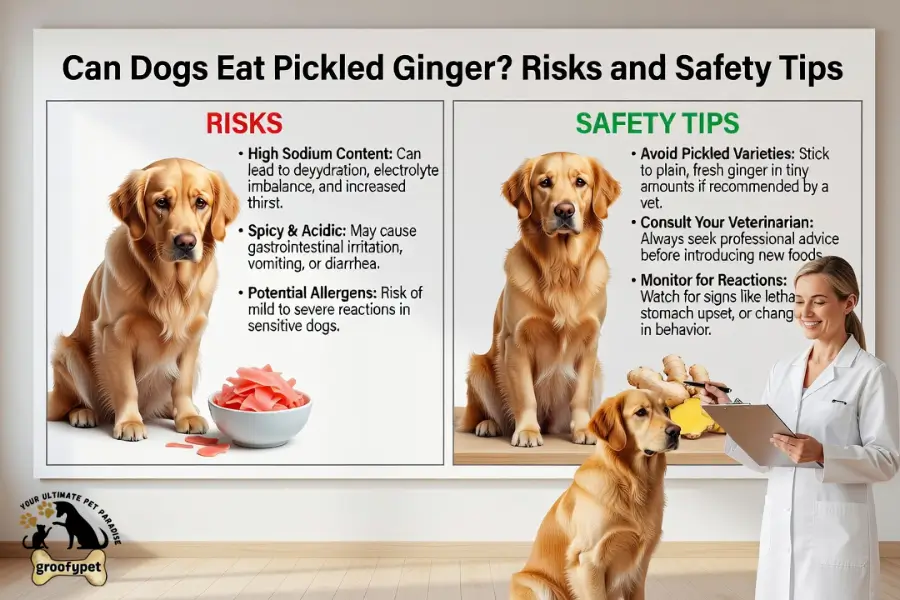
Have you ever wondered, “Can dogs eat pickled ginger?” Maybe your dog has grabbed a piece of sushi ginger from your plate. Before you share another bite, it is important to understand the risks.
Dogs should not eat pickled ginger as a regular treat. Pickled ginger often contains salt, sugar, vinegar, and other ingredients that offer little benefit to dogs. A tiny accidental taste of plain pickled ginger is unlikely to cause serious harm to most healthy dogs, but the risk depends on the ingredients and amount eaten.
In this guide, you will learn why pickled ginger may upset your dog’s stomach, what to do if your dog eats it, and which safer snacks you can offer instead.
Can dogs eat pickled ginger?
The safest choice is to keep pickled ginger away from your dog. Although ginger itself can be safe for some dogs in small amounts, the pickling process adds ingredients that make it a poor snack.
Pickled ginger, also called sushi ginger or gari, is thinly sliced ginger preserved in a mixture that often contains vinegar, sugar, and salt. Some recipes also include additional seasonings or sweeteners.
These ingredients can cause problems when dogs eat too much. Certain added ingredients, such as xylitol, garlic, and onion, can pose more serious risks.
Here is a quick guide:
- One tiny piece: It may not cause a problem if the product contains no toxic ingredients.
- Several pieces: The risk depends on the amount of salt, sugar, and other ingredients.
- Pickled ginger with garlic, onion, or xylitol: Contact a veterinarian promptly for advice.
- Pickled ginger juice or brine: Do not offer it to your dog because it may contain concentrated salt and seasonings.
The best rule is simple: do not give your dog pickled ginger on purpose.
What is pickled ginger?
Pickled ginger is a popular food served with sushi and other Japanese dishes. It is made from ginger root that is sliced thinly and soaked in a pickling mixture.
You may see two common types:
- Pink pickled ginger: Often served with sushi. Its color may come from natural pigments or added coloring.
- Pale yellow pickled ginger: Usually has a light yellow or cream color.
Both types may contain vinegar, sugar, and salt. Their exact ingredients depend on the brand and recipe.
People often eat pickled ginger to refresh their taste between different sushi dishes. However, dogs do not need this food in their diet.
Fresh ginger and pickled ginger are not the same thing. Fresh ginger does not usually contain the added salt, sugar, or vinegar found in pickled products.
Why is pickled ginger bad for dogs?
Pickled ginger is not automatically poisonous just because it contains vinegar or sugar. The main concern is the complete recipe, the amount your dog eats, and your dog’s health.
Here are the most important risks.
1. High salt
Some pickled ginger products contain added salt. Dogs need sodium in their diets, but too much salt can be dangerous.
Eating a large amount of salty food may cause excessive thirst, vomiting, diarrhea, weakness, and, in severe cases, neurological problems such as tremors or seizures. The level of risk depends on the amount consumed and the dog’s size.Dogs with kidney or heart problems may also need special dietary care.
What to do: Check the product label. If your dog eats a large quantity or you are concerned about its salt content, contact your veterinarian.
2. Vinegar may upset the stomach
Vinegar gives pickled ginger its sour taste. Small amounts of vinegar are not generally considered a specific dog toxin, but acidic and strongly flavored foods may irritate some dogs’ stomachs.
Your dog may experience:
- Vomiting
- Diarrhea
- Drooling
- Reduced appetite
- Mild stomach discomfort
Not every dog will develop these signs. Some dogs may show no symptoms after a tiny taste.
3. Added sugar
Many pickled ginger recipes contain sugar to balance the sharp taste of vinegar.
A small accidental amount of ordinary sugar is not usually a poisoning emergency. However, sugary foods add unnecessary calories and are not a healthy choice for dogs.
Regularly feeding sugary snacks can contribute to weight gain and poor dietary balance. Important: Check the label for artificial sweeteners, especially xylitol. Xylitol is highly toxic to dogs and can cause a dangerous drop in blood sugar and liver injury. If your dog eats a product containing xylitol, contact a veterinarian or emergency animal clinic immediately. Do not wait for symptoms.
4. Garlic and onion
Some pickled foods contain garlic, onion, or their powders for extra flavor. These ingredients are dangerous to dogs because they can damage red blood cells and cause anemia. Signs may include weakness, pale gums, vomiting, and reduced energy. Some effects may take time to appear.
Not every pickled ginger product contains garlic or onion, so read the label carefully.If your dog eats pickled ginger containing either ingredient, contact your veterinarian. Do not try to decide the risk based on appearance alone.
5. Spices and other additives
Some specialty products contain chili, strong seasonings, or other additives. Spicy ingredients may irritate your dog’s digestive system. Food coloring and preservatives should not automatically be treated as toxic. Their safety depends on the specific substance and amount. Check the ingredient list rather than assuming every additive carries the same risk.The simplest option is to choose a plain, dog-safe snack instead.
What happens if a dog eats pickled ginger?
The effects depend on how much your dog ate, what the product contains, and your dog’s size and health.Some dogs may show no signs after eating a tiny piece. Others may develop digestive upset.
Watch for these possible symptoms:
- Vomiting
- Loose stools or diarrhea
- Drooling
- Loss of appetite
- Abdominal discomfort
- Unusual tiredness
More serious signs may include weakness, pale gums, difficulty walking, tremors, or seizures. These signs need urgent veterinary attention, particularly after possible exposure to toxic ingredients or large amounts of salt.Do not assume your dog is safe just because it looks normal immediately after eating the food.
My dog ate pickled ginger. What should I do
If your dog has eaten pickled ginger, stay calm. Follow these steps to decide what to do next.

Step 1: Remove the remaining ginger
Move the plate or jar out of your dog’s reach. Prevent your dog from eating more ginger or drinking the pickling liquid.
Step 2: Check the ingredients
Read the product label carefully. Look for:
- Salt or sodium
- Sugar
- Xylitol or other sweeteners
- Garlic or onion
- Chili or other strong seasonings
If the label is missing, keep the packaging and contact your veterinarian if you are concerned.
Step 3: Estimate how much your dog ate
Try to determine whether your dog ate a tiny piece, several slices, or a large amount. Also note when the food was eaten.Your dog’s weight matters, too. The same amount of a substance can pose different risks to a small dog and a large dog.
Step 4: Provide fresh drinking water
Make sure your dog can access fresh water. Do not force your dog to drink large amounts of water, and do not give salt, vinegar, or other home remedies to counteract the food.
Step 5: Contact your veterinarian when needed
Contact a veterinarian promptly if your dog ate a large amount, consumed pickling liquid, has an existing medical condition, or ate a product containing potentially toxic ingredients. If the product contains xylitol, seek immediate veterinary advice even if your dog seems fine. Repeated vomiting, severe weakness, tremors, seizures, or collapse also require urgent care.
Never induce vomiting unless a veterinarian specifically instructs you to do so.
Can dogs eat fresh ginger instead?
Fresh ginger is generally a better option than pickled ginger because it does not usually contain added salt, sugar, or vinegar.The American Kennel Club explains that dogs can eat small amounts of ginger, although too much may cause digestive upset.
Fresh ginger may contain natural compounds with antioxidant and anti-inflammatory properties. However, research on its benefits in dogs remains limited, and it should not replace veterinary treatment.
If you are considering giving your dog fresh ginger, remember these tips:
- Use plain, fresh ginger without added seasonings.
- Ask your veterinarian whether it is suitable for your dog.
- Avoid giving large amounts.
- Do not use ginger as a treatment for vomiting or another health problem without veterinary guidance.
- Consult your vet before giving ginger to a dog with a bleeding disorder, a dog taking medication, or a dog scheduled for surgery.
Puppies, pregnant dogs, and dogs with ongoing medical conditions may need additional precautions.
Can dogs eat sushi with ginger?
Sushi ginger is usually pickled ginger, so the same precautions apply.Although a tiny accidental taste may not harm a healthy dog, sushi ginger is not a suitable regular treat. Its salt, sugar, vinegar, and possible additives offer no special nutritional benefit that your dog needs.
Also, be careful with other foods on your sushi plate. Small, plain pieces can make a refreshing snack for many dogs.Its strong, spicy nature may irritate your dog’s mouth and digestive system.It can contain a lot of sodium, making it an unsuitable choice for dogs.
Avoid sharing seasoned sushi, spicy sauces, or other salty accompaniments with your dog. Keep garlic- or onion-containing foods away from pets, too.
Can dogs eat ginger in other forms?
Not all ginger products have the same ingredients or risks. Here is how common options compare.
| Ginger product | Is it suitable for dogs? | Main concern |
|---|---|---|
| Fresh ginger | Sometimes, in small amounts with appropriate guidance | May upset the stomach |
| Pickled ginger | Best avoided | Salt, sugar, vinegar, and seasonings |
| Ginger powder | Ask your veterinarian first | Concentration and serving size |
| Ginger tea | Depends on ingredients | Caffeine, sweeteners, and added flavorings |
| Ginger cookies | Not recommended as a regular treat | Sugar, fat, and other ingredients |
| Ginger supplements | Only with veterinary guidance | Dosage, interactions, and product quality |
Avoid ginger products containing chocolate, xylitol, or other ingredients known to be unsafe for dogs. Human supplements may also contain concentrated ingredients that are not appropriate for pets.If you want to use ginger to help with nausea or motion sickness, ask your veterinarian about the cause of the problem and the safest treatment.
How much pickled ginger can a dog eat?
There is no universal safe serving size for pickled ginger.The amount of salt, sugar, and other ingredients varies between products. A dog’s weight, age, health, and the amount eaten also affect the risk.For this reason, it is better not to offer pickled ginger as a treat.
If your dog accidentally eats one small piece of a product without known toxic ingredients, you can assess the situation calmly. Contact your veterinarian if you are unsure about the ingredients or amount, or if your dog develops symptoms.
Do not use a serving size intended for fresh ginger to determine how much pickled ginger is safe. They are different products.
Also Read : Can Dogs Eat Turnip Greens? Safety, Benefits, Risks, and Serving Guide
What are safer alternatives to pickled ginger?
If your dog wants a snack while you eat sushi, offer a small portion of a suitable alternative.
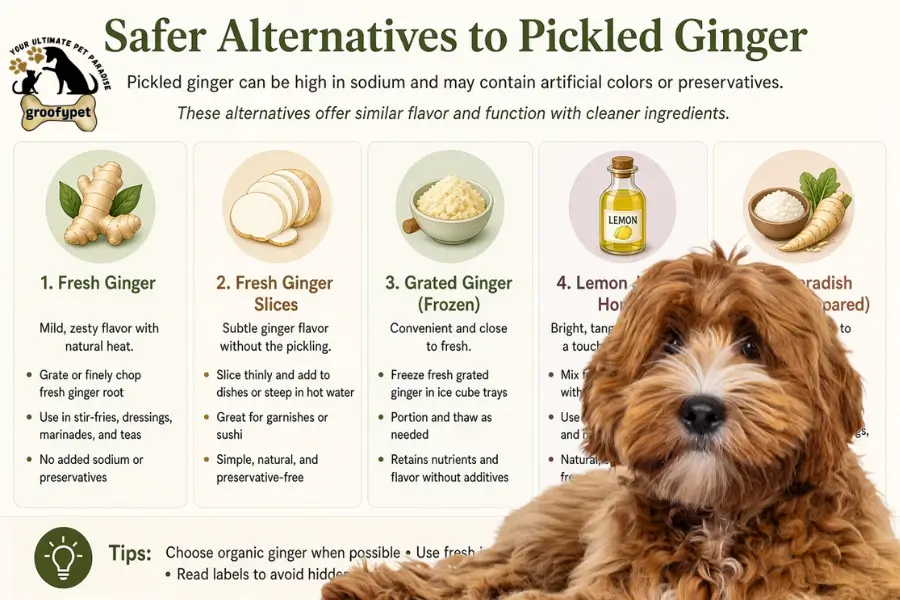
Here are some options:
- Cucumber: Serve plain, washed, and cut into bite-sized pieces.
- Carrot: Offer small raw pieces that suit your dog’s chewing ability, or plain cooked carrot.
- Sweet potato: Serve thoroughly cooked, plain, and without added butter, salt, or seasoning.
- Blueberries: Offer a few washed berries as an occasional treat.
Introduce new foods gradually and account for treats in your dog’s overall diet. Cut food into suitable pieces to reduce choking risks, especially for small dogs.
Dogs with allergies, digestive problems, diabetes, or other medical conditions may need different food choices. Ask your veterinarian if you are unsure.
When should you call a veterinarian?
- Use this quick guide to help you decide what to do.
- A tiny taste of plain pickled ginger
- Your dog seems normal and the ingredient label contains no known toxic ingredients. Remove the food, provide fresh water, and monitor your dog. Call your vet if you have concerns.
- Several slices or an unknown quantity
- Contact your veterinarian for advice, particularly if your dog is small or has an underlying health condition.
- Possible toxic ingredients or serious symptoms
- Seek urgent veterinary advice if the food contains xylitol, garlic, or onion, or if your dog develops repeated vomiting, severe weakness, tremors, seizures, or collapse.
When contacting your veterinarian, share your dog’s weight, the product label, the estimated amount eaten, the time of ingestion, and any symptoms.
Must Read : Raw Dog Food Calculator by Breed: Find the Right Portion for Your Dog
Frequently asked questions
Can dogs eat pickled ginger from sushi?
It is best not to feed pickled ginger to dogs. Sushi ginger often contains vinegar, sugar, and salt. A tiny accidental taste may not cause harm, but the ingredients and amount eaten determine the risk.
Is pickled ginger poisonous to dogs?
Pickled ginger is not automatically poisonous. However, some products contain ingredients that are dangerous to dogs, such as xylitol, garlic, or onion. Salt and other ingredients may also cause problems when consumed in large amounts.
What if my dog eats one piece of pickled ginger?
If your dog eats one small piece and the product contains no known toxic ingredients, serious problems are less likely. Check the label and monitor your dog. Contact a veterinarian if the ingredients are uncertain or your dog develops symptoms.
Can pickled ginger cause diarrhea in dogs?
Yes, it may cause diarrhea or other digestive upset in some dogs. The acidity, seasonings, and quantity eaten can affect how your dog responds. Contact your veterinarian if diarrhea is severe, persistent, or accompanied by other concerning symptoms.
Can dogs eat ginger without vinegar?
Plain fresh ginger may be suitable for some dogs in very small amounts. However, it can still cause stomach upset and may not suit dogs with certain medical conditions or medications. Ask your veterinarian before using it for health purposes.
Is sushi ginger safe for puppies?
It is best to avoid giving sushi ginger to puppies. Puppies have different nutritional needs, and pickled ginger provides no necessary dietary benefit. If your puppy eats some accidentally, check the ingredients and contact a veterinarian if you are concerned.
Can dogs eat ginger soaked in vinegar?
It is best to avoid offering ginger soaked in vinegar as a treat. Vinegar is not generally a specific dog toxin, but the acidic mixture may upset your dog’s stomach, especially when it also contains salt or seasonings.
What if pickled ginger contains garlic or onion?
Contact your veterinarian for advice. Garlic and onion can damage a dog’s red blood cells, and symptoms may not appear immediately. Tell your veterinarian which ingredient was present and how much your dog may have eaten.
Can dogs eat pickled ginger every day?
No. Pickled ginger is not a suitable daily treat for dogs. It may contain added salt, sugar, and other ingredients, and it does not provide a necessary benefit. Choose a dog-safe snack instead.
Is fresh ginger better than pickled ginger for dogs?
Fresh ginger is generally the better choice because it does not usually contain added salt, sugar, or vinegar. However, it is not right for every dog. Consult your veterinarian before adding it to your dog’s diet.
Final Thoughts
So, can dogs eat pickled ginger? It is best to keep it off your dog’s menu.Although a tiny accidental taste may not cause serious harm, pickled ginger often contains salt, sugar, vinegar, or other ingredients that dogs do not need. Some recipes may include ingredients that pose more serious risks.
If your dog eats pickled ginger, check the label, estimate the amount eaten, and watch for symptoms. Contact your veterinarian promptly if the product contains potentially toxic ingredients or your dog shows signs of illness.For an easy and safer snack, choose plain cucumber, carrot, or another dog-safe food that suits your pet’s needs.
Your dog does not need sushi ginger to stay healthy. A balanced diet, fresh water, and suitable treats are much better choices.
Can Dogs Eat Baguette? Safe Serving Guide for Dogs
Can Dogs Take Mylanta Safely? A Vet-Informed Guide for Owners