
Can dogs eat plumcots? Yes, dogs can eat the ripe flesh of a plumcot in small amounts. The flesh is generally safe and offers vitamins, fiber, and hydration. However, the pit is dangerous; it contains cyanogenic compounds and poses a serious choking and intestinal blockage risk, so it must always be removed before sharing this fruit with your dog.
If you’ve ever bitten into a juicy, sweet-tart plumcot and noticed your dog staring up at you with pleading eyes, you’re probably wondering: can dogs eat plumcots, or is this fruit better left off the menu? It’s a fair question. Dogs are curious eaters, and many popular fruits that are perfectly healthy for humans can be risky or even toxic for our canine companions.
Plumcots are a hybrid fruit, a cross between a plum and an apricot, and they belong to the same “stone fruit” family as peaches, cherries, and nectarines. That family connection matters, because stone fruits share a common danger: their pits. Many pet owners confuse plumcots with pluots, another plum-apricot hybrid, and the safety guidance is essentially the same for both.
The short answer is plumcots for dogs can be a safe, occasional treat if you serve them correctly. The flesh is not toxic, but the pit, stem, and leaves absolutely are. This guide walks through everything you need to know nutrition, benefits, risks, proper serving sizes, and what to do if your dog accidentally eats a plumcot pit so you can make an informed, vet-backed decision.
What Are Plumcots?
Plumcots are a hybrid fruit created by crossing a plum and an apricot, typically bred to be roughly 50% of each parent fruit. They were developed decades ago by fruit breeders looking to combine the best qualities of both stone fruits: the juicy sweetness of a plum with the slightly tangy, aromatic flavor of an apricot.
- Appearance: Plumcots usually have smooth, thin skin similar to a plum, in shades of red, purple, or deep maroon. The flesh inside tends to be juicy and can range from golden-yellow to deep red.
- Flavor: Most people describe plumcots as sweeter than apricots but with a slight tartness reminiscent of plums. They’re often eaten fresh, sliced into salads, or used in jams and baked goods.
- Difference between plumcots and pluots: This is where things get confusing. Plumcots are roughly an even 50/50 cross of plum and apricot, while pluots are a plum-dominant hybrid (usually more plum than apricot in genetics and flavor). For feeding purposes, though, the safety rules are identical — both are stone fruits with a toxic, hazardous pit at the center.
- Nutritional profile: Like plums and apricots, plumcots are low in fat, moderately high in natural sugar, and contain fiber, vitamin C, vitamin A, and potassium.
- Human culinary uses: Plumcots are popular in summer fruit salads, smoothies, tarts, and preserves. Their bright color and balanced sweet-tart flavor make them a favorite at farmers markets.
Nutritional Value of Plumcots for dogs
Plumcot flesh does contain nutrients that can offer minor benefits when fed in moderation.
| Nutrient | Benefit for Dogs |
|---|---|
| Vitamin C | Supports immune function |
| Vitamin A | Promotes eye and skin health |
| Fiber | Aids healthy digestion |
| Potassium | Supports muscle and nerve function |
| Water | Contributes to hydration |
| Antioxidants | Helps protect cells from damage |
| Natural sugars | Provides quick energy in small amounts |
While these nutrients are genuinely beneficial, keep in mind that a complete and balanced dog food already supplies everything your dog needs. Plumcots should be viewed as a nutritional bonus, not a dietary requirement.
Can Dogs Eat Plumcots Safely?
Yes, dogs can eat plumcots safely as long as you follow a few important rules:
- Only offer the ripe flesh, never the pit, stem, or leaves.
- Remove the pit completely and check that no fragments remain.
- Wash the fruit thoroughly to remove dirt, wax, or pesticide residue.
- Cut the flesh into small, bite-sized pieces appropriate for your dog’s size.
- Feed plumcots only occasionally, as a treat rather than a meal component.
So, are plumcots safe for dogs? In moderation, and with proper preparation, the answer is yes. The danger isn’t the fruit itself—it’s the pit and plant parts surrounding it.
Pros and Cons of Plumcots for Dogs
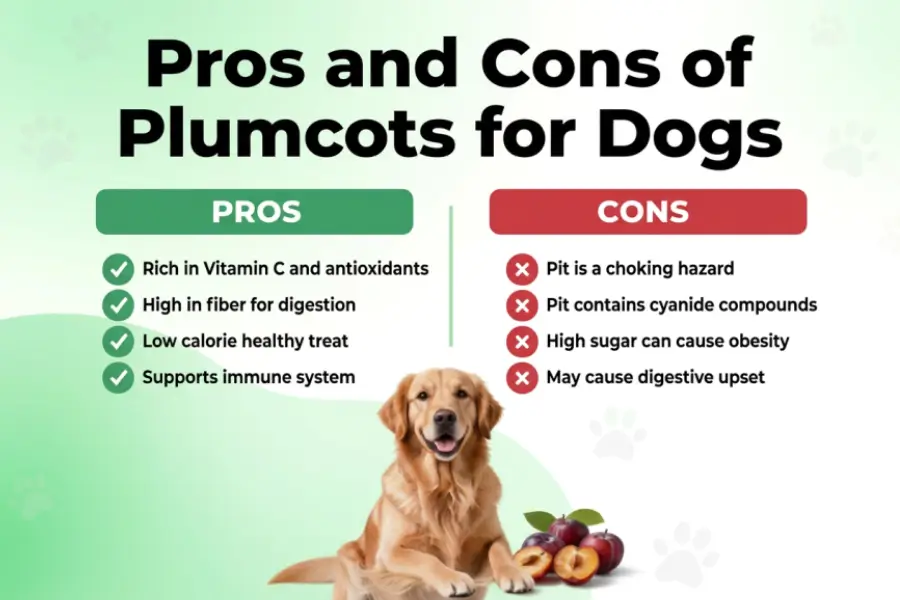
- Rich in vitamins
- Contains antioxidants
- Good source of hydration
- Provides dietary fiber
- Low in fat
- Contains a toxic pit
- Choking hazard from the pit
- High in natural sugar
- Can cause digestive upset if overfed
- Not nutritionally necessary for dogs
Are Plumcots Toxic to Dogs?
This is one of the most important questions to understand fully.
- The flesh of a ripe plumcot is generally not toxic to dogs and can be shared in small quantities.
- The pit, stem, and leaves, however, contain cyanogenic compounds, natural substances that release cyanide when metabolized or chewed. This is true across the stone fruit family, including plums, apricots, peaches, and cherries.
- If a dog swallows the pit, it can also cause a choking hazard or become lodged in the digestive tract, leading to an intestinal blockage.
- In rare but serious cases, chewing through a pit and releasing enough cyanogenic compound can lead to cyanide toxicity, which is a genuine veterinary emergency.
Also Read : Can Dogs Eat Fonio? Benefits, Risks and Safe Serving Guide
If your dog shows any signs of distress after eating a plumcot pit, including difficulty breathing, collapse, or bright red gums, this requires immediate veterinary care. It’s always safer to treat pit ingestion as an emergency until a veterinarian confirms otherwise.
Health Benefits of Plumcots for Dogs
Can dogs eat plumcots? When served correctly, plumcot flesh can offer a few modest health perks.

1. Rich in Antioxidants
Plumcots contain antioxidants that help neutralize free radicals in the body, potentially supporting healthy aging and cell protection.
2. Supports Immune Function
The vitamin C in plumcots may offer a small boost to immune health, although dogs already produce their own vitamin C internally.
3. Provides Dietary Fiber
Fiber supports regular digestion and can help maintain healthy bowel movements when given in appropriate amounts.
4. Helps Hydration
Because plumcots are largely made up of water, a few small pieces can contribute to your dog’s hydration, especially in warm weather.
5. Low in Fat
Plumcots are naturally low in fat, making them a lighter treat option compared to many store-bought dog treats.
It’s worth repeating: these benefits are minor. Dogs get complete, balanced nutrition from a quality dog food, and fruit should never be used to replace essential dietary components.
Must Read: Can Dogs Eat Whitebait? Safe or Risky? The Complete Feeding Guide
Risks of Feeding Plumcots to Dogs
Before you share this fruit, it’s important to understand the full range of risks involved.
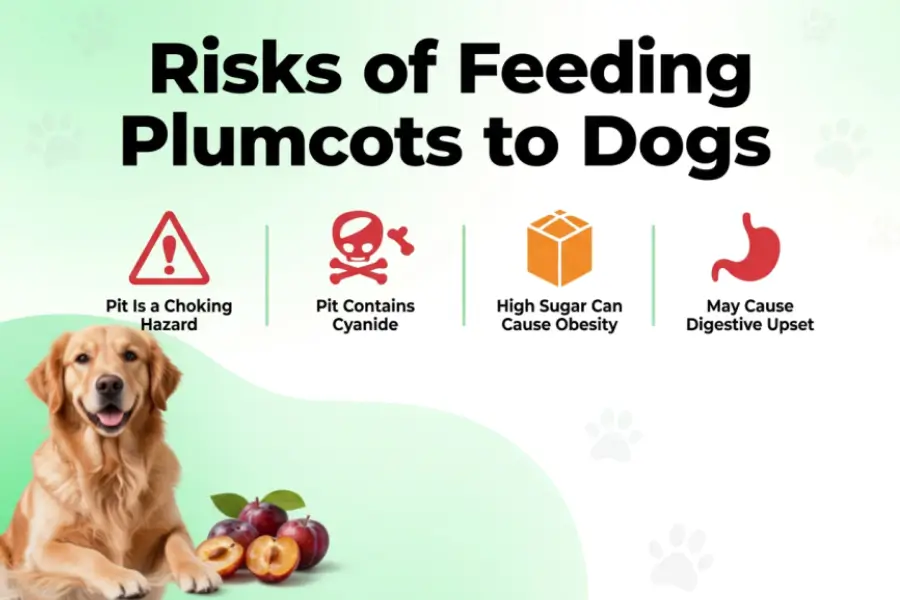
1. Toxic Pit
The pit contains cyanogenic compounds that convert to cyanide when chewed or digested. This is the single biggest danger associated with plumcots and other stone fruits.
2. Choking Hazard
The pit is roughly walnut-sized in some plumcot varieties and can easily lodge in a dog’s throat, particularly in small or medium-sized breeds.
3. Intestinal Blockage
If swallowed whole, the pit can become stuck in the stomach or intestines, sometimes requiring surgical removal.
4. High Natural Sugar
Plumcots contain a fair amount of natural sugar. Overfeeding can contribute to weight gain, upset stomach, or complications for dogs with diabetes.
5. Digestive Upset
Eating too much fruit, or introducing it too quickly, can cause vomiting, diarrhea, or general stomach discomfort.
6. Allergic Reactions
Though uncommon, some dogs may have individual sensitivities to plumcots or other stone fruits. Watch for itching, swelling, or hives after first exposure.
7. Pesticide Residue
Commercially grown plumcots may carry pesticide residue on the skin. Washing thoroughly or peeling the fruit reduces this risk.
Can puppies eat plumcots?
Feeding plumcots to puppies is generally not recommended. Puppies have more sensitive digestive systems than adult dogs, making them more prone to stomach upset from new foods. They’re also at a higher choking risk due to their smaller mouths and airways, and they may be more likely to accidentally swallow a pit while exploring new textures and tastes.
If you’re considering introducing any new fruit, including plumcots, to a puppy’s diet, consult a veterinarian first. They can advise on appropriate serving size, timing, and whether it’s a good fit for your puppy’s individual health needs.
Can Dogs Eat Plumcot Flesh?
Yes. Plumcot flesh is the safest part of the fruit for dogs, provided it’s
- Fresh and ripe
- Free of the pit, stem, and leaves
- Cut into small, manageable pieces
If your dog has a sensitive stomach, consider removing the skin as well, since the extra fiber in the skin can sometimes be harder to digest for dogs prone to gastrointestinal issues.
Can Dogs Eat Plumcot Skin?
Plumcot skin is usually safe for dogs if washed thoroughly, since it can carry dirt, wax coatings, or pesticide residue. That said, the skin is slightly tougher and higher in fiber than the flesh, which may be harder for some dogs to digest. If your dog has a history of digestive sensitivity, it’s a good idea to peel the plumcot before serving.
Can Dogs Eat Plumcot Pits?
No. This is the one part of the plumcot that should never be given to a dog, for several important reasons:
- It contains cyanogenic compounds that can be toxic when chewed.
- It presents a serious choking hazard.
- It can cause an intestinal obstruction if swallowed.
- If your dog does swallow or chew a pit, seek veterinary care immediately, even if your dog seems fine at first.
So when people ask, are plumcot pits toxic to dogs? The answer is a clear yes, and this single fact is the most important takeaway from this entire guide.
Can Dogs Eat Dried Plumcots?
Dried plumcots are best avoided. Drying fruit concentrates its natural sugars, making dried plumcots much higher in sugar content per bite than fresh fruit. Many dried fruit products also contain added preservatives, sulfites, or sweeteners that aren’t appropriate for dogs. If you want to offer a fruit treat, fresh plumcot flesh in small amounts is a far better option.
Can Dogs Drink Plumcot Juice?
This is generally not recommended. Store-bought plumcot juice or smoothies often contain added sugar, artificial sweeteners (some of which, like xylitol, are highly toxic to dogs), or other additives that offer no nutritional benefit and add unnecessary risk. Fresh, whole fruit prepared safely is always the better choice over juiced or processed versions.
How Much Plumcot Can Dogs Eat?
Serving size should always be scaled to your dog’s body size. Use this table as a general guide:
| Dog Size | Suggested Amount |
|---|---|
| Extra Small (under 10 lbs) | 1–2 tiny cubes |
| Small (10–25 lbs) | 2–3 small cubes |
| Medium (25–50 lbs) | 4–5 cubes |
| Large (50+ lbs) | Up to ½ small plumcot |
As a general rule of thumb, treats — including fruit — should make up no more than 10% of your dog’s daily calorie intake. The rest should come from a complete, balanced dog food.
How to Feed Plumcots Safely
Follow these steps every time you share plumcots with your dog:
- Wash thoroughly to remove dirt and pesticide residue.
- Remove the pit, stem, and leaves completely — check carefully for fragments.
- Slice into bite-sized pieces appropriate for your dog’s size.
- Feed plain — no added sugar, syrup, or seasoning.
- Introduce gradually, starting with a very small piece.
- Observe your dog for the next 24 hours for any signs of digestive upset or allergic reaction.
What Happens If a Dog Eats a Plumcot Pit?
If your dog swallows or chews a plumcot pit, watch closely for the following symptoms:
- Choking or gagging
- Vomiting
- Difficulty swallowing
- Abdominal pain
- Constipation or straining to defecate
- Lethargy
- Collapse (rare, but possible with cyanide exposure)
Mild symptoms like brief gagging or a single vomiting episode may resolve on their own, but immediate veterinary attention is necessary if your dog shows signs of breathing difficulty, repeated vomiting, extreme lethargy, or collapse. When in doubt, it’s always safer to call your veterinarian.
What Should You Do If Your Dog Eats a Plumcot?
If your dog ate a plumcot, whether just the flesh or the whole fruit, here’s what to do:
- Stay calm. Panicking won’t help you assess the situation clearly.
- Determine whether the pit was swallowed. Check the area for pit fragments.
- Remove any remaining fruit so your dog can’t eat more.
- Offer water to help keep your dog comfortable.
- Watch for symptoms over the next several hours, including vomiting, lethargy, or difficulty breathing.
- Contact your veterinarian immediately if the pit is eaten or if any concerning symptoms appear.
Keeping the number for your veterinarian and a nearby emergency animal hospital handy can save valuable time in a real emergency.
Best Fruits for Dogs
If you’re building a mental list of dog-safe fruits, here’s a helpful comparison chart:
| Fruit | Safe? | Notes |
|---|---|---|
| Blueberries | ✅ | Excellent source of antioxidants |
| Apples (seedless) | ✅ | Remove seeds and core first |
| Strawberries | ✅ | A healthy, low-calorie treat |
| Bananas | ✅ | High in sugar feed sparingly |
| Watermelon (seedless) | ✅ | Great for hydration |
| Plumcot flesh | ✅ | Safe only with the pit removed |
| Grapes | ❌ | Toxic can cause kidney failure |
| Cherries | ❌ | Pit is toxic and a choking risk |
Fruits Dogs Should Never Eat
Some fruits should be kept far away from your dog at all times, including:
- Grapes and raisins — can cause sudden kidney failure, even in small amounts
- Cherry pits — contain cyanogenic compounds
- Plum pits — same danger as plumcot pits
- Peach pits — also cyanogenic and a choking hazard
- Apricot pits — contain the same toxic compound
- Avocado (in large amounts) — contains persin, which can cause digestive upset
Notice a pattern? Nearly all stone fruit pits plum, peach, cherry, apricot, and plumcot, share the same underlying danger: cyanogenic compounds that release cyanide when broken down. This is why stone fruits and dogs require extra caution compared to seedless fruits like berries or melon.
Frequently Asked Questions
Can dogs eat plumcot flesh?
Yes, dogs can eat plumcot flesh in small, occasional amounts. It’s low in fat and contains vitamins, fiber, and antioxidants. Always remove the pit, stem, and leaves first, and cut the flesh into bite-sized pieces appropriate for your dog’s size.
Are plumcot pits poisonous to dogs?
Yes. Plumcot pits contain cyanogenic compounds that can release cyanide when chewed. They also pose a choking hazard and can cause an intestinal blockage if swallowed. Never let your dog chew on or swallow a plumcot pit.
Can puppies eat plumcots?
It’s not generally recommended. Puppies have more sensitive digestive systems and a higher choking risk than adult dogs. If you want to introduce plumcots or any new fruit to a puppy’s diet, talk to your veterinarian first.
Can dogs eat plumcot skin?
Usually, yes, as long as it’s washed thoroughly to remove dirt or pesticide residue. The skin is slightly higher in fiber than the flesh, so dogs with sensitive stomachs may do better with the skin peeled off.
What if my dog swallowed a plumcot pit?
Watch closely for choking, vomiting, difficulty swallowing, abdominal pain, or lethargy. Contact your veterinarian immediately, since pit ingestion can lead to intestinal blockage or cyanide exposure, both of which require prompt medical attention.
Can dogs eat dried plumcots?
It’s best to avoid dried plumcots. Drying concentrates the natural sugar content, and many dried fruit products contain added preservatives or sweeteners that aren’t safe for dogs.
Can diabetic dogs eat plumcots?
Diabetic dogs should avoid or strictly limit plumcots due to their natural sugar content, which can affect blood sugar regulation. Always consult your veterinarian before offering fruit to a dog with diabetes or other metabolic conditions.
Are plumcots healthier than plums for dogs?
Not significantly. Plumcots and plums have very similar nutritional profiles and share the same risks, since both are stone fruits with a toxic, cyanogenic pit. Neither should be considered a necessary or “healthier” addition to a dog’s diet; both are simply occasional treats when prepared safely.
Final Thoughts
So, can dogs eat plumcots? Yes, dogs can eat the ripe flesh of a plumcot in moderation, but the pit, stem, and leaves should never be given because they contain cyanogenic compounds and can also cause choking or intestinal blockage.
Offer only small portions as an occasional treat, never as a substitute for a balanced diet, and contact your veterinarian immediately if your dog swallows a plumcot pit or develops any concerning symptoms.
When in doubt, the safest approach with any new fruit, plumcots included, is to prepare it carefully, serve it sparingly, and keep a close eye on your dog afterward. A little caution goes a long way toward keeping treat time safe and enjoyable for your furry friend.