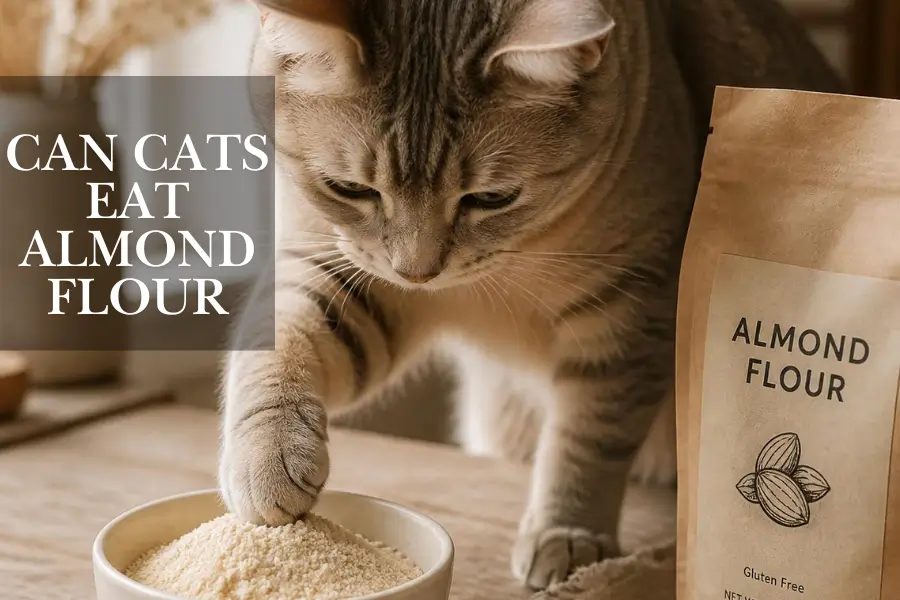
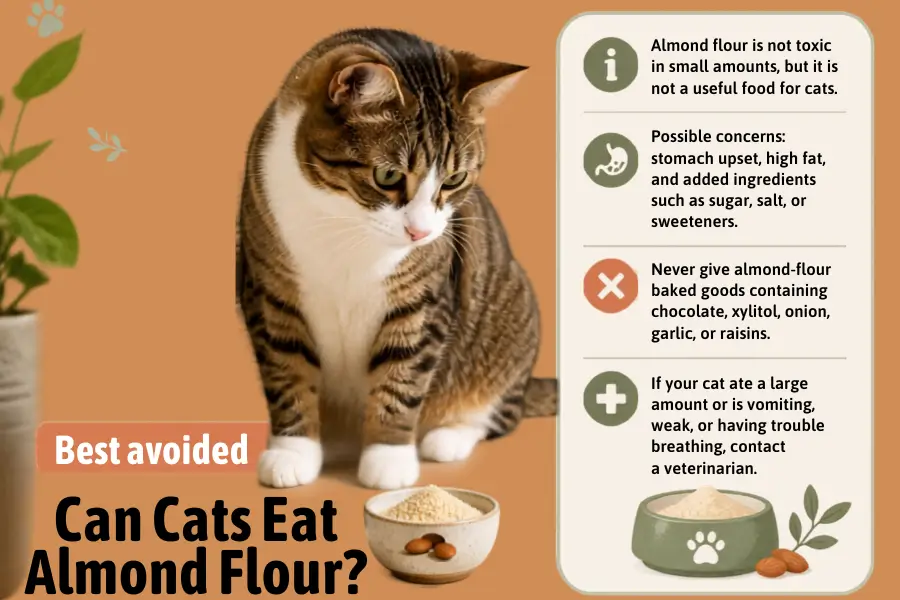
Can cats eat almond flour? In small, accidental amounts, plain almond flour is unlikely to cause serious harm to most cats. It is not toxic in the way chocolate or onion is, but it also isn’t a food cats need. The real risk depends on how much was eaten, what else was in the recipe, and your cat’s individual health, so it’s worth understanding the details rather than assuming either “totally fine” or “call the emergency vet.”
Picture this: you’re mixing almond flour batter for a batch of muffins, and the second your back is turned, your cat has hopped onto the counter and licked a smear of it right off the bowl. Or maybe a few crumbs from an almond-flour cookie ended up on the kitchen floor, gone before you even noticed. Either scenario is common, and it’s exactly why so many cat owners search “can cats eat almond flour” the moment it happens.
Almond flour has become a kitchen staple thanks to the popularity of low-carb, gluten-free, and grain-free baking. But almond flour is not the same thing as a whole almond, and it’s also not the same as the finished baked good it ends up in. A spoonful of plain almond flour carries different risks than a slice of almond flour banana bread loaded with sugar or a cookie containing chocolate chips. Cats do not need almond flour in their diet in any form but that doesn’t automatically make it dangerous. This guide walks through what almond flour actually is, when it’s a non-issue, when it’s worth a call to the vet, and how to think about all the almond-flour-based foods your cat might get into.
What Is Almond Flour?
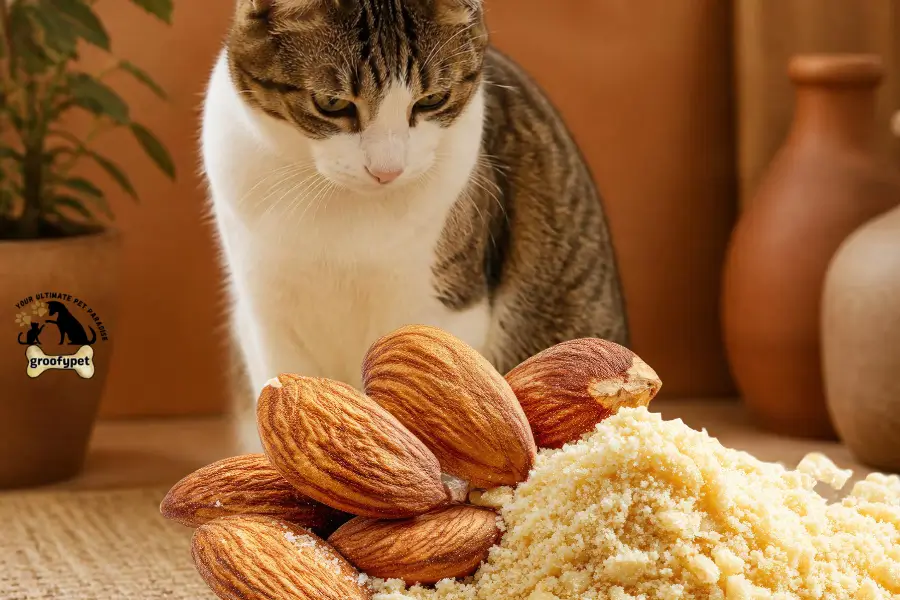
Almond flour is made by grinding blanched almonds almonds with the skins removed into a fine, powdery texture. It’s popular in baking because it’s naturally gluten-free, lower in carbohydrates than wheat flour, and gives baked goods a soft, slightly dense texture.
A few related terms often get confused:
- Almond flour is typically made from blanched (skinless) almonds and has a finer texture.
- Almond meal is usually made from almonds with the skins still on, giving it a coarser texture and slightly different color.
- Blanched almond flour is the finer, lighter-colored version most commonly used in gluten-free baking recipes.
Nutritionally, almond flour is higher in fat and plant protein than wheat flour, and it contains fiber, vitamin E, and magnesium. Those are reasonable nutrients for human diets, but they don’t map onto what a cat’s body is built to use. Cat food and almond flour are formulated for two completely different species with different digestive systems and nutritional targets.
Can Cats Eat Almond Flour?
The direct answer: almond flour is not recommended as a regular food or treat for cats, but a small accidental taste is generally not an emergency.
A few things to keep in mind:
- Cats are obligate carnivores. Their bodies are built to get the bulk of their nutrition from animal protein, not plant-based ingredients like ground nuts.
- A tiny lick or crumb is different from a spoonful. Small, incidental exposure is far less concerning than a cat deliberately eating a meaningful portion.
- Larger amounts can cause digestive upset. Because almond flour is dense and fatty relative to a cat’s normal diet, eating more than a trace amount can lead to an unhappy stomach.
- The recipe matters more than the flour. In most real-world cases, it’s not the almond flour itself that’s the biggest concern it’s what else is mixed into the cookie, bread, or cake.
Almond flour isn’t a nutritional benefit for your cat, and it shouldn’t be treated as one, but a single small accidental exposure doesn’t mean you need to panic.
Is Almond Flour Toxic to Cats?
It helps to separate three different questions that often get lumped together.
Toxicity refers to whether a substance can directly poison a cat’s system, as chocolate, xylitol, or lilies can. Plain almond flour, made only from ground almonds, does not fall into that category the way those substances do.
Digestive problems are a separate issue. Even non-toxic foods can cause vomiting, diarrhea, gas, or stomach discomfort if a cat’s system isn’t used to them, especially in larger quantities or with a food this rich in fat.
Recipe-related risks are often the real concern. Almond flour is frequently combined with ingredients that genuinely are dangerous for cats chocolate, garlic, onion, raisins, or artificial sweeteners, for example. The finished product can be far riskier than the flour itself.
So, plain almond flour isn’t a poison. But “almond flour cookies” or “almond flour bread” are only as safe as their full ingredient list.
Almond Flour vs. Whole Almonds
| Feature | Almond Flour | Whole Almonds |
|---|---|---|
| Form | Ground | Whole |
| Texture | Powder/fine meal | Hard nut |
| Choking concern | Lower than whole nuts, but still possible in large amounts | Greater |
| Nutritional value for cats | Not necessary | Not necessary |
| Appropriate as a regular cat food | No | No |
Grinding almonds into flour changes the texture and reduces the choking hazard, but it doesn’t turn almonds into an appropriate food for cats. Neither form offers cats anything their complete, balanced cat food doesn’t already provide.
Also Read : Can Cats Eat String Cheese? Safety, Benefits, Risks, and Feeding Tips!
Can Cats Eat Almond Meal?
Almond meal and almond flour come from the same base ingredient almonds but almond meal is usually made with the skins left on, giving it a coarser, slightly grainier texture and a darker color.
From a cat-safety standpoint, the two behave almost identically:
- Both are ground almond products with similar fat and fiber content.
- Almond meal’s coarser texture doesn’t meaningfully change the digestive risk.
- Both can cause stomach upset in larger amounts.
- Neither should be intentionally given to a cat as a treat.
If your cat gets into almond meal instead of almond flour, treat it the same way a small accidental taste is not usually alarming, but it’s not something to offer on purpose.
Can Cats Eat Ground Almonds?
“Ground almonds” is really just another name for almond meal or almond flour, depending on how finely they’re processed and whether the skins are included.
A few practical points:
- Plain ground almonds, in a small amount, follow the same low-concern pattern as almond flour.
- The amount matters a few crumbs versus a handful is a meaningful difference.
- If the ground almonds were mixed into a recipe, check what else is in it.
- Cats shouldn’t be intentionally fed ground almonds as a snack.
Not all ground almonds are toxic, but none of them are necessary or beneficial for a cat, either.
What Happens If a Cat Eats Almond Flour?
The outcome really depends on the amount and what was mixed in.
Possible scenarios include:
- No noticeable symptoms after a very small, accidental exposure, like a lick off a bowl or countertop.
- Mild digestive upset, such as an upset stomach or reduced appetite, after a larger amount.
- Vomiting or diarrhea, particularly if a cat ate a meaningful quantity or has a sensitive stomach.
- More serious symptoms if the almond-flour product also contained a genuinely toxic ingredient like chocolate, onion, or garlic.
There’s no way to promise a cat will or won’t have symptoms; every cat’s tolerance is different. If your cat seems fine after a small exposure, keep an eye on them for the next day rather than assuming nothing further needs attention.
Can Kittens Eat Almond Flour?
Kittens deserve extra caution around any food outside their regular diet.
- Kittens are growing rapidly and have higher, more specific nutritional requirements than adult cats.
- Their digestive systems are more sensitive and less able to handle unfamiliar or rich foods.
- A complete kitten food is formulated to support that growth; almond flour offers nothing that supports it.
- Even a small amount of a fatty, unfamiliar food can trigger digestive upset more easily in a kitten than in an adult cat.
Almond flour should not be intentionally added to a kitten’s diet. If a kitten eats a meaningful amount by accident, it’s reasonable to check in with a veterinarian sooner rather than later, given how sensitive young cats can be.
Can Senior Cats Eat Almond Flour?
Older cats often have more individualized dietary needs, which makes “just a little almond flour” a more complicated question than it is for a young, healthy cat.
Considerations include:
- Weight management — extra fat and calories from human foods can work against a senior cat’s weight goals.
- Kidney disease — many senior cats are managing kidney function, and diet plays a bigger role for them.
- Diabetes — some human foods can complicate blood sugar management.
- Digestive sensitivity — older cats may have less tolerance for rich or unfamiliar foods.
- Prescription diets — a senior cat on a therapeutic diet shouldn’t be given unapproved extras.
This isn’t the place for specific disease-based feeding instructions that’s exactly the kind of thing that needs to come from your cat’s own veterinarian, who knows their history. If your senior cat has any ongoing health condition, check with your vet before letting them have anything outside their normal diet, almond flour included.
Is Almond Flour Good for Cats?
Almond flour contains fat, plant protein, fiber, and some vitamins and minerals nutrients that are genuinely useful in a human diet. That doesn’t translate to cats.
- Cats have very specific nutritional requirements that differ substantially from humans.
- Animal-based nutrients, not plant-based ones are what cats are built to use efficiently.
- A food can be perfectly nutritious for people while being unnecessary, or even a poor fit, for a cat’s biology.
Almond flour isn’t a “toxic” food simply because cats don’t need it those are two different claims. It’s simply not doing anything useful for your cat, nutritionally speaking.
Why Cats Do Not Need Almond Flour
Cats are obligate carnivores, meaning their bodies are specifically adapted to thrive on animal-based nutrition. They require nutrients like taurine, which is found in animal tissue and isn’t reliably available from plant sources. A complete and balanced commercial cat food is formulated precisely to meet those needs protein, fat, vitamins, minerals, and amino acids in the right ratios for feline health.
This doesn’t mean cats can never encounter a plant-based ingredient without issue many cats occasionally nibble on plant matter without harm. The point is narrower: almond flour isn’t a necessary, beneficial, or recommended part of a healthy feline diet, no matter how it’s prepared.
Can Cats Eat Almond Flour Cookies?
This is one of the most common real-world scenarios, and it’s where the other ingredients matter far more than the almond flour itself.
Before assuming a cookie is harmless, check for:
- Chocolate or cocoa
- Coffee or caffeine
- Raisins or grapes
- Alcohol (used in some extracts or glazes)
- Artificial sweeteners
- Excess sugar
- High-fat add-ins like butter or chocolate chips
Xylitol, an artificial sweetener, is well known to be extremely dangerous to dogs. Its toxicity profile in cats isn’t as firmly established in veterinary literature, so it’s more accurate to say caution is warranted rather than to claim it’s proven equally dangerous for cats but it’s still worth avoiding.
For cats, the safest approach with any cookie is to check the full ingredient list rather than assuming the almond flour is the only thing to worry about.
Can Cats Eat Almond Flour Bread?
Homemade and store-bought almond-flour breads often include ingredients beyond the almond flour itself, such as:
- Salt
- Sugar
- Garlic
- Onion
- Spices
- Yeast
- Dairy
Garlic and onion are genuinely unsafe for cats and can cause damage to red blood cells if eaten in meaningful amounts, so any bread seasoned with either deserves real caution. A plain, unseasoned crumb is a very different situation than a slice of garlic-herb almond flour bread. It’s best not to intentionally share seasoned almond-flour bread with your cat.
Can Cats Eat Almond Flour Pancakes?
Pancakes made with almond flour often include:
- Eggs
- Milk
- Butter
- Sugar
- Maple syrup or other syrups
- Chocolate chips
- Flavorings like vanilla extract
A cat stealing a tiny accidental lick of batter is a different situation than deliberately being handed a bite of finished pancake, which is usually higher in sugar and fat. Pancakes shouldn’t become a regular treat for your cat regardless of the flour used.
Can Cats Eat Almond Flour Crackers?
Commercial almond-flour crackers frequently contain:
- Salt
- Garlic powder
- Onion powder
- Additional seasonings
- Oils
- Artificial flavorings
Because savory crackers are often heavily seasoned, checking the full ingredient list is essential before assuming they’re harmless. Crackers, even “healthy” gluten-free ones, aren’t a good snack choice for cats.
Can Cats Eat Almond Flour Pizza or Savory Foods?
Almond-flour pizza crusts and other savory baked goods bring their own set of concerns, mostly unrelated to the almond flour itself:
- Onion and garlic in the sauce or seasoning
- Excess salt
- Rich, fatty toppings
- Cheese, which many cats digest poorly
- Additional seasonings and spice blends
In these dishes, the almond flour crust is rarely the biggest issue the toppings and seasonings usually are.
Can Cats Eat Almond Flour Desserts?
Cakes, brownies, cookies, muffins, donuts, and pastries made with almond flour often include ingredients that are genuinely inappropriate for cats: chocolate, caffeine, raisins or grapes, alcohol-based extracts, dairy, or simply a large amount of fat and sugar. Desserts as a category — regardless of the flour used — aren’t something to offer your cat.
How Much Almond Flour Can Cats Eat?
There is no established daily serving recommendation for almond flour for cats, because it isn’t a required or recommended part of the feline diet in the first place. Rather than a specific “safe dose,” it’s more useful to think in terms of exposure level:
| Exposure | General Response |
|---|---|
| Tiny accidental amount of plain almond flour | Monitor and avoid further exposure |
| Several spoonfuls | Contact veterinarian for advice |
| Large amount | Contact veterinarian promptly |
| Almond-flour product with chocolate, onion, garlic, or other concerning ingredients | Contact veterinarian |
| Symptoms develop | Seek veterinary guidance |
This is a general guide to thinking about exposure, not a toxicology chart, and it doesn’t replace an actual conversation with your vet when you’re unsure.
What Should I Do If My Cat Eats Almond Flour?
- Remove the food. Get the almond flour or almond-flour product out of reach so your cat can’t eat more.
- Check the ingredient list. Look specifically for chocolate, onion, garlic, raisins, alcohol, or artificial sweeteners.
- Estimate the amount. A rough sense of “a few crumbs” versus “half a cookie” makes a real difference if you do call a vet.
- Note the time. Knowing roughly when the exposure happened is useful information for a veterinarian.
- Monitor your cat. Watch for vomiting, diarrhea, lethargy, or other unusual behavior over the following hours.
- Contact a veterinarian when appropriate. Especially after a large exposure, ingestion of a genuinely concerning ingredient, or the start of symptoms.
- Don’t reach for home remedies. Milk, oil, or over-the-counter medication aren’t appropriate responses to food exposure.
- Don’t try to induce vomiting at home. Cats should never be made to vomit using home methods this should only be done under veterinary direction.
Signs to Watch for After a Cat Eats Almond Flour
Keep an eye out for:
- Vomiting
- Diarrhea
- Gas
- Abdominal discomfort
- Reduced appetite
- Lethargy
Keep in mind these signs can have plenty of causes unrelated to almond flour, so context matters. If symptoms are severe, persistent, or paired with other concerning signs, it’s time to involve your veterinarian.
When Should You Call a Veterinarian?
Reach out to a vet if:
- A large or unknown quantity was consumed
- The product contained chocolate or another known feline toxin
- The product contained onion or garlic
- Your cat is very young or elderly
- Your cat has an underlying medical condition
- There’s repeated vomiting or severe diarrhea
- Your cat shows difficulty breathing, tremors, seizures, collapse, or severe weakness
The last group of symptoms breathing trouble, tremors, seizures, collapse, or serious weakness calls for immediate veterinary or emergency care, not a wait-and-see approach.
Can Cats Eat Almond Butter?
Almond butter is concentrated ground almonds, often with added salt, sugar, oils, or sweeteners mixed in. Some brands include flavorings that add further risk. Like almond flour, it isn’t a necessary or recommended treat, and its higher fat concentration makes overindulgence more likely to cause an upset stomach than a small amount of dry flour would.
Can Cats Eat Almond Milk?
Almond milk is a different product from almond flour, but the same general logic applies. Unsweetened, plain almond milk is less risky than a vanilla or chocolate-flavored version, which may contain added sugar, cocoa, or flavoring agents. Thickeners and sweeteners in flavored versions add another layer of concern. Regardless of the type, almond milk shouldn’t replace water or nutritionally complete cat food it offers cats nothing they need.
Safer Treat Alternatives for Cats
If you want to share something with your cat, better options include:
- Commercial cat treats specifically formulated for feline nutrition
- Small pieces of plain, cooked chicken (no seasoning)
- Plain, cooked turkey (no seasoning)
- Other veterinarian-approved, animal-based treats
Raw meat can carry food-safety risks of its own, so if you’re considering it, that’s a separate conversation worth having with your vet first. Whatever treat you choose, it should remain a small part of your cat’s overall diet.
Almond Flour vs. Cat Food
Complete cat food is formulated specifically around feline needs protein levels appropriate for an obligate carnivore, taurine, essential vitamins and minerals, and essential fatty acids, all balanced to support long-term health. Almond flour provides none of that in a form cats can use effectively. However convenient it might be as a pantry staple in your own kitchen, it cannot replace or supplement a cat’s actual diet.
Frequently Asked Questions
Can cats eat almond flour?
A tiny accidental amount of plain almond flour is unlikely to cause serious harm, though it isn’t necessary or beneficial for cats. Larger amounts can cause digestive upset, and any product made with almond flour should be checked for other ingredients that may be genuinely unsafe.
Is almond flour toxic to cats?
Plain almond flour itself is not considered toxic in the way chocolate or onion is. The bigger concern is usually digestive upset from a larger amount or other ingredients mixed into the finished baked good.
Is almond flour bad for cats?
It isn’t a beneficial food for cats and offers no nutritional advantage, but a small accidental taste isn’t automatically “bad” in the sense of being dangerous. It simply isn’t something to offer intentionally.
Can cats eat almond meal?
Almond meal behaves similarly to almond flour, since both are ground almond products. A small accidental amount is generally low concern, but it shouldn’t be given as an intentional treat.
Can cats eat ground almonds?
Ground almonds are essentially the same as almond meal or flour. A small amount is usually not alarming, but larger amounts or seasoned versions can cause more concern.
Can kittens eat almond flour?
Almond flour should not be intentionally added to a kitten’s diet. Kittens have more sensitive digestive systems and higher, more specific nutritional needs than adult cats, so any accidental exposure deserves closer monitoring.
What happens if my cat eats almond flour?
A very small amount often causes no visible symptoms. Larger amounts can lead to vomiting, diarrhea, or a reduced appetite, particularly if the almond flour was part of a recipe with other rich or risky ingredients.
Can cats eat almond flour cookies?
It depends entirely on the other ingredients. Check for chocolate, caffeine, raisins, alcohol, or artificial sweeteners before assuming a cookie is safe these are often bigger risks than the almond flour itself.
Can cats eat almond flour bread?
Only if it’s plain. Many almond-flour breads contain garlic, onion, or added seasonings, which are genuinely unsafe for cats, so it’s best not to share seasoned bread.
Can cats eat almond flour pancakes?
A tiny accidental lick of batter is different from being given a bite of finished pancake, which usually contains added sugar, butter, or syrup. Pancakes aren’t a recommended treat for cats.
Can cats eat almond flour crackers?
Savory crackers are often seasoned with garlic powder, onion powder, or extra salt, so it’s worth checking the ingredient list before assuming they’re a safe snack.
Can cats eat almond butter?
Almond butter is more concentrated than almond flour and often contains added salt, sugar, or oils. It isn’t a recommended treat, and its richness makes stomach upset more likely with larger amounts.
Can cats eat almond milk?
Plain, unsweetened almond milk carries fewer added ingredients than flavored versions, but it still isn’t necessary for cats and shouldn’t replace water or their regular food.
How much almond flour can a cat eat?
There’s no established “safe amount,” since almond flour isn’t a required part of a cat’s diet. A small accidental exposure is generally low concern, while several spoonfuls or more warrants a call to your vet.
Should I call a vet if my cat eats almond flour?
If it was a tiny accidental amount of the plain flour with no symptoms, monitoring at home is usually reasonable. If a larger amount was eaten, the product contained a known feline hazard, or your cat starts showing symptoms, it’s time to call your veterinarian.
Final Verdict
Almond flour isn’t something your cat needs, and it was never meant to be part of a balanced feline diet. That said, a tiny accidental exposure to plain almond flour, a lick off a bowl, or a few stray crumbs isn’t automatically a poisoning emergency.
Eating a larger amount can bring on digestive upset like vomiting or diarrhea, and the recipe it came from matters just as much as the flour itself. Chocolate, onion, garlic, caffeine, alcohol, and raisins or grapes are the real hazards to watch for in almond-flour baked goods, and any of those should be taken seriously.
The safest path forward is straightforward: keep almond flour and anything made with it out of your cat’s reach, stick to a complete and balanced diet formulated for feline nutrition, and contact your veterinarian if your cat eats a meaningful amount or starts showing symptoms afterward.
Can Cats Eat Acorn Squash? Benefits, Risks, and Safe Feeding Guide
Homemade Cat Food Guide for Scottish Fold Cats | Best Ingredients and Feeding Tips