If you’re cooking a pot of white bean soup or prepping a healthy dinner, you may wonder: can dogs eat cannellini beans? Cannellini beans are a type of white kidney bean known for their creamy texture and mild, nutty flavour. They’re popular in Italian cooking and often show up in soups, stews, and salads.
The short answer is yes, dogs can eat cannellini beans, but only when they’re plain and fully cooked. These beans offer a good amount of plant-based protein, dietary fibre, and important minerals. However, they need to be prepared the right way to keep your dog safe. Raw beans, salty canned beans, and beans mixed with garlic or onion can all cause problems.
This article covers everything you need to know about feeding cannellini beans to your dog. We’ll look at their nutritional value, health benefits, possible risks, safe serving sizes, and how to prepare them properly. We’ll also answer common questions about puppies, canned beans, and portion control so you can feed your dog with confidence.
Can Dogs Eat Cannellini Beans?
Yes, dogs can eat cannellini beans in moderation, as long as they are cooked plain with no added salt, oil, garlic, or onion. Cannellini beans are not toxic to dogs when prepared correctly, and many veterinarians consider them a safe, occasional addition to a dog’s diet.
When They Are Safe
Cannellini beans are safe for dogs when they’re:
- Fully cooked until soft
- Free of seasoning, salt, and spices
- Served in small, appropriate portions
- Rinsed well if they came from a can
When They Are Unsafe
Cannellini beans become risky when they are:
- Raw or undercooked
- Canned in salty brine and not rinsed
- Mixed into recipes with garlic, onion, or heavy seasoning
- Fed in large amounts, which can lead to stomach upset
Importance of Moderation
Even healthy foods can cause problems if a dog eats too much of them. Beans are no exception. Cannellini beans should always be treated as an occasional snack, not a daily meal replacement. Feeding too many at once can lead to gas, bloating, or diarrhoea.
Why Preparation Matters
How you prepare cannellini beans makes a bigger difference than the beans themselves. Plain, well-cooked beans are gentle on a dog’s stomach. Raw beans or beans loaded with seasoning are a different story. Preparation is the key factor that separates a healthy treat from a risky one.
What Are Cannellini Beans?
Cannellini beans are a variety of white kidney bean, widely used in Italian and Mediterranean cooking. They have a smooth, creamy texture once cooked and a mild flavour that takes on the taste of whatever they’re cooked with.
What Makes Cannellini Beans Different?
Cannellini beans stand out from other beans in a few ways:
- White kidney beans — they belong to the same family as red kidney beans but are milder in taste
- Mild flavor — they don’t have a strong, overpowering taste
- Soft texture — they become creamy and tender when cooked properly
- Common uses — often found in soups, stews, pasta dishes, and salads
Because of their mild flavour and soft texture, cannellini beans are easy for dogs to eat and digest once they’re fully cooked.
Nutritional Value of Cannellini Beans
Cannellini beans are packed with nutrients that can support your dog’s overall health when fed in the right amount.
| Nutrient | Benefit for Dogs |
|---|---|
| Protein | Muscle maintenance |
| Fiber | Digestive health |
| Iron | Healthy blood cells |
| Magnesium | Muscle and nerve function |
| Potassium | Heart health |
| Folate | Cell growth |
| Phosphorus | Bone health |
| Zinc | Immune support |
This combination of plant-based protein, complex carbohydrates, and minerals makes cannellini beans a nutrient-dense food. That said, beans should never replace the animal-based protein dogs need as part of a balanced diet.
Are Cannellini Beans Safe for Dogs?
Are cannellini beans safe for dogs? Yes, when they are cooked properly and served without seasoning. Here’s what to keep in mind.
Yes, When Cooked Properly
Cooking softens the beans and breaks down compounds that can otherwise irritate a dog’s digestive system. Boiled or steamed cannellini beans, served plain, are the safest option.
Raw Beans Are Unsafe
Raw cannellini beans contain lectins, a natural plant compound that can cause digestive upset and, in larger amounts, more serious symptoms. Cooking beans thoroughly reduces lectin levels significantly, which is why raw or undercooked beans should never be given to dogs.
Avoid Seasoned Recipes
Human recipes often include garlic, onion, butter, salt, and spices. These ingredients are common in bean dishes but are harmful to dogs. Garlic and onion, in particular, can damage a dog’s red blood cells over time. Always serve beans plain, separate from any seasoned dish.
Watch Sodium Levels in Canned Beans
Canned cannellini beans are convenient, but they’re often packed in a salty liquid. Too much sodium can cause dehydration and, in severe cases, sodium poisoning. If you use canned beans, rinse them thoroughly under running water before feeding them to your dog.
Health Benefits of Cannellini Beans for Dogs

When served correctly, cannellini beans can offer several health benefits for dogs.
1. Good Source of Plant Protein
Cannellini beans provide plant-based protein that supports muscle maintenance. While dogs primarily need animal protein, beans can serve as a supplemental protein source in small amounts.
2. Rich in Dietary Fiber
The fibre in cannellini beans supports healthy digestion and helps maintain regular bowel movements. Fibre can also help dogs feel satisfied after eating, which is useful for weight management.
3. Supports Healthy Digestion
Along with fibre, cannellini beans contain complex carbohydrates that digest slowly. This steady digestion can help support a healthy gut when beans are introduced gradually and in moderation.
4. Helps Dogs Feel Full Longer
Because beans are high in fibre and protein, they can help dogs feel fuller for longer. This makes them a useful low-calorie addition for dogs who need to manage their weight.
5. Low in Fat
Cannellini beans are naturally low-fat foods, making them a lighter alternative to fatty treats. This is especially helpful for dogs prone to weight gain or pancreatitis.
6. Provides Essential Minerals
Cannellini beans contain iron, magnesium, potassium, folate, phosphorus, and zinc. These minerals support healthy blood cells, muscle and nerve function, heart health, cell growth, bone health, and immune support.
7. Supports Overall Health
Taken together, the fibre, protein, and minerals in cannellini beans can contribute to a dog’s health when the beans are used as an occasional, well-prepared treat rather than a dietary staple.
Risks of Feeding Cannellini Beans to Dogs
While cannellini beans offer benefits, there are risks to keep in mind before adding them to your dog’s bowl.
1. Raw Beans Contain Lectins
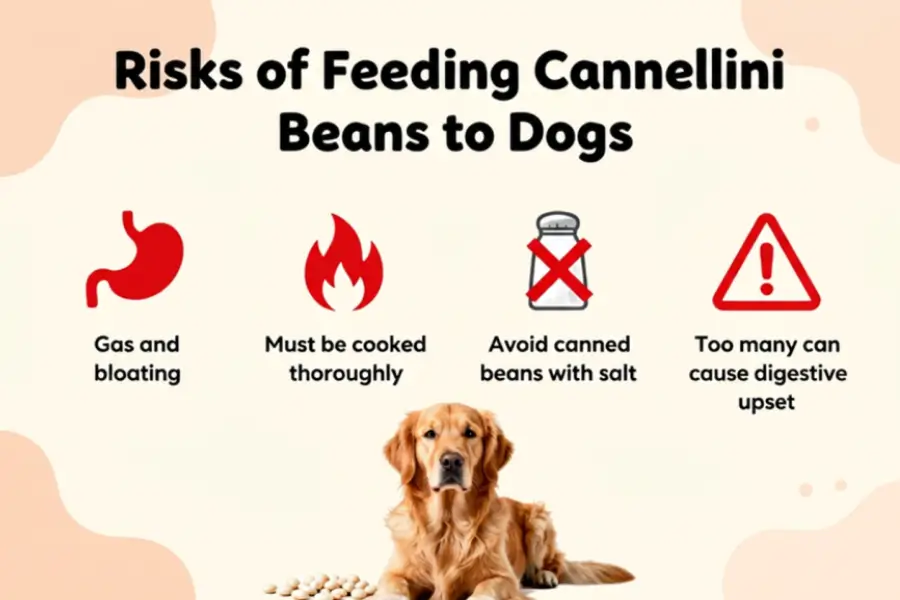
As mentioned earlier, raw beans contain lectins, which can cause vomiting, diarrhoea, and digestive discomfort. Always cook beans fully before feeding them.
2. Excess Fiber May Cause Gas and Bloating
Beans are naturally high in fibre, which is good in moderation but can lead to gas and bloating if a dog eats too many at once. Start with small portions to see how your dog reacts.
3. High Sodium in Canned Beans
Canned beans often contain added sodium for preservation and flavour. High sodium intake can lead to excessive thirst, dehydration, and, in extreme cases, sodium ion poisoning. Rinsing canned beans well reduces this risk significantly.
4. Garlic and Onion Seasonings
Many bean-based recipes include garlic and onion for flavour. Both are toxic to dogs and can damage red blood cells, leading to a condition called ‘haemolytic anaemia’. Never feed your dog beans that were cooked with these ingredients.
5. Digestive Upset
Introducing any new food too quickly, including cannellini beans, can cause an upset stomach. Signs include soft stool, mild vomiting, or reduced appetite. Introduce beans slowly and in small amounts.
6. Too Many Beans Can Cause Weight Gain
Beans are calorie-dense compared to many vegetables. Feeding too many can contribute to weight gain over time, especially in smaller dogs or those with limited activity.
7. Allergic Reactions (Rare)
Though uncommon, some dogs may be allergic or sensitive to legumes. Watch for symptoms like itching, swelling, or skin irritation after your dog eats beans for the first time.
Can Puppies Eat Cannellini Beans?
Can puppies eat cannellini beans? Yes, but with extra caution. Puppies have more sensitive digestive systems than adult dogs, so new foods should always be introduced carefully.
Are They Safe?
Plain, fully cooked cannellini beans can be safe for puppies in very small amounts. However, a puppy’s main diet should come from puppy-formulated food that supports proper growth and development.
Small Portions Only
Puppies need far smaller portions than adult dogs. A teaspoon or less is usually enough for a small-breed puppy trying beans for the first time.
Fully Cooked
Just like with adult dogs, puppies should never eat raw or undercooked beans due to the risk of lectins and digestive upset.
Introduce Slowly
Add cannellini beans to a puppy’s diet gradually, watching closely for any signs of digestive discomfort, such as loose stool or gas.
Consult a Veterinarian for young puppies
Before adding any new food to a young puppy’s diet, it’s best to consult your veterinarian. They can confirm whether cannellini beans are appropriate based on your puppy’s age, breed, and health history.
Can Dogs Eat Different Types of Cannellini Beans?
Not all forms of cannellini beans are prepared the same way. Here’s a breakdown of common variations.
Can Dogs Eat Cooked Cannellini Beans?
Yes. Cooked cannellini beans, served plain with no added salt or seasoning, are the safest and most digestible option for dogs.
Can Dogs Eat Canned Cannellini Beans?
Yes, but only if rinsed thoroughly. Canned cannellini beans are already cooked, which makes them convenient, but the canning liquid usually contains excess sodium. Rinse and drain before serving.
Can Dogs Eat Raw Cannellini Beans?
No. Raw cannellini beans contain lectins that can cause vomiting, diarrhoea, and other digestive issues. Always cook beans thoroughly before offering them to your dog.
Can Dogs Eat Dried Cannellini Beans?
Dried cannellini beans must be soaked and cooked completely before feeding. Never give your dog dried, uncooked beans, as they are hard, difficult to digest, and still contain lectins.
Can Dogs Eat Mashed Cannellini Beans?
Yes. Mashed cannellini beans, without seasoning, can be an easy option for small dogs, puppies, or senior dogs with dental issues.
Can Dogs Eat Cannellini Bean Soup?
This depends on the ingredients. If the soup contains garlic, onion, excess salt, or broth with harmful additives, it is not safe. Plain, dog-safe bean preparations are the better choice.
Can Dogs Eat Cannellini Beans with Tomato Sauce?
Generally, no. Tomato sauces often include garlic, onion, salt, and sometimes sugar. These ingredients make the dish unsafe for dogs, even though plain tomato in small amounts is usually fine.
How Much Cannellini Beans Can Dogs Eat?
Portion size depends on your dog’s size. Below is a general serving guide.
| Dog Size | Suggested Serving |
|---|---|
| Extra Small | 1 teaspoon |
| Small | 1–2 tablespoons |
| Medium | 2–3 tablespoons |
| Large | ¼ cup |
Keep these guidelines in mind:
- Feed cannellini beans as an occasional treat, not a daily food.
- Treats, including beans, should stay under 10% of your dog’s total daily calories.
- Introduce beans gradually to avoid digestive upset.
- Monitor your dog’s digestion after feeding beans for the first time.
How to Prepare Cannellini Beans for Dogs Safely
Proper preparation is the most important step in keeping cannellini beans safe for your dog.
Cook Until Soft
Boil or steam cannellini beans until they are fully soft. This breaks down lectins and makes the beans easier to digest.
Do Not Add Salt
Skip the salt entirely. Dogs need far less sodium than humans, and excess salt can lead to dehydration or worse.
Avoid Garlic and Onions
Never cook beans with garlic or onion, even in small amounts. These ingredients are toxic to dogs regardless of quantity.
Rinse Canned Beans Thoroughly
If using canned cannellini beans, rinse them under cold water for at least 30 seconds to remove excess sodium from the canning liquid.
Serve Plain
Beans should be served on their own or mixed into your dog’s regular food, without sauces, oils, or seasoning blends.
Cool Before Feeding
Always let beans cool to room temperature before giving them to your dog. Hot food can burn a dog’s mouth and throat.
Signs Your Dog Ate Too Many Cannellini Beans
Even safely prepared beans can cause problems if a dog eats too many. Watch for these signs:
- Gas
- Bloating
- Vomiting
- Diarrhea
- Constipation
- Stomach discomfort
- Loss of appetite
Mild symptoms, like occasional gas or soft stool, usually resolve on their own within a day. However, if your dog shows repeated vomiting, severe diarrhoea, or lethargy or refuses food and water for more than 24 hours, contact your veterinarian right away. These could be signs of a more serious digestive issue that needs professional care.
What to Do If Your Dog Eats Seasoned Cannellini Beans
If your dog gets into a dish of seasoned cannellini beans, take these steps:
- Stay calm. Panicking won’t help you assess the situation clearly.
- Check the ingredient list. Look for garlic, onion, excess salt, or spicy ingredients that could be harmful.
- Watch for symptoms. Keep an eye out for vomiting, diarrhoea, lethargy, or unusual behaviour over the next 24 to 48 hours.
- Contact your veterinarian. If the recipe included garlic, onion, excessive salt, or spicy ingredients, call your vet or an animal poison control hotline for guidance, especially if your dog ate a large amount.
Acting quickly and providing accurate information to your vet can make a big difference in how fast your dog recovers.
Best Healthy Alternatives to Cannellini Beans
If you’re looking for other dog-friendly foods, here are some safe alternatives.
| Food | Safe for Dogs | Benefits |
|---|---|---|
| Green beans | ✅ | Low-calorie snack |
| Pumpkin | ✅ | Digestive support |
| Sweet potato | ✅ | Fiber and vitamins |
| Lentils (cooked) | ✅ | Plant protein |
| Chickpeas (plain) | ✅ | Protein and fiber |
| Peas | ✅ | Vitamins and minerals |
These foods offer similar nutritional benefits and can add variety to your dog’s diet when fed in appropriate amounts.
Pros and Cons of Cannellini Beans for Dogs
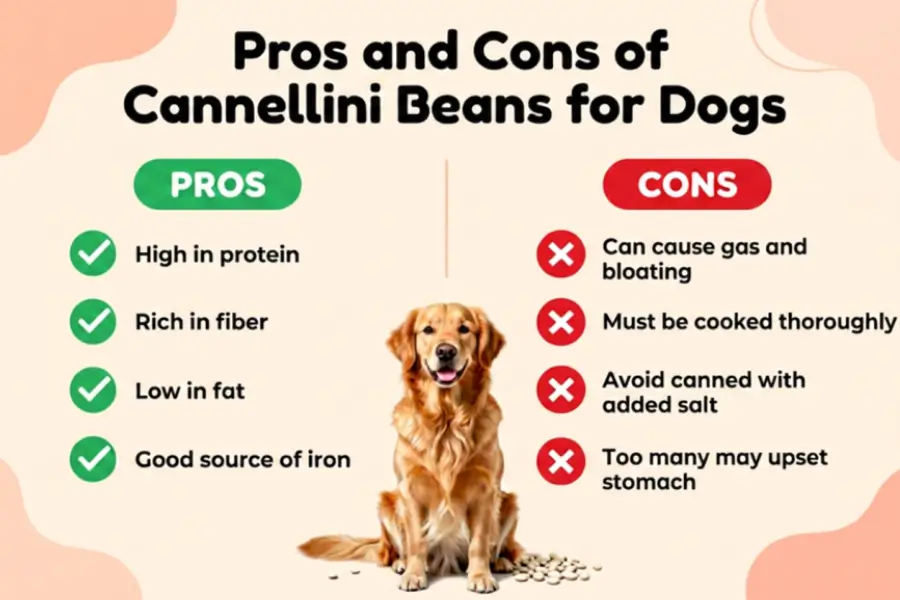
Here’s a quick summary to help you weigh the benefits against the risks.
| Pros | Cons |
|---|---|
| Rich in protein | Raw beans are unsafe |
| High in fiber | May cause gas |
| Low in fat | Canned beans may contain sodium |
| Good source of minerals | Seasoned recipes can be harmful |
| Supports digestion | Overfeeding may upset the stomach |
Frequently Asked Questions
Can dogs eat cannellini beans every day?
It’s not recommended. Cannellini beans should be an occasional treat, not a daily food. Feeding them every day can increase the risk of digestive upset and unwanted weight gain.
Can dogs eat canned cannellini beans?
Yes, as long as they are rinsed thoroughly to remove excess sodium from the canning liquid. Choose plain canned beans without added seasoning.
Can dogs eat white kidney beans?
Cannellini beans are a type of white kidney bean, so the same rules apply. They are safe when cooked, plain, and served in moderation.
Are raw cannellini beans toxic to dogs?
Raw cannellini beans aren’t classified as toxic in the same way as foods like chocolate or grapes, but they contain lectins that can cause significant digestive upset. It’s best to avoid feeding raw beans altogether.
Can diabetic dogs eat cannellini beans?
Cannellini beans have a moderate effect on blood sugar due to their fibre and protein content, but every dog’s condition is different. Talk to your veterinarian before feeding beans to a diabetic dog.
Can senior dogs eat cannellini beans?
Yes, senior dogs can generally eat plain, cooked cannellini beans in small amounts. The fibre can support digestive health, which is often beneficial for older dogs. Mashed beans may be easier for senior dogs with dental issues.
Can beans cause gas in dogs?
Yes. Beans are high in fibre, which can lead to gas and bloating, especially if introduced too quickly or fed in large amounts.
Are cannellini beans healthier than black beans for dogs?
Both beans offer similar nutritional benefits, including protein, fibre, and minerals. Neither is significantly healthier than the other. The most important factor is how the beans are prepared, not which variety you choose.
Final Thoughts
So, can dogs eat cannellini beans? Yes, plain, fully cooked cannellini beans can be a safe and healthy occasional treat for most dogs. They offer plant-based protein, fibre, and important minerals that can support digestion, muscle maintenance, and overall health.
That said, preparation matters more than the bean itself. Always avoid raw beans, sodium-heavy canned beans that haven’t been rinsed, and any recipe that includes garlic, onion, butter, or spices. Stick to appropriate portion sizes based on your dog’s weight, and introduce beans slowly to watch for any signs of digestive upset.
As with any new food, it’s a good idea to consult your veterinarian before adding cannellini beans to your dog’s diet, especially for puppies, senior dogs, or dogs with existing health conditions. With the right preparation and portion control, cannellini beans can be a nutritious addition to your dog’s occasional treat rotation.