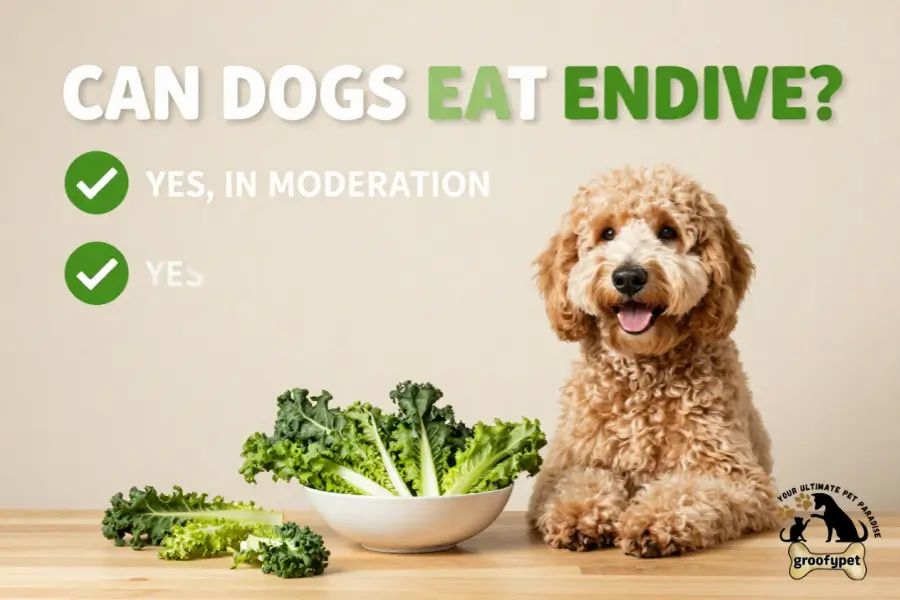
Can dogs eat endive?Yes, dogs can eat endive. This leafy green from the chicory family is safe for most dogs in moderation, whether served raw or cooked. Endive is low in calories and offers fiber, vitamin A, vitamin K, and folate. The main risk is digestive upset gas, loose stool, or bloating if you feed too much too fast. Always serve it plain, washed, and cut into small pieces, and skip the butter, oil, garlic, or salt.
There are three common types you’ll find at the grocery store:
- Belgian endive (witloof) – Small, torpedo-shaped heads with pale, tightly packed leaves. Mildest in bitterness of the three.
- Curly endive (frisée) – Loose, frizzy, dark green leaves with a sharper, more bitter flavor.
- Escarole – Broader, smoother leaves with the mildest bitterness of the bunch, often used in soups.
In human kitchens, endive shows up in salads, braises, and as a base for appetizers. For dogs, it’s best thought of as an occasional vegetable topper rather than a dietary staple — a way to add variety, not a replacement for balanced dog food.
Can Dogs Eat Endive Safely?
Endive is not toxic to dogs and most dogs digest it without any problem when it’s given in modest amounts. It contains no compounds on the ASPCA’s list of dangerous plants for pets, which already puts it in a different category from foods like onions, grapes, or chocolate.
That said, “safe” doesn’t mean “unlimited.” A few things affect how well an individual dog handles endive:
- Digestive sensitivity – Dogs with a history of an upset stomach, colitis, or inflammatory bowel disease may react to the fiber load with gas or soft stool.
- Preparation – Endive cooked with butter, oil, garlic, onion, or salt is not safe, even though plain endive is fine.
- Portion size – A few small pieces are a treat; a whole head of endive is too much for any dog, regardless of size.
- Underlying health conditions – Dogs on blood-thinning medication, dogs with kidney disease, or dogs on a prescription diet should only get new vegetables with veterinary sign-off, since endive’s vitamin K content can interact with certain blood thinners.
Most veterinarians treat leafy greens like endive the same way they treat carrots or green beans: fine as an occasional snack, not something to lean on for nutrition.
Is Endive Good for Dogs?
Endive brings a respectable nutritional package for very few calories. It’s mostly water, which makes it hydrating, and the fiber content can support regular digestion when fed in sensible amounts.
Endive Nutrition Snapshot (per 100g, raw)
| Nutrient | Amount |
|---|---|
| Calories | ~17 kcal |
| Protein | ~1.3g |
| Fat | ~0.2g |
| Fiber | ~3.1g |
| Water | ~94% |
| Vitamin A | ~1,025 IU |
| Vitamin C | ~6.5mg |
| Vitamin K | ~231mcg |
| Folate (B9) | ~142mcg |
| Potassium | ~314mg |
These numbers are based on raw endive and will shift slightly depending on variety and cooking method. For a 100g serving — which is far more than most dogs would ever eat in one sitting — that’s a small, low-calorie nutritional boost.
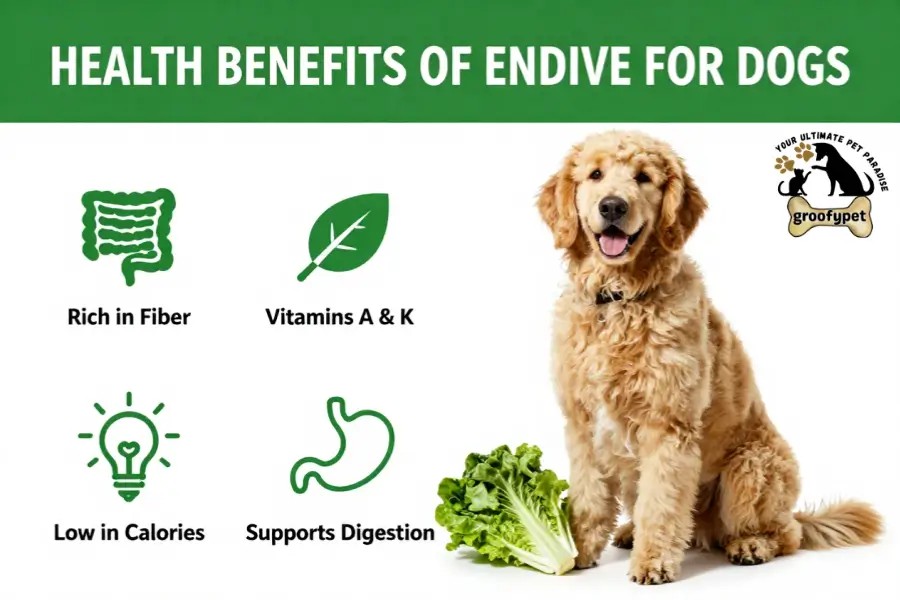
Health Benefits of Endive for Dogs
Health benefits of endive for dogs come from its low-calorie, nutrient-rich profile. When served in small amounts, plain endive can support your dog’s overall health as part of a balanced diet.
1. Rich in Fiber
The fiber in endive helps move food through the digestive tract and can support a healthy gut when introduced gradually.
2. Supports Digestion
For dogs that tolerate it well, endive’s fiber and water content work together to support regular, comfortable bowel movements.
3. Low-Calorie Treat
At roughly 17 calories per 100 grams, endive is a smart snack option for dogs on a weight-management plan, since it adds volume and chew time without adding much energy.
4. Helps Hydration
Endive is over 90% water, so a few leaves can be a refreshing snack, especially in warm weather.
5. Contains Antioxidants
Endive contains plant compounds, including kaempferol, that act as antioxidants. These compounds help neutralize free radicals in the body, which may support overall cellular health over time.
6. Supports Immune System
Vitamin A and vitamin C both play roles in normal immune function, and endive provides modest amounts of each.
7. May Improve Gut Health
The prebiotic-like fiber in chicory-family vegetables can feed beneficial gut bacteria, which may support a healthier gut microbiome when fed consistently in small amounts.
8. Provides Vitamin K
Vitamin K supports normal blood clotting. This is generally beneficial, but it’s also the reason dogs on blood-thinning medication need a vet’s input before eating endive regularly.
9. Contains Folate
Folate supports red blood cell production and several metabolic processes. It’s a nutrient most dogs get enough of through complete dog food, but a little extra from vegetables doesn’t hurt.
10. Healthy Homemade Diet Addition
For owners who like to mix fresh vegetables into their dog’s meals, endive is a reasonable rotation option alongside other dog-safe greens, adding texture and nutritional variety.
Can Puppies Eat Endive?
Puppies can try endive, but with more caution than adult dogs. Puppies have smaller, more sensitive digestive systems that are still developing, so new foods — even safe ones — should be introduced one at a time and in tiny amounts.
A good approach for puppies:
- Wait until the puppy is at least a few months old and already eating solid puppy food consistently.
- Offer a single small, finely chopped piece the first time.
- Wait 24 hours and watch for any digestive changes before offering more.
- Keep portions very small even once a puppy tolerates endive well, since their daily calorie and nutrient needs are tightly tied to growth.
If you’re ever unsure, ask your vet at the puppy’s next checkup before adding any new vegetable to the diet.
Can Dogs Eat Raw Endive?
Yes. Raw endive is safe for most dogs and keeps the most nutrients intact since nothing is lost to cooking.
Benefits of raw endive:
- Maximum vitamin and fiber content
- Crunchy texture that some dogs enjoy chewing
- No added oils or seasoning risk
Risks of raw endive:
- The bitter flavor turns some dogs off entirely
- Tougher texture can be harder to chew for small dogs, senior dogs, or dogs with dental issues
- Raw leaves can trap dirt or pesticide residue in their folds if not washed thoroughly
Best preparation: Rinse each leaf individually under running water, separate the leaves to check for dirt, and chop into small, bite-sized pieces before serving.
Can Dogs Eat Cooked Endive?
Yes, and for many dogs, cooked endive is the easier option. Cooking softens the texture and mellows some of the bitterness, which can make it more appealing to picky eaters.
Safe cooking methods include:
- Steaming until just tender
- Boiling in plain water (no broth with added salt, garlic, or onion)
- Roasting without oil, butter, or seasoning
The rule that matters most here: plain is the only acceptable way to cook it for your dog. No butter, no garlic, no onion, no salt, and no seasoning blends — all of these can range from unhelpful to genuinely harmful for dogs, even in small amounts.
Can Dogs Eat Belgian Endive?
Yes,Belgian endive is one of the mildest, most dog-friendly versions of endive because its bitterness is the least intense of the three common types.

Safety: Belgian endive is safe raw or cooked, following the same plain-preparation rule as other endive varieties.
Benefits: It carries a similar nutritional profile to other endive types — fiber, vitamin A, vitamin C, vitamin K, and folate — in a leaf that’s often easier for dogs to accept due to its milder taste.
Serving ideas: Separate a few leaves, chop them small, and mix into your dog’s regular food, or offer a leaf or two as a standalone snack.
Can Dogs Eat Curly Endive?
Yes, curly endive (frisée) is also safe for dogs, though it has a more pronounced bitterness than Belgian endive.
Safety: Same precautions apply — wash well, serve plain, chop small.
Nutrition: Curly endive offers a comparable nutrient profile to other endive types, with fiber, vitamin A, and vitamin K standing out.
Key difference from Belgian endive: Curly endive’s frizzy, looser leaf structure and stronger bitterness mean some dogs are more likely to refuse it outright. If your dog isn’t a fan, Belgian endive or escarole are gentler alternatives.
Can Dogs Eat Escarole?
Yes. Escarole is technically a broad-leaved type of endive, and it’s arguably the easiest variety to feed dogs because its leaves are smoother and its flavor is the mildest of the three.
Escarole shares the same vitamin and fiber profile as other endive types and follows the same safety guidelines: plain preparation, modest portions, and small, chewable pieces. If you’re introducing endive to a dog for the first time, escarole is a sensible starting point.
How Much Endive Can Dogs Eat?
Portion size should scale with your dog’s size. Endive should never make up more than a small fraction of a dog’s daily food intake — vegetables in general are best kept to around 10% or less of total daily calories.
Endive Feeding Chart
| Dog Size | Suggested Amount | Frequency |
|---|---|---|
| Small (under 20 lbs) | 1–2 small chopped leaves | 1–2 times per week |
| Medium (20–50 lbs) | 2–4 chopped leaves | 1–2 times per week |
| Large (50–90 lbs) | 4–6 chopped leaves | 2–3 times per week |
| Giant (90+ lbs) | A small handful, chopped | 2–3 times per week |
These amounts are starting points, not strict rules. Always begin with the smaller end of the range, especially the first time, and adjust based on how your dog tolerates it.
Best Ways to Feed Endive
- Raw chopped – Small pieces mixed into a meal or handed over as a snack.
- Steamed – Softened slightly, good for dogs who dislike the raw bitterness or have dental sensitivity.
- Mixed with kibble – Stir a few chopped pieces into regular dog food for texture and variety.
- Homemade treats – Pureed cooked endive can be blended into dog-safe homemade treat recipes (always check every other ingredient is dog-safe too).
- Frozen snacks – Pureed endive mixed with plain pumpkin or dog-safe broth and frozen in ice cube trays makes a cooling warm-weather treat.
Risks of Feeding Endive to Dogs
- Digestive upset – Too much, too fast, can cause an unsettled stomach.
- Gas – Fiber-rich vegetables commonly cause gas in dogs not used to them.
- Loose stool – Excess fiber can loosen stool consistency.
- Overfeeding – Large amounts can crowd out a dog’s balanced diet and lead to nutrient imbalances over time.
- Pesticides – Unwashed endive may carry pesticide residue trapped in its leaf folds.
- Seasonings – Garlic, onion, butter, oil, and salt used in human cooking are unsafe for dogs.
- Choking – Large, unchopped leaves or stems can pose a choking risk, particularly for small dogs.
- Food allergies – Though uncommon, some dogs may be sensitive or allergic to chicory-family plants.
- Sensitive stomach – Dogs with pre-existing GI conditions may react more strongly than the average dog.
- Kidney concerns – Dogs with kidney disease should only get new vegetables with veterinary guidance, since some nutrients need careful management on a renal diet.
Symptoms to Watch After Eating Endive
Keep an eye out for these signs after your dog tries endive for the first time, or after any new feeding amount:
- Vomiting
- Diarrhea
- Bloating
- Excess gas
- Lethargy
- Appetite loss
Mild gas or one loose stool usually isn’t an emergency. Contact your veterinarian if vomiting or diarrhea continues beyond 24 hours, if your dog seems unusually weak or painful, if there’s blood in the stool or vomit, or if your dog stops eating or drinking altogether.
What To Do If Your Dog Eats Too Much Endive
- Stay calm. Endive is not toxic, so a larger-than-intended portion is generally a digestive issue, not a poisoning emergency.
- Remove access to any remaining endive so your dog can’t eat more.
- Offer fresh water to help support digestion and prevent dehydration if loose stool follows.
- Watch for symptoms over the next 24–48 hours, especially vomiting, diarrhea, or lethargy.
- Withhold food briefly if advised by your vet, or offer a bland, vet-approved meal if your dog’s stomach seems unsettled.
- Call your veterinarian if symptoms are severe, persistent, or your dog has an existing health condition that makes you cautious.
Dogs That Should Avoid Endive
- Dogs with a sensitive stomach or chronic GI upset
- Dogs with diagnosed digestive disease (e.g., IBD, pancreatitis flare-ups)
- Dogs with kidney disease, since dietary changes need careful vet oversight
- Dogs on a prescription or special diet where unapproved additions could disrupt nutritional balance
- Dogs with a known food allergy to chicory-family plants
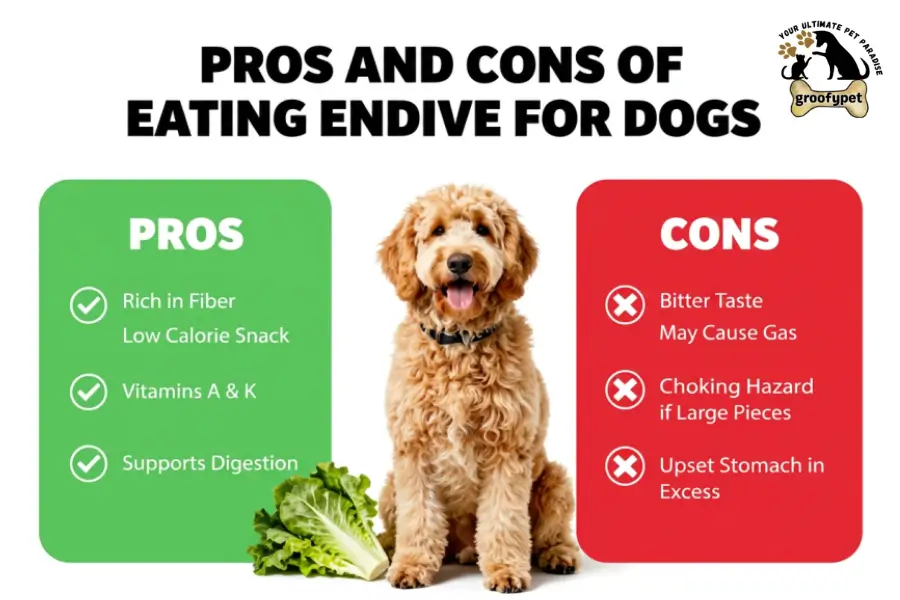
Pros and Cons of Eating Endive for Dogs
Pros
- Low in calories
- High in fiber
- Hydrating
- Rich in vitamins A, K, and folate
- Easy, low-prep snack option
Cons
- Can cause gas in some dogs
- Too much fiber can upset digestion
- Bitter taste isn’t appealing to every dog
- Shouldn’t replace a dog’s balanced, complete diet
Endive vs. Other Leafy Greens for Dogs
| Vegetable | Safe for Dogs? | Notable Consideration |
|---|---|---|
| Endive | Yes | Bitter taste; mild fiber boost |
| Escarole | Yes | Mildest of the endive varieties |
| Lettuce | Yes | Low nutritional value; mostly water |
| Kale | Yes, in small amounts | Contains calcium oxalate; can contribute to bladder stones if overfed |
| Spinach | Yes, in small amounts | Contains oxalic acid, which can affect calcium absorption |
| Cabbage | Yes, in moderation | Can cause gas; cruciferous vegetable |
| Swiss chard | Yes, in small amounts | Also contains oxalates; feed sparingly |
Vegetables Dogs Can Safely Eat
| Vegetable | Safe? |
|---|---|
| Endive | Yes, in moderation |
| Carrots | Yes |
| Green beans | Yes |
| Pumpkin (plain) | Yes |
| Sweet potato (cooked) | Yes |
| Broccoli (small amounts) | Yes |
| Cucumber | Yes |
| Zucchini | Yes |
Vegetables Dogs Should Never Eat
- Onion – Damages red blood cells; can cause anemia.
- Garlic – Same risk as onion, even more concentrated.
- Chives – Part of the same toxic plant family as onion and garlic.
- Leeks – Also in the onion family; carries the same risk.
These should be avoided entirely, in any amount, raw or cooked.
Veterinarian Tips
- Introduce any new vegetable, including endive, in small amounts and one at a time, so you can spot a reaction if one occurs.
- Always wash produce thoroughly before serving it to your dog.
- Skip all oils, butter, salt, and seasoning blends — what’s flavorful for you can be harmful for your dog.
- Treats and vegetables, combined, should stay under roughly 10% of your dog’s total daily calorie intake.
- If your dog has an existing health condition, ask your vet before adding any new food, even a generally safe one like endive.
- Keep a brief mental note (or written log) of new foods and your dog’s reaction, especially during the first few introductions.
Frequently Asked Questions
Can dogs eat endive every day?
It’s better as an occasional treat than a daily habit. Feeding it a few times a week, in small amounts, is a safer pattern than daily feeding.
Is raw endive better than cooked?
Neither is strictly “better.” Raw keeps more nutrients intact; cooked is softer and often more palatable. Choose based on your dog’s preference and dental comfort.
Can puppies eat endive?
Yes, in very small, finely chopped amounts, and only after they’re already eating solid food consistently.
Can diabetic dogs eat endive?
Endive’s low calorie and moderate fiber content make it a reasonable option for many diabetic dogs, but always check with your veterinarian first, since individual management plans vary.
Is Belgian endive safe?
Yes, Belgian endive is safe for dogs and tends to be the mildest-tasting variety.
Can dogs eat escarole?
Yes. Escarole is a type of endive and follows the same safety guidelines.
Can endive upset a dog’s stomach?
Yes, particularly if fed in large amounts or introduced too quickly. Gas and loose stool are the most common signs of overfeeding.
Can dogs eat endive leaves?
Yes, the leaves are the part most commonly fed to dogs. Just wash and chop them first.
Is endive healthier than lettuce?
Endive generally offers more fiber and a richer vitamin profile than lettuce, which is mostly water with limited nutritional density.
What leafy greens are safest for dogs?
Endive, escarole, romaine lettuce, and small amounts of spinach or kale are all commonly considered safe leafy greens for dogs when prepared plainly and fed in moderation.
Final Verdict
So the final verdict is can dogs eat endive?Endive is a safe, low-calorie vegetable that most dogs can enjoy as an occasional snack. Whether raw or cooked, the safest approach is simple: wash it well, skip the seasoning, chop it small, and keep portions modest relative to your dog’s size.
The biggest risk isn’t toxicity it’s overdoing it, which can lead to gas or an upset stomach rather than anything serious.As with any new food, introduce endive slowly and watch how your dog responds.
If your dog has an underlying health condition, is on medication, or shows any unusual symptoms after eating endive, check in with your veterinarian before continuing. Used thoughtfully, endive can be a healthy, hydrating addition to your dog’s occasional treat rotation.
Can Dogs Eat Grouper? Benefits, Risks, and Safe Feeding Guide
Can Dogs Eat Psyllium Husk? Benefits, Risks and Safety Guide