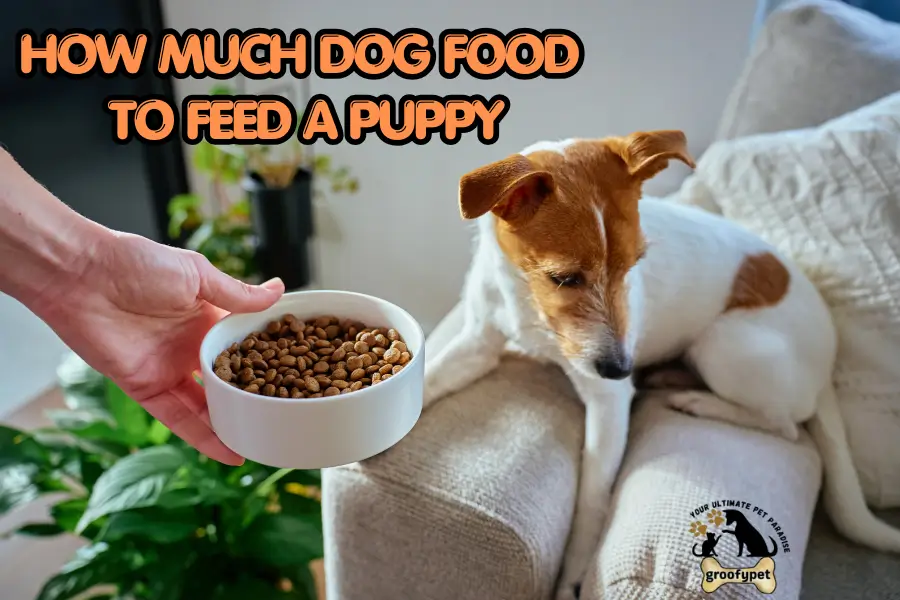
If you just brought a puppy home, one of your first big questions is probably this: how much dog food to feed a puppy every single day. This is a very common question that almost every new dog owner asks. The good news is that the answer is not too hard once you know the basics.
Your puppy needs the right amount of food to grow healthy and strong. Too much food can cause weight gain and health problems. Too little food can slow down growth and leave your puppy weak and tired.
In this guide, we are going to walk you through everything you need to know about feeding your puppy the right way, from the first week all the way to the time they become an adult dog.
Why puppy feeding is different from adult dog feeding?
Here is something most people do not think about when they bring a puppy home. That tiny little animal is not just eating to stay alive — they are eating to grow an entire body from scratch. Their bones are forming, their muscles are developing and their brain is wiring itself up every single day. That takes a serious amount of energy and the right mix of nutrients.
An adult dog is basically just maintaining what they already have. A puppy is building from the ground up, which is a completely different job. This is why you cannot just grab any bag of dog food off the shelf and call it done. Puppy food is specially made with higher levels of protein, calcium, healthy fats and DHA to support all that growing happening inside your pup.
Adult dog food simply does not have the same nutritional profile. On top of that a puppy’s stomach is tiny so they cannot eat one big meal and be done like an adult dog can. They need smaller meals spread across the day to keep their energy steady and their blood sugar stable.
How much dog food to feed a puppy based on age?
The amount of food your puppy needs is not fixed it changes as they grow and that is completely normal. A puppy at eight weeks old eats very differently compared to a puppy at six months old. Think of it like a baby moving from puréed food to solid meals as they get bigger.
The right amount depends on your puppy’s age, their current weight, how big they will be as an adult and the specific food you are using. The sections below break it all down by age so you always have a clear idea of where your puppy stands and how much food they actually need at each stage of their life.
6 to 8 weeks old puppy
This is the very beginning of your puppy’s journey with solid food. Up until now they were drinking their mother’s milk and that was giving them everything they needed. Now that they have been weaned they need real food but their tummy is still incredibly small.
At this stage you want to offer three to four tiny meals every single day. Each meal should be just a small amount roughly a quarter to half a cup of food depending on your puppy’s size and the calorie density of the food you are using.
One thing I always tell new puppy owners: please buy a proper measuring cup and use it every single time. Eyeballing portions at this age leads to overfeeding really fast. Also keep fresh water next to the bowl at every meal and never leave food sitting out between feedings.
8 to 12 weeks old puppy
Between eight and twelve weeks your puppy hits one of their biggest growth spurts. You might actually notice them looking slightly bigger from one week to the next and that is because their body is working incredibly hard at this point.
How much dog food to feed a puppy ? Bone development, muscle growth and brain development are all happening at the same time. Because of all this growth their daily food intake needs to go up a little compared to the previous weeks. Most puppies in this range do well with roughly half a cup to three quarters of a cup of food per day split across three or four meals.
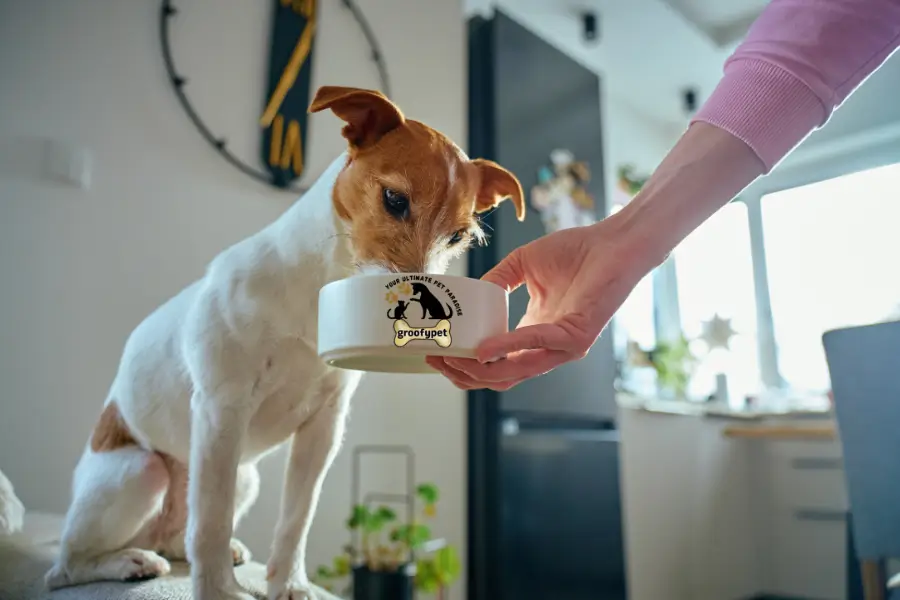
The most important thing here is to flip that food bag over and actually read the puppy feeding chart on the back. Every brand has different calorie counts per cup so the chart tells you exactly how much of that specific food your puppy needs.
3 to 6 months old puppy
This is the stage where your puppy really starts to come alive with personality and energy. They are running around, exploring everything and wearing you out by lunchtime. Their energy requirements are at their peak right now because their body is growing fast and they are burning through calories just playing and moving around.
Most puppies at this age need somewhere between one cup and two cups of food per day but this varies a lot depending on their breed size. A small breed puppy will be on the lower end while a large breed puppy will need considerably more.
You can also start reducing meals from four times a day down to three times a day at this point.Just keep a close eye on their body condition score because this is the stage where overfeeding can quietly start causing problems that show up later as joint issues or weight problems.
6 to 12 months old puppy
By the time your puppy reaches six months they are starting to look much more like a real dog and a little less like the tiny fluffball you first brought home. Their growth is still happening but it has slowed down a bit compared to those first few months.
The puppy feeding schedule at this stage can move to two or three meals per day and the total daily food amount will be higher than before simply because your puppy is physically bigger now. For most medium breed puppies this works out to around two to two and a half cups per day. Large breed puppies may need three cups or more.
The key is to watch your individual puppy closely. Are they looking a bit chunky? Cut back slightly. Are their ribs starting to show? Add a little more. Their body will tell you what it needs if you pay attention.
Puppy Feeding Chart (Weight & Age Guide)
| Estimated Adult Weight | 1.5–3 months | 4–5 months | 6–8 months | 9–11 months | 1–2 years |
|---|---|---|---|---|---|
| 3–12 lb | ½ to 1 cup | ⅔ to 1⅓ cups | ½ to 1½ cups | Feed as Adult | Feed as Adult |
| 13–20 lb | ½ to 1¼ cups | 1⅛ to 2 cups | ¾ to 1⅓ cups | ½ to 1½ cups | Feed as Adult |
| 21–50 lb | ½ to 1½ cups | 1½ to 2¾ cups | 1⅛ to 2⅓ cups | 2 to 3 cups | 2 to 4¼ cups |
| 51–75 lb | ⅝ to 2⅓ cups | 1½ to 4 cups | 1½ to 3¾ cups | 2½ to 4¾ cups | 2⅝ to 6¼ cups |
| 76–100 lb | 1 to 2⅔ cups | 2⅞ to 3¾ cups | 2⅞ to 6⅓ cups | 3⅞ to 7 cups | 5⅝ to 11 cups |
| 101+ lb | 2⅔ cups + ⅓ cup per 10 lbs over 100 | 3¾ cups + ⅓ cup per 10 lbs over 100 | 6⅓ cups + ⅓ cup per 10 lbs over 100 | 7 cups + ⅓ cup per 10 lbs over 100 | 11 cups + ⅓ cup per 10 lbs over 100 |
Puppy feeding chart by weight and breed size
- A puppy feeding chart is basically a reference guide that most pet food brands print right on their packaging.
- It shows you how much food to give based on your puppy’s current weight and their expected adult weight.
- It is a solid place to start but please treat it as a guideline rather than a hard rule.
- These charts are designed around the average puppy and your puppy might need a bit more or a bit less depending on their activity level, metabolism and individual body type.
- The chart does not know your specific puppy the way you do.
- Use it as your starting point and then adjust based on what you actually see when you look at your dog.
Small breed puppies
If you have a small breed puppy like a Chihuahua, a Pomeranian or a Yorkshire Terrier then you need to know one important thing right away — these little guys have a very fast metabolic rate. They burn through calories much quicker than bigger dogs which means they are at real risk of hypoglycemia or low blood sugar if they go too long without food.
This is why small breed puppies sometimes need four to six small meals per day when they are very young. The portions are tiny but they need to be frequent. Always choose a puppy food formula made specifically for small breeds because the kibble is smaller and shaped for little mouths and the nutritional density is higher to pack more energy into each bite.
Medium breed puppies
Medium breed puppies like Beagles, Cocker Spaniels and Border Collies are probably the easiest group to feed because they fall right in the middle of everything. They are not too sensitive to blood sugar drops like small breeds and they are not at risk for the growth-related problems that affect large breeds.
Three meals a day works great for them until around six months and then two meals a day is usually enough after that. Total daily calorie needs for a medium breed puppy generally works out to around one and a half to two and a half cups of dry food per day.
Again this varies by brand so always check the label. The most important habit you can build right now is using a proper measuring cup every single time you serve food rather than just pouring from the bag and guessing.
Large and giant breed puppies
This is where feeding gets a little more serious and you really need to pay close attention. Large breeds like German Shepherds and Labradors and giant breeds like Great Danes are at genuine risk of developing skeletal problems, hip dysplasia and joint issues if they are overfed and grow too quickly.
It sounds strange but with large breeds, slower growth is actually healthier growth. Large breed puppy food is specially formulated to support controlled growth and it has a carefully balanced ratio of calcium and phosphorus to protect developing bones and joints.
Giant breed puppies are also prone to bloating which can be a life-threatening condition so it is much better to give them three or four smaller meals throughout the day rather than one or two big ones.
How many times a day should you feed a puppy?
This is one of those questions where the honest answer is: it depends on how old your puppy is. A very young puppy needs food much more frequently than an older one and that is simply because their stomach is tiny and their body burns through fuel quickly.
As they get bigger and their digestive system matures they can handle larger meals spaced further apart. Having a consistent feeding schedule is genuinely one of the best things you can do for your puppy. It helps their digestion stay regular, it makes potty training much more predictable and it helps your puppy feel secure because they always know when food is coming.
Puppies under 3 months old
Puppies under three months old need four meals spread across the day. Their little bodies are working around the clock to grow and develop and they need a steady flow of calories and nutrients to keep up with that demand.
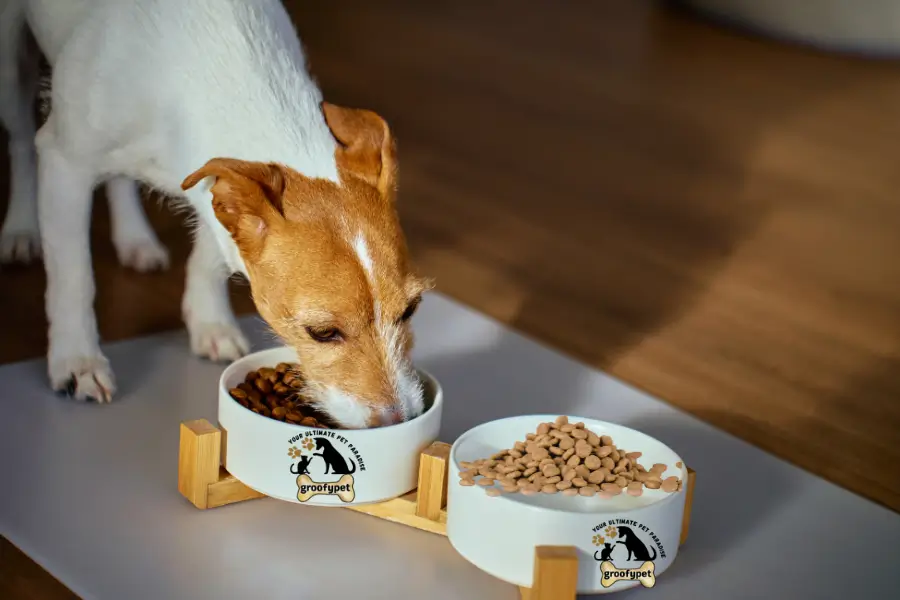
A schedule that works really well for most families is 7am, 12pm, 5pm and then a small meal around 9pm before bed. The gaps between meals give their digestive system time to properly process each one before the next arrives.
One habit that is worth building from day one is removing the food bowl after about fifteen to twenty minutes whether your puppy has finished or not. This teaches your puppy that meal time is meal time and it prevents them from grazing all day which leads to overeating.
Puppies 3 to 6 months old
Once your puppy reaches three months you can start bringing meals down from four to three per day. Their stomach has grown a little and they can handle slightly bigger portions at each sitting. A simple schedule like 7am, 12pm and 5pm works well for most families at this stage.
One important thing to remember here is that reducing the number of meals does not mean reducing the total daily food amount. The same total amount of food just gets divided into three servings instead of four.
Your puppy still needs every bit of those essential nutrients to keep up with the growth that is still happening inside their body every single day.
Puppies 6 months and older
From six months onwards your puppy can move to two meals a day — morning and evening — which is the same routine most adult dogs follow for their whole lives. Keep those meal times as consistent as possible every single day.
A puppy that knows exactly when food is coming is calmer, less likely to beg between meals and far less likely to develop picky eating habits later on. Split the total daily food amount evenly between the two meals.
If you notice your puppy seems really hungry before one of the meals or is leaving food in the bowl consistently then you may need to slightly adjust the portion sizes to find the right balance for your individual dog.
How to read the dog food label for feeding instructions?
- Every bag or can of puppy food has a feeding guide printed somewhere on the packaging and it is really worth taking two minutes to actually read it.
- The chart shows you how much of that specific food to give based on your puppy’s current weight and sometimes their expected adult weight too.
- The amounts are usually shown in cups per day divided into different weight categories.
- Now here is the thing most people miss these charts are based on averages.
- Your puppy might be more active than average or have a faster metabolism than average and need a bit more. Or they might be a couch potato and need slightly less.
- The label gives you your starting number but you need to fine-tune it based on what you actually see with your puppy week to week.
- If they are gaining weight too fast, pull back a little.
- If they seem thin and hungry all the time, add a small amount more.
Dry food vs wet food: How much should you give your puppy?
Walk into any pet store and you will find shelves full of both dry kibble and wet puppy food and it can feel overwhelming trying to figure out which one is right. Here is the simple truth both can work really well as long as they are complete and balanced formulas designed specifically for growing puppies.
Dry food tends to be the more popular choice because it is easier to measure, store and serve and it also does a better job of keeping teeth clean as your puppy chews. Wet food is great for puppies that are picky eaters or ones that need extra hydration in their diet.
Some owners mix the two together and that works fine too — just make sure you adjust the total daily amount so you do not accidentally give too much by combining both. If you are ever unsure how to combine them, your vet can help you work out the right balance.
How to tell if you are feeding your puppy too much?
Honestly this is the mistake I see new puppy owners make most often — and it comes from a good place. Your puppy always seems hungry, they look at you with those eyes and it is really hard to say no. But overfeeding a puppy does real damage over time.
An overweight puppy puts extra pressure on bones and joints that are still forming and that can lead to hip dysplasia and arthritis problems down the road that are painful and expensive to manage. There is a simple at-home check you can do right now. Run your hands along your puppy’s sides.
You should be able to feel each rib fairly easily but they should not be sticking out visibly. If you press and still cannot feel the ribs because of a layer of fat sitting on top then your puppy is carrying too much weight and it is time to gently reduce their daily portions and perhaps add a little more exercise to their day.
How to tell if you are not feeding your puppy enough?
On the flip side underfeeding is also a real problem even if it gets talked about less. How much dog food to feed a puppy? puppy that is not getting enough food will show you pretty clearly that something is off. They will seem constantly tired and low on energy even after sleeping.
Their coat will lose its shine and start to look dull or sparse. You may be able to clearly see or feel their ribs and spine without pressing at all which is a definite warning sign. An underfed puppy will also beg desperately at meal times and may show anxious behaviour around food.
If you are seeing any of these signs the first step is to increase the daily food amount slightly. But also book a visit with your vet because sometimes low weight is caused by food allergies, parasites or a condition called EPI that stops your puppy from properly absorbing the nutrients in their food no matter how much they eat.
Foods you should never feed your puppy
Getting how much dog food to feed a puppy right also means knowing what should never go into their bowl in the first place. Some very common human foods are genuinely toxic to dogs and can cause serious harm fast. Chocolate tops the list and even a small amount can make a puppy very sick.
Grapes and raisins are surprisingly dangerous and have been linked to kidney failure in dogs many people do not know this. Onions and garlic even in cooked or powdered form damage red blood cells over time. Salty snacks like chips and crisps put stress on your puppy’s kidneys and can cause dangerous dehydration.
Anything containing xylitol which is an artificial sweetener found in a lot of sugar-free products can cause a rapid and dangerous drop in blood sugar. The safest approach is to stick to vet-approved puppy food and treats that are made specifically for dogs and keep your puppy well away from your dinner plate.
How to switch your puppy’s food safely?
There will come a point when you need to change your puppy’s food — maybe you are switching brands, maybe your vet has recommended a different formula or maybe it is time to move from puppy food to adult food. Whatever the reason the switch needs to happen slowly and gradually.
If you change the food all at once your puppy’s digestive system will protest loudly in the form of diarrhea, vomiting and a complete refusal to eat. The safe way to do it is over seven to ten days. Start by mixing about twenty five percent new food with seventy five percent of the old food for the first couple of days.
Then move to a fifty-fifty split for a few more days. Then increase to seventy five percent new food for a couple more days. By the end of the ten days your puppy should be fully eating the new food without any stomach upset at all.
When to switch from puppy food to adult dog food?
A lot of owners are surprised to learn that there is no single age when every puppy switches to adult food. It really depends on how big your dog is going to be as an adult. Toy breeds like Chihuahuas are usually fully grown by around six to nine months so they can make the switch around that time. Small breeds are generally ready by nine or ten months.
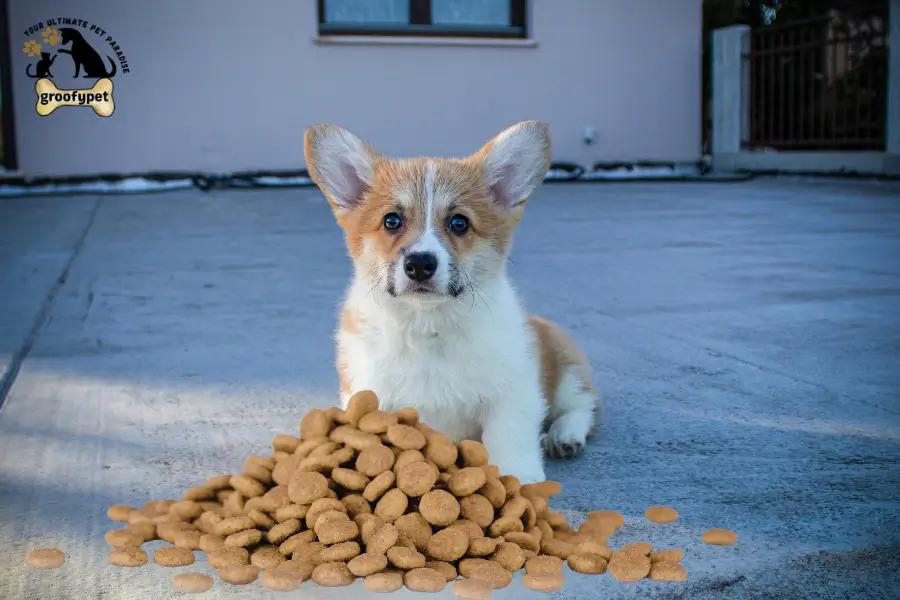
Medium breeds usually transition somewhere around twelve to fourteen months. Large breeds like Labradors often need to stay on puppy food all the way to twelve or even eighteen months because their body takes longer to fully develop.
Giant breeds like Great Danes sometimes need puppy food until they are eighteen to twenty four months old. Please talk to your vet before you make the switch because making the change too early can disrupt your puppy’s development in ways that are hard to see but very real.
Puppy feeding tips every new owner should know
Here are a few practical things that will genuinely make feeding your puppy easier and more effective every single day.
- Always use a proper measuring cup ,never pour straight from the bag and guess because that leads to inconsistent portions over time.
- Fix your meal times and stick to them every day because routine gives puppies a sense of safety and security that helps with their overall behaviour.
- Never free-feed your puppy by leaving food out all day long because this makes it almost impossible to know if your puppy is eating the right amount and it also makes potty training much harder.
- Always take the bowl away after fifteen to twenty minutes.
- Keep fresh water available at all times especially if your puppy is mainly eating dry kibble.
- And remember that treats count as calories too , they should make up no more than ten percent of your puppy’s daily intake which is the 90/10 rule that most vets recommend.
Frequently Asked Questions
How much food should a 2-month-old puppy eat?
A two month old puppy needs three to four small meals every day. The exact amount depends on their breed size and the calorie density of the food you are using. As a general starting point most puppies at this age need between half a cup and one full cup of food spread across the day in total. Always check the puppy feeding chart on your specific food bag and adjust the amount based on your puppy’s weight and how they look and feel from week to week.
Can I feed my puppy 3 times a day?
Yes and for most puppies between three and six months old three meals a day is actually the recommended approach. It gives their growing body a steady supply of energy without overloading their still-developing stomach at any one time. Three meals a day also fits really naturally into most family routines which makes it easier to stick to consistently.
What if my puppy does not finish its food?
If your puppy regularly leaves food in the bowl it is usually a sign that the portion is a little too big and you should reduce it slightly. Take the bowl away after fifteen to twenty minutes no matter what. Do not leave it sitting out hoping they will come back to finish it later.
If your puppy is refusing meals entirely for more than a day or two then that is worth a conversation with your vet to rule out any underlying health issue.
Is it okay to give treats along with regular meals?
Treats are perfectly fine in moderation and they are a fantastic training tool especially in those early months when you are teaching your puppy basic commands and good behaviour. Just remember that treat calories add up fast.
Keep treats to no more than ten percent of your puppy’s total daily calorie intake and choose low-calorie training treats where you can. Count them as part of the overall daily food budget not as something extra on top of it.
How much water should my puppy drink every day?
Water is honestly just as important as food and it is something a lot of new puppy owners underestimate. A rough guide is that puppies need around half an ounce to one ounce of water per pound of body weight each day. So a ten pound puppy should be drinking somewhere between five and ten ounces daily.
Always keep a clean fresh bowl of water available next to the food area. Puppies eating mainly dry kibble tend to need more water than puppies eating wet food because wet food already contains a significant amount of moisture.
Final Thoughts
At the end of the day figuring out how much dog food to feed a puppy is not about finding a perfect number and never changing it again. It is about paying attention to your puppy, watching how they grow and adjusting as you go. Start with the puppy feeding chart on your food bag, use a measuring cup every single time, keep meal times consistent and watch your puppy’s body condition from week to week.
Those four things alone will get you most of the way there. And whenever you are not sure — whether it is about portion sizes, the right food brand or when to make the switch to adult food — your vet is always your best resource.
They know your puppy personally and they can give you a feeding plan that is tailored to your dog specifically rather than just a general average. You brought this puppy home because you wanted to give them a good life and getting their nutrition right from day one is one of the best things you can do for them.
What to Give a Sick Dog? 10 Foods That Can Help Your Pup Feel Better!