Dogs love to eat whatever we eat and coconut rice is no different at all.Can dogs eat coconut rice? You might be sitting at the dinner table enjoying a warm bowl of coconut rice and your dog gives you those big puppy eyes. That moment makes you wonder if sharing a small bite would be okay or not.
The good news is that plain coconut rice is generally safe for most healthy dogs when given in moderation. But there are some things every dog owner needs to know before feeding it to their furry friend.
This guide covers everything from benefits and risks to serving size and vet tips so you can make a smart choice. We talked to pet nutrition experts and looked at what vets say about this popular human food for dogs. By the end of this article you will know exactly how to handle coconut rice around your dog safely.
Some people like to add salt, sugar, butter or different spices to give it more flavor and taste. The rice absorbs the coconut flavor during cooking and becomes creamy and slightly sweet on its own naturally. This is where things get tricky for dogs because those extra ingredients can cause real health problems for them.
Dogs do not process seasonings and spices the same way our human bodies do so we need to be careful. When we talk about feeding coconut rice to dogs we always mean the plain version without any added extras. Understanding what goes into this dish helps you decide what is safe and what is not for your pet.
Can dogs eat coconut rice safely?
Yes dogs can eat coconut rice safely as long as it is plain and free from harmful ingredients entirely. The two main components which are rice and coconut milk are not toxic to dogs in small amounts. Most healthy dogs can handle a small serving of coconut rice without any problems or side effects at all. The key here is moderation because too much of anything can cause trouble for your dog’s digestive system quickly.
You should treat coconut rice as an occasional snack and not as a replacement for regular dog food ever. Your dog’s main diet should always come from balanced commercial dog food that meets all nutritional needs properly. If your dog has never tried coconut before then start with a very tiny amount and watch for reactions.
Can dogs eat coconut rice every time you make it? Not really because it should stay a special treat only. Always check with your vet if your dog has any existing health conditions before trying new foods at home.
Is coconut milk safe for dogs?
Coconut milk is not toxic to dogs but it does come with a high fat content that you need to watch. A small amount of plain unsweetened coconut milk will not harm most dogs but large amounts can cause problems. The fat in coconut milk can upset your dog’s stomach and lead to diarrhea, gas or loose stools very quickly.
Store-bought coconut milk often contains added sugar, preservatives and thickeners that are not good for dogs at all. Always choose plain and unsweetened coconut milk if you plan to use it for making coconut rice for your dog. Some dogs are more sensitive to fatty foods than others so you need to know your own dog’s tolerance level.
Dogs with a history of pancreatitis or obesity should avoid coconut milk completely because the fat can trigger serious issues. The lauric acid in coconut milk does have some health benefits but those benefits only come with small and controlled portions. Talk to your vet if you are not sure whether your specific dog can handle coconut milk in their food.
Is white rice good for dogs?
White rice is one of the most commonly recommended foods by vets for dogs with upset stomachs or digestive trouble. It is easy to digest and gentle on the stomach which makes it a great option for sick dogs recovering fast. Many vets suggest a bland diet of plain white rice and boiled chicken when dogs have diarrhea or vomiting issues.
White rice gives your dog carbohydrates that the body converts into energy for running playing and daily activities around the house. It is low in fiber compared to brown rice which actually helps when your dog has loose stools or tummy problems. However white rice alone does not provide complete nutrition so dogs still need protein, vitamins and minerals from other sources.
Feeding too much rice can also lead to weight gain because it is high in calories and starch content overall. You should always cook the rice fully and serve it plain without any butter oil or seasoning for your dog. White rice works best as a temporary food or a small addition to your dog’s regular balanced meals at home.
Nutritional benefits of coconut rice for dogs
Can dogs eat coconut rice? Coconut rice does offer some real nutritional benefits for dogs when you feed it in the right amount carefully. The combination of rice and coconut brings together energy, healthy fats and some useful nutrients your dog can enjoy. Let us look at the specific benefits that make this treat a decent option for your furry friend at home.
1. Healthy fats from coconut
Coconut contains medium chain fatty acids that are easier for your dog’s body to break down and use for energy. These healthy fats support several body functions and can contribute to your dog’s overall wellness in small amounts. Lauric acid is one of the star nutrients in coconut and it helps fight bacteria viruses and infections inside your dog’s body.
Unlike some other fats these medium chain fats do not get stored as body fat as easily in dogs. They get converted into energy quickly which is great for active dogs that love to run and play outdoors. Many pet owners have noticed positive changes in their dog’s energy levels after adding small amounts of coconut to meals.
However you should remember that even healthy fats can become unhealthy when you give too much to your dog. Balance is everything and a little bit of coconut fat goes a long way for your dog’s health and body.
2. Quick energy from rice
Rice is a fantastic source of carbohydrates that gives your dog a fast and reliable energy boost during the day. When your dog eats rice the body breaks down those carbs into glucose which fuels muscles and the brain effectively. This makes coconut rice a helpful snack for active dogs that spend a lot of time exercising or playing outdoors.
Working dogs and sporting dogs especially benefit from the extra energy that a small portion of rice can provide. The energy from rice gets released quickly so your dog can use it right away for their daily activities and movement. It also helps dogs recover after a long walk or an intense play session at the park with other dogs.
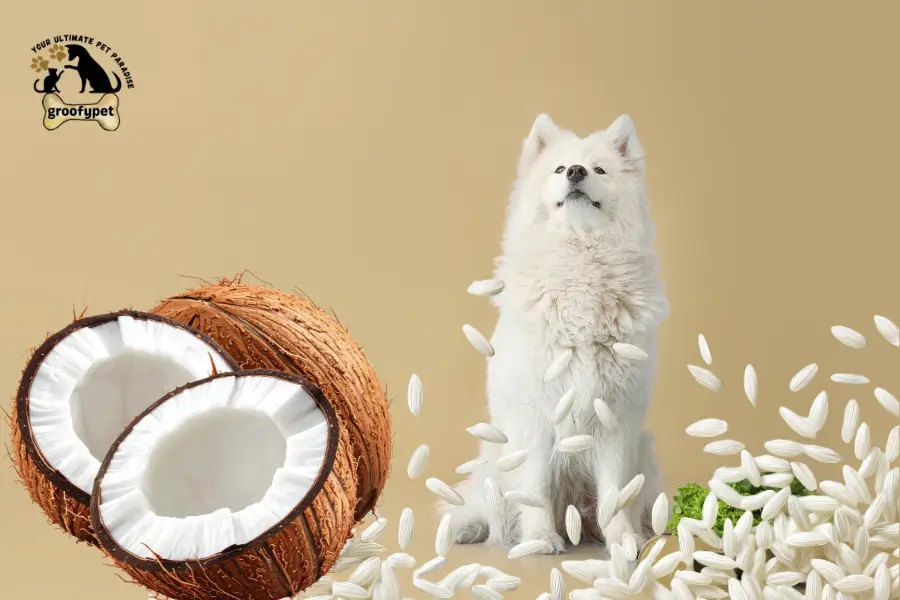
Just keep the portions small because too many carbs can lead to weight gain and other health issues over time. A couple of tablespoons of coconut rice can give your dog enough extra energy without overdoing the calorie count
3. Better skin and coat health
The healthy fats in coconut are well known for improving skin and coat health in dogs over time with regular use. Many dog owners report that their dog’s fur became shinier and softer after adding small amounts of coconut to their diet. Coconut oil and coconut milk contain nutrients that help moisturize your dog’s skin from the inside out naturally and gently.
Dogs that suffer from dry skin, flaking or mild itching may find some relief when coconut is part of their occasional treats. The fatty acids in coconut nourish the hair follicles which can reduce shedding and promote a thicker healthier coat over time.
This does not mean you should give coconut rice every day but an occasional serving can support coat health nicely. If your dog has a skin condition or severe itching then you should visit the vet instead of relying on food alone. Think of coconut rice as a small bonus for your dog’s appearance and not a medical treatment for skin problems.
4. Supports the immune system
Coconut has natural properties that can help give your dog’s immune system a gentle boost when given in small amounts. The lauric acid found in coconut is known to have antibacterial and antiviral effects that support your dog’s natural defense system. A stronger immune system helps your dog fight off common illnesses infections and seasonal bugs that go around every year.
The antioxidants present in coconut also play a small role in protecting your dog’s cells from damage over time. When you combine these benefits with the easy energy from rice you get a treat that does more than just taste good. Of course coconut rice alone will not make your dog immune to diseases but every small healthy choice adds up over time.
Make sure your dog also gets regular exercise proper vaccinations and routine vet checkups for the best overall health and protection. Coconut rice is just one small piece of the puzzle when it comes to keeping your dog healthy and happy at home.
5. Easy on the stomach
Plain rice has always been a go-to food for dogs with digestive issues because it is very gentle on the stomach. When combined with a small amount of coconut milk it remains easy to digest for most healthy dogs without problems. Vets often recommend rice as part of a bland diet when dogs are recovering from vomiting or diarrhea episodes at home.
The soft texture of well-cooked coconut rice makes it comfortable for dogs to chew and swallow without any struggle. Dogs with temporary tummy trouble may actually benefit from a spoonful of plain coconut rice as a light and soothing meal.
However if your dog has chronic stomach problems or a diagnosed condition then you should follow your vet’s specific diet plan instead. Not all dogs react the same way to new foods so always introduce coconut rice slowly and in very small amounts first. Watch your dog for a few hours after eating to make sure they do not show any signs of discomfort or distress.
Potential risks of feeding coconut rice to dogs
Even though coconut rice is generally safe there are some real risks that every dog owner should know about beforehand. Not every dog will react the same way and some dogs may experience negative effects after eating this treat at home.
1. High fat
The biggest concern with coconut rice is the high fat content that comes from the coconut milk used in cooking. Too much fat in your dog’s diet can lead to weight gain, obesity and serious health problems over a period of time. One of the most dangerous conditions linked to high fat intake in dogs is pancreatitis which causes painful inflammation of the pancreas.
Dogs that already carry extra weight or have a history of pancreas issues should stay away from coconut rice completely always. Even healthy dogs can develop problems if they eat fatty foods too often or in portions that are too large for them. The fat in coconut milk adds extra calories to the rice which can quickly push your dog over their daily calorie limit.
Stick to small portions and treat coconut rice as a rare snack instead of a regular part of your dog’s weekly meals. If you notice your dog gaining weight after eating coconut rice then it is time to cut back or stop giving it.
2. Upset stomach and diarrhea
Some dogs have sensitive stomachs and coconut rice can trigger digestive problems like gas, bloating or diarrhea in them. The richness of coconut milk is often too much for dogs that are not used to eating fatty or creamy foods regularly. Introducing any new food too quickly can shock your dog’s digestive system and cause temporary discomfort or messy bathroom trips.
Start with just a teaspoon of coconut rice and wait 24 hours to see how your dog handles it before giving more. If your dog shows signs of stomach upset like gurgling noises, restlessness or refusing to eat then stop the coconut rice right away. Puppies and senior dogs are especially prone to digestive issues because their stomachs are more delicate than adult dogs overall.
Keep fresh water available at all times because diarrhea can lead to dehydration which is a serious concern for dogs of all sizes. When in doubt always choose plain white rice over coconut rice because it is lighter and less likely to cause any stomach trouble.
3. Allergic reactions
Although it is rare some dogs can have an allergic reaction to coconut or coconut-based products like coconut milk. Signs of an allergy include itching, swelling, hives, vomiting or in severe cases difficulty breathing which needs emergency care immediately. If your dog has never eaten coconut before then you should introduce it very slowly and watch closely for any unusual behavior.
Give a tiny amount first and observe your dog for at least 24 hours before offering any more coconut rice at home. Dogs with known food allergies or sensitivities are at a higher risk of reacting badly to new ingredients in their diet. Keep a record of what your dog eats so you can quickly identify the cause if an allergic reaction happens unexpectedly.
If you notice any signs of an allergy then stop feeding coconut rice and contact your veterinarian for advice right away. It is always better to be safe and cautious when introducing any new human food to your dog’s regular meal plan.
4. Added ingredients are dangerous
The most dangerous part of coconut rice for dogs is not the rice or coconut itself but the extra ingredients people add. Garlic and onion are extremely toxic to dogs and can damage their red blood cells leading to serious health emergencies fast. Salt in large amounts can cause sodium poisoning in dogs which leads to vomiting, diarrhea, seizures and even death in extreme cases.
Sugar contributes to obesity dental problems and can worsen conditions like diabetes in dogs that are already at risk for it. Many recipes also include butter, oil or various spices that add unnecessary fat and calories to your dog’s treat portion. Some coconut rice recipes use garlic powder which is just as toxic as fresh garlic and should be avoided completely for dogs.
Always make a separate plain batch of coconut rice for your dog using only rice and unsweetened coconut milk and nothing else. Read the ingredients on store-bought coconut milk carefully to make sure it does not contain anything harmful for your pet.
5. Weight gain and obesity
Coconut rice has significantly more calories than plain white rice because of the added fat from coconut milk in it. Feeding coconut rice regularly or in large portions can lead to gradual weight gain that you might not notice right away. Overweight dogs face a higher risk of developing joint problems, diabetes, heart disease and a shorter lifespan overall compared to fit dogs.
Small breed dogs are especially vulnerable to weight gain because even a few extra calories can make a big difference for them. You should always measure the portion size and make sure coconut rice does not exceed 10 percent of your dog’s daily calorie intake. If your dog is already overweight then coconut rice is probably not the best treat option for them right now at all.
Choose lower calorie alternatives like plain boiled chicken, carrots or green beans instead until your dog reaches a healthy weight goal. Keeping your dog at a healthy weight is one of the best things you can do for their long-term health and happiness.
How to make coconut rice for dogs at home?
- Making coconut rice for your dog at home is very simple and takes less than 20 minutes from start to finish.
- The recipe should be as plain as possible with no seasonings, spices or any extra ingredients that could harm your dog.
- Start by rinsing one cup of plain white rice under clean running water to remove excess starch from the grains.
- Add the rinsed rice to a pot along with one cup of unsweetened coconut milk and one cup of plain water together.
- Cook the mixture on low heat with a lid on until the rice is soft and all the liquid is fully absorbed.
- Let the coconut rice cool down completely before serving it to your dog because hot food can burn their mouth.
- You can store any leftover coconut rice in an airtight container in the fridge for up to three days without any problems.
- Always warm it up slightly before serving leftovers so it is easier for your dog to eat and digest comfortably.
- This homemade dog food recipe gives you full control over what goes into your dog’s treat with no hidden harmful ingredients.
How much coconut rice can a dog eat?
Portion control is the most important thing when it comes to feeding coconut rice to dogs safely at home. The general rule is that treats and extras should make up no more than 10 percent of your dog’s daily calories total. For small dogs that weigh under 20 pounds, you should give only one to two tablespoons of coconut rice per serving.
Medium dogs between 20 and 50 pounds can have about two to four tablespoons as an occasional treat alongside their regular food. Large dogs that weigh over 50 pounds can safely eat up to half a cup of coconut rice but not more than that amount. Always start with a smaller portion than recommended and increase gradually only if your dog shows no negative reactions at all.

Can dogs eat coconut rice in unlimited amounts? Absolutely not because overeating can lead to stomach problems and weight gain fast. Treat coconut rice like a special reward and not like a main meal that your dog eats every single day of the week.
Can puppies eat coconut rice?
Can dogs eat coconut rice?Puppies have very sensitive and developing digestive systems so you need to be extra careful with any new food introduction. A tiny amount of plain coconut rice is generally okay for puppies but it should be a very rare and small treat only. Most vets recommend waiting until your puppy is at least 12 weeks old before introducing any human food into their diet.
Puppy stomachs are not ready to handle rich and fatty foods like coconut milk which can cause diarrhea and vomiting easily. If you decide to try coconut rice with your puppy then give only half a teaspoon and watch them closely for 24 hours after. Puppy nutrition is critical during the first year of life so their main diet should come from high-quality puppy food always.
Adding too many extras can throw off the nutritional balance that growing puppies need for healthy bones muscles and organs development. Always talk to your veterinarian before giving coconut rice or any other new food to a young puppy at home.
Can senior dogs eat coconut rice?
Senior dogs often have slower digestion and may struggle with rich or fatty foods more than younger adult dogs do. The fat in coconut milk can be hard for an older dog’s body to process and may cause stomach discomfort or loose stools. If your senior dog is healthy and has no major health conditions then a small amount of plain coconut rice should be fine occasionally.
However older dogs with pancreatitis, kidney disease, diabetes or heart problems should avoid coconut rice and other fatty treats completely. Start with a very tiny portion and watch your senior dog for any signs of digestive upset like gas bloating or changes in stool. Senior dogs also tend to be less active which means extra calories from coconut rice can lead to weight gain more quickly.
Always check with your vet before adding new foods to your senior dog’s diet because their nutritional needs change as they age. Your vet can give you personalized advice based on your dog’s specific health status and dietary requirements at their current age.
Can dogs eat coconut rice with chicken?
Plain boiled chicken mixed with coconut rice can be a delicious and safe treat for most healthy dogs when prepared correctly. Vets often recommend a bland diet of chicken and rice for dogs recovering from stomach bugs or digestive problems at home. The chicken provides protein while the rice gives carbohydrates and the coconut adds a little bit of healthy fat to the meal.
Always use boneless skinless chicken breast because bones can be a choking hazard and skin adds unnecessary fat to the meal. Never use seasoned, fried or spiced chicken because ingredients like garlic, onion and heavy salt are toxic to dogs entirely. Cook the chicken by boiling it in plain water until it is fully cooked through and then shred it into small bite-sized pieces.
Mix the shredded chicken with cooled plain coconut rice and serve it in your dog’s bowl as a special occasional treat only. This combination works great as a dog treat but should not replace your dog’s regular balanced commercial dog food on a daily basis.
Coconut rice vs plain rice for dogs
When comparing coconut rice to plain rice for dogs there are some important differences that every pet owner should understand clearly. Plain rice is lighter and lower in calories which makes it the safer and more practical option for everyday use with dogs.
Coconut rice has more flavor and healthy fats but it also brings extra calories and richness that not all dogs can handle well. Vets almost always recommend plain white rice over coconut rice when a dog is sick because it is easier on the stomach.
Coconut rice works better as an occasional tasty reward while plain rice serves as a reliable and safe staple food for dogs. If your dog has a sensitive stomach or is prone to digestive issues then plain rice is definitely the better and safer choice. For healthy active dogs that have no weight or stomach problems a small serving of coconut rice now and then is perfectly fine.
Signs your dog had too much coconut rice
- If your dog ate too much coconut rice you might notice some warning signs within a few hours after the meal.
- Common symptoms include vomiting, diarrhea, gas, bloating and a general loss of interest in eating their regular food afterwards.
- Some dogs may become lethargic or unusually restless which can indicate that their stomach is not handling the food well at all.
- Excessive drooling or lip licking can also be a sign that your dog is feeling nauseous or uncomfortable after eating too much.
- If your dog has loose stools for more than a day then you should stop all treats and switch to a plain bland diet.
- Make sure your dog drinks plenty of fresh water because diarrhea and vomiting can cause dehydration which is dangerous for dogs.
- Contact your veterinarian right away if symptoms are severe or if they do not improve within 24 hours of starting.
- Prevention is always better than treatment so stick to the recommended portion sizes and avoid overfeeding coconut rice to your dog.
Other coconut products dogs can and cannot eat
Coconut comes in many different forms and not all of them are equally safe or suitable for dogs to eat at home.
Can dogs eat coconut meat?
Fresh coconut meat is safe for dogs to eat in small amounts and it provides healthy fats and fiber for their body. Cut the coconut meat into small pieces to prevent choking and make it easier for your dog to chew and swallow properly.
Can dogs have coconut oil?
Coconut oil is a popular supplement for dogs and many owners use it to improve skin, coat and digestive health naturally. Start with a very small amount like a quarter teaspoon and increase slowly to avoid stomach upset in your dog.
Can dogs drink coconut water?
Plain coconut water is safe for dogs but it contains natural sugars so you should only offer it in small amounts occasionally. Avoid flavored or sweetened coconut water products because they have added ingredients that are not safe for dogs.
Can dogs eat shredded coconut?
Unsweetened shredded coconut is okay for dogs in small amounts but sweetened versions contain too much sugar and should be avoided. Sprinkle a tiny bit on your dog’s food as an occasional topper for extra flavor and a small nutritional boost.
Foods you should never mix with coconut rice for dogs
Some common kitchen ingredients are extremely toxic to dogs and should never be added to coconut rice or any dog treat. Garlic and onion in any form including powder can destroy your dog’s red blood cells and cause life-threatening anemia quickly. Chocolate contains theobromine which is poisonous to dogs and can cause seizures heart problems and even death in severe cases.
Raisins and grapes can cause sudden kidney failure in dogs even in very small amounts so keep them far away from dog food. Xylitol is an artificial sweetener found in many products and it can cause a dangerous drop in your dog’s blood sugar levels.
Macadamia nuts are toxic to dogs and can cause weakness vomiting tremors and high fever within just 12 hours of eating them. Always keep your dog’s coconut rice recipe simple and plain with only rice and unsweetened coconut milk as the two ingredients. When cooking for your dog think about their safety first and leave all the fancy seasonings and toppings for your own plate instead.
When should you call the vet?
You should call your veterinarian right away if your dog shows severe symptoms after eating coconut rice or any new food. Signs that need immediate attention include repeated vomiting, bloody stool, extreme lethargy, swelling of the face or difficulty breathing.

These symptoms could indicate a serious allergic reaction, food poisoning or a blockage that requires professional medical treatment right away. Even mild symptoms like ongoing diarrhea or refusal to eat that last more than 24 hours deserve a vet call for safety. Keep your vet’s phone number saved in your contacts so you can reach them quickly during any food-related emergency at home.
If it is after hours then contact an emergency animal hospital because some conditions cannot wait until the next morning for treatment. Early intervention can prevent small digestive issues from turning into serious and expensive health problems for your beloved dog. It is always better to make one extra vet call than to wait too long and risk your dog’s health and safety at home.
Frequently Asked Questions
Can diabetic dogs eat coconut rice?
Diabetic dogs should generally avoid coconut rice because the carbohydrates in rice can spike blood sugar levels quickly. The added fat from coconut milk also makes it harder for diabetic dogs to maintain stable glucose levels throughout the day. Always follow your vet’s specific diet plan if your dog has diabetes and avoid giving unapproved treats or human foods entirely.
Can dogs eat coconut rice from a restaurant?
Restaurant coconut rice almost always contains salt, spices, butter and other ingredients that are not safe for dogs to eat. You have no way of knowing exactly what went into the recipe so it is best to avoid giving restaurant food to dogs. Make a plain batch of coconut rice at home where you can control every single ingredient that goes into your dog’s bowl.
Is coconut rice better than plain rice for sick dogs?
Plain rice is always the better choice for sick dogs because it is lighter and much easier on the digestive system overall. The fat in coconut milk can make a sick dog’s stomach feel worse and may slow down the recovery process entirely. Stick to the vet-recommended bland diet of plain rice and boiled chicken until your dog is fully recovered and feeling better.
How often can I give my dog coconut rice?
You can give your dog coconut rice about once or twice a week in small portions as an occasional special treat. Can dogs eat coconut rice more often than that? It is not recommended because frequent feeding can lead to weight gain and digestive problems. Always monitor your dog after each serving to make sure they are handling it well without any negative side effects or discomfort.
Can coconut rice cause pancreatitis in dogs?
The high fat content in coconut milk can potentially trigger pancreatitis in dogs that are already prone to this painful condition. Pancreatitis causes inflammation of the pancreas and symptoms include vomiting, stomach pain, loss of appetite and extreme lethargy in dogs. If your dog has a history of pancreatitis or is a breed that is predisposed to it then avoid coconut rice and other fatty foods entirely.
Final Thoughts
Can dogs eat coconut rice safely? Yes most healthy dogs can enjoy a small amount of plain coconut rice as an occasional treat. The key is to keep it simple by using only plain white rice and unsweetened coconut milk without any harmful added ingredients. Never add salt, sugar, garlic, onion or any spices to coconut rice that you plan to share with your dog at home.
Start with a small portion and watch your dog carefully for any signs of allergic reaction or digestive discomfort after eating. Dogs with pancreatitis, diabetes, obesity or other health conditions should avoid coconut rice and stick to vet-approved foods instead. Always follow the 10 percent rule where treats should make up no more than 10 percent of your dog’s total daily calorie intake.
Your dog’s primary nutrition should always come from a balanced commercial dog food that meets all their dietary needs completely. When in doubt about any new food for your dog the best thing you can do is call your veterinarian for personalized advice. Being a responsible and loving dog owner means making smart food choices that keep your furry best friend healthy and happy for years.
Can Dogs Eat Curry Powder Health Benefits Real Risks and Safe Food Alternatives
Can Dogs Eat Cassava? Hidden Risks and Surprising Benefits Revealed!