Few things compare to the feeling of running your hand along a cat’s back and sinking into that plush, silky coat. But why are cats so soft in the first place? The answer isn’t just one thing — it’s a combination of genetics, hair structure, natural skin oils, grooming habits, diet, and even evolution working together to give cats their signature velvety touch.
In this guide, we’ll break down the biology behind soft cat fur, explore which breeds are the plushest, and share practical tips for keeping your cat’s coat silky and healthy.
Why are cats so soft? Cats are soft because of their fur. The softness of a cat’s fur depends on its age, breed, genetics, grooming habits, and diet. Cats shed hair every day, sometimes more than you might think. On average, a cat can lose between 30 and 60 grams of hair per month, depending on its breed and age.
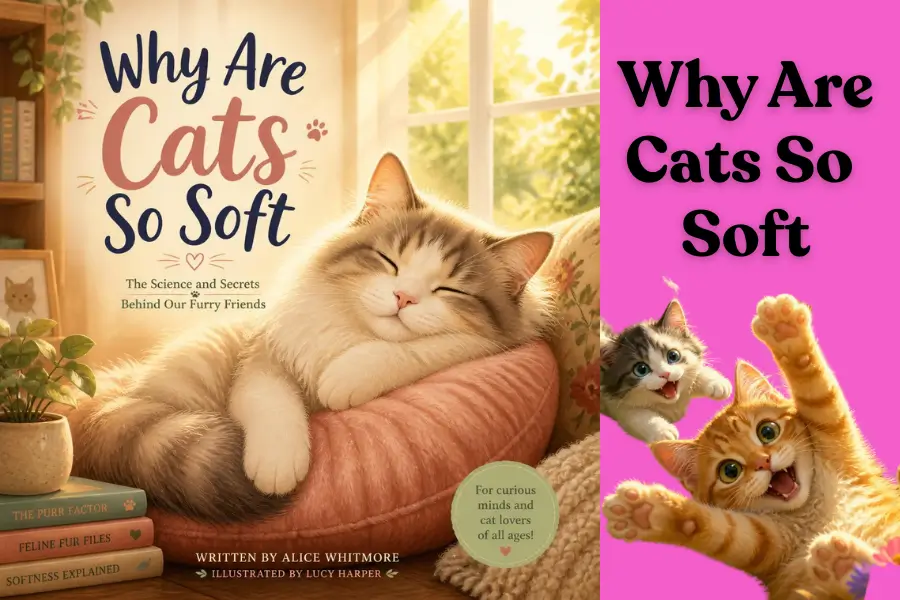
Brushing your cat helps remove these dead hairs, allowing the coat to regain its lightness and shine. By removing these dead hairs, the skin breathes better. A well-coated coat is a healthy coat, which is ready to shine. We often notice that, after brushing, the coat becomes incredibly soft. That’s the magic of regular care.
In this article, you’ll learn more about why cats are so plush and which types of cats have the soft and silky fur. Keep reading!
Why are cats so cute?
15 Reasons why are cats so soft?
There are several reasons why cats have such soft fur. Let’s take a look.
1. Genetics
Cats with long or fine hair, such as Angoras and Persians, often have the softest, fluffiest fur. This is why long-haired cats are usually softer than their short-haired ones. Even if we take two varieties of the breed, Scottish longhaired cats and the same Scottish but shorthaired. Longhaired cats have fur that is much softer to the touch. It is thinner than shorthaired cats.
Therefore, even in newborn kittens, an experienced breeder can easily distinguish a long-haired kitten from a short-haired one. The length of the hair and its thickness in newborns are almost the same. Only with age does it become obvious which of the babies is long-haired and which is short-haired.
2. Age Factor
You may notice your cat’s coat changing as it ages. As your cat gets older, its coat may become less soft; this is because its natural oils are not produced as quickly.
3. Healthy Diet
The condition of your cat’s coat depends on many factors, including its diet. You should always feed your cat high-quality food to keep its coat soft, fluffy, shiny, and healthy.
4. Good Grooming Habits
You can help keep your cat’s coat soft by grooming it regularly. Brush the coat once a week to remove dirt. When you pet your cat, you may notice that some parts of the body are softer than others. This is why cats like to be petted under the chin or around the belly, as this area has extra fat that makes the fur fluffier and softer.
5. Cats have thick and dense fur
One big reason cats feel so soft is their thick fur coat. Most cats have thousands of tiny hairs covering their bodies. This fur acts like a blanket that protects them from cold weather, heat, and small injuries. Their fur is packed closely together, which creates a plush and fluffy texture.
When you pet a cat, your hand glides over this thick layer, making them feel smooth and comforting. Indoor cats often keep especially soft coats because they live in stable temperatures.
6. Their fur has fine hair strands
Cat fur is made of very fine and delicate hair strands. These hairs are much thinner than human hair, which gives cats their silky touch. The softness comes from how these tiny hairs bend easily and feel smooth against the skin.
Fine fur also reduces roughness and creates that luxurious velvety sensation many cat owners love. Some breeds, like Persian or Ragdoll cats, have even finer fur, making them extra soft.
7. Natural skin oils keep fur smooth
Cats produce natural oils from their skin that help maintain healthy fur. These oils coat each strand of hair, keeping it moisturized, shiny, and smooth. Without these oils, a cat’s fur could become dry, brittle, or rough.
Cats spread these oils through grooming by licking their fur daily. This natural conditioning system is one reason their coat often feels incredibly soft and polished.
8. Cats groom themselves constantly
Cats are famous for being very clean animals. They spend a large part of their day grooming their fur with their tongues. This grooming removes dirt, loose hair, and debris while spreading healthy oils across their coat.
Regular grooming helps prevent matting and keeps fur in top condition. Because of this daily care routine, cats maintain their soft and silky appearance naturally.
9. Many cats have a soft undercoat
Under the visible topcoat, many cats also have an undercoat. This hidden layer is made of shorter, fluffier hairs that provide warmth and insulation. The undercoat feels especially soft and downy. Together, the topcoat and undercoat create a rich, cushiony texture. Breeds with thicker undercoats often feel even softer when cuddled.
10. Proper nutrition supports soft fur
A cat’s diet plays a huge role in coat softness. Healthy fats, proteins, and vitamins help support skin health and fur quality. Cats that eat balanced diets often develop shinier and softer coats. Nutrients like omega fatty acids are especially important for reducing dryness and improving fur texture. A healthy body creates healthy fur.
11. Their skin is loose and flexible
Cats have flexible skin that moves easily over their muscles. This loose skin adds to their smooth and soft physical feel. When combined with their plush fur, their body feels gentle and cushion-like. This flexibility also helps cats move gracefully while keeping their body protected.
12. Cats are naturally warm
Cats have a slightly higher body temperature than humans. Their warmth, combined with soft fur, creates a cozy and soothing sensation. Holding or petting a warm cat often feels extra comforting because softness and warmth work together to create a calming effect.
13. Genetics influence fur quality
Different cat breeds have different fur types based on genetics. Some breeds are specifically known for extra-soft coats, such as Maine Coons, Ragdolls, and British Shorthairs. Selective breeding has enhanced softness in many domestic cats. Even mixed-breed cats can inherit soft fur traits from their ancestors.
14. Evolution helped cats develop protective fur
In the wild, soft but dense fur helped cats survive by providing warmth and protection. Fur softness was not just for comfort—it served practical purposes like temperature control and camouflage. Over generations, domestic cats kept these traits, giving them the soft coats we adore today.
15. Seasonal Coat Changes Can Increase Softness
Many cats grow thicker and softer coats during colder seasons. As temperatures drop, their bodies produce extra fur to keep them warm. This seasonal coat often feels fluffier and denser than their summer coat. In winter, cats may become even softer because of this natural adaptation.
Sebaceous glands: a softness boost for cat fur
Cats have sebaceous glands, little hidden ones in their skin. These glands produce a natural oil that nourishes and protects their coat. By brushing your cat, you help distribute this oil evenly, making the fur shiny. A well-brushed cat is a soft and happy cat. A brushed cat makes your cat happy all day.
Brushing, a shared moment of relaxation
You may have noticed that your cat seems calm after a brushing. This is no coincidence. Brushing stimulates the release of endorphins, the famous hormones. The result: your cat feels relaxed and content, and it shows in their fur.
Few tangles, great softness
Tangles in the coat aren’t just unsightly. They make it less pleasant to touch and can even be painful for your cat. Regular brushing eliminates and prevents these tangles from forming. For long-haired cats, such as the Maine Coon or the Persian, daily grooming is recommended by 70% of veterinarians.
When you take the time to brush your cat, you also clean its fur. You can spot small parasites, such as fleas, which make the coat dry and rough. By brushing regularly, you keep these intruders away and give your cat a flawless coat.
A clean and healthy cat coat
Even though our companions spend half their lives grooming themselves, they can’t do it all on their own. Brushing removes dust and impurities that cats can’t reach. Clean fur is simply soft fur.
Did you know how to find your cat’s coat softer after weekly brushing? It is the result of removing impurities that can dull the fur. With a well-cleaned coat, petting becomes a shared pleasure, both for the cat and its human.
Must Read : how to stop kitten playing in litter box?
A clean home means a healthy cat
By brushing your cat regularly, you also reduce the amount of hair left on your furniture and clothing. Fewer flying hairs means fewer regurgitated hairballs. Cats swallow hair when licking themselves, which can cause digestive problems. Brushing your cat is therefore taking care of its health.
According to the study, regular brushing reduces the risk of hairball regurgitation by 55%. It is good news for your cat, but also for you. A healthy cat means a harmonious home.
Why are cats so gentle?
When your cat is gentle, your bond will be stronger. It’s an act of care and affection, a moment of complicity that creates a bond between them. You’ll see, your cat will thank you with its purrs and plush-soft fur. So, get out the brush, sit back, and enjoy this moment with your companion, your gentle cat.
Why are some cats softer than others?
There are many reasons why some cats have softer fur than others. Cats with long hair tend to be softer than cats with short hair. Young cats tend to have softer fur because they have not been exposed to external factors. Some cats also get more attention than others.
Cats that are brushed, groomed, and loved every day tend to have soft fur because their pet owners help them to keep it looking great!
Feral vs. Domestic Cats
It is also important to consider why domestic cats have softer fur than feral cats. When a cat is not a pet , it is difficult for it to stay healthy and well-groomed because it does not always have access to food and shelter. Feral cats also fight with other cats if they find each other in their territory, so feral cats tend to have coarser fur.
Also Read : Feline Hyperesthesia Life Expectancy
Why are cats softer than dogs?
You might be wondering why cats are softer than dogs. For starters, they follow different evolutionary paths. Cats evolved into soft, silky creatures over thousands of years, while dogs were bred to have thick, strong fur and strong muscles.
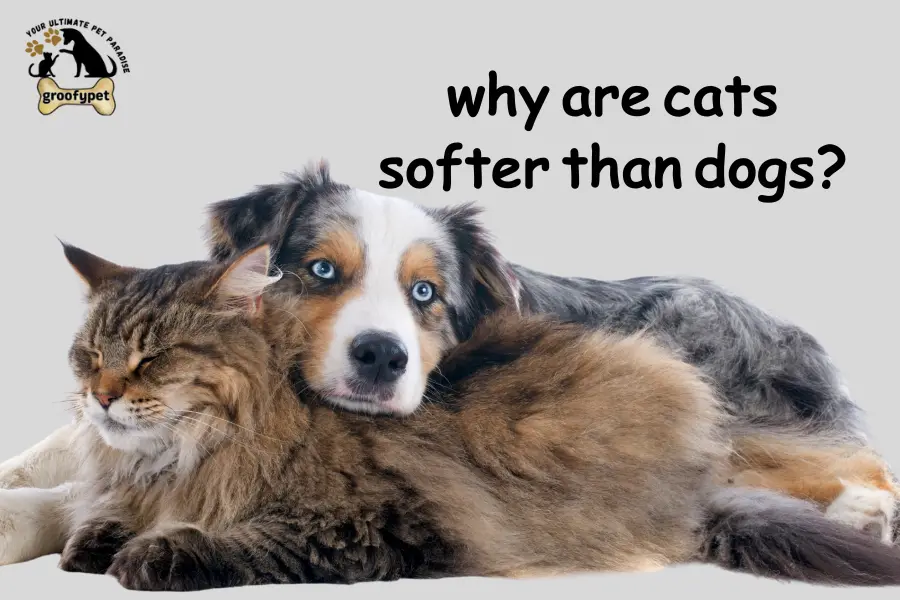
Therefore, some dog breeds do not shed as much as cats. They do not have as much hair on their heads and faces as domestic cats. If you are looking for a dog that is soft like a cat, consider getting a poodle. Poodles are known for having very soft fur that is only slightly wavy or curly.
Which cat breeds have the softest fur?
As mentioned above, some cats have silky and soft fur, which is why some cat breeds are considered soft. Let’s see which cat breeds make our furry friends.
1) Persian Cat
The Persian (or Himalayan) cat has long, silky fur that is straight or slightly wavy. That is why Persian cats are considered one of the plushest cat breeds.
2) Maine Coon
Maine Coon cats have a fluffy, soft coat. The Maine Coon is a type of domestic cat that originated in the northeastern United States.
3) British and Scottish
British (or Scottish) cats typically have thick, smooth fur, both long and short. Like Persians, they are known for being one of the fluffy cat breeds. Longhaired cats, however, have fine and soft fur.
4) Ragdoll
Ragdolls are known for their soft, thick, and fluffy fur. This is why they are considered one of the most comfortable cats to own.
5) Norwegian Forest Cat
Norwegian Forest Cats have long hair with thick, long fur. They also usually have fluff behind their ears, large paws, and fluffy tails.
6) Burmese
The Birman is an old-style cat with soft, wavy fur. They also tend to have very long hair.
How to Keep Your Cat’s Fur Soft and Healthy
- Brush regularly. Weekly brushing (daily for long-haired breeds) removes dead hair, prevents tangles, and evenly distributes natural oils.
- Feed a high-quality diet. Look for cat food with real meat as the first ingredient and added omega fatty acids.
- Keep your cat hydrated. Fresh water supports skin and coat health from the inside out.
- Watch for skin issues. A sudden change from soft to dull, rough fur can signal allergies, parasites, or a nutritional deficiency — a job for your veterinarian or a veterinary dermatologist.
- Reduce hairballs. Regular brushing significantly cuts down on the amount of loose hair a cat swallows during grooming, lowering the risk of hairball regurgitation.
- Keep a clean home. Reducing dust and allergens in your cat’s environment supports healthier skin and coat.
Frequently Asked Questions
Final Thoughts
Humans have been domesticating cats for thousands of years. Over time, they evolved into the fluffier, plush creatures. Therefore, it is important to keep your cat’s coat clean and healthy, because she deserves only the best!
Why are cats so soft? Cats are usually distinguished by their soft fur, so the breeds listed above will not surprise you. If you are looking for a specific breed of kittens or cats that are cute and plush, consider getting one of these cuties!
15 Cat Breeds That Don’t Shed-Your Perfect Pet!
Cat Litter How To Dispose: Eliminate Odors Instantly!