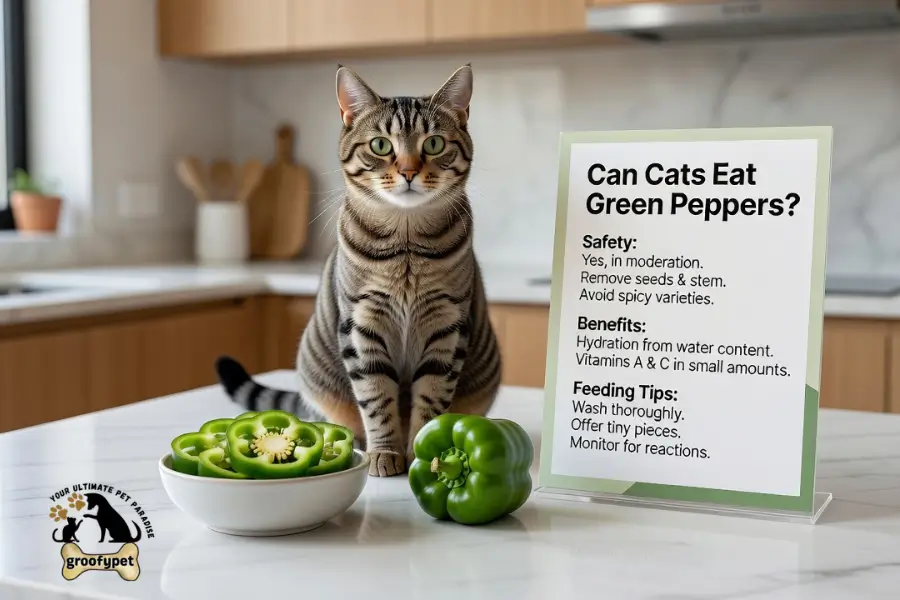
Have you ever caught your cat sniffing or nibbling on a green pepper in your kitchen? You might wonder whether this crunchy vegetable is safe for your furry friend. Can cats eat green peppers? Yes, cats can eat small amounts of plain green bell pepper. Green bell peppers are generally considered non-toxic to cats, but they are not necessary for feline nutrition.
A tiny piece is unlikely to cause problems for most healthy adult cats. However, spicy green peppers, seasoned dishes, and large portions can cause discomfort or other health concerns. Cats are obligate carnivores, meaning their bodies depend on nutrients found in animal-based foods. Although green bell peppers contain vitamins, fiber, and antioxidants, cats do not need them to stay healthy.
Before sharing this vegetable, it is important to understand its safety, possible side effects, nutritional value, and proper serving methods.
Are Green Peppers Safe for Cats?
Plain green bell peppers are generally safe for cats when offered occasionally and in very small amounts. They do not contain the natural heat found in chili peppers, making them a different food from jalapeños and other spicy varieties. Green bell peppers belong to the Capsicum annuum plant family. They are commonly used in salads, sandwiches, stir-fries, and other human meals.
Although they are not considered toxic to cats, that does not mean every cat will tolerate them well. Some cats may experience digestive discomfort after eating unfamiliar plant foods.
Here are a few important things to remember:
- Plain green bell peppers are generally non-toxic to cats.
- Small portions are preferable to large servings.
- Raw and cooked peppers should be completely unseasoned.
- Remove the stem and cut the pepper into tiny pieces.
- Avoid spicy peppers and heavily seasoned recipes.
- Never use vegetables as a replacement for balanced cat food.
If your cat enjoys a tiny piece of green bell pepper, there is usually no reason to panic. However, it should remain an occasional snack rather than a regular part of its diet.
Can Cats Eat Raw Green Peppers?
Yes, cats can eat small pieces of raw green bell pepper. Raw peppers are not naturally spicy and contain water, fiber, and several vitamins.However, their firm texture can make them difficult for some cats to chew. Large pieces may also create a choking risk, particularly for kittens and cats that swallow food quickly.
If you want to offer raw green pepper, follow these precautions:
- Wash the pepper thoroughly under running water.
- Remove the stem and seeds.
- Cut away tough inner portions.
- Slice the flesh into very small pieces.
- Offer one tiny piece and observe your cat.
- Stop feeding it if your cat develops digestive problems.
Raw green peppers have a crunchy texture that some curious cats may enjoy. Others may sniff the vegetable and walk away.
There is no nutritional reason to encourage a cat to eat raw peppers. If your cat does not like them, simply offer its regular food instead.
Can Cats Eat Cooked Green Peppers?
Yes, cats can eat plain cooked green bell peppers in small quantities. Cooking softens the vegetable, which may make it easier to chew than raw pepper.Steaming or boiling without additional ingredients is a simple preparation method. Allow the pepper to cool completely before offering a tiny piece.
However, the ingredients used during cooking matter just as much as the vegetable itself.Avoid giving your cat green peppers prepared with:
Garlic and onions are particularly dangerous for cats. They contain compounds that can damage red blood cells and cause anemia. Even when mixed with otherwise harmless vegetables, these ingredients make a dish unsuitable for cats.
For the safest option, prepare a separate piece of green bell pepper without seasoning. Your cat does not need the added ingredients that make human recipes more flavorful.
Are Green Peppers Good for Cats?
Green bell peppers contain several nutrients that are useful in human diets. They provide vitamin C, vitamin A precursors, vitamin B6, fiber, and antioxidants.However, cats have different nutritional requirements from humans. They obtain essential nutrients from complete and balanced animal-based food.
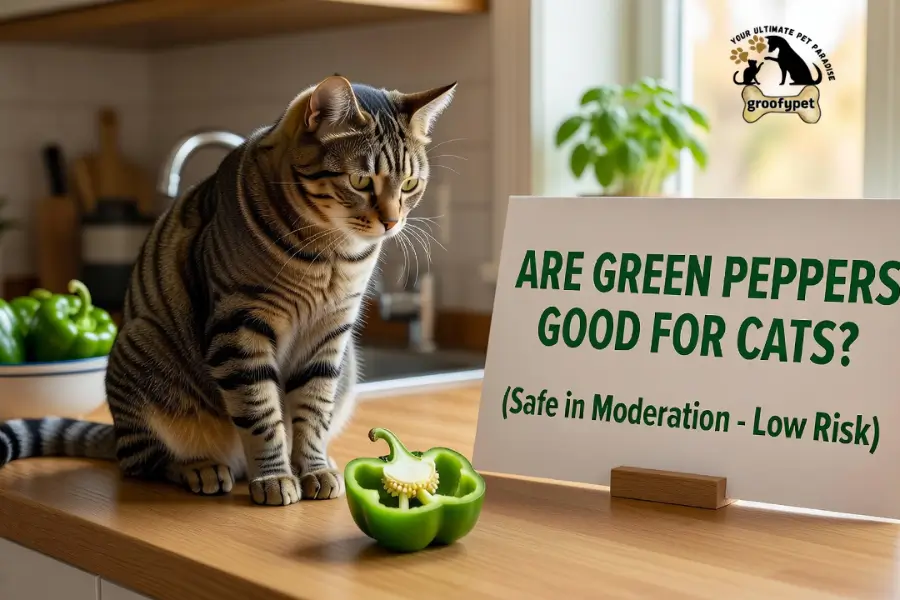
Green peppers may provide a little nutritional variety, but they should not be considered a necessary or particularly beneficial addition to a cat’s diet.
Nutritional Components of Green Bell Peppers
| Nutrient | Potential role |
|---|---|
| Vitamin C | Supports antioxidant activity |
| Vitamin A precursors | Help support normal vision and immune function |
| Vitamin B6 | Helps with normal metabolism |
| Fiber | Supports digestive function |
| Water | Contributes to hydration |
| Antioxidants | Help protect cells from oxidative damage |
One important distinction is that cats require preformed vitamin A from their diet. They cannot depend on plant-based beta-carotene in the same way humans can.Cats also produce their own vitamin C under normal conditions, so they generally do not need vegetables as a vitamin C supplement.
Therefore, even though green peppers contain several nutrients, they do not provide a nutritional advantage that makes them necessary for cats.
Can Green Peppers Make Cats Sick?
Green bell peppers are generally non-toxic, but eating too much can upset a cat’s digestive system. Cats are not naturally adapted to eating large quantities of vegetables.Some cats may tolerate a tiny piece without any problems, while others may develop stomach discomfort after trying even a small amount.
Here are some possible reactions to watch for.
1. Vomiting
A cat may vomit after eating an unfamiliar food. This can happen when its digestive system does not tolerate the new ingredient.If vomiting happens repeatedly, contact your veterinarian rather than assuming the pepper is responsible.
2. Diarrhea
Green peppers contain dietary fiber. Too much fiber from an unfamiliar food may contribute to loose stools or diarrhea.Monitor your cat’s bowel movements after introducing any new treat.
3. Stomach Discomfort
Some cats may experience mild digestive discomfort after eating green peppers. You might notice restlessness, unusual posture, or reduced interest in food.
4. Gas and Bloating
The fiber in vegetables can cause digestive changes in some cats. Eating more than a tiny portion may contribute to gas or abdominal discomfort.
5. Choking Risk
Large or thick pieces of raw green pepper can be difficult for cats to chew and swallow. Always cut the vegetable into tiny, manageable pieces.
6. Reduced Appetite
If your cat eats too many unfamiliar treats, it may become less interested in its regular food. This is particularly concerning because cats need consistent access to nutritionally complete meals.
Important: Contact a veterinarian if your cat experiences repeated vomiting, persistent diarrhea, weakness, difficulty breathing, or other concerning symptoms. Seek immediate veterinary assistance if choking or breathing difficulties occur.
How Much Green Pepper Can a Cat Eat?
There is no scientifically established serving size for green bell peppers in cats. If your veterinarian is comfortable with your cat trying this vegetable, start with a tiny piece of plain pepper flesh.
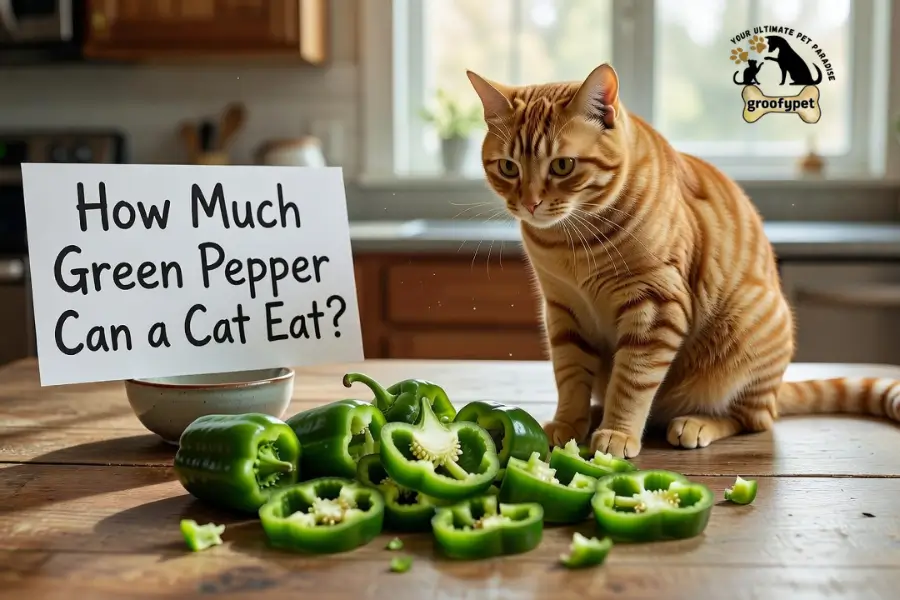
The following table provides cautious, practical guidance rather than medically established serving recommendations.
| Cat’s age or size | Feeding recommendation |
|---|---|
| Small adult cat | Start with one tiny piece |
| Average adult cat | Offer one tiny piece occasionally |
| Large adult cat | Start with one tiny piece |
| Kitten | Avoid introducing unnecessary vegetables |
| Senior cat | Ask your veterinarian before introducing new foods |
Remember that treats should make up no more than 10% of your cat’s daily calorie intake. This includes all snacks and treats, not just vegetables.A tiny piece of green pepper should never replace a nutritionally complete meal. If your cat has diabetes, kidney disease, digestive problems, food allergies, or follows a prescription diet, ask your veterinarian before offering new foods.
Can Kittens Eat Green Peppers?
It is better to avoid giving green peppers to kittens, especially during their early development. Kittens need carefully balanced nutrition to support their growing bodies, muscles, bones, and organs.Their primary diet should consist of complete kitten food formulated for growth. Introducing unnecessary vegetables can also make it harder to monitor their food intake and digestive reactions.
If your kitten accidentally eats a tiny piece of plain green bell pepper, it is not automatically an emergency. However, watch for vomiting, diarrhea, unusual tiredness, or changes in appetite.If symptoms develop, contact your veterinarian.
Can Cats Eat Green Bell Peppers Every Day?
Cats do not need green bell peppers every day. Although a tiny amount is generally non-toxic, regular vegetable feeding offers no established health advantage for cats.Your cat needs a balanced diet containing essential animal-based nutrients, including taurine, arachidonic acid, and preformed vitamin A.
Feeding too many vegetables may also reduce the amount of nutritionally complete food your cat eats. If your cat enjoys green peppers, keep them as an occasional extra. There is no reason to make them a daily part of its feeding routine.
Green Bell Peppers vs. Other Pepper Varieties
Not every pepper is the same. Some varieties are mild, while others contain compounds that produce a burning sensation. Understanding these differences is important because the word pepper describes several different plants and foods.
| Pepper variety | Suitable for cats? | Important information |
|---|---|---|
| Green bell pepper | Generally safe in tiny amounts | Mild and non-spicy |
| Red bell pepper | Generally safe in tiny amounts | Similar to green bell pepper |
| Yellow bell pepper | Generally safe in tiny amounts | Mild sweet pepper |
| Orange bell pepper | Generally safe in tiny amounts | Non-spicy variety |
| Jalapeño | Avoid | Contains irritating capsaicin |
| Serrano pepper | Avoid | Hot and potentially irritating |
| Green chili pepper | Avoid | May irritate the mouth and digestive system |
| Black pepper | Avoid intentionally feeding | Can irritate sensitive cats |
Can Cats Eat Red and Yellow Bell Peppers?
Yes, red and yellow bell peppers are generally considered non-toxic to cats, just like green bell peppers.The main difference is their ripeness and nutritional composition. Green bell peppers are harvested earlier, while red, yellow, and orange varieties develop different colors as they mature.
However, none of these varieties is necessary for feline nutrition. If you offer any color, keep the portion tiny and serve it plain.
Can Cats Eat Green Chili Peppers?
No, you should not intentionally feed green chili peppers to cats.Unlike sweet bell peppers, hot varieties contain capsaicin, a compound responsible for their spicy sensation. It can irritate a cat’s mouth and digestive tract.
A cat that eats a spicy pepper may experience drooling, discomfort, vomiting, or diarrhea.Keep jalapeños, serrano peppers, cayenne peppers, and other hot varieties away from curious cats.
Read This : Can Cats Eat Bitter Gourd? Benefits Risk And Safe Choices!
How to Prepare Green Peppers for Cats
If your cat is interested in green bell peppers, proper preparation can reduce unnecessary risks.Follow these simple steps before offering a small taste.
Step 1: Choose a Fresh Pepper
Select a fresh, firm green bell pepper without mold, soft spots, or visible spoilage.
Step 2: Wash It Properly
Rinse the pepper under running water to remove dirt and surface residues.
Step 3: Remove the Stem
Cut away the stem and remove the tough inner portions. Removing the seeds is also a practical preparation step, although ordinary bell pepper seeds are not established as a specific feline toxin.
Step 4: Cut It Into Tiny Pieces
Make very small pieces to reduce the risk of choking. Avoid offering long strips or large chunks.
Step 5: Cook It if Needed
You can lightly steam or boil the pepper without adding salt, oil, butter, or seasoning. Let it cool before serving.
Step 6: Offer a Tiny Amount
Start with one small piece and observe your cat’s reaction. Do not force your cat to eat it.
What Should You Do If Your Cat Eats Green Peppers?
Finding your cat eating a piece of green bell pepper can be surprising, especially if you were preparing dinner.Fortunately, a small amount of plain green bell pepper is generally not a reason to panic.
Here is what you should do:
- Check the pepper: Determine whether your cat ate a sweet bell pepper or a spicy chili.
- Estimate the amount: Try to understand how much your cat consumed.
- Check other ingredients: Look for onion, garlic, hot sauce, or other potentially harmful ingredients.
- Monitor your cat: Watch for vomiting, diarrhea, drooling, unusual behavior, or reduced appetite.
- Contact your veterinarian: Seek advice if your cat ate spicy peppers, seasoned food, or develops concerning symptoms.
If the pepper came from pizza, pasta, stir-fry, or another prepared dish, check the complete ingredient list.
Onions and garlic are particularly important because they can damage red blood cells in cats. Both raw and cooked forms can be dangerous.Do not try to make your cat vomit at home unless a veterinarian specifically instructs you to do so.
Healthier Vegetable Alternatives for Cats
Some cats show curiosity about vegetables, especially when their owners are preparing meals. While vegetables are not necessary for cats, certain plain options can be offered in small amounts.
Here are a few alternatives to consider.
| Vegetable | Preparation | Important consideration |
|---|---|---|
| Pumpkin | Plain cooked pumpkin | Avoid sweetened pie filling |
| Zucchini | Steamed and chopped | Serve without seasoning |
| Carrots | Cooked until soft | Cut into tiny pieces |
| Broccoli | Plain and steamed | Offer a very small amount |
| Green beans | Cooked and chopped | Avoid salt and sauces |
These vegetables should remain optional treats. They cannot replace the protein, taurine, and other essential nutrients found in complete cat food.If your cat has a medical condition or follows a veterinary-prescribed diet, check with your veterinarian before introducing alternatives.
Also Read : Can Cats Eat Bread Crust? Risks, Benefits and Safe Alternatives!
Frequently Asked Questions
1. Are Green Peppers Poisonous to Cats?
Plain green bell peppers are generally not considered poisonous to cats. A tiny piece is unlikely to cause serious problems in a healthy adult cat. However, spicy peppers and seasoned dishes containing harmful ingredients should be avoided.
2. Can Cats Eat Raw Green Bell Peppers?
Yes, cats can eat small pieces of raw green bell pepper. Wash the vegetable thoroughly, remove the stem, and cut the flesh into tiny pieces. Avoid offering large chunks that could cause choking.
3. Can Cats Eat Cooked Green Peppers?
Yes, plain cooked green peppers are generally safe in tiny amounts. Steaming or boiling is preferable to cooking with oil, butter, salt, garlic, onions, or spices.
4. Can Kittens Eat Green Bell Peppers?
It is best to avoid feeding green bell peppers to kittens. Growing kittens need carefully balanced food that supports healthy development. Their meals should come from complete kitten-formulated nutrition rather than unnecessary vegetable treats.
5. Can Cats Eat Green Pepper Seeds?
Ordinary green bell pepper seeds are not recognized as a specific feline toxin. However, removing them is a sensible preparation step. It also makes the vegetable easier to portion and serve.
6. Are Green Peppers Difficult for Cats to Digest?
Some cats may have difficulty tolerating unfamiliar vegetables. Green peppers contain fiber, and eating too much may cause digestive discomfort, loose stools, or vomiting.
Key Takeaways
- Cats can eat small amounts of plain green bell peppers.
- Green bell peppers are generally considered non-toxic to cats.
- Raw and cooked varieties are acceptable when properly prepared.
- Remove the stem and cut the pepper into tiny pieces.
- Green peppers are not an essential part of feline nutrition.
- Avoid jalapeños, serrano peppers, and other spicy varieties.
- Never serve peppers prepared with onion or garlic.
- Kittens do not need vegetables in their regular diet.
- Watch for vomiting, diarrhea, and other signs of digestive discomfort.
- Complete and balanced cat food should always remain the foundation of your cat’s diet.
Final Thoughts
So, can cats eat green peppers? Yes, a small amount of plain green bell pepper is generally safe for most healthy adult cats. However, it does not offer any essential nutritional benefit that your cat cannot obtain from a properly balanced diet.If your furry friend shows interest in this crunchy vegetable, you can offer a tiny, properly prepared piece occasionally.
Avoid spicy varieties, seasonings, and large portions that could cause digestive problems.Remember that cats are obligate carnivores. Their health depends on getting the right nutrients from appropriate animal-based food. Green peppers can be an occasional curiosity, but they should never become an important part of your cat’s everyday meals.