
Yes, dogs lose their milk teeth as they grow from puppies into adults. This is a natural part of canine dental development, usually beginning around 12 weeks of age. Puppies gradually lose their temporary baby teeth as permanent adult teeth grow underneath them.
During this stage, you may notice loose teeth, increased chewing, mild gum irritation, or tiny spots of blood on toys. Some puppies even swallow their fallen teeth without their owners noticing.
Do dogs lose milk teeth?Understanding the puppy teething process helps you recognize normal changes and identify potential dental problems. It also allows you to make your puppy more comfortable while protecting their developing teeth.
Do Dogs Lose Milk Teeth?
Yes, dogs lose their milk teeth, also called deciduous teeth. These temporary teeth develop during puppyhood and eventually fall out to make room for stronger permanent teeth. Most puppies are born without visible teeth. Their baby teeth usually begin appearing when they are around three weeks old. By six to eight weeks, most puppies have developed their complete set of 28 baby teeth.
As puppies grow, their permanent teeth begin pushing through the gums. This process gradually loosens the baby teeth until they fall out naturally. You might find a tiny tooth on the floor, inside your puppy’s bedding, or attached to a chew toy. However, many puppies swallow their loose teeth while eating or playing.
Losing baby teeth is a normal developmental milestone. However, owners should monitor their puppy’s mouth to ensure adult teeth develop correctly.
At What Age Do Dogs Lose Their Milk Teeth?
Most puppies start losing their milk teeth between three and four months of age. Their permanent teeth gradually replace the temporary ones over the following months. The exact timing can vary depending on the puppy’s breed, size, and individual development.
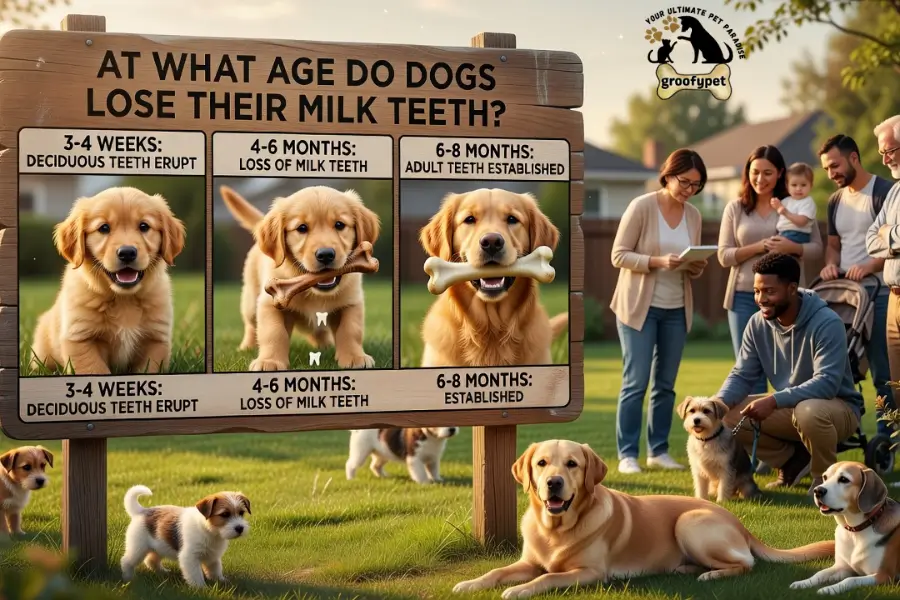
Here is a general puppy dental development timeline:
| Puppy Age | Dental Development | What to Expect |
|---|---|---|
| Birth to 2 weeks | No visible teeth | Puppies depend on their mother’s milk. |
| 2–4 weeks | Baby teeth begin appearing | Small, sharp teeth emerge through the gums. |
| 6–8 weeks | Most baby teeth are present | Puppies generally have 28 deciduous teeth. |
| 3–4 months | Baby teeth begin falling out | Permanent incisors start replacing baby teeth. |
| 4–6 months | Active teething stage | Canines and premolars are replaced. |
| 6–7 months | Most permanent teeth have appeared | Most puppies have 42 adult teeth. |
These ages are approximate rather than strict deadlines. Some puppies develop slightly earlier or later than others.
If your puppy still has baby teeth after their adult teeth have appeared, arrange a veterinary dental examination.
How Many Milk Teeth Do Puppies Have?
Puppies have 28 baby teeth when their temporary teeth are fully developed. These teeth help them bite, chew, and explore different textures as they grow.
Their baby teeth include:
- 12 incisors: Small front teeth used for nibbling and scraping.
- 4 canines: Pointed teeth used for gripping and tearing.
- 12 premolars: Teeth that help break down food.
Unlike adult dogs, puppies do not have baby molars.
As puppies mature, their permanent teeth replace the temporary ones. Adult dogs typically develop 42 permanent teeth, including additional premolars and molars.This change allows adult dogs to handle a wider variety of foods and chewing activities.
What Happens When Puppy Milk Teeth Fall Out?
When puppies begin teething, permanent teeth develop beneath their baby teeth. As these adult teeth move upward, they gradually push the temporary teeth out.The roots of baby teeth are naturally absorbed during this process. This makes the teeth loose and allows them to fall out without requiring assistance.
You may notice your puppy chewing furniture, toys, blankets, or other household objects more frequently. This behavior often increases because chewing can help relieve pressure around the gums.Sometimes, the gums become slightly red or sensitive. You may also notice small amounts of blood on toys after chewing.
Most puppies continue eating and playing normally throughout this stage. However, severe pain, significant bleeding, or difficulty eating should never be dismissed as ordinary teething.
Signs Your Puppy Is Losing Baby Teeth
Puppy teething can cause several noticeable changes in your dog’s behavior and mouth. Some signs are easy to recognize, while others may go unnoticed.
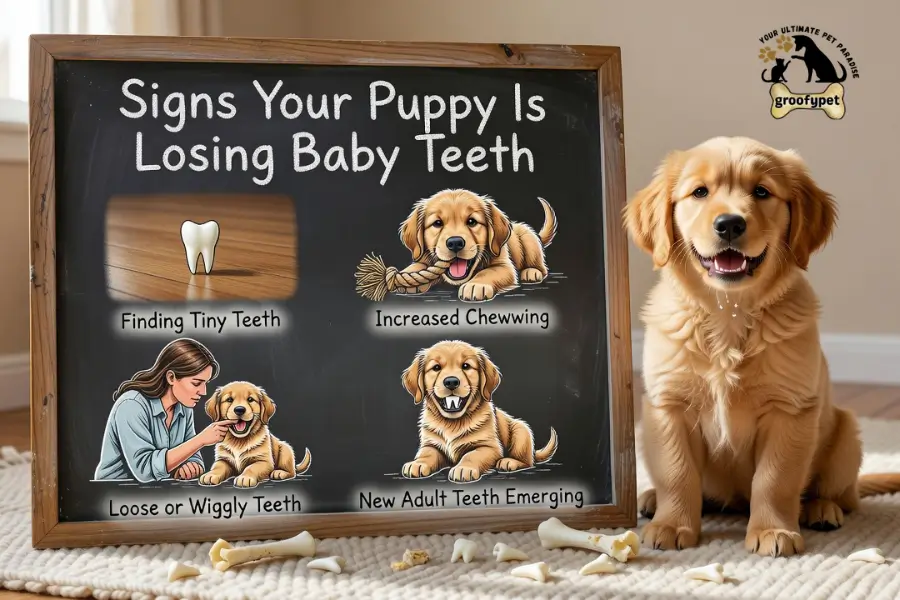
Here are common signs that your puppy is losing milk teeth.
1. Increased Chewing
Your puppy may start chewing toys, shoes, furniture, or other objects more frequently. Chewing helps relieve pressure on the gums during tooth replacement.
2. Loose Teeth
You might notice a baby tooth moving slightly when your puppy eats or plays. This happens because the roots gradually dissolve as permanent teeth develop.
3. Mild Gum Irritation
Your puppy’s gums may look slightly red or swollen. This usually happens because new teeth are pushing through the gum tissue.
4. Small Spots of Blood
You may find tiny blood spots on chew toys, bedding, or food. A small amount of bleeding can occur when a loose tooth falls out.
5. Increased Drooling
Some puppies produce more saliva during teething. This can happen because their gums feel uncomfortable or irritated.
6. Changes in Eating Habits
Your puppy may chew more slowly or prefer softer food when their gums feel sensitive. However, refusing food completely or showing significant pain requires veterinary attention.
7. Finding Tiny Teeth Around the House
You might discover a small white tooth near your puppy’s sleeping area or food bowl. These are naturally shed baby teeth.Not every puppy experiences all these symptoms. Some lose their milk teeth without showing noticeable discomfort.
Do Puppies Swallow Their Baby Teeth?
Yes, puppies commonly swallow their baby teeth when they fall out. This is one reason many owners never find their puppy’s lost teeth.When a loose tooth falls out during eating, chewing, or playing, your puppy may swallow it accidentally. In most cases, this is harmless because the tiny tooth passes through the digestive system.
You generally do not need to worry if your puppy swallows a small baby tooth and continues behaving normally.However, contact your veterinarian if your puppy develops repeated vomiting, abdominal discomfort, loss of appetite, or other unusual symptoms.
There is no need to search for every missing tooth. Instead, focus on checking your puppy’s mouth and monitoring the development of permanent teeth.
Also Read : How Many Treats Per Day for a Puppy? A Safe Feeding Guide
What Should You Do When Your Puppy Loses a Tooth?
Losing baby teeth is a natural process, so most puppies do not need special treatment. However, a few simple steps can make the teething stage more comfortable.
Here is what you can do to support your puppy.
Offer Puppy-Safe Chew Toys
Provide soft, flexible chew toys designed specifically for puppies. These toys give your dog something appropriate to chew while helping relieve gum discomfort. Avoid extremely hard toys, bones, and objects that could damage developing teeth.
Choose Comfortable Food
If your puppy has sensitive gums, offer their regular food softened with a little warm water. You can also ask your veterinarian whether temporarily using a suitable wet puppy food would help.Make sure your puppy continues receiving balanced nutrition for healthy growth.
Avoid Pulling Loose Teeth
Never pull out a loose baby tooth yourself. Even when a tooth looks ready to fall out, pulling can damage the surrounding gum tissue or break the tooth.Allow natural tooth loss unless a veterinarian recommends treatment.
Check Your Puppy’s Mouth Gently
Look for loose teeth, unusual swelling, persistent bleeding, or adult teeth appearing beside baby teeth.Do not force your puppy’s mouth open if they seem uncomfortable. Ask your veterinarian to examine it instead.
Maintain Fresh Drinking Water
Keep clean, fresh water available throughout the day. Proper hydration supports general health and helps your puppy remain comfortable.
What Are Retained Puppy Teeth?
Retained puppy teeth are baby teeth that remain in the mouth after their permanent replacements have started developing.Normally, baby teeth fall out as adult teeth emerge. However, sometimes a temporary tooth stays in place instead of falling out naturally.
This condition is called retained deciduous teeth or persistent deciduous teeth.
It is particularly common in smaller dog breeds, including:
- Yorkshire Terriers
- Chihuahuas
- Pomeranians
- Maltese
- Toy Poodles
- Dachshunds
When both baby and adult teeth remain in the same area, they can create overcrowding.
This may cause several problems:
- Food and bacteria can become trapped between teeth.
- Gums may become irritated or inflamed.
- Permanent teeth may grow in abnormal positions.
- Bite alignment may become affected.
- Dental disease may develop earlier.
Retained baby teeth should receive veterinary attention. A veterinarian may recommend removing the persistent tooth to protect the developing permanent tooth and surrounding tissues.
Do not attempt to remove a retained tooth at home because its root can be fragile and extraction requires proper veterinary care.
When Should You Worry About Your Puppy Losing Teeth?
Most puppy tooth loss is harmless. However, certain symptoms can indicate dental injuries, infections, or other oral health problems.
Pay attention to these warning signs:
| Warning Sign | Why It Matters |
|---|---|
| Heavy or persistent bleeding | May indicate injury or another dental problem. |
| Severe mouth pain | Could suggest an infection or damaged tooth. |
| Facial or gum swelling | May indicate inflammation or infection. |
| Refusing food | Could be associated with significant oral discomfort. |
| Broken teeth | Can expose sensitive inner tooth structures. |
| Persistent bad breath | May indicate dental disease or infection. |
| Double teeth | May indicate retained baby teeth. |
If you notice any of these symptoms, arrange a veterinary examination.One particularly important issue is double teeth. This happens when an adult tooth grows beside a baby tooth that has not fallen out.
Do not wait several months to see whether the retained tooth disappears. Early veterinary attention can help prevent permanent dental problems.
Read This : Dog Age in Human Years by Breed: Complete Age Chart
Puppy Teething Timeline at a Glance
Understanding the different stages of puppy dental development helps you prepare for changes before they happen.
Puppy dental development
- 2–4 weeks: First baby teethSmall deciduous teeth begin emerging through the gums.
- 6–8 weeks: Complete baby teethMost puppies have developed their 28 temporary teeth.
- 3–4 months: Teething beginsBaby teeth start loosening as permanent teeth develop.
- 4–6 months: Active replacementMore baby teeth fall out and adult teeth continue emerging.
- 6–7 months: Adult teethMost puppies have their complete set of 42 permanent teeth.
Approximate ages. Individual puppies may develop at different rates.
How to Keep Your Puppy’s Teeth Healthy During Teething
Good dental care should begin during puppyhood rather than waiting until all adult teeth appear.Here are practical ways to protect your puppy’s developing teeth.
1. Introduce Toothbrushing Early
Help your puppy become comfortable with gentle mouth handling. Start with a puppy-safe toothbrush or finger brush and veterinary-approved dog toothpaste.Never use human toothpaste because some ingredients, including xylitol, can be dangerous to dogs.
2. Choose Appropriate Chew Toys
Select toys that are soft enough to avoid damaging developing teeth. Avoid extremely hard materials that could cause tooth fractures.
3. Schedule Regular Veterinary Checkups
Ask your veterinarian to examine your puppy’s mouth during routine vaccinations and wellness visits.These examinations help identify retained baby teeth, abnormal tooth growth, and other dental concerns.
4. Monitor Adult Teeth
Check whether permanent teeth are growing in normally. Pay particular attention when adult canine teeth appear because retained baby canine teeth can cause overcrowding.
5. Avoid Giving Inappropriate Bones
Hard bones and other extremely tough chewing objects can damage teeth. Choose products specifically designed for puppies instead.
6. Make Dental Care a Routine
Continue brushing your dog’s teeth after the teething stage ends. Regular brushing helps reduce plaque buildup and supports better long-term oral health.
Frequently Asked Questions
Do Dogs Lose All Their Milk Teeth?
Yes, puppies normally lose all 28 baby teeth as their permanent teeth develop. These temporary teeth are gradually replaced by 42 adult teeth. However, some puppies develop retained baby teeth that require veterinary attention.
What Age Do Puppies Start Losing Their Baby Teeth?
Most puppies start losing their baby teeth around three to four months of age. The process continues until approximately six or seven months, when most permanent teeth have appeared.
Do Puppies Lose Their Canine Teeth?
Yes, puppies lose all four baby canine teeth. These pointed teeth are replaced by permanent adult canines, which are larger and stronger.
Do Puppies Swallow Their Baby Teeth?
Yes, puppies often swallow their loose baby teeth while eating or chewing. This is generally harmless, and the tiny teeth usually pass through their digestive system naturally.
Is It Normal to Find Blood When Puppy Teeth Fall Out?
A few tiny blood spots on toys or bedding can be normal during teething. However, continuous bleeding, significant blood loss, or painful swelling requires veterinary attention.
How Many Baby Teeth Do Puppies Have?
Puppies have 28 deciduous teeth, including 12 incisors, four canines, and 12 premolars. These teeth gradually disappear as permanent adult teeth develop.
Do Small-Breed Dogs Lose Their Milk Teeth Later?
Not necessarily. However, small-breed dogs have a greater tendency to develop retained baby teeth. Their owners should monitor dental development carefully and schedule regular veterinary examinations.
What Happens If Puppy Baby Teeth Do Not Fall Out?
Baby teeth that remain after permanent teeth appear may cause overcrowding, abnormal tooth positioning, and gum problems. A veterinarian can examine the mouth and determine whether extraction is necessary.
Final Thoughts
So do dogs lose milk teeth? Dogs naturally lose their milk teeth as they grow into adulthood. This process usually begins around three to four months and continues until approximately six or seven months.During this period, you may notice increased chewing, loose teeth, mild gum irritation, and occasional blood spots on toys. These changes are generally normal parts of puppy development.
However, keep an eye out for retained baby teeth, persistent bleeding, swelling, and difficulty eating. Regular veterinary examinations help ensure permanent teeth develop correctly.With appropriate chew toys, gentle dental care, and regular checkups, you can help your puppy develop a healthy adult smile.