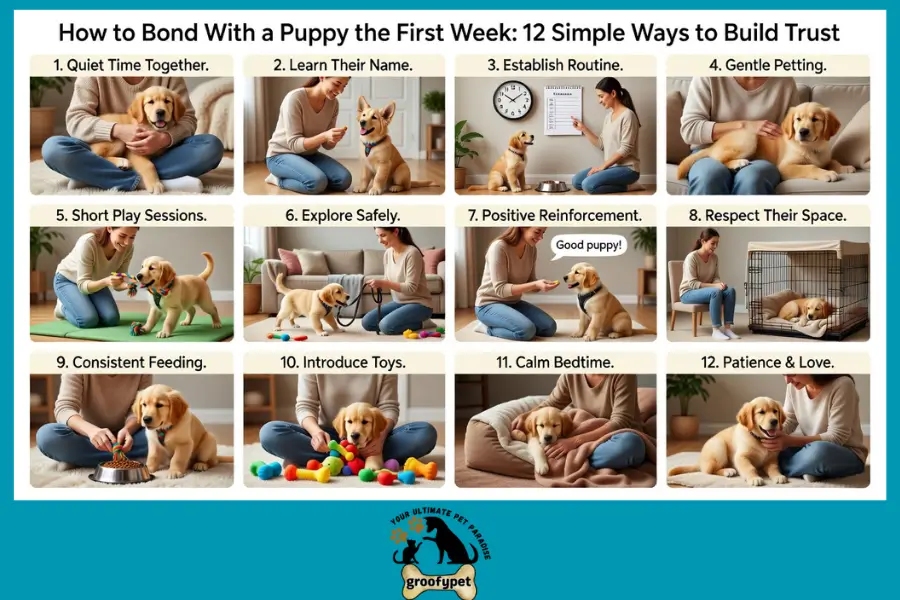
Bringing a new puppy home is an exciting experience, but those first few days can also feel challenging. Your puppy is entering an unfamiliar environment, meeting new people, and adjusting to a completely different routine. You might wonder whether your puppy feels comfortable, recognizes you as a trusted person, or understands that your home is now its safe place.
The secret is to build trust through patience, gentle interactions, consistent care, and positive experiences.
To bond with a puppy during the first week, create a safe environment, establish a predictable routine, spend quality time together, offer gentle affection, and use positive reinforcement. Avoid forcing interaction or overwhelming your puppy. Allow it to approach you naturally and become comfortable at its own pace.
Remember that every puppy is different. Some become comfortable within a few days, while others need several weeks to feel completely secure.
Why the First Week Matters for Bonding With Your Puppy
The first week introduces your puppy to a completely new lifestyle. It may have recently left its mother and littermates, familiar sleeping areas, and the people who previously cared for it. Suddenly, everything smells and sounds different. Your puppy must learn where to sleep, where to eat, whom to trust, and what to expect throughout the day.
This adjustment period creates an important opportunity to build positive associations with you. When your puppy receives consistent care, gentle attention, and enough time to rest, it gradually learns that you are a reliable source of comfort.
However, bonding does not mean keeping your puppy busy all day. Puppies need plenty of sleep and quiet time to process new experiences. Your goal during the first week should be simple: help your puppy feel safe before expecting it to learn complicated commands or follow household rules.
How to Bond With a Puppy the First Week: 12 Practical Ways
Let’s explore 12 practical ways to build a strong relationship with your new puppy during those important first seven days.

1. Give Your Puppy Time to Adjust to the New Home
One of the biggest mistakes new puppy owners make is expecting immediate affection. Your puppy might hide behind furniture, avoid eye contact, or spend considerable time exploring its surroundings. These behaviors can be normal during the adjustment period.
Instead of constantly picking up your puppy or calling it toward you, allow it to explore a small, puppy-safe area. Sit nearby and let your puppy approach whenever it feels comfortable. Keep the environment peaceful and avoid introducing too many people immediately.
For example, if your puppy sits quietly in a corner, sit a short distance away and speak gently. You can offer a small treat when it voluntarily approaches. This teaches your puppy that being around you brings positive experiences without pressure.
2. Create a Safe and Comfortable Sleeping Space
A comfortable sleeping area helps your puppy develop a sense of security. Choose a quiet location where your puppy can rest without constant interruptions. You can use a comfortable puppy bed or an appropriately sized crate introduced gradually and positively. Place familiar bedding or a safe comfort item in the sleeping area.
Keep fresh water accessible and ensure the space has a comfortable temperature. Avoid using the sleeping area as punishment. Your puppy should associate it with relaxation rather than fear. Young puppies need substantial sleep, often around 18–20 hours across a 24-hour period, although individual needs vary.
Respecting your puppy’s rest time helps prevent overstimulation and makes your interactions more enjoyable.
3. Spend Quality Time Together Without Forcing Interaction
Your puppy does not need constant entertainment to develop a strong connection with you.Sometimes, simply sitting together is one of the best bonding activities.Sit on the floor, read a book, or work quietly while your puppy explores nearby. Allow it to sniff your hands, investigate your shoes, or settle beside you.
Avoid leaning over your puppy or repeatedly reaching toward its face. These actions can feel intimidating, particularly when your puppy is still unfamiliar with you. When your puppy approaches, reward the interaction with gentle praise or a small treat. These quiet moments teach your puppy that your presence is comfortable and predictable.
4. Use Gentle Touch to Build Trust
Physical affection can strengthen your relationship, but every puppy has different preferences. Some puppies enjoy gentle chest rubs, while others prefer being petted around their shoulders or sides. Start with brief, gentle touches and observe your puppy’s reaction.
Look for relaxed body language, a loose posture, and voluntary approaches. If your puppy moves away, freezes, turns its head, or repeatedly licks its lips, give it space. Never force hugs, kisses, or prolonged handling. A helpful approach is to pet your puppy briefly, pause, and see whether it chooses to move closer for more attention. This teaches your puppy that its boundaries are respected.
5. Establish a Consistent Daily Routine
Puppies feel more comfortable when they understand what happens throughout the day. A predictable routine helps them become familiar with feeding, toilet breaks, playtime, training, and sleep. Try to keep important activities around similar times each day.
For example, your morning routine might include taking your puppy outside for a toilet break, offering breakfast, enjoying a short play session, and providing time to rest. Consistency also makes toilet training easier because your puppy begins learning when and where to eliminate.
Avoid changing the entire schedule every day. A familiar routine creates positive expectations and helps your puppy recognize you as a dependable caregiver.
6. Hand-Feed Some Meals to Create Positive Associations
Hand-feeding can be a useful way to encourage positive interactions during the first week.Instead of giving every meal directly from a bowl, offer a small portion of your puppy’s regular food from your hand when it is comfortable doing so.You can also use individual pieces of kibble to reward voluntary approaches, responding to its name, or simple training exercises.
Never withhold necessary meals to make your puppy approach you.If your puppy seems nervous about eating from your hand, place the food in its regular bowl and sit nearby.The goal is to create positive associations with your presence, not pressure your puppy into eating.
7. Start With Simple Positive Reinforcement Training
Training is not just about teaching commands. It also helps your puppy understand how to communicate and interact with you.
Start with simple activities such as
Responding to its name.
- Following a treat with its nose.
- Coming toward you voluntarily.
- Sitting when naturally offered.
- Learning to settle calmly.
Use small rewards, gentle praise, and short sessions.For example, say your puppy’s name once. When it looks toward you, immediately reward it with a small treat.Repeat this activity for a few minutes when your puppy is relaxed.Avoid shouting, punishment, or forcing your puppy into positions. Reward-based training builds confidence and makes learning enjoyable.
8. Play Short and Age-Appropriate Games
Play is an excellent way to create happy memories with your puppy.During the first week, choose simple activities that do not require too much physical effort.
Some enjoyable options include:
- Gentle tug games with an appropriate puppy toy.
- Rolling a soft ball across the floor.
- Encouraging your puppy to follow a toy.
- Hiding a few pieces of kibble in an easy-to-find location.
- Playing simple name-recognition games.
Keep sessions short and allow your puppy to rest whenever it becomes tired. Avoid rough wrestling, jumping from furniture, or repetitive high-impact activities. The purpose of play is to create enjoyable interactions while helping your puppy develop confidence.
9. Talk to Your Puppy in a Calm and Friendly Voice
Your puppy is learning to recognize your voice, tone, and everyday sounds. Speak gently when offering food, preparing for walks, or inviting your puppy to play. Use consistent words for common activities. For example, you might say “outside” before taking your puppy for a toilet break.
Avoid shouting or using an intimidating tone when your puppy makes mistakes. A calm voice helps make everyday interactions more predictable… You can also talk to your puppy while sitting nearby. It might not understand your sentences, but it can become familiar with your voice and the positive experiences associated with it.
10. Respect Your Puppy’s Personal Space
Building a strong bond does not mean your puppy must always want attention. Some puppies naturally enjoy cuddling, while others prefer exploring independently. Pay attention to signs that your puppy needs space.
These may include:
- Moving away from your hand.
- Turning its head repeatedly.
- Hiding behind furniture.
- Freezing during interaction.
- Showing a tucked tail or tense posture.
- Trying to escape from handling.
When you notice these signals, stop what you are doing and give your puppy room.
Respecting boundaries helps develop trust because your puppy learns that it can communicate discomfort without being forced into an interaction.
11. Introduce Family Members Gradually
If several people live in your home, introduce them slowly.
Allow your puppy to meet family members one at a time in a calm environment.
Ask everyone to avoid chasing, shouting, crowding, or repeatedly picking up the puppy.
Children should always be supervised around puppies. Teach them to approach gently and avoid disturbing the puppy while eating or sleeping.You can also encourage family members to offer appropriate treats or participate in calm play.
Gradual introductions help prevent overwhelming experiences and allow your puppy to become comfortable with different people.
12. Reward Calm Behavior and Small Achievements
Not every successful interaction needs to involve an exciting game.Sometimes, your puppy simply sitting peacefully near you is worth rewarding.Notice small achievements, such as approaching you voluntarily, relaxing beside your chair, responding to its name, or calmly exploring a new room.
Offer praise or a small treat when appropriate.Avoid expecting perfect behavior during the first week.Your puppy is still learning how to live in your home. Recognizing small improvements helps you focus on progress rather than mistakes.
Your First 7 Days With a New Puppy: A Simple Bonding Schedule
Having a daily plan can make the first week less stressful for both you and your puppy.You do not need to follow a strict timetable. Instead, use the following schedule as a flexible guide to introduce new experiences gradually.
| Day | Main goal | Activities | What to expect |
|---|---|---|---|
| Day 1 | Feeling safe | Explore one small area, offer food and water, provide rest | Nervousness and curiosity |
| Day 2 | Building familiarity | Gentle interaction, name recognition, regular meals | Beginning to explore |
| Day 3 | Developing trust | Short play sessions and calm companionship | More comfortable interactions |
| Day 4 | Positive experiences | Simple reward-based training and gentle handling | Increased confidence |
| Day 5 | Strengthening connection | Interactive games and relaxed time together | More engagement |
| Day 6 | Building consistency | Repeat routines and simple training activities | Better familiarity |
| Day 7 | Reviewing progress | Play, gentle training, and quiet companionship | Early signs of trust |
Important: Your puppy does not need to master something new every day. If it seems frightened or uncomfortable, repeat familiar activities instead of introducing something different.
What Should You Prioritize During Each Day?
Days 1–2: Safety and comfort
Focus on helping your puppy understand its new surroundings. Show it where to sleep, eat, drink, and go for toilet breaks. Keep visitors and unnecessary noise to a minimum.
Days 3–4: Familiarity and positive experiences
Begin short name-recognition games and gentle training sessions. Reward your puppy for approaching you and exploring its environment.
Days 5–6: Confidence and communication
Introduce simple games and encourage calm interactions with family members. Continue following a predictable routine.
Day 7: Building consistency
Look at how your puppy responds to everyday activities. Notice whether it approaches you more often, relaxes nearby, or shows interest in playing together.
Remember, bonding is not a seven-day competition. Your puppy may need more time, and that is perfectly normal.
How Much Time Should You Spend With a New Puppy During the First Week?
New puppies need companionship, but they also need plenty of sleep and opportunities to relax.Rather than spending several continuous hours playing, divide your attention into short interactions throughout the day.For example, you can spend a few minutes practicing name recognition, offer a short play session, and then allow your puppy to rest.
Your daily routine should include:
- Regular meals based on your puppy’s age and feeding plan.
- Frequent toilet opportunities, especially after sleeping, eating, drinking, and playing.
- Several short training and play sessions.
- Gentle social interaction.
- Quiet time and sufficient sleep.
- Gradual practice being comfortable alone.
Avoid leaving a young puppy alone for long periods. Start with very short separations and gradually increase the time as it becomes comfortable.The right amount of attention depends on your puppy’s age, temperament, health, and energy level.
How to Make Your Puppy Trust You Faster
Trust develops when your puppy repeatedly experiences safety, comfort, and predictable care.Here are five habits that can make the process easier.
- Be consistent with your behavior. Use similar routines and gentle communication every day. Avoid confusing your puppy with constantly changing expectations.
- Use positive reinforcement. Reward behaviors you want to encourage. Small treats, praise, and play can help your puppy associate you with enjoyable experiences.
- Avoid punishment. Accidents, chewing, and occasional barking are normal parts of puppy development. Redirect unwanted behavior instead of frightening your puppy.
- Learn canine body language. A relaxed body, voluntary approach, and comfortable posture can indicate that your puppy feels safe. Recognizing stress signals helps you respond appropriately.
- Allow your puppy to make choices. Give it opportunities to approach you, explore its surroundings, and rest without unnecessary interference.
The most important thing to remember is that you cannot force trust. You earn it through repeated positive interactions.
Also Read : Why Does My Dog Sleep On My Pillow So Often?
Signs Your Puppy Is Starting to Bond With You
You might not notice a dramatic change during the first few days, but small behavioral changes can indicate growing comfort.Here are 10 signs that your puppy may be developing a connection with you.
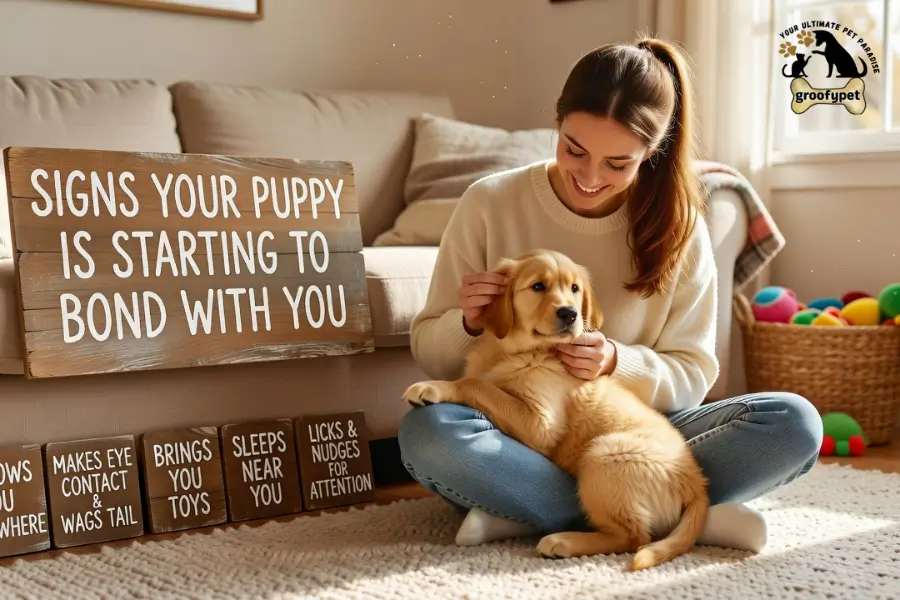
1. Your Puppy Follows You Around
Your puppy may begin following you from one room to another because your presence has become familiar and comforting.However, following you everywhere is not necessary for a healthy bond.
2. It Approaches You Voluntarily
A puppy that walks toward you without being called may be showing growing confidence and interest in interacting.
3. It Responds to Your Voice
Your puppy might look toward you when you speak or recognize familiar words associated with food, play, and everyday routines.
4. It Relaxes Near You
Sleeping or resting close to you can indicate that your puppy feels comfortable in your presence.
5. It Brings Toys to You
Some puppies invite interaction by carrying their favorite toys toward their owners.
This can become a lovely way to strengthen your relationship through play.
6. It Shows Excitement When You Return
Your puppy may wag its tail, approach you, or show playful behavior when you return after a short absence.
7. It Checks In With You
During exploration, your puppy might occasionally look toward you before continuing to investigate its surroundings.
8. It Enjoys Gentle Interaction
A puppy that voluntarily stays close during gentle petting may be becoming more comfortable with physical affection.
9. It Initiates Play
Your puppy may start bringing toys, bouncing playfully, or encouraging you to participate in simple games.
10. It Seeks Comfort Near You
When something unfamiliar happens, your puppy might move closer to you or settle nearby.This can indicate that your presence is becoming a source of reassurance.
Remember: These signs are not a checklist that every puppy must complete. Some puppies show affection through quiet companionship rather than constant physical contact.
Puppy Body Language: How to Know If Your Puppy Feels Comfortable
Understanding your puppy’s body language is essential for developing trust.
| Behavior | What it may indicate | How you should respond |
|---|---|---|
| Loose, relaxed body | Comfort and relaxation | Continue gentle interaction |
| Voluntary approach | Interest and confidence | Reward the interaction |
| Tucked tail | Fear or uncertainty | Give extra space |
| Repeated lip licking | Possible stress | Reduce pressure |
| Turning away | Avoidance or discomfort | Stop reaching toward the puppy |
| Yawning outside normal tiredness | Possible stress | Make the environment calmer |
| Hiding | Fear or need for security | Allow the puppy to settle |
| Playful body movements | Interest in interaction | Offer an appropriate game |
No single behavior tells the whole story. Consider the situation and your puppy’s overall body language.
5-Minute Bonding Activity: A Simple Trust-Building Exercise
You do not need expensive toys or complicated training exercises to develop a relationship with your puppy.Try this simple five-minute activity when your puppy is awake, relaxed, and comfortable.
- Step 1: Find a quiet place. Sit on the floor in a comfortable room without loud noises or distractions.
- Step 2: Give your puppy space. Avoid immediately reaching for it or trying to pick it up.
- Step 3: Speak gently. Use a friendly voice and allow your puppy to become familiar with your presence.
- Step 4: Encourage voluntary interaction. If your puppy approaches, offer a small piece of its regular food or a suitable treat.
- Step 5: Finish positively. Allow your puppy to leave whenever it wants. End the activity before it becomes tired or uncomfortable.
Repeat this exercise during the week when your puppy is comfortable.The purpose is not to measure how much your puppy trusts you. It is to create another positive experience together.
Mistakes to Avoid When Bonding With a Puppy in the First Week
Even loving owners can unintentionally make the adjustment period more difficult.
Here are 10 common mistakes and better alternatives.
| Common mistake | Better alternative |
|---|---|
| Forcing cuddles | Allow voluntary affection |
| Inviting too many visitors | Introduce people gradually |
| Overwhelming your puppy | Introduce new experiences slowly |
| Ignoring sleep needs | Provide quiet resting periods |
| Shouting or punishing | Use positive reinforcement |
| Changing routines constantly | Establish predictable daily habits |
| Leaving the puppy alone too long | Practice gradual separation |
| Expecting instant obedience | Keep training short and simple |
| Allowing rough handling | Supervise children and teach gentle interaction |
| Ignoring fear signals | Respect body language and provide space |
Why Should You Avoid Overwhelming Your Puppy?
Puppies are still developing their ability to handle unfamiliar experiences.Too many visitors, loud noises, long play sessions, and forced interactions can create unnecessary stress.Socialization is important, but it should involve positive, controlled experiences rather than exposing your puppy to everything immediately.
Follow your veterinarian’s advice about vaccination and safe opportunities to meet other dogs and explore public areas.
Also Read : Why Do Dogs Bark at Cats? 10 Reasons and Proven Solutions!
What If Your Puppy Doesn’t Bond With You in the First Week?
It can feel disappointing when your new puppy does not immediately show affection.Perhaps it hides when you approach, sleeps in its own corner, or prefers exploring rather than sitting beside you.However, this does not mean your puppy dislikes you.
Some puppies are naturally cautious. Others need additional time to adjust after leaving their mother, littermates, previous home, or familiar surroundings.
Instead of trying harder to get attention, make interactions easier and more comfortable.
Try these approaches:
- Sit near your puppy without demanding attention.
- Offer meals and treats in a calm environment.
- Avoid sudden movements and loud noises.
- Establish consistent sleeping and feeding routines.
- Reward voluntary approaches.
- Allow your puppy to explore safely.
- Give it enough rest between activities.
If your puppy shows persistent fear, severe distress, or sudden behavioral changes, consult a veterinarian or qualified force-free dog behavior professional.
Also remember that a puppy’s lack of affection does not automatically indicate a bonding problem. Health, tiredness, temperament, and environmental changes can all affect behavior.
Special Tips for Bonding With a Rescue or Adopted Puppy
Rescue puppies may have different experiences from puppies raised in a familiar home environment.Some may have experienced inconsistent care, unfamiliar people, or stressful surroundings.This does not mean every rescue puppy has experienced trauma. However, providing extra patience can help make the transition easier.
Here are some useful tips:
Keep the environment predictable. Avoid changing sleeping arrangements, feeding locations, and daily routines unnecessarily.
- Allow voluntary interaction. Do not force your rescue puppy to accept handling or affection.
- Use familiar food when possible. Ask the previous caregiver or rescue organization about its existing diet before making changes.
- Introduce people slowly. Give your puppy time to become comfortable with each family member.
- Reward positive experiences. Use treats, praise, and play to build pleasant associations.
Some adopted puppies become comfortable quickly, while others need weeks or months. Let your puppy’s progress guide your approach.
When Should You Worry About Your Puppy’s Behavior?
Some nervousness is normal when a puppy enters a new home. However, not every behavioral or physical change should be considered part of the adjustment period.
Pay attention to the following warning signs:
- Persistent refusal to eat.
- Refusing water or showing signs of dehydration.
- Repeated vomiting or diarrhea.
- Extreme tiredness or difficulty waking.
- Signs of pain or discomfort.
- Severe or worsening fear.
- Sudden changes in normal behavior.
Young puppies can become dehydrated and unwell quickly. Contact your veterinarian promptly if your puppy refuses food, particularly if it is also lethargic or showing other symptoms.
Seek urgent veterinary care for serious symptoms such as difficulty breathing, collapse, seizures, or repeated vomiting.Building a strong bond also means recognizing when your puppy needs professional care.
Frequently Asked Questions
How long does it take to bond with a new puppy?
Bonding can begin within the first few days, but developing a strong relationship often takes several weeks or longer. Your puppy needs time to become familiar with your voice, routine, surroundings, and behavior. Patience and consistent positive interactions help build lasting trust.
How do I make my puppy love and trust me?
Provide regular meals, gentle affection, comfortable sleeping arrangements, and positive experiences. Spend time playing and practicing simple training exercises. Avoid punishment and forced interactions. Allowing your puppy to approach you voluntarily helps develop a healthy relationship.
Should I sleep near my puppy during the first week?
Yes, sleeping near your puppy can provide comfort during the initial adjustment period. You can place its crate or bed near your sleeping area. This allows you to respond to nighttime toilet needs while helping your puppy feel less isolated.
How much should I play with my puppy during the first week?
Offer several short play sessions throughout the day rather than long, exhausting activities. Choose gentle games appropriate for your puppy’s age and energy level. Allow plenty of rest between sessions because young puppies need substantial sleep for healthy development.
Why is my new puppy scared of me?
Your puppy may feel nervous because your home, voice, smells, and surroundings are unfamiliar. Some puppies also have naturally cautious personalities. Give your puppy space, speak gently, and offer positive experiences without forcing physical contact.
Final Thoughts
The first week with a new puppy is about creating comfort, trust, and positive experiences rather than expecting instant affection.Your puppy is learning about a completely different world. Every gentle interaction, regular meal, comfortable nap, and enjoyable play session helps make that world feel safer.
Focus on establishing a predictable routine, understanding canine body language, and respecting your puppy’s personal space.Some puppies become attached quickly, while others need additional time to feel comfortable. Neither experience means you are doing something wrong.
The strongest bond does not develop through one perfect day. It grows through hundreds of small moments when your puppy learns that it can depend on you.
How to Train Your Dog to Greet Visitors Calmly? 10 Simple Steps