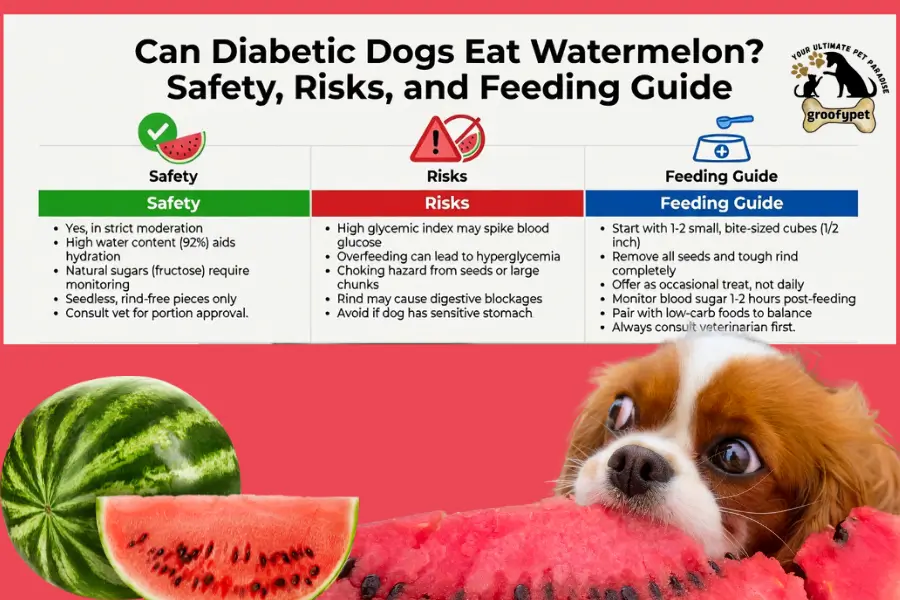
Can diabetic dogs eat watermelon? Watermelon is not toxic to dogs, but its natural sugars and carbohydrates can affect blood glucose levels. Dogs with diabetes should not eat watermelon without veterinary approval. Whether a small portion is appropriate depends on the dog’s glucose control, insulin treatment, regular diet, and individual health needs.
Watermelon is a popular summer fruit because it contains plenty of water and has a refreshing taste. Many dog owners enjoy sharing a small piece with their pets. However, feeding a dog with diabetes requires more care than choosing an occasional snack for a healthy dog.
If your dog receives insulin, follows a prescription diet, or has difficulty maintaining stable blood glucose, even small dietary changes deserve attention. Understanding the risks can help you make safer decisions about treats.
Can Diabetic Dogs Eat Watermelon?
Diabetic dogs may be able to eat a small amount of fresh watermelon if their veterinarian approves it. However, watermelon is not an ideal treat for every dog with diabetes because it contains naturally occurring sugar.
Canine diabetes mellitus affects the body’s ability to regulate blood glucose. Most diabetic dogs need insulin treatment, consistent meals, and regular veterinary monitoring to manage their condition.
Watermelon contains natural sugars and digestible carbohydrates. These nutrients can contribute to a rise in blood glucose after eating. The effect depends on the amount consumed and the individual dog’s condition.
According to Cornell University’s College of Veterinary Medicine, consistent meals and careful treat selection are important for diabetic dogs because excessive treats and carbohydrate-rich snacks can interfere with insulin regulation.
Before offering watermelon, ask your veterinarian whether it fits your dog’s treatment plan. Some dogs may tolerate a carefully measured taste, while others may need to avoid fruit because of poor glucose control or additional health concerns.
The important distinction is that a food can be non-toxic to dogs without being suitable for a dog with diabetes.
Is Watermelon Safe for Dogs With Diabetes?
Watermelon flesh is generally safe for healthy dogs when prepared correctly. However, dogs with diabetes need a more individualized approach because their food intake affects their glucose management.

Several factors determine whether watermelon might be appropriate.
Blood Glucose Control
A dog whose diabetes is well managed may have different dietary needs from a dog with frequent glucose fluctuations. Adding an unplanned carbohydrate source can make glucose management more difficult. Your veterinarian can determine whether a small amount of watermelon fits your dog’s current plan.
Insulin Treatment
Many diabetic dogs receive insulin according to a regular schedule that is coordinated with their meals. Changing the food or treat routine can affect the predictability of glucose levels. Never increase, decrease, or skip insulin to compensate for a treat unless your veterinarian specifically instructs you to do so.
Existing Health Conditions
Some diabetic dogs also have obesity, pancreatitis, digestive problems, or other conditions that influence their nutritional needs. For example, a dog that needs a calorie-controlled diet may have little room for additional treats. A dog with another medical condition may require stricter dietary restrictions.
Daily Diet
A diabetic dog should receive a complete and balanced diet appropriate for its health needs. Treats should be considered part of the overall feeding plan rather than extra food that does not count toward daily intake.
Does Watermelon Raise Blood Sugar in Diabetic Dogs?
Yes, watermelon can contribute to increased blood glucose because it contains naturally occurring sugars and carbohydrates. Although watermelon consists mostly of water, it is not sugar-free. Its sweetness comes from naturally occurring sugars that the body can digest and use for energy.
When a diabetic dog eats watermelon, the carbohydrates may affect blood glucose. The size of the change can vary depending on the portion, the dog’s metabolism, its current glucose control, and other foods eaten around the same time. This is why a small piece should not automatically be considered harmless for every diabetic dog.
Also Read : Can Dogs Eat Black Sapote? Safety, Risks and Advice
Does Natural Sugar Affect Diabetic Dogs?
Yes. Natural sugar still contributes to carbohydrate intake, even when it comes from fresh fruit rather than candy or desserts. The source of the sugar matters for overall nutrition, but it does not eliminate the need to consider its effect on diabetes management.
For this reason, do not assume watermelon is safe simply because it contains natural sugar rather than added sugar.
Can a Small Piece Cause a Blood Sugar Spike?
A small piece may have a different effect from a large serving, but no single portion can be guaranteed to produce the same glucose response in every dog. Dogs with poorly controlled diabetes may be particularly vulnerable to dietary changes. Even dogs that appear stable should follow their veterinarian’s recommendations when introducing new foods.
Do not use a single home glucose reading to decide independently whether watermelon is safe. Blood glucose measurements need to be interpreted within the dog’s overall monitoring plan.
Nutritional Value of Watermelon for Dogs
Watermelon contains water, natural sugars, carbohydrates, and small amounts of vitamins and minerals. Its high water content makes it a refreshing fruit for many healthy dogs.

The following table describes its general nutritional characteristics.
| Nutrient or component | What it means for dogs |
|---|---|
| Water | Contributes to the fruit’s high moisture content |
| Natural sugars | Provide energy but may affect blood glucose |
| Carbohydrates | Need to be considered in a diabetic dog’s diet |
| Vitamin C | Supports normal physiological functions |
| Vitamin A precursors | Contribute to normal vision and immune function |
| Potassium | Helps support normal muscle and nerve function |
| Calories | Add to daily energy intake |
The exact nutritional values depend on the amount of watermelon served. Because diabetic dogs have individual dietary requirements, a general nutrition table cannot determine a safe serving for your pet.
Watermelon can contribute nutrients, but dogs do not need it to maintain a balanced diet. Their regular food should remain the main source of nutrition.
Potential Benefits of Watermelon for Diabetic Dogs
Watermelon has some nutritional advantages, but these benefits should not be confused with proven benefits for diabetes management.
1. High Water
Watermelon contains a large amount of water, making it refreshing on a warm day. However, it should not replace fresh drinking water or veterinary treatment for dehydration.
2. A Refreshing Texture
Some dogs enjoy the soft texture and mild sweetness of fresh watermelon. If a veterinarian approves it, a small piece may provide variety without introducing a large quantity of food.
3. Small Amounts of Vitamins and Antioxidants
Watermelon contains vitamin C, compounds that the body can use to make vitamin A, and antioxidants such as lycopene.These nutrients contribute to normal body functions, but there is no good reason to feed watermelon specifically to treat canine diabetes.
4. Potential Variety in an Approved Treat Plan
Some dogs enjoy having different textures and flavors in their treats. If watermelon fits the veterinarian’s plan, a carefully measured piece might be an occasional option.
However, diabetic dogs do not need fruit to remain healthy. Their regular diet and prescribed treatment are much more important than adding variety.
Risks of Feeding Watermelon to Diabetic Dogs
Watermelon is not automatically a safe choice for a dog with diabetes. Consider these potential risks before sharing the fruit.
1. Increased Blood Glucose
The natural sugars in watermelon can contribute to higher blood glucose after eating. The response depends on the amount consumed and the dog’s individual condition. This is the main reason to seek veterinary approval before adding watermelon to a diabetic dog’s diet.
2. Extra Carbohydrates
Treats add carbohydrates to a dog’s usual food intake. If owners offer watermelon without accounting for these carbohydrates, the dog’s overall diet may become less predictable. Consistent food intake is an important part of diabetes management.
3. Unwanted Weight Gain
Dogs that consume more calories than they need can gain weight. Maintaining a suitable body weight is important for diabetic dogs because excess weight can complicate their overall health management.
Even treats that seem light or refreshing contribute to total daily calorie intake.
4. Digestive Upset
Eating too much watermelon may cause loose stools, diarrhea, gas, or stomach discomfort. Dogs that rarely eat fruit may be more likely to experience digestive upset after a large serving. If your dog develops persistent vomiting or diarrhea, contact your veterinarian.
5. Choking From Seeds
Watermelon seeds can present a choking risk, especially for small dogs or dogs that swallow food without chewing thoroughly.Choose seedless watermelon when possible and remove any visible seeds before offering the flesh.
6. Intestinal Blockage From Rind
The tough outer rind is difficult for dogs to digest. Swallowing a large piece can cause choking or contribute to an intestinal blockage. Always remove the rind. If your dog swallows a large piece and develops vomiting, abdominal pain, loss of appetite, or difficulty passing stool, seek veterinary advice promptly.
7. Added Sugar in Processed Products
Watermelon juice, syrups, sweetened fruit cups, frozen desserts, and watermelon-flavored snacks may contain added sugars or other ingredients unsuitable for dogs. Some products may contain xylitol, an artificial sweetener that is highly toxic to dogs. Check ingredient labels carefully and never offer a product containing xylitol.
Plain fresh watermelon is different from a sweetened watermelon dessert, but fresh fruit still needs veterinary approval for a diabetic dog.
Must Read : Can Dogs Eat Nance Fruit? Benefits, Risks and Serving Guide
How Much Watermelon Can a Diabetic Dog Eat?
There is no universally safe serving size for every diabetic dog. The appropriate amount, if any, depends on the dog’s weight, glucose control, regular food, insulin treatment, and other medical conditions.
Do not automatically apply serving recommendations designed for healthy dogs to a diabetic pet.
| Dog size | General feeding consideration | Advice for diabetic dogs |
|---|---|---|
| Small dog | Even a small piece can represent a relatively large portion | Ask your veterinarian before offering any |
| Medium dog | Portion size still affects total carbohydrate intake | Follow an individually approved amount |
| Large dog | A larger body size does not guarantee safe glucose control | Follow the same veterinary approval process |
The table provides general guidance rather than medically established serving sizes.If your veterinarian approves watermelon, ask how much to offer, how often to offer it, and whether it should be given at a particular time. Some dogs may need to avoid it altogether.
Should You Follow the 10% Treat Rule?
For many healthy dogs, general feeding guidance recommends keeping treats below 10% of daily calories. However, this is not a diabetes-specific safety rule.A diabetic dog may need stricter limits based on its nutritional requirements and treatment plan. Staying below a general calorie limit does not guarantee that a treat will have no effect on blood glucose.
Your veterinarian should help determine which treats are appropriate and how they fit into your dog’s daily food allowance.
How to Feed Watermelon to a Diabetic Dog Safely
If your veterinarian approves watermelon, follow these steps to reduce avoidable risks.
- Get veterinary approval. Ask whether watermelon is suitable for your dog’s current glucose control and diet.
- Choose plain, fresh watermelon. Avoid juice, syrups, sweetened fruit, and flavored desserts.
- Remove the rind. Do not feed the tough outer skin.
- Remove visible seeds. Seedless watermelon can make preparation easier.
- Cut the flesh into small pieces. Choose a size appropriate for your dog’s mouth and swallowing ability.
- Follow the approved portion. Do not offer additional pieces simply because your dog wants more.
- Keep the regular routine consistent. Continue following the prescribed meal and insulin schedule.
- Monitor according to veterinary instructions. Record any unusual symptoms and contact your veterinary team if you have concerns.
Do not change the dog’s insulin dose or skip a meal to make room for watermelon. If your dog refuses its regular food, follow the veterinarian’s instructions for missed meals and insulin rather than trying to solve the problem with treats.
Can Diabetic Dogs Eat Watermelon Every Day?
Watermelon should not automatically become a daily treat for diabetic dogs. Repeated servings add carbohydrates and calories that need to be considered as part of the overall diet.Even if your dog tolerates one small piece without obvious symptoms, that does not prove that daily feeding is appropriate.
Dogs with diabetes benefit from consistent meals, predictable food intake, and regular monitoring. The American Animal Hospital Association’s diabetes guidelines emphasize considering the nutritional content, amount, and potential glucose effects of treats.
If your veterinarian approves watermelon, ask whether it should be an occasional treat or whether another option would be more suitable.
Can Dogs With Diabetes Eat Watermelon Seeds or Rind?
No. It is best to remove both seeds and rind before offering watermelon to any dog, including a diabetic dog.
Watermelon Seeds
A few accidentally swallowed seeds do not automatically cause an emergency. However, seeds can pose a choking risk, and large amounts are best avoided.Choose seedless watermelon when practical and inspect each serving before feeding.
Watermelon Rind
The rind is tough and difficult to digest. Large pieces can cause choking or intestinal obstruction.Never give your dog the rind as a chew or assume that a small dog can safely break it down.If your dog swallows a large amount of rind, contact your veterinarian for advice. Seek urgent care if your dog develops repeated vomiting, abdominal pain, difficulty passing stool, or other concerning symptoms.
What Are Better Treat Alternatives for Diabetic Dogs?
The best treat for a diabetic dog is one that fits its prescribed nutritional plan and does not interfere with consistent food intake.Consider these options with your veterinarian.
Regular Kibble
Using a few pieces of your dog’s usual food as rewards may help avoid introducing an unfamiliar ingredient. However, count them toward the daily food allowance rather than adding them on top of regular meals.
Veterinary-Approved Diabetic Treats
Your veterinarian may recommend treats that fit your dog’s nutritional needs. Check the ingredients and feeding instructions rather than relying on a product label that simply says “diabetic-friendly.”
Plain Cucumber
Plain cucumber is a low-calorie food that may suit some dogs. Ask your veterinarian whether it is appropriate for your pet, especially if your dog has additional dietary restrictions.
Plain Green Beans
Green beans may be suitable for some dogs when served plain and in appropriate portions. Avoid butter, salt, sauces, and seasonings.Neither cucumber nor green beans are guaranteed to be appropriate for every diabetic dog. Individual needs still matter.
Healthy Dogs vs. Diabetic Dogs: What Is the Difference?
A food that is acceptable for a healthy dog may require additional caution for a dog with diabetes.
| Consideration | Healthy dog | Dog with diabetes |
|---|---|---|
| Watermelon | Often suitable in moderation | Requires individualized veterinary approval |
| Natural sugar | Usually considered within the overall diet | Must be considered alongside glucose management |
| Treat routine | General portion control | Consistent intake and treatment compatibility |
| Feeding schedule | Depends on age and health | Often coordinated with insulin treatment |
| Diet changes | Usually straightforward, when appropriate | Should be planned with the veterinary team |
The key difference is not that watermelon suddenly becomes poisonous when a dog develops diabetes. It is that the dog’s nutritional needs and ability to manage blood glucose require greater attention.
What Should You Do If Your Diabetic Dog Eats Watermelon Accidentally?
If your dog eats a small piece of plain watermelon, do not panic. A small accidental bite does not automatically mean that a medical emergency will occur.
Instead, take the following steps:
- Estimate how much watermelon your dog ate.
- Check whether it contained seeds, rind, added sugar, or other ingredients.
- Follow your dog’s established glucose-monitoring instructions.
- Contact your veterinary team if your dog ate a large quantity or you are unsure what to do.
- Watch for vomiting, diarrhea, unusual weakness, or other concerning changes.
Do not give extra insulin or change the next dose to compensate for the fruit. Insulin adjustments must be based on veterinary guidance, not on the assumption that a particular food caused a particular glucose change.
If your dog swallowed a large piece of rind or develops signs of an intestinal blockage, seek prompt veterinary care.
When Should You Contact a Veterinarian?
Contact your veterinarian before introducing watermelon if your dog’s diabetes is newly diagnosed, poorly controlled, or complicated by another medical condition.
You should also seek advice if your dog refuses food, develops repeated digestive problems, or has unexpected changes in thirst, urination, appetite, behavior, or glucose readings.
Signs of Low Blood Sugar
Insulin-treated dogs can develop hypoglycemia, which means their blood glucose has fallen too low.
Warning signs may include:
- Trembling or shaking.
- Sudden weakness.
- Disorientation or unusual behavior.
- Loss of coordination.
- Seizures or collapse.
These signs require urgent veterinary attention. Follow your dog’s prescribed emergency plan. If the dog is unconscious, having seizures, or unable to swallow safely, do not force food or liquid into its mouth.
Watermelon is not a treatment for hypoglycemia. Use the emergency instructions provided by your veterinary team.
Frequently Asked Questions
Can diabetic dogs eat a small piece of watermelon?
Some diabetic dogs may be able to eat a small piece if their veterinarian approves it. However, there is no portion that is guaranteed safe for every dog with diabetes. Your dog’s glucose control, regular diet, insulin treatment, and other health conditions should guide the decision.
Does watermelon spike blood sugar in dogs?
Watermelon contains natural sugars and carbohydrates that can contribute to higher blood glucose after eating. The size of the response varies between dogs. A small serving may have a different effect from a large serving, but owners should not assume that a small amount has no effect.
Can diabetic dogs eat watermelon every day?
Daily watermelon feeding is not automatically appropriate for diabetic dogs. Regular servings add carbohydrates and calories that must fit the dog’s nutritional plan. Ask your veterinarian whether watermelon is suitable as an occasional treat and whether daily feeding would interfere with consistent glucose management.
Is seedless watermelon safe for diabetic dogs?
Seedless watermelon is easier to prepare because it reduces the risk associated with swallowed seeds. However, seedless watermelon still contains natural sugars. Dogs with diabetes should only receive it if their veterinarian approves the food and serving amount.
Can watermelon replace commercial dog treats?
Watermelon does not need to replace commercial treats, and it is not necessarily a better choice for diabetic dogs. Your veterinarian may recommend using the dog’s regular kibble or a suitable veterinary-approved treat. Choose treats based on their nutritional content and compatibility with the dog’s treatment plan.
What fruits should diabetic dogs avoid?
There is no universal fruit list that determines what every diabetic dog can eat. Fruits with substantial natural sugar may be unsuitable for some dogs, while other foods may be restricted because of additional health conditions. Avoid sweetened fruit products and ask your veterinarian to identify appropriate choices for your pet.
Can a diabetic dog eat watermelon if its blood sugar is controlled?
Good glucose control does not automatically make every treat appropriate. Your veterinarian should consider the dog’s diet, treatment schedule, weight, and individual response before approving watermelon. Continue monitoring your dog as instructed and do not change insulin treatment to accommodate a treat.
Final Thoughts
So, can diabetic dogs eat watermelon? Some may tolerate a small, veterinarian-approved portion, but watermelon is not suitable for every dog with diabetes. Its natural sugars and carbohydrates can affect blood glucose, and even occasional treats should fit the dog’s overall feeding plan.
Before sharing watermelon, ask your veterinarian whether it is appropriate for your dog. If approved, serve only the recommended amount of plain flesh without seeds or rind. Keep meals and insulin treatment consistent, and follow your dog’s prescribed monitoring instructions.
A thoughtful approach to treats can help you care for your diabetic dog without making unnecessary changes to its routine. When in doubt, choose guidance from your veterinary team over general feeding advice.
Can Dogs Eat Hops? Toxicity, Symptoms & What to Do
Can Dogs Eat Bilimbi? Safety, Benefits, Risks, and Feeding Guide