Have you ever found your dog curled up on your shirt, lying on your dirty laundry, or sleeping on the clothes you left on the bed? This behavior is common among dogs and usually has a simple explanation. Your clothes carry your familiar scent, which may help your dog feel comfortable, safe, and close to you.
If you wonder, “Why does my dog sleep on my clothes?” the answer often comes down to scent, comfort, warmth, and bonding. Dogs have an excellent sense of smell, so even an ordinary T-shirt can be appealing to them. However, the reason may differ depending on when your dog chooses your clothes and how they behave around them.
In most cases, there is no reason to worry. Understanding your dog’s habits can help you decide whether to allow this behavior or encourage a more suitable sleeping spot.
Why Does My Dog Sleep on My Clothes?
Dogs often sleep on their owners’ clothes because familiar scents provide comfort and a sense of security. Your clothing smells like you, even when you are not nearby. This familiar smell may help your dog relax, especially when resting alone or adjusting to a new environment.
Your dog may also prefer clothes because they feel soft and warm. Some dogs simply enjoy lying on fabric more than sleeping in their own beds.The context matters, too. A dog that quietly sleeps on your shirt while you are home may simply enjoy the scent. A dog that becomes distressed whenever you leave and repeatedly seeks your clothing may need additional support with being alone.
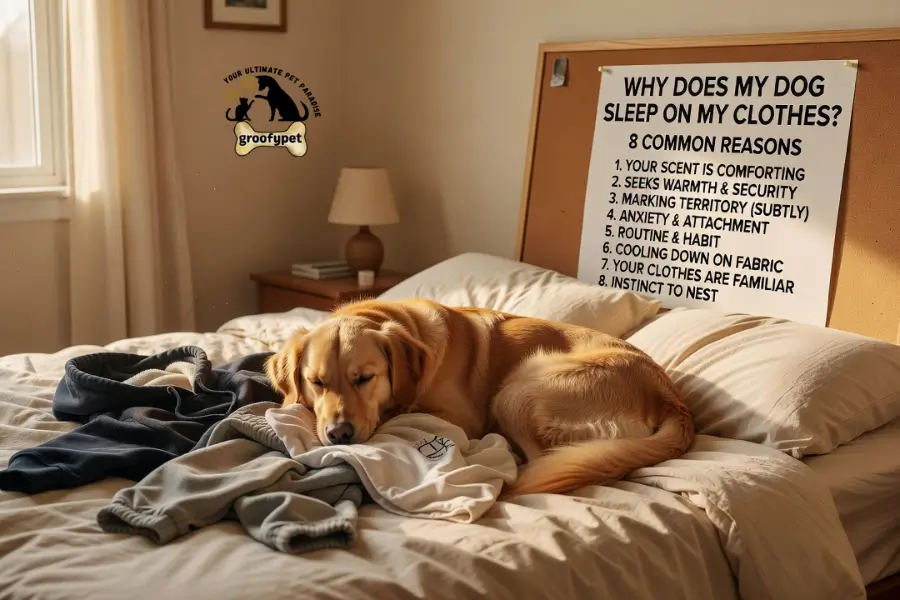
Here are eight common reasons your dog may choose your clothes as a favorite resting place.
8 Reasons Your Dog Loves Sleeping on Your Clothes
Dogs often sleep on their owner’s clothes because familiar scents make them feel safe, comfortable, and close to their favorite person. From seeking warmth to finding emotional comfort, several simple reasons can explain this common sleeping habit.
1. Your Clothes Smell Familiar and Comforting
A dog’s sense of smell plays a major role in how they understand the world. While people often recognize others through their appearance and voice, dogs rely heavily on scent. Your clothes carry your personal smell through skin oils, sweat, and everyday contact. Your dog may recognize these familiar scent cues and associate them with positive experiences, such as affection, meals, playtime, and relaxation.
This explains why your dog might ignore an expensive dog bed but settle happily on your old sweatshirt.
What you can do: If you do not mind the behavior, provide a designated blanket or dog bed that offers a familiar scent. Make sure your dog cannot chew or swallow the fabric.
2. Your Dog Feels Safe and Secure Around Your Scent
Dogs are social animals that often develop strong bonds with their families. Familiar smells can become associated with safety and predictable routines. When your dog lies on your clothing, the familiar scent may help create a comfortable resting environment. This can be especially helpful for dogs settling into a new home or learning to spend time alone.
For example, a newly adopted dog may choose a shirt you wore earlier instead of sleeping on an unfamiliar dog bed. The clothing may feel more familiar than the rest of the environment. However, sleeping on your clothes does not automatically mean your dog feels unsafe without you. Many dogs simply prefer familiar-smelling objects.
3. Your Dog Misses You When You Are Away
If your dog sleeps on your clothes while you are at work or running errands, they may be seeking comfort from your familiar scent.Dogs can form strong attachments to their owners. Your scent may remind your dog of your presence, helping them settle while you are away.
You might notice your dog choosing your pajamas, a T-shirt, or the clothes you wore that morning. This behavior can be particularly noticeable when your dog has fewer people around during the day.Still, sleeping on clothing alone is not proof that your dog is unhappy or experiencing separation anxiety.
If your dog also barks continuously, paces, damages doors, drools excessively, or becomes extremely distressed when you leave, speak with your veterinarian about possible separation-related problems.
4. Your Clothes Provide Warmth and Softness
Sometimes, the explanation is much simpler: your clothes are comfortable.A pile of laundry can create a soft surface that feels pleasant under your dog’s body. Sweatshirts, fleece jackets, pajamas, and blankets may also retain warmth, making them attractive places to rest.
Small dogs, short-haired breeds, puppies, and some senior dogs may be especially interested in warm sleeping spots, although individual preferences vary.If your dog chooses clothes straight from the laundry basket, consider whether their usual bed is too cold, too firm, or positioned in a drafty area.
Try this: Give your dog a comfortable, washable bed in a quiet location. Add suitable bedding if needed, and check whether your dog begins choosing it more often.
5. Your Dog Wants to Feel Close to You
Sleeping on your clothes can be one way your dog seeks closeness. Your scent may provide a familiar connection even when you are not physically present.Dogs often show attachment through everyday habits, such as following their owners around the house, resting nearby, leaning against them, or choosing their favorite chair.
Your dog’s preference for your clothes may be another part of that relationship. However, it is best not to interpret one behavior as definite proof of a particular emotion. Look at your dog’s overall body language and behavior.If your dog relaxes on your clothes and behaves normally when you leave, the habit is usually harmless.
6. Your Dog Has Learned That Your Clothes Are a Good Sleeping Spot
Dogs learn from experience. If your dog discovers that a pile of clothes is soft, warm, and comfortable, they may return to it repeatedly. The habit can become stronger if you regularly allow your dog to sleep there. It may also continue if your dog receives attention whenever they steal a sock or carry your shirt around.
This does not mean your dog is trying to control you or deliberately disobeying your rules. They may simply have found something rewarding. If you prefer your dog to sleep elsewhere, make the alternative more appealing. Reward your dog when they settle on their own bed, and keep laundry out of reach when you cannot supervise them.
7. Your Dog Is Seeking Attention or Reassurance
Some dogs learn that taking clothing quickly gets their owner’s attention. You may laugh, call your dog, chase them, or repeatedly ask for a stolen shirt back. Even negative attention can make an exciting behavior more rewarding for certain dogs.
If your dog grabs your clothes and runs away while watching you, the behavior may have become a game. Other dogs may choose clothing when they feel uncertain or want a familiar object nearby.Avoid chasing your dog around the house. Instead, calmly trade the item for a safe toy or treat when appropriate, and reward desirable behavior.
If your dog guards clothing, growls when approached, or becomes aggressive, do not forcefully take it away. Seek help from a qualified, reward-based dog trainer or veterinary behavior professional.
8. Your Dog Prefers Your Clothes to Their Own Bed
Your dog’s bed may not meet their needs. It could be too small, too firm, too warm, too cold, or located somewhere noisy.Some beds also have unfamiliar smells that your dog has not yet accepted. Your clothes may feel more appealing because they are soft and carry a recognizable scent.
Observe where your dog likes to rest. Do they choose the sofa, a blanket, the floor near you, or a quiet corner? These preferences can help you select a better sleeping arrangement. Try moving the dog bed closer to your usual resting area. Keep it clean, choose a suitable size, and reward your dog for using it.
Remember that dogs do not need to sleep on a particular bed to prove good behavior. The goal is to provide a safe and comfortable resting place.
Why Does My Dog Sleep on My Dirty Clothes?
Your dog may prefer dirty clothes because worn clothing often carries stronger familiar scent cues than freshly washed fabric. Sweat, skin oils, and everyday contact can leave recognizable smells on your clothes. Because dogs rely heavily on their sense of smell, these scents may make your laundry especially interesting.
This behavior does not mean your dog enjoys dirt in the same way humans might imagine. Your dog is responding to scent and comfort rather than judging whether clothing is clean. Dirty laundry can also form a soft pile that makes a convenient resting place.
Although the behavior is usually normal, keep your laundry basket out of reach if your dog chews fabric. Clothing may contain buttons, zippers, strings, or other pieces that can cause choking or intestinal blockage if swallowed.
Also, keep clothes contaminated with medications, cleaning chemicals, nicotine, or other harmful substances away from your dog.
Why Does My Dog Sleep on My Clothes When I’m Gone?
When you leave home, your dog may choose your clothing because it offers a familiar smell. This can be a normal comfort-seeking behavior during your absence. For example, your dog might sleep on a shirt left on the bed while waiting for you to return. If they remain relaxed, rest normally, and show no other signs of distress, the behavior is generally not concerning.
However, some dogs struggle to cope with being alone. In those cases, sleeping on clothing may occur alongside other signs of separation-related distress.
Watch for behaviors such as:
- Repeated barking, whining, or howling after you leave.
- Scratching or damaging doors and windows.
- Pacing, excessive drooling, or an inability to settle.
- Urinating or defecating indoors despite being house-trained.
- Extreme excitement or distress when you prepare to leave.
One sign alone does not establish separation anxiety. Consider the overall pattern, including when the behavior starts and how long it continues. If your dog repeatedly becomes distressed when left alone, speak with your veterinarian. A qualified behavior professional can help you develop a suitable training plan.
Why Does My Puppy Sleep on My Clothes?
Puppies often seek warm, soft, familiar places while adjusting to life with their new families. Your clothes may provide a comforting scent during this transition.Young dogs are also learning about their surroundings. They may explore clothing, carry socks around, or settle on a shirt because it feels pleasant.
If you recently brought home a puppy, help them develop a consistent sleeping routine. Provide a comfortable bed, regular bathroom breaks, age-appropriate activity, and a quiet place to rest.You can encourage your puppy to use their bed by rewarding calm behavior there. A washable blanket may help make the space more inviting.
Be particularly careful with puppies that chew or swallow fabric. Socks, underwear, and small pieces of clothing can cause serious digestive problems if ingested.Do not leave a puppy alone with clothing they might destroy. If you suspect your puppy has swallowed fabric, contact your veterinarian promptly rather than waiting for symptoms.
Also Read : 10 Simple Tips For Dog Itchy After Grooming Care!
Is It Normal for Dogs to Sleep on Their Owners’ Clothes?
Yes, sleeping on an owner’s clothes is generally normal dog behavior. Familiar scents, comfortable fabric, warmth, and learned preferences can all explain the habit.You usually do not need to stop it if your dog rests peacefully and does not chew or swallow the clothing.
Pay closer attention if the behavior appears suddenly alongside other changes, such as restlessness, unusual clinginess, reduced appetite, or difficulty sleeping. These signs do not necessarily indicate a serious problem, but they may warrant veterinary advice.
The key is to consider the whole picture. A dog peacefully sleeping on a shirt is different from a dog that panics whenever the owner leaves or compulsively eats fabric.
Should You Let Your Dog Sleep on Your Clothes?
Whether to allow this behavior depends on your dog’s habits and your household rules. If your dog simply rests on a shirt without damaging it, there may be little reason to stop them.However, giving your dog access to laundry can become a problem if they steal clothes, chew them, or swallow pieces of fabric.
| Potential benefit | Possible concern | What you can do |
|---|---|---|
| Familiar scents may provide comfort | Clothing may contain harmful residues | Keep contaminated clothes inaccessible |
| Soft fabric may offer a comfortable resting surface | Chewing can damage fabric or create choking hazards | Supervise dogs that chew |
| May help a dog settle in an unfamiliar home | Laundry stealing can become a repeated habit | Provide an appealing dog bed |
| Can offer a familiar resting option | Swallowed fabric can cause an obstruction | Contact a veterinarian if ingestion is suspected |
You should also consider your dog’s individual needs. A dog that settles comfortably on a blanket may not need any intervention. A dog that destroys socks whenever left alone may need closer supervision and additional training.
How to Stop Your Dog From Sleeping on Your Clothes
If you want to keep your laundry off the floor and your dog in their own sleeping area, consistency is more effective than punishment.
1. Keep Laundry Out of Reach
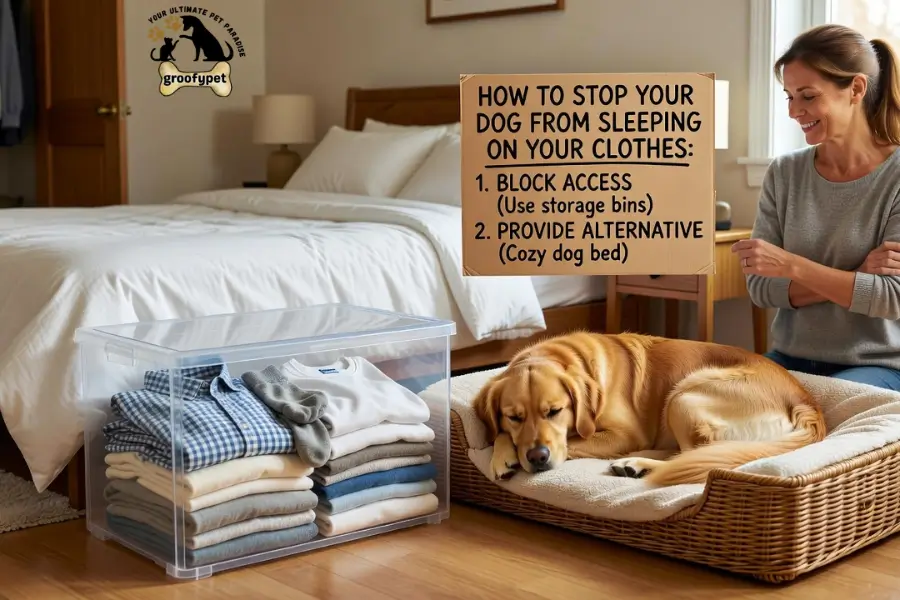
Place dirty clothes in a hamper with a secure lid. Keep clean laundry in a closet or drawer, especially when your dog is alone.This removes the opportunity to practice unwanted behavior and protects your clothing from damage.
2. Make Your Dog’s Bed More Comfortable
Choose a bed that fits your dog’s size and preferred sleeping position. Some dogs like to stretch out, while others prefer curling up in a cushioned space.Place the bed somewhere quiet and comfortable. If your dog likes resting near you, start by placing it in the same room.
3. Offer a Familiar-Smelling Blanket
A washable blanket may provide a comfortable alternative to your clothing. You can let it pick up familiar household scents through normal use.Only leave the blanket with your dog if they do not chew or swallow fabric. Remove it if it becomes damaged.
4. Reward Your Dog for Using Their Bed
When your dog settles on their bed, calmly offer praise or a small treat. Repeat this whenever your dog chooses the desired resting spot.You can also teach a cue such as “bed” and reward your dog for going there. Keep training sessions short and positive.
5. Avoid Turning Laundry Into a Game
If your dog steals clothes, chasing them may make the behavior more exciting. Instead, use a calm trade with a suitable toy or treat when safe.Reward your dog for choosing appropriate items. Keep clothing inaccessible when you cannot supervise them.
6. Provide Enough Exercise and Enrichment
Dogs need suitable physical activity, mental stimulation, social interaction, and rest. Walks, sniffing opportunities, training games, and food puzzles can help meet these needs.However, do not assume that stealing clothes always means your dog is bored. Look at the timing and circumstances before deciding what changes may help.
When Should You Be Concerned About This Behavior?
Sleeping on clothing is not usually a medical problem by itself. The main concerns are sudden behavioral changes, distress when separated, and chewing or swallowing fabric.Contact your veterinarian if your dog develops a persistent inability to settle, marked anxiety, or a sudden change in normal behavior. If separation-related distress is suspected, professional guidance can help identify suitable treatment and training.
Fabric ingestion is a more immediate safety concern. Socks, underwear, and other textiles can become lodged in the digestive tract and cause a potentially life-threatening obstruction.Seek veterinary advice promptly if you know or suspect your dog swallowed clothing. Do not wait for symptoms or attempt to induce vomiting unless your veterinarian specifically instructs you to do so.
Warning signs can include vomiting, abdominal pain, reduced appetite, unusual tiredness, or difficulty passing stool. If these occur, seek urgent veterinary care.
Read This : Why Does My Dog Sleep On My Pillow So Often?
Practical Tips to Help Your Dog Feel Comfortable
You can support your dog’s comfort without allowing them to sleep on every item of clothing.
- Create a regular bedtime routine: Keep sleeping and waking times reasonably consistent.
- Choose a suitable sleeping location: Give your dog a quiet place away from drafts and excessive noise.
- Keep bedding clean: Wash your dog’s blankets and bed according to the care instructions.
- Offer safe comfort items: Use suitable bedding rather than loose clothing if your dog chews fabric.
- Observe the timing: Notice whether your dog chooses your clothes mainly at night, when you leave, or after exciting events.
- Watch for other behaviors: Record any pacing, barking, destructive behavior, or unusual changes that occur alongside clothing-seeking.
- Use positive reinforcement: Reward calm resting and appropriate choices instead of punishing your dog for seeking comfort.
These small adjustments can help you understand your dog’s preferences and create a safer sleeping environment.
Frequently Asked Questions
Why does my dog sleep on my clothes instead of his bed?
Your dog may prefer the familiar scent, soft texture, or warmth of your clothes. Their bed might also be uncomfortable or located in an area they do not enjoy. Try improving the bed’s comfort and location, then reward your dog for choosing it.
Why does my dog sleep on my dirty laundry?
Dirty laundry often carries stronger familiar scent cues from sweat, skin oils, and everyday contact. Your dog may find these smells comforting or interesting. Keep laundry inaccessible if your dog chews clothing, since swallowing fabric can cause a dangerous intestinal blockage.
Does my dog sleep on my clothes because he loves me?
Your dog’s preference may reflect familiarity and the bond you share. Your scent can be associated with comfort, affection, and positive experiences. However, sleeping on clothing alone cannot prove a particular emotion. Consider your dog’s overall behavior and how comfortably they cope when you are away.
Why does my dog sleep on my clothes when I leave home?
Your dog may use your clothing as a familiar-smelling resting spot while you are away. This can be normal if they remain relaxed. If your dog also howls, destroys doors, paces, or shows intense distress after you leave, consult your veterinarian about possible separation-related problems.
Is sleeping on my clothes a sign of separation anxiety?
Not necessarily. Many dogs sleep on their owners’ clothing without experiencing separation anxiety. Concern increases when the behavior occurs alongside persistent distress, destructive behavior, excessive vocalization, or an inability to settle when alone. A veterinarian or qualified behavior professional can help assess the full pattern.
Why does my puppy sleep on my shirt?
Your puppy may find your shirt warm, soft, and familiar-smelling. This can help them settle while adjusting to a new home. Provide a comfortable sleeping area and a consistent routine, and keep clothing away from puppies that chew or swallow fabric.
Should I let my dog sleep on my unwashed clothes?
You can allow it if your dog rests safely and does not damage or swallow the clothing. However, keep laundry contaminated with medications, chemicals, nicotine, or other hazardous substances away from your dog. A washable dog blanket can be a practical alternative.
Conclusion
If you have been wondering, “Why does my dog sleep on my clothes?” the most common explanations are familiar scent, comfort, warmth, and attachment to you. Your dog may simply prefer the smell and feel of your clothing to their own bed.In most cases, this habit is harmless. You can allow it if your dog rests peacefully and does not chew or swallow fabric.
If you prefer to keep your clothes off-limits, provide a comfortable dog bed, offer suitable bedding, and reward your dog for using the designated spot.Pay attention to the circumstances rather than assuming the behavior always means love or anxiety. If your dog shows intense distress when you leave, develops sudden behavioral changes, or swallows clothing, seek appropriate professional advice.
Understanding your dog’s sleeping habits helps you provide comfort while keeping both your pet and your belongings safe.
Why Does My Dog Lick My Nose So Gently?
10 Possible Reasons My Dog Keeps Sitting on His Bum After Grooming!