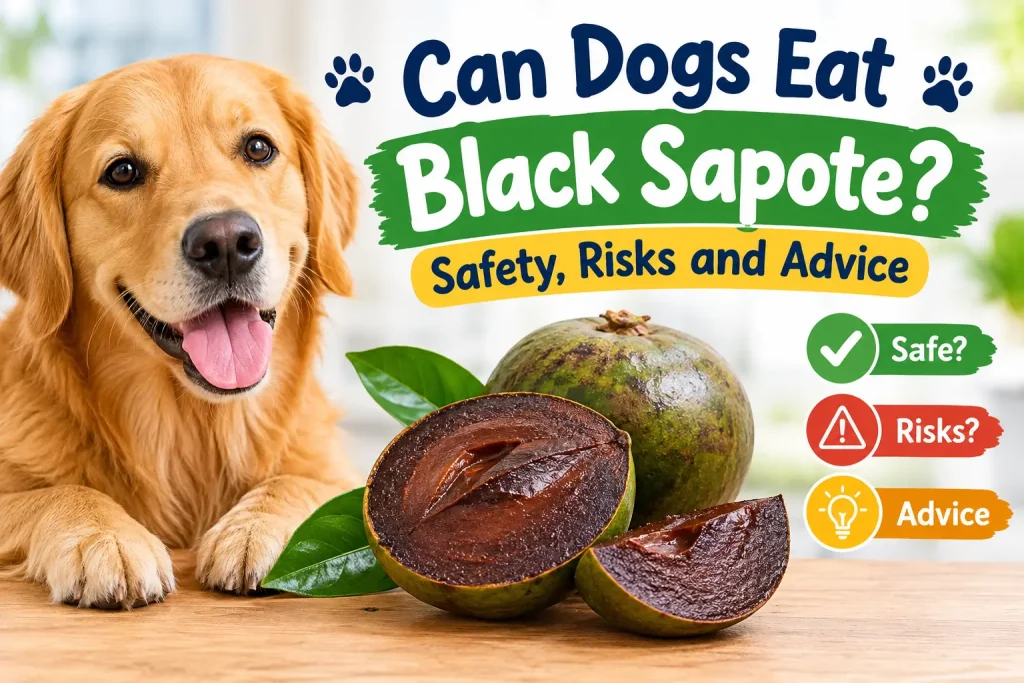
Can dogs eat black sapote? Not as a routine treat. Black sapote is not listed as a known dog poison in the sources reviewed, but no reliable research has established that it is safe for dogs either. Until that gap is filled, the most careful choice is to skip it, or to ask your veterinarian before offering even a lick of the ripe flesh.
That answer may feel unsatisfying, so here is the reasoning. Humans eat ripe black sapote happily. But “people eat it” and “dogs can eat it” are two different claims, and only the first has solid support. This guide explains what is known about each part of the fruit, what remains uncertain, and exactly what to do if your dog has already helped itself.
What Is Black Sapote?
Black sapote (Diospyros nigra) is a tropical fruit tree native to Mexico, Central America, and parts of northern South America. It is often called chocolate pudding fruit because the ripe pulp is soft, dark brown, and mildly sweet. Plant Pono, a botanical risk resource, describes the round fruit as turning olive-green when ripe with soft, dark brown pulp that has a mild, chocolate-like flavor.
A quick naming note: you may also see this fruit listed as Diospyros digyna. Botanists have debated the correct name for years, and Julia Morton’s classic reference Fruits of Warm Climates notes that it was widely misidentified under other Diospyros names. Both names refer to the same fruit people call black sapote.
The tree belongs to the ebony family and is a close relative of the persimmon because both are in the Diospyros genus. It is not related to the cocoa plant, so the fruit contains no chocolate. It is also not the same as sapodilla (chikoo), which is a different tree with a brown, grainy-textured fruit.
Black Sapote Identification Check
- Outside: A smooth, olive-green skin, roughly tomato-shaped to apple-shaped, with a leafy calyx at the stem end.
- Inside (ripe): Very soft, dark brown to nearly black pulp, often described as jelly-like or pudding-like, with a few flat seeds or sometimes none.
- Not chocolate: The color and flavor are chocolate-like, but there is no cocoa. This matters because chocolate toxicity (theobromine) is a separate, well-known danger to dogs. Black sapote has not been shown to contain it.
- Not sapodilla: Sapodilla has rough, tan skin and grainy flesh. If you are unsure which fruit you have, treat it as unidentified and keep it away from your dog.
Can Dogs Eat Black Sapote Safely?
The honest verdict is that safety has not been established. Here is what that means in practice:
- Documented toxicity in dogs: None found in the reviewed sources.
- Canine feeding studies or veterinary guidance: None found.
- Known concerns in humans and other uses: Unripe fruit is described as astringent, irritant, and bitter, and some parts of the plant have traditional non-food uses.
When evidence is thin, “not shown to be harmful” should not be confused with “shown to be safe.” Because many safer fruits exist, there is little reason to take a chance.
| Fruit Part | Safety Assessment | What Dog Owners Should Do |
|---|---|---|
| Fully ripe flesh | Not documented as toxic, but not studied in dogs. Safety unestablished. | Do not feed routinely. If you are curious, ask your vet first. |
| Unripe flesh | Described as astringent, irritant, and bitter in botanical references. Likely to upset the mouth and stomach. | Avoid. Keep unripe fruit out of reach. |
| Seeds | Choking and blockage hazard. No species-specific evidence of cyanide was found, so toxic chemistry is unconfirmed. | Never offer. Call your vet if swallowed. |
| Skin | Not studied in dogs. Skin is tougher to digest than soft flesh. | Remove before any vet-approved taste. Keep whole fruit away. |
| Leaves and stems | Plant parts have traditional uses, but no dog-specific safety data was found. | Keep dogs from chewing the tree and fallen debris. |
Note what this table does not say: it does not label any part “toxic” just because information is missing. It says “unknown, so be cautious.”
Fruit Safety Versus Nutritional Value
A food can contain vitamins and fiber and still be a poor choice for a dog. Nutritional value tells you what a food contains. Safety tells you what a food does to a particular species. These are separate questions, and a rich nutrient profile in humans does not answer the second one.
Potential Benefits of Black Sapote for Dogs
For dogs, there are no proven benefits. Human nutrition sources describe black sapote as a fruit with natural sugars, some dietary fiber, and vitamins. Fiber and vitamins matter in a dog’s diet in general, but nothing shows that black sapote improves canine health, and human data cannot be assumed to apply to dogs.
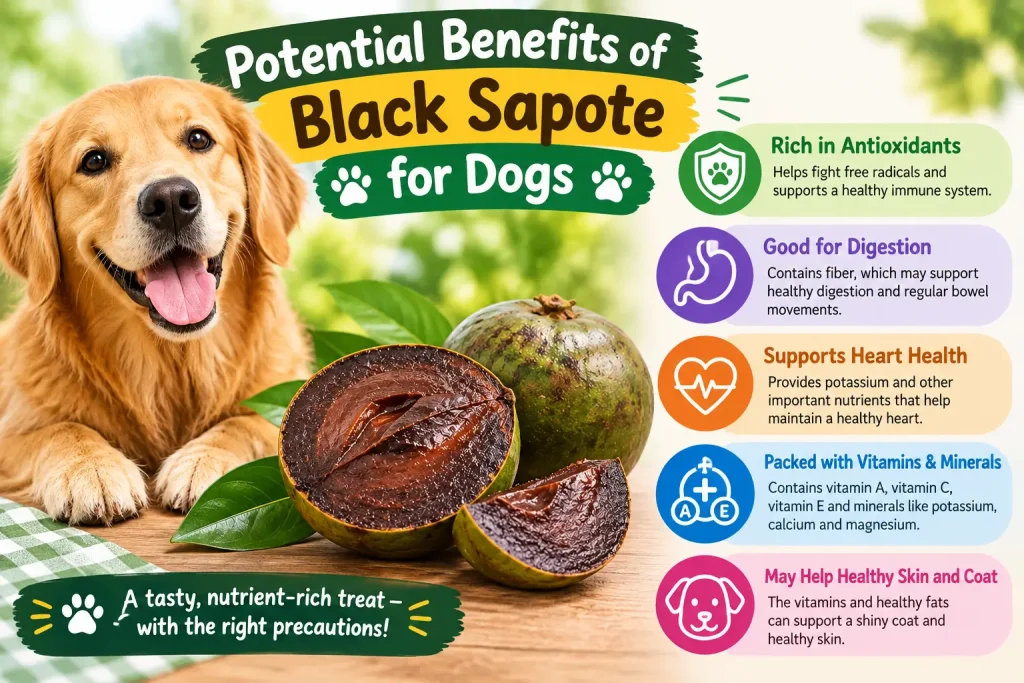
Dogs also do not need fruit at all. A complete and balanced commercial dog food, or a home-prepared diet formulated by a veterinary nutritionist, already supplies what a dog needs. Fruit is an optional extra, and it should stay small. For that reason, the possible upside of black sapote is minor compared with the uncertainty.
Potential Risks of Black Sapote for Dogs
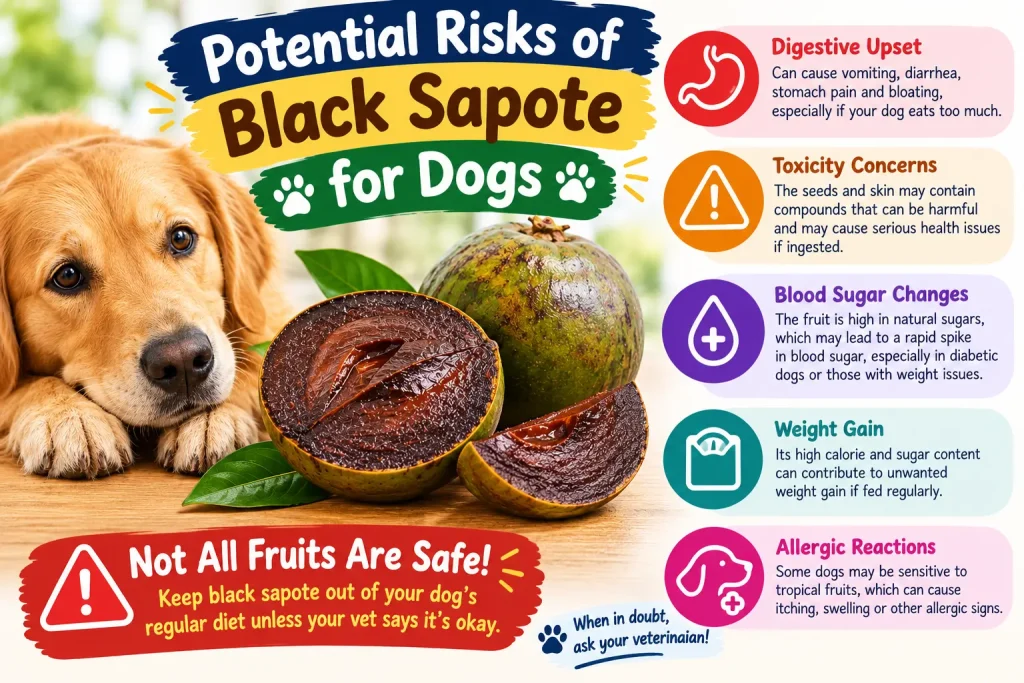
Some risks are established. Others are cautious possibilities. Keeping them separate prevents both panic and complacency.
Established or well-recognized concerns
- Choking or obstruction from seeds and chunks. Any large, hard seed can lodge in a dog’s throat or digestive tract, especially in small dogs. This is a general mechanical risk, not a black sapote-specific toxin.
- Digestive upset from an unfamiliar food. A new, rich food can cause vomiting or loose stools in sensitive dogs. This is common with many foods.
- Extra sugar and calories. Ripe fruit is naturally sweet. Too much adds calories and can matter for overweight dogs.
- Added ingredients in desserts. Black sapote is often blended into puddings, ice cream, and baked goods. Those may contain added sugar, chocolate, dairy, or the sweetener xylitol, which are separate risks for dogs.
- Individual health needs. Dogs with diabetes, pancreatitis, obesity, or sensitive stomachs may need stricter limits. Your veterinarian can advise on this.
Possible concerns that need more research
- Unripe fruit. Botanical references describe unripe black sapote as very astringent and irritating, and the FAO’s Ecocrop database notes it has been used as a fish poison. That does not prove how a dog would react, but it is a good reason to avoid it.
- Fiber-related blockages. A related fruit, the persimmon, can form fibrous masses (phytobezoars) in the stomach when dogs eat the skin and seeds, according to Kinship’s veterinary-written guide. Persimmon and black sapote are relatives, not the same fruit, so this is a cautionary parallel rather than a proven black sapote effect.
- Overall safety in dogs. Without feeding studies or poison-control data, the real risk level is simply unknown.
This article does not claim black sapote seeds contain cyanide, because no reliable species-specific evidence for that was found. It also does not assume that facts about black cherry, sapodilla, or persimmon apply directly.
Can Dogs Eat Ripe Black Sapote?
Ripe black sapote is the version people eat. It is soft, sweet, and lacks the harsh bitterness of the unripe fruit. In human food use, ripeness is the key difference, and unripe fruit is avoided.
But ripeness answers a human question. Whether ripe flesh suits a dog’s digestion has not been tested. Looks cannot settle it either. Soft, creamy pulp may seem harmless, yet grapes look harmless too, and they can cause kidney failure in dogs. Appearance never proves safety.
Because the evidence is missing, this article does not give a serving size. Any number would be invented. If you want to offer ripe flesh anyway, the responsible step is to ask your veterinarian about your individual dog first.
Must Read : Can Dogs Eat Turnip Greens? Safety, Benefits, Risks, and Serving Guide
Can Dogs Eat Black Sapote Seeds or Skin?
Seeds. Do not let dogs eat them. The primary proven risk is physical: a hard, flat seed can cause choking or, if swallowed, may contribute to a blockage in a small dog. Chemical toxicity has not been confirmed for this species, so the practical rule rests on the mechanical risk. If your dog swallows a seed, call your veterinarian for guidance rather than waiting for symptoms.
Skin. The skin has not been studied in dogs. It is tougher than the pulp and harder to digest, and it can carry soil or pesticide residue from the tree. Remove skin from anything you and your vet decide to share, and keep whole fruit out of reach.
Fallen fruit. If you grow black sapote, fallen fruit on the ground may be unripe, overripe, or fermenting. Clean it up promptly, since dogs will often eat what they find.
What Happens If a Dog Eats Black Sapote?
Not every dog will react the same way. Outcomes depend on which part was eaten, how much, the dog’s size and health, and whether the fruit was ripe. Many dogs who eat a small amount of ripe pulp may show no signs at all. That is possible, but it is not a guarantee.
Possible warning signs include vomiting, diarrhea, belly discomfort, drooling, loss of appetite, or unusual tiredness. These symptoms are nonspecific, which means they can come from many causes, not only this fruit.
Contact a veterinarian promptly if:
- Seeds were swallowed.
- The fruit was unripe.
- A large amount was eaten, or your dog is small.
- The dog has vomiting that continues, a swollen or painful belly, straining to pass stool, or refuses to eat.
- The dog has a health condition such as diabetes or pancreatitis.
What Should You Do If Your Dog Eats Black Sapote?
- Remove the remaining fruit so your dog cannot eat more.
- Identify which part was eaten: ripe flesh, unripe fruit, seeds, skin, or leaves.
- Estimate the amount and the time your dog ate it.
- Note your dog’s approximate weight and any symptoms you see.
- Contact a veterinarian for individual advice if seeds, unripe fruit, a large amount, or any uncertainty is involved. An animal poison-control service such as the ASPCA Animal Poison Control Center can also help (a consultation fee may apply).
- Seek urgent veterinary care for trouble breathing, collapse, seizures, or severe symptoms.
Do not induce vomiting or give home remedies unless a veterinary professional specifically tells you to. Some methods can cause harm.
A Vet-Call Checklist
Have this ready before you phone:
- Your dog’s age, breed, and weight.
- The fruit’s name (Diospyros nigra, black sapote) and whether it was ripe.
- Which parts were eaten, and about how much.
- When it happened.
- Any symptoms and when they began.
- Existing health conditions and current medications.
- A photo of the fruit or packaging, if you have one.
When a dog eats any unfamiliar fruit, work through four steps: identify the species, identify the part eaten, estimate the amount, and assess symptoms, then share all four with a veterinarian. This works for black sapote and for any fruit you cannot confidently name.
Can Puppies Eat Black Sapote?
Puppies deserve extra caution. Their digestive systems are still maturing, they are small, and they often swallow items whole. A seed or large piece is a bigger choking and blockage risk, and a small amount of rich fruit can cause more upset in a small body. Since safety is not established even for adult dogs, black sapote is not recommended for puppies. Stick to their veterinarian-approved puppy diet and ask before introducing any treats.
Read This : Can Dogs Eat Baguette? Safe Serving Guide for Dogs
Healthier Fruit Alternatives for Dogs
If you want to share fruit, choose options with an established record. Veterinary and kennel-club sources commonly list the following as acceptable in small amounts, as AKC and other veterinary resources describe:
| Fruit | Preparation Requirements | Portion-Control Considerations |
|---|---|---|
| Blueberries | Wash well. Small dogs may need them cut or mashed to prevent choking. | Treat-sized portions only. Count them toward the daily treat limit. |
| Seedless watermelon | Remove seeds and rind. Cut into small pieces. | Very watery and low in calories, but still a treat. Too much can upset the stomach. |
| Plain apple flesh | Remove seeds and core. Slice into bite-sized pieces. | A few slices for most dogs. Natural sugar adds up. |
Ask your veterinarian about the right amount for your dog, especially if your dog is small, overweight, or has a medical condition. Avoid fruits known to be dangerous, such as grapes and raisins.
How to Introduce Any New Fruit to Your Dog
- Check safety first. Confirm the fruit and the part are considered dog-safe by a veterinary source.
- Start tiny. Offer one small, bite-sized piece rather than a handful.
- Prepare it properly. Remove seeds, pits, cores, and tough skin, and cut it small.
- Introduce one new food at a time so you can tell what caused any upset.
- Watch your dog for vomiting, diarrhea, itching, or low energy for the next day.
- Count the calories. Treats should generally make up no more than 10% of a dog’s daily calories, a guideline supported by veterinary groups such as WSAVA. Dogs with medical conditions may need a lower limit set by their vet.
The 10% guideline is a ceiling for all treats combined. It is not a recommended serving size for black sapote or any particular fruit.
Myth Versus Fact
- Myth: If humans can eat it, dogs can too. Fact: Dogs process some foods very differently. Grapes, onions, and chocolate are all fine or common for people but dangerous for dogs.
- Myth: Chocolate pudding fruit contains chocolate. Fact: The fruit has a chocolate-like color and taste, but it is not related to cocoa.
- Myth: If a fruit is not on a toxic list, it is safe. Fact: Many foods are simply unstudied. “Unknown” should mean “ask first.”
- Myth: Natural means harmless. Fact: Plants contain irritants and toxins as part of their defenses, which is why unripe black sapote is described as harsh.
Frequently Asked Question
Can dogs eat black sapote?
It is not recommended as a regular treat. Black sapote is not a documented dog toxin, but no reliable research confirms it is safe for dogs. Seeds and unripe fruit are the biggest concerns. If you want to offer ripe flesh, ask your veterinarian about your individual dog first.
Is black sapote poisonous to dogs?
No poisoning in dogs has been documented in the sources reviewed, but absence of reports is not proof of safety. Unripe fruit is described as irritating, so avoid it. Because evidence is limited, treat black sapote as unstudied for dogs and contact a vet if your dog eats a worrying amount.
Can dogs eat the black flesh inside the fruit?
The dark pulp is the part people eat when the fruit is fully ripe, but it has not been studied in dogs. Its dark color comes from the fruit, not from chocolate. Do not feed it routinely, and check with your veterinarian before offering any, especially for small or health-compromised dogs.
Are black sapote seeds dangerous for dogs?
Seeds are a choking and blockage risk, particularly for small dogs. No species-specific evidence of cyanide was found, so chemical toxicity is unconfirmed. Still, seeds should never be offered. If your dog swallows one, call your veterinarian for advice instead of waiting to see what happens.
What happens if my dog eats unripe black sapote?
Unripe black sapote is described as astringent, bitter, and irritating, so mouth irritation, drooling, or stomach upset are plausible. Reactions are not well documented in dogs and will vary. Remove the fruit, note how much was eaten, and contact your veterinarian, particularly if symptoms appear.
Key Takeaways
- Verdict: Black sapote is not recommended for dogs as a regular treat, because its canine safety has not been established.
- Uncertainty: “Not documented as toxic” is not the same as “safe.” No dog-specific studies were found.
- Part by part: Avoid unripe fruit and never offer seeds. Skin and leaves are unstudied, so keep them away.
- If it happens: Remove the fruit, note the part, amount, time, and dog’s weight, and call your veterinarian. Seek urgent care for severe symptoms.
- Safer choices: Blueberries, seedless watermelon, and apple slices without seeds or core are better-known options, within the 10% treat limit.
Final Thoughts
Can dogs eat black sapote? The responsible answer is “not as a routine treat, and not without veterinary guidance.” This fruit is a delicious choice for people, and the ripe pulp is not known to be poisonous, but dogs are not small humans, and this particular fruit simply has not been studied in them. Seeds and unripe fruit deserve the most caution.
Do not assume an unfamiliar tropical fruit is safe because humans enjoy it. When in doubt, identify the fruit, identify the part, estimate the amount, and call your vet. Your dog will be just as happy with a few blueberries.
Can Dogs Eat Nance Fruit? Benefits, Risks and Serving Guide
Can Dogs Eat Mortadella? Risks, Ingredients, and Safer Alternatives