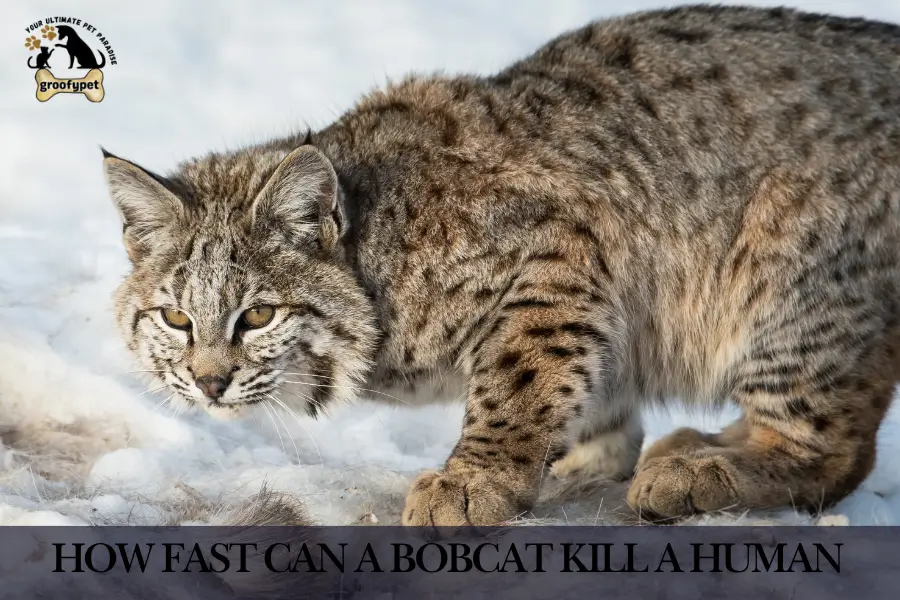
If you have ever spotted a bobcat near your yard or on a hiking trail, you may have wondered just how dangerous that animal really is. Search engines are full of dramatic headlines, but the real answer is more measured than most people expect.
So, how fast can a bobcat kill a human? The honest answer is that there is no reliable universal time. A bobcat attack could, in theory, cause a serious injury within seconds, but a fatal outcome is not something wildlife experts can assign a predictable timeline to. Every encounter is different, and the result depends on far more than raw speed.
This article walks through what bobcats are actually capable of, how often bobcat attacks on humans really happen, what puts a person at higher risk, and what to do if you come across one. The goal is not to scare you. It is to give you a clear, factual picture of bobcat safety so you can enjoy the outdoors with confidence.
How Fast Can a Bobcat Kill a Human?
There is no scientifically established “kill time” for a bobcat attacking a person, and any website that gives you an exact number of seconds is guessing. Wildlife agencies do not track attack speed because a bobcat encounter is not a fixed, predictable event. It is shaped by a long list of variables that change from one situation to the next.
Some of the factors that affect how serious an encounter becomes include:
- The circumstances that led to the encounter in the first place
- How close the bobcat and the person already were when contact happened
- Whether the bobcat was acting defensively rather than aggressively
- The age and physical condition of the person involved
- Where on the body any injuries occur
- How quickly the person receives medical care afterward
- Whether the bobcat is behaving normally or is showing signs of illness
Because of these variables, it is misleading to reduce a bobcat attack to a countdown clock. A bobcat is absolutely a wild predator capable of causing serious injury. That is a fact worth taking seriously. But being capable of injury is not the same as bobcat attacks routinely ending in death. As you will see in the next section, fatal attacks on humans are exceptionally rare.
Can a Bobcat Kill a Human?
Bobcats are built for hunting, not for confronting people, but it helps to understand their physical tools so you can judge the real level of risk.
A grown bobcat has strong jaws suited for gripping and holding onto smaller prey like rabbits and rodents. Its teeth are sharp enough to puncture skin easily, and its claws can retract and extend the way a house cat’s claws do, just on a larger scale. Bobcats are also agile. They can leap several feet in a single bound, move quickly over short distances, and change direction fast when chasing prey or escaping a threat.
Put together, these traits mean a bobcat could injure a person if it felt threatened enough to attack. A bite or a set of deep scratches from an animal this size is not something to brush off.
That said, having the physical ability to cause harm does not mean a bobcat wants to use it on a person. Bobcats did not evolve to hunt animals the size of an adult human, and they do not view people as prey. Their natural instinct when they sense a human nearby is almost always to retreat, not to engage. The capability for injury exists, but the everyday behavior of bobcats rarely puts that capability to the test.
Are Bobcats Dangerous to Humans?
Under normal circumstances, bobcats are not considered a serious danger to people. Their natural behavior is built around avoidance, not confrontation.
Typical bobcat behavior includes the following patterns:
- Staying away from areas with heavy human activity when possible
- Preferring quiet, secluded terrain such as brush, forest edges, and rocky outcrops
- Hunting small animals like rabbits, squirrels, birds, and rodents rather than larger prey
- Becoming most active around dawn, dusk, and nighttime hours
- Retreating quickly when they notice a person nearby, rather than approaching
This is why most people who live in bobcat territory never have a negative encounter, even if bobcats pass through their property regularly. A bobcat sighting is common in many parts of North America and does not by itself signal danger.
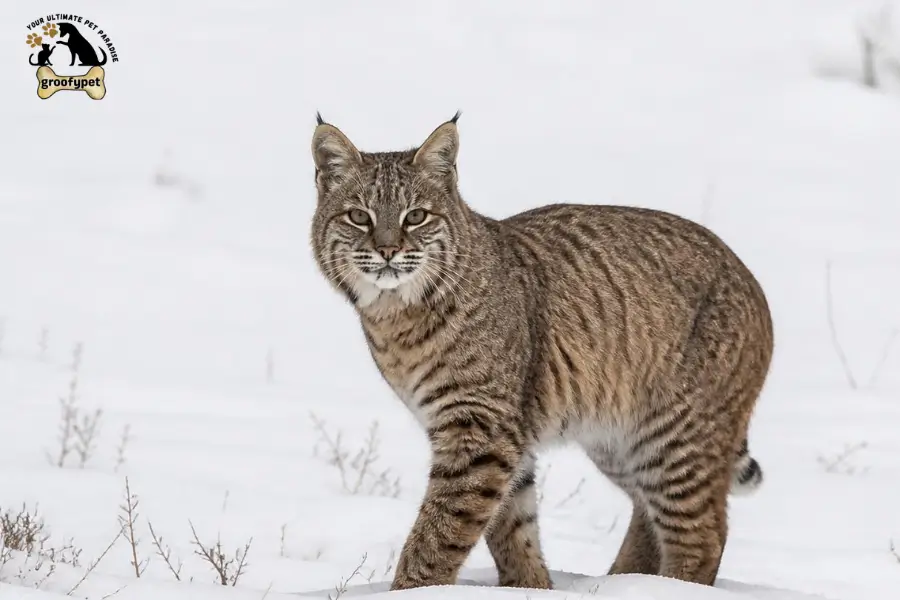
The risk level can shift, however, when a bobcat behaves outside of these normal patterns. An animal that lingers near people instead of fleeing, appears unusually bold, or seems disoriented may be dealing with illness, injury, or another unusual circumstance. Later sections cover these warning signs in more detail, along with what to do if you notice them.
How Common Are Bobcat Attacks on Humans?
Documented bobcat attacks on humans are genuinely rare, and it helps to separate a few different terms that often get blurred together in online articles and social media posts.
- Sightings simply mean someone saw a bobcat, often from a distance, with no interaction at all.
- Approaches happen when a bobcat moves closer than expected, sometimes out of curiosity or because it did not immediately notice the person.
- Defensive encounters occur when a bobcat feels cornered or threatened and reacts to protect itself.
- Bites or scratches are physical contact incidents, which can range from minor to more serious.
- Confirmed attacks are verified incidents reported to wildlife or health authorities.
- Fatal incidents involve a human death directly caused by the animal.
The overwhelming majority of bobcat-related stories fall into the first two categories. Sightings and approaches happen fairly often in areas where bobcat habitat overlaps with neighborhoods, parks, and hiking trails. Confirmed attacks are far less common, and fatal incidents are essentially unheard of in recorded history.
It is worth being careful here. A handful of viral videos or local news stories about a bobcat attack does not mean attacks are becoming a widespread pattern. Isolated incidents, even dramatic ones, should not be mistaken for a general trend of bobcat aggression toward people.
Why Would a Bobcat Attack a Person?
When a bobcat does act aggressively toward a human, there is almost always an identifiable reason behind it rather than random hostility. Documented circumstances include:
- Self-defense, when the animal feels it has no way to escape
- Feeling cornered, such as being trapped in a garage, shed, or small enclosed space
- Protecting young, particularly if a person or pet gets close to a den with kittens
- Food-related situations, including cases where a bobcat has been fed by people and lost its natural wariness
- Habituation to humans, which can happen in areas where bobcats regularly find easy food sources
- Severe illness, which can affect an animal’s normal instincts and behavior
- Rabies or other neurological disease, which can cause unusual aggression and a loss of normal fear responses
It is important to separate what has actually been documented from speculation. Wildlife biologists point to these factors based on observed patterns in reported incidents. Claims that go beyond this, such as suggesting bobcats are becoming more predatory toward humans in general, are not well supported by evidence.
How Fast Can a Bobcat Move?
Bobcats are quick and athletic animals, well suited for chasing down fast-moving prey like rabbits over short distances. They are not built for long chases but rely instead on short bursts of speed combined with stealth and a strong ambush instinct.
Rather than citing a single fixed top speed, it is more useful to understand that a bobcat’s speed is not the main factor in how dangerous an encounter becomes. Distance, terrain, and how the situation unfolds matter far more than raw speed for your safety.
A few practical points to keep in mind:
- Open, flat ground gives a fast animal every advantage, while uneven or obstacle-filled terrain can slow it down.
- A surprise encounter at close range leaves far less time to react than a bobcat spotted from a distance.
- Having a clear escape route, such as a nearby building or vehicle, matters more than trying to outpace the animal.
Because of this, running is generally not recommended if a bobcat is close by. Quick, fleeing movement can trigger a chase instinct in any predator. Slow, deliberate movement away from the animal is a safer approach, which is covered in more detail later in this article.
How Strong Is a Bobcat Compared With a Human?
It is tempting to want a simple strength comparison, like a bite-force number or a “strength score,” but these kinds of comparisons can be misleading without proper context. What can be said with confidence is that bobcats are muscular, athletic wild cats adapted specifically for catching and holding onto small, fast-moving prey.
Their physical strengths center on a few key traits:
- Claws built for gripping prey and climbing
- Teeth designed to puncture and hold rather than crush large bones
- Jaw strength sufficient to subdue animals roughly their own size or smaller
- Agility and balance, allowing sudden direction changes and controlled leaps
- The ability to make explosive, sudden movements over short distances
A bobcat is considerably stronger, pound for pound, than an unarmed adult human would be in a physical struggle with an animal of similar body weight. However, most adult humans significantly outweigh a bobcat, which typically weighs between 15 and 40 pounds. Size, weight, and the fact that humans are not natural bobcat prey all work in a person’s favor during almost any real-world encounter.
Can a Bobcat Attack a Child?
This is a sensitive but important question for parents and caregivers. Children can be more vulnerable in wildlife encounters simply because of their smaller size, limited strength, and reduced ability to respond calmly and safely on their own.
That said, this does not mean bobcats target children specifically or that attacks on kids are common. The same core facts apply: bobcats generally avoid people, including children, and confirmed attacks of any kind remain rare.
Sensible precautions for families in bobcat habitat include:
- Keeping children close by during any wildlife sighting, rather than letting them approach for a closer look
- Never allowing a child to approach, corner, or try to touch a wild bobcat
- Bringing small pets indoors when bobcat activity has been reported nearby
- Teaching children early on never to feed any wild animal, including bobcats
- Reporting unusually bold or aggressive wildlife behavior to local animal control or a wildlife agency
These steps are about building good habits, not instilling fear. A calm, informed child who knows to keep their distance from wildlife is well prepared for most situations they might encounter.
Also Read : Can Cats See Fire? A Friendly Guide for Pet Parents!
What Should You Do If a Bobcat Approaches You?
If you see a bobcat nearby, the right response is calm, deliberate action rather than panic. Wildlife agencies generally recommend the following steps:
- Stay calm and avoid sudden movements.
- Do not approach the bobcat, even if it looks calm or curious.
- Give the animal plenty of open space to move away on its own.
- Do not run toward the bobcat under any circumstances.
- Keep children and pets close to you and under control.
- Begin slowly backing away when it is safe to do so.
- If the animal continues approaching, make yourself look larger by raising your arms or opening a jacket.
- Use a firm, loud voice to assert your presence if the bobcat does not retreat.
- Move toward a car, building, or other secure shelter if one is available.
- Contact local animal control or a wildlife agency if the bobcat continues acting unusually or will not leave a populated area.
These steps are designed to help the bobcat identify you as something to avoid, which lines up with its natural instincts. There is no need for physical confrontation in the vast majority of encounters.
What Should You Do If a Bobcat Attacks?
In the rare event that a bobcat does make physical contact, the priority shifts to getting to safety and getting proper care.
- Focus on reaching a secure location, such as indoors or inside a vehicle, as quickly as you safely can.
- Call emergency services right away if the injury is serious.
- For a bite or a scratch, clean the wound promptly with soap and running water once you are safe.
- Seek medical attention for any bite or scratch from a wild bobcat, even if it looks minor at first.
- Tell the healthcare provider clearly that the injury came from a wild mammal so they can guide follow-up care appropriately.
- Report the encounter to your local animal control office or wildlife agency so they can track the incident and monitor the area if needed.
Because rabies is a possible concern with any wild mammal bite, prompt medical evaluation is important. A healthcare provider can assess the wound and advise on whether rabies post-exposure treatment is needed based on the circumstances.
Can You Survive a Bobcat Attack?
Survival after any wild animal encounter depends heavily on the specific circumstances and the severity of any injuries involved. There is no dependable survival percentage to cite for bobcat encounters, since the data on confirmed attacks is limited and each case is different.
What can be said clearly is that the overwhelming majority of bobcat encounters do not result in severe human injury of any kind, let alone a life-threatening one. At the same time, any bite or scratch from a wild mammal deserves prompt, appropriate medical care, both for wound treatment and to rule out concerns like rabies exposure. Taking an encounter seriously and seeking care quickly gives you the best possible outcome.
Bobcat vs. Other Wild Cats
It can help to see how bobcats compare with a few other cats people often confuse them with or ask about.
- Cougars (mountain lions) are considerably larger than bobcats, often weighing well over 100 pounds. Because of their size, cougars are generally regarded by wildlife agencies as carrying a higher potential risk to humans than bobcats, though attacks from either animal remain uncommon.
- Canada lynx are close relatives of bobcats and similar in size, but lynx tend to live in more remote, northern habitats with far less regular contact with people, so documented encounters are even less common than with bobcats.
- Domestic cats, while much smaller, are technically involved in far more scratch and bite incidents with humans overall simply because of how frequently people interact with them at close range every day.
The goal here is not to rank these animals by how “dangerous” they are, but to give context. Size and typical proximity to humans both play a bigger role in real-world incident numbers than most people assume.
Must Read: Cat Gurgling Sound Breathing: When to Worry and How to Help Fast!
Signs a Bobcat May Be Acting Abnormally
Most bobcat sightings involve completely normal behavior, but it is useful to know which signs might call for extra caution or a report to local authorities:
- An unusual lack of fear or hesitation around people
- Repeated aggressive approaches toward humans or pets
- Signs of disorientation or confusion
- Visible difficulty walking or moving normally
- Unusual vocalizations that seem out of place for a typically quiet animal
- Being active in circumstances that do not match normal bobcat patterns
- Remaining in an open, exposed area without the usual effort to avoid people
It is worth being clear that abnormal behavior does not automatically mean an animal has rabies. Illness, injury, or unusual environmental pressures can all play a role. If you notice any of these signs, the safest response is to keep your distance and contact local wildlife authorities so trained professionals can assess the situation.
Are Bobcats More Dangerous at Night?
Bobcats are often most active during twilight hours and at night, which is simply part of their natural hunting rhythm rather than a sign of aggression. Seeing a bobcat after dark does not mean it is more likely to attack than one seen during the day.
For people living near bobcat habitat, a few practical nighttime precautions can help:
- Use outdoor lighting around entry points and pet areas.
- Bring small pets indoors overnight rather than leaving them outside unattended.
- Check yards briefly with a light before letting pets out late at night.
- Secure trash, compost, and any outdoor food sources that might attract smaller prey animals bobcats hunt.
These steps reduce the chance of a surprise close encounter rather than addressing any special nighttime danger from bobcats themselves.
How to Keep Bobcats Away From Your Home
If bobcats are regularly visiting your property, a few consistent habits can make your yard less appealing to them:
- Secure garbage cans with tight-fitting lids.
- Avoid leaving pet food outdoors, even for short periods.
- Remove other accessible food sources, such as fallen fruit or open compost.
- Keep small pets indoors, especially during dawn, dusk, and nighttime hours.
- Secure chicken coops, rabbit hutches, and other small animal enclosures with sturdy fencing.
- Trim back dense vegetation near walkways, doors, and play areas to reduce hiding spots.
- Never intentionally feed a bobcat, since this can lead to habituation and increased boldness around people.
- Reach out to your local wildlife agency for region-specific deterrence recommendations if bobcat visits become frequent.
These strategies focus on removing what attracts a bobcat in the first place, which is a far more effective long-term approach than trying to scare an individual animal away after the fact.
Bobcat Encounters With Dogs and Cats
Pets are often more likely than their owners to have a close bobcat encounter, since bobcats view small animals as natural prey. A few habits can lower the risk for your pets:
- Keep cats indoors, particularly at dawn, dusk, and overnight.
- Supervise small dogs when they are outside, rather than leaving them unattended in the yard.
- Avoid letting a dog chase after wildlife it spots, since this can turn a sighting into a confrontation.
- Keep pet food indoors rather than leaving bowls outside.
- Make sure outdoor animal enclosures, like chicken coops, are properly secured.
These simple adjustments protect pets without requiring any drastic changes to how you use your outdoor space.
What Makes Bobcats Different From Domestic Cats?
Because of their size and coloring, bobcats are sometimes mistaken for large house cats or stray kittens, especially from a distance. It helps to understand the real differences:
- Wild instincts: Bobcats rely entirely on hunting and natural caution to survive, unlike domestic cats that depend on humans.
- Physical structure: Bobcats have longer legs, larger paws, and a short, bobbed tail that domestic cats lack.
- Hunting behavior: Bobcats actively stalk and hunt live prey as their primary food source, rather than relying on provided food.
- Territory: Bobcats maintain and defend home ranges that can stretch across several square miles.
- Human socialization: Bobcats have not been domesticated and do not form the kind of bond with people that house cats do.
- Response to unfamiliar people: A bobcat’s default response to an unfamiliar person is caution and retreat, not curiosity or comfort.
Because of these differences, it is important never to treat a bobcat like a friendly stray, even if it looks calm or approaches out of curiosity. Keeping this distinction in mind is one of the simplest ways to stay safe.
Common Myths About Bobcats
A lot of misinformation circulates about bobcats online. Here are a few common myths, along with the facts.
- Myth: Bobcats regularly hunt humans. Fact: Bobcats do not view humans as prey. Their diet consists of small animals like rabbits, rodents, and birds.
- Myth: Every bobcat sighting means an attack is coming. Fact: The vast majority of sightings involve a bobcat passing through or hunting small prey, with no interest in people at all.
- Myth: A bobcat will chase anyone it sees. Fact: A healthy bobcat’s typical response to spotting a person is to retreat, not to give chase.
- Myth: Bobcats can kill a person instantly. Fact: There is no reliable data supporting an instant or fixed “kill time,” and fatal attacks on humans are essentially unheard of.
- Myth: A bobcat acting strangely is definitely rabid. Fact: Unusual behavior can stem from illness, injury, or other factors, not only rabies. A wildlife professional can properly assess the animal.
- Myth: Feeding a bobcat makes it safer around people. Fact: Feeding a bobcat does the opposite. It encourages habituation, which can make the animal bolder and increase the risk of negative encounters.
Frequently Asked Questions
How fast can a bobcat kill a human?
There is no reliable universal time for a bobcat to kill a person. Outcomes depend on the specific circumstances, the animal’s behavior, and how quickly injuries are treated, so no fixed number of seconds or minutes applies.
Can a bobcat kill a person?
A bobcat is physically capable of causing serious injury, but fatal attacks on humans are not documented in recorded history. Bobcat attacks on humans overall remain uncommon.
Are bobcats aggressive toward humans?
No, bobcats are generally not aggressive toward people. Their natural behavior favors avoidance, and aggression is typically tied to specific triggers like feeling cornered or illness.
Has a bobcat ever attacked a human?
Yes, confirmed bobcat attacks on humans have occurred, though they remain rare. Most involve identifiable circumstances such as a cornered or sick animal.
Can a bobcat attack a child?
It is possible, though uncommon, and children may be more vulnerable due to their smaller size. Supervision and basic precautions around wildlife sightings help reduce this risk.
What should you do if you see a bobcat?
Stay calm, keep your distance, avoid approaching the animal, and give it space to move away on its own.
Should you run from a bobcat?
No, running is not recommended, since sudden fleeing movement can trigger a chase instinct. Slow, deliberate retreat is safer.
Can a bobcat carry rabies?
Yes, bobcats can contract rabies like other wild mammals, which is one reason prompt medical care is important after any bite or scratch.
What should you do after a bobcat scratch?
Clean the wound with soap and running water, seek medical attention promptly, and report the incident to local animal control or a wildlife agency.
How do you keep bobcats away from your home?
Secure food sources, keep pets indoors during peak activity hours, secure animal enclosures, and trim dense vegetation near your home.
Key Takeaways
- There is no reliable universal time for how fast a bobcat could kill a human.
- Bobcats are capable of causing serious injuries, but fatal attacks on people are not documented in recorded history.
- Bobcats generally avoid people and prefer to retreat rather than engage.
- Unusual or bold behavior in a bobcat deserves extra caution and a report to local authorities.
- People should never approach, feed, or corner a wild bobcat under any circumstances.
- Children and pets should be kept close and supervised during any wildlife encounter.
- Bites and scratches from a wild bobcat should always receive prompt medical attention.
- Local wildlife authorities are the right resource for guidance after any unusual bobcat encounter.
Final Thoughts
Asking how fast a bobcat could kill a human does not have a simple numerical answer, and any source that gives you one is filling in a gap that real wildlife data does not support. What the evidence does show is that bobcats are capable wild predators, but they are not a common threat to people, and fatal attacks on humans are not part of the historical record.
A more useful question to focus on is how to keep an ordinary bobcat sighting from turning into a dangerous encounter. Giving these animals space, securing food sources around your home, supervising children and pets, and responding calmly if you do cross paths with one will keep you safe in the vast majority of situations. Bobcat safety, in the end, comes down to respect and awareness rather than fear.
Why Is My Cat So Jumpy? A Caring Guide To Help Your Nervous Cat Feel Safe!
Why Does My Cat Hug My Arm? 10 Vet Reviewed Reasons Explained!