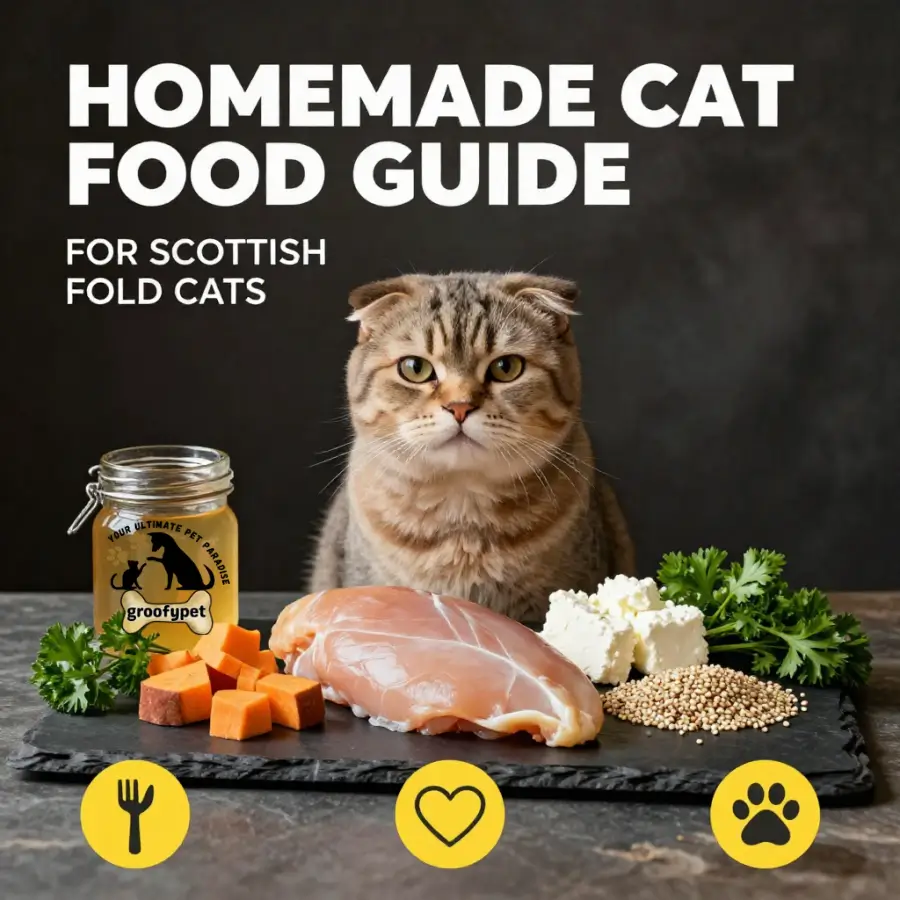
Scottish Fold cats win hearts with their round faces and folded ears. But behind that adorable look sits a breed with real nutritional needs. Many owners want to take control of what goes into their cat’s bowl, and homemade cat food is one way to do that.
This guide breaks down everything you need to know about feeding a Scottish Fold cat a homemade diet. The homemade cat food guide for Scottish Fold cats covers essential nutrients, safe ingredients, practical recipes, feeding charts by life stage, and the mistakes that trip up even careful owners.
Homemade feeding gives you control over quality and freshness. It also comes with real risks if you skip key nutrients like taurine or get the calcium-to-phosphorus ratio wrong. This article walks through both sides so you can feed your Scottish Fold safely and confidently.
You will learn what nutrients a Scottish Fold cat needs, which ingredients support joint and heart health, how to build balanced meals for kittens, adults, and seniors, and how to transition your cat from commercial food without stomach upset.
Veterinary guidance is referenced throughout, because no article should replace a real conversation with your vet or a board-certified veterinary nutritionist.
Can Scottish Fold Cats Eat Homemade Food?
Yes, Scottish Fold cats can eat homemade food, as long as the recipe is nutritionally complete and balanced. A safe homemade diet includes a high-protein animal source, organ meat, taurine, and a properly balanced calcium-to-phosphorus ratio.
Because Scottish Folds carry a genetic risk for joint and cartilage problems, their diet should also support bone and joint health through quality protein, healthy fats, and vet-approved supplements.
- Scottish Fold cats are obligate carnivores and need a diet built mainly around animal protein.
- Taurine is non-negotiable. Without enough of it, cats can develop heart and eye disease.
- Homemade diets require careful planning, not just fresh ingredients.
- Some common human foods, including onion, garlic, and chocolate, are toxic to cats and must be avoided entirely.
- A vet or board-certified veterinary nutritionist should review any homemade recipe you plan to feed regularly.
- Balanced meals support long-term joint, heart, and coat health, especially in a breed prone to osteochondrodysplasia.
What Makes Scottish Fold Cats Different?
Scottish Fold cats carry a gene mutation, known as the Fd gene, that folds their ear cartilage forward. This same gene mutation affects cartilage development throughout the cat’s body, not just the ears.
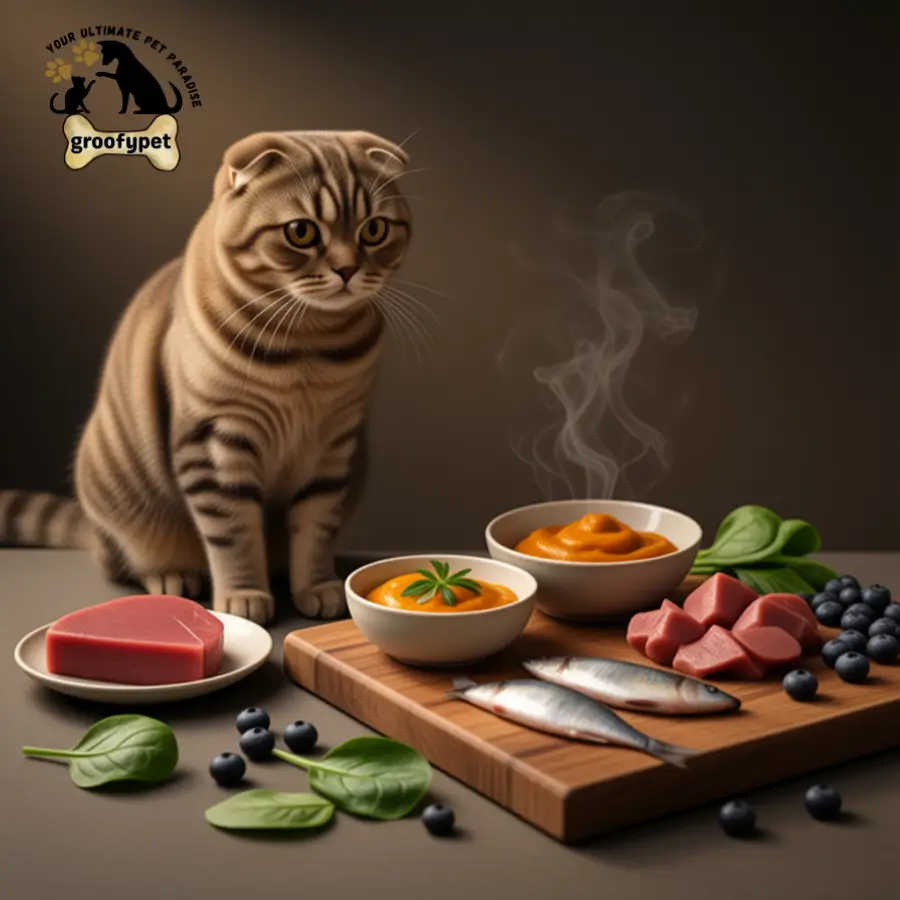
The result is a breed-wide tendency toward a condition called osteochondrodysplasia, sometimes called Scottish Fold disease. It can cause:
- Thickened or stiff joints
- Shortened, inflexible tails
- Misshapen toes
- A higher lifetime risk of arthritis and osteoarthritis
Cats with one copy of the Fd gene usually have milder symptoms. Cats with two copies tend to develop more serious skeletal and cartilage problems. This breed trait is exactly why diet matters so much for Scottish Folds. Nutrition will not cure osteochondrodysplasia, but the right nutrients can support joint comfort and slow additional strain on the skeleton.
Why Does Nutrition Matter for Scottish Fold Cats?
Good nutrition supports a Scottish Fold cat in four key areas:
- Growth and development — Kittens need extra protein and calories to build muscle, bone, and cartilage correctly.
- Bone and joint support — Ingredients rich in omega-3 fatty acids, glucosamine, and chondroitin help maintain joint comfort.
- Weight management — Extra body weight puts more pressure on already vulnerable joints, so portion control matters more for this breed than for many others.
- Immune health — Amino acids, vitamins, and minerals support a strong immune system and a healthy coat.
Expert Tip: Many veterinarians recommend tracking a Scottish Fold’s body condition score every few months, not just their weight on a scale. A lean, well-muscled cat puts far less daily stress on the hips, spine, and tail than an overweight one, even at the same weight reading.
Raw Diet or Cooked Diet: Which Is Right for a Scottish Fold?
Owners researching homemade feeding often land on a choice between a raw diet and a cooked diet. Both can work, but they come with different trade-offs.
- Raw diets mimic what a cat would eat in the wild and retain more natural enzymes and nutrients, since nothing is lost to heat. However, raw poultry and meat carry a real risk of bacterial contamination, including salmonella and listeria, which can affect both the cat and the people handling the food.
- Cooked diets reduce that bacterial risk significantly while still allowing full control over ingredients. Cooking can slightly lower taurine levels, which is one more reason a taurine supplement matters even when fresh meat is the base.
For most households, especially those with kittens, seniors, or immune-compromised family members, a cooked homemade diet is the safer default. A vet can help you decide if a properly handled raw diet makes sense for your specific cat and home setup.
Essential Nutrients Every Scottish Fold Cat Needs
Cats are obligate carnivores. Unlike dogs or humans, they cannot get all their essential nutrients from plants. Their bodies are built to process and thrive on animal protein.
Animal Protein
The best protein sources for a homemade Scottish Fold diet include:
Lean muscle meat should make up the largest portion of any homemade meal.
Taurine
Taurine is an amino acid that cats cannot make in sufficient amounts on their own. It must come from the diet, almost entirely from animal tissue.
A taurine deficiency can lead to:
- Dilated cardiomyopathy (a serious heart condition)
- Retinal degeneration and vision loss
- Weakened immune response
Because plant ingredients contain little to no taurine, and cooking can reduce taurine levels in meat, most homemade recipes need a taurine supplement added separately, even when fresh meat is the main ingredient.
Healthy Fats
Fat is not the enemy in a cat’s diet. It provides concentrated energy and carries fat-soluble vitamins.
- Omega-3 fatty acids (from fish oil or salmon) support skin, coat, and joint health.
- Omega-6 fatty acids (commonly found in poultry fat) support skin barrier function.
For a Scottish Fold specifically, omega-3s deserve extra attention because of their anti-inflammatory effect on joints.
Vitamins and Minerals
| Nutrient | Why It Matters | Common Sources |
| Vitamin A | immune health | Liver |
| Vitamin D | Calcium absorption, bone strength | Fish, egg yolk |
| Calcium | Bone and joint structure | Eggshell powder, bone meal |
| Phosphorus | Works with calcium for bone health | Meat, organs |
| Zinc | Skin, coat, and wound healing | Meat, liver |
Water and Hydration
Cats evolved from desert ancestors and often have a weak thirst drive. This makes moisture-rich food valuable, since many cats do not drink enough water on their own.
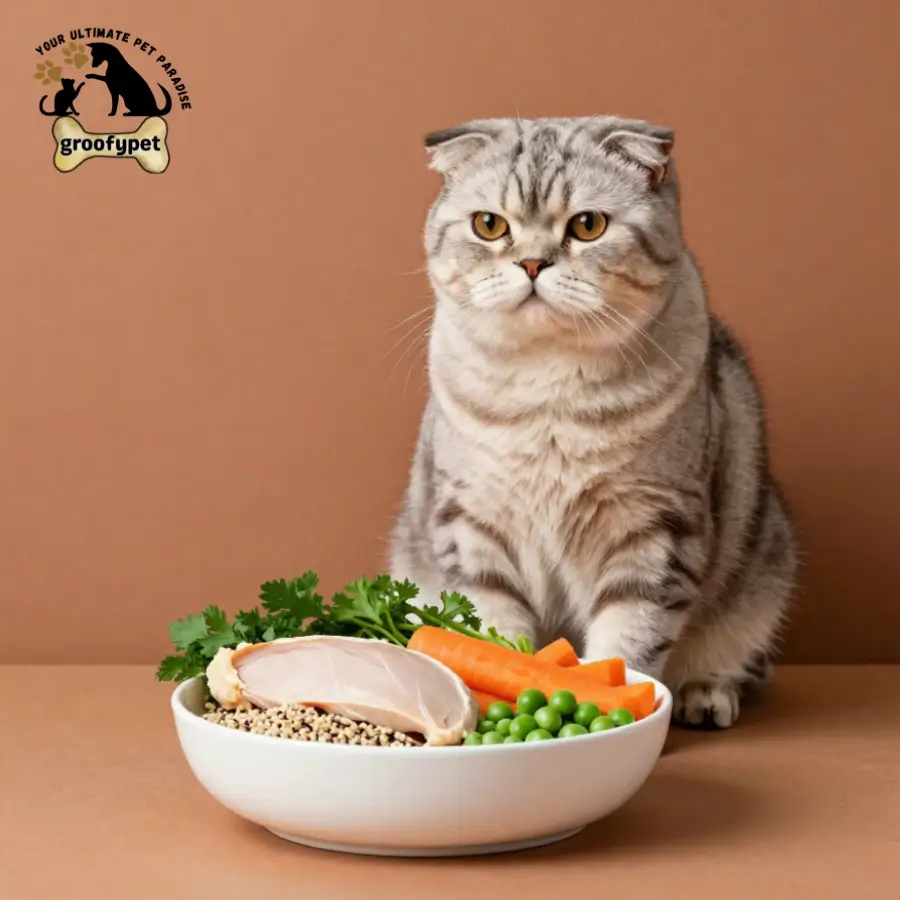
Homemade food, especially when prepared with broth, naturally delivers more moisture than dry kibble. Good hydration supports kidney function and helps prevent urinary tract issues, which matter even more for a breed already managing joint and mobility challenges.
Homemade Cat Food vs Commercial Cat Food
Both feeding methods can support a healthy Scottish Fold cat. The right choice depends on your time, budget, and your cat’s individual health needs.
| Factor | Homemade Food | Commercial Food |
| Ingredient Control | Full control over every ingredient | Limited to label disclosure |
| Cost | Calcium absorption, bone strength | Fish, egg yolk |
| Calcium | Variable; can be cheaper or pricier depending on ingredients | Generally predictable and budget-friendly |
| Convenience | Requires prep time, shopping, and storage | Ready to serve |
| Customization | Easy to tailor for allergies or preferences | Limited to available product lines |
Advantages of homemade food:
- Avoids unwanted fillers, dyes, and preservatives
- Useful for cats with specific food allergies or sensitivities
- Lets you choose fresh, identifiable ingredients
Drawbacks of homemade food:
- Time-consuming to prepare and store
- Easy to get nutrient ratios wrong without guidance
- Requires supplements that commercial food already includes
Best Ingredients for Homemade Scottish Fold Cat Food
The best ingredients for homemade Scottish Fold cat food include cooked chicken, turkey, salmon, and eggs, as they provide high-quality animal protein that cats need for strong muscles and overall health.
Safe Protein Sources
- Chicken (breast or thigh, boneless)
- Turkey
- Rabbit
- Beef
- Lamb
- Salmon
- Sardines (packed in water, no added salt)
Organ Meats
Organ meats are nutrient-dense and mimic what a cat would eat in the wild.
- Liver—rich in vitamin A and taurine, but should stay limited to a small percentage of the diet to avoid vitamin A toxicity
- Heart — an excellent natural taurine source
- Kidney — adds variety and trace minerals
Healthy Supplements
- Fish oil (for omega-3 fatty acids)
- Taurine supplement (powder form is easiest to mix in)
- Egg yolk (cooked, for additional vitamins and healthy fat)
- Ground eggshell or a vet-approved calcium supplement
| Ingredient | Main Benefit | Recommended Use |
| Chicken thigh | Lean protein | Base ingredient |
| Beef heart | Natural taurine | 10–15% of meal |
| Liver | Vitamin A, taurine | 5% of meal |
| Fish oil | Omega-3s, joint support | A few drops per meal |
| Eggshell powder | Calcium | ¼ tsp per pound of meat (vet-guided) |
Ingredients to Avoid
Toxic Foods for Cats
Some common kitchen ingredients are dangerous, even in small amounts.
- Onion
- Garlic
- Chocolate
- Grapes and raisins
- Xylitol (a sweetener found in some peanut butters and baked goods)
Ingredients That Can Cause Digestive Problems
- Excess dairy (many cats are lactose intolerant)
- Raw bread dough
- Spicy or heavily seasoned foods
Homemade Cat Food Safety Checklist
- No onion, garlic, or other allium vegetables
- No chocolate, caffeine, or alcohol
- No grapes, raisins, or xylitol
- No excessive salt or seasoning
- No raw bones from cooked sources (they splinter)
- Taurine added to every batch
- Calcium source added to balance phosphorus
- Recipe reviewed by a vet or veterinary nutritionist
Homemade Cat Food Recipes for Scottish Fold Cats
These recipes are starting points. Always confirm portion sizes and supplement dosages with your veterinarian before feeding regularly, especially for kittens, seniors, or cats with existing health conditions.
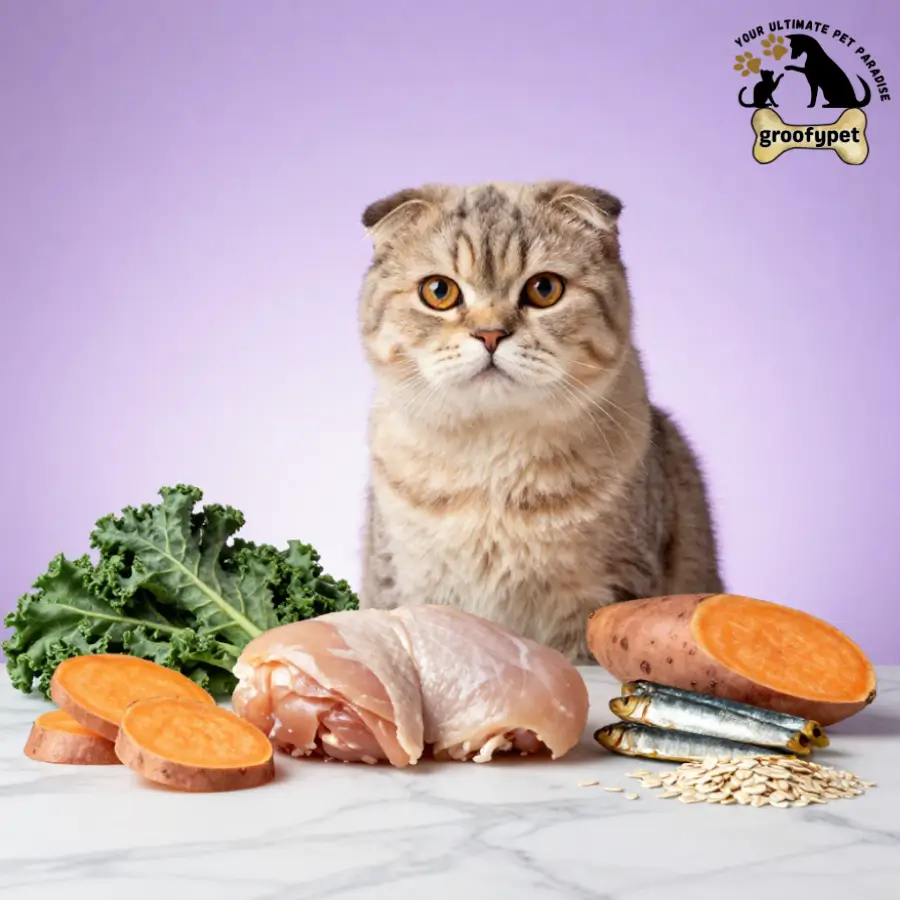
Basic Chicken Recipe
Ingredients:
- 1 lb boneless chicken thigh, cooked
- 2 oz chicken liver, cooked
- ¼ tsp ground eggshell (calcium)
- 250 mg taurine supplement
- ½ cup low-sodium broth
Instructions:
- Cook the chicken thigh and liver fully, with no pink remaining.
- Chop or blend the meat into small, soft pieces.
- Mix in the eggshell powder and taurine supplement.
- Add broth until the texture is moist but not runny.
- Cool completely before serving. Refrigerate or freeze leftovers.
Nutritional Benefits: High in lean protein, supports muscle maintenance, and delivers a natural taurine boost from the liver.
Turkey and Pumpkin Recipe
Ingredients:
- 1 lb ground turkey, cooked
- 2 tbsp plain canned pumpkin
- 1 tsp fish oil
- ¼ tsp ground eggshell
- 250 mg taurine supplement
Instructions:
- Cook the ground turkey thoroughly.
- Stir in the pumpkin for gentle fiber and digestive support.
- Mix in fish oil, eggshell powder, and taurine.
- Cool and portion into airtight containers.
Nutritional Benefits: Easy on digestion, supports stool quality, and adds joint-friendly omega-3s.
Salmon and Egg Recipe
Ingredients:
- 8 oz cooked salmon, boneless
- 1 cooked egg yolk
- ¼ tsp ground eggshell
- 250 mg taurine supplement
- ¼ cup water or broth
Instructions:
- Bake or steam the salmon until fully cooked.
- Mash in the egg yolk while warm.
- Add eggshell powder, taurine, and broth.
- Blend to a soft, even texture and cool before serving.
Nutritional Benefits: High in omega-3 fatty acids, which support coat shine and joint comfort, a priority for a breed prone to cartilage issues.
Beef and Liver Recipe
Ingredients:
- 1 lb lean ground beef, cooked
- 2 oz beef liver, cooked
- ¼ tsp ground eggshell
- 250 mg taurine supplement
- ½ cup low-sodium broth
Instructions:
- Cook the beef and liver fully, draining excess fat.
- Chop or blend into a soft consistency.
- Mix in eggshell powder, taurine, and broth.
- Portion and refrigerate or freeze.
Nutritional Benefits: Rich in iron and natural taurine, supports energy levels and red blood cell health.
Homemade Food for Scottish Fold Kittens
Nutritional Needs of Kittens
Kittens need significantly more protein and calories per pound of body weight than adult cats. Growth, muscle development, and early cartilage formation all depend on getting this stage right, which matters even more for a breed already prone to cartilage problems.
- Protein needs run higher than adult maintenance levels
- Calcium and phosphorus balance is critical during bone growth
- Smaller, more frequent meals suit a kitten’s stomach capacity
Homemade Food for Adult Scottish Fold Cats
A balanced homemade diet should also include essential nutrients such as taurine, healthy fats, and vitamins to support heart health, joint function, and a healthy coat. Always ensure meals are properly balanced for long-term feeding.
Maintaining Healthy Weight
Extra weight adds direct strain to a Scottish Fold’s joints. Keeping an adult cat lean is one of the simplest ways to protect long-term mobility.
Portion Recommendations
Most adult Scottish Folds do well on 4–6 ounces of homemade food split across two meals daily, adjusted for activity level and body condition.
Daily Feeding Schedule
| Time | Portion |
| Morning | 2–3 oz |
| Evening | 2–3 oz |
Homemade Food for Senior Scottish Fold Cat
Senior Scottish Fold cats benefit from homemade meals that contain easy-to-digest proteins, healthy fats, and plenty of moisture. These nutrients help support aging muscles, joint health, and proper hydration.
Age-Related Nutritional Changes
Senior cats often need slightly more protein, not less, to preserve muscle mass. Many older cats also become less efficient at absorbing certain nutrients, making supplement consistency even more important.
Joint Support Nutrients
- Glucosamine and chondroitin
- Omega-3 fatty acids
- Moderate, consistent calcium intake
Easy-to-Digest Meal Ideas
Soft, stew-like textures work well for senior cats with dental sensitivity. The turkey and pumpkin recipe above is a good base for older Scottish Folds.
| Age | Meals Per Day | Notes |
| 7–10 years | 2 | Watch weight closely |
| 10+ years | 2–3 smaller meals | Prioritize soft textures and joint supplements |
How Much Homemade Food Should a Scottish Fold Cat Eat?
The amount of homemade food a Scottish Fold cat needs depends on its age, weight, activity level, and overall health. Most adult cats require portion sizes that provide enough calories to maintain a healthy body weight.
Factors Affecting Portions
- Age — kittens and seniors often need adjusted portions
- Weight — heavier cats need fewer calories per pound
- Activity level — playful cats burn more energy than sedentary ones
- Health condition — joint pain may reduce activity and calorie needs
Feeding Amount Table by Weight
| Cat Weight | Approx. Daily Food Amount |
| 6–8 lbs | 4–5 oz |
| 8–10 lbs | 5–6 oz |
| 10–12 lbs | 6–7 oz |
| 12+ lbs | 7–8 oz (consult your vet for overweight cats) |
These numbers are general guidelines. A vet can calculate exact caloric needs based on your cat’s body condition score.
Food Safety Tips for Homemade Cat Meals
Safe Food Handling
Wash hands, utensils, and surfaces thoroughly after handling raw meat to avoid cross-contamination.
Proper Cooking Temperatures
Cook poultry to an internal temperature of at least 165°F and beef or lamb to at least 160°F to reduce the risk of harmful bacteria.
Refrigeration Guidelines
Store prepared homemade cat food in the refrigerator for no more than 2–3 days.
Freezing and Storage
Freeze portions in airtight containers for longer storage, and thaw only in the refrigerator, never at room temperature.
Signs Your Scottish Fold Cat Is Thriving on Homemade Food
Healthy Indicators
- Shiny, soft coat
- Good energy and normal activity for the cat’s joint condition
- Stable, healthy body weight
- Consistent digestion
- Normal, well-formed stool
Warning Signs
- Unexplained weight loss
- Vomiting
- Diarrhea
- Dull or flaky coat condition
Any of these warning signs should prompt a vet visit rather than a wait-and-see approach, since they can signal a nutrient gap or an unrelated health issue.
Transitioning from Commercial Food to Homemade Food
A slow transition reduces the risk of stomach upset and helps a cat accept new textures and flavors.
Step-by-Step Transition Plan
- Week 1: Mix 25% homemade food with 75% current commercial food
- Week 2: Move to a 50/50 mix
- Week 3: Shift to 75% homemade food with 25% commercial food
- Week 4: Serve 100% homemade food, if your cat is tolerating it well
| Week | Homemade % | Commercial % |
| 1 | 25% | 75% |
| 2 | 50% | 50% |
| 3 | 75% | 25% |
| 4 | 100% | 0% |
If digestive upset appears at any stage, slow the transition down and hold at the current ratio for a few extra days.
Frequently Asked Questions
Can Scottish Fold cats eat homemade food every day?
Yes, as long as the recipe is nutritionally complete and balanced, including taurine and a proper calcium-to-phosphorus ratio. A vet-reviewed recipe is the safest long-term choice.
Is raw food safe for Scottish Fold cats?
Raw food can be part of a balanced diet, but it carries a higher risk of bacterial contamination for both cats and humans. Cooking reduces this risk while still allowing a nutritious homemade diet.
Do homemade diets need supplements?
Almost always, yes. Fresh meat alone typically lacks enough taurine, calcium, and certain vitamins for long-term feeding without supplementation.
What meat is best for Scottish Fold cats?
Chicken, turkey, beef, and salmon all work well as primary proteins. Variety across these sources helps cover a broader range of nutrients.
Can kittens eat homemade cat food?
Yes, but kitten recipes need higher protein and more carefully balanced calcium for proper bone and cartilage development.
How do I balance homemade cat food?
Combine a high-protein meat base, a small portion of organ meat, a taurine supplement, a calcium source, and a healthy fat like fish oil. Confirm the final recipe with a vet or veterinary nutritionist before regular feeding.
Is homemade food better than commercial food for Scottish Fold joint health?
Neither option is automatically better. A high-quality commercial food formulated with glucosamine, chondroitin, and omega-3s can support joints just as well as a well-built homemade recipe. What matters most is whether the diet, homemade or commercial, is complete, balanced, and includes joint-supportive nutrients.
How long does it take to prepare a week of homemade cat food?
Most owners spend 30–60 minutes preparing a 4–5 day batch, including cooking, mixing supplements, and portioning into containers. Batch cooking on a set day each week makes homemade feeding far more manageable.
Final Thoughts
Homemade cat food can be a rewarding way to support a Scottish Fold’s health, especially a homemade cat food guide for Scottish Fold cats, given this breed’s unique joint and cartilage needs. The key is treating it as a science, not just a kitchen project. Protein, taurine, healthy fats, and a correct calcium-to-phosphorus ratio all need to show up in every batch.
Watch your cat’s coat, weight, energy, and digestion as ongoing feedback on how well the diet is working. Partner with a veterinarian or board-certified veterinary nutritionist to review your recipes, especially during kittenhood, senior years, or if your cat already shows signs of osteochondrodysplasia.
Done carefully, homemade feeding gives a Scottish Fold cat fresh, high-quality nutrition built around its specific needs, supporting a longer, more comfortable life.
Can Cats Eat Watercress? Benefits, Risks, and Safe Feeding Guide
Can Cats Eat String Cheese? Safety, Benefits, Risks, and Feeding Tips!