
Your dog catches the smell the moment you peel back the lid. That sweet strawberry scent and creamy texture pull them right over to your side. Can dogs eat strawberry yogurt? Dogs are curious about everything you eat, and strawberry yogurt is no different. The bright color and fruity aroma make it look like a fun treat worth sharing.
But not all yogurt is safe for dogs. Many store-bought strawberry yogurts carry ingredients that can seriously hurt your pet. Added sugars, artificial sweeteners, preservatives, and artificial flavors are all common in popular brands. Some even contain xylitol, a sweetener that is toxic to dogs even in tiny amounts.
This article covers everything you need to know before sharing strawberry yogurt with your dog. You will find out what goes into most strawberry yogurts, when it is safe and when it is not, what the real benefits and risks are, how much to give based on your dog’s size, and which safer alternatives work better. Read every section before making a decision.
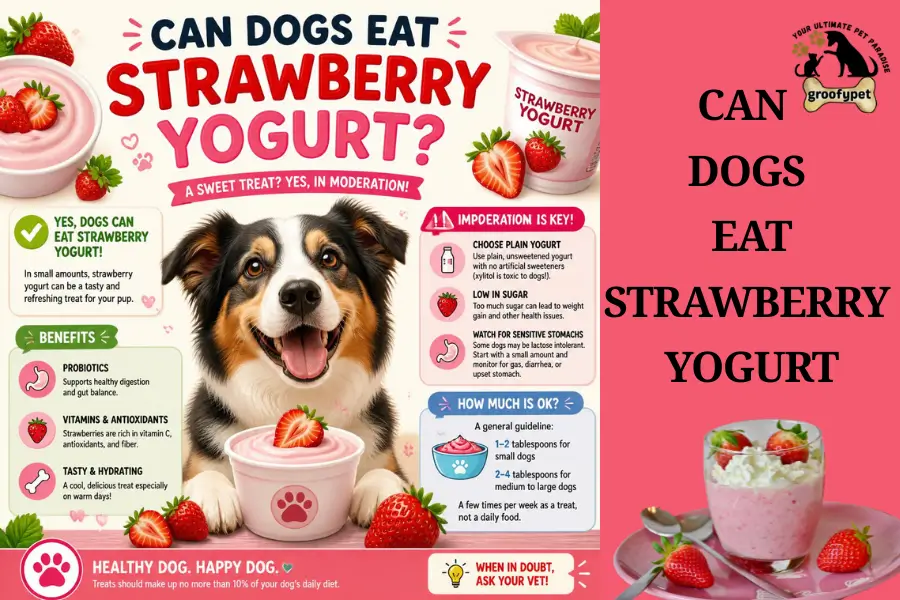
Strawberry yogurt is a flavored dairy product made from fermented milk. Most versions sold in grocery stores are thick, sweet, and made for human taste preferences. On the surface, it looks harmless. But the ingredient list on most flavored yogurts tells a very different story.
Common Ingredients Found in Strawberry Yogurt
When you flip a strawberry yogurt cup around and read the label, you usually find a mix of these ingredients:
- Yogurt base — made from whole milk, low-fat milk, or nonfat milk
- Strawberries — sometimes real fruit pieces, sometimes strawberry puree, often just artificial flavoring
- Sugar — added in large amounts to create sweetness that appeals to humans
- Artificial flavors — lab-created compounds designed to mimic natural strawberry taste
- Sweeteners — including sucralose, aspartame, or the dangerous xylitol in sugar-free versions
- Preservatives — added to increase shelf life
- Thickeners and stabilizers — such as pectin, modified starch, or gelatin
How Strawberry Yogurt Differs From Plain Yogurt
Plain yogurt contains two things: milk and live bacterial cultures. That is it. Those live cultures, also called probiotics, are what make plain yogurt a potentially healthy food for dogs in small amounts.
Strawberry yogurt layers sugar, flavoring, and often artificial ingredients on top of that base. The more ingredients you see on the label, the further it moves from something that is healthy for your dog. A regular cup of strawberry yogurt from a popular brand can have 15 to 25 grams of added sugar per serving. Dogs do not need any of that.
The bottom line: plain yogurt and strawberry yogurt are very different products. Always treat flavored yogurt with caution before sharing it with your dog.
Can Dogs Eat Strawberry Yogurt?
Yes — but with clear conditions. Dogs can eat a small amount of strawberry yogurt if the yogurt has no xylitol, no artificial sweeteners, and low added sugar. That rules out most commercial flavored yogurts right away.
Plain yogurt mixed with fresh strawberries is almost always a safer option than store-bought strawberry yogurt. When you make it yourself, you control the ingredients completely. You skip the added sugar, the artificial flavors, and the preservatives that make commercial versions risky.
If you pick up a store-bought strawberry yogurt and want to know if it is safe, read the label before doing anything else. Check specifically for xylitol and other artificial sweeteners. If you find any, put the container away. If the sugar content is high, the same rule applies.
Treats of any kind should follow the 10% rule — no more than 10% of your dog’s daily calorie intake should come from treats. For most dogs, that leaves very little room for sugary yogurt.
Is Strawberry Yogurt Safe for Dogs?
Strawberry yogurt can be safe for dogs in small amounts if it contains no xylitol, artificial sweeteners, or excessive sugar. Plain or low-sugar yogurt with real strawberries is usually the safest choice for an occasional treat.
When Strawberry Yogurt May Be Safe
There are specific situations where a small serving of strawberry yogurt is unlikely to cause problems:
- The yogurt is plain yogurt that you personally mixed with real, fresh strawberries
- No xylitol or artificial sweetener appears anywhere in the ingredient list
- The total sugar content is low, under 5 grams per serving
- Your dog is a healthy adult with no known digestive problems or dairy sensitivity
- You give a small amount based on your dog’s size and keep it an occasional treat
When Strawberry Yogurt Is Not Safe
Strawberry yogurt becomes genuinely dangerous in the following situations:
- The label says ‘sugar-free’ or ‘light’ — these versions almost always contain xylitol or another harmful sweetener
- You spot any artificial sweetener in the ingredient list
- The sugar content is high common in most major grocery store brands
- The yogurt contains chocolate swirls, chocolate chips, or any chocolate flavoring
- The container is expired or the yogurt smells off
- Your dog is very young, very old, or has a known digestive condition
10 Benefits of Strawberry Yogurt for Dogs
When made safely with clean ingredients, strawberry yogurt can offer some genuine upsides. Here are ten reasons it earns occasional treat status when prepared the right way:

1. Contains Calcium
Yogurt is a natural source of calcium. Calcium plays a key role in building and maintaining strong bones and teeth. A small serving contributes to your dog’s daily calcium intake, which supports long-term bone health, especially in active or aging dogs.
2. May Support Healthy Bones
Calcium and phosphorus work together to keep bones dense and strong. Yogurt provides both in reasonable amounts. Senior dogs especially benefit from calcium-rich foods as part of a complete and balanced diet.
3. Has Protein
Yogurt contains protein, which helps with muscle repair and daily energy. While dog food should always be the main protein source, a spoonful of yogurt adds a small boost. Greek yogurt, in particular, has higher protein than regular yogurt.
4. Can Provide Probiotics
Live bacterial cultures in yogurt support a healthy gut microbiome. Probiotics help maintain digestive balance, reduce gas, and can support immune function. Look for yogurt that lists live and active cultures on the label to get this benefit.
5. Strawberries Contain Antioxidants
Fresh strawberries are packed with vitamin C, fiber, and antioxidants. These compounds help fight free radicals in the body and support immune health. When real strawberries are part of the yogurt, your dog gets a small nutritional boost from the fruit itself.
6. Refreshing During Warm Weather
Frozen yogurt treats cool dogs down on hot days. A simple mixture of plain yogurt and fresh strawberries frozen in an ice cube tray makes a refreshing summer snack. Dogs love licking cold treats, and the creamy texture keeps them entertained for longer.
7. Easy to Serve
Yogurt needs no cooking, cutting, or prep beyond a quick label check. You can drop a small spoonful into your dog’s bowl, spread it on a lick mat, or freeze it. It is one of the quickest treat options to prepare safely.
8. Soft Texture for Older Dogs
Senior dogs often develop dental problems that make hard treats painful to eat. Yogurt’s soft, creamy texture goes down easily without putting stress on sore teeth or gums. It is a good treat option for older dogs who need something gentle.
9. Can Be Used as a Treat Topper
A small spoonful of plain yogurt with fresh mashed strawberries on top of regular kibble can turn a boring meal into something exciting for picky eaters. It adds flavor and moisture without replacing any of the nutritional value of balanced dog food.
10. Dogs Often Enjoy the Taste
Joy matters. Dogs that get a small, safe treat they genuinely love are happier. The sweet, creamy flavor of strawberry yogurt appeals to most dogs’ taste preferences. When it is made safely, that enjoyment is a real benefit on its own.
10 Risks of Feeding Strawberry Yogurt to Dogs
The risks deserve just as much attention as the benefits. Can dogs eat strawberry yogurt? These are the ten main problems that come with feeding strawberry yogurt to dogs:
1. Too Much Sugar
Dogs do not need sugar in their diet. Commercial strawberry yogurts typically contain 15 to 25 grams of added sugar per serving. That amount of sugar causes blood sugar spikes, feeds bad bacteria in the gut, and contributes to weight gain over time.
2. Xylitol Can Be Dangerous
Xylitol is an artificial sweetener that appears in sugar-free and reduced-calorie yogurts. It is highly toxic to dogs. Even a small amount can cause a rapid drop in blood sugar, seizures, liver failure, or death. This is the single most important thing to check on any yogurt label before giving it to your dog.
3. Lactose Intolerance
Many dogs cannot properly digest lactose, the natural sugar in dairy products. Dogs with lactose intolerance experience stomach cramps, loose stools, and excessive gas after eating dairy. Some dogs show no tolerance for any dairy product at all.
4. Stomach Upset
Even dogs without lactose intolerance can get an upset stomach from eating yogurt, especially if it is their first time or if they eat too much. The combination of dairy, sugar, and artificial ingredients can irritate a sensitive digestive system.
5. Gas and Bloating
Dairy is one of the most common causes of gas in dogs. Fermentation of lactose and other sugars in the gut produces gas that leads to bloating, discomfort, and flatulence. If your dog looks uncomfortable after eating yogurt, their belly is telling you something.
6. Weight Gain
Flavored yogurts add significant calories beyond what most dogs need. If your dog already carries extra weight, adding a sugary treat is not helpful. Even for healthy dogs, regular yogurt treats add up over time and contribute to gradual weight gain.
7. Artificial Colors
The bright pink or red color in many commercial strawberry yogurts comes from artificial food dyes. These colorings do not benefit dogs in any way. Some dogs react to artificial dyes with skin irritation, itching, or digestive issues.
8. Dental Problems
Sugar sticks to teeth and feeds the bacteria that cause tooth decay and gum disease. Dogs that eat sugary treats regularly face a higher risk of dental problems. Since most dogs do not get regular teeth brushing, this risk compounds quickly.
9. Allergic Reactions
Some dogs are allergic to dairy protein, specific fruit compounds, or artificial additives in flavored yogurt. Signs of an allergic reaction include itching, skin redness, swollen face, hives, or stomach upset. If you see any of these, stop the yogurt immediately.
10. Digestive Upset from Overfeeding
Even a completely safe yogurt causes problems when your dog eats too much of it. Overfeeding leads to loose stools, vomiting, and stomach pain within a few hours. Always respect portion sizes. More is never better when it comes to treats.
Can Puppies Eat Strawberry Yogurt?
Puppies have smaller, more sensitive digestive systems than adult dogs. Their bodies are still developing, and introducing too many new foods too quickly leads to digestive problems. Strawberry yogurt is not a great choice for most puppies because of the sugar and artificial ingredients.
If you want to try yogurt with a puppy, start with a tiny amount of plain, unsweetened yogurt first. Watch for signs of lactose sensitivity, including loose stools, gas, or a bloated belly. If your puppy handles plain yogurt fine, you can try adding a small amount of fresh mashed strawberry as a topping.

For puppies under six months old, check with your veterinarian before introducing dairy or any new treat. Young puppies need a carefully balanced diet to support their growth, and off-plan treats can interfere with that.
Safer puppy treat options include small pieces of fresh fruit like blueberries or banana slices, plain cooked sweet potato, or treats specifically designed for puppies and sold by reputable pet nutrition brands.
How Much Strawberry Yogurt Can Dogs Eat?
Serving size is one of the most important parts of feeding any treat safely. Use the 10% rule as your guide: treats should account for no more than 10% of your dog’s total daily calories. For most dogs, that is a very small amount.
Use this table as a practical starting point based on your dog’s size:
| Dog Size | Weight Range | Safe Portion | How Often | Notes |
| Extra Small | Under 10 lbs | 1 teaspoon | 1–2x per week | Mix into kibble to avoid gulping |
| Small | 10–25 lbs | 2 teaspoons | 1–2x per week | Monitor for gas or loose stool |
| Medium | 25–60 lbs | 1 tablespoon | 2x per week | Plain yogurt is always the safest base |
| Large | 60–90 lbs | 2 tablespoons | 2x per week | Check sugar content on every label |
| Extra Large | Over 90 lbs | 3 tablespoons | 2–3x per week | Ask your vet if dog has health issues |
These amounts apply only to yogurt made with safe, low-sugar ingredients and no xylitol. If the yogurt has a high sugar content, cut the portion in half or skip it entirely. Always introduce new treats slowly and watch your dog closely the first few times.
Best Ways to Serve Strawberry Yogurt to Dogs
The way you serve yogurt affects how much your dog enjoys it and how safe it stays. These five methods work well for most dogs:
- Mix with plain dog food — stir a small spoonful into your dog’s regular kibble to add moisture and flavor without changing the portion of treat they receive
- Freeze into cool treats — pour plain yogurt mixed with fresh mashed strawberries into silicone molds or ice cube trays and freeze for a refreshing warm-weather snack
- Add fresh strawberries yourself — instead of buying pre-flavored yogurt, mix plain yogurt with your own fresh strawberries so you control every ingredient
- Stuff inside a treat toy — fill a Kong or spread on a lick mat, then freeze it; this adds mental stimulation and slows down fast eaters
- Use as a meal topper — half a teaspoon on top of a regular meal works as a small reward without adding too many extra calories
Safe Alternatives to Strawberry Yogurt for Dogs
If you want to give your dog a tasty, creamy treat without the risks that come with flavored commercial yogurt, these alternatives are worth trying:
- Plain unsweetened yogurt — delivers all the probiotic and calcium benefits without any added sugar or artificial ingredients
- Fresh strawberries — wash them well, remove the leaves, slice into small pieces, and serve as a simple low-calorie treat
- Plain pumpkin puree — naturally sweet, great for digestion, and high in fiber; always choose pure pumpkin with no added spices
- Banana slices — soft, naturally sweet, and rich in potassium; a few small pieces make a satisfying treat for most dogs
- Blueberries — small and easy to serve, packed with antioxidants, and safe as both fresh treats and frozen snacks
- Cottage cheese — lower in lactose than yogurt and higher in protein; a small spoonful is well tolerated by most dogs
- Frozen dog treats — commercially made options formulated specifically for dogs use safe, vet-approved ingredients and remove the guesswork
Signs Your Dog Ate Too Much Strawberry Yogurt
Pay close attention to your dog for a few hours after giving yogurt for the first time or after a larger serving than usual. These are the main signs to watch for:

- Vomiting shortly after eating — often the first sign that the stomach rejected the food
- Diarrhea or very loose stools — the digestive system trying to flush out something it cannot process
- Excessive gas or flatulence — dairy fermentation at work in the gut
- Visible bloating or a swollen, hard belly — a sign of significant gas buildup
- Repeated lip licking or gulping — a common sign of nausea in dogs
- Low energy or lethargy — the body’s response to digestive stress
Mild cases of stomach upset usually resolve within 12 to 24 hours. Reduce the yogurt amount or stop it completely. Make sure your dog has access to fresh water at all times to help flush the system.
When to Call a Vet
Most cases of mild stomach upset from yogurt do not need a vet visit. Can dogs eat strawberry yogurt? Some situations require immediate professional attention. Call your veterinarian right away if you notice any of the following:
- Vomiting that does not stop after two to three hours or becomes severe
- Diarrhea that lasts more than 24 hours or contains blood or mucus
- Signs of an allergic reaction, including swollen face, difficulty breathing, hives, or intense itching
- Any trouble breathing at any point after eating
- Your dog ate sugar-free yogurt that may have contained xylitol
Xylitol poisoning is a medical emergency with no safe waiting period. If there is any chance your dog ate yogurt with xylitol in the ingredient list, call your vet or an animal poison control hotline right away. Do not wait to see if symptoms develop. Early treatment makes a major difference in outcomes.
Frequently Asked Questions
Can dogs eat strawberry Greek yogurt?
Yes, in small amounts, as long as it is plain Greek yogurt with no added sweeteners or artificial flavors. Greek yogurt has higher protein and lower lactose than regular yogurt, which makes it slightly easier for dogs to digest. Always read the label before giving any Greek yogurt to your dog, and stick to plain varieties only.
Is strawberry yogurt better than ice cream for dogs?
Yes, strawberry yogurt is generally the safer option between the two. Ice cream has far higher fat and sugar content and often contains dangerous ingredients like chocolate or xylitol. Plain yogurt with natural strawberry is a much better choice. That said, both are treats, and both should be given in very small amounts on rare occasions.
Can dogs eat yogurt with strawberry flavor?
It depends entirely on the ingredients. If the strawberry flavor comes from real fruit and no artificial sweeteners or high sugar content is present, small amounts are generally okay. If the flavor comes from artificial compounds, added sugar, or any sweetener other than natural fruit, skip it.
Can dogs eat frozen strawberry yogurt?
Yes, when made from safe ingredients. Homemade frozen treats using plain yogurt and fresh strawberries are one of the best ways to serve this combination to dogs. Avoid store-bought frozen yogurt, which typically carries high sugar content and artificial additives that make it unsuitable for dogs.
What yogurt is safest for dogs?
Plain, unsweetened yogurt with live and active cultures is the safest option. Look for a short ingredient list with just milk and live cultures. No added sugar, no flavoring, no sweeteners of any kind, and absolutely no xylitol. Full-fat or low-fat both work fine; fat-free versions sometimes compensate with extra sugar or thickeners.
Final Thoughts
Can dogs eat strawberry yogurt? Strawberry yogurt can work as an occasional treat for your dog, but the conditions matter a lot. The ingredient list has to be clean. That means no xylitol, no artificial sweeteners, and low added sugar. Those three requirements rule out most commercial strawberry yogurt brands.
The safest approach is to skip the pre-made flavored version entirely and build your own. Start with plain, unsweetened yogurt and add fresh strawberries yourself. You control every ingredient, your dog gets the taste they love, and you do not have to worry about hidden additives.
Keep serving sizes small and appropriate for your dog’s weight. Use yogurt as a treat, not a meal supplement. And always check with your veterinarian if your dog has existing health conditions or food sensitivities or you are not sure whether a new food is appropriate.
Fresh strawberries alone, plain yogurt alone, or a simple homemade combination of both will always beat any store-bought flavored yogurt when it comes to safety. Your dog does not need the added sugar to enjoy the treat. They just need something tasty, shared by someone they trust.
Can Dogs Eat Corndogs? Risks Benefits And Powerful Tips!
Can Dogs Eat Chia Pudding? Risks Benefits and Safe Alternatives!