My Cats Purr Sounds Different. Have you ever noticed your cat purr sounding a little… off? Maybe it’s deeper, louder, or softer than usual. Cats are mystic creatures, and their purrs are no exception. Understanding what a different-sounding purr means is important for your feline’s health and happiness. Why does my cat purr sound different? Let’s find this fascinating topic together!

Table of Contents
ToggleUnderstand the Basics of Cat Purring
Cats are purring just for the fun of it. They purr when they’re happy; they’re curled up on your lap. They also purr when they’re scared, in pain, or hungry. It’s their way of communicating and expressing emotions.
Understanding Why a Cat’s Purr Might Sound Weird
A cat’s purr might sound weird due to variations in pitch, rhythm, or intensity, which can indicate underlying factors like health issues, emotions, or breed traits. For instance, cats sometimes develop respiratory infections or throat problems that alter their typical purring sound. Emotional states, like nervousness or pain, can also influence the purr, making it sound uneven or strained instead of the usual soothing hum.
Additionally, some cat breeds, like Siamese or Maine Coons, naturally have distinct purrs that might seem odd to new owners. Observing your cat’s behavior alongside its purring can help determine if the unusual sound is a cause for concern or simply a quirk of their personality.
What makes my cat purr sound different?
Cats purr for many reasons that help you connect better with your pet. Purring indicates contentment, a need for comfort, or even physical distress.
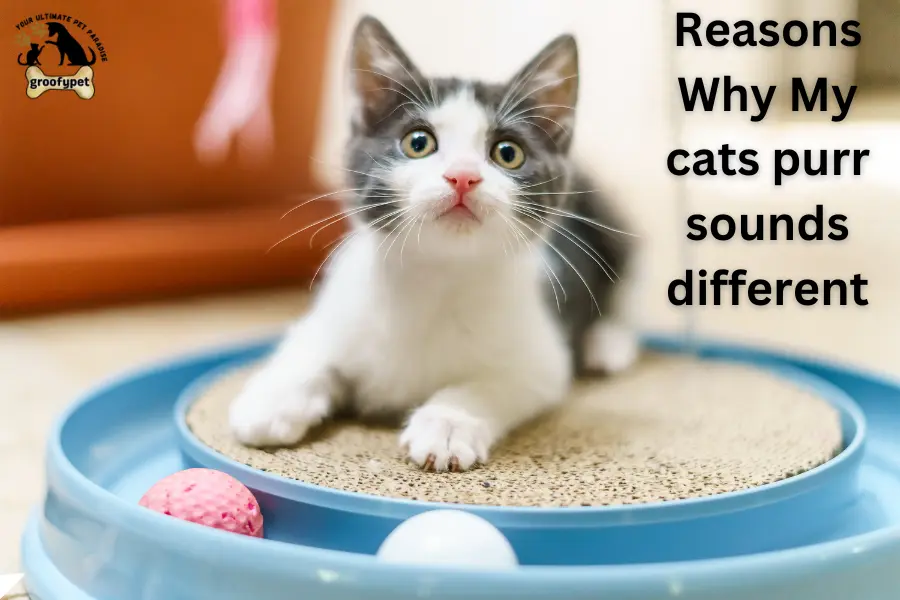
Reasons Why My cats purr sounds different
If you’ve noticed your cat’s purr sounds different, don’t create panic and just relax. There are several reasons, and some of them are harmless. However, it’s good to be aware of the possibilities.
1-Age and Development
Just like a human voice changes as we grow, a cat’s purr evolves. Kittens tend to have high-pitched, soft purrs, while older cats develop deep ones.
2-Health Issues
Health problems, especially those affecting the respiratory system, alter the way cats purr. A stuffy nose or throat issue muffles the sound, while more severe conditions, like a tumor or infection, could change it drastically.
3-Emotional States
Cats are emotional creatures. Stress, fear, or extreme happiness influence the tone and volume of their purrs. Think of it as their emotional barometer.
4: Environment and Stimulation
Sometimes external factors like a noisy room or intense playtime make a cat’s purr sound different. Cats adapt their behavior to fit their surroundings.
When to Worry About a Different-Sounding Purr?
While a change in purr isn’t always a red flag, certain signs might indicate a more serious issue. Being attentive to your cat’s overall behavior is key.
Identifying Unusual Symptoms
Is your cat coughing, sneezing, or acting lethargic alongside the change in purr? These could be signs of respiratory or other health problems. Keep an eye out for appetite changes or difficulty breathing.
Consulting a Veterinarian
When you are in doubt, a vet visit is always a good idea.
Also Read: Cats Synesthesia
What Your Cat’s Purr Is Telling You?
Just like how we might sound different when we’re excited versus tired, our cats’ purrs can change for various reasons. Sometimes it’s as simple as them being extra happy or particularly relaxed.
The fascinating thing about purrs is that they’re not just expressions of happiness.but also purr when they’re stressed, in pain, or in healing. It’s like their built-in therapy mechanism, vibrating at frequencies that can actually promote healing and bone density. Pretty incredible, right?
When Should You Worry?
If you’re like me, you’ve probably spent countless nights Googling “why does my cat sound different?” Here’s what I’ve learned: Trust your instincts. You know your cat better than anyone. If their purr changes dramatically or comes with other concerning symptoms like:
- Eating less than usual
- Seeming more lethargic than their normal lazy-cat self
- Showing signs of respiratory issues
- Being more vocal or less vocal than usual
- Better safe than sorry when it comes to our furry family members.
How to Keep Your Cat Healthy and Happy?
Prevention is better than cure, right? Ensuring your cat stays healthy can minimize the risk of sudden changes in their purring habits.
Regular Check-ups
Routine vet visits are essential. They help catch potential issues early and keep your furry friend in tip-top shape.
Proper Nutrition
A balanced diet isn’t just for humans. High-quality cat food supports everything from a healthy coat to a strong immune system.
A Stress-Free Environment
Cats love stability. Providing a calm, predictable environment does wonders for their emotional well-being and their purrs.
What does it mean when my cat meows?
A meow means anything from a greeting to a request for attention or food. Nonstop meowing might point to loneliness, discomfort, or health issues that need immediate attention.
Fun Facts About Cat Purring
Did you know there’s more to cat purring than meets the ear? Let’s explore some surprising tidbits.
Healing Powers of Purring
Cats use purring as a form of self-healing. The vibrations stimulate recovery from injuries and even reduce pain. It’s like a natural superpower!
Purring in Wild Cats
Domestic cats aren’t the only ones who purr. Cheetahs, bobcats, and even some big cats purr too. However, lions and tigers don’t—go figure!
Unraveling the Mystery Behind Purring
Each purr carries meaning based on its context from expressing emotions to aiding recovery. Let’s explore the possibilities:
1-Joy and Contentment
A steady purr often signifies your cat is feeling happy and secure.
Building Emotional Connections: Purring is a way for cats to show affection and strengthen bonds with their humans or fellow animals.
2-Navigational Signal
Kittens purr to signal their location to their mother, ensuring safety and communication.
3-Physical Discomfort
A cat in pain purr as a coping mechanism to calm themselves. Purring can stimulate their body’s natural healing process, aiding recovery from injuries.
4-Calming Effect
Cats purr to soothe their anxiety or regulate emotions. If it’s close to mealtime cat purr indicates your kitty is hungry and asking for food.
Also Read : why do cats love blankets?
Why Is My Cat Meowing Excessively?
Persistent meowing signifies boredom, distress, or medical issues. Learning to interpret the sound’s tone and frequency helps address your cat’s needs effectively.
Decode the Language of Cats: What Are They Trying to Say?
Each sound cats make serves a unique purpose. Here’s what the most common cat sounds indicate:
Meow: A versatile sound used to grab attention or communicate needs.
Hiss: Often a warning sign that your cat feels threatened or uncomfortable.
Chirp: A chirping noise typically shows excitement, especially when watching birds.
Growl: A low growl is a sign of defensiveness or fear.
Yowl or Caterwaul: Loud and prolonged, this sound means your cat is feeling territorial, is in heat, or is in distress.
Frequently Asked Questions
Why does my cat’s purr get louder at night?
Cats often feel more relaxed and playful at night, which might amplify their purring.
Can a cat stop purring altogether?
It’s rare but possible. Health issues or extreme stress might suppress purring temporarily.
Are some cat breeds naturally louder purrers?
Yes, breeds like Siamese and Maine Coons are known for their louder purrs.
Should I worry if my senior cat’s purr changes?
Not necessarily. Aging can naturally change the sound of their purr, but watch for signs of discomfort.
Can purring help humans too?
Absolutely! Studies suggest that the frequency of a cat’s purr can lower stress and blood pressure in humans.
How can I encourage my cat to meow more?
Responding positively to vocalization and engaging your cat promote communication.
Does purring always mean happiness?
Not always while purring indicates happiness it also be a self soothing mechanism during stress.
Why do cats purr when cuddling?
Cuddling creates sense of security that your cat to purr as a sign of trust and relaxation.
Final Thoughts
Your cat’s purr is a unique form of expression, a blend of communication and self-care. While changes in their purring sound can be fascinating or even concerning, staying informed helps ensure their well-being. Trust your instincts, love your cat, and always be ready to listen—literally! Understanding and responding to your cat vocalizations enhance their overall well-being and your relationship with them.
6 Reasons Your Cat is Meowing Excessively: Discover Now!
Urgent ! My Cat Sounds Congested When Purring-What’s Really Up?
Why Do Cats Puff Up Their Fur? Explosive Emotion and Fierce Defense!