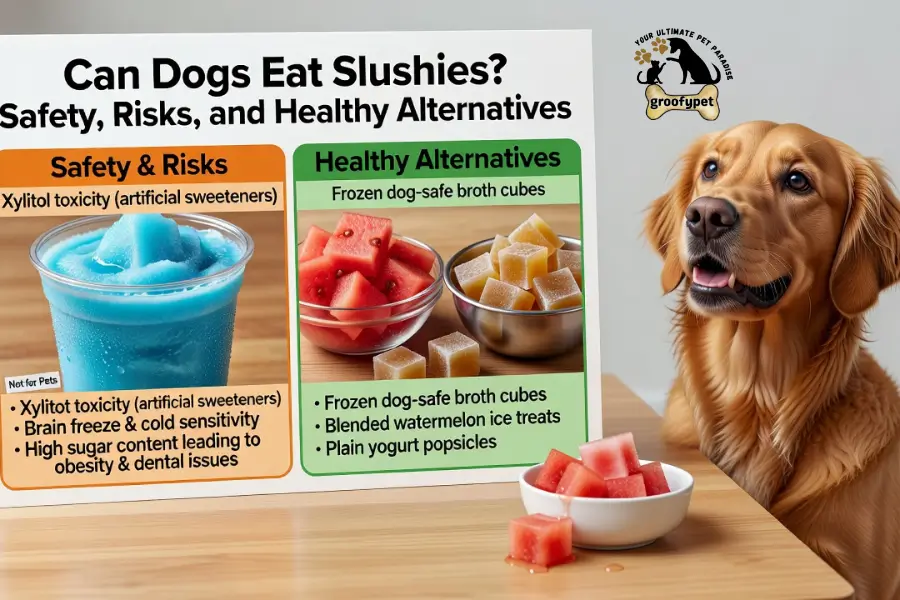
On a hot summer day, a colorful slushie might look like a refreshing treat to share with your dog. However, these frozen drinks are not a healthy choice for dogs. Dogs should generally avoid commercial slushies because they often contain excessive sugar, artificial flavorings, food coloring, and other ingredients that may upset their stomachs.
Some sugar-free slushies can be even more dangerous if they contain xylitol, an artificial sweetener that is highly toxic to dogs. Even a small amount of a drink with this ingredient can cause a medical emergency.
If your dog wants something cold, plain water, a few ice cubes, or homemade frozen treats made with dog-safe ingredients are better options. Before sharing any frozen drink, it is important to understand its ingredients and potential health risks.
Can Dogs Eat Slushies?
No, dogs should not eat commercial slushies as a regular treat. These frozen beverages are usually made with flavored syrups, sweeteners, food coloring, and large amounts of added sugar.Although a small accidental lick of an ordinary sugar-containing slushie is unlikely to cause serious problems in most healthy dogs, it does not provide any nutritional benefits. Drinking larger quantities may lead to digestive discomfort, vomiting, or diarrhea.
Sugar-free varieties require even greater caution because some products may contain xylitol. This sweetener can cause a dangerous drop in blood sugar and potentially serious liver damage.Plain crushed ice is different from a flavored slushie. It does not contain added sugar or artificial flavorings and can be offered in small, manageable amounts to dogs that tolerate it.
The bottom line: Avoid commercial slushies and choose fresh water or dog-friendly frozen treats instead.
Are Slushies Safe for Dogs?
Most commercial slushies are not suitable for dogs because their ingredients are designed for human consumption rather than canine nutrition. A typical slushie may contain several ingredients that dog owners should understand before allowing their pets to taste it.
| Slushie ingredient | Potential concern for dogs |
|---|---|
| Added sugar | May cause digestive upset and contribute to weight gain |
| Artificial sweeteners | Some require caution, particularly xylitol |
| Xylitol | Highly toxic and can cause severe hypoglycemia |
| Food coloring | Provides no nutritional benefit and may irritate sensitive stomachs |
| Flavoring syrups | May contain concentrated sugars and unsuitable ingredients |
| Caffeine | Can cause serious toxicity |
| Fruit concentrates | May contain added sugar or unsuitable fruit ingredients |
Not every slushie contains all these ingredients. However, checking the product label is essential before allowing your dog to consume an unfamiliar drink.
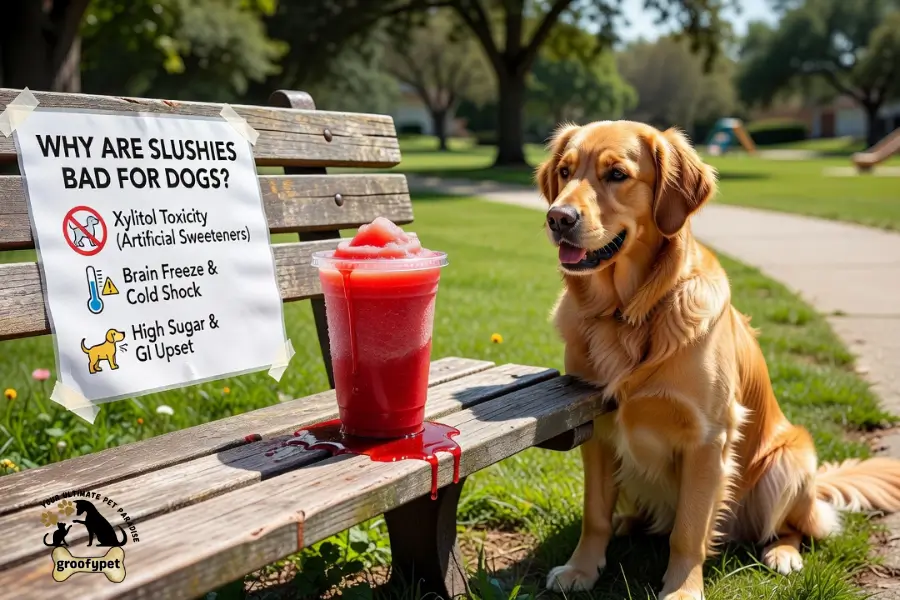
Why Are Slushies Bad for Dogs?
Slushies can create several health concerns, especially when dogs drink large amounts or consume products containing harmful ingredients. Here are ten potential risks every dog owner should understand.
1. Excessive Sugar Consumption
Most traditional slushies contain large amounts of added sugar. Dogs do not need sugary beverages because their regular food should provide the nutrients they require. Consuming too much sugar may cause stomach discomfort, vomiting, diarrhea, and increased thirst. Frequent exposure to sugary treats can also contribute to unhealthy weight gain and dental problems.
2. Xylitol Poisoning
Xylitol is one of the most dangerous ingredients a dog can consume. It is a sugar substitute sometimes used in sugar-free foods, syrups, candies, and other products. When dogs ingest xylitol, their bodies can release excessive insulin. This causes blood sugar levels to drop rapidly, a condition known as hypoglycemia.
Symptoms may include weakness, vomiting, stumbling, lethargy, tremors, and seizures. Severe poisoning can also cause liver injury or failure. Contact a veterinarian immediately if your dog consumes a product containing xylitol.
3. Artificial Sweeteners
Some slushies contain artificial sweeteners to provide sweetness without traditional sugar. However, not every sweetener has the same effects on dogs. Xylitol is particularly dangerous, while other sweeteners have different safety profiles. For example, aspartame and sucralose are not known to cause the same characteristic xylitol poisoning in dogs.
Nevertheless, artificially sweetened drinks are unnecessary for dogs. Avoid sharing them, especially when the ingredients are unclear.
4. Artificial Food Coloring
Brightly colored slushies often contain food dyes that make drinks look attractive. These colors do not make the beverage healthier or more suitable for dogs. Food coloring is not usually the main concern in a small accidental lick. However, some dogs may experience digestive sensitivity to unfamiliar ingredients or additives.
5. Stomach Upset and Diarrhea
A dog’s digestive system may not tolerate large amounts of sugary drinks. Drinking a slushie can introduce concentrated sugars and flavoring ingredients that may upset the stomach. Possible symptoms include loose stools, gas, abdominal discomfort, and vomiting. Puppies and dogs with sensitive digestive systems may be particularly uncomfortable.
6. Dental Problems
Frequent consumption of sugary drinks can contribute to plaque buildup and dental problems. Dogs already need regular dental care to maintain healthy teeth and gums. Slushies offer no dental benefits. Fresh water is a much better everyday drink for maintaining hydration without unnecessary sugar.
7. Weight Gain and Obesity
Regularly giving dogs sugary treats adds unnecessary calories to their diet. Over time, these extra calories can contribute to weight gain.Obesity may increase the risk of joint problems, reduced mobility, and other health concerns. Choosing low-calorie dog treats is a better way to reward your pet.
8. Blood Sugar Concerns
Sugary drinks can be particularly unsuitable for dogs with diabetes or other blood sugar management needs. Their dietary requirements may differ from those of healthy dogs. If your dog has diabetes, follow your veterinarian’s feeding recommendations and avoid offering sugary beverages.
9. Caffeine Exposure
Not every slushie contains caffeine. However, frozen coffee drinks, energy-style beverages, and some specialty frozen drinks may contain it.Caffeine can be toxic to dogs and may cause restlessness, vomiting, rapid heart rate, tremors, and seizures. Keep caffeinated frozen drinks away from your pet.
10. Choking Risks From Large Ice Pieces
Some frozen drinks contain hard ice chunks that may be difficult for small dogs to manage. Large pieces can create a choking risk, particularly for dogs that swallow food quickly. Offer only appropriately sized ice pieces if your dog enjoys them, and supervise your pet.
Can Dogs Have Sugar-Free Slushies?
No, sugar-free slushies are not automatically safe for dogs. Removing regular sugar does not make a drink suitable for canine consumption. Some sugar-free products use xylitol, which can cause severe poisoning in dogs. Even small amounts may trigger a dangerous drop in blood glucose.

However, it is important to understand that not all artificial sweeteners are equally toxic. Xylitol is the major ingredient of concern because of its specific effects on canine insulin production.
Before considering any sugar-free product, check its ingredient list for:
- Xylitol
- Birch sugar
- Birch bark extract
- Other artificial sweeteners
- Caffeine
- Concentrated flavoring ingredients
If you cannot identify the sweetener, do not share the drink with your dog.
Important: If your dog consumes a slushie containing xylitol, contact your veterinarian or an emergency veterinary clinic immediately. Do not wait for symptoms to develop.
Also Read : Can Dogs Eat Pear Skin? Safe Treat or Hidden Risk!
Can Dogs Drink Homemade Slushies?
Homemade slushies can be a better alternative to commercial frozen drinks when prepared with appropriate ingredients. However, they should not contain added sugar, artificial sweeteners, or potentially harmful foods.
You can prepare a simple frozen treat using fresh water and dog-safe fruits. Blend the ingredients, freeze them in small portions, and offer a little at a time.
Here are some ingredients to consider:
| Ingredient | Suitable for homemade dog treats? |
|---|---|
| Fresh watermelon without seeds or rind | Yes |
| Fresh blueberries | Yes |
| Fresh strawberries | Yes |
| Plain water | Yes |
| Unsweetened pumpkin puree | Yes |
| Plain cucumber | Yes |
| Grapes | No |
| Raisins | No |
| Chocolate syrup | No |
| Xylitol-containing sweeteners | No |
Avoid adding honey, flavored syrups, chocolate, or sugar substitutes. Introduce new ingredients gradually and consider your dog’s existing dietary needs.Remember that homemade fruit slushies should remain occasional treats rather than replacements for drinking water.
Can Dogs Eat Fruit Slushies?
Dogs can enjoy certain fresh fruits in moderation, but fruit slushies require careful preparation. Fresh fruit contains natural sugars, fiber, vitamins, and water. However, commercial fruit slushies often contain concentrated fruit syrups, added sugar, and artificial flavorings.
The difference between fresh fruit and flavored syrup is important. A homemade watermelon treat made from fresh, seedless watermelon is different from a bright red watermelon-flavored slushie.
Here are some fruit options to consider:
| Fruit | Can dogs eat it? | Preparation |
|---|---|---|
| Watermelon | Yes | Remove seeds and rind |
| Blueberries | Yes | Wash thoroughly |
| Strawberries | Yes | Remove stems and cut into small pieces |
| Apples | Yes | Remove seeds and core |
| Bananas | Yes | Remove peel and serve small portions |
| Grapes | No | Avoid completely |
| Raisins | No | Avoid completely |
| Cherries | Avoid | Pits and other parts create additional risks |
Grapes and raisins are particularly dangerous because they can cause kidney injury in dogs. Never use them in homemade frozen treats.
Read Also : Can Dogs Eat Aronia Berries?Benefits, Risks, and Feeding Guide
What Happens If a Dog Drinks a Slushie?
The effects depend on the ingredients, quantity consumed, and your dog’s size and health.A small lick of an ordinary sugar-containing slushie may cause no noticeable problems. However, consuming a larger quantity may lead to digestive discomfort.
Watch for the following signs:
- Vomiting
- Diarrhea
- Excessive thirst
- Gas or bloating
- Restlessness
- Reduced appetite
- Unusual tiredness
- Weakness or stumbling
- Tremors or seizures
The last three signs can indicate a serious problem, especially if the drink contained xylitol or caffeine.Remember that symptoms of xylitol poisoning may develop quickly or be delayed. A dog that initially appears normal can still require emergency veterinary assessment. MSD Veterinary Manual+1
What Should You Do If Your Dog Drinks a Slushie?
If your dog accidentally drinks a slushie, stay calm and identify exactly what your pet consumed. The ingredients are more important than the drink’s color or flavor.
Follow these steps:
1. Check the Ingredient Label:Look for sugar, artificial sweeteners, xylitol, caffeine, and other unfamiliar ingredients. Keep the container or take a photograph of the label.
2. Identify How Much Your Dog Consumed:Estimate whether your dog took one lick, several sips, or drank the entire cup. This information helps your veterinarian assess the exposure.
3. Look for Dangerous Ingredients:Check particularly carefully for xylitol, which may also appear under the name birch sugar. If it is listed, seek veterinary assistance immediately.
4. Contact Your Veterinarian: Explain the product, ingredients, estimated amount, and time of consumption. If xylitol or caffeine may be involved, do not wait for symptoms.
5. Do Not Induce Vomiting Yourself:Never try to make your dog vomit using home remedies unless a veterinarian specifically instructs you to do so.
6. Monitor Your Dog:Watch for vomiting, diarrhea, weakness, unusual behavior, or changes in coordination. Monitoring does not replace veterinary advice when a dangerous ingredient is involved.If possible, bring the original packaging to the veterinary clinic. It can help the veterinarian identify the ingredients and determine the appropriate treatment.
What Are the Healthier Alternatives to Slushies for Dogs?
Dogs can enjoy cold and refreshing treats without consuming commercial frozen beverages. The best alternatives use simple ingredients and avoid unnecessary sugar or artificial additives.
Here are seven options worth considering.
1. Plain Fresh Water
Fresh water is the best option for keeping dogs hydrated. Make sure your dog always has access to clean drinking water, especially during warm weather.
2. Small Ice Cubes
Some dogs enjoy licking ice cubes or playing with them in their water bowls. Offer appropriately sized pieces and supervise your pet to reduce choking risks.
3. Frozen Watermelon
Seedless watermelon without the rind makes a refreshing occasional treat. Cut it into small pieces before freezing and serving.
4. Frozen Blueberries
Blueberries contain fiber and antioxidants. Wash them thoroughly and offer a few at a time, depending on your dog’s size.
5. Frozen Strawberries
Strawberries can be a tasty occasional snack. Remove the stems, wash them, and cut larger berries into smaller pieces.
6. Homemade Frozen Dog Treats
Blend dog-safe fruits with plain water and freeze the mixture in small silicone molds. Avoid sweeteners and flavored syrups.
7. Frozen Pumpkin Treats
Unsweetened plain pumpkin puree can be mixed with water and frozen. Avoid pumpkin pie filling because it may contain added sugar and spices.
These alternatives should be served in moderation. Treats should not replace a complete and balanced dog food diet.
Can Puppies Drink Slushies?
No, puppies should not drink commercial slushies. Their developing digestive systems can be sensitive to excessive sugar and unfamiliar ingredients.Puppies also need consistent access to fresh water to support normal growth and hydration. Sugary beverages provide no nutritional advantage and may cause digestive discomfort.
If you want to give your puppy something refreshing, offer fresh water or a small amount of an appropriate dog-safe frozen treat.Always introduce new foods gradually. For very young puppies, follow your veterinarian’s feeding recommendations.
Commercial Slushie vs. Homemade Frozen Treats
Not all frozen drinks are prepared the same way. Commercial slushies and homemade dog-friendly treats have important differences.
| Feature | Commercial slushies | Homemade frozen treats |
|---|---|---|
| Added sugar | Often high | Can be avoided |
| Artificial flavorings | Common in flavored varieties | Not necessary |
| Food coloring | May be present | Not necessary |
| Xylitol risk | Depends on ingredients | Avoided by using safe ingredients |
| Ingredient control | Limited | Complete control |
| Suitable for dogs | Generally avoid | Can be suitable when properly prepared |
Homemade treats give dog owners more control over ingredients. However, using fresh ingredients does not automatically make every recipe safe.
Slushie Ingredient Safety Checklist
Before your dog gets near a frozen drink, use this simple checklist to assess potential risks.
- Check whether the drink contains xylitol or birch sugar.
- Look for caffeine or coffee extracts.
- Check the amount of added sugar.
- Avoid chocolate-based flavorings.
- Check whether the drink contains grapes or grape concentrates.
- Avoid unknown syrups and sweetener blends.
- Check whether the drink contains ingredients unsuitable for dogs.
- Keep the cup, straw, and packaging away from your pet.
If the ingredient list is unavailable, do not assume the beverage is safe.
What Does the Slushie Color Tell You?
Brightly colored slushies are popular because they look attractive and come in many flavors. However, their colors do not tell you whether they are safe for dogs.
Here are some common examples:
| Slushie color | Common flavor | What dog owners should know |
|---|---|---|
| Blue | Blue raspberry | May contain added sugar and artificial coloring |
| Red | Strawberry or cherry | Check flavoring and sweetener ingredients |
| Green | Lime or apple | Check for unsuitable flavor additives |
| Purple | Grape | Avoid grape-containing ingredients |
| Orange | Orange | Check sugar and flavoring ingredients |
A blue slushie is not automatically more dangerous than a red one. The actual ingredients determine the potential risk.
Remember: Never judge a frozen drink’s safety by its color, smell, or fruity flavor.
How Much Slushie Is Too Much for Dogs?
There is no established safe serving size for commercial slushies. The ingredients, amount consumed, and individual dog’s health all influence the potential risk.For example, a small lick of an ordinary sugary slushie is different from drinking an entire cup. However, even a small amount of a xylitol-containing product can be dangerous.
| Amount consumed | What to do |
|---|---|
| One small lick of regular slushie | Check ingredients and monitor for digestive upset |
| Several sips of regular slushie | Contact your veterinarian for advice |
| Half a cup or more | Contact your veterinarian and provide ingredient details |
| Any suspected xylitol-containing slushie | Seek immediate veterinary guidance |
| Caffeinated frozen drink | Contact your veterinarian promptly |
These are practical response guidelines, not medically established safe or toxic serving limits. Never use portion size to dismiss a possible poisoning exposure.
Emergency Warning Signs Dog Owners Should Know
Some reactions to slushies are mild, while others require immediate medical attention.
Pay particular attention to these warning signs:
- Repeated vomiting
- Severe diarrhea
- Sudden weakness
- Difficulty standing or walking
- Trembling or shaking
- Unusual sleepiness
- Seizures
- Collapse
- Yellowing of the eyes or gums
Weakness, stumbling, tremors, and seizures may indicate xylitol poisoning. Do not wait for these symptoms if you already know or suspect your dog consumed xylitol.
Frequently Asked Questions
Can Dogs Lick a Slushie?
Dogs should not be encouraged to lick commercial slushies. A tiny accidental lick of an ordinary sugary drink is unlikely to cause serious harm in most healthy dogs, but ingredients such as xylitol can create an emergency.
Can Dogs Have a Small Amount of a Slushie?
It is better not to offer slushies, even in small amounts. Commercial varieties may contain added sugar, artificial ingredients, or potentially dangerous sweeteners.
Are ICEE Drinks Safe for Dogs?
ICEE drinks are not recommended for dogs. They are flavored frozen beverages that may contain added sugars and other ingredients that provide no nutritional benefit to pets.
Can Dogs Drink Slurpees?
Dogs should avoid Slurpees because these drinks are generally formulated with sweeteners, flavorings, and other ingredients intended for people. Check the ingredient list if your dog accidentally consumes one.
Can Dogs Have Sugar-Free Slushies?
No, sugar-free slushies should not be considered safe for dogs. Some may contain xylitol, which can cause severe hypoglycemia and liver injury.
Can Dogs Eat Frozen Fruit Drinks?
Dogs can enjoy certain homemade frozen fruit treats when they contain appropriate ingredients. Use dog-safe fruits such as watermelon, blueberries, and strawberries without added sugar.
Key Takeaways
- Dogs should generally avoid commercial slushies.
- Most slushies contain unnecessary sugar and artificial flavorings.
- Xylitol is highly toxic to dogs and can cause dangerously low blood sugar.
- Sugar-free does not automatically mean dog-safe.
- Caffeinated frozen beverages should also be avoided.
- A small accidental lick of an ordinary sugary slushie is different from consuming a toxic ingredient.
- Homemade frozen treats can be a better option when made with dog-safe ingredients.
- Fresh drinking water should always be your dog’s main source of hydration.
- Contact a veterinarian immediately if your dog consumes xylitol.
Final Thoughts
Slushies may be refreshing for people, but they are not an appropriate everyday treat for dogs. Their added sugars, artificial ingredients, and potentially dangerous sweeteners can create unnecessary health risks.If your dog wants something cold during warm weather, offer fresh water, appropriately sized ice cubes, or homemade frozen fruit treats instead.
Most importantly, always check the ingredients before sharing human food with your pet. A little extra caution can help protect your dog’s health and keep treat time enjoyable.
Can Dogs Eat Plumcots? Safety, Benefits, Risks and Feeding Guide
Can Dogs Eat Bilimbi? Safety, Benefits, Risks, and Feeding Guide