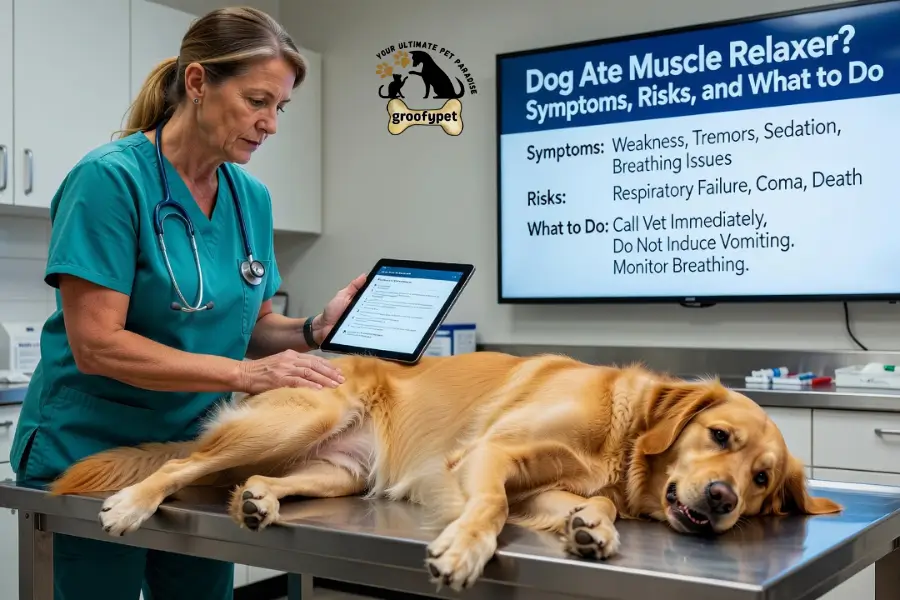
If your dog ate muscle relaxer, contact a veterinarian or emergency animal hospital immediately. Human muscle relaxers can cause serious poisoning in dogs, even when a dog swallows only part of a tablet. The level of danger depends on the medication, strength, amount swallowed, and your dog’s weight.
Some medications, such as baclofen and cyclobenzaprine, can affect a dog’s nervous system and cause severe symptoms. These may include extreme sleepiness, weakness, tremors, difficulty walking, seizures, and breathing problems. Do not wait for symptoms to appear. A dog may initially look normal even after swallowing a potentially dangerous medication.
Do not induce vomiting or give home remedies unless a veterinary professional specifically instructs you to do so.In this guide, we explain what happens when a dog eats a muscle relaxer, which medications are dangerous, what symptoms to watch for, and how veterinarians treat accidental poisoning.
Emergency information
- Contact your veterinarian or an emergency veterinary hospital now.
- Keep the medication packaging available.
- Record your dog’s weight, medication name, tablet strength, and estimated amount swallowed.
- Do not wait for your dog to become sick.
What Happens If a Dog Eats a Muscle Relaxer?
Muscle relaxers are medications that reduce muscle spasms, tightness, or discomfort. Doctors commonly prescribe them to people experiencing muscle injuries, back pain, and other painful conditions.
However, these medications can affect dogs differently than humans. A drug that helps a person relax their muscles may interfere with a dog’s nervous system, coordination, heart function, or breathing. The effects depend on the specific medication and the amount swallowed.
A dog may experience mild sleepiness or develop more serious problems, such as severe weakness, tremors, seizures, or respiratory depression. Some muscle relaxers can also cause changes in blood pressure and heart rate. These complications may require immediate veterinary treatment.
Even if your dog appears comfortable after swallowing a tablet, you should not assume everything is fine. Early veterinary advice can help prevent complications.
Are Muscle Relaxers Toxic to Dogs?
Yes, certain human muscle relaxers can be toxic to dogs. Some have a particularly narrow margin between an amount that causes clinical effects and a potentially severe overdose. The risk varies depending on the drug.
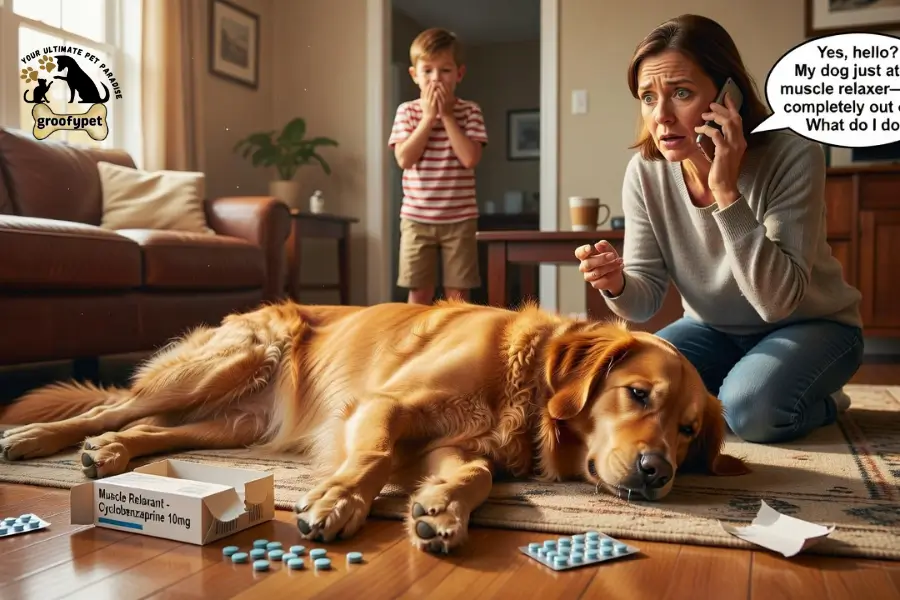
For example, baclofen poisoning can cause profound nervous system depression, while cyclobenzaprine can cause neurological and cardiovascular effects. Other medications may produce different symptoms and require different treatment approaches.Never give your dog a human muscle relaxer unless a veterinarian has specifically prescribed that medication and provided instructions for its use.
Common Muscle Relaxers That Can Poison Dogs
Several prescription muscle relaxants can cause poisoning in dogs. Some are more dangerous than others, and each medication affects the body differently.
Here are five medications that pet owners should recognize.
1. Baclofen
Common human medication for muscle spasms and spasticity. Baclofen is one of the most concerning muscle relaxers for dogs. It affects GABA receptors in the central nervous system, which help control nerve activity and muscle movement.
Dogs can develop serious poisoning after swallowing relatively small amounts. Symptoms may include excessive drooling, vomiting, unusual vocalization, weakness, poor coordination, severe sedation, and seizures.In serious cases, baclofen poisoning can cause dangerously low blood pressure, breathing difficulties, coma, or respiratory arrest.
Veterinary treatment may require intensive monitoring and respiratory support. Contact a veterinarian or animal poison control immediately if your dog eats baclofen.
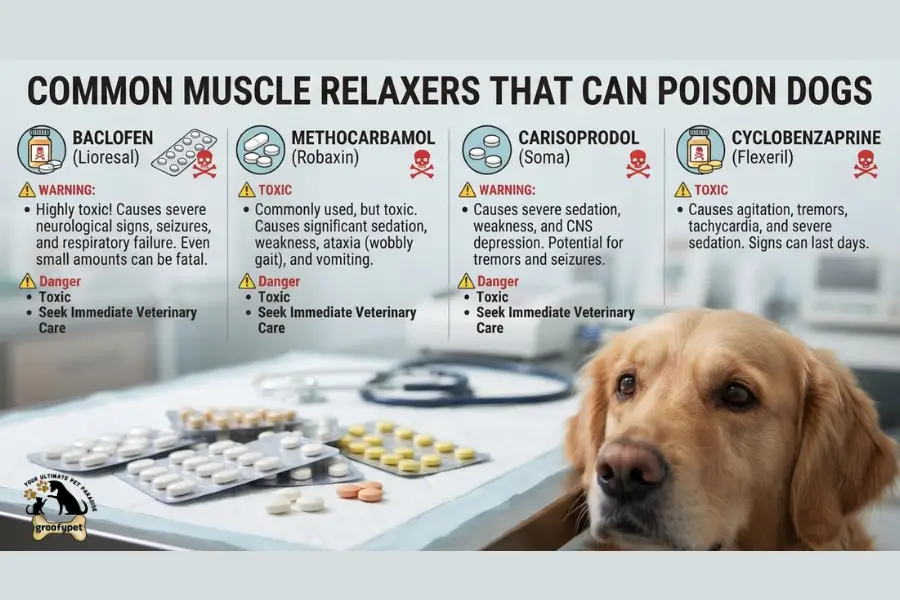
2. Cyclobenzaprine (Flexeril)
Cyclobenzaprine is prescribed to people to relieve muscle spasms associated with certain musculoskeletal conditions. It acts on the central nervous system and is chemically related to some tricyclic antidepressants. This makes accidental ingestion particularly concerning.
Possible signs include
- Excessive sleepiness
- Unusual behavior or agitation
- Vomiting
- Difficulty walking
- Increased heart rate
- Tremors
- Seizures
Severe poisoning may affect the cardiovascular and nervous systems. A veterinarian may recommend hospitalization and supportive treatment depending on the amount swallowed.
3. Methocarbamol (Robaxin)
Methocarbamol is a muscle relaxant used to manage muscle spasms and discomfort. Unlike some other medications in this group, veterinarians also use methocarbamol to treat certain muscle-related conditions in animals.
However, this does not mean human tablets are automatically safe for dogs.
An excessive amount can cause:
- Lethargy
- Weakness
- Vomiting
- Poor coordination
- Excessive sedation
- Central nervous system depression
Large ingestions may cause more serious neurological and respiratory complications. Veterinary assessment is important to determine whether treatment or monitoring is needed.
4. Tizanidine (Zanaflex)
Tizanidine works by reducing certain nerve signals involved in muscle spasticity. It can affect blood pressure and heart rate.
If a dog swallows too much tizanidine, possible symptoms include:
- Extreme tiredness
- Weakness
- Vomiting
- Poor coordination
- Slow heart rate
- Low blood pressure
Severe poisoning may require intravenous fluids, cardiovascular monitoring, and other supportive treatments. Do not wait for visible symptoms before contacting your veterinarian.
5. Carisoprodol (Soma)
Carisoprodol is a prescription muscle relaxant used for short-term relief of certain muscle discomfort. It can cause nervous system depression in dogs. An overdose may lead to weakness, unusual behavior, poor coordination, and severe sedation.Some dogs may develop serious complications that require hospital care and continuous monitoring.
The severity depends on the amount consumed and the dog’s individual response. Any suspected ingestion should be discussed with a veterinary professional immediately.
Read This :Can Dogs Eat Portobello Mushrooms? Safety, Risks, and Feeding Tips
Symptoms of Muscle Relaxer Poisoning in Dogs
The symptoms of muscle relaxer poisoning depend on the medication, amount swallowed, and the dog’s body weight.Some signs can develop within approximately 30 minutes, while others may take longer to appear. Baclofen poisoning can sometimes progress rapidly.
Watch for the following warning signs.
| Symptom | What You May Notice |
|---|---|
| Excessive sleepiness | Your dog sleeps unusually or struggles to stay awake |
| Weakness | Difficulty standing or moving normally |
| Poor coordination | Walking as if drunk or stumbling |
| Drooling | More saliva than usual |
| Vomiting | Repeated stomach upset or vomiting |
| Tremors | Shaking or involuntary muscle movements |
| Agitation | Restlessness or unusual vocalization |
| Slow heartbeat | An unusually slow heart rate |
| Low blood pressure | Weakness or collapse |
| Breathing problems | Slow, difficult, or abnormal breathing |
| Seizures | Uncontrolled body movements or convulsions |
| Unconsciousness | Failure to respond normally |
Emergency warning signs
- Difficulty breathing, seizures, collapse, and unconsciousness require immediate emergency veterinary attention.
- Do not try to manage these symptoms at home. Keep your dog away from stairs and other hazards while arranging emergency transportation.
How Much Muscle Relaxer Is Toxic to a Dog?
There is no single toxic amount that applies to every muscle relaxer or every dog. The risk depends on several important factors.
- Dog’s body weight: Smaller dogs may experience serious effects from amounts that produce different effects in larger dogs.
- Medication strength: A tablet containing 5 mg is different from one containing 20 mg or more.
- Type of medication: Baclofen, cyclobenzaprine, methocarbamol, and tizanidine have different toxicity profiles.
- Number of tablets: Swallowing several tablets can increase the risk of severe poisoning.
- Formulation: Immediate-release and extended-release medications may behave differently.
- Individual health: Existing medical problems and other medications can influence the dog’s response. For example, baclofen has a particularly narrow safety margin in dogs. Even relatively small ingestions can produce serious clinical signs.
Never use an online dosage chart to decide whether your dog needs treatment. A veterinarian or veterinary toxicologist should assess the actual exposure.
What Should You Do If Your Dog Ate a Muscle Relaxer?
If your dog swallowed a muscle relaxer, take action immediately. The first few steps can help your veterinarian identify the medication and choose appropriate treatment.
1. Remove the remaining medication
Move any remaining tablets, capsules, or medication packaging out of your dog’s reach. Prevent further ingestion.
2. Identify the medication
Check the medicine bottle or packaging for the drug name, tablet strength, and formulation.
3. Contact a veterinarian immediately
Call your regular veterinarian or the nearest emergency animal hospital. Explain what happened and follow their instructions.
4. Estimate how much your dog swallowed
Count the remaining tablets and estimate how many may be missing. Do not delay the call if you cannot determine the amount.
5. Provide your dog’s information
Tell the veterinarian your dog’s weight, age, medication details, estimated ingestion time, and any symptoms.Important: Never make your dog vomit without veterinary instructions. Do not give hydrogen peroxide, salt water, milk, activated charcoal, or other home remedies on your own.
Some poisoned dogs have impaired swallowing or consciousness, which increases the risk of aspiration if vomiting is induced. Pet
How Do Veterinarians Treat Muscle Relaxer Poisoning?
There is no single treatment for every muscle relaxer overdose. Veterinarians select treatment according to the medication, amount swallowed, time since ingestion, and your dog’s condition. The main goal is to prevent further absorption when appropriate, control symptoms, and support essential body functions.
Initial Examination
The veterinarian will assess your dog’s breathing, heart rate, blood pressure, body temperature, coordination, and level of alertness.They may also recommend blood tests or an electrocardiogram (ECG) to check for complications.
Decontamination
In selected cases, a veterinarian may recommend inducing vomiting or administering activated charcoal to reduce medication absorption.However, these procedures are not appropriate for every dog. A dog that is sleepy, having seizures, or struggling to swallow may be at risk of inhaling vomit.
The decision must be made by the veterinary team.
Intravenous Fluids
IV fluids may help maintain hydration, support circulation, and correct fluid losses.The veterinarian will decide the appropriate fluid treatment based on blood pressure and overall condition.
Seizure and Tremor Management
If your dog develops seizures or severe tremors, the veterinary team may administer medications to control these symptoms.Continuous monitoring may be necessary.
Breathing Support
Severe poisoning can interfere with normal breathing. Some dogs may need oxygen therapy or mechanical ventilation.
Hospital Monitoring
Dogs with significant poisoning may require hospitalization. Veterinarians monitor neurological function, heart activity, breathing, and other vital signs throughout recovery.Early veterinary treatment is especially important in serious baclofen exposures.
How Long Does Muscle Relaxer Poisoning Last in Dogs?
The recovery period varies according to the specific medication and severity of exposure.Some dogs may develop symptoms within minutes or a few hours. Others may have delayed signs depending on the drug and formulation.Baclofen poisoning can cause prolonged symptoms.
Severe cases may require several days of veterinary care and monitoring.Cyclobenzaprine and other muscle relaxants can also require continued observation when the exposure is significant.
Recovery depends on several factors:
- Type of muscle relaxer.
- Amount swallowed.
- Time before veterinary treatment.
- Severity of nervous system effects.
- Whether breathing or heart function is affected.
- Response to supportive treatment.
Do not assume your dog is safe simply because several hours have passed without symptoms. Contact a veterinarian even if your dog appears normal.
Also Read : Can Bed Bugs Kill Dogs? Risks, Symptoms, and Safety Tips
Can a Dog Die From Eating a Muscle Relaxer?
Yes. Severe muscle relaxer poisoning can be life-threatening in dogs.Some medications can cause profound nervous system depression, seizures, abnormal heart function, and respiratory failure.Baclofen is particularly concerning because it has a narrow safety margin. Serious poisoning and fatalities have been reported in dogs following ingestion.
However, not every exposure leads to a fatal outcome. The chances of recovery depend on the medication, amount consumed, severity of symptoms, and speed of veterinary treatment.The most important thing is to seek professional help immediately rather than waiting to see whether your dog improves.
What If My Dog Seems Completely Normal?
A dog that appears normal after eating a muscle relaxer may still be at risk.Some medications take time to produce noticeable effects. Others can cause symptoms that progress quickly after they begin.For example, baclofen can cause serious neurological problems, even when the dog initially appears unaffected.
Do not use normal behavior as proof that the medication was harmless.Contact your veterinarian and provide the medication name, strength, estimated amount, and ingestion time. The veterinary team can determine whether examination, treatment, or observation is necessary.
What If My Dog Ate Only Half a Muscle Relaxer Tablet?
Even half a tablet can be concerning, especially when the medication is baclofen or the dog is small.The risk depends on the tablet strength, the dog’s weight, and the specific drug.A half tablet of one medication cannot be compared directly with half a tablet of another.
For example, half a tablet containing a high-strength medication may represent a significant exposure for a small dog.Never assume a partial tablet is harmless. Contact a veterinarian or animal poison control for an individual assessment.
What If My Dog Ate a Muscle Relaxer Several Hours Ago?
You should still contact a veterinarian immediately, even if the ingestion happened several hours ago.Some muscle relaxers can produce delayed or prolonged effects. Waiting longer does not necessarily mean the medication has left your dog’s body.Your veterinarian may recommend an examination, blood pressure monitoring, neurological assessment, or other treatment.Be honest about when the ingestion occurred. Accurate timing helps the veterinary team make better decisions.
Emergency Mistakes Dog Owners Should Avoid
When a dog accidentally eats medication, panic can lead to unsafe decisions. Avoid these common mistakes.
- Waiting for symptoms: Some medications can cause serious poisoning before owners notice anything unusual.
- Inducing vomiting without instructions: This can create an aspiration risk, especially in dogs with neurological symptoms.
- Giving milk or food: These are not reliable treatments for medication poisoning.
- Guessing the amount: An inaccurate estimate can affect veterinary decisions.
- Using human remedies: Human medications and home treatments may make the situation worse.
- Assuming one tablet is harmless: Some muscle relaxers are dangerous even in relatively small amounts.
- Ignoring unusual behavior: Drooling, stumbling, excessive sleepiness, or strange vocalization can indicate poisoning.
When in doubt, contact a veterinary professional immediately.
How to Prevent Accidental Medication Poisoning
Preventing medication poisoning is easier than treating an emergency. Dogs are naturally curious and may chew bottles, swallow dropped tablets, or investigate an unattended pill organizer.
Follow these practical safety tips:
- Store medicines securely: Keep prescription medications inside closed cabinets that your dog cannot reach.
- Avoid leaving tablets unattended: Never place pills on bedside tables, kitchen counters, or sofas.
- Secure handbags: Keep purses, backpacks, and travel bags containing medication away from pets.
- Use child-resistant containers: Keep medicines in their original packaging with the labels intact.
- Clean up dropped pills: Check the floor immediately if you accidentally drop a tablet.
- Inform visitors: Ask guests to keep their medications safely stored during visits.
- Dispose of unused medication properly: Follow local pharmaceutical disposal instructions.
These simple habits can reduce the risk of accidental drug ingestion and protect your dog’s health.
What Information Should You Give Your Vet?
When contacting your veterinarian, provide as much information as possible. This helps the veterinary team assess the exposure and decide what your dog needs.
Use this checklist:
| Information | Details to Provide |
|---|---|
| Medication name | Baclofen, Flexeril, Robaxin, etc. |
| Tablet strength | Milligrams listed on the packaging |
| Amount swallowed | Estimated number of tablets |
| Dog’s weight | Current weight in kilograms or pounds |
| Ingestion time | When you think it happened |
| Symptoms | Vomiting, weakness, tremors, etc. |
| Other medications | Any additional drugs your dog may have swallowed |
Take the original medication packaging to the veterinary clinic whenever possible.Do not delay emergency care if some information is missing.
Frequently Asked Questions
What happens if a dog eats a muscle relaxer?
A dog may develop sleepiness, weakness, vomiting, poor coordination, tremors, or seizures. Severe poisoning can affect heart function and breathing. Contact a veterinarian immediately, even if your dog appears normal.
Can one muscle relaxer hurt a dog?
Yes. One tablet can cause serious poisoning, depending on its strength, the medication, and the dog’s weight. Baclofen is particularly dangerous because of its narrow safety margin.
How long does it take for muscle relaxers to affect dogs?
Some dogs develop symptoms within approximately 30 minutes, while others may take longer. Baclofen poisoning can develop rapidly, sometimes within minutes. Never wait for symptoms before seeking veterinary advice.
Is baclofen toxic to dogs?
Yes. Baclofen can cause severe poisoning in dogs, including excessive sedation, weakness, poor coordination, seizures, and respiratory depression. Even relatively small amounts can be dangerous.
Can dogs survive muscle relaxer poisoning?
Yes, many dogs can recover with appropriate veterinary treatment. However, severe poisoning can be life-threatening. Early treatment and proper supportive care are important.
Final Thoughts
If your dog ate a muscle relaxer, treat the situation as a potential poisoning emergency. Human medications such as baclofen, cyclobenzaprine, methocarbamol, tizanidine, and carisoprodol can cause harmful effects in dogs.The severity depends on the medication, amount swallowed, and your dog’s size. Some cases may cause mild symptoms, while others can lead to serious neurological and breathing complications.
Do not wait for symptoms, induce vomiting, or try home remedies without veterinary instructions. Contact an emergency veterinarian as soon as possible and keep the medication packaging available.Acting quickly gives your dog the best opportunity for appropriate treatment and recovery.
Can Dogs Eat Turnip Greens? Safety, Benefits, Risks, and Serving Guide
Raw Dog Food Calculator by Breed: Find the Right Portion for Your Dog