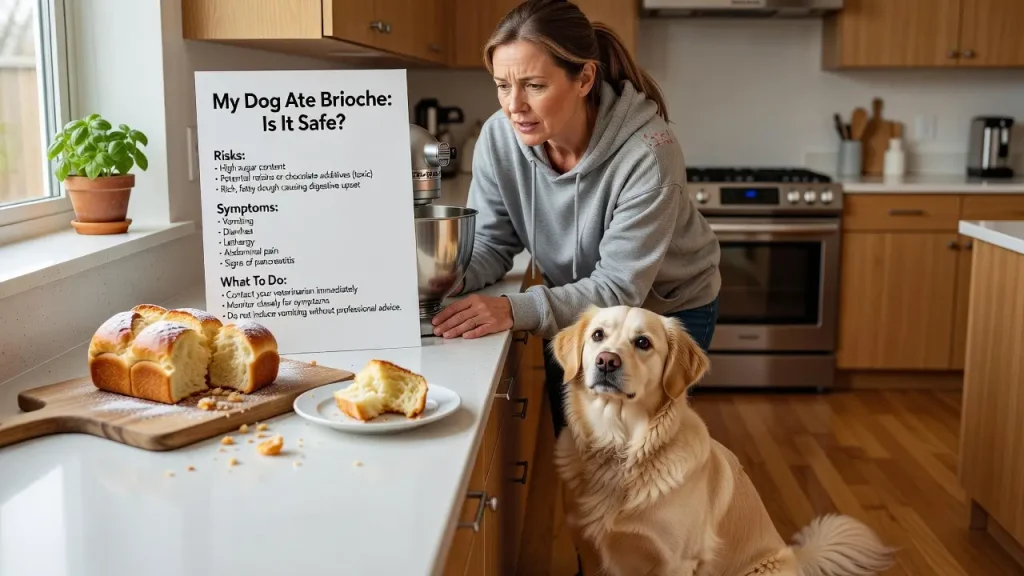
Finding out that my dog ate brioche can be worrying, especially when you do not know its ingredients. The good news is that a small piece of plain, fully baked brioche may not cause serious problems in many healthy dogs. However, brioche is not a healthy treat because it contains butter, sugar, and refined flour.
The bigger concern is what else was inside the bread. Chocolate, raisins, and xylitol can create serious health risks for dogs. The amount eaten, your dog’s size, and existing health conditions also matter.
If your dog ate brioche, check the ingredients first and contact your veterinarian if you suspect a harmful ingredient. Here is what you should know about possible risks, warning signs, and the next steps to take.
My Dog Ate Brioche: What Should I Do First?
If your dog ate brioche, stay calm and find out exactly what was in it. A small piece of plain brioche is different from bread containing chocolate, raisins, or other harmful ingredients.
Take these steps:
- Remove the remaining bread: Move the brioche out of your dog’s reach so it cannot eat more.
- Check the ingredients: Look for chocolate, raisins, currants, xylitol, or other potentially harmful additions.
- Estimate the amount: Work out whether your dog ate a small bite, half a roll, or several pieces.
- Note the time: Record approximately when your dog swallowed the bread.
- Watch for unusual behavior: Look for vomiting, diarrhea, weakness, abdominal discomfort, or changes in appetite.
- Contact your veterinarian: Explain the ingredients, amount eaten, and your dog’s weight.
Do not try to make your dog vomit at home unless a veterinarian specifically tells you to do so.
Important safety warning
If the brioche contained chocolate, raisins, currants, or xylitol, contact a veterinarian or animal poison control service immediately. Do not wait for symptoms to appear.
Is Brioche Toxic to Dogs?
Plain, fully baked brioche is not generally considered a specifically toxic food for dogs. However, that does not mean it is suitable for regular feeding.Brioche is a soft, enriched bread made with ingredients such as flour, butter, eggs, milk, sugar, and yeast. These ingredients make it richer than ordinary white bread.
A small bite may cause no noticeable problems in some dogs. However, eating a large amount can lead to digestive discomfort. The high fat content may also increase the risk of pancreatitis in susceptible dogs.
The ingredients used in flavored or filled brioche can make the situation more serious. For example, chocolate and raisins are dangerous for dogs, even when they are mixed into baked goods.
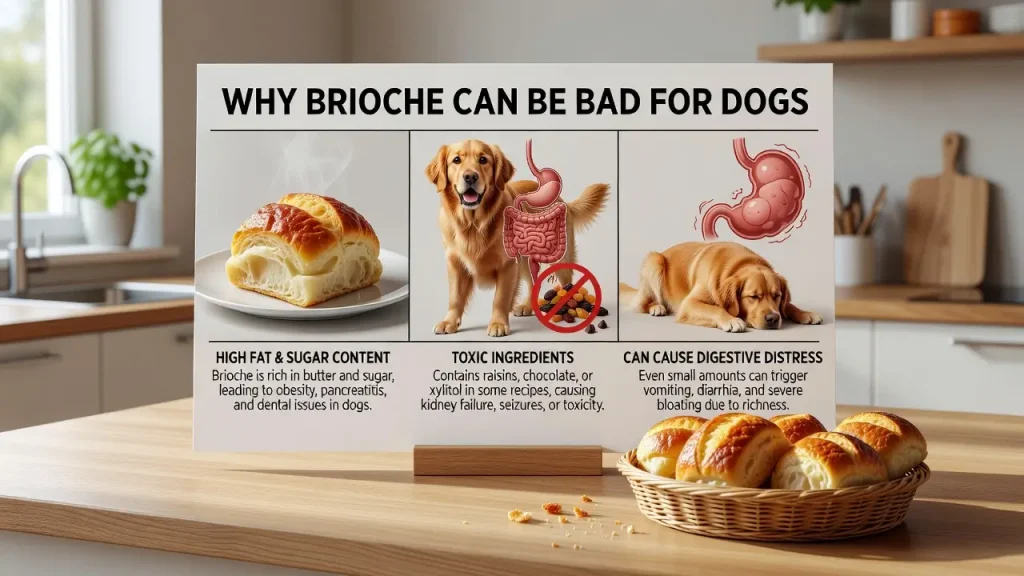
Why Brioche Can Be Bad for Dogs
Although brioche may look like harmless breakfast bread, its ingredients are not ideal for canine digestion. Here are the main reasons dog owners should avoid sharing it.
1. High Butter and Fat
Butter gives brioche its soft texture and rich flavor. However, it also adds a considerable amount of fat. Dogs that eat too much fatty food may experience vomiting, diarrhea, and stomach discomfort. In some cases, a high-fat meal can contribute to pancreatitis, which is inflammation of the pancreas.
Dogs with a history of pancreatitis need particular care. Even a seemingly small amount of rich food may be unsuitable for them.
2. Added Sugar
Brioche usually contains added sugar to create its slightly sweet taste. Dogs do not need this extra sugar in their diet. Eating sugary bread may cause digestive upset, especially if your dog consumes several pieces. Regularly feeding sweet foods can also contribute to excess weight and dental problems.
3. Digestive Upset
Some dogs have sensitive stomachs and may react to unfamiliar foods. The combination of butter, milk, eggs, and sugar can be difficult for certain dogs to tolerate. Your pet may develop loose stools, vomiting, gas, or temporary stomach discomfort.
4. Risk of Pancreatitis
Pancreatitis occurs when the pancreas becomes inflamed. This organ helps the body digest food and regulate blood sugar. Rich, fatty foods can trigger an episode in some dogs, particularly those with a previous history of the condition. Watch for repeated vomiting, abdominal pain, loss of appetite, and unusual tiredness. These symptoms need veterinary attention.
5. Excess Calories and Weight Gain
Brioche is an energy-dense bread because it contains butter, eggs, and sugar. Giving your dog calorie-rich human foods regularly can contribute to weight gain. Extra weight can put more pressure on joints and make it harder for dogs to stay active.
6. Milk and Dairy Ingredients
Traditional brioche recipes often contain milk or other dairy ingredients. Some dogs have difficulty digesting lactose, a natural sugar found in milk. They may experience gas, diarrhea, or stomach discomfort after eating dairy-containing foods.
7. Harmful Fillings and Toppings
Not every brioche contains the same ingredients. Some bakery products include chocolate chips, raisins, dried fruit, sweet cream, or flavored fillings. These additions can change the risk significantly. Always check the packaging or ask the bakery about the ingredients.
8. Dangerous Ingredients Dog Owners Should Check
Some brioche recipes contain ingredients that are much more dangerous than the bread itself.
| Ingredient | Potential danger for dogs |
|---|---|
| Chocolate | Can cause vomiting, abnormal heart rhythms, and seizures |
| Raisins | Can cause serious kidney damage |
| Currants (Zante) | Can cause kidney injury, similar to raisins |
| Xylitol | Can cause dangerously low blood sugar and liver injury |
| Macadamia nuts | Can cause weakness, vomiting, and tremors |
| Raw yeast dough | Can expand in the stomach and produce alcohol |
- Chocolate: Chocolate contains theobromine and caffeine, which dogs cannot process safely. The risk depends on the type of chocolate, amount eaten, and your dog’s size.
- Raisins and currants: Raisins and Zante currants can cause sudden kidney injury in dogs. There is no reliably safe amount, so contact a veterinarian immediately after ingestion.
- Xylitol: Some sugar-free baked goods contain xylitol instead of regular sugar. This sweetener can cause a dangerous drop in blood sugar and potentially liver damage.
- Macadamia nuts: Some specialty breads contain chopped macadamia nuts. These nuts can cause weakness, vomiting, tremors, and difficulty walking.
- Raw yeast dough: Raw dough is different from baked brioche. Yeast can continue expanding inside a dog’s stomach and produce alcohol during fermentation. This can cause serious bloating and alcohol poisoning.
If your dog ate brioche containing any of these ingredients, seek veterinary advice rather than waiting for symptoms.
Symptoms to Watch for After Your Dog Eats Brioche
Your dog may show no symptoms after eating a small piece of plain brioche. However, larger amounts or harmful ingredients can cause health problems.
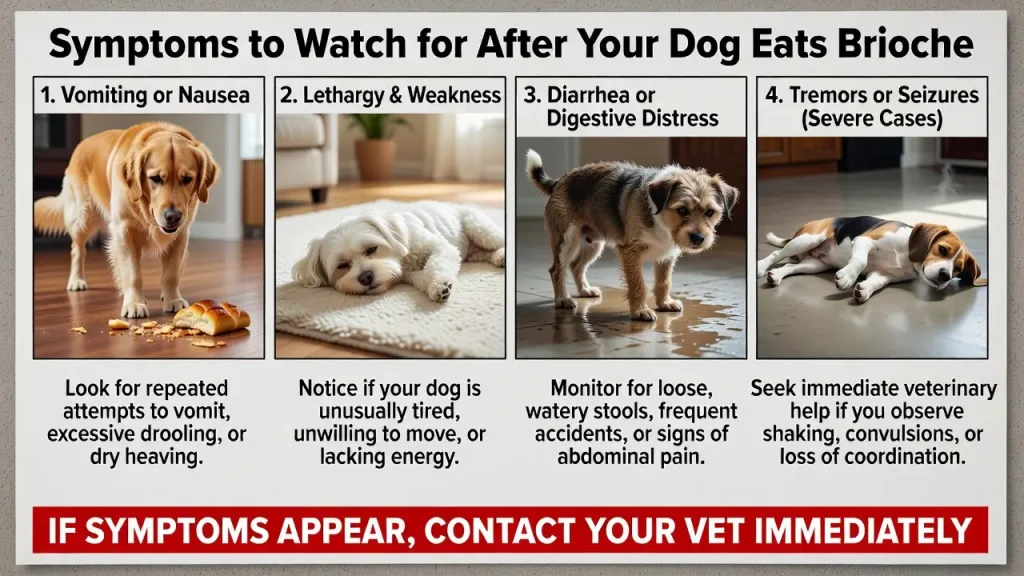
Watch your pet carefully for the following signs.
| Symptom | What it may indicate |
|---|---|
| Vomiting | Digestive irritation or food intolerance |
| Diarrhea | Gastrointestinal upset |
| Gas | Digestive discomfort |
| Abdominal pain | Possible digestive problem or pancreatitis |
| Loss of appetite | Illness or stomach discomfort |
| Lethargy | Possible underlying health problem |
| Excessive thirst | Possible dehydration or another complication |
| Restlessness | Discomfort or possible toxicity |
| Tremors | Possible poisoning or neurological effects |
| Swollen abdomen | Possible serious stomach problem |
Emergency warning signs
Repeated vomiting, severe abdominal pain, a swollen stomach, weakness, collapse, tremors, or seizures require urgent veterinary attention. Do not assume that your dog is safe simply because it looks normal. Some toxic ingredients can cause delayed symptoms. For example, raisin ingestion can lead to kidney injury, while chocolate poisoning signs may take several hours to appear.
How Much Brioche Is Dangerous for Dogs?
There is no established safe serving size of brioche for dogs. A small bite of plain baked bread may cause no problems, but a larger amount can increase the risk of digestive upset. The following table explains what dog owners should consider.
| Dog size | What to consider |
|---|---|
| Tiny dogs | Even a small piece represents more food relative to body weight |
| Small dogs | Monitor closely for digestive problems |
| Medium dogs | Consider the amount eaten and the ingredients |
| Large dogs | A small bite may be less concerning, but toxic ingredients remain dangerous |
| Puppies | Contact a veterinarian because their smaller body size increases concern |
| Senior dogs | Existing health conditions may increase the risk |
Remember that body size is only one part of the picture. A large dog can still become seriously ill after eating a harmful ingredient. The fat content also matters. Dogs with previous pancreatitis, digestive disorders, or other medical conditions may need additional care.
Can Dogs Eat Plain Brioche Without Toppings?
Plain brioche is generally less concerning than filled or topped varieties, provided it is fully baked and does not contain harmful ingredients. However, it is still not a good everyday snack for dogs. Plain brioche contains butter, sugar, eggs, milk, and refined flour. These ingredients provide little nutritional benefit when compared with a complete and balanced dog food diet.
If your dog accidentally eats a tiny piece of plain brioche, the situation may only require observation and veterinary guidance based on its health and the amount consumed. Avoid deliberately feeding brioche as a treat. Choose food made specifically for dogs instead.
What If My Puppy Ate Brioche?
If your puppy ate brioche, take the situation seriously and contact your veterinarian for advice. Puppies are smaller than adult dogs, so the same piece of bread represents a larger amount relative to their body weight. They may also be more vulnerable to dehydration if vomiting or diarrhea develops.
Check whether the brioche contained chocolate, raisins, currants, or xylitol. These ingredients require immediate veterinary advice. Do not wait until your puppy starts showing symptoms if you suspect it ate something toxic. Also, avoid giving your puppy additional human food to settle its stomach. Follow your veterinarian’s instructions about food, water, and monitoring.
Also Read : How Many Treats Per Day for a Puppy? A Safe Feeding Guide
When Should You Call a Veterinarian?
Not every brioche accident is an emergency, but certain situations need immediate attention.
Contact a veterinarian promptly if:
- Your dog ate brioche containing chocolate.
- The bread contained raisins or Zante currants.
- The recipe included xylitol.
- Your dog swallowed raw yeast dough.
- Your dog ate a large quantity of rich, buttery bread.
- Your dog has a history of pancreatitis.
- Your dog develops vomiting, diarrhea, or abdominal pain.
Seek emergency care if your dog has seizures, collapses, struggles to breathe, develops severe abdominal swelling, or becomes extremely weak.
How to Prevent Your Dog From Eating Brioche Again
Dogs often investigate food left on kitchen counters, dining tables, or breakfast plates. A little prevention can save you from another stressful situation.
Here are some simple habits to follow.
- Store bread properly: Keep brioche inside a sealed container or cupboard that your dog cannot access.
- Avoid leaving food unattended: Do not leave breakfast plates, bakery bags, or bread baskets within your dog’s reach.
- Check bakery ingredients: Sweet breads may contain chocolate, raisins, nuts, or sugar substitutes.
- Teach the leave-it command: Training your dog to leave unwanted food alone can prevent accidental eating.
- Secure kitchen trash: Dogs sometimes search rubbish bins for leftover bread and food wrappers.
- Inform family members: Make sure everyone in your home understands which human foods are unsafe for dogs.
A few simple changes can make your kitchen much safer for your pet.
Healthier Alternatives to Brioche for Dogs
If your dog enjoys soft foods or small snacks, there are better choices than buttery sweet bread.
| Alternative | How to serve |
|---|---|
| Plain pumpkin | Cooked, unseasoned, and without added sugar |
| Carrots | Washed and cut into suitable bite-sized pieces |
| Cucumber | Fresh, plain, and cut into small pieces |
| Plain cooked chicken | Boneless, skinless, and without seasoning |
| Dog treats | Choose treats appropriate for your dog’s age and size |
Introduce new foods gradually and offer only small portions. Treats and snacks should not replace your dog’s complete and balanced meals.Avoid adding butter, salt, garlic, onion, sauces, or sweeteners.
Read This : Can I Give My Dog Greek Yogurt Every Day? Safety and Serving Guide
Frequently Asked Questions
Can Dogs Eat Brioche Bread?
Dogs should not regularly eat brioche bread. A small amount of plain, fully baked brioche may not cause serious problems in many healthy dogs, but its high butter and sugar content makes it an unsuitable treat.
Is Brioche Toxic to Dogs?
Plain baked brioche is not generally toxic to dogs. However, some varieties contain dangerous ingredients such as chocolate, raisins, and xylitol. Always check the ingredients before deciding what to do.
What Should I Do If My Dog Ate a Piece of Brioche?
Remove the remaining bread and check its ingredients. Estimate how much your dog ate and contact your veterinarian if you are concerned. Watch for vomiting, diarrhea, abdominal discomfort, and unusual behavior.
Can Brioche Cause Pancreatitis in Dogs?
Brioche contains butter and other fats that can contribute to pancreatitis in susceptible dogs. This condition causes inflammation of the pancreas and may lead to vomiting, abdominal pain, and appetite loss.
What If My Puppy Ate Brioche?
Contact your veterinarian for advice, especially if your puppy ate more than a tiny bite. Check the ingredients for potentially toxic additions and do not wait for symptoms if harmful ingredients are present.
Key Takeaways
- Plain, fully baked brioche is not generally toxic to dogs, but it is not a healthy treat.
- Butter and sugar can contribute to digestive upset.
- Eating rich, fatty foods may increase pancreatitis risk in susceptible dogs.
- Chocolate, raisins, and xylitol require immediate veterinary attention.
- Raw yeast dough can cause dangerous stomach expansion and alcohol poisoning.
- Puppies and dogs with existing health problems need extra caution.
- Never induce vomiting without veterinary instructions.
Final Thoughts
If your dog ate brioche, the first thing to do is check its ingredients and estimate how much it swallowed. A small piece of plain, fully baked brioche may not cause serious problems, but larger amounts can upset your dog’s stomach.Remember that brioche containing chocolate, raisins, or xylitol presents a much greater risk. Contact your veterinarian immediately if any of these ingredients are involved.
Although sharing breakfast with your dog can feel harmless, buttery sweet bread is better left on your plate. Choose dog-friendly treats that support your pet’s health instead.
Can Dogs Eat Portobello Mushrooms? Safety, Risks, and Feeding Tips