Have you ever gone to bed only to find your cat sitting outside your bedroom door, watching the hallway or refusing to move? You might wonder why your cat guards your door at night and whether this behavior means something special.
Cats may guard bedroom doors because they want to stay close to their owners, monitor their surroundings, seek attention, or gain access to a favorite room. Some cats also develop nighttime routines that make sitting by a particular doorway a regular habit.
Although this behavior is usually harmless, your cat’s body language and daily routine can help explain what is happening. Understanding the reason behind your cat’s behavior can help you decide whether to leave the habit alone or make a few changes to improve everyone’s sleep.
Why Does My Cat Guard My Door at Night?
Your cat may guard your door at night because it is curious about what happens inside, wants to be near you, or considers the doorway an important part of its territory. Some cats sit outside bedrooms because they have learned that meowing or scratching gets attention. Others simply enjoy the quiet, familiar spot. Observing your cat’s posture, vocalizations, and routine can help you identify the most likely reason.
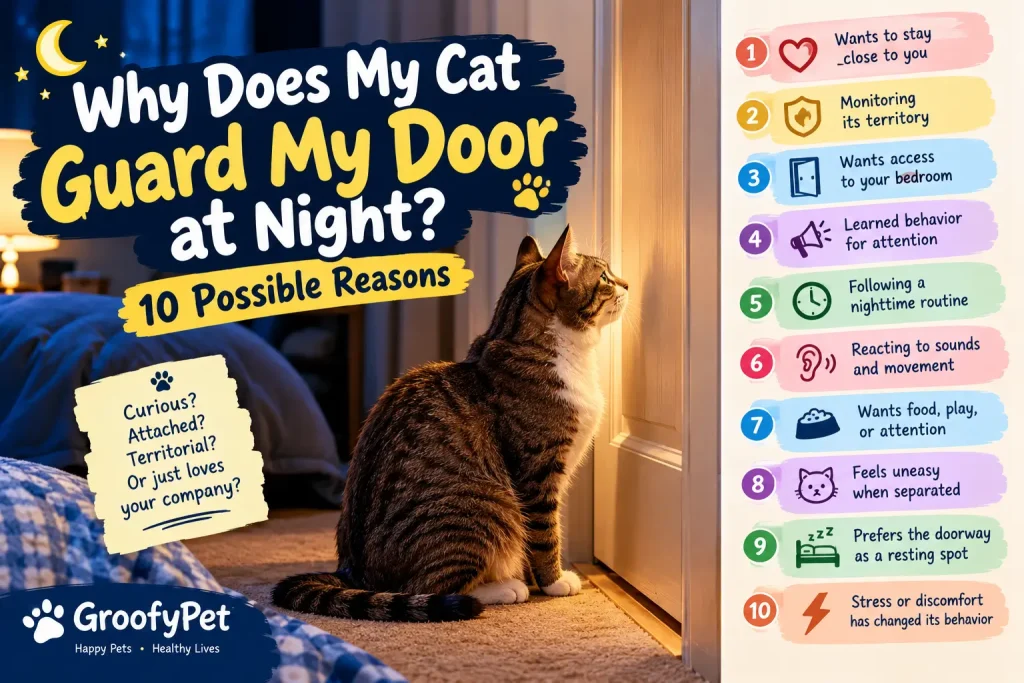
10 Reasons Your Cat Guards Your Bedroom Door at Night

1. Your Cat Wants to Stay Close to You
Cats can form strong social bonds with their owners, even when they prefer independence during other parts of the day. Your cat may sit outside your bedroom because your presence provides comfort and familiarity.
If your cat follows you around the house, waits outside your room, or settles nearby while you work, it may simply enjoy being close to you. Your bedroom also carries familiar scents that can make the area appealing.
This behavior does not necessarily mean your cat feels anxious when you are out of sight. Some cats enjoy sharing space with their favorite people without needing constant physical contact.
What you can do: If the behavior is peaceful, there is usually no need to stop it. Provide a comfortable bed nearby if you prefer your cat to rest outside the doorway.
2. Your Cat Is Monitoring Its Territory
Cats naturally pay attention to familiar spaces and changes in their surroundings. A bedroom doorway can become an interesting place to observe because people, other pets, and household sounds frequently pass through it.
Your cat may sit there to monitor movement or maintain a clear view of the hallway. This can be particularly noticeable in homes with multiple cats, where animals sometimes compete for preferred resting areas or access to resources.
However, sitting in front of a door does not automatically mean your cat is displaying aggression or trying to dominate the household.
What you can do: Give your cat several comfortable resting spots throughout the home. If other pets are involved, make sure each animal has access to its own food, water, litter boxes, and resting areas.
3. Your Cat Wants Access to Your Bedroom
A closed door can be surprisingly interesting to a curious cat. If your cat normally has access to your bedroom, suddenly closing the door may encourage it to investigate what is happening inside.
Your cat may sit outside, push its paws underneath the door, scratch the surface, or repeatedly check whether you have opened it. These actions often reflect curiosity and a desire to explore a familiar space.
Cats can also become interested in rooms they rarely enter because restricted access makes the area less predictable.
What you can do: Decide whether you want your cat to enter your bedroom. If access is allowed, establish a consistent routine. If the room must remain closed, provide a comfortable alternative rather than repeatedly opening the door after persistent scratching.
4. Your Cat Has Learned That the Door Gets Attention
Sometimes, the reason a cat guards a bedroom door is surprisingly simple: the behavior works. Imagine that your cat scratches the door and you immediately open it. The next night, your cat may repeat the same action because it has learned that scratching can produce a response.
Even talking through the door, getting up to check on your cat, or offering treats can reinforce the behavior. This is called learned behavior, which means an animal repeats an action because it has previously produced a result.
Not every cat that scratches or meows is seeking attention, but repeated responses can make the habit stronger. What you can do: Reward calm behavior and establish a predictable nighttime routine. Avoid accidentally rewarding persistent scratching with attention every time. First make sure your cat’s essential needs are met and that the behavior is not caused by distress.
5. Your Cat Follows a Familiar Nighttime Routine
Cats often become attached to predictable routines. If your cat usually waits outside your bedroom around bedtime, the behavior may have become part of its daily schedule. Your cat might associate your evening activities with feeding, playtime, cuddling, or the moment you stop interacting with it.
When these familiar activities occur, your cat may automatically head toward the bedroom door.Cats can also become active around dawn and dusk, which helps explain why some begin moving around the house when their owners are preparing to sleep.What you can do: Create a consistent evening routine.
Offer interactive play before bedtime, provide an appropriate meal according to your cat’s feeding plan, and give it time to settle afterward.A predictable routine may help your cat relax without repeatedly checking the bedroom door.
6. Your Cat Reacts to Sounds and Movement
Cats have sensitive hearing and are naturally attentive to movement. A quiet hallway may contain sounds that you barely notice, such as footsteps outside, insects, distant animals, plumbing noises, or movement from another room. Your cat may sit near the door because it provides a good position for observing these sounds. You might notice its ears turning toward the hallway, its head following a sound, or its attention shifting suddenly.
This kind of environmental awareness is a normal part of feline behavior. It does not necessarily mean your cat senses danger or is deliberately guarding you.What you can do: Observe whether specific sounds trigger the behavior. If outdoor noise appears to disturb your cat, consider closing windows, using curtains, or providing a quieter resting area.
7. Your Cat Wants Food, Play, or Attention
A cat that becomes active at night may be looking for something to do. If it has spent much of the day sleeping, it may have plenty of energy when you are ready for bed.Your cat might sit outside your room because it expects a meal, wants to play, or hopes you will interact with it. Meowing and scratching can become ways of communicating these needs.
Boredom may also contribute when a cat lacks toys, climbing spaces, scratching posts, or other forms of environmental enrichment.What you can do: Give your cat opportunities to play, explore, climb, and investigate safe toys during the day. Interactive play before bedtime can help satisfy its need for activity.
If your cat repeatedly wakes you for food, review its feeding schedule rather than automatically providing extra meals every time it meows.
8. Your Cat Feels Uneasy When Separated From You
Some cats become uncomfortable when they cannot reach a familiar person. They may wait outside bedroom doors, vocalize when separated, or follow their owners closely throughout the house.In some cases, these behaviors can occur alongside separation-related distress. However, a cat sitting outside a closed door is not enough to establish that it has separation anxiety.
Look for a broader pattern, such as persistent distress when you leave, unusual vocalization, destructive behavior, or difficulty settling when separated.What you can do: Provide predictable routines, comfortable resting areas, and rewarding activities that your cat can enjoy independently. Gradually encourage calm periods away from you rather than forcing sudden separation.
If your cat shows persistent distress, consult a veterinarian or qualified feline behavior professional for guidance.
9. Your Cat Prefers the Doorway as a Resting Spot
Sometimes, the explanation is much less complicated. Your cat may simply like the location.A bedroom doorway might provide a comfortable temperature, a clear view of the hallway, a familiar scent, or a quiet place to rest. Cats often choose locations that allow them to relax while remaining aware of nearby movement.
If your cat sleeps across the doorway with relaxed muscles, partially closed eyes, and a comfortable posture, it may not be guarding anything at all. The phrase cat sleeping in front of the door can describe a normal resting preference rather than a behavioral problem.
What you can do: Place a comfortable cat bed or blanket near the preferred spot. If the location blocks a walkway or creates a safety concern, gradually encourage your cat to use a nearby resting area.
10. Stress or Discomfort Has Changed Your Cat’s Behavior
If your cat has suddenly started guarding your bedroom door, consider whether anything has changed recently. A new pet, a different household schedule, unfamiliar visitors, construction noise, or conflict with another animal can affect how comfortable your cat feels at night. Cats sometimes respond to stress by changing their resting locations, following people more closely, or becoming more vocal.
Physical discomfort can also affect behavior. A cat that seems restless, unusually clingy, irritable, or unable to settle may need closer attention.What you can do: Look for changes in appetite, drinking, litter-box habits, movement, and social behavior. If the door guarding begins suddenly or occurs alongside other unusual symptoms, arrange a veterinary examination rather than assuming it is simply a new habit.
What Does Your Cat’s Body Language Mean?

Your cat’s body language can provide useful clues about why it sits outside your bedroom. However, no single posture tells the whole story. Consider what your cat is doing, what happens immediately before the behavior, and whether the same pattern appears every night.
| Cat’s behavior | Possible meaning | What to observe |
|---|---|---|
| Sitting quietly by the door | Curiosity, routine, or a preferred resting spot | Relaxed posture and normal daily behavior |
| Sleeping across the doorway | Comfort or a favorite location | Whether your cat appears relaxed |
| Scratching and meowing | Wants access or attention | Timing and response to interaction |
| Ears turning toward hallway sounds | Monitoring the environment | Whether particular sounds trigger the behavior |
| Growling, hissing, or blocking another pet | Fear, stress, or conflict | Triggers and changes in household dynamics |
| Repeatedly pacing near the door | Excitement, frustration, or possible distress | Whether your cat can settle elsewhere |
A relaxed cat usually has a relatively loose posture and may lie down or groom itself. A frightened or highly aroused cat may crouch, flatten its ears, tense its body, or growl.
Interpret these signs together rather than assuming that every cat sitting by a door is being protective.
Is My Cat Guarding My Door Because It Loves Me?
Your cat may sit outside your bedroom because it enjoys your company and feels comfortable near you. Cats can develop familiar relationships with their owners and choose to spend time in nearby spaces.However, door guarding alone does not prove that your cat is protecting you. Curiosity, territorial behavior, learned routines, and a preference for the location can produce similar actions.
Look at the wider relationship between you and your cat. Does it voluntarily approach you, relax nearby, rub against you, or choose to rest in the same room? These behaviors can indicate familiarity and comfort.Some cats show affection by sleeping beside their owners, while others prefer to stay nearby without direct contact. Both patterns can be normal.
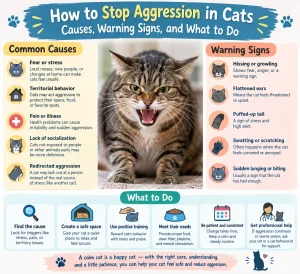
Also Read : How to Stop Aggression in Cats: Causes, Warning Signs, and What to Do
Should I Let My Cat Guard My Bedroom Door?
If your cat calmly sits or sleeps outside your bedroom, there is generally no need to stop the behavior unless it causes a problem.Allowing your cat to rest near the door may be perfectly reasonable when the location is safe and does not interfere with your sleep. You can also provide a nearby cat bed if you want to keep the doorway clear.
The situation deserves more attention if your cat repeatedly scratches the door, cries for long periods, blocks other pets, or seems unable to settle. These behaviors may indicate an unmet need, frustration, stress, or a learned habit.
Make sure your cat has access to fresh water, a clean litter box, comfortable resting areas, and appropriate activities. A safe and predictable environment can make nighttime behavior easier to manage.
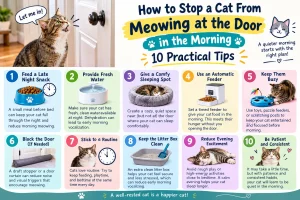
How to Stop Your Cat From Guarding Your Door at Night

If your cat keeps waking you by scratching, meowing, or sitting directly in front of your bedroom door, try these practical steps.
1. Establish a Consistent Bedtime Routine
Cats often respond well to predictable schedules. Try to keep playtime, feeding, and bedtime reasonably consistent so your cat knows what to expect.Avoid changing the routine dramatically from one night to the next.
2. Offer Interactive Play Before Bedtime
Use a suitable wand toy or another interactive toy to give your cat an opportunity to chase, stalk, and pounce.A play session can provide mental stimulation and physical activity. Follow it with an appropriate meal if that fits your cat’s normal feeding schedule.
3. Create a Comfortable Alternative Resting Spot
If your cat sleeps across the doorway, place a soft bed or blanket nearby. Choose a quiet location where your cat can relax without blocking the walkway.You can reward your cat for choosing the new spot with calm praise or an occasional suitable treat.
4. Make Sure Essential Needs Are Met
Before bedtime, check that your cat has fresh water, access to its litter box, and a safe place to rest.If your cat is repeatedly seeking food or interaction, review its feeding and activity schedule to determine whether something needs adjusting.
5. Avoid Reinforcing Persistent Scratching
If you open the door every time your cat scratches, the behavior may become more frequent because it consistently gets a response.Once you have confirmed that your cat is safe and its needs are met, respond consistently and reward calm behavior instead. Do not ignore signs of genuine distress or illness.
6. Add Environmental Enrichment
Provide appropriate toys, scratching posts, climbing structures, hiding places, and opportunities to explore. Puzzle feeders can also provide mental stimulation when used safely.A cat with suitable activities throughout the day may have fewer reasons to seek constant interaction at night.
7. Check for Household Stress
Consider whether a new pet, visitor, changed schedule, or conflict between animals is affecting your cat.In multi-cat homes, make sure resources are distributed so one animal cannot easily block another from reaching food, water, litter boxes, or resting areas.
8. Seek Professional Advice When Necessary
If your cat’s nighttime behavior becomes intense, appears suddenly, or continues despite reasonable changes, speak with your veterinarian.A professional can help assess whether the behavior is related to stress, discomfort, or another issue and recommend an appropriate plan.
Avoid punishment, shouting, or frightening your cat. These approaches can increase stress without addressing the underlying reason for the behavior.
Must Read : Why Do Cats Sneak Around? 9 Reasons Behind This Quiet Behavior
When Should You Worry About Your Cat’s Nighttime Door Guarding?
Sitting quietly outside your bedroom door is not usually a medical emergency. However, a sudden change in behavior deserves attention, particularly when it occurs alongside other symptoms.
Contact your veterinarian if you notice:
- New or unusually frequent nighttime vocalization.
- Disorientation, confusion, or difficulty settling.
- A sudden increase in aggression or irritability.
- Changes in appetite, thirst, or litter-box habits.
- Unusual restlessness or signs of pain.
- A noticeable change in social behavior or daily activity.
Older cats that develop new nighttime vocalization or confusion may need an examination. These changes can have several possible causes, so it is best not to diagnose the problem from behavior alone.
Seek prompt veterinary care if your cat shows severe distress, difficulty breathing, collapse, or other urgent symptoms.
Frequently Asked Questions
Why Does My Cat Sit Outside My Bedroom Door Every Night?
Your cat may want to be near you, explore the room, follow a familiar bedtime routine, or rest in a comfortable spot. Some cats also learn that sitting outside a door leads to attention. Observe whether your cat is relaxed or showing signs of frustration or distress.
Why Does My Cat Guard My Door but Not My Partner’s?
Your cat may have a stronger routine or attachment with you, prefer your room’s location, or associate you with feeding and playtime. Different bedroom layouts and household habits can also influence the behavior. It does not necessarily mean your cat is protecting you or dislikes your partner.
Why Does My Cat Sleep in Front of My Bedroom Door?
Your cat may find the doorway comfortable, familiar, quiet, or useful for observing the hallway. If it sleeps with relaxed muscles and appears comfortable, the behavior may simply reflect its preferred resting spot. Consider providing a nearby bed if the doorway needs to remain clear.
Why Does My Cat Scratch at My Door When I Go to Bed?
Your cat may want access to the room, seek attention, or feel frustrated by a closed door. If scratching repeatedly causes you to open the door, the behavior can become a learned habit. Check your cat’s needs first, then establish a consistent response and reward calm behavior.
Does My Cat Think It Is Protecting Me?
There is no reliable way to conclude that your cat is deliberately protecting you simply because it sits outside your bedroom. Cats may monitor their surroundings, enjoy being close to familiar people, or prefer a particular location. Body language and the wider situation offer better clues.
Why Does My Cat Stare at Me Through the Doorway?
Your cat may be curious about your movements, waiting for interaction, or monitoring a familiar person. A relaxed posture generally suggests a different situation from tense muscles, flattened ears, or growling. Consider what happens before the staring begins and whether your cat can settle comfortably.
Should I Ignore My Cat When It Meows Outside My Door?
Do not automatically ignore every meow. First check that your cat has access to essential resources and is not showing signs of distress or illness. If the behavior is attention-seeking, a consistent bedtime routine and rewards for calm behavior may help reduce repeated vocalization.
How Can I Help My Cat Settle Peacefully at Night?
Offer interactive play, maintain a predictable routine, and provide comfortable resting areas. Make sure your cat has access to water and a clean litter box. If nighttime behavior is new, persistent, or accompanied by other changes, consult a veterinarian before assuming that boredom is the cause.
Final Thoughts
If you have wondered, “Why does my cat guard my door at night?” the answer may be a combination of curiosity, attachment, territorial instincts, routine, or a comfortable resting spot.
Pay attention to your cat’s body language and the circumstances surrounding the behavior. A relaxed cat sitting outside your bedroom usually does not need correction, while persistent distress or sudden changes deserve closer attention.
Start with a predictable bedtime routine, interactive play, and a comfortable resting place. If your cat continues to struggle or develops other symptoms, your veterinarian can help identify the cause and guide you toward a suitable solution.
How to Deal With an Aggressive Cat Towards Other Cats: A Step-by-Step Guide