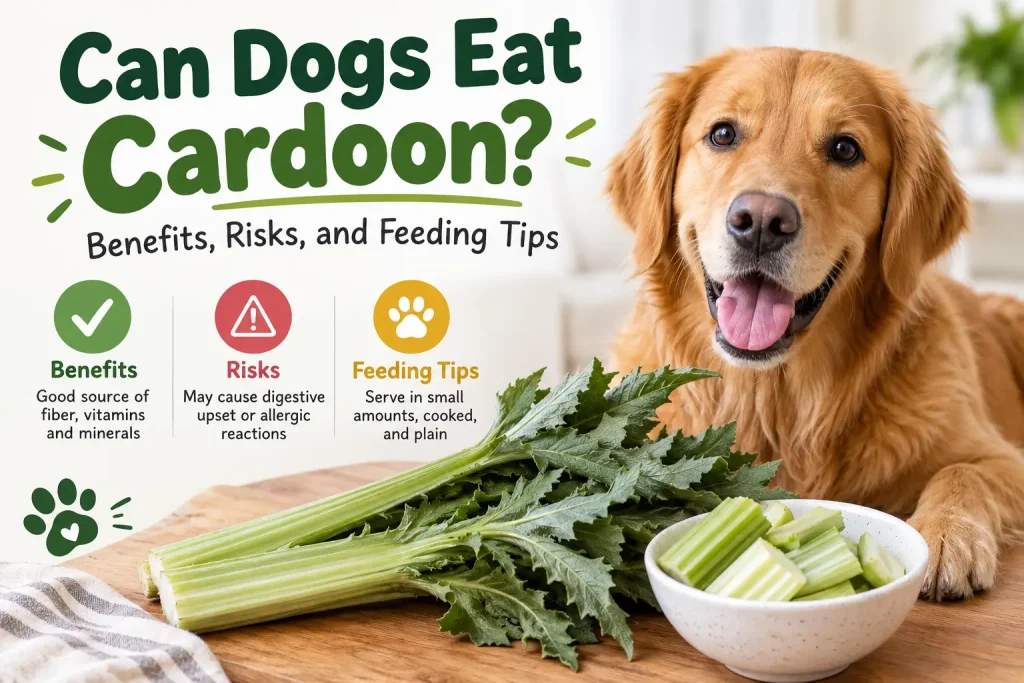
Can dogs eat cardoon? Yes, most dogs can eat a small amount of plain cardoon. Cardoon is a thistle-like vegetable related to the artichoke, and plant databases do not list it as toxic to dogs. Still, no studies test cardoon in dogs. The stalks are tough, bitter, and sometimes spiny, so preparation matters.
Portion size matters too. A tiny nibble in the garden is very different from a pile of raw stalks or a buttery restaurant dish. Cardoon also cannot replace complete dog food. This guide explains what is known, what is uncertain, and how to keep the risk low.
Can dogs eat cardoon?
Yes, in small amounts, as an occasional treat. Cardoon is not known to be toxic to dogs. The risks come from tough fiber, large portions, spines, seasonings, and garden chemicals.
Cardoon (Cynara cardunculus) is a tall, silvery, thistle-like plant. People also call it the artichoke thistle, Spanish artichoke, or cardy. It belongs to the Asteraceae family, the same family as daisies and sunflowers. It is a close cousin of the globe artichoke, and botanists often treat the artichoke as a cultivated form of the same species.
The plant can reach well over six feet. It has deeply cut gray green leaves and large purple flowers that look like fat thistles. Bees love them.
Humans mainly eat the thick leaf stalks. Cooks usually blanch or braise them, then use them in soups, stews, and gratins. The texture is close to celery, but the flavor is bitter and earthy. The flower buds and roots are edible too, though less common.
Cardoon is a classic Mediterranean vegetable. Italy, Spain, France, and Portugal all have traditional cardoon dishes. It also grows as a garden ornamental and has become invasive in places like California and Australia.
People sometimes mistake cardoon for celery, burdock, or a wild thistle. The leaves are spiny, so they do not look like celery in the field. At a market, though, trimmed stalks can pass for giant celery. Correct identification matters before you share anything with your dog.
Can Dogs Eat Cardoon?
Yes, most healthy dogs can eat a small amount of plain, prepared cardoon. It works as an occasional treat, not a diet staple. Cardoon is not known to be toxic to dogs.
Why: Garden and plant safety databases report no toxic effects for Cynara cardunculus. That is reassuring. It is not the same as proof that cardoon is good for dogs. Researchers have not studied cardoon in dogs, so safe feeding advice comes from general vegetable guidance and plain common sense.
How to feed: Peel off the tough outer strings. Cook the stalk until soft. Chop it small. Offer a bite or two and watch your dog.
Safe as an occasional food and necessary for a dog’s diet are two separate ideas. Dogs get everything they need from complete and balanced dog food. Cardoon adds nothing essential. Think of it as a novelty snack, like a green bean or a slice of cucumber.
Individual tolerance also varies. Some dogs handle new vegetables well. Others get gas or loose stool from a few bites. Your dog’s past reactions to fiber are your best guide.
Is Cardoon Toxic to Dogs?
No. Cardoon is not recognized as a poisonous plant for dogs. Plant databases that draw on ASPCA data list it as non-toxic. It can still cause mild stomach upset or mouth irritation, especially in large amounts.
Evidence and context: I reviewed the major sources before writing. Plant safety lists show no reported toxicity for Cynara cardunculus in dogs. One botanical reference notes that the sap and leaf compounds may cause contact skin irritation in sensitive people. Nothing I found describes poisoning in dogs. Please confirm the current entry yourself in the ASPCA plant search tool, because lists get updated.
Two ideas help here. First, there are known toxic plants, such as sago palm or lilies in cats. These can cause serious illness. Second, there are plants that are not poisonous but still cause trouble. Any plant matter can trigger vomiting or diarrhea in a dog. The ASPCA itself notes that eating plant material may cause mild, short-lived signs like vomiting or loose stool.
Cardoon sits in the second group. It is not risk-free. Spines, fiber, and portion size are the real issues.
Practical advice: If your dog ate a bit of cardoon, you usually do not need to panic. If you are unsure the plant was actually cardoon, treat it as an unknown plant and call your vet.
Can Dogs Eat Raw Cardoon?
A small amount of raw cardoon is unlikely to poison a dog. But raw stalks are tough, stringy, and bitter, so cooked cardoon is easier on most dogs.
Why raw is harder: Raw stalks contain long fibers. Dogs often gulp food instead of chewing it well. A long, stringy piece can be awkward to swallow. Large chunks add a choking concern. Raw cardoon is also very bitter. Many dogs simply refuse it.
The outer ribs may carry small spines or prickles, especially near the leaf base. Those can irritate the mouth and lips. One pet food site warns that prickly parts may irritate a dog’s mouth and skin.
I could not find reliable evidence that raw cardoon causes intestinal blockage. So I will not claim it does. The honest summary is simple. Raw cardoon is not proven dangerous, but it is a poor fit for the way dogs eat.
How to feed: If you want to offer a raw piece, peel it, remove strings, and cut it into tiny bits. For most owners, cooking is the better path.
Can Dogs Eat Cooked Cardoon?
Yes. Plain cooked cardoon is the preferred way to offer it. Cooking softens the fiber, reduces bitterness, and makes small pieces easier to chew and swallow.
Why cooking helps: Heat breaks down the tough stalk. Parboiling also tames some bitterness, which may make it more appealing. Soft pieces move through the mouth and throat more easily than stiff, raw ones.
How to cook it:
- Steam or boil peeled stalks until very tender.
- Drain well and let the pieces cool completely.
- Cut them into small, bite-sized pieces.
- Serve plain and unsalted.
Do not cook cardoon with garlic, onion, excess salt, butter, heavy sauces, or spicy seasonings. Garlic and onion belong to the Allium family and are harmful to dogs. Rich sauces can trigger stomach upset or pancreatitis in some dogs.
Plain preparation is the safest rule for any human vegetable you share with your dog.
Can Dogs Eat Cardoon Stalks?
Yes, but only after you peel, cook, and chop them. The stalks are the main edible part for people, and they are also the part most likely to cause trouble for dogs if served raw.
Why stalks need work: Cardoon stalks look like giant celery ribs. The outer layer is stringy, and the surface can carry tiny spines. The inner flesh is the part worth keeping. Gardeners and cooks routinely scrape the stalks to remove the fibrous strings before cooking. Do the same for your dog.
Step by step:
- Cut away the leaf edges and any visible prickles.
- Peel the outer strings with a vegetable peeler.
- Cook the pale inner flesh until soft.
- Chop it into pieces smaller than a pea for small dogs or a thumbnail for larger dogs.
Never hand a dog a whole stalk. Long pieces are a choking and swallowing hazard. A big dog can also bolt large chunks without chewing. Small, soft pieces are easier to manage and easier to track if your dog reacts.
One popular pet site says all stalks must be cooked first to remove spikes. Peeling does most of that work. Cooking then handles texture.
Can Dogs Eat Cardoon Leaves?
It is better not to offer cardoon leaves. They are spiny, leathery, and very bitter. They are not the part people usually eat.
Why: Cardoon leaves carry sharp spines along the margins. They can poke the mouth, tongue, and throat. Their texture is tough even after cooking. I found no evidence that the leaves are poisonous. But no one should assume every part of a plant is equally safe. Young, tender leaves are sometimes cooked for people. That does not make them a good dog snack.
Practical advice: If your dog nibbled a leaf in the garden, check the mouth for irritation. Look for pawing at the face, drooling, or gagging. Most dogs are fine. Call your vet if irritation persists or your dog seems uncomfortable. Keep dogs away from the thorny plant if they like to chew it.
Potential Benefits of Cardoon for Dogs
Cardoon is a plant food, and like many vegetables, it provides water, fiber, small amounts of vitamins, and some minerals. Some pet sites list vitamin C, B vitamins, potassium, magnesium, and iron. Cardoon also contains plant compounds such as polyphenols.
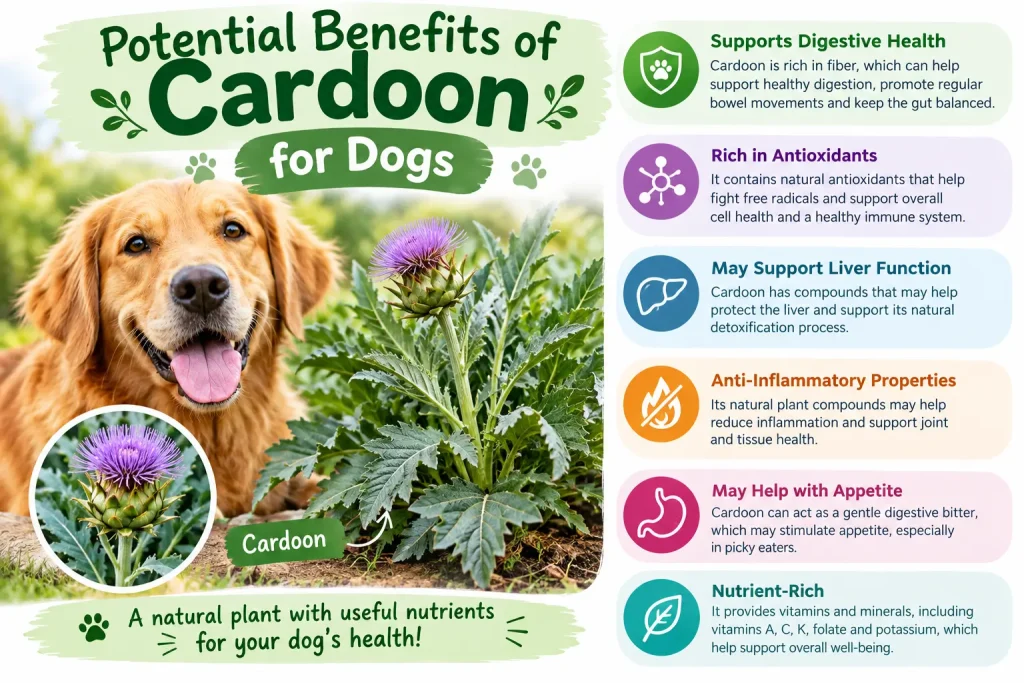
That sounds good, but there is a catch. These claims come from the human food and plant literature. No study shows that cardoon improves a dog’s health. Dogs eating complete dog food already receive balanced nutrients. A few bites of cardoon will not add meaningful nutrition.
Also Read : Can Dogs Eat Plumcots? Safety, Benefits, Risks and Feeding Guide
So here is the fair summary. Cardoon may offer a little fiber and moisture as a low-calorie treat. It does not detox, cure, prevent cancer, reduce inflammation, or replace veterinary care. Cardoon is not a superfood for dogs.
Is Cardoon Good for a Dog’s Digestion?
Cardoon contains fiber, and fiber can change stool quality. But a little goes a long way. Too much can cause gas, loose stool, or an upset stomach.
Why: Fiber adds bulk and feeds gut bacteria. Moderate fiber can help some dogs have firmer stools. A sudden jump in plant matter does the opposite. Cardoon also contains bitter compounds that stimulate digestion in people, and one source warns they can irritate the gut in excess. Dogs also react differently from one another.
Practical advice: Introduce any new vegetable slowly. Start with one tiny piece. Wait a day. Do not use cardoon to treat constipation, diarrhea, or any digestive disease. Those problems need a veterinarian.
Risks of Feeding Cardoon to Dogs
Some of these risks are well established for vegetables in general. Others are sensible precautions because cardoon has not been studied in dogs.
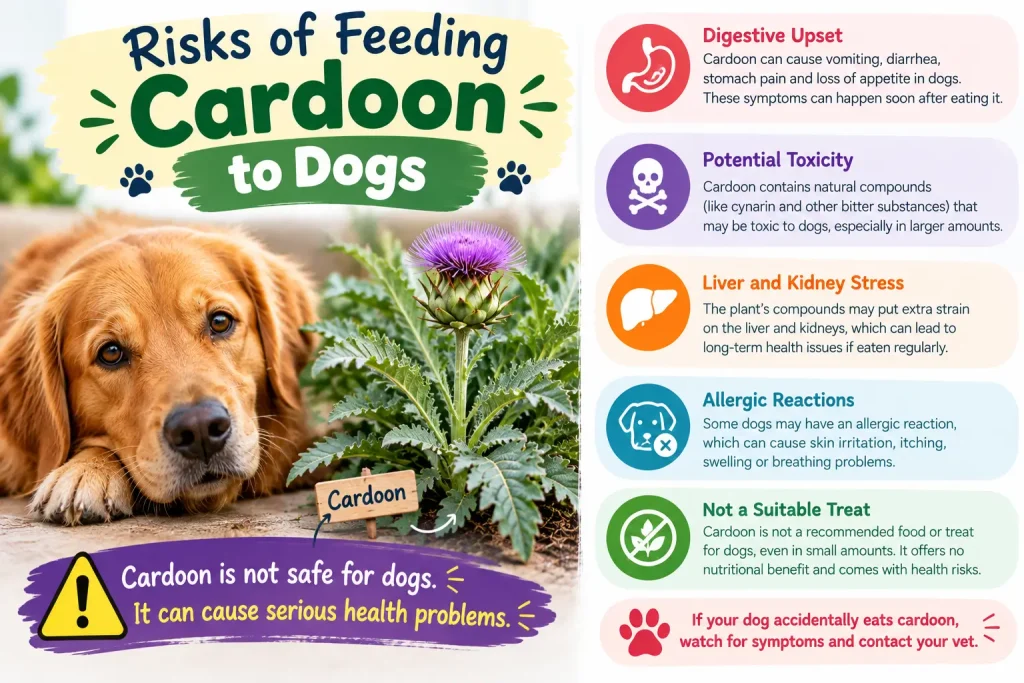
- Tough texture. Raw cardoon stalks are fibrous and stringy. Dogs may swallow strings without chewing, which can cause gagging or stomach upset. Peeling and cooking reduce this.
- Choking risk from large pieces. Long or thick pieces can lodge in the throat, especially in small dogs and fast eaters. This is an established risk for many foods. Cut cardoon small.
- Digestive upset. Even non-toxic plants can cause vomiting, gas, or diarrhea. Cardoon is bitter and may irritate some stomachs. Mild signs usually pass within a day.
- Excess fiber. Fiber helps in moderation. Too much can lead to bloating, loose stool, or frequent bathroom trips. A new fiber source should start in tiny amounts.
- Large portions. A big serving crowds out balanced food and raises the odds of stomach upset. Large raw amounts are the biggest concern. This is a precaution rather than a documented cardoon problem.
- Incorrect preparation. Unpeeled, undercooked, or oversized pieces make cardoon harder to eat. Spiny edges can irritate the mouth. Prep is where most problems start.
- Seasonings and sauces. Garlic, onion, salt, butter, and spices turn a plain vegetable into a risky dish. Garlic and onion are toxic to dogs. This is a well established risk and often the real danger.
- Chemical contamination from gardens or farms. Pesticides, herbicides, fertilizers, and animal waste can stay on plants. This risk comes from the environment, not from cardoon itself. Wash everything and know where it grew.
How Much Cardoon Can Dogs Eat?
Only a very small amount. No reliable veterinary source gives a gram-based safe serving for cardoon, so I will not invent one. Treat it as a few small bites once in a while.
Some websites list specific stalk counts per day. I could not trace those numbers to veterinary research, so please treat them with caution.
The right amount depends on your dog’s size, age, regular diet, health, and tolerance. It also depends on preparation. A soft, peeled, cooked piece is easier to handle than a raw one.
Must Read : Can Dogs Eat Chicory Root? Benefits, Risks and Feeding Guide
Three situations help explain the difference:
- A tiny accidental nibble. A bite of garden cardoon is usually a non-event. Watch your dog and check for mouth irritation.
- Intentional treat. A few small, plain, cooked pieces now and then is the reasonable approach.
- A large amount of raw cardoon. This is the scenario that deserves caution. Expect possible gas, loose stool, or vomiting, and call your vet if signs are strong.
| Dog Size | General Approach |
|---|---|
| Small dog | Tiny pieces and a very small amount |
| Medium dog | Small occasional portion |
| Large dog | Small occasional portion |
| Puppy | Avoid unnecessary human foods unless appropriate |
| Dog with digestive problems | Ask a veterinarian first |
Treats of all kinds should stay a small part of the daily diet. Cardoon is an occasional addition, never a replacement for complete dog food.
Can Puppies Eat Cardoon?
Puppies do not need cardoon, and it is best to skip it unless your veterinarian approves. A puppy’s diet should come from a complete puppy food.
Why: Growing puppies need precise nutrition for bones, brains, and muscles. Their stomachs are small and sensitive. A few extra vegetables will not automatically harm a puppy. But new foods are a common cause of upset stomachs in young dogs. Fiber can also fill a tiny stomach without giving the nutrients puppies need.
Practical advice: Keep treats very small. If your vet agrees, try a pea-sized piece of plain, cooked cardoon. Do not let a puppy chew garden plants. Puppies explore with their mouths, and the spines are not friendly to young gums.
Can Dogs Eat Cardoon Every Day?
Direct answer: No. Dogs do not need cardoon every day, and daily servings are unnecessary.
Why: Extra plant matter can upset digestion. Cardoon also adds almost nothing a good dog food does not already provide. Variety does not mean unlimited vegetables. Rotating a few safe treats is fine, and keeping each one small is better.
Complete and balanced dog food should remain the foundation. Cardoon can show up now and then, like a weekend treat.
How to Prepare Cardoon for Dogs
- Choose fresh cardoon. Pick firm, pale stalks without brown spots or slime. Be sure what you have is cardoon, not an unknown thistle.
- Wash it thoroughly. Rinse well to remove dirt, residue, and any garden chemicals.
- Remove tough or stringy portions. Trim the leaf edges. Peel the outer strings with a vegetable peeler.
- Cut it into small pieces. Aim for pea-sized for small dogs and thumbnail-sized for larger dogs.
- Cook it plainly if desired. Steam or boil until very soft. Skip salt, oil, butter, garlic, onion, and spices.
- Allow it to cool. Hot food can burn a dog’s mouth.
- Offer a small amount. Start with one or two pieces. Do not mix it into a big meal.
- Monitor your dog afterward. Watch for gas, loose stool, vomiting, or refusal to eat over the next day.
Can Dogs Eat Cardoon From the Garden?
Sometimes, yes, if the plant is correctly identified and chemical free. The growing environment matters as much as the plant.
Why: A vegetable can be edible while the plant growing in a treated or contaminated area is still unsuitable for a dog. Possible problems include:
- Pesticides and herbicides. Residue can stay on leaves and stalks.
- Fertilizers. Some garden fertilizers and soil products can upset or harm dogs.
- Animal waste. Droppings from wildlife or other pets can carry germs and parasites.
- Unknown soil contamination. Old pipes, paint, or nearby spraying can affect a garden.
This does not mean every home garden is unsafe. A well-kept organic bed is usually fine. Just wash the stalks and know what was sprayed on them.
Also confirm the plant is really cardoon. Many thistle-like plants look alike. Do not let your dog eat unidentified plants. Wild thistles, especially along roadsides, may have been sprayed.
What Happens If a Dog Eats Too Much Cardoon?
Most dogs that eat too much cardoon develop mild stomach upset such as gas or loose stool. Severe signs are uncommon, but symptoms depend on the amount, the preparation, and your dog’s health.
Possible signs include:
- Gas
- Loose stool or diarrhea
- Vomiting
- Belly discomfort or a tucked posture
- Reduced appetite
Raw stalks and spiny pieces may also irritate the mouth. Look for drooling or pawing at the face.
This is general information, not a diagnosis. A small dog that eats a lot may react more strongly than a big dog that eats a little. If your dog has a chronic health condition, call your veterinarian sooner.
What Should You Do If Your Dog Eats Cardoon?
- Determine how much was eaten. A nibble and a half stalk are very different.
- Check whether it was raw or cooked. Raw, stringy stalks cause more trouble.
- Check for added ingredients. Look for garlic, onion, salt, butter, sauce, or alcohol.
- Consider where it came from. Garden sprays and unknown plants raise the concern level.
- Monitor your dog. Watch for vomiting, diarrhea, drooling, gagging, or lethargy for the next 24 hours.
- Provide normal access to fresh water. Do not force fluids.
- Contact a veterinarian if signs are severe, persistent, or concerning. In the US, the ASPCA Animal Poison Control Center hotline is 1-888-426-4435, and a consultation fee may apply.
Do not make your dog vomit unless a veterinary professional tells you to. It can cause harm and does not help in every situation.
Cardoon vs Artichoke for Dogs
Cardoon and artichoke are close relatives, so owners often ask whether one is safer. The evidence does not say. Both are generally considered non-toxic, and both need careful preparation.
| Feature | Cardoon | Artichoke |
|---|---|---|
| Plant family | Asteraceae (Cynara cardunculus) | Asteraceae (Cynara scolymus, a cultivated form) |
| Common edible portion | Leaf stalks, sometimes roots and buds | Flower bud base and heart |
| Texture | Stringy, celery-like, bitter | Dense heart with tough outer bracts and a fuzzy choke |
| Fiber | High in the stalks | High in the bracts and heart |
| Preparation | Peel strings, cook until tender | Remove outer leaves and choke, cook plain |
| Main concern for dogs | Fibrous stalks, spines, bitterness | Spiny bract tips, tough leaves, marinades and oils |
Neither plant is automatically better for dogs. Plain artichoke hearts without oil, garlic, or brine are usually the simpler option. Marinated jars often contain garlic and salt, which makes them a poor choice.
Cardoon vs Other Dog-Safe Vegetables
This is not a ranking. It is a practical look at what each vegetable asks of the owner.
| Vegetable | Main Consideration |
|---|---|
| Cardoon | Tough, stringy stalks and bitter taste. Needs peeling, cooking, and chopping. |
| Carrot | Crunchy and popular. Large raw pieces can be a choking risk for small dogs. |
| Green beans | Easy to serve plain. Cooked or raw, no seasoning. |
| Pumpkin | Plain cooked pumpkin is gentle. Avoid pie filling and added sugar. |
| Zucchini | Soft and mild. Serve plain in small pieces. |
| Cucumber | Watery and low in calories. Slice thinly for small dogs. |
Several of these are easier to prepare and better liked. Cardoon is the more effortful choice. That is fine if your dog tolerates it.
Human Foods Dogs Should Avoid With Cardoon
Cardoon itself may not be the biggest worry. The dish is. Plain cardoon and a restaurant-style cardoon dish are very different foods for a dog.
Traditional recipes often include:
- Onion, garlic, and chives. These Allium plants can damage a dog’s red blood cells.
- Excess salt. Too much sodium is harmful, especially for small dogs.
- Butter, cream, and heavy sauces. Fat can cause diarrhea or pancreatitis.
- Wine or other alcohol sauces. Alcohol is unsafe for dogs.
- Spicy seasonings. Pepper and strong spices can upset the stomach.
If you are cooking cardoon for dinner, set aside a plain portion before you season. Do not share leftovers from the table.
Should You Give Your Dog Cardoon?
General educational guidance, not a veterinary diagnosis.
Lower concern
- Correctly identified cardoon
- Plain preparation, peeled and cooked
- A small amount
- No symptoms
Use caution
- A large amount
- Raw, very fibrous pieces
- A dog with a sensitive stomach
- Unknown preparation or unknown ingredients
Contact a veterinarian
- Severe or persistent vomiting
- Significant diarrhea
- Choking or breathing difficulty
- Severe weakness
- Unknown plant identification
- Possible exposure to chemicals or unsafe ingredients
Frequently Asked Questions
How much cardoon can dogs eat?
Only a very small amount. No reliable veterinary source sets a safe serving size for cardoon. Offer a few small, plain, cooked pieces once in a while. Size, age, health, and tolerance all matter. Ask your vet if your dog has digestive problems.
Can dogs eat cardoon every day?
No. Dogs do not need cardoon daily. Extra fiber and plant matter may cause gas or loose stool. Complete and balanced dog food should provide the nutrition. Cardoon works best as an occasional treat, not a routine addition to meals.
What happens if my dog eats too much cardoon?
Most dogs get mild digestive upset, such as gas, loose stool, or reduced appetite. Vomiting and belly discomfort can happen too. Offer fresh water and watch your dog. Call your vet if signs are severe, last more than a day, or include choking or weakness.
Can dogs eat cardoon from the garden?
Sometimes, if you are sure the plant is cardoon and it grew without pesticides, herbicides, or harmful fertilizers. Wash the stalks well and prepare them plainly. Do not let dogs eat unidentified garden plants or thistles from sprayed areas.
Is cardoon difficult for dogs to digest?
Raw cardoon can be hard to digest because the stalks are fibrous. Cooking helps. Even then, a large amount of fiber may cause gas or loose stool. Start with a tiny piece and stop if your dog shows any digestive upset.
Key Takeaways
- Most dogs can eat a small amount of plain cardoon, and it is not known to be toxic.
- Cooked, peeled cardoon is easier to eat than raw, stringy stalks.
- Stalks need peeling and chopping. Never give large raw pieces.
- Keep portions tiny. No reliable safe serving size exists, so avoid guessing high.
- Cardoon contains fiber. Too much can cause gas or loose stool.
- Puppies should stick to complete puppy food unless a vet approves.
- Garden cardoon may carry pesticides, herbicides, or animal waste, so wash it and know its source.
- Call your vet for severe vomiting, ongoing diarrhea, choking, weakness, or an unidentified plant.
Final Thoughts
So, can dogs eat cardoon? Yes, in small, plain, well-prepared portions. That simple answer hides the details that matter most.The plant itself is not the main problem. A peeled, cooked, chopped bite is a very different experience from a mouthful of raw spiny stalk. A plain piece is also very different from a garlicky restaurant dish.
And a stalk from a clean garden is not the same as one from a sprayed roadside patch.If your dog loves cardoon, enjoy sharing a little now and then. If your dog seems unsure, skip it. Plenty of easier vegetables exist. Complete and balanced dog food should always remain the foundation of the diet, and your veterinarian is the best guide for anything beyond a casual treat.
Can Dogs Eat Navy Beans? Benefits, Risks, Serving Size & Safety
Can Dogs Eat Escarole? Safety, Benefits, Risks & Serving Tips